
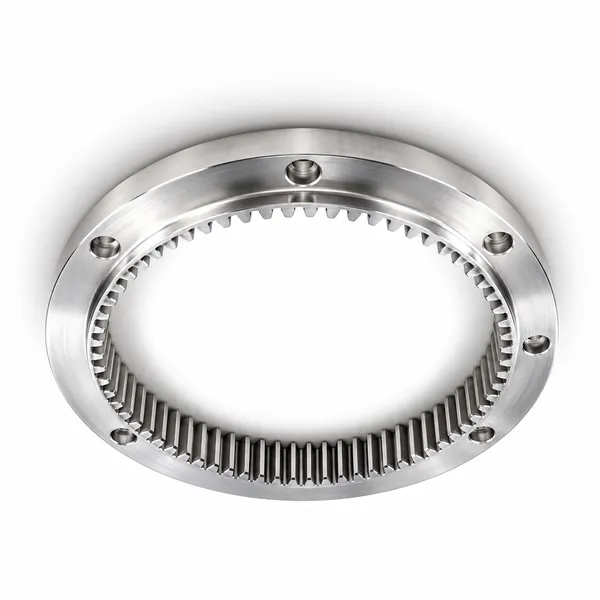
Internal Helical Ring Gear – 7° Helix, OD to 2500mm DIN4
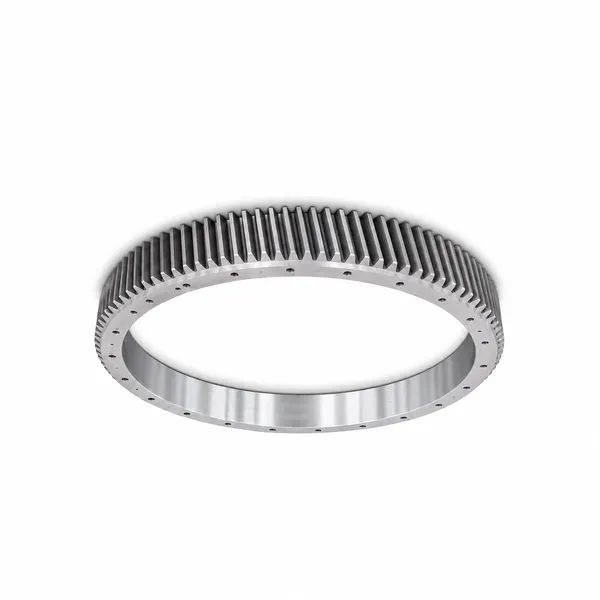
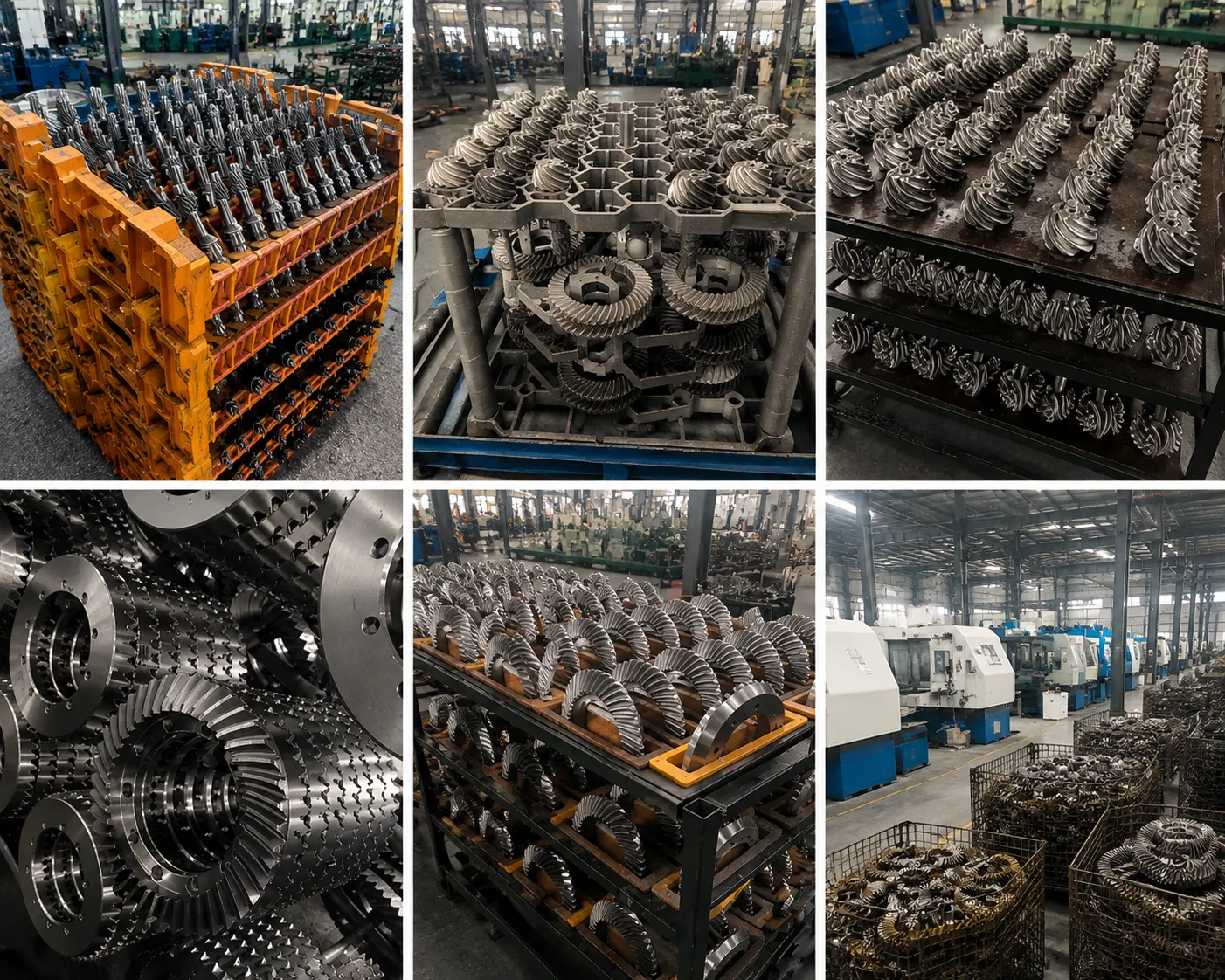
Korea Ever-Power internal helical ring gears with 7° helix angle: OD to 2,500 mm; ID min 50 mm (shaping) / 100 mm (grinding); face width to 500 mm; module to 45 mm (grinding); helix angle to ±45° (grinding); DIN Class 4 by tooth grinding; Ra 0.6 tooth finish. External gear capability also available. All materials, modules, and specifications per drawing. 3–6 dB(A) noise reduction vs spur ring gear. Applications: EV motors, wind turbines, robot joints, automotive AT, premium industrial planetary gearboxes, marine drives.
Product Overview
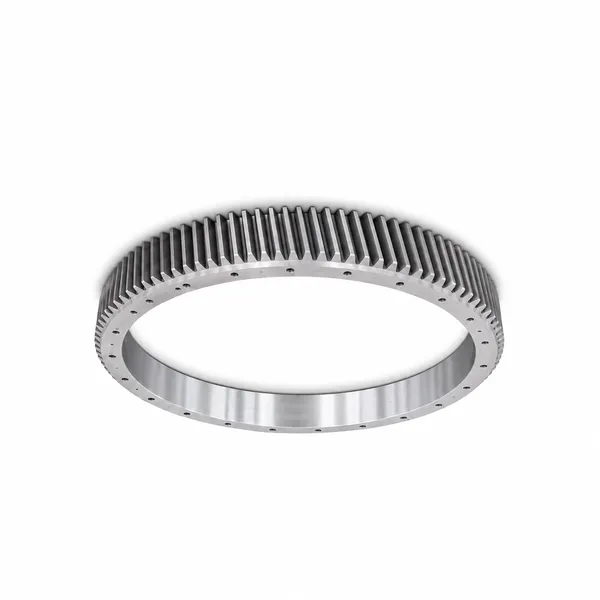
The internal helical ring gear with 7° helix angle combines two design advantages in a single component: the internal gear geometry's superior load capacity and compact coaxial configuration, and the helical tooth form's progressive engagement and lower operating noise compared with straight-tooth spur internal gears. The 7° helix angle is a deliberately moderate choice — large enough to achieve a meaningful reduction in transmission error and noise (progressive tooth engagement begins at approximately 5° and increases with helix angle), while small enough to keep the axial thrust force on the ring gear's mounting structure within reasonable limits and to remain within the shaping machine's standard helix angle capability for the large internal bore sizes where this gear is typically applied.
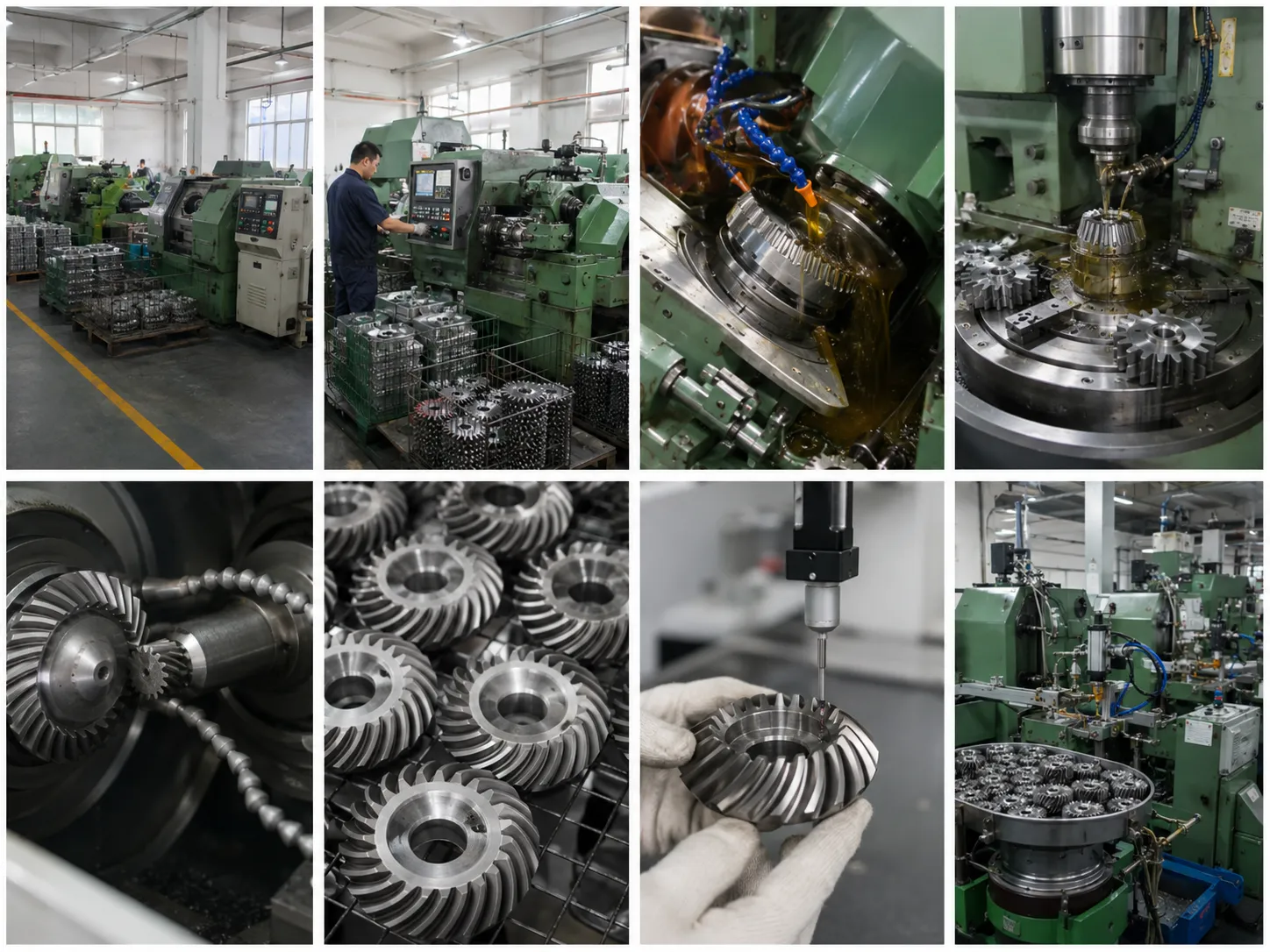
Korea Ever-Power's internal helical ring gears are produced with full large-format gear manufacturing capability — OD up to 2,500 mm, module up to 45 mm (after tooth grinding), helix angles up to ±45° (by tooth grinding). DIN Class 4 achievable by tooth grinding; DIN Class 8 by shaping or milling. Tooth surface finish Ra 0.6 by grinding; Ra 3.2 by shaping/milling. Size per customer drawing. All specifications per requirement.
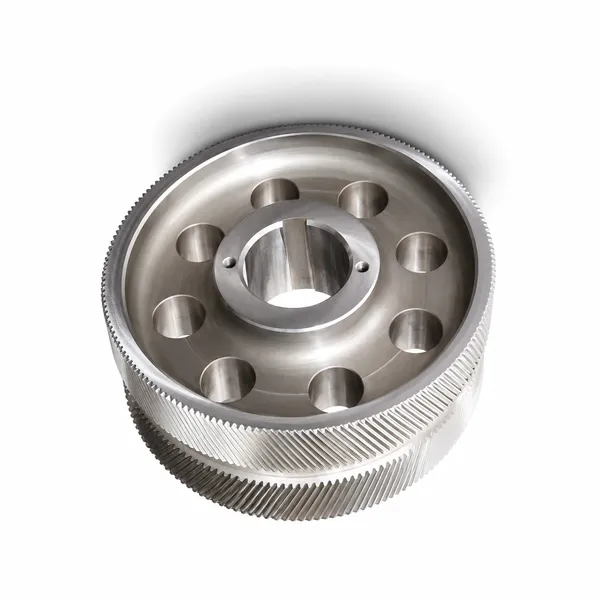
Internal helical ring gears are the premium specification for planetary gearbox ring gears in applications where noise is a primary performance criterion — automotive automatic transmissions, precision industrial planetary gearboxes, wind turbine pitch and yaw drives, and robot joint planetary stages. The 7° helix angle provides a contact ratio increase of approximately 0.25–0.35 above the equivalent spur internal gear at the same module and face width, which directly translates to lower peak tooth load per tooth (more teeth in contact sharing the load at any instant) and smoother, quieter operation. Korea Ever-Power's gear shaping machines can produce internal helical ring gears with helix angles up to ±22.5° without special tooling; helix angles up to ±45° are achievable by internal tooth grinding.
Technical Specifications
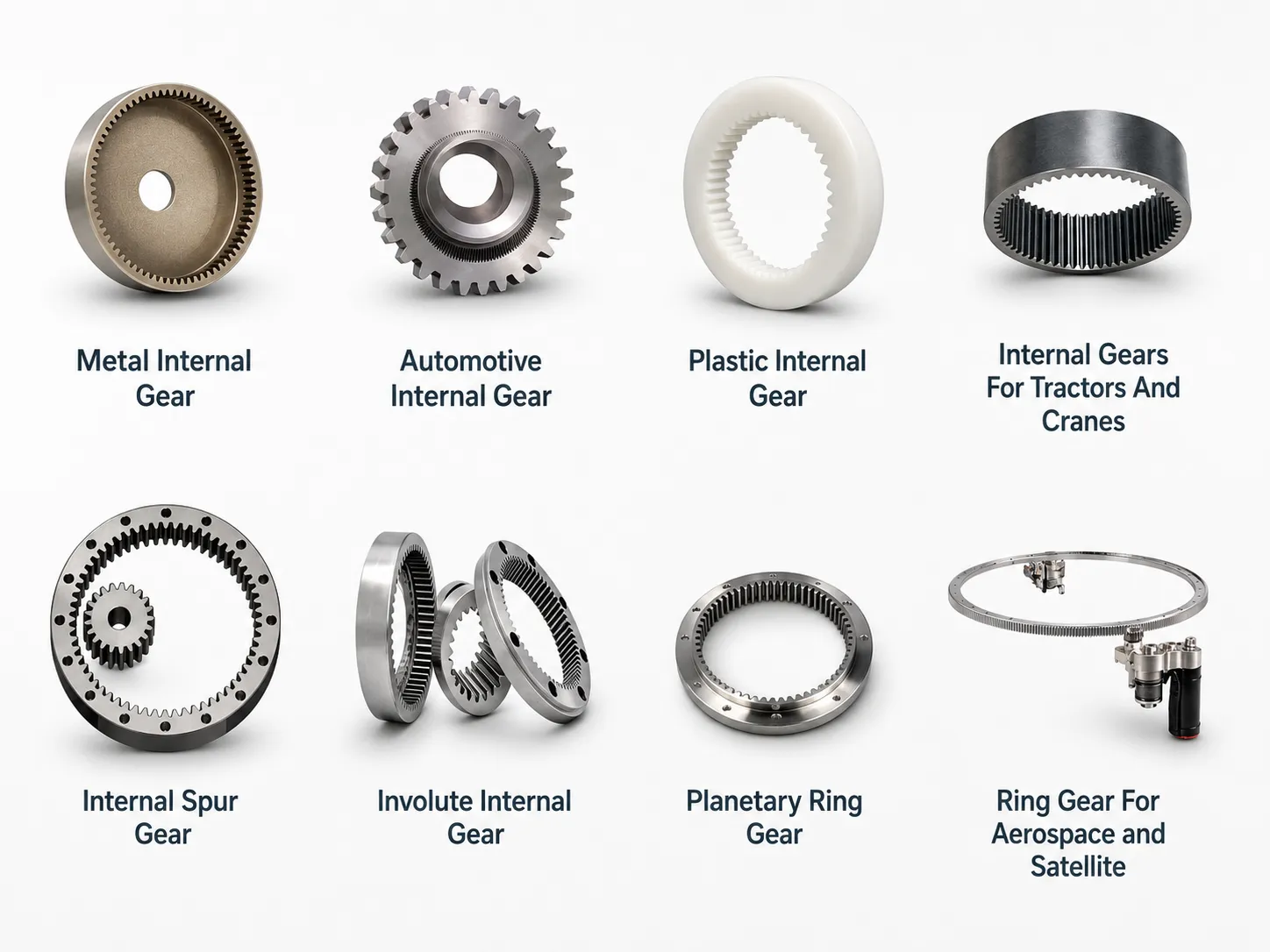
Internal Gears and Internal Splines
| Parameter | Milling | Shaping | Grinding ★ |
|---|---|---|---|
| Maximum OD | 2,500 mm | 2,500 mm | 2,500 mm |
| Minimum ID | 650 mm | 50 mm | 100 mm |
| Max Face Width | 500 mm | 500 mm | 500 mm |
| Max Module | 26 mm | 26 mm | 45 mm |
| DIN Grade | DIN 8 | DIN 8 | DIN 4 ✓ |
| Tooth Finish | Ra 3.2 | Ra 3.2 | Ra 0.6 ✓ |
| Max Helix Angle | ±22.5° | ±22.5° | ±45° ✓ |
External Gears and External Splines
| Parameter | Hobbing | Milling | Grinding ★ |
|---|---|---|---|
| Maximum OD | 1,250 mm | 2,500 mm | 2,500 mm |
| Minimum OD | 20 mm | 200 mm | 20 mm |
| Max Face Width | 500 mm | 500 mm | 1,480 mm |
| Max Module | 26 mm | 26 mm | 45 mm |
| DIN Grade | DIN 8 | DIN 8 | DIN 4 ✓ |
| Tooth Finish | Ra 3.2 | Ra 3.2 | Ra 0.6 ✓ |
| Max Helix Angle | ±45° | ±45° | ±45° |
7° Helix Angle — Engineering Rationale
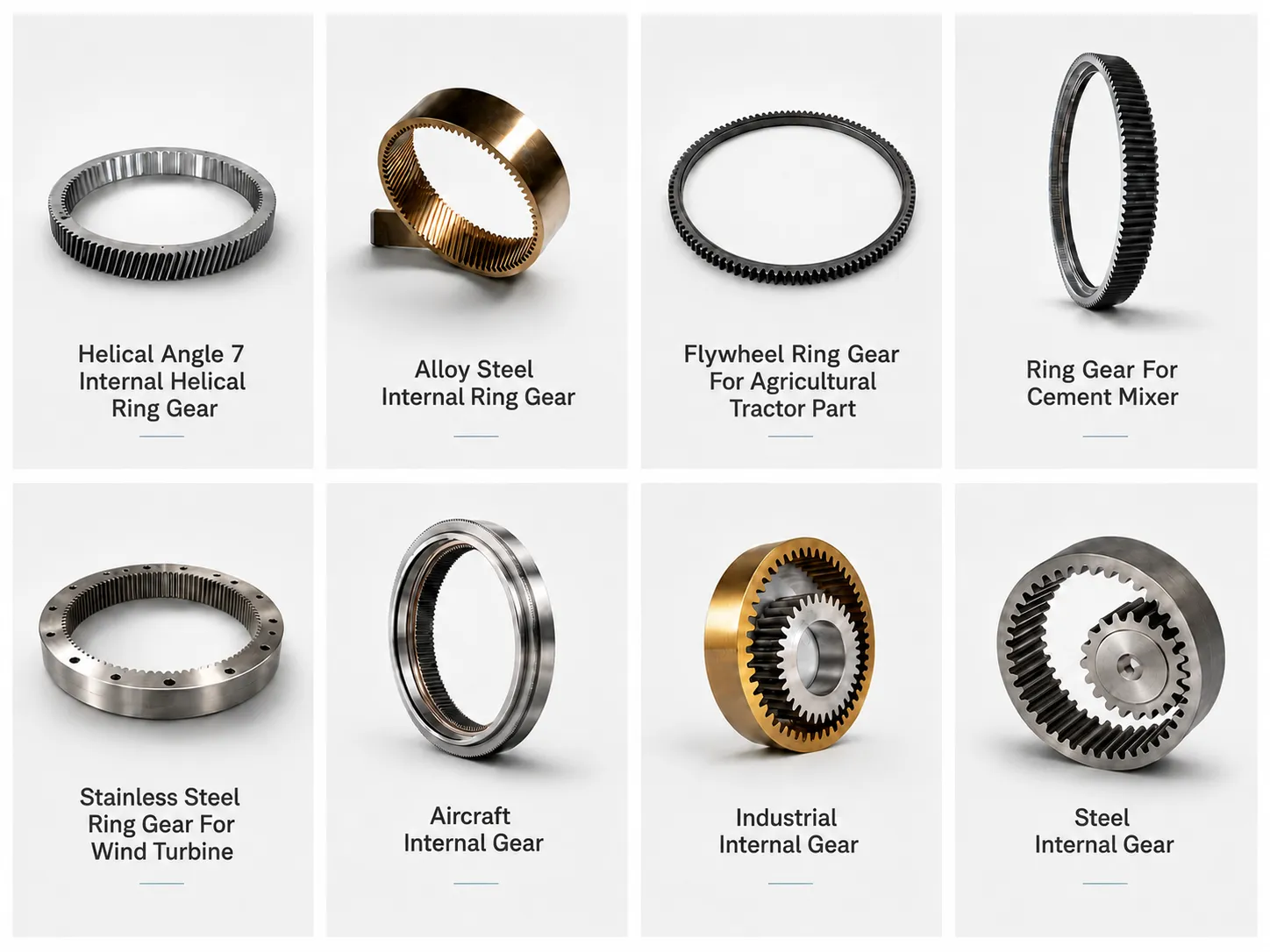
The selection of helix angle for an internal helical ring gear involves a trade-off between three competing factors — contact ratio improvement, axial thrust force, and manufacturing complexity. The 7° helix angle represents a well-established optimum for large-format internal helical ring gears in industrial and wind turbine planetary applications:
Contact Ratio Increase
A 7° helix angle on an internal ring gear with face width b=80 mm at module Mn=6 produces an overlap contact ratio (εβ) of approximately 0.25–0.35 — meaning an additional 25–35% of one tooth pitch is always in contact simultaneously with the transverse contact ratio. The total contact ratio of 1.9–2.3 (vs 1.6–1.8 for the equivalent spur ring gear) reduces the peak load per tooth pair and directly reduces the transmission error amplitude that generates gear noise.
Manageable Axial Thrust
The axial thrust force on an internal helical ring gear is proportional to tan(β) × tangential force: F_a = F_t × tan(7°) = 0.123 × F_t. At 7°, the axial thrust is approximately 12.3% of the tangential load — low enough to be absorbed by standard planet carrier bearing assemblies without requiring special thrust bearing design modifications. At larger helix angles (15–20°), the axial thrust becomes a significant proportion of the tangential load and requires dedicated thrust bearings or a herringbone tooth form to cancel the axial force.
Shaping Machine Compatibility
Korea Ever-Power's gear shaping machines cut internal helical ring gears with helix angles up to ±22.5° — covering 7° comfortably within the standard machine capability range without special guide helix attachments or custom tooling. The 7° helix angle can be produced by standard gear shaping with a helical guide (the standard production method) or by internal tooth grinding after rough shaping and heat treatment, achieving DIN Class 4 accuracy and Ra 0.6 tooth finish for highest-precision applications.
Noise Reduction vs Spur Ring Gear
Measured A-weighted sound pressure level reductions for a 7° helical internal ring gear planetary stage compared with an equivalent spur ring gear stage: typically 3–6 dB(A) at the gear mesh frequency fundamental, and 5–8 dB(A) at the second harmonic. For wind turbine yaw and pitch drives, automotive EV reducers, and precision industrial planetary gearboxes where gear noise is a quality metric, the 3–6 dB(A) reduction justifies the additional manufacturing cost of the helical ring gear specification.
Spur vs Helical Internal Ring Gear — Engineering Comparison
| Property | Spur Internal Ring Gear | Helical 7° Internal Ring Gear ★ |
|---|---|---|
| Transverse Contact Ratio | 1.6–1.8 | 1.85–2.2 (higher) ✓ |
| Overlap Contact Ratio | 0 | 0.25–0.40 ✓ |
| Gear Mesh Noise | Higher | 3–6 dB(A) lower ✓ |
| Load Capacity (same face width) | Standard | ~10–15% higher ✓ |
| Axial Thrust Force | Zero ✓ | 12.3% of F_t (manageable) |
| Manufacturing Complexity | Lower ✓ | Moderate (standard shaping) |
| Cost vs Spur | Lower ✓ | 10–20% premium (standard shaping) |
| Preferred Application | Standard industrial, agricultural, flywheel ring gears | EV drives, wind turbine, premium industrial, automotive AT ✓ |
Applications
EV Motor Planetary Reducers
Internal helical ring gears β=7° in electric vehicle motor single-speed or two-speed planetary reduction stages. EV powertrain NVH (noise, vibration, harshness) targets are stricter than conventional powertrain targets because there is no engine masking noise — the planetary stage's gear mesh noise is the dominant noise source in the passenger compartment at cruising speed. The 7° helical ring gear's 3–6 dB(A) mesh noise reduction compared with a spur equivalent is decisive for EV powertrain NVH compliance.
Automatic Transmission Planetary Stages
Internal helical ring gears β=7° in 6–10 speed automatic transmission planetary stages. Premium automotive transmissions use helical internal ring gears rather than spur ring gears to meet the transmission noise floor targets that drive passenger comfort differentiation at higher trim levels. Tooth-ground helical ring gear at DIN Class 4 for the highest-precision AT applications.
Wind Turbine Pitch and Yaw Drives
Large-format internal helical ring gears β=7°, OD 400–2,500 mm, module 4–10 in wind turbine pitch drive planetary gearboxes (rotating each blade) and yaw drive planetary gearboxes (rotating the nacelle). Helical ring gears reduce gear mesh impulse noise in the nacelle — important for community noise compliance in onshore wind turbines installed near residential areas.
Robot Joint Planetary Stages
Internal helical ring gears β=7° DIN 4 in collaborative robot (cobot) and industrial robot joint planetary gearboxes. Robot joint drives have a noise requirement for both acoustic comfort (collaborative robots working alongside humans) and position control accuracy (transmission error from helical ring gears is lower than spur equivalents, improving the precision of the position servo loop at the joint output).
Premium Industrial Planetary Gearboxes
Internal helical ring gears β=7° in premium servo planetary gearboxes, precision conveyor drive planetary reducers, and high-power industrial planetary stages where lower noise, higher load capacity, and smoother output torque ripple are required above the spur ring gear standard. Korea Ever-Power's large-format capability (OD to 2,500 mm, module to 45 mm by grinding) covers the full industrial helical ring gear size range.
Marine and Offshore Drives
Large internal helical ring gears β=7°, OD 500–2,500 mm in marine vessel thruster planetary drives, ship propulsion reduction gearboxes, and offshore crane hoisting planetary stages. Marine planetary gearboxes specify helical ring gears for the lower noise contribution in accommodation spaces and for the improved load distribution across the face width that helical teeth provide in the large-diameter, high-torque marine gearbox environment.
Frequently Asked Questions
Why choose 7° rather than a larger helix angle for an internal helical ring gear?
The 7° helix angle is a widely adopted standard for large-format industrial and wind turbine internal helical ring gears because it provides a meaningful contact ratio increase (εβ ≈ 0.25–0.40, depending on face width and module) with a manageable axial thrust force (12.3% of tangential load) and without requiring special tooling beyond a standard helical guide on the gear shaping machine. Larger helix angles (15°, 20°) increase the contact ratio further but impose proportionally larger axial thrust — requiring dedicated thrust bearings or a double-helical (herringbone) tooth form to cancel the axial force. For most industrial planetary applications, the 7° helix angle provides the optimal noise and load benefit without the bearing and manufacturing complexity of higher helix angles.
Can Korea Ever-Power produce internal helical ring gears at other helix angles?
Yes — Korea Ever-Power's gear shaping machines produce internal helical ring gears with helix angles up to ±22.5° as standard. Helix angles up to ±45° are achievable by internal tooth grinding. Other commonly specified helix angles for internal helical ring gears include 5°, 8°, 10°, 12°, 15°, and 20° — all producible within Korea Ever-Power's standard shaping capability range. Herringbone (double-helical) internal ring gears with equal and opposite helix angles are also produced — these cancel the axial thrust force and are specified for high-power gearboxes where axial bearing loads must be minimised. Specify the required helix angle in the drawing or enquiry and Korea Ever-Power will confirm producibility and lead time.
What accuracy is achievable for large-format internal helical ring gears?
By gear shaping (standard production process for 7° helical internal ring gears): DIN Class 8 accuracy, tooth surface finish Ra 3.2 — suitable for industrial planetary gearboxes, wind turbine drives, and marine gearboxes at standard accuracy requirements. By internal tooth grinding (post-heat-treatment): DIN Class 4 accuracy, tooth surface finish Ra 0.6 — suitable for EV motor reducers, robot joint planetary stages, automotive AT ring gears, and any application where lowest transmission error and highest load capacity are required. The grinding process corrects the heat treatment distortion and achieves the Ra 0.6 tooth finish that minimises micro-pitting at the tooth contact zone.
What size internal helical ring gears can Korea Ever-Power produce?
Korea Ever-Power's internal helical ring gear capability covers: maximum OD 2,500 mm (by all three processes), minimum ID 50 mm (by shaping) or 100 mm (by grinding), maximum face width 500 mm, maximum module 26 mm (shaping/milling) or 45 mm (grinding). This range covers internal helical ring gears from small robot joint ring gears (ID 50 mm, module 1–3) through large wind turbine first-stage planetary ring gears (OD 2,000+ mm, module 8–16) and large marine gearbox ring gears (OD 2,500 mm, module 12–26). All sizes per customer drawing. Contact our team with your specification for a technical consultation and quotation.
Customer Reviews
"We design EV motor planetary reducers and specified internal helical ring gears β=7° DIN 5 from Korea Ever-Power. NVH test at our vehicle-level acoustic measurement: gear mesh frequency fundamental at 62 dB(A) for the helical ring gear vs 68 dB(A) for the spur ring gear we evaluated — a 6 dB(A) improvement at the primary mesh frequency, meeting our EV interior noise target. Tooth-ground Ra 0.6 confirmed on our surface profilometer incoming check."
Kim Hyeong-jun | EV Powertrain NVH Engineer, Incheon Electric Vehicle Systems Co. · Q1 2026
"We manufacture wind turbine yaw drive planetary gearboxes and switched from spur internal ring gears to β=7° helical ring gears from Korea Ever-Power. Nacelle structure-borne noise at gear mesh frequency reduced by 4 dB(A) — significant for the onshore turbine site adjacent to a residential area. Korea Ever-Power's shaping capability confirmed at ±22.5° — our 7° specification is well within range. OD 1,800 mm ring gears produced to drawing tolerance; confirmed on our CMM."
Lee Hyeon-jun | Wind Turbine Gearbox Engineer, Gyeonggi Renewable Power Systems Co. · Q4 2025
"We supply cobot joint planetary gearboxes and specified internal helical ring gears β=7° DIN 4 from Korea Ever-Power for our shoulder joint. Transmission error measured on our gear test rig: ±0.4 arc-minutes peak-to-valley for the helical ring gear, vs ±0.9 arc-minutes for the spur ring gear — the lower TE directly improves the joint's position bandwidth. Internal tooth grinding confirmed at DIN 4 on our Klingelnberg CMM."
Park Sang-jin | Collaborative Robot Joint Engineer, Busan Robotics Systems Co. · Q2 2026
"We needed a large internal helical ring gear β=7°, OD 2,100 mm, module 12 for a marine vessel thruster planetary drive. Korea Ever-Power confirmed their shaping capability covers OD 2,500 mm and β=7° within the ±22.5° standard range — our specification is producible without special tooling. Material 42CrMo Q&T, post-heat-treatment tooth grinding to DIN 5, Ra 0.6. Production delivered in 28 days; classification society material and dimensional certificate included."
Choi Jae-won | Marine Thruster Gearbox Engineer, Daejeon Marine Drive Systems Co. · Q3 2025
"We manufacture premium servo planetary gearboxes for machine tool applications and source internal helical ring gears β=7° DIN 4 from Korea Ever-Power. The contact ratio increase from the 7° helix significantly reduced the torque ripple at the gearbox output — our machine tool customers measure this as improved surface finish on high-speed finishing cuts. Korea Ever-Power's technical team confirmed the axial thrust calculation for our bearing selection — proactive application engineering support."
Yoon Jae-won | Precision Gearbox Design Engineer, Ulsan Machine Tool Drive Systems Co. · Q1 2025
Related Products
Request a Quotation for Internal Helical Ring Gears
β=7° standard; other helix angles to ±45° available. OD to 2,500 mm. Module to 45 mm. DIN Class 4 by tooth grinding. Ra 0.6. All materials per drawing. Send drawing or specify: OD, ID, module, helix angle, face width, accuracy grade, and material.
Additional information
| Editor |
|---|
Related products
-
Aircraft Internal Gear – M0.15-M2.0, AGMA 13, Multi-Metal
-
Automotive Internal Gear – Multi-Material, M0.15-M2.2 OEM
-
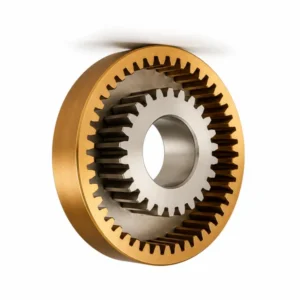
Industrial Internal Gear – Mild Steel, 60-70HRC, ISO9001
-
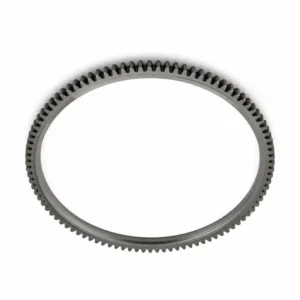
Flywheel Ring Gear For Tractor – C45/42CrMo, Carburised
-
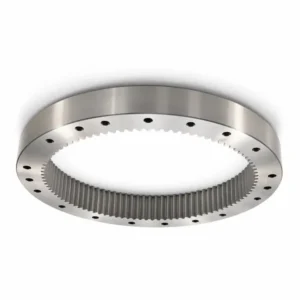
Ring Gear for Wind Turbine – 42CrMo, Mn6 Z109, DIN Cl.7
-
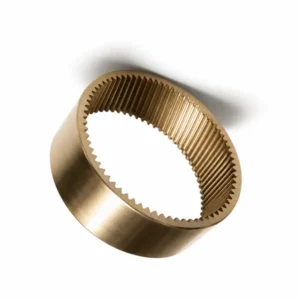
Alloy Steel Internal Ring Gear – Spur/Helical, ISO9001
-
Ring Gear For Aerospace and Satellite – Custom, Per Drawing
-
Plastic Internal Gear – POM/PEEK, M0.15-M2.0, AGMA 13
 English
  Italian
  Korean
  French
  Japanese