
Forging Spur Gear – SAE1045, M6-M32, Hot Forged, DIN 6-9
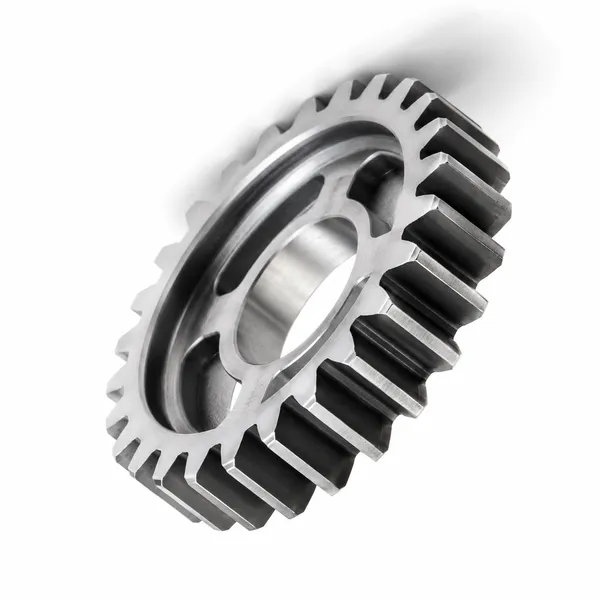
Korea Ever-Power forging spur gears are hot-forged in SAE1045 (C45 steel) and other alloy grades — module M6, M8, M12, M16, M20, M25, M32 and larger. Precision forging produces superior fibre structure, higher toughness, and better fatigue resistance than cut-from-bar blanks. Teeth are subsequently hobbed, shaped, milled, or ground to DIN 6–9 accuracy. Surface treatments: zinc-plated, nickel plated, black oxide, phosphatising, powder coating, and others per drawing. 100–5,000 mm outer diameter range for very large forgings. Applications: automatic machinery, general industry, machine tools, parking systems, high-speed rail, and aviation. Sample 20 days; bulk 25 days. T/T or L/C.
Product Overview
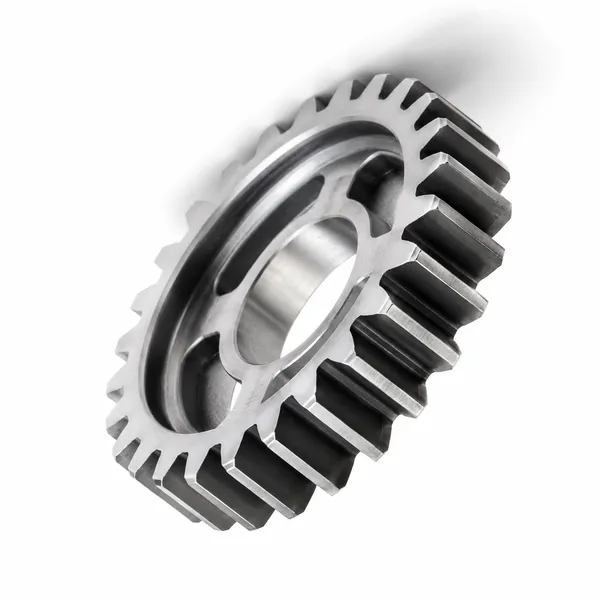
engrenages droits forgés are manufactured by first producing a near-net-shape blank through hot forging, then finishing the tooth form and bore by CNC machining. The forging step — applying impact or pressure through a die while the steel is at elevated temperature — produces a continuous fibre structure throughout the gear blank that follows the tooth profile contour. This forged grain flow dramatically improves the gear's fatigue resistance under cyclic bending loads at the tooth root, and increases toughness (resistance to crack propagation) compared with a gear blank cut from bar stock, where the grain flow is interrupted at the machined surface regardless of the machining quality.
Korea Ever-Power's forging spur gears cover module M6 through M32 and larger in SAE1045 (C45 steel), brass, stainless steel, copper, aluminium, and alloy grades per drawing. Precision DIN 6–9. Teeth hobbed, milled, or ground after forging. Full surface treatment range. Sample 20 business days; bulk production 25 days. T/T or L/C payment.
The precision forging process — where the forging die is designed to produce a blank with near-finished tooth profile geometry — goes one step further: it can produce the gear tooth form directly in the forging operation with only finish grinding required, reducing material waste to near zero and cutting total manufacturing time compared with the conventional forge-then-fully-machine approach. Korea Ever-Power applies precision forging technology to large-module gears where the material saving per blank is economically significant, and uses conventional forge-plus-machine for medium-module gears where the tooling investment for precision forging is not yet justified by the production volume.
Technical Specifications
| Forging Spur Gear — Product Specification | |
|---|---|
| Module Range | M6, M8, M12, M16, M20, M25, M32 and larger — custom per drawing |
| Standard Material | SAE1045 / C45 steel (hot forging standard); also brass, stainless steel, copper, aluminium, alloy steel per drawing |
| Surface Treatment | Zinc-plated, nickel plated, passivation, oxidation, anodisation, Geomet, Dacromet, black oxide, phosphatising, powder coating, electrophoresis |
| Standard | ISO, DIN, ANSI, JIS, BS, and non-standard |
| Precision | DIN 6, DIN 7, DIN 8, DIN 9 |
| Teeth Treatment | Hardened, milled, or ground (post-forging) |
| Tolerance | 0.001 mm – 0.01 mm – 0.1 mm per accuracy grade |
| Finition | Shot/sandblast, heat treatment, annealing, tempering, polishing, anodising, zinc-plated |
| Packing | Plastic bag + cartons, or wooden packing for large gears |
| Payment Terms | T/T, L/C |
| Sample Lead Time | 20 business days |
| Bulk Lead Time | 25 business days |
| Sample Price | USD 2 – USD 100; express freight paid by customer |
Why Forging for Spur Gears
The traditional gear manufacturing method produces blanks by turning from bar stock, then cuts the teeth by hobbing or shaping. This approach has well-understood limitations at large module sizes: material utilisation is low (30–50% of the bar stock becomes swarf), processing time is long, production cost is high, and the machined surfaces interrupt the continuous grain flow of the bar stock at every tool pass. Forging addresses all four issues simultaneously.
Superior Fibre Structure
Hot forging aligns the steel's crystalline grain structure along the direction of material flow in the die. In a forged gear blank, the grain flows continuously around the tooth profile — the fibres at the tooth root run parallel to the root fillet, which is the highest stress region under bending load. A machined blank interrupts this grain flow at the root, creating a stress concentration point that the forged blank does not have.
Higher Toughness
Forging breaks up and redistributes inclusions (non-metallic particles within the steel) into a fine, uniform distribution. Cast blanks have clustered inclusions that act as crack initiation sites; bar-turned blanks have elongated inclusions aligned with the bar axis. Forged blanks have dispersed, equiaxed inclusions — the toughest (most crack-resistant) distribution achievable in steel processing. Toughness is the resistance to crack propagation under impact, which is critical for gears transmitting shock loads.
Fatigue Resistance
Gear tooth root bending fatigue is the primary failure mode for heavily loaded spur gears — the tooth bends under the contact force, and the root fillet experiences alternating tensile and compressive stress with each tooth engagement cycle. The superior grain flow and inclusion distribution of a forged blank significantly increase the number of cycles to fatigue crack initiation compared with a bar-turned blank of the same steel grade, making forged gears the standard for high-cycle, high-load applications.
Dimensional Stability
Forged blanks have lower residual stress than machined blanks because the deformation is distributed throughout the volume rather than concentrated at the surface. Lower residual stress means that the blank is less likely to distort during subsequent machining operations (hobbing, boring, keyway cutting) or during heat treatment — producing more consistent finished dimensions across a production batch.
Material Efficiency
For large-module gears (M12–M32), the forged blank is a near-net-shape approximation of the finished gear — the die produces the web, rim, and hub geometry, and only the tooth flanks and bore require finish machining. Material utilisation rises from 30–50% (bar turning) to 70–85% (forging), which directly reduces material cost per gear at the large module sizes where alloy steel costs are significant per kilogram.
Consistent Piece-to-Piece Quality
The forging die produces the same blank geometry on every stroke — blank weight, web thickness, and hub diameter vary within the die dimensional tolerance across the entire production run. This consistency makes the subsequent tooth-cutting operation predictable and reduces the set-up and inspection time per batch compared with turned blanks, where variations in the incoming bar stock can affect the blank dimensions.
SAE1045 / C45 Steel — Standard Forging Grade
SAE1045 (also designated C45, S45C in JIS, and CK45 in DIN) is the standard medium-carbon steel for forging spur gears. Its combination of moderate carbon content (0.43–0.50% C), good forgeability, adequate hardenability, and machinability makes it the most widely specified blank material for spur gears in the M6–M32 range.
| Property | As-forged / Normalised | Quenched & Tempered | Induction Hardened Surface |
|---|---|---|---|
| Tensile Strength | ≥ 600 MPa | 750–900 MPa | Core: 600–750 MPa |
| Yield Strength | ≥ 355 MPa | 600–750 MPa | Core: 450–600 MPa |
| Surface Hardness | 170–210 HB | 250–300 HB | 50–58 HRC ✓ |
| Impact Toughness | Good | Excellent | Excellent (core) |
| Machinability | Good | Moderate | Grind after hardening |
| Typical Application | Light-duty forged gears, conveyor drives | Medium-duty industrial gears | High-load machine tool and industrial gears |
For higher hardenability and fatigue resistance, alloy steel grades 40Cr, 42CrMo, and 20CrMnTi are available as alternative forging materials. Specify the required hardness or heat treatment on the drawing.
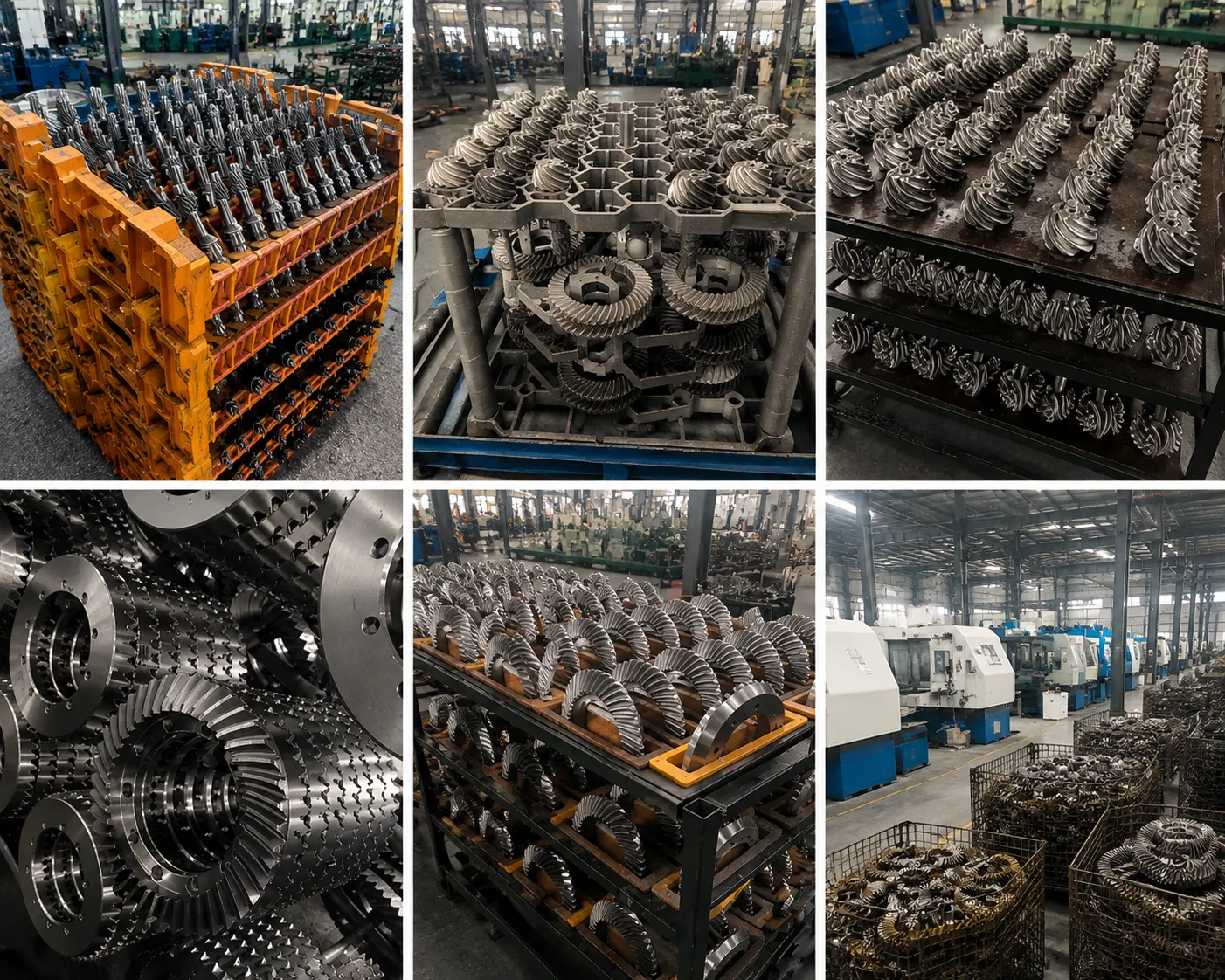
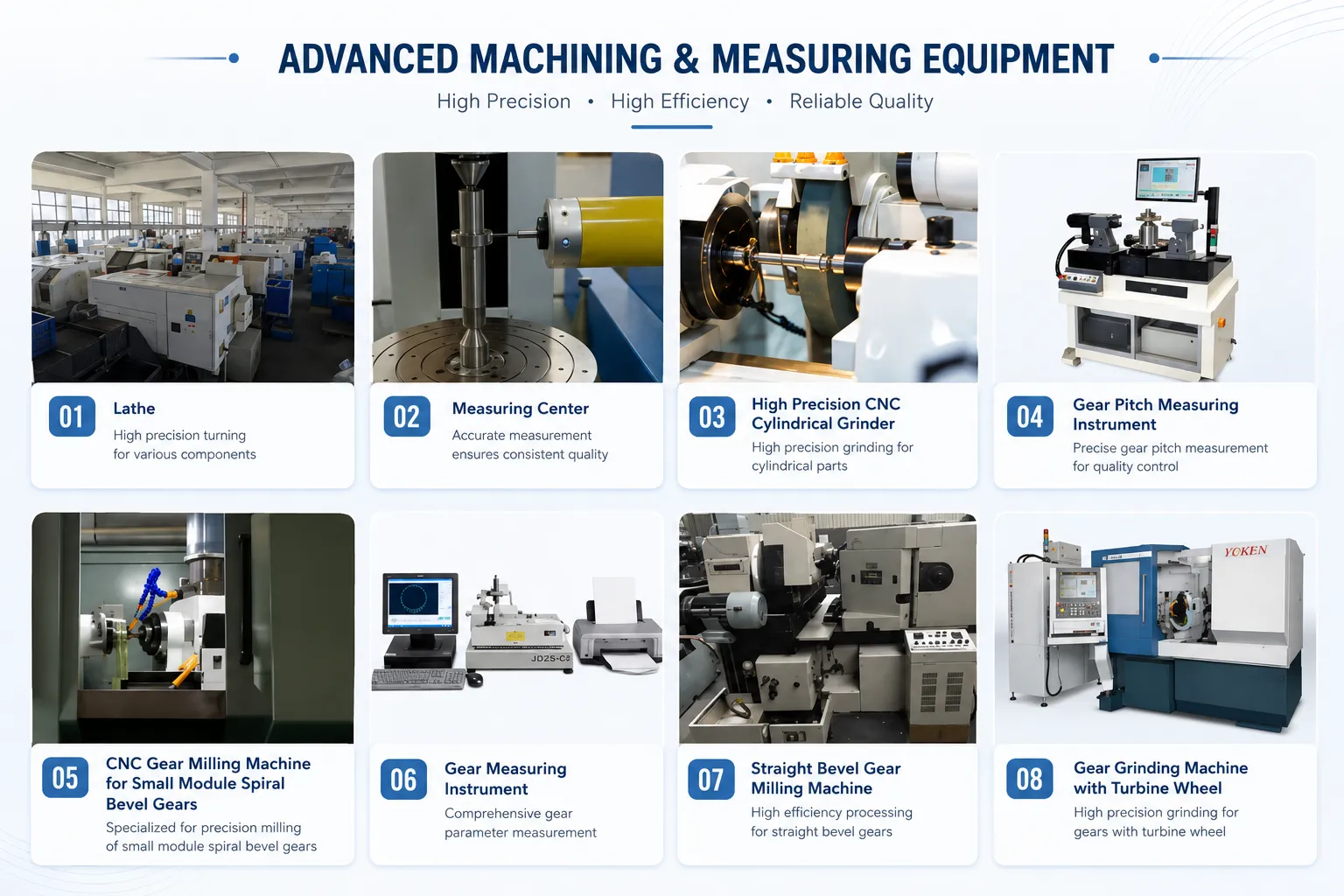
Manufacturing Process
Applications
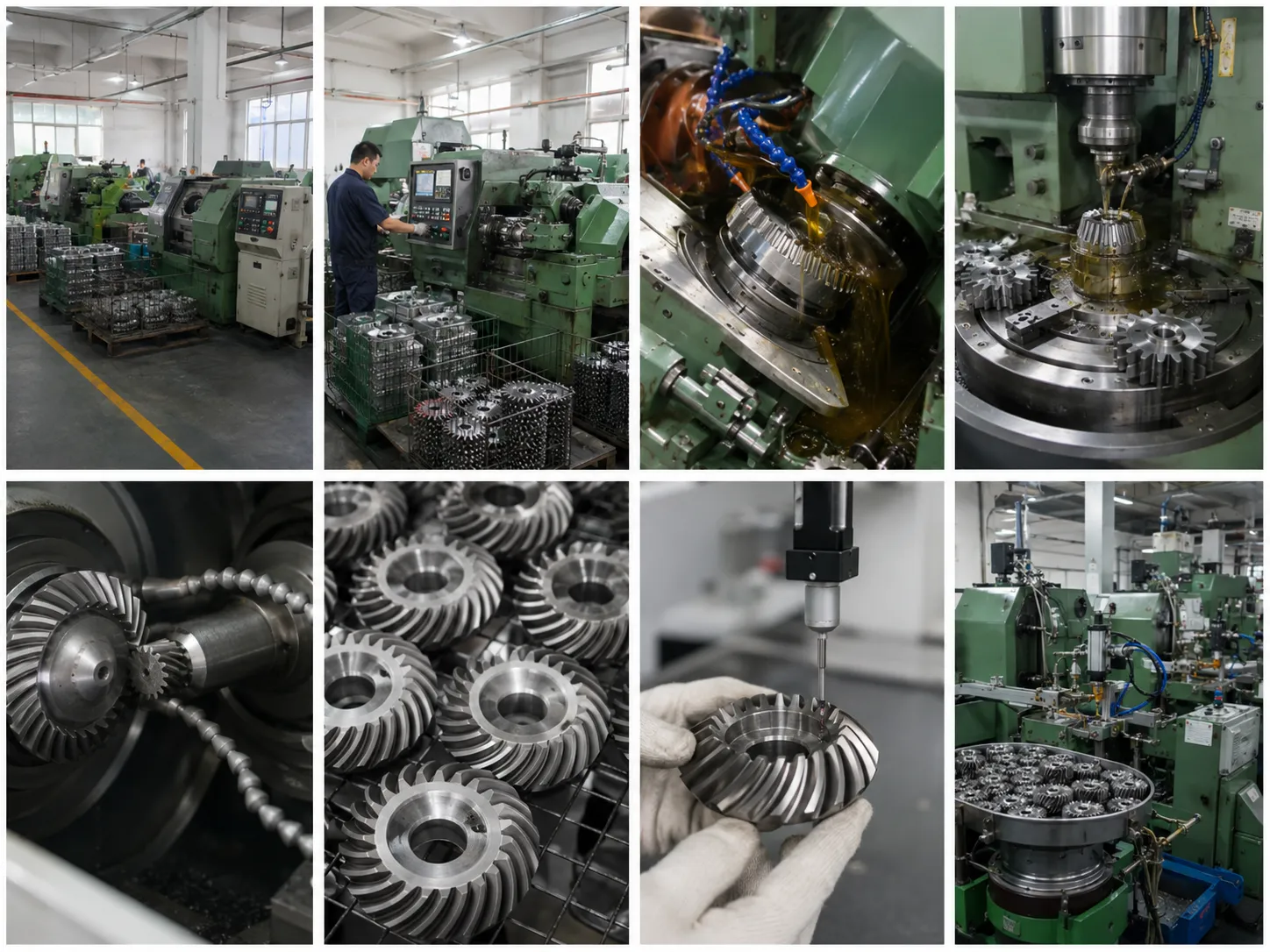
General Industrial Machinery
M6–M16 SAE1045 forged spur gears in speed reducer gearboxes, conveyor drives, agitator drives, and general industrial power transmission. Forged blanks provide the fatigue life required for continuous-duty industrial applications at substantially lower cost per gear than alloy steel alternatives at these module sizes.
Machine Tools
M6–M12 hardened forged spur gears in lathe headstock gearboxes, milling machine table drives, and gear hobbing machine spindle drives. High hardness (induction hardened 50–58 HRC) and forged grain structure combine to deliver the long service life required in machine tool maintenances intervals of 5,000–10,000 hours.
Parking Systems
M8–M16 forged spur gears in automated car parking lift drives and rotary platform mechanisms. Outdoor parking systems experience thermal cycling, moisture, and intermittent heavy shock loads — the forged gear's toughness and dimensional stability under heat treatment suit this demanding duty profile.
High-Speed Rail and Aviation
M8–M20 precision forged spur gears in rail vehicle bogie gearboxes and aircraft ground support equipment. Rail and aerospace applications require documented material genealogy (heat number traceability) and mechanical property certification — both provided as standard with Korea Ever-Power's forging spur gear production.
Automatic Controlling Machines
M6–M12 forged spur gears in servo-driven automation equipment where the gear must withstand millions of start-stop load cycles without fatigue failure. The forged blank's superior cyclic load resistance makes it the correct specification for servo actuator gears running at high cycle frequency.
OEM Wholesale Export
Wholesale supply of forged spur gears to OEM equipment builders and gear distributors in Europe, South Korea, Australia, and North America. ISO/DIN standard tooth form confirmed on dimensional report. Full surface treatment range for export-market corrosion protection requirements.
Frequently Asked Questions
Why does a forged spur gear have better fatigue resistance than a bar-turned blank gear?
The fatigue life of a gear tooth root depends on three factors: the material's intrinsic fatigue limit, the surface quality at the root fillet, and the stress concentration factor at the root. Forging improves all three simultaneously. The forged blank's continuous grain flow at the root fillet reduces the stress concentration factor compared with a machined surface where grain flow is interrupted. The refined microstructure from hot working increases the fatigue limit of the steel. And the reduced residual stress in the forged blank means that the stress field at the root fillet is more uniform across the face width — eliminating stress peaks from machining-induced residual stress that can initiate fatigue cracks at below the design load.
What is precision forging and how does it differ from conventional forging?
Conventional forging produces a blank whose shape approximates the gear geometry — the blank then requires full machining of all faces, OD, bore, and teeth. Precision forging uses a more tightly controlled die to produce a blank with near-finished dimensions on faces and OD, requiring only tooth finishing and bore machining. The most advanced form — precision net-shape forging of the tooth profile — produces a blank where the tooth flanks are forged to within grinding stock of the final dimension, requiring only tooth grinding to finish. This maximises material utilisation and minimises machining time. Korea Ever-Power applies the appropriate forging method based on the gear size, module, and production volume.
Is material traceability documentation available for forged spur gears?
Yes — Korea Ever-Power provides the steel mill material certificate (heat number, chemical composition) and the post-forging / post-heat-treatment mechanical property test report (tensile strength, yield strength, elongation, impact energy, hardness) for each production batch. These documents are required by customers in rail, aviation, heavy lifting, and defence applications and are produced as standard for Korea Ever-Power's forged spur gear production without additional charge. Third-party inspection from an accredited independent laboratory is also available on request.
What surface treatments are available for forging spur gears in outdoor or corrosive environments?
Korea Ever-Power offers the full range of surface treatments for forged spur gears: zinc-plated (electroplating, 8–25 μm), nickel plated (electroless or electrolytic), black oxide (black finish, mild corrosion protection), phosphatising (conversion coating, oil retention), powder coating (50–100 μm organic coating), Geomet / Dacromet (water-based inorganic zinc flake coating — salt spray resistance 480–1,000 hours, no hydrogen embrittlement risk), and electrophoretic deposition. For outdoor parking system gears, Dacromet or Geomet coating combined with phosphatising is the standard corrosion protection system.
What is the sample price and how long does sample production take?
Sample price ranges from USD 2 to USD 100 depending on size, module, and surface treatment complexity. Sample production lead time is 20 business days from drawing confirmation. Express freight for sample delivery is paid by the customer. If you need the sample urgently, contact Korea Ever-Power and we will confirm whether an accelerated production schedule is feasible. Production lead time for bulk orders is 25 business days. Contact our team with the drawing and required module to begin the quotation.
Customer Reviews
"We manufacture industrial speed reducers for conveyor drives and source M10 SAE1045 forged spur gears from Korea Ever-Power. The forged blanks have noticeably finer grain at the tooth root compared with previous bar-turned blanks — confirmed on etched cross-section samples. In our fatigue test, the forged gear achieved 35% more cycles to tooth root crack initiation than the equivalent bar-turned blank."
Kim Sang-cheol | Gearbox Design Engineer, Incheon Industrial Drives Co. · Q1 2026
"We supply automated parking system drives to Korean and European markets. Korea Ever-Power's M12 forged spur gears with Dacromet surface treatment have passed our 480-hour salt spray test — a mandatory specification for outdoor parking systems in coastal regions. Material certificate and mechanical test report provided with each delivery batch."
Lee Byeong-hun | Drive Systems Engineer, Seoul Parking Systems Co. · Q4 2025
"We manufacture machine tool headstock gearboxes and specified M8 induction-hardened forged spur gears DIN 7. Korea Ever-Power produced the forged blanks, hobbed the teeth, induction hardened to 54 HRC, and finish ground to DIN 7. Surface hardness confirmed per batch by portable Rockwell tester included with delivery. Three-year production record without a tooth fatigue failure in service."
Park Hyeon-su | Machine Tool Component Engineer, Gyeonggi Machine Tool Manufacturing · Q2 2026
"We import M16 and M20 forged spur gears for wholesale distribution to industrial machinery builders. Korea Ever-Power provides the ISO material certificate and DIN dimensional inspection report as standard — both required for our customers' incoming inspection. Bulk orders fulfilled consistently within the 25-day production window across 18 months of orders."
Choi Dong-won | Industrial Parts Import Manager, Busan Heavy Equipment Supply Co. · Q3 2025
"We supply rail vehicle auxiliary drives and required M12 SAE1045 forged spur gears with full material traceability to the steel mill heat number. Korea Ever-Power provided the mill certificate, forging inspection report, and post-heat-treatment mechanical property report as a complete documentation package. This satisfied our rail authority supplier qualification audit without supplemental testing."
Yoon Jae-won | Rail Component Qualification Engineer, Daejeon Rail Systems Co. · Q1 2025
Related Products
Request a Quotation for Forging Spur Gears
Send drawing with module, tooth count, bore, face width, material (SAE1045 standard), heat treatment, surface treatment, accuracy grade (DIN 6–9), and quantity. Material certificate and mechanical test report included. Sample 20 days; bulk 25 days. T/T or L/C.
Informations complémentaires
| Editor |
|---|
Produits similaires
-
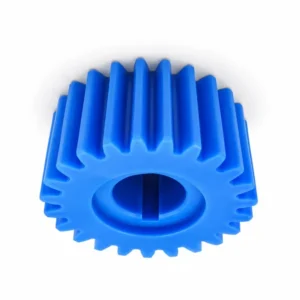
Nylon Spur Gears – PA, POM, PEEK, M1-M12, DIN 6-9, Custom
-
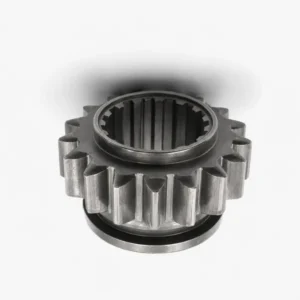
Tractor Spur Gear – Steel, 17T, OEM 50-1701212A, MOQ 30
-
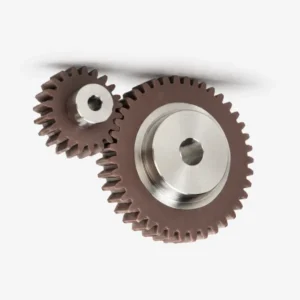
Plastic Spur Gears with Steel Core – MC Nylon, S45C Hub
-
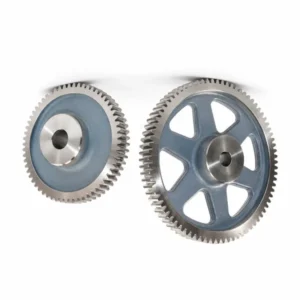
Spur Gears European Standard – M1 to M6, Steel, Custom
-
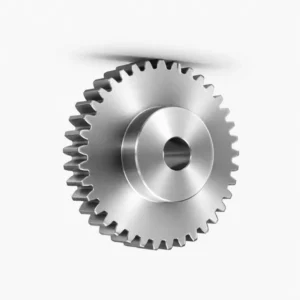
Medical Stainless Spur Gear – SS, M0.15-M2.0, AGMA 13
-
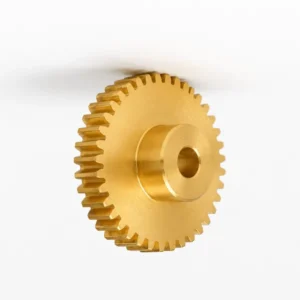
Brass Spur Gear – Copper, M0.15-M2.2, AGMA 13, ODM/OEM
-
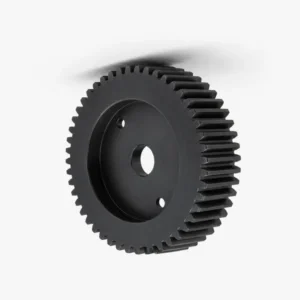
Automotive Spur Gear – M0.15-M2.2, Multi-Material, AGMA 13
-
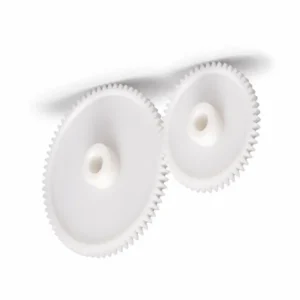
Plastic Spur Gears – POM, Nylon, M0.1-M2.0, OD 2-100mm
 French
  English
  Italian
  Korean
  Japanese