
Gear Manufacturers Custom Nylon Plastic Pinion Gear
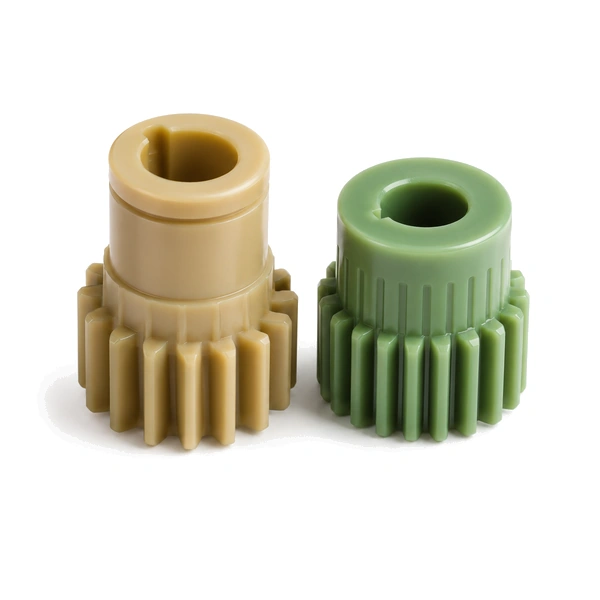
Custom Gear Manufacturers Custom Nylon Plastic Pinion Gear from Korea Ever-Power — Hangzhou plastic gear manufacturer. POM, MC Nylon, PA66, PEEK, UHMWPE. ISO9001, SGS, FDA, RoHS certified. Custom size, colour, material. 24hr quote.
Product Overview
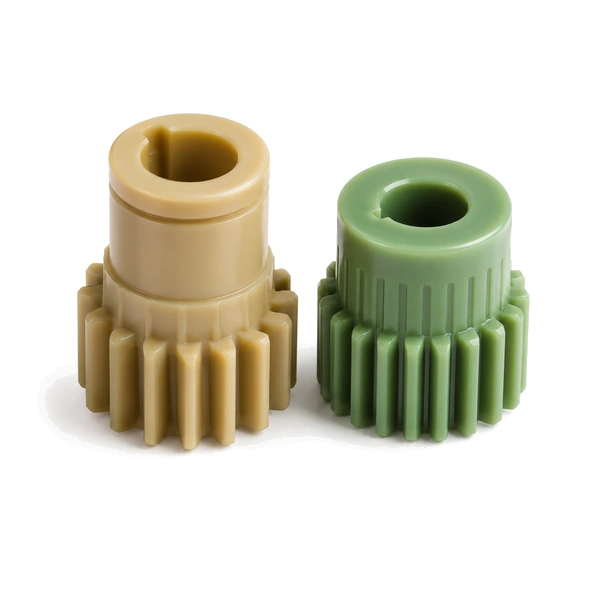
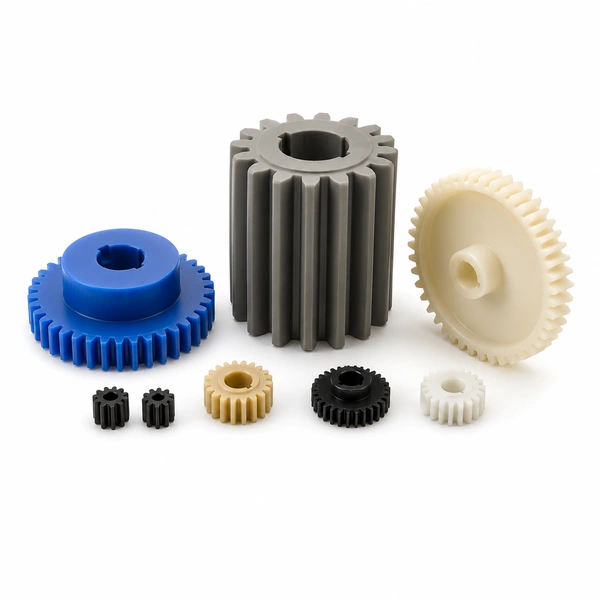
Korea Ever-Power manufactures custom nylon and plastic pinion gears — the small driving gear of a rack-and-pinion or gear pair — in all engineering plastics including Nylon (PA6/PA66/PA66+GF), POM, PEEK, PVC, PPS, PTFE, PU, ABS, PE, UPE, and acrylic. As the smaller gear in a gear pair, the pinion rotates faster and experiences more tooth load cycles than the larger wheel — demanding precise tooth form, good fatigue resistance, and the right material selection to achieve the specified service life. Korea Ever-Power's plastic pinion gears cover diameter 5–200 mm (or fully customised), tolerance ±0.05 mm, certification ISO9001 / SGS / Test Report / RoHS. Custom to drawing or sample.
Korea Ever-Power's custom plastic pinion gears cover all gear styles: spur pinion, helical pinion, bevel pinion, rack-and-pinion driver. Applications include CNC linear drives, camera zoom mechanisms, medical instrument actuators, automotive rack-and-pinion steering feel actuators, robot joint drives, and conveyor head drive stations. The key advantage of choosing an experienced plastic gear manufacturer — Korea Ever-Power — for pinion gears: correct material selection for the pinion's higher duty cycle, precise tooth form to match the mating gear, and a prototype-before-mould process that prevents expensive tooling rework.
Nylon Pinion
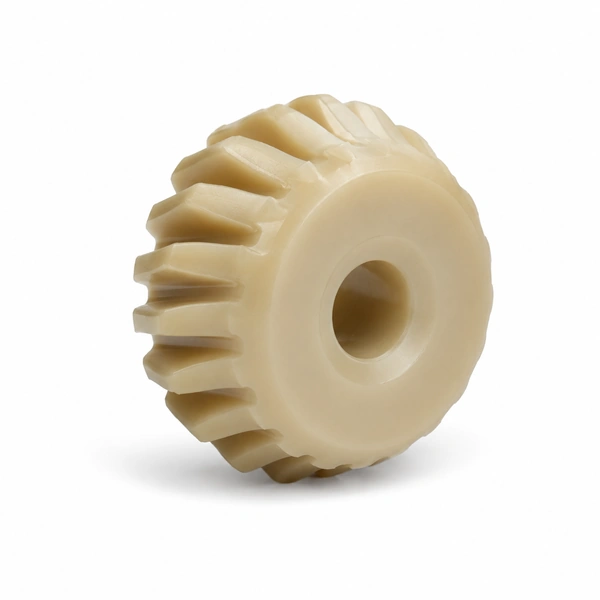
MC Nylon Spur Pinion
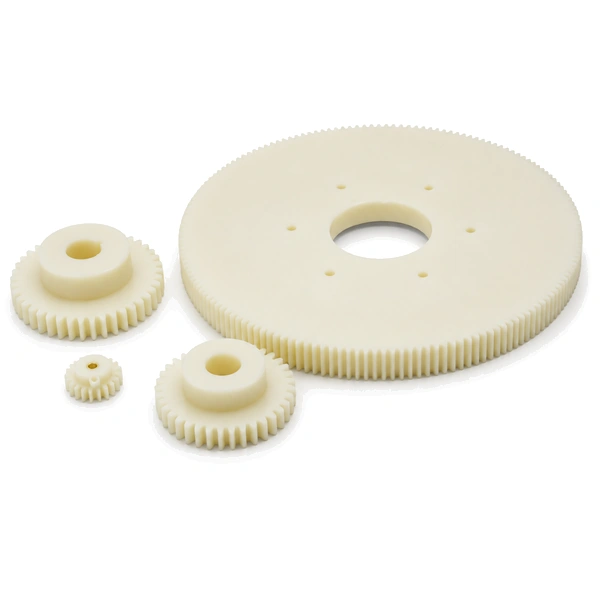
MC Nylon Parts
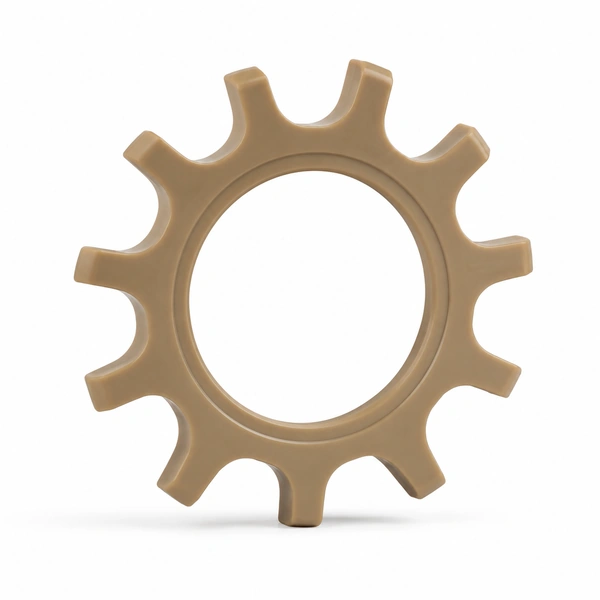
Conveyor Pinion
Technical Specifications
| Parameter | Detail |
|---|---|
| Nom du produit | Gear manufacturers custom nylon plastic pinion gear |
| Matériel | Nylon/POM/PEEK/PVC/PPS or customised; PTFE, PU, PA, Acrylic, PE, UPE, ABS also available |
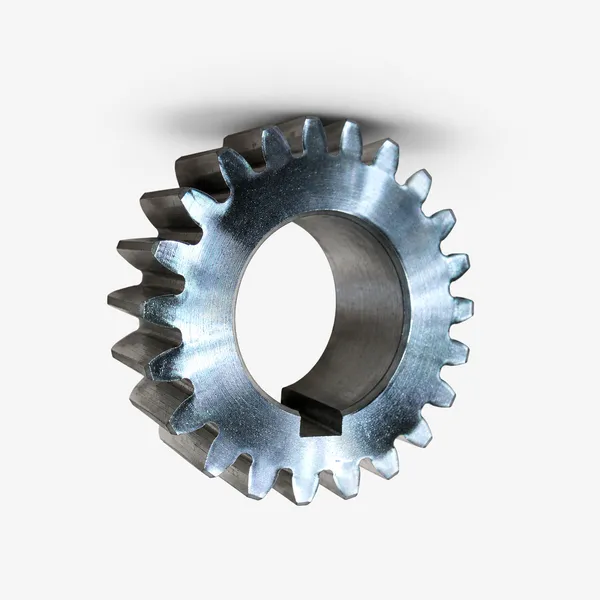
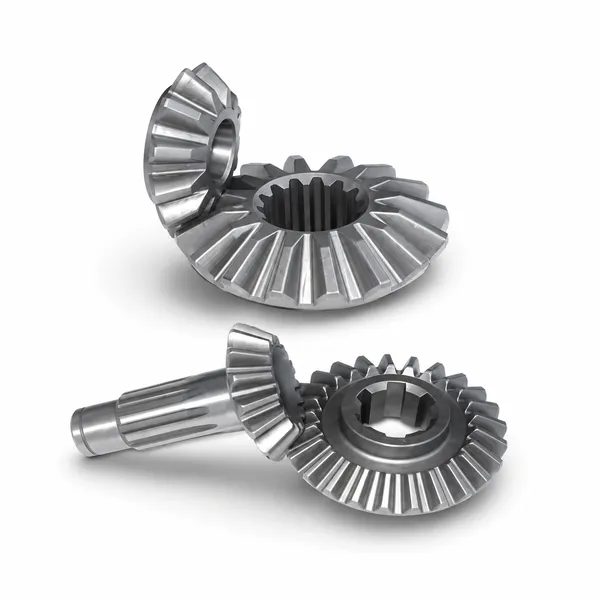
| Gear Styles | Spur pinion, helical pinion, bevel pinion, rack-and-pinion drive gear |
| Colour | White, black, or as required |
| Diameter | 5–200 mm, or fully customised |
| Tolerance | ±0.05 mm |
| Certification | ISO9001, SGS, Test Report, RoHS |
| Customisation | Per customer drawing or sample; ODM/OEM |
| Packing | Plastic bags, cartons, wooden case, pallet, container |
| Service | 24-hour customer service; shipping status notification |
Pinion Gear Engineering — Design Considerations
The pinion — the smaller driving gear in a gear pair — has unique engineering requirements that differ from the larger wheel:
Higher Duty Cycle — More Load Cycles per Unit Time
In a gear pair with ratio i = Z_wheel / Z_pinion, the pinion rotates i times for every one revolution of the wheel. A pinion with 10 teeth meshing with a 40-tooth wheel at ratio 4:1 rotates 4 times per wheel revolution — accumulating 4× as many tooth load cycles as the wheel in the same operating time. This higher duty cycle means the pinion teeth experience fatigue loading at 4× the rate of the wheel teeth, and the pinion material must be selected to have adequate fatigue endurance at this cycle rate. Korea Ever-Power accounts for the pinion's higher duty cycle in material specification and face width selection.
Minimum Tooth Count — Undercutting Risk
At low tooth counts (below 17 teeth for 20° pressure angle standard involute), the gear tooth profile is undercut at the root — the standard involute form intersects the root fillet, weakening the tooth root section. For plastic pinion gears, undercutting is more significant than for metal gears because plastic's lower tooth root bending strength means the weakened undercut root is proportionally more damaging. Korea Ever-Power designs plastic pinion gears with profile-shifted teeth (addendum modification) to eliminate undercutting at low tooth counts, maintaining full tooth root strength down to 10–12 teeth.
Pinion Tooth Root Stress
The pinion's smaller pitch diameter means its teeth have proportionally thinner root cross-sections than the wheel teeth at the same module — producing higher tooth root bending stress in the pinion than the wheel at the same transmitted torque. For equal fatigue life of pinion and wheel, the pinion material must either have higher bending strength, or the pinion must use a larger module (coarser pitch) than the wheel — a technique called "profile modification" or "different module" design. Korea Ever-Power engineers analyse pinion root stress and select material accordingly.
Plastic Pinion Meshing with Metal Gear
A common arrangement in precision drives is a plastic pinion meshing with a metal wheel — the plastic pinion is the sacrificial element that wears first, protecting the more expensive metal gear. The plastic pinion's self-lubricating surface also lubricates the metal wheel's tooth surface in this mixed-material mesh. Korea Ever-Power designs plastic pinion gears for mixed-material mesh: higher face width than equivalent plastic-plastic mesh (to compensate for higher Hertz contact stress against the harder metal tooth), and POM or PEEK material for the lowest friction coefficient against metal.
Rack-and-Pinion Applications
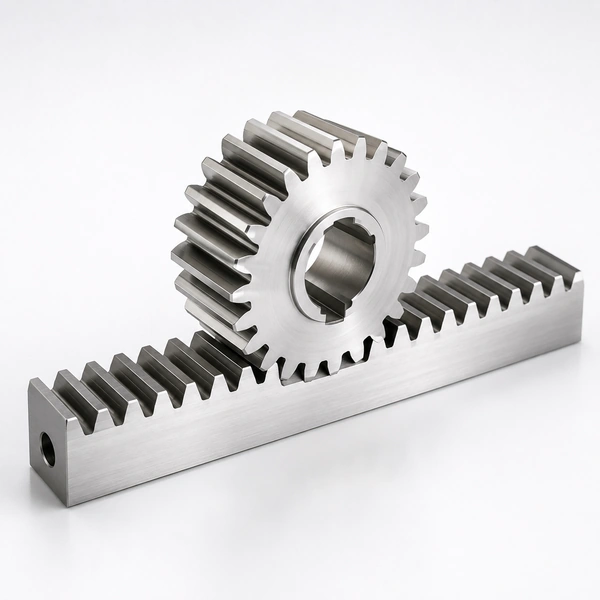
The plastic pinion driving a plastic or metal rack is the standard linear motion interface in CNC axes, 3D printer systems, camera focus drives, and medical positioning tables. The rack-pinion mesh is a spur gear (pinion) meshing with an infinite-radius gear (rack) — the pinion experiences continuous sliding contact against the rack tooth surfaces as the rack translates. POM and oil-containing MC Nylon are the preferred pinion materials for rack drives: their self-lubricating property reduces rack tooth wear; their dimensional stability maintains the pitch consistency that determines linear positioning accuracy.
Low Coefficient of Friction — Precision Positioning
Plastic pinion gears can be designed with a low coefficient of friction — POM achieves μ ≈ 0.10 against steel, PTFE-filled grades achieve μ ≈ 0.04–0.06 — generating less heat and friction torque than equivalent metal pinions against metal racks or gears. This low friction is particularly advantageous in rack-and-pinion positioning drives where friction hysteresis causes positioning error: lower μ reduces hysteresis and improves positioning repeatability. Korea Ever-Power selects pinion material grade partly based on the required positioning accuracy specification.
Applications
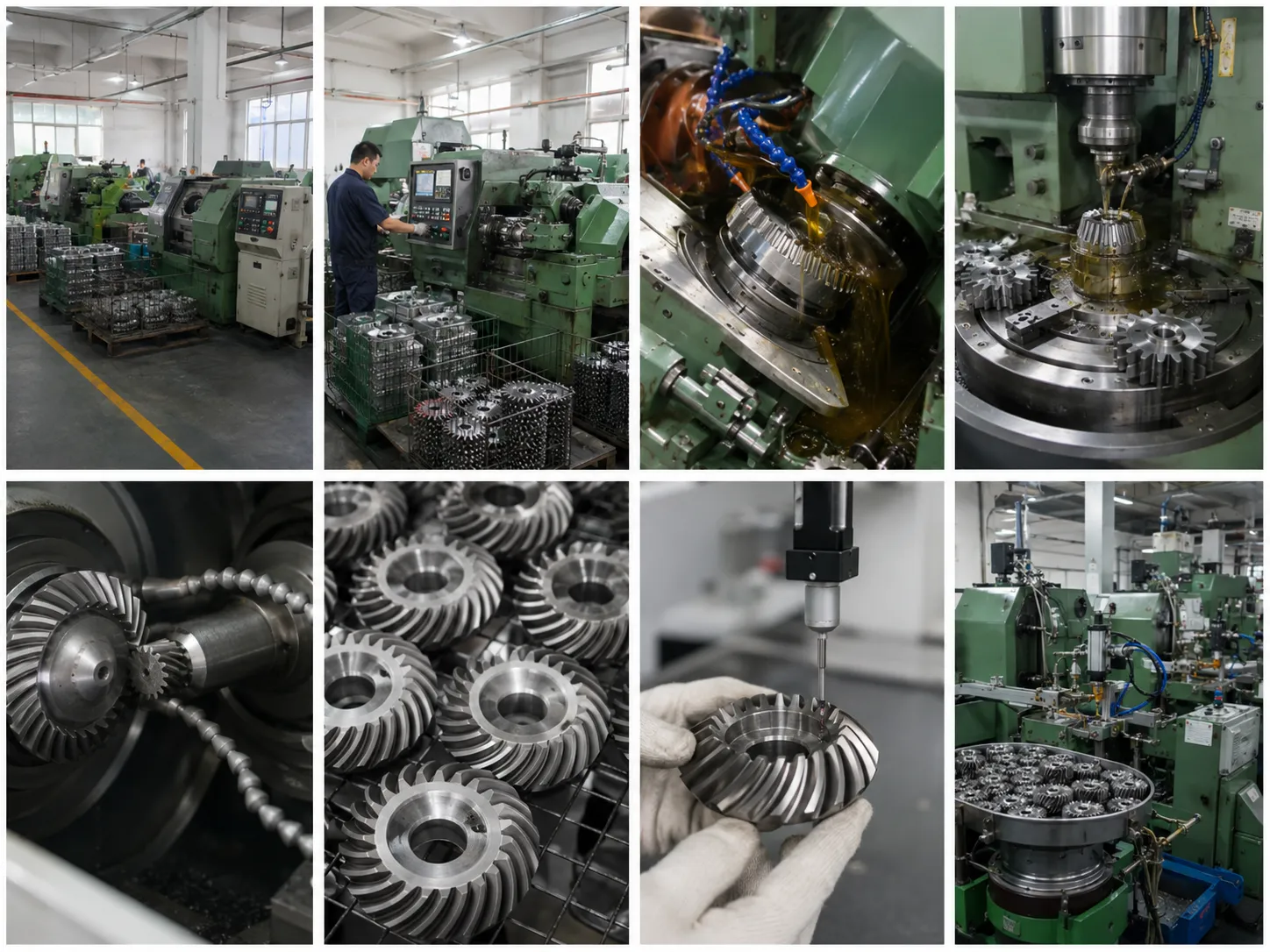
CNC and Linear Motion
POM and oil-MC Nylon pinion gears in CNC router rack-and-pinion drive axes, 3D printer gantry drives (toothed belt-driven pinion), and laser cutter linear drives. The pinion's dimensional precision directly determines the linear positioning accuracy of the axis — Korea Ever-Power's ±0.05 mm tolerance on pinion OD and tooth profile translates to ≤0.1 mm positioning error per 100 mm of travel for typical CNC rack-pinion axes.
Camera and Optical Drives
POM micro pinion gears (Ø5–15 mm) in DSLR and mirrorless camera zoom and focus drives, endoscope tip articulation mechanisms, and optical instrument focusing stages. The pinion's tooth count and module directly determine the image magnification change per motor step — Korea Ever-Power's precision plastic pinion gears achieve the sub-arcsecond angular resolution needed for smooth, continuous zoom and focus control in professional camera systems.
Medical Instrument Actuators
PEEK and POM pinion gears in minimally invasive surgical instrument articulation drives, medical bed positioning rack-and-pinion systems, and MRI-compatible positioning stages (non-magnetic plastic pinion). Medical pinion gears require biocompatible materials, zero lubricant contamination, cleanroom-compatible manufacturing, and complete material traceability — all standard with Korea Ever-Power's ISO9001 medical device supply process.
Automotive Actuators
PA66 and PA66+GF30 pinion gears in electric window winder racks, seat slide rack-and-pinion systems, and steering feel actuator pinions. The pinion's higher rotational speed in these high-ratio automotive drives makes plastic's noise advantage particularly significant — PA66 pinions running at 2,000+ RPM against metal racks are 8–12 dB(A) quieter than equivalent metal pinions, directly improving cabin acoustic quality.
Robot Drives and Manipulators
MC Nylon and PA66 spur and helical pinion gears in robot joint reduction stages, gripper finger drives, and delta robot arm axis drives. The plastic pinion's low weight reduces robot arm inertia; the self-lubricating property suits sealed joint designs; and the corrosion resistance suits food-industry robots exposed to cleaning chemicals during daily CIP cycles.
Conveyors and Packaging Machinery
Oil MC Nylon and POM pinion gears in conveyor head drive stations, packaging machine film feed pinions, and filling machine drive heads. At conveyor duty cycles — continuous operation 16–24 hours per day — the oil MC Nylon pinion's maintenance-free self-lubrication and low wear rate extend the pinion service life to match the conveyor's planned maintenance intervals, reducing unplanned downtime for gear replacement.
Frequently Asked Questions
The pinion teeth wear out faster than the wheel teeth — how do I choose the right material?
The pinion's faster wear is primarily due to its higher duty cycle (more tooth load cycles per unit time at the same gear ratio) and higher tooth root stress. To equalise pinion and wheel service life: use a tougher, more wear-resistant material for the pinion than the wheel; for a POM wheel, specify oil-containing MC Nylon for the pinion; or increase the pinion face width beyond the wheel face width to reduce tooth surface stress. Korea Ever-Power engineers will calculate the expected pinion service life at your operating load and recommend the correct pinion material and geometry to match the wheel's life.
What is the minimum tooth count for a plastic pinion gear without undercutting?
For a standard 20° pressure angle involute plastic pinion, undercutting begins below 17 teeth at zero profile shift. Korea Ever-Power uses profile shift (addendum modification) to eliminate undercutting at lower tooth counts — a positive profile shift on the pinion moves the tooth root circle outward, eliminating the undercut. With appropriate profile shift, Korea Ever-Power produces plastic pinion gears with as few as 8–10 teeth without undercutting. The correct profile shift is calculated to maintain correct mesh geometry with the mating gear — the mating gear must receive a corresponding negative profile shift if the centre distance is to remain unchanged.
Can Korea Ever-Power produce the plastic pinion as a matched set with the mating wheel or rack?
Yes — Korea Ever-Power can supply matched plastic pinion + wheel sets or plastic pinion + plastic rack sets to ensure geometrically consistent meshing (same module, pressure angle, and centre distance). Matched set supply eliminates the risk of cross-sourcing errors where a pinion and wheel from different suppliers have mismatched tolerances that produce incorrect backlash or contact ratio. Contact Korea Ever-Power with your pinion and wheel (or rack) specification to receive a matched-set quotation.
Customer Reviews
"We make CNC routers and source POM spur pinion gears (M3, 20T) from Korea Ever-Power for our rack-and-pinion X/Y axes. Tooth pitch cumulative error measured over one full pinion revolution: 0.038 mm — within our 0.05 mm CNC axis specification. Positioning repeatability: ±0.04 mm at all speeds up to 6 m/min. Pinion wear after 2,000 operating hours (2-shift production): tooth thickness reduced 0.06 mm — acceptable to 4,000-hour scheduled replacement. Zero lubricant applied throughout 2,000 hours."
Kim Cheol-su | CNC Machine Design Engineer, Incheon Router Systems Co. · Q2 2026
"We build camera zoom lenses and use POM micro pinion gears (M0.4, 12T, profile-shifted to eliminate undercutting) from Korea Ever-Power in our zoom drive train. Korea Ever-Power correctly identified that 12T at M0.4 standard would undercut and specified the profile shift automatically. Dimensional inspection: tooth thickness at pitch cylinder within ±0.008 mm on all 50 pcs in first batch. Zoom smoothness: no perceptible step or lurch through the full zoom range. Noise in quiet room: inaudible at 0.5 m."
Lee Jun-yeong | Optical Lens Mechanism Engineer, Gyeonggi Camera Optics Co. · Q4 2025
Related Products
Request a Quotation — Custom Nylon / Plastic Pinion Gears
Nylon, POM, PEEK, PPS, ABS, Oil MC Nylon. Ø5–200 mm. ±0.05 mm. Spur / helical / bevel pinion. Rack-and-pinion sets. Profile shift for low tooth count. ISO9001 / SGS / RoHS. Matched pinion + wheel or rack sets.
Informations complémentaires
| Editor |
|---|
Produits similaires
-
Plastics Injection Mold Wheel Plastic Gear
-
Factory Price Uhmw-pe Plastic Large Sprocket Wheel Plastic Gear
-
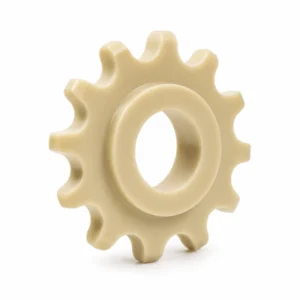
Black Pom Plastic Sprocket Wheel Plastic Gear
-
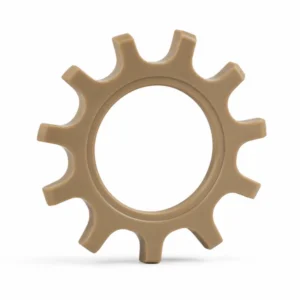
Plastic Components on Conveyors and Machinery Pom Black Star Wheel
-
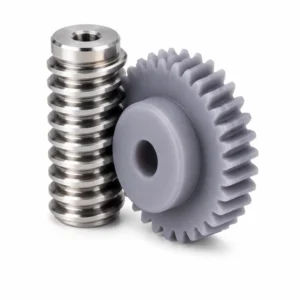
Plastic Worm Gears
-
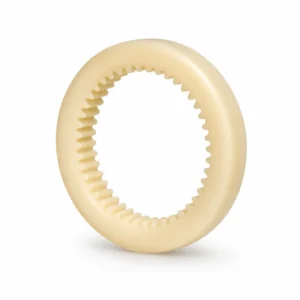
Plastic Internal Gear
-
Injection Factory Custom Nylon Planetary Gear
-
Plastic Bevel Gears
 French
  English
  Italian
  Korean
  Japanese