
Sintered Metal Bevel Gears – Self-Lubricating, DIN 6–9
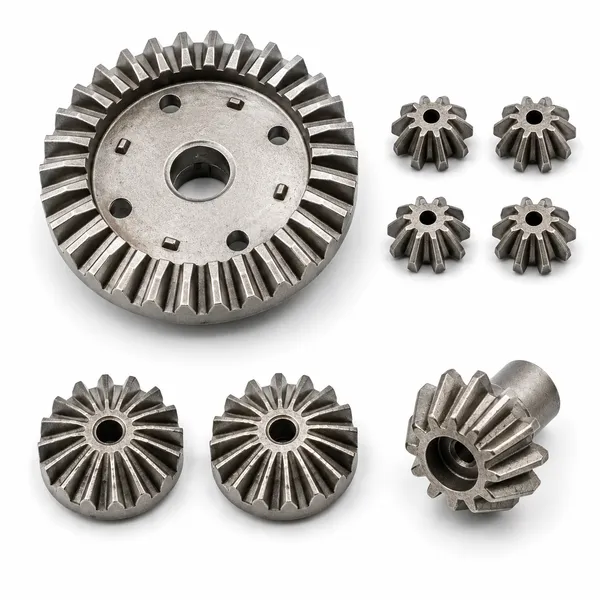
Korea Ever-Power sintered metal bevel gears are produced by compacting pre-alloyed metal powder in a precision die, then sintering at controlled temperature to bond the particles into a solid, dense gear structure. The resulting porous microstructure can be oil-impregnated for sealed-for-life self-lubrication — no external lubricant access required after assembly. Modules M3, M4, M5, M8, M12 in brass, C45 steel, stainless steel, copper, POM, aluminium, and alloy steel. DIN 6–9 precision, tolerances 0.001–0.1 mm. ISO, DIN, ANSI, JIS, BS standards. Full QA documentation including chemical composition report, mechanical performance, UT, and heat treatment curve.
Product Overview
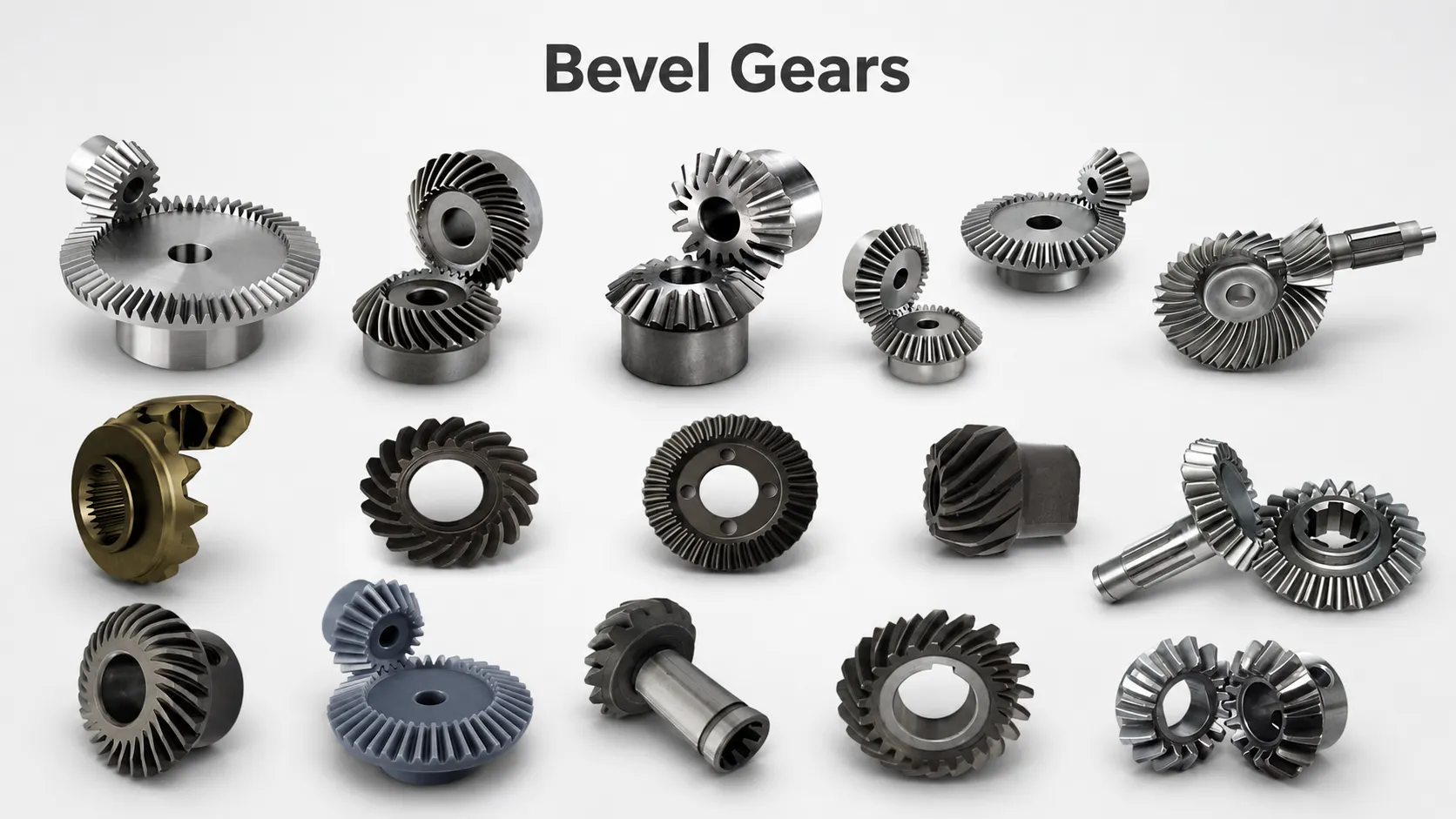
Sintered metal bevel gears are produced by a manufacturing process that is fundamentally different from machining or casting. Pre-alloyed metal powder — steel, brass, stainless, copper, or aluminium, depending on the application requirement — is compacted in a precision die under high pressure, forming a near-net-shape blank. The compact is then sintered in a controlled-atmosphere furnace at a temperature below the metal's melting point, causing the powder particles to bond metallurgically into a solid, dense structure with consistent mechanical properties throughout the gear body.
The microstructure of a sintered metal bevel gear contains a controlled volume fraction of interconnected porosity — typically 5 to 20 percent by volume, depending on the sintering parameters. This porosity can be exploited as a functional feature: impregnating the sintered gear with lubricating oil fills the pore network, creating a gear that releases lubricant to the tooth mesh surface during operation and replenishes the film between operating cycles. The result is a sealed-for-life sintered metal bevel gear that requires no external lubrication access after assembly — a significant advantage in sealed mechanisms, consumer products, and applications where maintenance access is not practical.
Korea Ever-Power sintered metal bevel gears are available in modules M3, M4, M5, M8, and M12 across multiple materials, with DIN 6 through DIN 9 precision grades and tolerances from 0.001 mm to 0.1 mm. A full QA documentation package — chemical composition report, mechanical performance test, ultrasonic inspection, and heat treatment curve — ships with every order. Lead time is 20 working days for samples and 25 working days for production batches. Samples are available with cost ranging from $2 to $100 depending on configuration; sample freight is paid by the customer.
How the Sintering Process Creates a Bevel Gear
The production sequence for a sintered metal bevel gear passes through six stages, each of which determines a specific aspect of the finished gear's properties.
- Powder selection and blending — pre-alloyed metal powder is selected and blended with lubricants for die pressing. The powder chemistry determines the sintered part's mechanical properties; the lubricant burns off during sintering and is not present in the finished gear.
- Die compaction — the powder blend is filled into a precision die and compacted under high pressure (typically 400–700 MPa). The die forms the gear's outer profile, tooth geometry, bore, and hub simultaneously in a single pressing operation. This is the step that makes sintering economical: one die stroke produces a near-complete gear shape without the multiple clamping and cutting operations that machining requires.
- Sintering — the compact is heated in a controlled-atmosphere furnace (typically hydrogen or nitrogen atmosphere to prevent oxidation) to 70–90% of the metal's melting temperature and held at that temperature for a defined time. At this temperature, solid-state diffusion bonds the powder particles at their contact points, developing the mechanical strength of the gear body. The gear shrinks predictably during sintering; the die dimensions are designed to account for this shrinkage.
- Optional sizing and coining — the sintered part may be pressed again in a calibration die to correct dimensional variation introduced by sintering shrinkage. This sizing operation achieves tighter dimensional tolerances than sintering alone.
- Oil impregnation — for self-lubricating applications, the sintered gear is immersed in lubricating oil under vacuum. The vacuum removes air from the pore network; when atmospheric pressure is restored, oil fills the pores. The impregnated oil is retained in the pore network and released to the tooth surface during operation through a capillary action mechanism driven by the heat of friction at the mesh point.
- Heat treatment and surface finishing — the sintered gear may undergo heat treatment (steam oxidation, case hardening, or other routes suited to PM materials) and surface finishing (grinding, lapping, or shot blasting) to achieve the required surface hardness and dimensional accuracy grade.
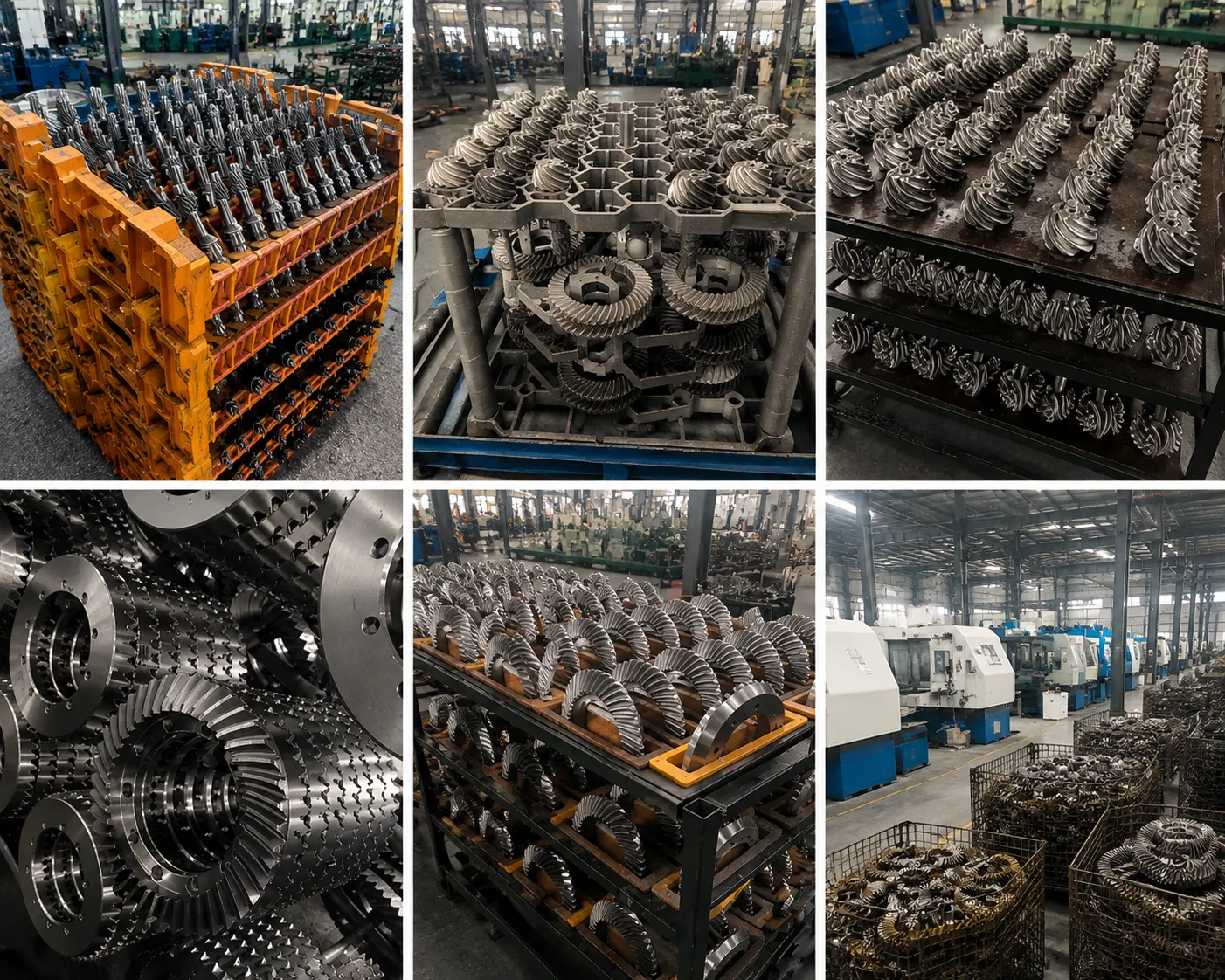
Key Advantages of Sintered Metal Bevel Gears
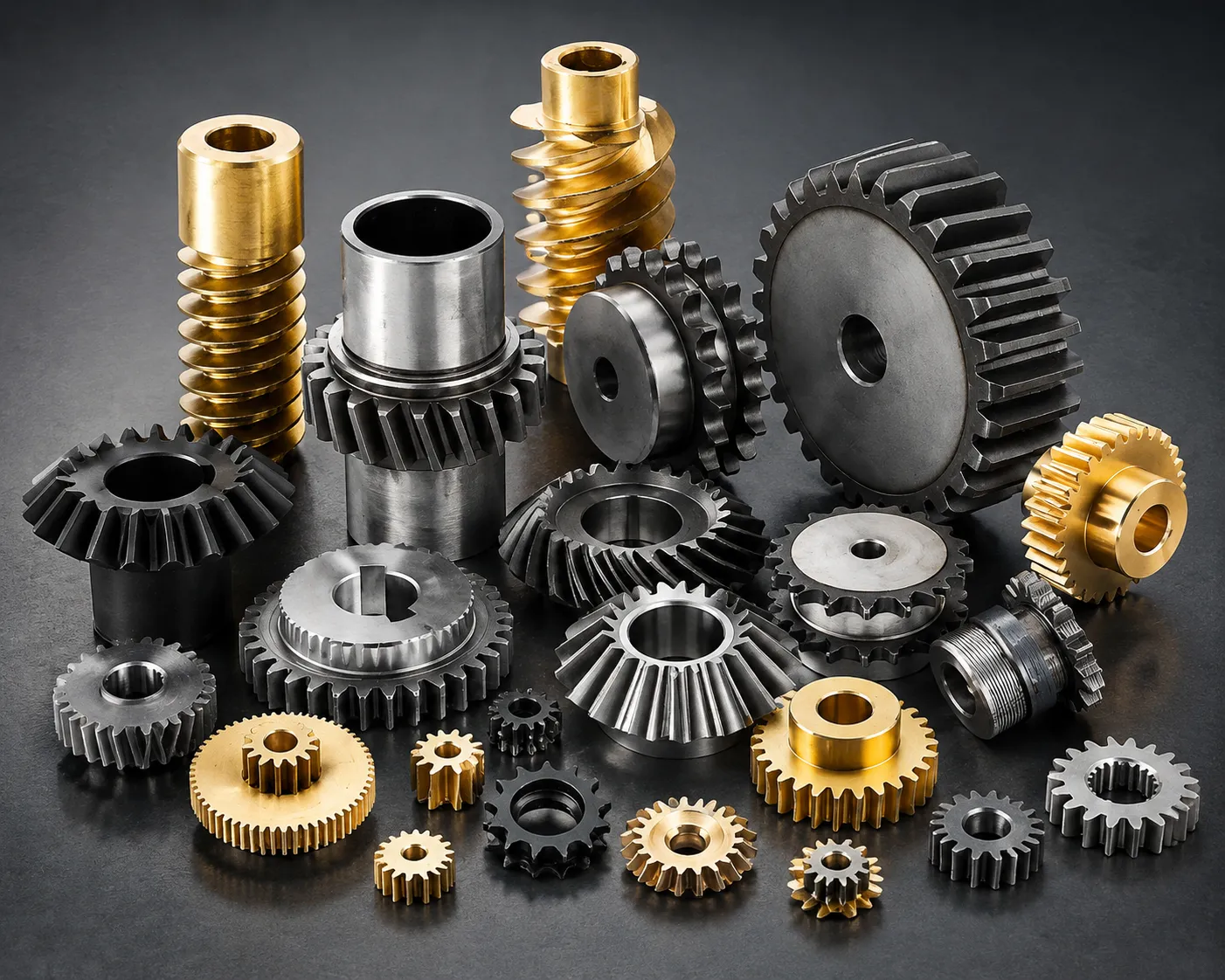
Sintered metal bevel gears can be produced in large quantities at lower per-unit cost than machined gears of equivalent size. The die compaction step produces a near-net-shape part with minimal material waste — no swarf, no excess stock to remove. Once the die is amortised, the per-unit variable cost is primarily powder material and furnace time. For volumes above approximately 5,000 pieces per year, the cost advantage over machining becomes substantial.
Oil impregnation of the pore network creates a gear that self-lubricates at the tooth mesh point without any external lubricant supply. This is especially valuable in sealed consumer products, appliances, and instruments where a lubrication port would add cost and complexity, and where the consumer cannot be expected to perform periodic re-lubrication. The impregnated oil typically provides 2,000–10,000 hours of lubricated operation depending on the load, speed, and operating temperature.
Sintering enables complex gear geometries that are difficult or expensive to machine. Hub features, internal splines, undercuts, and cross-holes can often be formed in the die rather than machined as secondary operations. This allows a sintered bevel gear to incorporate features that would require multiple machining setups if produced from billet, reducing total part cost at volume and improving feature-to-feature positional accuracy.
Sintered metal bevel gears exhibit excellent strength and durability through the metallurgical bonding achieved during sintering. Modern PM steels after sintering and heat treatment can achieve 80–95% of the yield strength of the equivalent wrought steel. For bevel gear applications at moderate loads, this strength level is sufficient without the cost of machining from solid billet. Forge-densified PM (a secondary forging operation) raises this further to near-wrought properties.
Sintered metal bevel gears can be engineered with optimised tooth profiles and surface finishes to minimise noise and vibration. The inherent damping of the porous PM structure — which absorbs some of the vibration energy at the tooth mesh — contributes to quieter operation compared with a fully dense machined gear of identical geometry. For consumer products and household appliances where gear noise is a product quality concern, this damping characteristic is an additional benefit alongside the cost advantage.
Sintered gears produced from the same die and powder batch have exceptionally consistent dimensions and properties — the die-forming process is inherently more repeatable than multi-operation CNC machining for equivalent geometry. This consistency is valuable in high-volume assembly operations where inter-part variation causes assembly quality problems, and in applications where the gear is a consumable item replaced at regular intervals and must be dimensionally interchangeable with the original.
Technical Specifications
| Parameter | Specification |
|---|---|
| Gear Type | Sintered metal bevel gear — straight or spiral; conical pitch surface |
| Module Range | M3, M4, M5, M8, M12; other modules on enquiry |
| Material Options | Brass, C45 steel, Stainless steel, Copper, POM, Aluminium, Alloy steel |
| Self-Lubrication | Oil-impregnated porous structure available; sealed-for-life lubrication |
| Surface Treatment | Zinc-plated, nickel-plated, passivation, oxidation, anodisation, Geomet, Dacromet, black oxide, phosphating, powder coating, electrophoresis |
| Standard | ISO, DIN, ANSI, JIS, BS, Non-standard |
| Precision Grade | DIN 6, DIN 7, DIN 8, DIN 9 |
| Teeth Treatment | Hardened, milled, or ground |
| Tolerance | 0.001 mm – 0.01 mm – 0.1 mm (grade-dependent) |
| Finish Options | Shot/sandblast, heat treatment, annealing, tempering, polishing, anodising, zinc-plating |
| QA Documentation | Chemical composition report, mechanical performance report, UT report (per EN10228-3 / SA388), heat treatment curve |
| Packing | Plastic bag + cartons, or wooden packing for larger gears |
| Payment Terms | T/T, L/C |
| Sample Lead Time | 20 working days; sample cost $2–$100 depending on configuration; freight paid by customer |
| Production Lead Time | 25 working days for bulk orders |
Common Operating Problems and Solutions
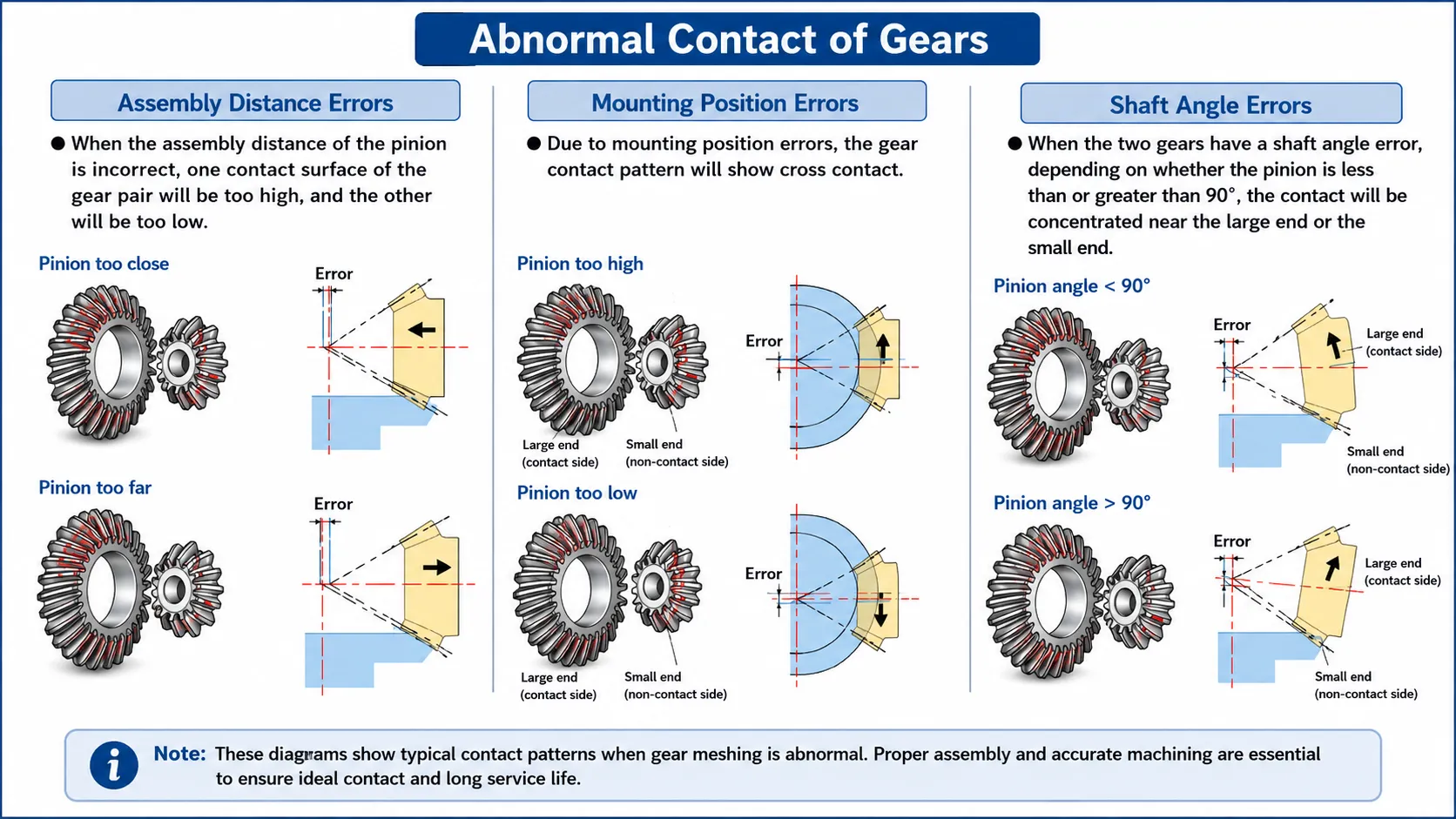
Sintered metal bevel gears are reliable in service when correctly specified and installed. The following covers the most frequent operating problems and the engineering response to each.
Wear and Tooth Damage
Cause: heavy loads beyond the sintered gear's rated capacity, inadequate lubrication (depleted oil impregnation), or abrasive contaminants entering the mesh. Solution: regular inspection to detect early pitting or scoring; replace gear if significant surface damage is found before propagation causes tooth fracture. If load is the cause, consider upgrading to a machined alloy steel gear for this application. If the impregnated oil is depleted (very long service under continuous load), re-impregnation or replacement is the correct action.
Excessive Noise and Vibration
Cause: shaft misalignment, insufficient lubrication (depleted impregnation), or uneven tooth contact from incorrect mounting distance. Solution: verify gear alignment; perform blue-dye contact check and compare against the reference contact pattern; confirm the oil impregnation is still effective by checking for dry mesh noise versus lubricated mesh noise. Optimise contact pattern through shim adjustment if mounting distance error is detected.
Lubrication Depletion
Cause: extended operation under high load or elevated temperature accelerates oil release from the pore network faster than the capillary replenishment mechanism can compensate. Operating temperature above approximately 80°C significantly shortens the effective lubrication life of oil-impregnated sintered gears. Solution: confirm operating temperature is within the impregnation oil's rated range; supplement with periodic light oil application to the mesh if extended service at elevated temperature is unavoidable; consider a gear with an external lubrication provision for high-duty applications.
Axial Thrust and Bearing Overload
Cause: bevel gears generate axial thrust forces in addition to the tangential and radial forces. If the bearing arrangement is sized only for radial load (as is common in simple consumer product drives), the axial thrust can overload the bearing and cause premature failure. Solution: ensure the shaft bearing arrangement includes a thrust element — angular contact bearing, taper roller bearing, or a plain thrust washer — rated for the axial load calculated from the gear geometry and operating torque. For spiral bevel gears, the thrust direction depends on the hand of the spiral and the direction of rotation; confirm the thrust direction during design.
Misalignment
Cause: housing bore misalignment, incorrect shim stack under bearing cups, or angular shaft misalignment. Solution: verify gear alignment during installation using dial indicators or laser alignment tools. Adjust shims to achieve the correct mounting distance. For sintered bevel gears — which have moderate tooth accuracy (DIN 7–9 typically) — the contact pattern tolerance is wider than for precision machined gears, but severe misalignment will still shift contact to the tooth edge and concentrate stress. A blue-dye contact check at assembly is recommended for loaded applications.
Contamination and Corrosion
Cause: the open pore structure of sintered gears makes them more susceptible to moisture and contaminant ingress than a fully dense machined gear. Corrosion can initiate at pore surfaces inside the gear body as well as on external surfaces. Solution: seal the gearbox housing to prevent moisture and debris entry. For corrosion-sensitive environments, specify stainless steel or brass sintered gears rather than carbon steel, or apply a corrosion-protective surface treatment (phosphating, black oxide, or Dacromet) to the outer surfaces. The oil impregnation itself provides some internal corrosion protection by displacing moisture from the pore network.
Applications
🚗 Automotive
Differentials, transmission auxiliary drives, and power take-off units where cost efficiency and moderate-duty performance are the primary criteria. Sintered steel bevel gears in automotive applications are typically sealed within the differential housing — exactly the environment where oil impregnation delivers its full benefit.
⚙ Industrial Machinery
Conveyors, machine tools, printing presses, and agricultural equipment using sintered bevel gear stages in lightly to moderately loaded auxiliary drives. The cost advantage of sintering over machining at moderate volumes makes sintered bevel gears the economical choice for drives that do not require maximum load capacity.
🔨 Power Tools & Appliances
Drills, saws, mixers, washing machines, and lawn mowers using sintered bevel gears in angle drives sealed at assembly. The oil impregnation eliminates the need for an external lubricant port; the porous damping reduces tooth mesh noise; and the sintered production process delivers the high volume needed for consumer products at competitive cost.
🤖 Robotics & Automation
Robotic arms, CNC machines, and automated equipment where precise motion control and cost-effective power transmission at moderate loads are required. Sintered metal bevel gears in automation drives benefit from the compact size achievable in sintering and the dimensional consistency of die-formed parts across large production batches.
☀ Renewable Energy
Wind turbine auxiliary drives and solar tracker angle drives using sintered bevel gears in lightly loaded accessory and positioning stages. The sealed-for-life lubrication of oil-impregnated sintered gears reduces maintenance requirements in remote or elevated installations where periodic lubrication access is impractical.
💊 Medical & Precision
Medical equipment, semi-conductor handling, machine tools, automatic controlling machines, and parking systems where the combination of self-lubrication, consistent dimensions across batches, and moderate cost suits the application better than machined gears at equivalent load.
How to Select the Right Sintered Metal Bevel Gear
Eight criteria guide the selection of the correct sintered metal bevel gear for a given application:
- Gear ratio and tooth count — determine the required ratio and confirm the pinion tooth count is sufficient for undercutting avoidance at the selected module.
- Load and torque capacity — evaluate the design torque against the sintered gear's rated capacity at the operating temperature. If load is near the limit, consider a higher-density sintered grade or a machined alternative.
- Material selection — match material to the environment (corrosion resistance, non-magnetic, food contact) and load (steel for load, brass for quiet running, stainless for wet environments).
- Lubrication requirement — specify oil-impregnated if the drive is sealed; confirm the expected operating temperature is within the impregnation oil's rated range.
- Efficiency and power loss — sintered gears at DIN 7–9 accuracy have higher tooth-to-tooth variation than machined gears; for drives where transmission efficiency is tightly specified, confirm the accuracy grade is sufficient.
- Noise and vibration — the porous PM structure provides some inherent damping; for noise-critical applications, specify optimised tooth profile and surface finish in the enquiry.
- Production volume — sintering becomes cost-advantageous above approximately 5,000 pieces per year when die cost is amortised. For lower volumes, machined gears may be more economical despite the higher per-unit variable cost.
- Manufacturer reputation and support — request QA documentation (chemical composition, mechanical performance, UT, heat treatment curve) as part of the standard supply agreement. Korea Ever-Power provides this package with every sintered metal bevel gear order.
Frequently Asked Questions
What is the difference between a sintered metal bevel gear and a machined bevel gear?
A machined bevel gear is produced by cutting the tooth profile from a solid metal blank using gear cutting machines. The result is a fully dense gear with excellent dimensional accuracy and high load capacity but requires multiple manufacturing steps and generates significant material waste as swarf. A sintered metal bevel gear is produced by pressing and sintering metal powder — the tooth profile is formed in a die rather than cut, producing a gear with inherent porosity that can be oil-impregnated for self-lubrication, at lower per-unit cost in high volumes, but with lower maximum load capacity than an equivalent machined and heat-treated gear. The correct choice depends on load level, production volume, and whether the self-lubricating property is valuable to the application.
How long does the oil impregnation lubrication last in service?
The effective lubrication life of oil-impregnated sintered gears depends strongly on operating conditions. Under light load at moderate speed and temperature (below 60°C), the impregnated oil typically provides 2,000 to 10,000 hours of operation. Under higher load or elevated temperature, oil release from the pore network accelerates and the effective lubrication life shortens. The primary mechanism of depletion is thermal — as operating temperature rises, oil viscosity drops and the capillary retention force weakens, causing faster drainage from the pore network. For applications where the gear operates continuously at above 70–80°C, oil impregnation alone is not sufficient and an external lubrication provision should be added.
What QA documentation is provided with sintered metal bevel gear orders?
Korea Ever-Power provides a full QA documentation package with every sintered metal bevel gear order: chemical composition report confirming the PM alloy grade; mechanical performance report covering density, tensile strength, and hardness; ultrasonic test (UT) report per EN 10228-3 or SA388 where applicable; and the original heat treatment curve confirming the sintering and any secondary heat treatment cycle. This documentation package supports incoming quality inspection, ISO audit trails, and supply chain qualification for industrial and automotive customers.
What is the lead time for samples and production orders?
Sample lead time is 20 working days. Production batch lead time is 25 working days. Sample cost ranges from $2 to $100 depending on module, material, and configuration; sample express freight is paid by the customer. Payment terms for production orders are T/T or L/C. If your application requires evaluation before committing to a production batch — which we recommend for new applications — submit the sample enquiry with your drawing or dimensional specification and we will confirm the lead time and cost within two working days.
Can sintered metal bevel gears be produced in non-standard modules or custom geometry?
Yes. While the standard series covers M3, M4, M5, M8, and M12, non-standard modules and custom gear geometries are available with new tooling. New die tooling is required for each unique tooth geometry; the tooling cost is quoted separately and amortised over the production quantity. For custom configurations, provide a drawing showing module, tooth count, pitch cone angle, bore, hub dimensions, and any specific surface treatment or material requirements. Our engineering team confirms feasibility and tooling lead time — typically three to four weeks for new dies — before production begins. Contact us with your specification to begin the tooling enquiry.
Customer Reviews
"We switched an appliance angle drive from machined brass to sintered steel bevel gears from Ever-Power. Cost per pair dropped by 38% at our annual volume. The oil-impregnated sintered gears have run the full 3,000-hour appliance design life in our accelerated life test without lubrication replenishment — exactly the sealed-for-life performance we needed for a sealed housing design."
Kwon Ji-su | Mechanical Engineer, Gyeonggi Consumer Appliance Co. · Q1 2026
"We use M5 sintered stainless metal bevel gears in a solar tracker drive that is installed outdoors without weather protection on the gear housing. The sintered stainless resists the condensation and rain exposure without surface treatment. Three years in service, 18 tracker units, no corrosion-related failures. QA documentation package met our supplier audit requirements."
Park Tae-il | Field Engineer, Jeollanam Solar Installations · Q3 2025
"We produce power drill angle heads and specified M4 sintered brass bevel gears for a 2:1 ratio head. The porous structure gives lower gear noise than the machined brass gears we previously used — our acoustic test results show a 3 dB reduction at the dominant mesh frequency. Dimensional batch-to-batch consistency is excellent; we have not had to adjust our assembly jig for any of the six production batches received."
Lee Bo-young | Product Engineer, Incheon Power Tool Manufacturing · Q4 2025
"We supply conveyor angle gearboxes for food processing lines and needed M8 sintered stainless bevel gears with passivation for incidental food contact compliance. Ever-Power produced with passivation and supplied the certificate. The sintered stainless at this module handles our conveyor torque adequately, and the sealed housing with oil-impregnated gears eliminates the lubricant contamination risk we had with the previous grease-lubricated machined gears."
Choi Dong-wook | Engineering Buyer, Daejeon Food Machinery · Q2 2025
"We source M3 sintered steel bevel gears for an automated parking system angle drive — 12,000 units per year. The sintering route gives us the volume cost target that machining cannot meet at this quantity. UT documentation and chemical composition reports ship with every batch per our procurement standard. Eighteen months without a field failure attributable to the bevel gear set."
Yoon Sang-il | Procurement Manager, Seoul Smart Parking Systems · Q1 2026
Request a Quotation for Sintered Metal Bevel Gears
Send us your module, ratio, material, and annual production volume. Specify whether oil impregnation for self-lubrication is required. Sample lead time 20 working days, sample cost $2–$100; freight paid by customer. Production lead time 25 working days.
Informations complémentaires
| Editor |
|---|
Produits similaires
-
Medical Bevel Gear – M0.15 to M2.2, ISO 6 / AGMA 13
-
Miter Gears – 1:1 Straight & Spiral, Right-Angle Drive
-
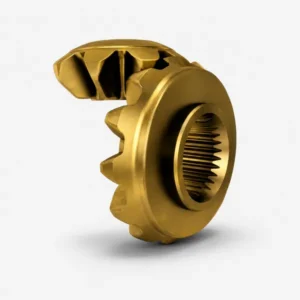
Differential Gears – Open, LSD, Torque Vectoring, Forged PM
-
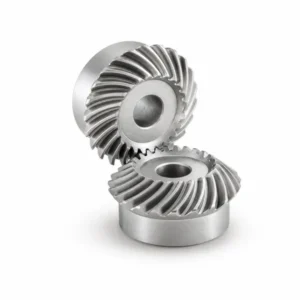
Spiral Miter Gears – 35° Spiral Angle, 1:1 High-Speed Drive
-
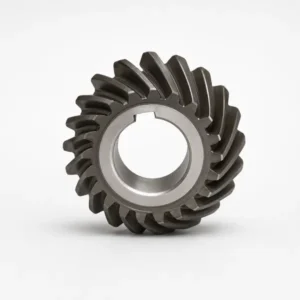
Industrial Bevel Gears – M3 to M20, Up to 1200mm Diameter
-
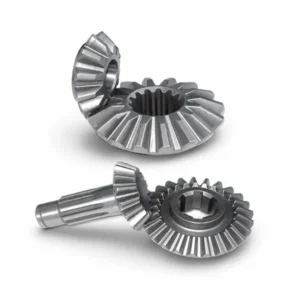
Forging Bevel Gears – Hot & Cold Forged, Custom OEM Supply
-
Precision Bevel Gear – M0.15 to M2.2, AGMA 13, 5 HT Routes
-
Helical Bevel Gear – Tangential Tooth, Low Noise Bevel Drive
 French
  English
  Italian
  Korean
  Japanese