
Crown Gear for Trains on Uphill Tracks Rollercoasters and Car Steering Wheels
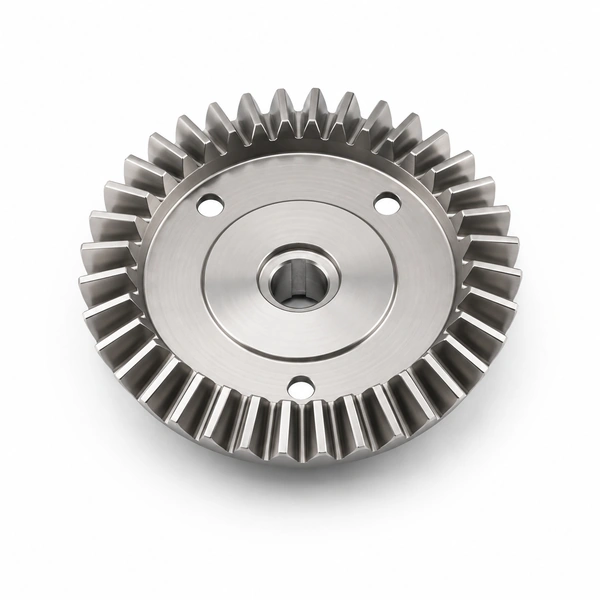
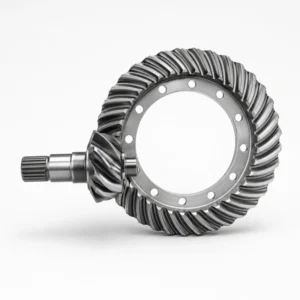
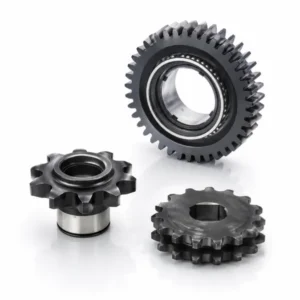
A crown gear (also known as a face gear or a contrate gear) is a gear that has teeth that project at right angles to the face of the wheel. In particular, the crown gear is a bevel gear where the pitch cone angle is 90 degrees. A pitch cone of any other angle is called a bevel gear. Crown gears typically mesh with other bevel gears or sometimes spur gears, a typical use being a crown gear and pinion system, which allows a rotary motion to be shifted 90 degrees. Korea Ever-Power: single, double, multiple-radius crown gears. EN 9, EN 19, EN 24 forged steel and cast steel. Cement, steel, mining, marine, sugar industries. Free sample.
Product Overview
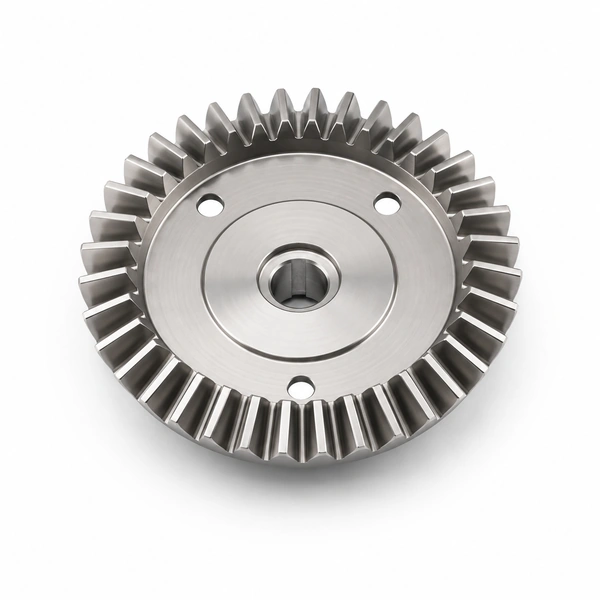
A crown gear — also known as a face gear or contrate gear — is a gear whose teeth project at right angles to the face of the wheel, like the points of a crown. In gear geometry terms, the crown gear is a bevel gear where the pitch cone angle is exactly 90°, making the pitch surface a flat plane (disc) rather than a cone. Crown gears typically mesh with bevel gears or spur gears, forming a crown gear and pinion system that shifts rotary motion through 90°. Korea Ever-Power manufactures single-radius, double-radius, and multiple-radius crown gears in forging materials (EN 9, EN 19, EN 24), cast steel (grades 2644 Gr-II / IS 2708 Gr-II), and other materials — supplying the cement, steel, mining, engineering, marine, and sugar industries.
Korea Ever-Power's crown gears are used for applications requiring low-noise, smooth transmission at 90° shaft angle: trains on uphill tracks (rack-and-pinion systems), rollercoasters, locking door drives on trails, and car steering wheels. Free samples available (customer pays freight). MOQ typically 100 pieces (lower MOQ under special circumstances). Mass production lead time: 30 days without tooling. Payment: under USD 1,000 — 100% advance; above USD 1,000 — 50% advance, balance before shipment.
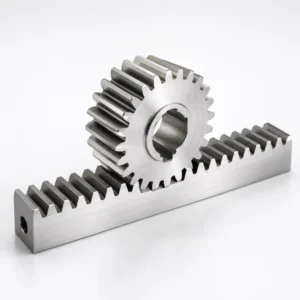
A special case of crown gear occurs when a conventional spur gear is used as a pinion meshing with the crown gear — in principle, the spur gear rolls on a rack that has been bent into a ring. The teeth arranged in the plane of the crown gear face resemble the teeth of a crown, giving the gear type its name. Unlike conical bevel gears, the crown gear allows axial displacement of its mating spur gear without affecting the mesh geometry, and no axial forces are generated in the crown gear shaft — a significant advantage in applications where axial float of the pinion must be accommodated.
Technical Specifications
Crown Gear Types and Materials
| Tipo | Material / Industries |
|---|---|
| Single Radius CG | EN 9, EN 19, EN 24 forging; cast steel 2644 Gr-II / IS 2708 Gr-II. Cement, steel, mining, engineering, marine, sugar industries. |
| Double Radius CG | Same materials. For applications requiring improved tooth contact distribution across the face. |
| Multiple Radius CG | Same materials. Complex crowning profile for maximum noise reduction and misalignment compensation. |
| Tooth Line | Straight cut or spiral — per OEM drawing |
Commercial Terms
| Item | Detail |
|---|---|
| MOQ | 100 pcs standard; lower MOQ under special circumstances |
| Sample | Free charge; customer pays freight |
| Lead Time | ~30 days without tooling for mass production |
| Payment | < USD 1,000: 100% advance; ≥ USD 1,000: 50% advance, balance before shipment |
| Drawing Formats | PDF, IGES, DWG, STEP — or sample for quotation |
| Non-conformance | Contact immediately with photos; problem solved as soon as possible |
Crown Gear Geometry and Operating Principles
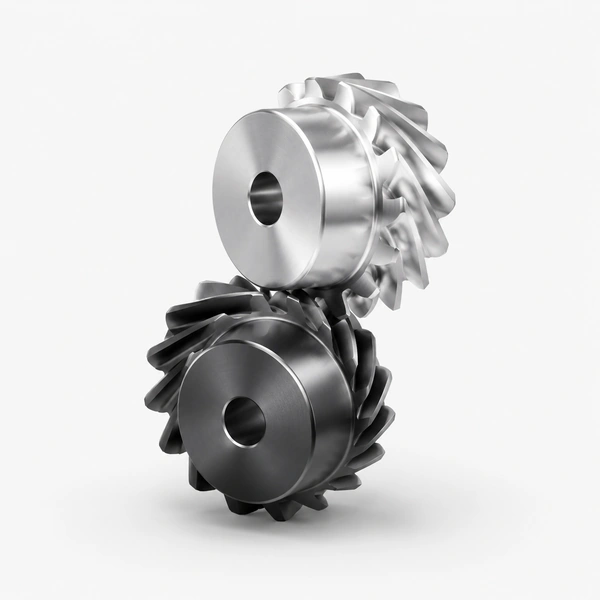
The crown gear occupies a unique position in the bevel gear family. Understanding its geometry and comparison with standard bevel gears and spur gears clarifies its application envelope:
90° Pitch Cone — Flat Face
In a standard bevel gear, the pitch surface is a cone — the pitch cone angle determines the ratio and shaft angle of the bevel gear pair. A crown gear is the limiting case where the pitch cone angle is exactly 90°: the cone becomes a flat plane (disc). The teeth of the crown gear project radially from this flat pitch surface like the points of a crown or the cogs of a ratchet wheel viewed from above. The flat pitch surface allows the crown gear to mesh with a spur gear (which has a cylindrical pitch surface) placed with its axis perpendicular to the crown gear face.
Variable Pressure Angle Across the Face
Because the crown gear's pitch surface is flat while the mating spur gear's pitch surface is cylindrical, the circumferential speed of the crown gear increases from the inner to the outer diameter — the outer teeth of the crown gear move faster than the inner teeth. The mating spur gear, however, has a constant circumferential speed across its face width. To achieve sliding-free rolling at all radial positions, the crown gear tooth pressure angle must vary across the face width: larger at the outer diameter (faster-moving teeth) and smaller at the inner diameter. Korea Ever-Power's crown gear hobbing machines implement this variable pressure angle profile automatically.
Axial Float — No Axial Force
Unlike conical bevel gears (which require precise axial positioning of both gears to maintain the designed tooth contact), a crown gear allows axial displacement of its mating spur gear without significantly degrading the tooth contact pattern — within limits. This axial float tolerance is a significant practical advantage in applications where thermal expansion, bearing wear, or manufacturing tolerances cause axial position variation of the pinion gear. Additionally, the crown gear shaft produces no axial thrust force on its bearings — eliminating the need for thrust bearings on the crown gear shaft.
Crown Gear vs Bevel Gear — Key Distinctions
Standard bevel gears have conical pitch surfaces and transmit force between intersecting shafts with both shafts producing axial thrust forces. Crown gears have flat pitch surfaces and can be paired with spur gears whose shafts do not need to intersect at the crown gear pitch plane. Bevel gears are not cylindrical; crown gears are essentially cylindrical (flat-faced disc). The crown gear is not a bevel gear in the strict sense — while it is a limiting case of bevel geometry, its operating characteristics (axial float tolerance, no axial force, variable pressure angle) are distinct from those of conventional bevel gears.
Shaft Angle Range
A regular (non-planar) crown gear achieves a shaft angle of exactly 90° — the standard configuration. In principle, the shaft angle of a crown gear pair can range between 0° and 180° by adjusting the tooth profile geometry. However, 90° is overwhelmingly the most common application, where the crown gear and pinion system provides the most compact right-angle output arrangement for the applications where crown gears are typically specified (train drives, rollercoaster drives, steering columns).
Crown Gear Tooth Crowning and Lead Modification
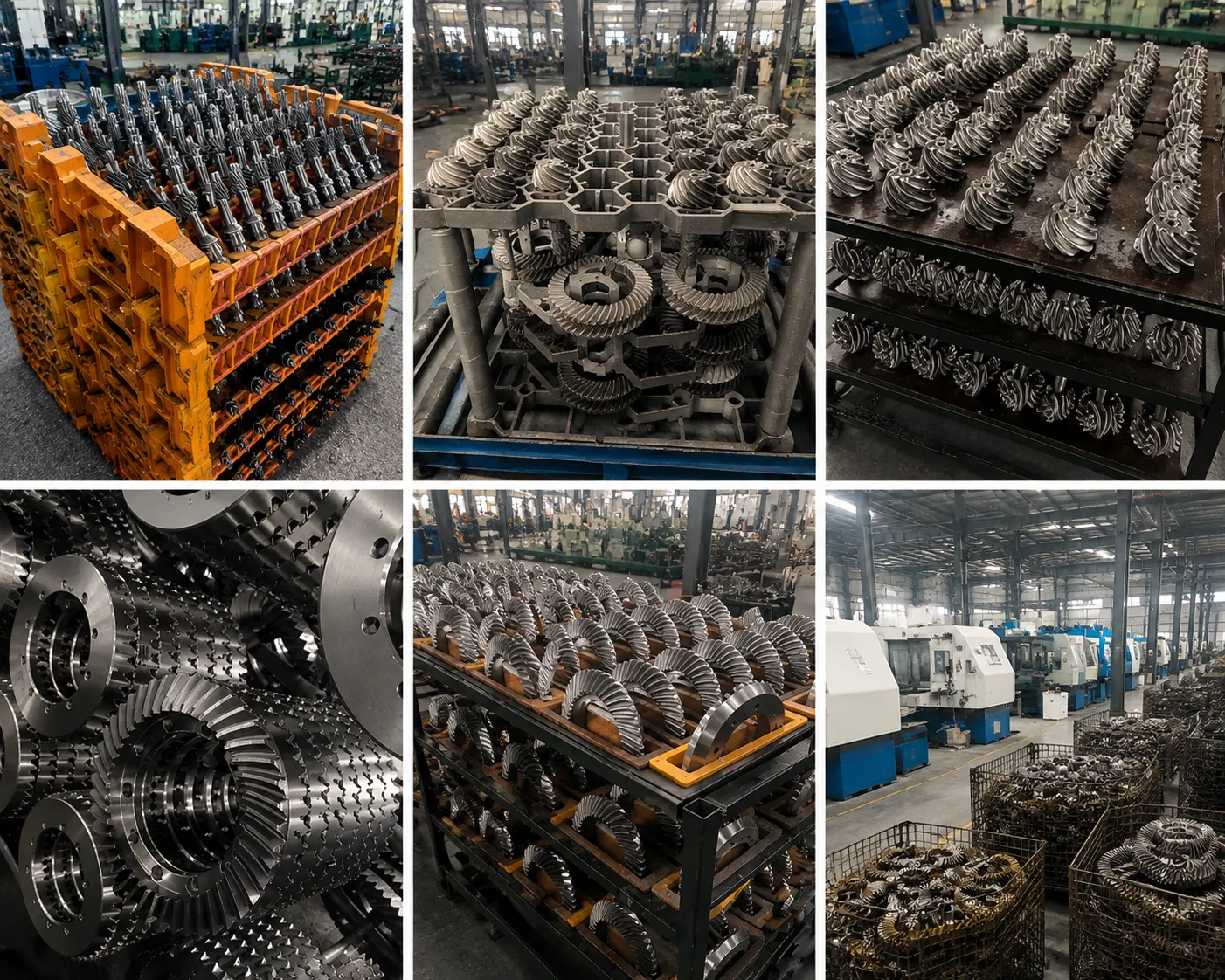
Korea Ever-Power applies tooth crowning and lead modification to crown gears as a standard quality practice for noise reduction and misalignment compensation — a technique that is essential for high-precision crown gear production:
What is Tooth Crowning?
Tooth crowning (or barreling) is the modification of a gear tooth's chordal thickness along its axis — the tooth is slightly thicker at the centre than at the edges. This creates a contact bearing in the centre of the gear face rather than at the edges. Lead crowning means the tooth centre line is described as a slight circular arc, so the tooth is convex in the tooth length direction. Crowning is achieved by Korea Ever-Power in one pass on the gear hobbing machine without additional processes.
Noise Reduction Through Crowning
The crowning technique is a practical approach to gear noise reduction that yields good results. By offering a contact bearing in the centre of the tooth face rather than at the edges, crowning prevents the high contact pressures at tooth flank borders that would otherwise result from misalignment. High border contact pressure is a primary source of gear noise — it produces impulse loading as the edge contact enters and leaves mesh, generating the characteristic gear whine. Crowned teeth eliminate edge loading and the associated noise.
Misalignment Compensation
Lead crowning compensates for assembly misalignment (e.g., assembly deviations from housing bore inaccuracies), shaft deflection under load, and thermal distortion. Without crowning, even small misalignments shift the tooth contact to one end of the face — dramatically increasing the local contact stress and accelerating wear and pitting fatigue at that end. Crowned teeth are self-correcting: any misalignment moves the contact zone slightly off-centre but does not cause edge loading, so the load remains distributed and the peak stress stays controlled.
Reduced Backlash Requirements
Because crowned gears with centre contact are less affected by discrepant manufacturing or design errors, the backlash requirements can be reduced compared with non-crowned gears of the same accuracy grade. Gears with centre contact wear in a self-correcting manner rather than wearing unevenly from end loading — so the run-in wear that occurs in the first hours of operation actually improves contact (rather than degrading it), and the gears naturally find the correct mesh position.
Crown Gear Material Selection
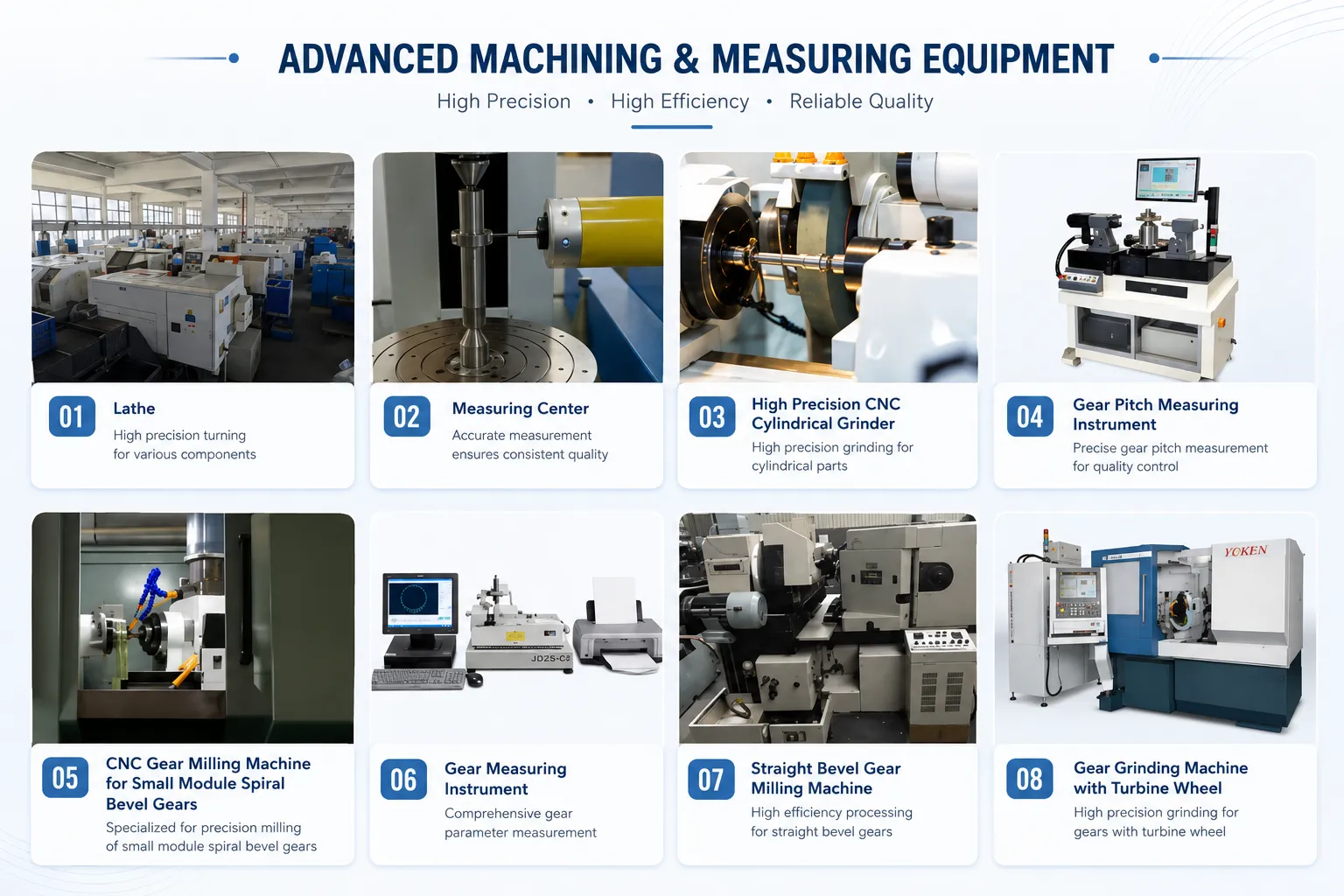
Crown gear material selection is guided by the method of manufacture, type of work, dimensions and weight, peripheral speed, allowable stress, required dimensional accuracy, and shock resistance:
Cast Iron
Good wearing properties, excellent machinability, ease of generating complicated forms by casting. Appropriate for large crown gears of complicated forms required in cement, mining, and sugar mill drives where size and geometric complexity make forgings impractical. Grey cast iron (HT200, HT250) and ductile iron (QT400, QT600) options available depending on required strength and ductility.
Steel (Forged)
Strong and extremely resistant to abrasion wear. Korea Ever-Power's forged crown gears use EN 9 (carbon steel), EN 19 (chromium-molybdenum alloy), and EN 24 (nickel-chromium-molybdenum alloy) — selected based on the required tooth root bending strength and surface hardness. Forged crown gears have superior mechanical properties to cast equivalents at the same dimensions.
Cast Steel
Used where stress on the crown gear is high and forging is not practical for the dimensions involved. Cast steel grades 2644 Gr-II / IS 2708 Gr-II provide higher strength than cast iron while allowing large, complex shapes to be produced near-net by casting with subsequent machining of critical surfaces including the tooth profile and mounting faces.
Plain Carbon and Alloy Steels
Plain carbon steels (C45, 40C8) for industrial crown gears requiring good toughness combined with large strength. Alloy steels (40Cr, 42CrMo) for crown gears where high tooth strength and small tooth wear are needed — the alloying elements enable case hardening to HRC 55–62 at the tooth surface while maintaining tough core properties, giving the highest fatigue life of any crown gear material option.
Aluminium
Aluminium alloy crown gears for applications where small inertia of the rotating mass is required — robotics, aircraft actuators, and camera pan/tilt heads. Aluminium crown gears are significantly lighter than steel equivalents (density 2.7 vs 7.85 g/cm³), enabling faster acceleration/deceleration cycles and reduced bearing loads at the cost of lower tooth strength and wear resistance compared with steel.
Non-Metallic (Plastic / Nylon)
Non-metallic crown gears (nylon, POM, acetal) for applications requiring noiseless operation at high peripheral velocities — the material damping of engineering plastics absorbs tooth mesh vibration that would produce noise in metal gears. Plastic crown gears are self-lubricating, corrosion-resistant, and lightweight, but limited to light loads and moderate speeds compared with metal crown gears of the same size.
Applications
Trains on Uphill Tracks (Rack Railways)
Crown gear drives in rack railway (cog railway) locomotive drive systems for steep mountain grades. A crown gear used with a rack's interlocking cogs allows the locomotive to roll along the track-mounted rack even if the track has to go uphill or sideways at gradients beyond the adhesion limit of conventional wheel-on-rail traction. The crown gear provides the 90° shaft angle needed to orient the drive wheel relative to the track rack.
Rollercoasters
Crown gear drives in rollercoaster launch mechanisms and uphill drive sections. The crown gear and pinion system enables the rollercoaster car to be driven up the steep lift hill by engaging with a rack or drive rail — the drive motor's horizontal shaft connects to the vertical roller-drive pinion through the crown gear's 90° angle conversion. The crown gear's axial float tolerance accommodates the slight track deflections under the rolling car weight.
Car Steering Wheels
Crown gear elements in steering column assemblies where the steering wheel shaft (column shaft) must transmit torque to the steering box input shaft at a different angle to accommodate the vehicle's steering column geometry. The crown gear's absence of axial force on its shaft makes it well-suited for steering column applications where bearing load minimisation is important for low steering effort.
Heavy Industry — Cement, Steel, Mining
Large forged or cast steel crown gears in cement mill drives, steel mill drives, and mining equipment right-angle drives. Korea Ever-Power supplies single-radius, double-radius, and multiple-radius crown gears in EN 9, EN 19, EN 24 forged steel and cast steel grades to these heavy industries — where the large dimensions, high loads, and continuous duty cycles demand the highest material and manufacturing quality.
Locking Door Drives on Trails
Crown gear and pinion systems in trail gate and locking door mechanisms — providing the 90° shaft angle needed for motorised gate drives where the actuator motor is mounted horizontally and the gate pivot shaft is vertical (or vice versa). The crown gear's no-axial-thrust property is particularly valuable in gate pivot drives where bearing life is critical for long-term maintenance-free outdoor operation.
Marine and Sugar Industries
Cast steel or corrosion-resistant alloy crown gears in marine equipment drives and sugar mill drives. Marine crown gears require salt-resistant materials and surface treatments; sugar mill crown gears must resist the abrasive and corrosive sugar juice environment. Korea Ever-Power supplies crown gears to both industries with the appropriate material specifications and surface treatment options.
Frequently Asked Questions
Are you a trading company or a manufacturer?
Korea Ever-Power is the factory — a direct manufacturer of crown gears, not a trading company. This means factory-direct pricing, direct engineering support for drawing review and design optimisation, and direct quality control accountability for every crown gear produced.
How do I get a quotation for crown gears?
Send drawings (PDF, IGES, DWG, STEP format), together with material, weight, and quantity requirements. If you don't have drawings, send the sample — Korea Ever-Power can quote based on the sample. The more detail provided in the inquiry, the more accurate the quotation will be.
What are the crown gear crowning types available?
Korea Ever-Power produces single-radius, double-radius, and multiple-radius crowning — all achievable in one pass on Korea Ever-Power's gear hobbing machines without additional processes. The crowning type is selected based on the application's noise requirement, misalignment level, and tooth loading pattern. Korea Ever-Power can also implement different complex and multiple-radius crowning types based on OEM design and drawings. Contact Korea Ever-Power to specify the correct crowning for your application.
Customer Reviews
"We supply drives for rack railway (cog railway) locomotives and source large EN 19 forged crown gears from Korea Ever-Power. Single-radius crown hobbing confirmed on our CMM — crown profile within 0.02 mm. Contact pattern at our assembly test: centred on tooth face, 70% face width coverage. No axial thrust measured on crown gear shaft — confirming the correct crown gear geometry. Lead time: 28 days for 6 pieces. Material certification (EN 19, mechanical test) supplied."
Kim Hyeon-suk | Mountain Railway Drive Engineer, Incheon Rail Systems Co. · Q2 2026
"We build automated gate systems for trail access control and specified aluminium alloy crown gears from Korea Ever-Power for our motorised pivot gate drives. Zero axial thrust on the gate pivot bearing confirmed — bearing temperature 8°C lower than with the previous bevel gear drive. Free sample provided (we paid freight); sample dimensions matched drawing to ±0.03 mm. 100-piece MOQ met our initial production run. Non-conformance process tested: one piece OD slightly oversize — Korea Ever-Power sent replacement in 6 days."
Lee Byeong-jun | Automated Gate Systems Engineer, Gyeonggi Access Control Systems Co. · Q1 2026
Related Products
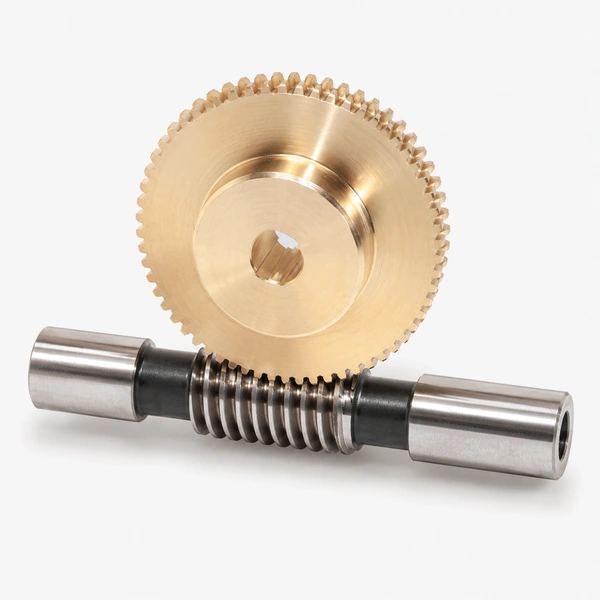
Request a Quotation for Crown Gears
Single, double, multiple-radius crowning. EN 9 / EN 19 / EN 24 forged steel; cast steel; cast iron; aluminium; plastic. Cement, steel, mining, marine, sugar industries. Free sample. MOQ 100 pcs. Send drawing or sample to begin.
Informazioni aggiuntive
| Editor |
|---|
 Italian
  English
  Korean
  French
  Japanese