
Industrial Bevel Gears – M3 to M20, Up to 1200mm Diameter
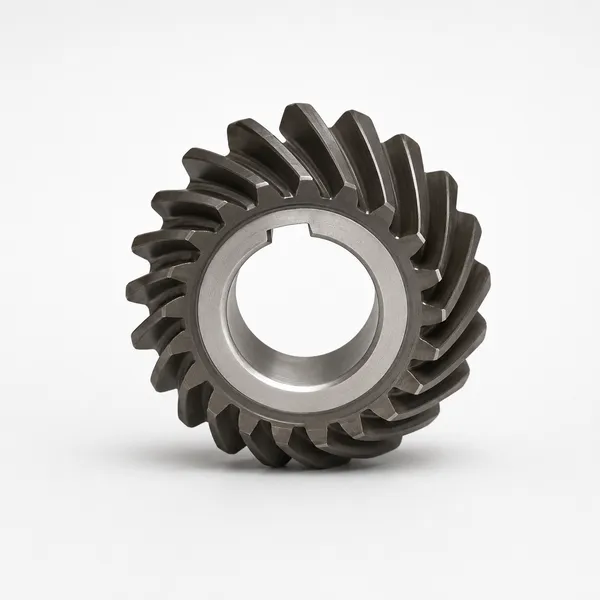
Korea Ever-Power industrial bevel gears cover module M3 through M20 and outer diameters up to 1200 mm, produced from case-hardening alloy steels including 20CrMnTi, 20CrMnMo, 20CrNi2MoA, and 42CrMo. Carburised and quenched tooth flanks reach 58 to 62 HRC. Accuracy class 5 to 8 per GB, DIN, JIS, and AGMA standards. Designed for speed reducers, oil and gas machinery, construction equipment, heavy trucks, and agricultural drives where module and load ratings exceed the range of standard catalogue gears. All production is ground-tooth finish on CNC gear machines. Customised to customer drawing or sample.
Product Overview
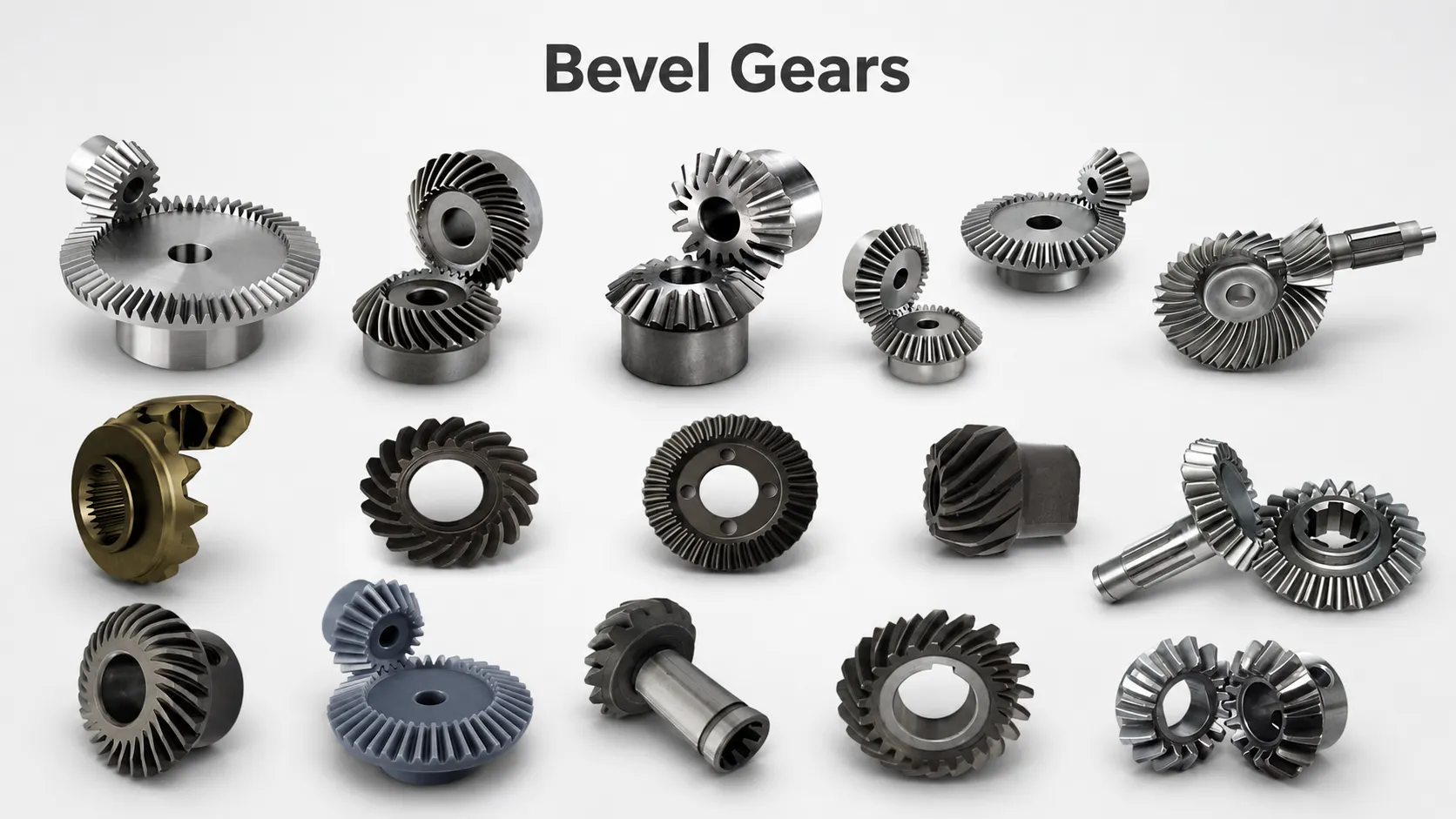
Korea Ever-Power industrial bevel gears address the upper end of the bevel gear market — drives where standard catalogue sizes and materials are insufficient, and where the gear must be engineered and manufactured to the customer's specific application data. Production covers module M3 through M20 with outer diameters up to 1200 mm, in a range of case-hardening and through-hardening alloy steels proven in heavy industrial, oil and gas, mining, and construction machinery. Every gear is produced to order on CNC gear machines with ground tooth finish, and ships with full material, heat treatment, and dimensional documentation.
The defining characteristic of an industrial bevel gear application — as distinct from a commercial or instrumentation application — is the combination of high continuous torque, long service life requirements, and the consequences of unplanned downtime. A mining drive gearbox that fails takes a conveyor or excavator off production. A construction crane gearbox that fails can halt a project. Oil and gas wellhead drives operate in environments where replacement logistics are complex and costly. In all of these contexts, the cost of a correctly specified, properly heat-treated, fully inspected gear is negligible relative to the cost of a premature failure. Korea Ever-Power's industrial bevel gear production sequence is built around this operating reality: material traceability, heat treatment records, and dimensional inspection are not optional documentation — they are part of the product.
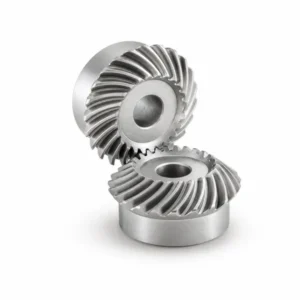
Both straight and spiral bevel configurations are available across the full module range. For applications above approximately 5 m/s pitch-line speed or where noise is a constraint, spiral bevel geometry is standard. For slow drives, heavy-duty agricultural equipment, and reversing drives where zero axial thrust is preferred, straight bevel or zero-degree spiral bevel configurations are available at the same module and size range.
Product Specifications
The table below reflects the production capability confirmed by Korea Ever-Power for industrial bevel gear manufacture. Specific dimensions, tolerances, and quality requirements are confirmed against the customer's drawing or application data sheet before production begins.
| Parameter | Specification |
|---|---|
| Gear Type | Industrial bevel gear — straight, spiral, or zero-degree spiral; customised to drawing |
| Module Range | M3 – M20; larger modules reviewed on enquiry |
| Outer Diameter | Up to 1200 mm; confirmed per drawing |
| Material — Standard | 20CrMnTi, 20CrMnMo, 42CrMo, 45# steel, 40Cr, 20CrNi2MoA |
| Heat Treatment | Carburising & quenching, tempering, nitriding, carbonitriding, induction hardening |
| Surface Hardness | 58 – 62 HRC (carburised); other hardness levels per heat treatment route and specification |
| Toothed Portion Shape | Bevel wheel (external gear) |
| Manufacturing Method | CNC gear cutting + grinding gear (ground tooth finish standard) |
| Accuracy Class | Class 5 – 8 per GB / DIN / JIS / AGMA standards |
| Quality Standard | GB, DIN, JIS, AGMA — customer drawing standard takes precedence |
| Gear Model | Customised to customer sample or drawing; no standard catalogue |
| Applications | Speed reducers, oil machinery, construction machinery, heavy trucks, agricultural machinery, marine drives |
| Delivery Time | Approximately 30 working days for standard configurations; complex or very large modules reviewed at quotation |
| Shipping | Sea freight (standard for large gears), air freight, express courier |
| Warranty | 12 months from date of delivery |
Material Selection for Heavy Industrial Duty
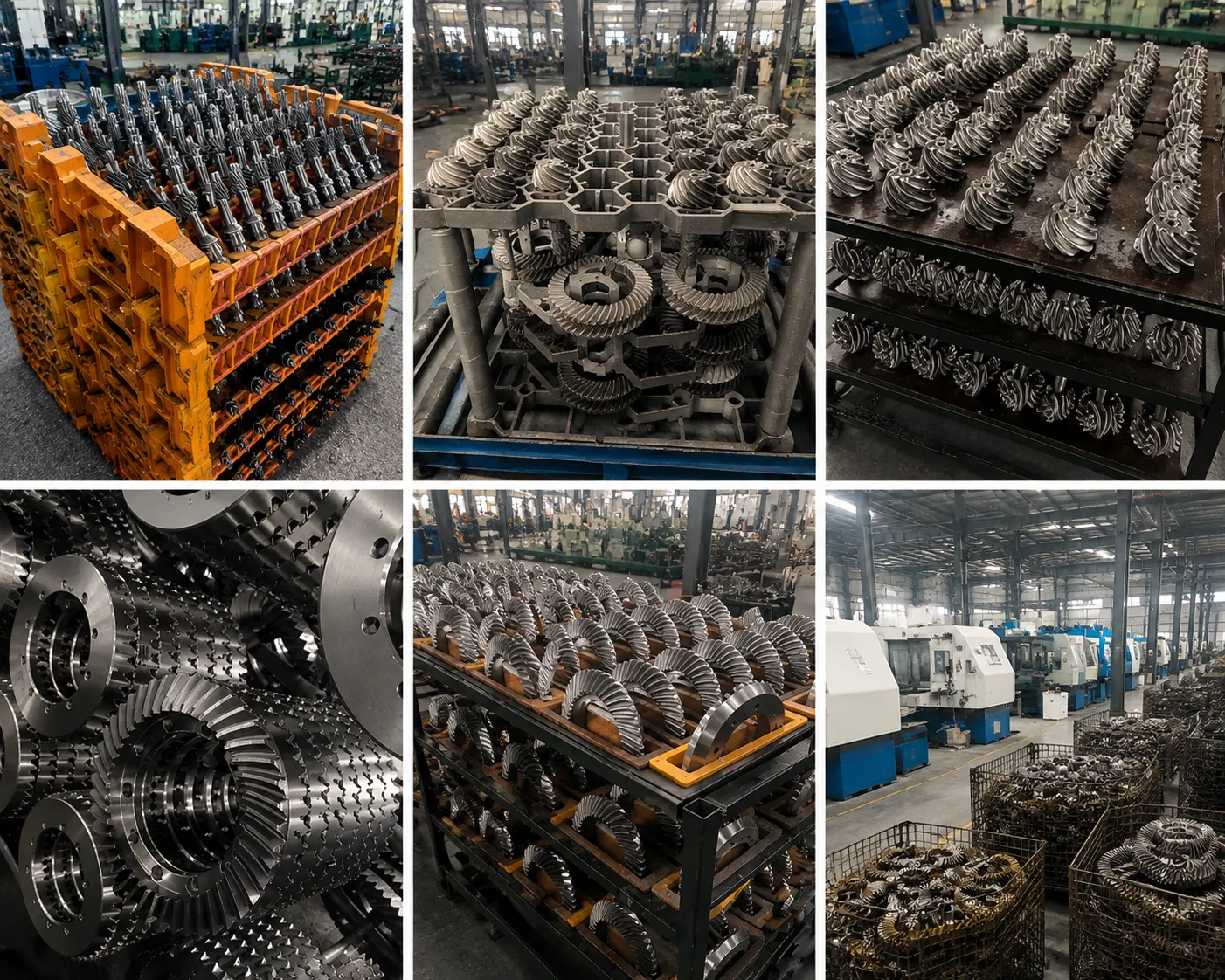
Industrial bevel gears in heavy-duty drives operate at sustained high loads, elevated tooth root bending stresses, and high surface contact pressures. The material must simultaneously resist contact fatigue at the tooth flank, bending fatigue at the tooth root, and impact loading from shock events in the drive. The following steel grades cover the principal industrial bevel gear applications Korea Ever-Power supplies:
20CrMnTi — Case-Hardening Standard Grade
The most widely used alloy steel for carburised industrial bevel gears. Low carbon content (0.17–0.23%) ensures the core remains tough and impact-resistant after quenching, while the chromium, manganese, and titanium additions produce a fine-grained case that hardens readily to 58–62 HRC. Standard in automotive differentials, agricultural gearboxes, and general industrial reducers.
20CrMnMo — Enhanced Hardenability
The molybdenum addition to 20CrMnMo increases hardenability through large cross-sections, making it the preferred grade for larger industrial bevel gears — typically above 200 mm outer diameter — where the case must harden fully through a thicker tooth cross-section. Also provides better temper resistance, relevant in drives where the gear body temperature rises during continuous high-power operation.
20CrNi2MoA — High-Performance Case-Hardening
The nickel addition to 20CrNi2MoA significantly raises core toughness while maintaining the case hardening response of the alloy system. This steel is specified for industrial bevel gears in applications with severe shock loading — mining drives that see rock-induced load spikes, construction equipment that impacts hard ground — where the core fracture toughness of standard 20CrMnTi is insufficient. The higher material cost is justified in applications where a core fracture is catastrophic.
42CrMo — Through-Hardening for Uniform Properties
Through-hardened to 280–340 HB (Brinell) rather than case-hardened to HRC, 42CrMo delivers uniform hardness from surface to core. This is preferred in applications where the gear tooth must be field-repairable by re-machining — through-hardened teeth can be re-cut and re-profiled; case-hardened teeth cannot without re-hardening. Large slow-speed industrial drives, heavy truck rear axles, and ship propulsion reduction stages use 42CrMo industrial bevel gears.
Heat Treatment Routes
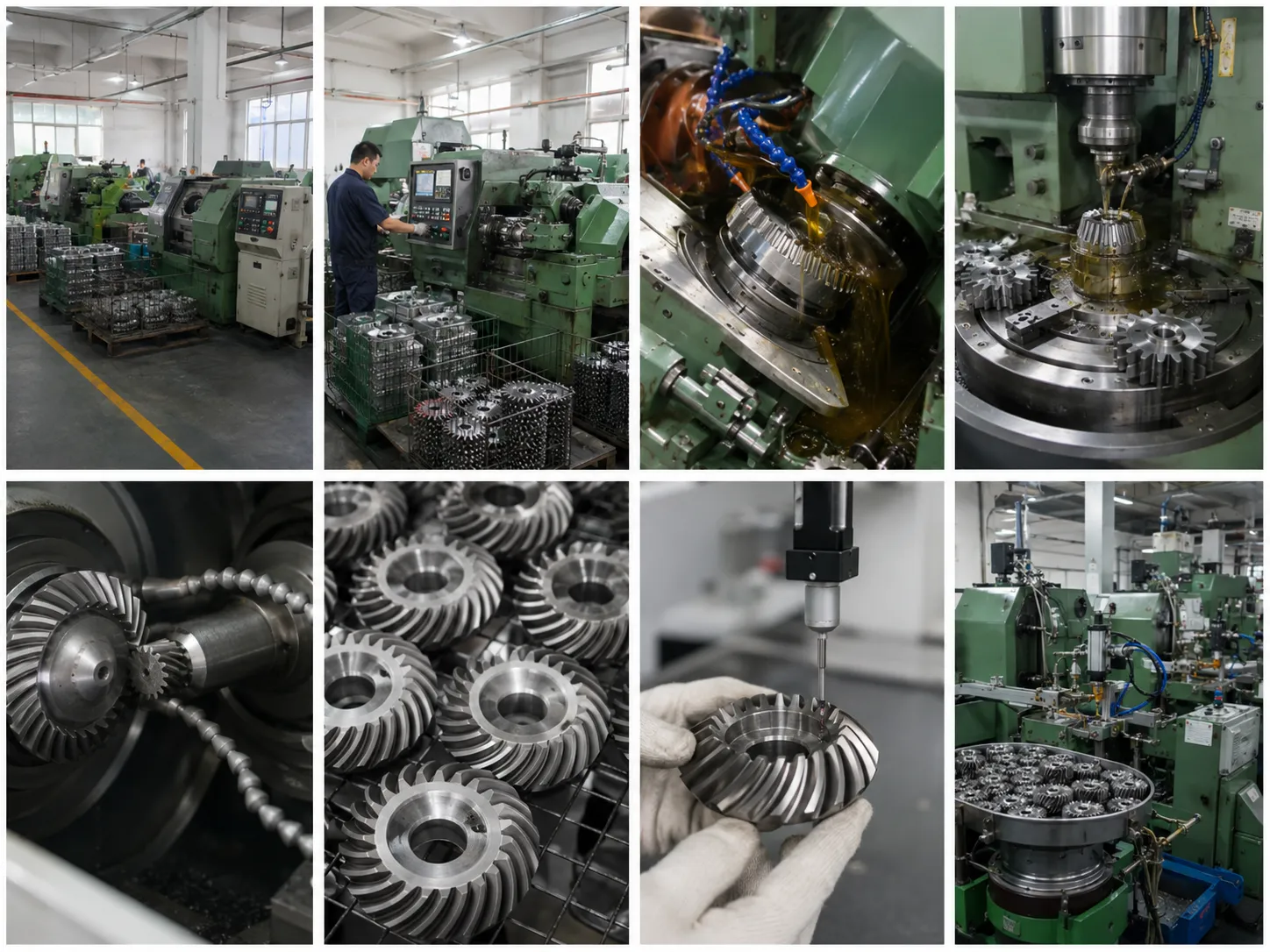
Heat treatment is the step that sets an industrial bevel gear's performance limits — the right tooth flank hardness prevents pitting, the right core toughness resists root fracture, and the correct quenching and tempering cycle achieves both simultaneously. Korea Ever-Power offers five heat treatment routes for industrial bevel gears; the correct route depends on the gear's size, material, load type, and operating environment.
The standard route for 20CrMnTi, 20CrMnMo, and 20CrNi2MoA. Carbon is diffused into the tooth surface to a controlled depth (typically 0.8–1.5 mm for industrial bevel gears), then quenched to lock the high-carbon case at maximum hardness (58–62 HRC) while the low-carbon core remains in a tough, lower-hardness condition. A post-quench temper at 150–200°C relieves quench stresses without significantly reducing surface hardness.
Best for: high contact stress applications, automotive and industrial high-load drives
Applied after carburising and quenching to reduce residual stress and improve toughness. The tempering temperature determines the final hardness: low-temperature tempering (150–200°C) retains maximum hardness; higher tempering temperatures (300–500°C) sacrifice some hardness for significantly improved impact resistance. The correct temper is selected based on the shock load profile of the application.
Applied as secondary treatment after quenching in all carburised and through-hardened gears
Nitrogen is diffused into the tooth surface at a lower temperature (500–580°C) than carburising, producing a very hard, thin case (typically 0.2–0.5 mm) without the dimensional distortion associated with quenching. Nitriding is specified for large industrial bevel gears where post-hardening grinding is not practical — the minimal distortion means teeth can be finish-machined before nitriding with high confidence of dimensional stability after the process.
Best for: large gears where distortion must be minimised, oil and gas, precision machine tools
Simultaneous diffusion of carbon and nitrogen into the tooth surface, typically at 820–870°C followed by quenching. The nitrogen in the case improves wear resistance and reduces tempering susceptibility compared with carburising alone. Carbonitriding is applied to smaller industrial bevel gears in abrasive environments where the enhanced wear resistance of the nitrogen-containing case extends tooth flank life.
Best for: moderate-size gears in abrasive or contaminated lubrication environments
High-frequency induction heating hardens the tooth surface rapidly, without the long furnace cycles of carburising. The depth and pattern of hardening are controlled by the inductor geometry and dwell time. For large industrial bevel gears where carburising furnace capacity is the limiting constraint, induction hardening tooth-by-tooth provides an alternative path to surface hardness. Through-hardening steels such as 42CrMo or 40Cr are the typical base materials for induction-hardened industrial bevel gears.
Best for: very large gears where furnace capacity constrains carburising; field repair situations
Accuracy Classes 5 to 8 — Selecting the Right Grade
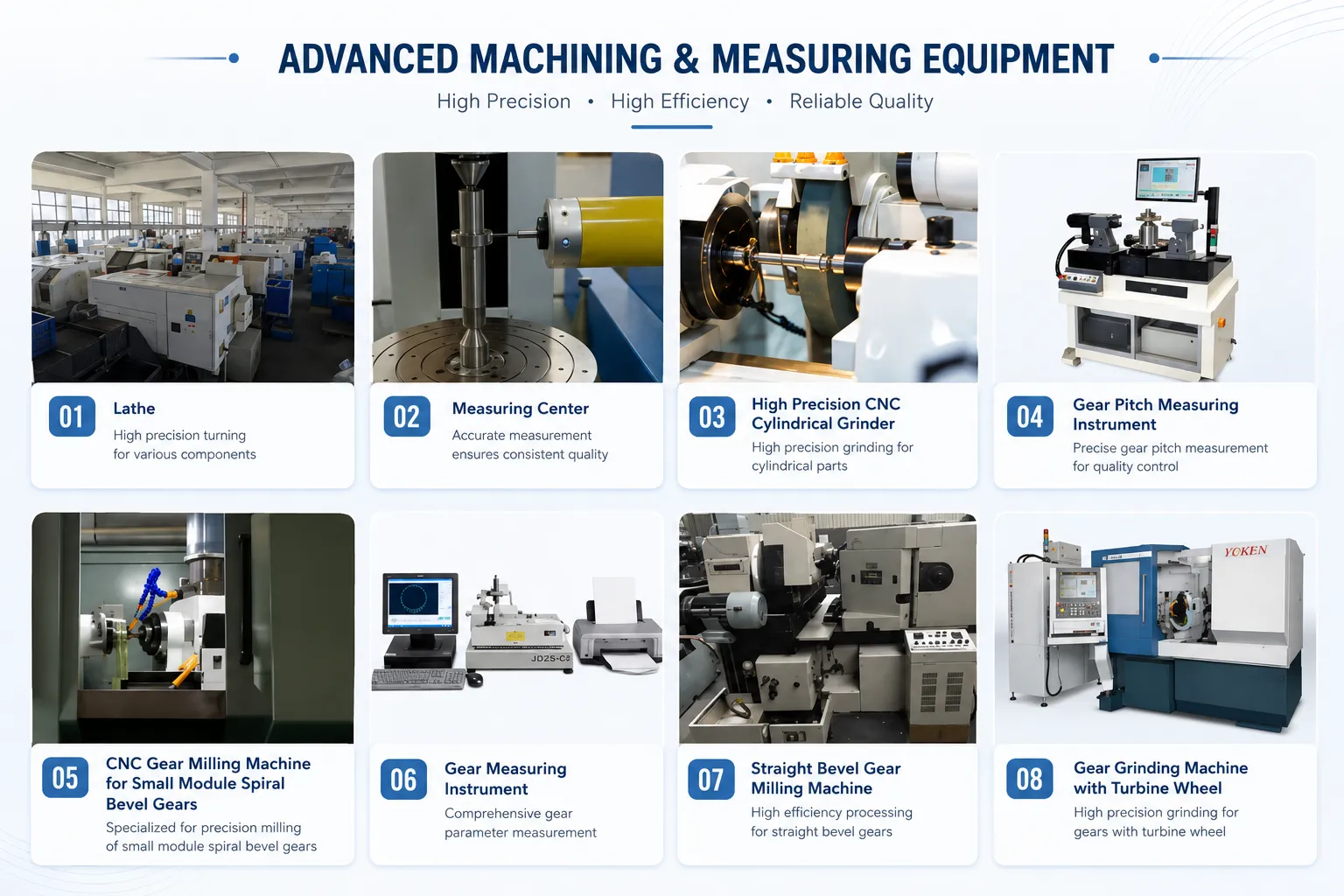
Accuracy class in industrial bevel gear specifications controls the permissible errors in tooth spacing, tooth profile form, pitch variation, and runout. For GB and DIN standards, a lower class number means tighter tolerances. The four classes available from Korea Ever-Power for industrial bevel gears cover the practical range from high-precision industrial drives to heavy-duty slow drives where dimensional tolerances are less critical than material strength.
- Class 5 — High precision industrial. Ground tooth flanks after heat treatment to correct distortion and achieve the tightest tooth spacing and profile tolerances. Applied in precision speed reducers, high-speed industrial drives above 15 m/s pitch-line speed, and machine tool main drives. Equivalent to AGMA Quality 11–12 and DIN 6–7.
- Class 6 — Precision industrial. Ground or high-accuracy milled. Used in industrial gearboxes for construction and oil machinery where controlled noise and smooth operation at moderate-to-high speed are required. Equivalent to AGMA Quality 10–11 and DIN 7–8.
- Class 7 — Standard heavy industrial. Milled and hardened, with controlled dimensional quality. The most common accuracy class for large industrial bevel gears in reducers, agricultural equipment, marine drives, and heavy truck differentials operating at moderate pitch-line speeds. Equivalent to AGMA Quality 8–9 and DIN 8–9.
- Class 8 — General purpose industrial. As-cut or normalised finish. For large, slow-moving drives — quarry equipment, ship anchor windlasses, heavy-duty conveyors — where continuous operating speed is low and noise is not a primary concern. The highest dimensional tolerance class in the range; not suitable for speeds above approximately 3 m/s pitch-line speed.
Industrial Applications
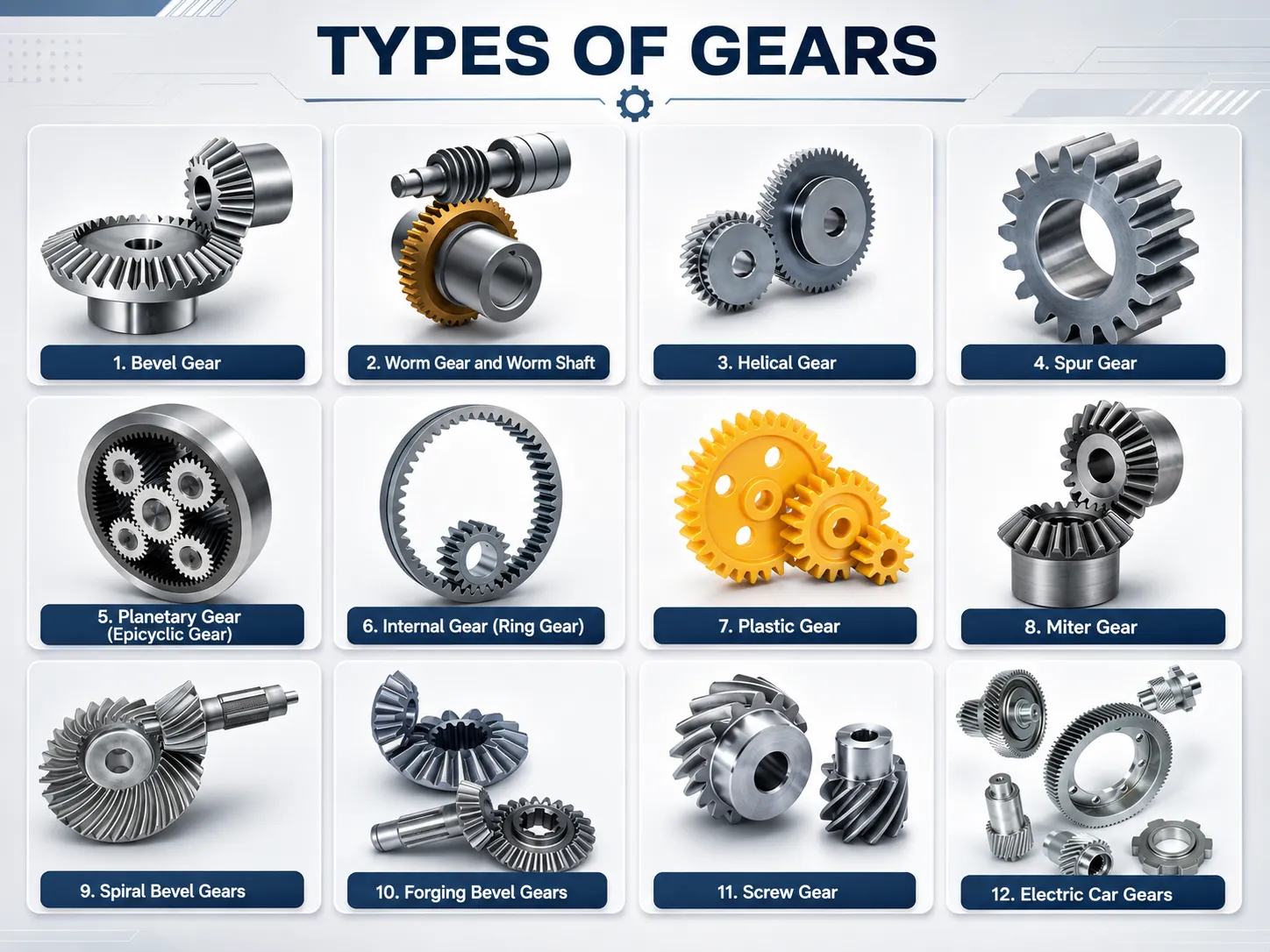
Korea Ever-Power industrial bevel gears ship to OEM and aftermarket customers across the following heavy-duty sectors. Each sector has distinct requirements for module size, material, heat treatment route, and documentation — our production covers all of them.
⚙ Speed Reducers & Industrial Gearboxes
Right-angle bevel gear stages in industrial speed reducers transmit continuous high torque between perpendicular shafts in conveyor drives, mixing plants, and production machinery. Large module spiral bevel gears in 20CrMnMo at class 6 or 7 accuracy are standard for this application. The gear must carry the full rated torque of the reducer at rated speed for a design life typically expressed in tens of thousands of operating hours.
💧 Oil & Gas Machinery
Drilling rig rotary tables, wellhead drives, and mud pump bevel gear stages operate in environments where replacement is logistically difficult and safety-critical. 20CrNi2MoA with full UT inspection and material traceability documentation is the standard specification for oil and gas industrial bevel gears. Nitrided gears are used in components where dimensional stability after heat treatment is critical to maintaining the tight clearances in drilling equipment.
🏗 Construction Machinery
Excavator final drives, crane slewing gearboxes, concrete mixer drives, and pile driver angular transmission stages all require large industrial bevel gears that absorb severe shock loads without tooth fracture. 20CrMnTi or 20CrNi2MoA carburised and quenched to 58–62 HRC provides the combination of hard tooth flanks and tough core that construction equipment demands. Class 7 accuracy covers the speed range of most construction drives.
🚙 Heavy Trucks & Commercial Vehicles
Rear axle differentials in heavy trucks, bus final drives, and specialised military vehicle angle drives use large industrial bevel gears that combine high tooth surface hardness with excellent core toughness. OEM and replacement production for heavy truck axle bevel gears follows the same material and heat treatment specifications as the original equipment, with matching dimensional documentation for fleet maintenance records.
🌿 Agricultural Machinery
Large tractors, combine harvesters, sugar cane harvesting machines, and self-propelled irrigation systems use industrial bevel gears in PTO drives, header angle gearboxes, and main transmission angle stages. Agricultural drives typically run intermittently at moderate speeds with seasonal peak loads during harvest, making 20CrMnTi at class 7 accuracy the practical standard for most agricultural industrial bevel gear applications.
⚓ Marine Propulsion & Ship Auxiliary
Vessel propulsion angle drives, bow thruster gearboxes, and deck crane slewing drives require large industrial bevel gears in materials that resist the corrosive marine environment while maintaining high load capacity. 42CrMo through-hardened with corrosion-protective surface treatment covers most marine auxiliary applications; stainless steel grades are available for drives in direct seawater contact. Classification society documentation (DNV, ABS, BV) can be arranged for new build vessel gear sets.
Quality Assurance & Documentation
Korea Ever-Power's quality management system is ISO 9001:2015 certified and operates a complete inspection sequence for industrial bevel gear production. The following documentation package ships with every industrial bevel gear order:
- Chemical composition report — mill certificate and spectral analysis confirming the alloy steel grade. Every industrial bevel gear production run is traceable to a specific steel melt.
- Mechanical performance report — tensile strength, yield strength, elongation at break, and Charpy impact energy from test pieces in the same heat as production parts.
- Ultrasonic test (UT) report — 100% volumetric UT per EN 10228-3, SA388, or the customer's specified standard. Performed on the blank before gear cutting; defects found at this stage are quarantined before any machining cost is incurred.
- Heat treatment report — original time-temperature curves from carburising, quenching, and tempering furnace runs, retained per batch number and available for audit.
- Hardness test report — tooth surface hardness (HRC) and, for carburised gears, case depth verification by cross-section metallographic inspection on sample pieces from the same batch.
- Dimensional inspection report — CMM verification of pitch cone angle, tooth spacing error, face width, bore, OD, hub dimensions, and runout against drawing tolerances. Roll-test contact pattern photograph for matched pairs.
The entire production process is logged in our computerised production management system — from order receipt through raw material issue, heat treatment, machining, inspection, and shipment. Every step is time-stamped and traceable by order number. For customers who need to audit the production record during a quality review or following a field failure investigation, this traceability covers the complete manufacturing history of each gear.
Frequently Asked Questions
What information is needed to quote a custom industrial bevel gear?
For a new design, the essential data is: gear type (straight, spiral, or zero-degree spiral), module, tooth count on each gear, shaft intersection angle, bore diameter and keyway details, face width, material, heat treatment, and accuracy class. For a replacement of an existing gear, send us the original drawing if available, or the worn gear (or both gears of the pair) with measurements of outer diameter, tooth count, face width, bore, hub diameter, and hub length. From either input our engineering team produces a complete production drawing for customer approval before cutting begins.
How is the 58–62 HRC hardness specification achieved and verified?
The 58–62 HRC surface hardness is achieved by the carburising and quenching route applied to case-hardening alloy steels. Carburising raises the carbon content of the tooth surface layer to approximately 0.8–1.0%; quenching from the austenitising temperature transforms this high-carbon surface to martensite, which carries the required hardness. The subsequent low-temperature temper at 150–200°C does not significantly reduce the HRC reading. Verification is by Rockwell hardness test on the tooth flank surface after all heat treatment is complete. For gears requiring case depth verification, a cross-section metallographic specimen from a test piece in the same batch is etched and examined under optical microscopy; the case depth is measured from the surface to the point where the hardness falls below a specified threshold.
Why is 20CrNi2MoA specified for shock-loaded applications rather than 20CrMnTi?
Both steels are case-hardening grades that reach equivalent tooth surface hardness after carburising and quenching. The difference is in the core — the low-carbon, non-carburised zone beneath the case. 20CrNi2MoA contains approximately 1.6–2.0% nickel, which dramatically raises the core's impact toughness (measured by Charpy energy) compared with the nickel-free 20CrMnTi. In a shock-loaded drive — a mining excavator hitting rock, a construction crane bucket impacting the ground — the tooth root experiences very high bending stress spikes of short duration. If the core fracture toughness is insufficient, the tooth cracks at the root and the top portion breaks off. 20CrNi2MoA's nickel-enhanced core toughness reduces this fracture risk. The material cost premium is typically 15–25% over 20CrMnTi, which is negligible relative to the cost of a tooth fracture event in a mission-critical drive.
What is the after-sales support arrangement if a gear fails during the 12-month warranty period?
If a gear fails within 12 months and the failure is attributable to a manufacturing defect — material non-conformance, insufficient case depth, dimensional error — Korea Ever-Power will produce and ship replacement parts as a priority, using international express freight where available. The complete production record for the failed gear is pulled from our system and reviewed to identify the stage at which the non-conformance occurred. If the failure is attributable to operating conditions outside the specified load or speed range, or to incorrect installation or lubrication, this is reported to the customer with supporting analysis and the gear is re-produced at commercial terms.
Can you supply classification society documentation for marine applications?
For marine industrial bevel gears destined for new-build vessels or major refit projects, Korea Ever-Power can arrange material inspection and documentation to the requirements of classification societies including DNV, ABS, Bureau Veritas (BV), Lloyd's Register, and others. This involves the classification society surveyor witnessing material tests, heat treatment, and dimensional inspection, and issuing the corresponding certificates. This service requires advance notice at the quotation stage as it affects planning and lead time. Please include the required classification society and rule set in your enquiry.
How do I trust a supplier I have not worked with before for a mission-critical gear?
We recommend the following verification steps for a first order: request the ISO 9001:2015 certificate and scope of certification to confirm the quality system covers gear production. Review the sample documentation package — chemical composition report, heat treatment curve, and dimensional inspection report — on a sample order at lower value before committing to a large production batch. Korea Ever-Power will provide the complete documentation package with the sample order, allowing you to audit it against your incoming inspection before approving the production run. We have supplied industrial bevel gears to customers in Korea, Japan, Southeast Asia, the Middle East, and Europe; reference contacts in your region can be provided on request. Contact our team to begin the qualification process for your specific application.
Customer Reviews
"We source M12 spiral bevel gears in 20CrMnMo for our industrial gearbox product line — output torques in the range of 50,000 to 120,000 Nm. Ever-Power supplies with class 6 accuracy, 58–62 HRC surface hardness confirmed by the hardness report, and the heat treatment curve for each batch. Three years into the supply relationship, every delivery has passed our incoming dimensional inspection. No field failures attributed to the gears."
Kim Tae-woo | Procurement Director, Gyeongnam Industrial Gear Systems · Q1 2026
"We replaced industrial bevel gears in a drilling rig rotary table drive — M16, 20CrNi2MoA, with UT to EN 10228-3. The previous supplier could not produce UT documentation meeting our oil company client's specification. Ever-Power produced with full UT certification, heat treatment curves, and chemical comp report. The documentation package passed the oil company's vendor audit without any requests for additional information."
Jang Ho-jin | Supply Chain Manager, Ulsan Oil Equipment Manufacturing · Q3 2025
"We manufacture 50-tonne excavators and had recurring tooth fracture in the bucket cylinder angle drive bevel gear — M10, 20CrMnTi, class 7. Ever-Power reviewed our application data and recommended upgrading to 20CrNi2MoA for improved core toughness. The fracture problem has not recurred in two years and approximately 850 operating hours per machine on the first five units fitted with the new specification."
Park Chan-ho | Product Engineering Manager, Changwon Construction Machinery · Q4 2025
"We source M8 42CrMo through-hardened bevel gears for our agricultural PTO gearbox range. The through-hardening specification allows our service centres to re-machine worn tooth profiles in the field — critical for tractors working in remote areas. Ever-Power matched the hardness specification, supplied with dimensional and hardness documentation, and has maintained consistent delivery to a 30-working-day lead time across eight quarterly orders."
Lee Byeong-soo | Technical Sourcing Engineer, Jeonbuk Agricultural Equipment Co. · Q2 2025
"We fitted an M18 industrial bevel gear set from Ever-Power into a bulk carrier bow thruster gearbox during a scheduled dry-dock. The gears arrived with the DNV material certificate and hardness report as agreed. Dimensional inspection on arrival matched the Ever-Power report. The gearbox has now completed one full operating cycle — 18 months — without issue. We have already placed the order for the sister vessel."
Choi Seung-hwan | Marine Technical Superintendent, Busan Shipping Group · Q1 2026
Request a Quotation for Industrial Bevel Gears
Send us your drawing, worn gear, or application specification — module, outer diameter, material, heat treatment, accuracy class, and required documentation. Our engineering team returns a feasibility review and price within two working days. All industrial bevel gear orders include full QA documentation as standard.
Informazioni aggiuntive
| Editor |
|---|
Prodotti correlati
-
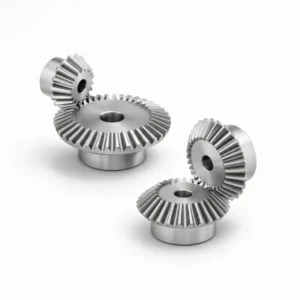
Bevel Gears European Standard – DIN Type A & B, 1:1 to 1:4
-
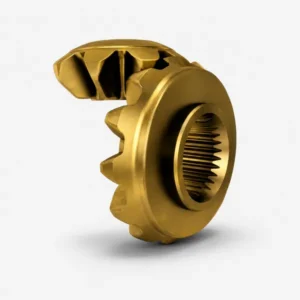
Differential Gears – Open, LSD, Torque Vectoring, Forged PM
-
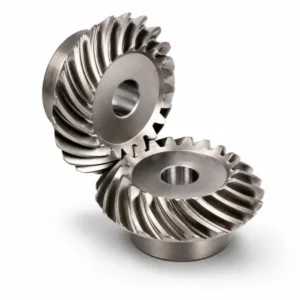
Spiral Bevel Gear – Localized Contact, Min 5 Teeth, M3-M12
-
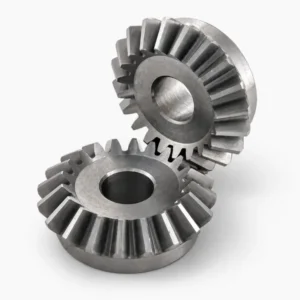
90 Degree Bevel Gears – Right-Angle Drive, All Materials
-
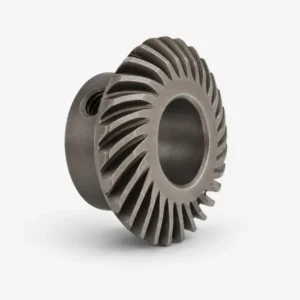
Metal Bevel Gear – M0.15 to M2.0, 11 Alloys, AGMA 13
-
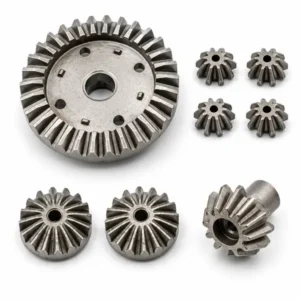
Sintered Metal Bevel Gears – Self-Lubricating, DIN 6–9
-
Spiral Miter Gears – 35° Spiral Angle, 1:1 High-Speed Drive
-
Aircraft Bevel Gear – M0.15 to M2.2, AGMA 13, AS9100
 Italian
  English
  Korean
  French
  Japanese