
Ring Gear For Aerospace and Satellite – Custom, Per Drawing
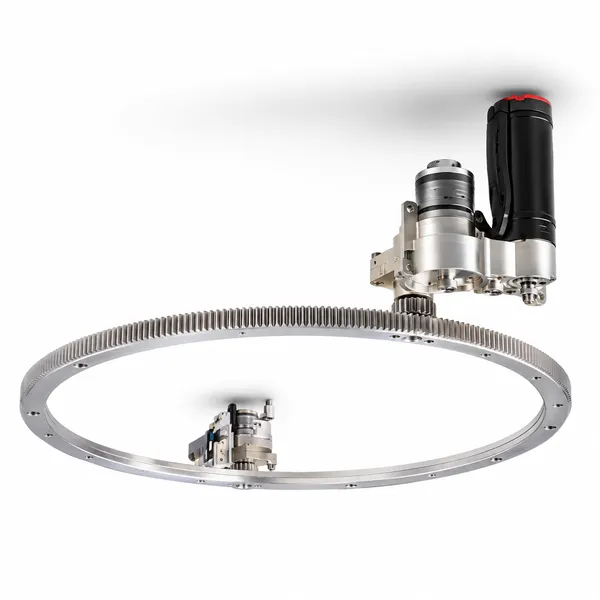
Korea Ever-Power ring gears for aerospace and satellite are precision internal ring gears for aerospace actuator planetary drives and satellite mechanism drives. Transmission ring gear; involute tooth profile; size per drawing. Materials: C45/SAE1045, alloy steel (20CrMnTi, 42CrMo), brass/bronze. Module 1.0–8.0+. OD tolerance ±0.005 mm. DIN Class 4–8; AGMA Class 13; tooth grinding to Ra 0.6. Heat treatment: Q&T, carburising, induction hardening, carbonitriding. Surface treatment: blacking, polishing, chrome plating, zinc plating.
Product Overview
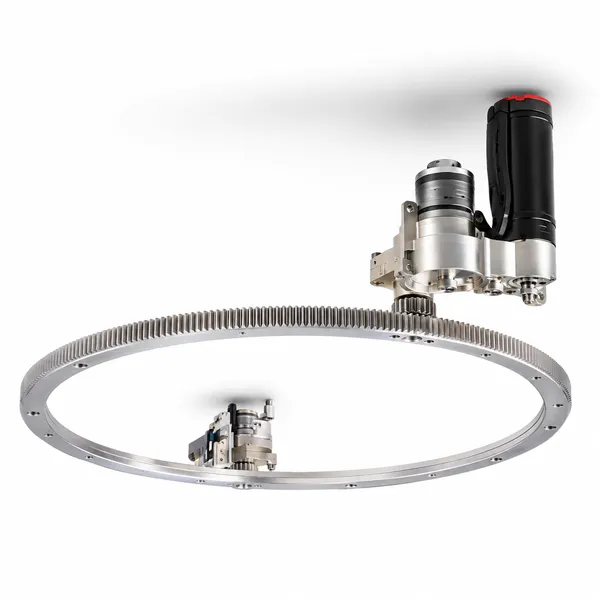
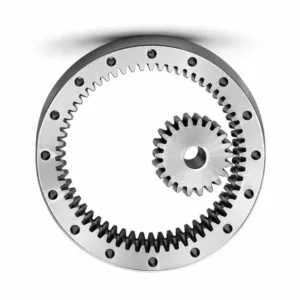
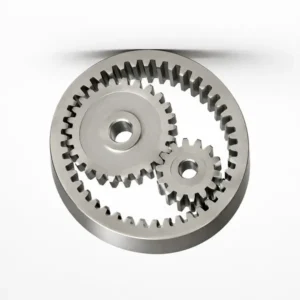
Ring gears — also called internal gears or annular gears — are cylindrical gears in which the teeth are cut on the inside face of the rim rather than the outside. The mating pinion runs inside the ring, producing the most compact gear pair geometry possible: both shafts rotate in the same direction, the centre distance is smaller than for an equivalent external gear pair, and the load is distributed across a longer arc of contact. These properties make the ring gear the essential component of planetary gear systems, which are the default reduction mechanism for aerospace actuators, satellite attitude control drives, helicopter gearboxes, and high-performance industrial servo drives wherever high torque density and precise transmission ratio are simultaneously required.
Korea Ever-Power manufactures precision ring gears to customer specification across the full size range used in aerospace and satellite applications — from fine-pitch instrument ring gears at 0.05" OD to large precision ring gears at 30" OD. AGMA Level 12 (Precision 3) quality. Both inch and metric units. MIL-I-45208A and ISO 9001:2000 compliant. NDA available. Average lead time 4 weeks.
Ring gears have a diversified industry presence and are typically used in passenger cars, trucks, tractors, aerospace and satellite systems, marine engines, lawnmowers, and industrial/power generation equipment. In aerospace applications specifically, the ring gear's role in the planetary stage is critical: it is the fixed element (the annulus) against which the planet gears react, transmitting the torque load from the planet carrier to the ring gear housing — which means the ring gear carries the full output torque of the planetary stage at all times. This makes dimensional accuracy, material integrity, tooth surface quality, and heat treatment correctness of the aerospace ring gear a direct determinant of the actuator's load capacity, life, and reliability.
Ring Gear — Engineering Fundamentals
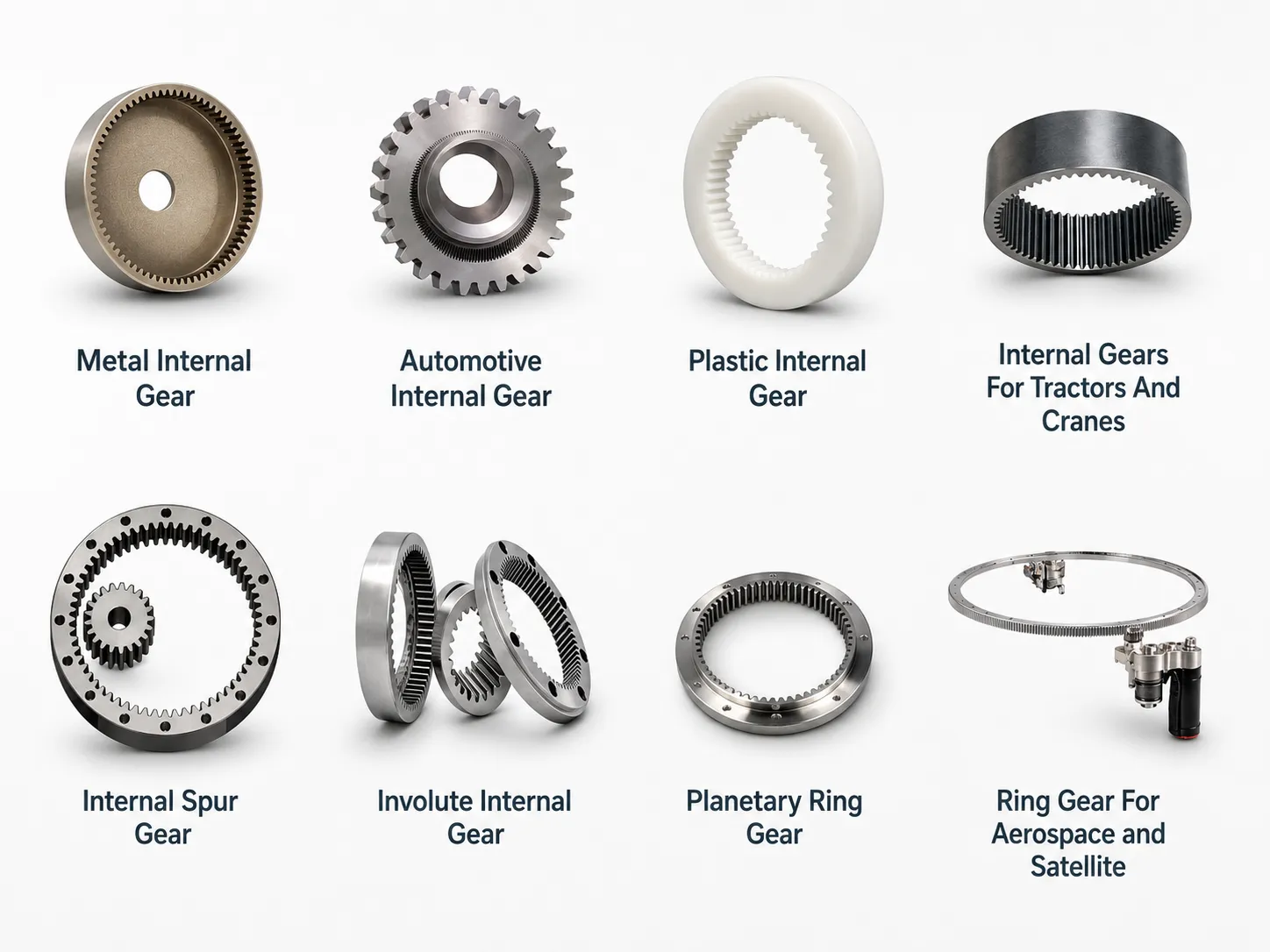
A ring gear (internal gear) differs from an external spur or helical gear in that its teeth are formed on the inner cylindrical surface. The tooth profile is still an involute, and the gear meshes with an external pinion running inside the ring — but several fundamental geometric and kinematic properties differ from external gear pairs.
Same-Direction Rotation
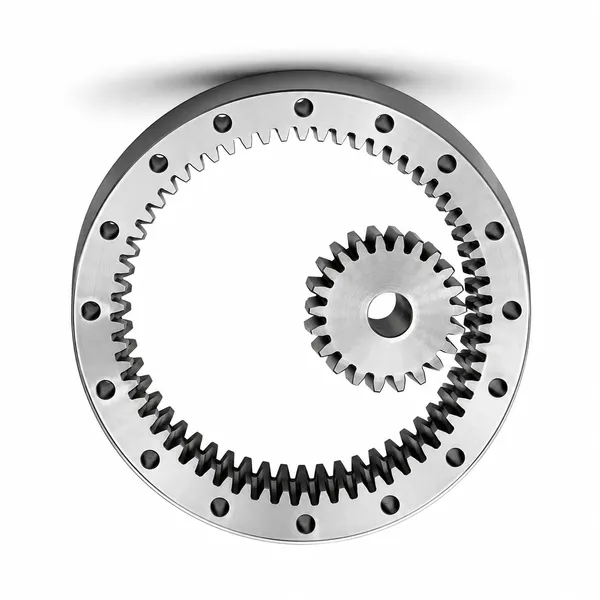
In an external gear pair, the two gears rotate in opposite directions. In an internal gear pair (ring gear + pinion), both gears rotate in the same direction. This property is essential for planetary gearbox design: the planet carrier and the output ring gear rotate in the same direction as the sun pinion input, which is the kinematic basis of the planetary reducer's operation.
Compact Centre Distance
The centre distance of an internal gear pair equals the difference between the pitch radii (R_ring − R_pinion), not the sum. For the same gear ratio as an external pair, the internal pair's centre distance is much smaller — which is why planetary gearboxes achieve higher torque density per unit volume than external gear trains of equivalent ratio. For aerospace actuators where envelope size and weight are critical constraints, this compactness is the primary engineering driver for specifying ring gears.
Longer Arc of Contact
The arc of contact between an internal ring gear and a pinion is longer than that of the equivalent external gear pair — the concave ring gear tooth wraps around the convex pinion tooth for a greater contact arc. This produces a higher contact ratio (typically 1.7–2.2 vs 1.4–1.6 for external pairs), which means more teeth are in simultaneous contact, the load is shared across more teeth, and the transmission is smoother with lower vibration. These are the reasons ring gears dominate in low-noise, high-smoothness aircraft actuation systems.
Concave Tooth Geometry
The ring gear tooth surface is concave — the involute curves inward rather than outward as on an external gear tooth. This concave surface conforms more closely to the convex pinion tooth at the contact point (a conforming contact), producing a larger contact patch than the convex-on-convex contact of an external pair. The larger contact patch reduces the Hertzian contact stress for the same load — which is why internal gear pairs can transmit more power per unit tooth face width than equivalent external pairs at the same material hardness.
Tooth Count Constraint
The ring gear tooth count must always exceed the pinion tooth count by a minimum margin to avoid interference — the tooth tips of the ring gear must not foul the tooth tips of the pinion as they pass through the mesh. The minimum difference in tooth counts depends on the pressure angle and the addendum coefficient. At 20° pressure angle, the ring gear typically requires at least 12–15 more teeth than the mating pinion to avoid interference — a design constraint that Korea Ever-Power's engineers verify for every custom aerospace ring gear design.
Internal vs Flywheel Ring Gear
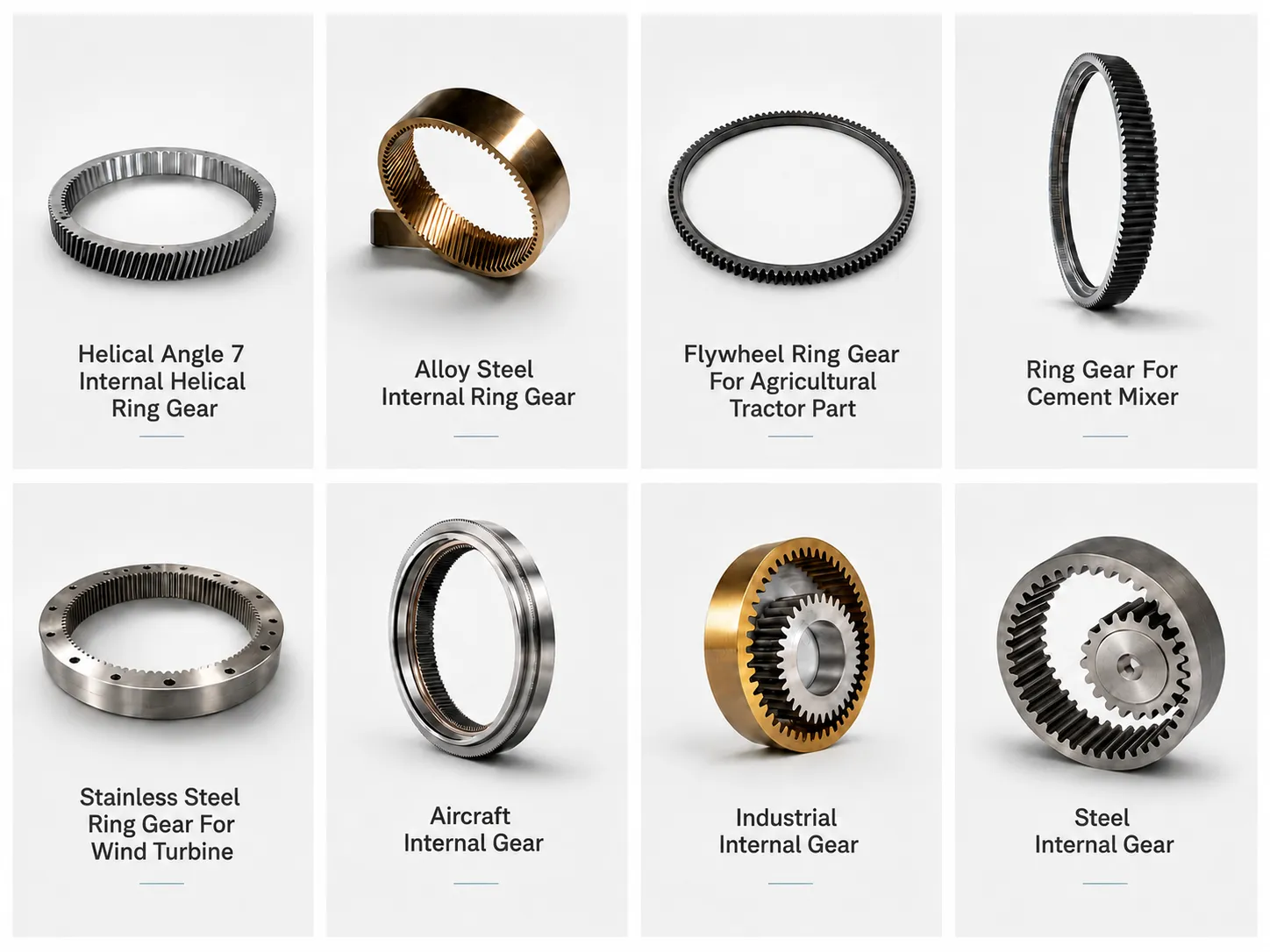
The term "ring gear" covers two distinct gear types that share the annular form but differ in tooth location and function. The internal ring gear (annular gear) has teeth on its inner bore and meshes with an internal pinion — used in planetary gear systems. The flywheel ring gear has teeth on its outer rim and meshes with a starter motor pinion — used in engine starting systems. Korea Ever-Power produces both types; this product page covers the internal ring gear for aerospace and satellite planetary drives.
Product Specifications
| Ring Gear for Aerospace and Satellite — Specification | |
|---|---|
| Use | Aerospace and satellite applications and any situation requiring precision torque conversion |
| Number of Teeth | Up to 197 teeth — custom per drawing |
| Pressure Angle | 14°, 20°, and 25° available |
| Face Width (Thickness) | Open to 1" (25.4 mm) |
| Diametral Pitch (DP) | Up to 250+ DP (fine pitch specialty) |
| Inside Diameter | Open to 48" (1,219 mm) |
| Outside Diameter | 0.05" to 30" (1.3 mm – 762 mm) |
| Quality Level | AGMA Level 12 (Precision 3) — the highest standard grade for precision aerospace gears |
| Tolerances | Critical contact surfaces held to 0.0001" (0.00254 mm) per customer specification |
| Units | Both inch (diametral pitch) and metric (module) available |
| Quality Control | MIL-I-45208A, MIL-STD-45662A, ISO 9001:2000; ISO 13485 Medical Device Certification available; QA inspection report with every delivery |
| Applications | Satellite attitude control drives, military aerospace, defence, oil and gas, medical devices, instrumentation |
| MOQ | 10+ (prototypes and samples available for quality verification) |
| Lead Time | Average 4 weeks |
| Drawing Formats | DXF preferred; also DWG, IGS, STEP, UG, PDF, SolidWorks; NDA available |
Materials
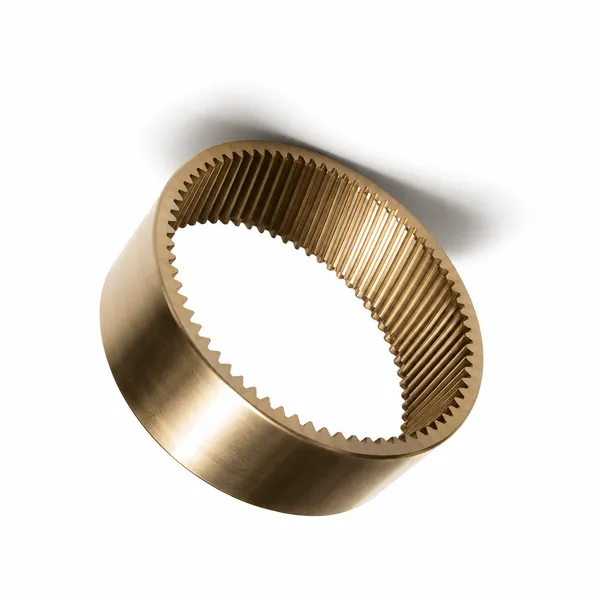
Korea Ever-Power selects the ring gear material based on the application's structural load, operating temperature, corrosion environment, weight budget, and magnetic compatibility requirements. The full materials list covers every standard aerospace gear material specification.
| Material Group | Specific Grades Available | Aerospace Application Context |
|---|---|---|
| Alloy Steel | Chromium steel, Cr-Mo steel, Cr-Mo-V steel, Cr-V steel, Mn steel, Mo steel, Ni-Cr steel, Ni-Cr-Mo steel, Ni-Mo steel, Si-Mn steel, Special bearing steel, High-strength (Impact™, MicroTec®, WHS-100™), High-temperature steel | Planetary ring gears in flight control actuators, helicopter gearboxes, thrust reversers — maximum torque density |
| Stainless Steel | 303 SS, 17-4 PH SS, 440C Heat Treated SS, Chromium SS | Satellite mechanism ring gears, marine aerospace drives, humid-environment actuators — corrosion resistance without coating |
| Carbon Steel | Carbon steel (standard and case hardening grades) | Medium-duty aerospace ring gears where alloy cost is to be minimised |
| Aluminium | Aluminium (aerospace grades per specification) | Weight-critical satellite ring gears and UAV actuator planetary stages where structural load is moderate |
| Bronze / Cast Iron | Bronze, Cast iron | Low-speed, self-lubricating aerospace auxiliary drives; instrument ring gears |
| Engineering Plastics | AVEC, Nylon, Delrin (POM) | Non-metallic ring gears for instrument drives, low-load satellite mechanism, and MRI-compatible actuators (non-magnetic, lightweight) |
Ring Gear in Aerospace Planetary Drive Systems
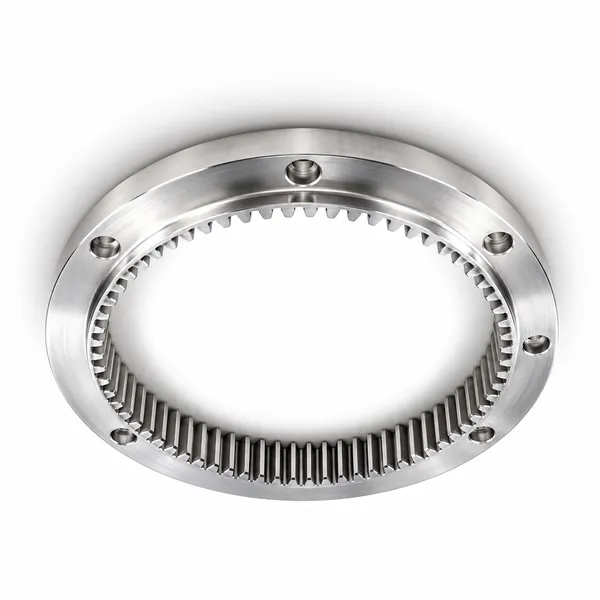
In a standard planetary gear stage used in aerospace actuators, the ring gear (annulus) is typically held fixed while the sun gear is driven by the motor and the planet carrier provides the output. The gear ratio of this arrangement is:
The ring gear carries the full output torque of the planetary stage — it is structurally the most loaded element in the planetary assembly. In a 4:1 planetary stage driven by a 10 Nm motor, the ring gear housing must withstand 40 Nm of reaction torque (minus transmission losses). In multi-stage aerospace planetary actuators with ratios of 100:1 or more, the ring gears in the final stages carry very large torques in a compact envelope — which is precisely why AGMA Level 12 accuracy and high-integrity material selection are mandatory for aerospace ring gears.
Flight Control Actuators
Electromechanical actuators (EMA) driving ailerons, elevators, rudders, and spoilers contain planetary ring gears that must achieve AGMA 12 accuracy to meet the actuator's positional accuracy specification. Alloy steel (Cr-Mo) carburised and case hardened ring gears are standard for primary flight control EMAs.
Satellite Attitude Control
Reaction wheel drives, solar array deployment mechanisms, and antenna pointing drives use fine-pitch ring gears (up to 250+ DP) in aluminium or stainless steel to minimise weight while achieving the precise transmission ratio and low backlash required for satellite pointing accuracy of arc-second or better.
Defence and Military
Radar antenna drives, turret elevation/azimuth actuators, and missile guidance system planetary stages. MIL-I-45208A and MIL-STD-45662A compliance required for military procurement. Korea Ever-Power's quality documentation package covers both military quality standards.
Oil and Gas Equipment
Downhole drilling tool planetary drives, subsea valve actuators, and pipeline pig drive motors use ring gears in high-strength alloy steel with corrosion-resistant surface treatments. The demanding oil and gas environment drives the same precision and material quality requirements as aerospace.
Quality and Manufacturing
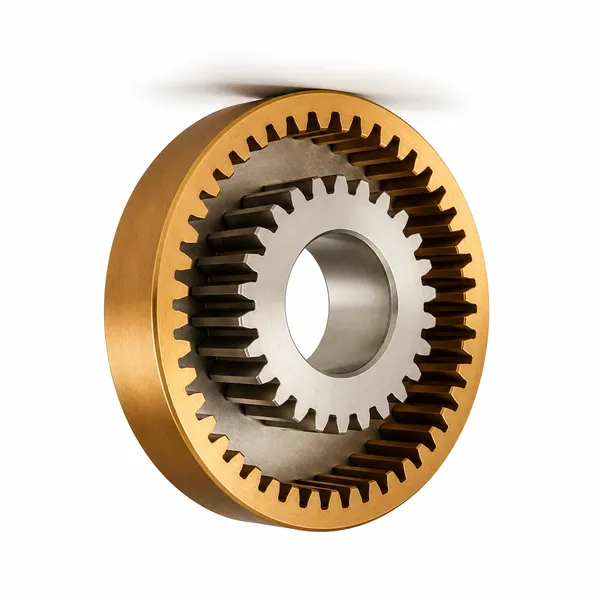
AGMA Level 12 — Highest Precision Grade
AGMA Quality Level 12 (formerly "Precision 3") is the highest grade in the AGMA gear quality classification system. At Level 12, the allowable tooth-to-tooth composite error and total composite error tolerances are at the micrometer level — requiring grinding after heat treatment and verification on a precision gear measuring machine (CMM or gear analyzer). Korea Ever-Power maintains the machine tool and measurement capability to produce and verify AGMA Level 12 internal ring gears across the full size range.
Tight Tolerance — 0.0001" on Critical Surfaces
For aerospace ring gears, all critical contact surfaces — tooth flanks, bore, and face — are held to the customer's tolerances down to 0.0001" (2.54 μm). This tolerance level requires temperature-controlled machining and inspection environments, calibrated CMM measurement, and careful fixturing to prevent workpiece deformation during machining. Korea Ever-Power's rigorous QA procedures cover every gear's critical surface measurements before delivery.
Fine Pitch Specialty — 250+ DP
Fine pitch gears are a Korea Ever-Power specialty. At 250 DP (diametral pitch), the tooth height is 0.008" (0.2 mm) — smaller than a human hair width. Machining, heat treating, and measuring fine-pitch internal ring gears at this scale requires specialised tooling, careful workholding, and optical measurement equipment. Satellite mechanism designers who need fine-pitch ring gears for instrument or camera drive applications will find Korea Ever-Power's fine pitch capability covers their requirement.
Rigorous QA Procedures
Every aerospace ring gear goes through Korea Ever-Power's full QA protocol: incoming material inspection (chemical analysis, mechanical property verification), in-process dimensional checks at each machining stage, post-heat-treatment hardness verification, final gear measurement (profile, pitch, lead, runout), and visual/surface inspection. An inspection report documenting all measured parameters is provided with every delivery — required for aerospace supplier quality records.
20 Years of Gear Processing Experience
Korea Ever-Power has focused on precision gear processing for 20 years. This experience covers carburising and quenching of tooth surfaces for maximum wear resistance, tooth surface grinding after heat treatment for tightest dimensional accuracy, and the reliable operation that comes from knowing the process variables that matter most for each material and gear size combination. Experience accumulated over 20 years of aerospace and precision ring gear production is not reproducible in a shorter time frame.
NDA and Drawing Security
Customer drawings are never released to third parties without explicit written permission. A Non-Disclosure Agreement (NDA) can be signed before the customer sends the drawing — a standard requirement for aerospace and defence programmes. Korea Ever-Power's NDA is straightforward and covers both the drawing and any associated technical data, and is signed before any design information is exchanged.
Ring Gear vs Other Gear Types
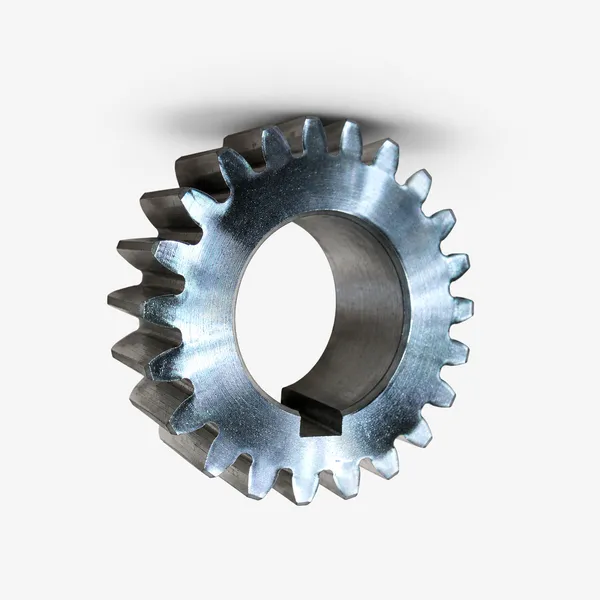
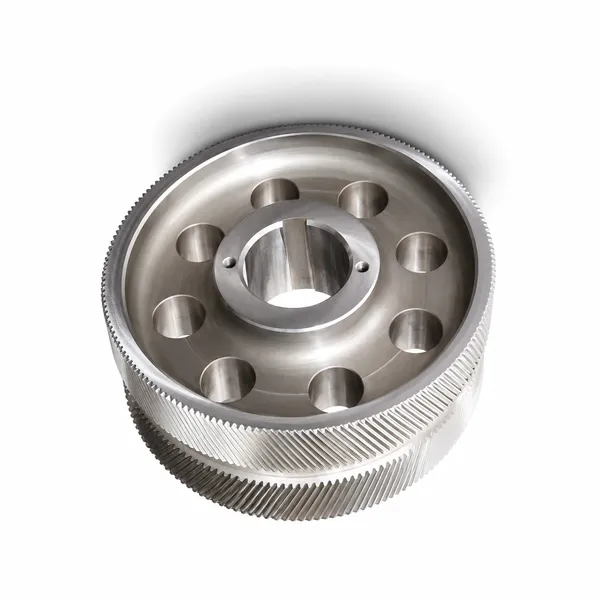
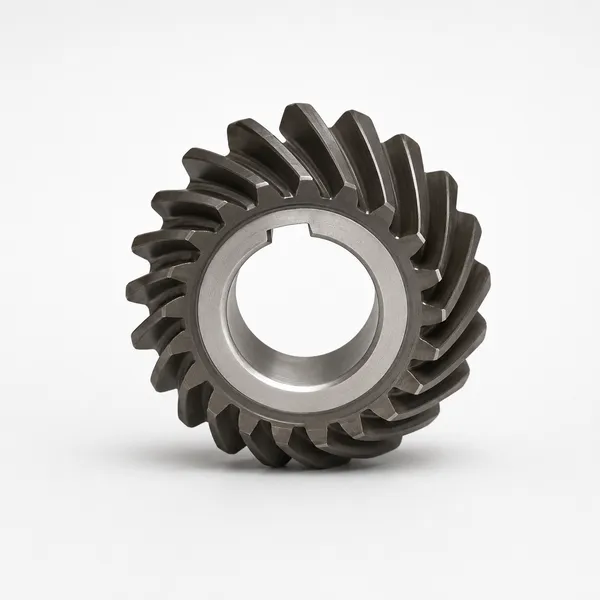
| Property | Ring Gear ★ | External Spur | External Helical | Bevel |
|---|---|---|---|---|
| Shaft Arrangement | Coaxial ✓ | Parallel | Parallel | Intersecting |
| Output Direction | Same as input ✓ | Opposite | Opposite | 90° or other |
| Torque Density | Highest ✓ | Moderate | High | High |
| Contact Ratio | Highest (1.7–2.2) ✓ | 1.4–1.6 | 1.6–2.0 | 1.5–1.9 |
| Axial Thrust | None (spur form) ✓ | None | Yes | Yes |
| Manufacture Complexity | High (internal cutting) | Lowest ✓ | Moderate | High |
Frequently Asked Questions
How do I get an accurate quotation for an aerospace ring gear?
To provide a detailed quotation, Korea Ever-Power needs: the drawing (DXF preferred; also DWG, IGS, STEP, UG, PDF, or SolidWorks), the material specification (or performance requirements from which Korea Ever-Power's engineers will select the material), the required surface treatment, the AGMA quality level (standard is 12 for aerospace), and the purchasing quantity. If you do not have a drawing, Korea Ever-Power can design the ring gear to your application requirements — contact us with the operating torque, speed, planetary stage ratio, OD/ID envelope, and material preference. NDA can be signed before the drawing is sent.
What is AGMA Level 12 and why is it specified for aerospace ring gears?
AGMA Level 12 (Precision 3 in the older AGMA classification) is the highest standard quality grade for precision gears under ANSI/AGMA 2001. At Level 12, the total composite tolerance for a 1" pitch diameter gear is approximately 0.00035" (8.9 μm) — requiring gear grinding after heat treatment to achieve the required profile, pitch, and runout tolerances. For aerospace planetary ring gears, the AGMA 12 accuracy level is specified because any transmission error in the ring gear directly translates to position error at the actuator output, which affects the aircraft control surface position or satellite pointing accuracy. Lower accuracy grades are not adequate for primary flight control or precision satellite mechanism applications.
What is the MOQ and can prototypes be ordered?
The minimum order quantity is 10+ pieces. Korea Ever-Power does not set a fixed MOQ — the price improves with larger quantity, but smaller prototype or sample quantities are available for quality verification before production commitment. For aerospace programmes where a single prototype ring gear is needed for mechanism validation, Korea Ever-Power will produce and deliver at prototype quantity with the same AGMA 12 quality and inspection protocol as a production order. Contact Korea Ever-Power with the drawing and required quantity for a prototype lead time and pricing.
What happens if the received ring gears have a quality non-conformance?
All aerospace ring gears are QC inspected and accepted with an inspection report before delivery. In the rare event of a non-conformance, the customer should contact Korea Ever-Power immediately and provide photographs of the non-conforming part. Korea Ever-Power will analyse the non-conformance, and the affected parts will be reworked or repaired as a priority. All resulting transportation costs for rework are borne by Korea Ever-Power. The inspection report provided with the original delivery is the baseline for non-conformance analysis.
Can Korea Ever-Power produce both inch (DP) and metric (module) ring gears?
Yes — both inch diametral pitch (DP) and metric module ring gears are available. Aerospace programmes based on US/UK standards typically specify diametral pitch (DP); European and Asian programmes typically specify module (m). The conversion is straightforward (m = 25.4/DP for inch-to-metric) but the cutting tools and inspection standards differ between the two systems. Korea Ever-Power's production facility is equipped for both DP and module ring gear production. Specify the system (DP or module) and the value on the drawing, and Korea Ever-Power will produce and inspect in that system. Contact our team for a quotation.
Customer Reviews
"We design electromechanical actuators for primary flight control and specified Cr-Mo alloy steel ring gears AGMA 12 from Korea Ever-Power. Critical surface tolerances of 0.0001" confirmed at our incoming CMM measurement for all 12 gears in the first delivery. NDA signed before drawing submission — no issues. Average 4-week lead time confirmed across three production orders."
Kim Tae-jun | Flight Control Actuator Design Engineer, Incheon Aerospace Systems Co. · Q1 2026
"We develop satellite solar array deployment mechanisms and used Korea Ever-Power's fine-pitch aluminium ring gears at 120 DP, 0.3" OD. The fine pitch specialty claimed proved accurate — the gears arrived to AGMA 12 profile tolerance confirmed on our gear measurement machine. Satellite mechanism weight budget met; gear weight was 0.8 g per ring gear."
Lee Sang-won | Satellite Mechanism Engineer, Gyeonggi Space Technology Co. · Q4 2025
"We supply radar antenna drive systems to the military and needed MIL-I-45208A compliant ring gears. Korea Ever-Power provided the full QA documentation package — material certificate, in-process inspection records, final gear measurement report — that satisfied our MIL procurement quality audit. Both 14° and 20° pressure angle ring gears produced in the same order for two different drive designs."
Park Dong-hyeon | Defence Systems Drive Engineer, Busan Defence Electronics Co. · Q2 2026
"We needed a ring gear designed from performance requirements — no existing drawing. Korea Ever-Power's engineering team designed the Cr-Mo ring gear from our torque, speed, and envelope specification, produced a drawing for approval, and delivered prototype gears within the 4-week average lead time. The prototype gears fit the housing assembly and met the torque test on first pass."
Choi Min-jun | Precision Actuator Development Engineer, Daejeon Precision Mechatronics Co. · Q3 2025
"We distribute precision aerospace ring gears to South Korean and Southeast Asian aerospace suppliers. Korea Ever-Power produces both inch (DP) and metric (module) ring gears from the same facility — which covers our customer base that spans both US-standard and European-standard programmes. ISO 9001:2000 compliance accepted at our customers' incoming supplier qualification in all markets."
Yoon Byeong-seok | Aerospace Parts Distribution Manager, Ulsan Aerospace Components Co. · Q1 2025
Related Products
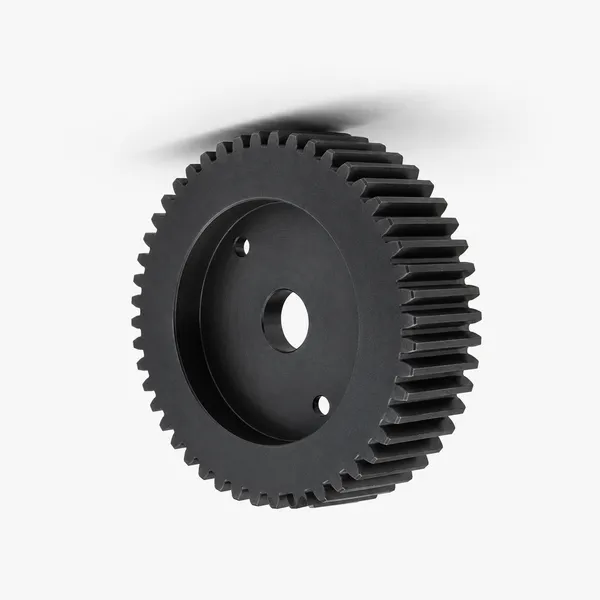
Request a Quotation for Aerospace Ring Gears
Send DXF drawing or specification: tooth count (up to 197), OD (0.05"–30"), ID (to 48"), DP or module, pressure angle (14°/20°/25°), material, and quantity (10+ standard). NDA available before drawing submission. AGMA Level 12. MIL-I-45208A compliant. Average 4-week lead time.
Informazioni aggiuntive
| Editor |
|---|
Prodotti correlati
-
Plastic Internal Gear – POM/PEEK, M0.15-M2.0, AGMA 13
-
Ring Gear For Cement Mixer – M0.5-20, C45/42CrMo, DIN5-10
-
Flywheel Ring Gear For Tractor – C45/42CrMo, Carburised
-
Internal Spur Gear – Custom Material & Size, MOQ 1 Unit
-
Aircraft Internal Gear – M0.15-M2.0, AGMA 13, Multi-Metal
-
Automotive Internal Gear – Multi-Material, M0.15-M2.2 OEM
-
Ring Gear for Wind Turbine – 42CrMo, Mn6 Z109, DIN Cl.7
-
Steel Internal Gear – Mild Steel, 100mm OD, 45HRC, Custom
 Italian
  English
  Korean
  French
  Japanese