
Aircraft Bevel Gear – M0.15 to M2.2, AGMA 13, AS9100
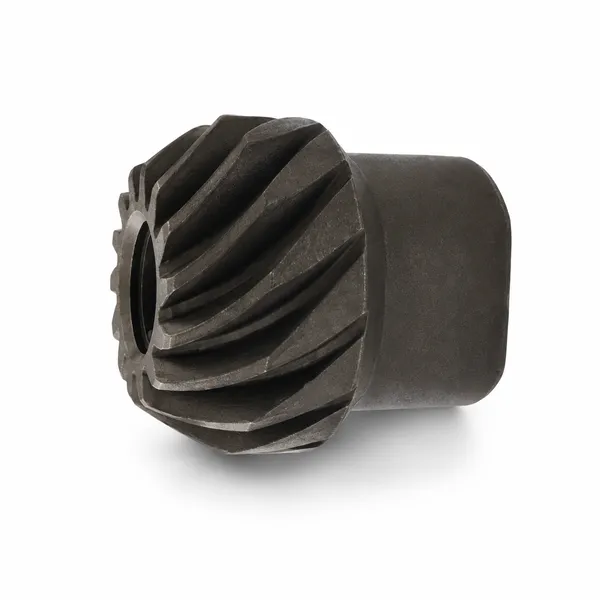
Korea Ever-Power aircraft bevel gears cover module M0.15 through M2.2 and outer diameters Φ3 mm to Φ120 mm, produced to the exacting requirements of aviation applications — AGMA 13 / JGMA 1 accuracy, full material traceability, extreme temperature performance from −55°C to +150°C and beyond, and the fatigue life margins demanded by airworthiness standards. Spiral bevel form as standard for grindable tooth flanks and maximum noise reduction; straight bevel available where specified. Steel, aluminium alloy, stainless, titanium-equivalent alloys, bronze, and brass. Full OEM and ODM service with AS9100-compatible documentation.
Product Overview
Korea Ever-Power aircraft bevel gears are produced to the precision and documentation standards required in aviation applications — flight instrument drives, avionics actuators, auxiliary power unit gearheads, helicopter cockpit mechanism drives, and UAV propulsion angle stages. The module range M0.15 through M2.2 and outer diameter range Φ3 mm to Φ120 mm covers the compact, high-accuracy bevel gear sizes that appear throughout aircraft systems where a direction change between perpendicular shafts must be achieved within a minimum weight and volume envelope.
The most significant engineering distinction of aircraft bevel gears from their industrial counterparts is the convergence of requirements that individually would each be demanding, but together define a design space that only the highest-quality production processes can satisfy: AGMA 13 tooth accuracy, extreme temperature performance across a range of more than 200°C, fatigue life expressed in flight hours rather than calendar years, a mass budget counted in grams rather than kilograms, and material traceability documented to airworthiness standards. Korea Ever-Power produces to all of these requirements as a coordinated package — not as separate optional additions to a basic gear.
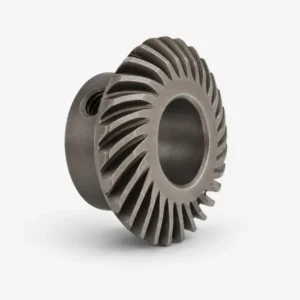
On the question of tooth form for aircraft applications: the CSV product notes a technical trend that reflects real manufacturing and performance reality — straight bevel gear manufacturing equipment is becoming increasingly rare, and straight bevel gear teeth cannot be ground (polished) after heat treatment. Spiral bevel gears can be tooth-ground after hardening, which corrects the dimensional distortion introduced by the heat treatment cycle and delivers tooth surface roughness and profile accuracy that is simply not achievable on a straight bevel tooth by any finishing process. For aircraft applications, where noise transmission into the cockpit or instrument structure is regulated and where tooth profile accuracy directly affects transmission error in precision pointing drives, the spiral bevel gear with ground tooth flanks is the standard specification. Straight bevel gears remain available where the application drawing specifies them.
Five Engineering Requirements That Define Aircraft Bevel Gears
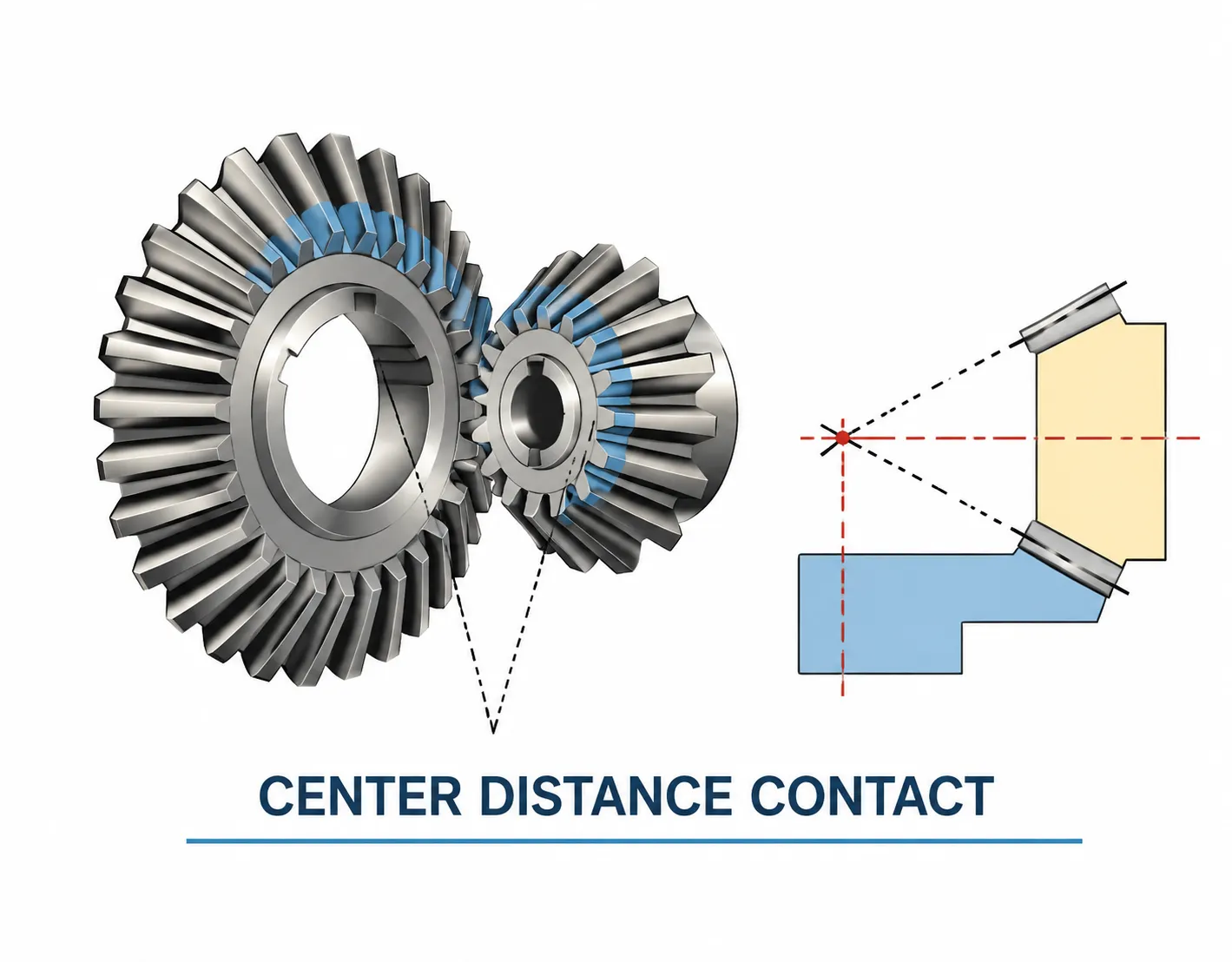
1. Tooth accuracy — AGMA 13 / JGMA 1 as standard
Aviation applications regulate transmission error — the cyclic variation in output angular position relative to the ideal — because this error appears directly as pointing inaccuracy in sighting and navigation instruments and as vibration in flight control drive trains. AGMA 13 limits tooth spacing error and profile form deviation to single-digit micrometre tolerances, achievable only through post-hardening tooth grinding. This accuracy grade is the baseline for aircraft bevel gears at Korea Ever-Power, not a premium option.
2. Temperature range — −55°C to +150°C and beyond
At cruising altitude, unpressurised compartments reach −55°C or below. Near the engine, auxiliary gearbox housings operate continuously above 120°C and transiently above 150°C. Aircraft bevel gears must maintain dimensional stability and tooth strength across this entire range in a single service life. Metal materials — steel, stainless, aluminium alloys, and bronze — all meet this requirement. No engineering plastic survives the combined low-temperature brittleness and high-temperature softening of this range.
3. Weight — minimum mass for given load capacity
Every gram added to an aircraft is paid for in fuel over the service life. Aircraft bevel gears are optimised to the minimum mass consistent with the required load capacity and fatigue life. High-strength alloy steels allow smaller tooth sections for equivalent load; aluminium alloy gears are used where the load permits, reducing gear mass by approximately 65% versus steel at equivalent size. Titanium alloy is used in the most weight-critical applications where both high strength and minimum density are simultaneously required.
4. Fatigue life — design life in flight hours, not cycles
Aircraft components are designed and certified to a specific number of flight hours between overhaul. The gear's tooth bending fatigue life and surface pitting fatigue life must both exceed this interval with adequate margin. This requires material certifications that include fatigue test data in addition to static mechanical properties, and heat treatment verification that confirms the case depth and core hardness necessary to meet the fatigue design calculations.
5. Traceability — material and process documentation to airworthiness level
Aviation maintenance organisations and OEM customers require that every part in the aircraft drivetrain be traceable to its material source, heat treatment run, and dimensional inspection record. A gear that cannot produce this documentation cannot enter service, regardless of how well it meets the dimensional specification. Korea Ever-Power maintains full traceability from raw material incoming certificate through production to final inspection, and can produce the complete record for any serial-numbered aircraft bevel gear supplied.
Why Spiral Bevel Is the Standard Tooth Form for Aircraft Applications
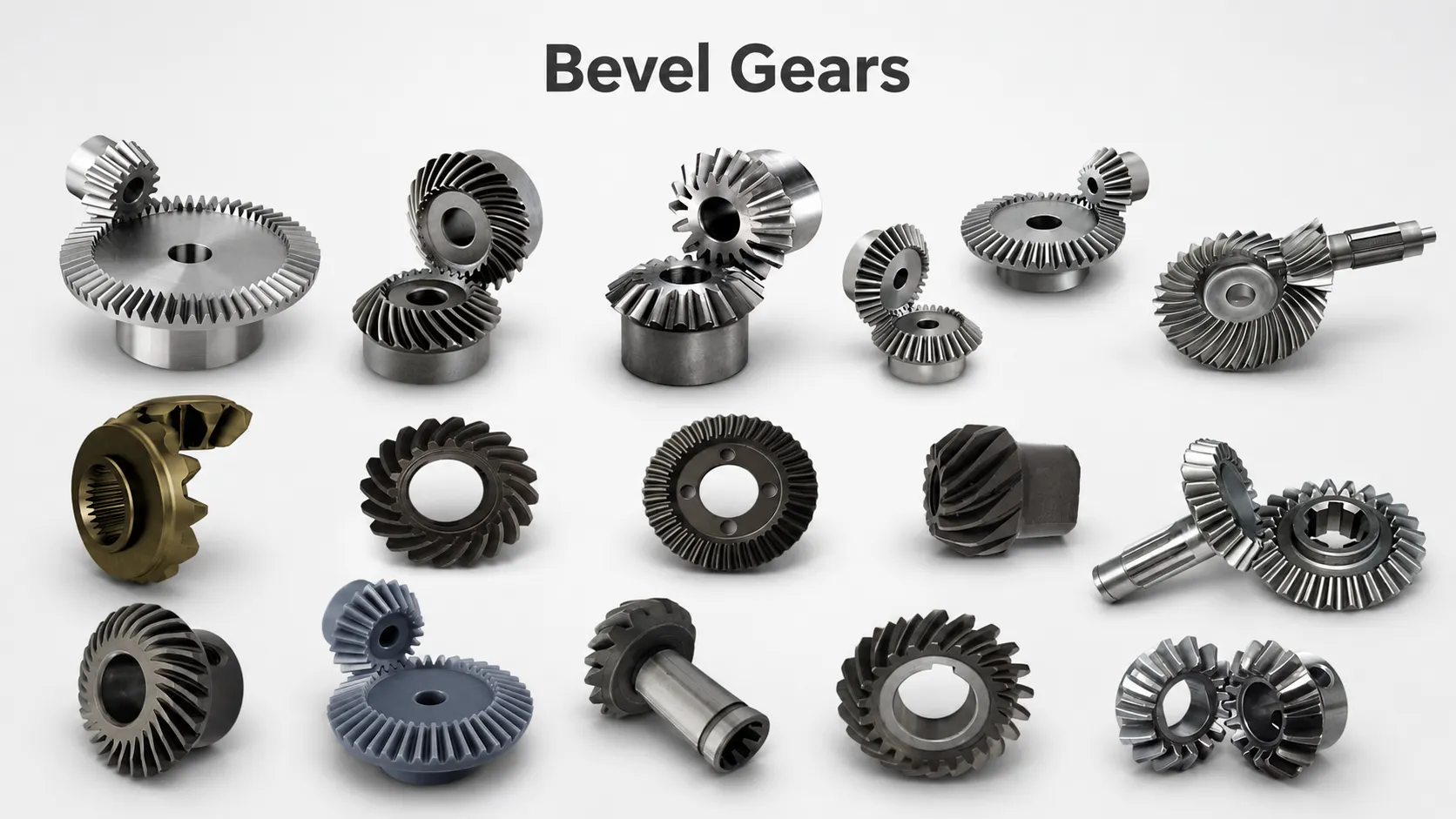
The shift from straight bevel to spiral bevel gears in aircraft applications follows from two compounding factors. First, the manufacturing equipment for high-accuracy straight bevel gears — which operates on a generating principle different from spiral bevel cutting machines — is no longer being widely built or supported, concentrating expertise and tooling in the spiral bevel ecosystem. Second, and more important to the application engineer, spiral bevel gear tooth flanks can be ground after heat treatment. Straight bevel gear teeth cannot be ground in the same way.
What grinding achieves on spiral bevel teeth
After carburising and quenching, a gear's teeth distort by several micrometres to tens of micrometres from the thermal and transformation stresses of the heat treatment cycle. For a gear at AGMA 13 accuracy, this post-heat-treatment distortion would push the finished gear well outside the tolerance band unless corrected. Tooth grinding removes material from the distorted flank surfaces to restore the specified tooth form and spacing within the AGMA 13 tolerance, simultaneously achieving a tooth surface roughness (Ra) below 0.4 μm that is not achievable by any other post-hardening process on a bevel tooth.
The low surface roughness has a direct effect on the gear's fatigue life: surface micropits initiate at surface asperities, and a ground tooth surface has far fewer and shallower asperities than a lapped or as-hardened surface. In aviation applications where the gear is expected to run for thousands of hours before overhaul, this surface quality difference translates to a measurable increase in the inspection interval before pitting becomes detectable.
What this means for straight bevel gears in aviation
A straight bevel gear tooth, because it is generated by a different cutting geometry, cannot be finish-ground using the same equipment as a spiral bevel tooth. Lapping — running the pair together with abrasive compound — partially corrects tooth surface roughness but does not correct tooth spacing error or profile form deviation introduced by heat treatment distortion. The accuracy grade achievable on a hardened straight bevel gear is therefore lower than that achievable on a hardened and ground spiral bevel gear, regardless of the quality of the cutting operation before heat treatment.
This is the fundamental technical reason — documented in the product data for this series — why spiral bevel gears are becoming the standard in aviation applications, and why straight bevel manufacturing capability is declining. Korea Ever-Power produces straight bevel gears for aircraft applications where the drawing specifies this tooth form and the application's accuracy requirement is within the achievable range for hardened straight teeth. Where a new design is being specified, the spiral bevel form is recommended.
Technical Specifications
All values are confirmed against the customer's drawing or application data at the quotation stage. For aviation programmes requiring AS9100-compatible documentation or first-article inspection reports, these are specified at the enquiry stage and included in the quotation scope.
| Parameter | Specification |
|---|---|
| Gear Type | Aircraft bevel gear — spiral bevel (standard); straight bevel per drawing; zero-degree spiral available |
| Module Range | M0.15 – M2.2; confirmed per customer drawing |
| Outer Diameter | Φ3 mm – Φ120 mm |
| Meshing Accuracy Grade | JGMA 1, JIS 6, AGMA 13, DIN 6, DIN 5, AGMA 12 — confirmed per drawing standard |
| Tooth Finishing | Tooth grinding standard for AGMA 13 / JGMA 1; lapping for matched pairs at lower grades |
| Surface Roughness | Ra ≤ 0.4 μm on ground tooth flanks (AGMA 13 grade) |
| Operating Temperature | −55°C to +150°C continuous; transient above per material selection |
| Material — Primary | Alloy steel (20CrNiMo, 9310, M50), stainless steel (440C, 17-4PH), aluminium alloy (7075-T6) |
| Material — Other Options | Bronze, brass, copper, zinc alloy, iron — per application requirement |
| Heat Treatment | Carburising & quenching, case hardening, nitriding, age hardening (17-4PH) |
| Surface Treatment | Hard anodising (aluminium), cadmium plating equivalent, phosphating, passivation (stainless) |
| QA Documentation | Chemical composition, mechanical performance, heat treatment curve, dimensional inspection, first-article report; AS9100-compatible on request |
| OEM / ODM | Full service; AutoCAD and SolidWorks; reverse engineering from sample |
| IPR Protection | Strict policy; NDA available on request |
| 認証 | ISO 9001:2008; TS16949; AS9100-compatible documentation available |
| Packing | Vacuum-packed with plastic tray; individual serial number marking available |
| Delivery | DHL, UPS express |
Material Selection for Aircraft Bevel Gears
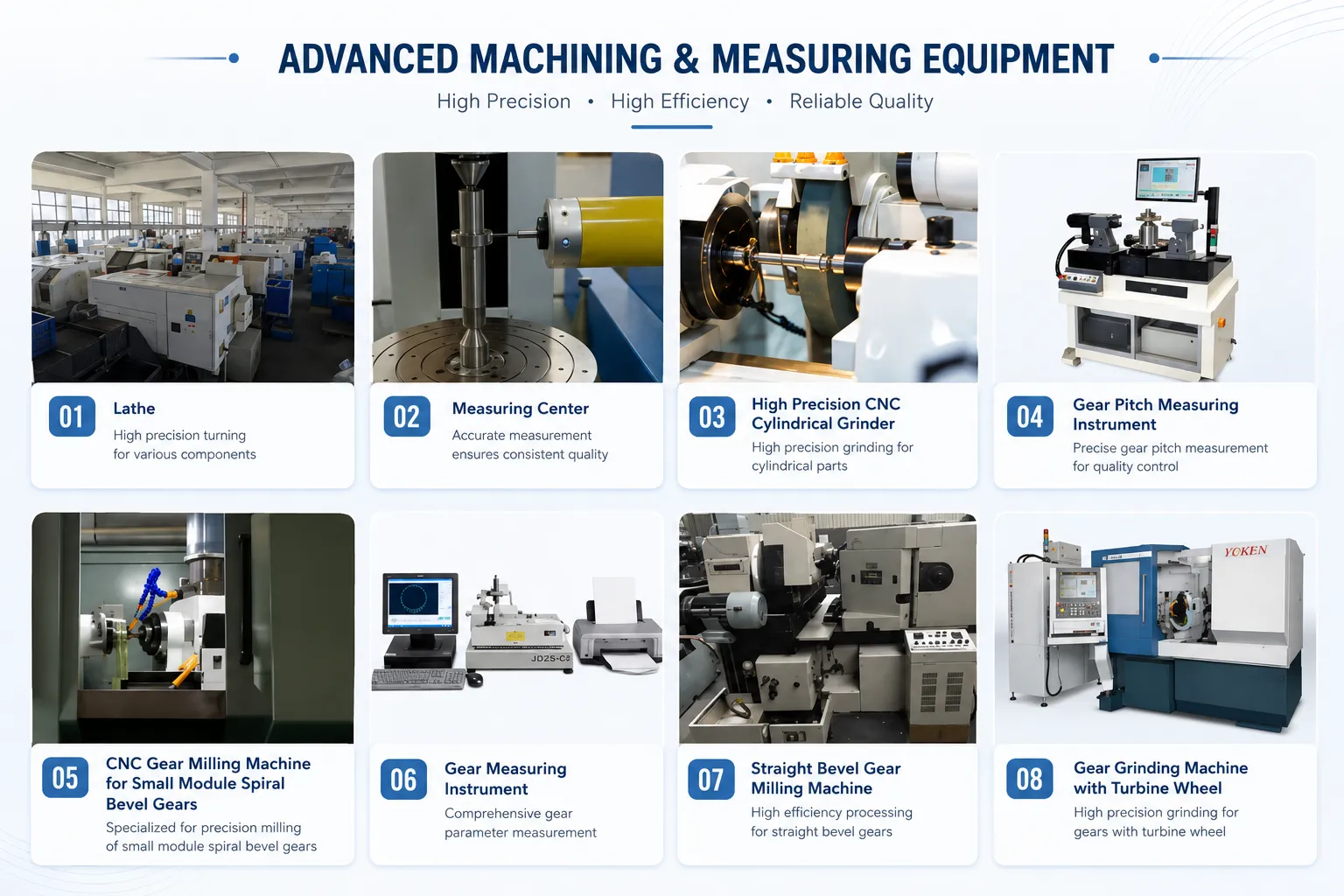
Aviation material selection for bevel gears involves a trade-off between strength-to-weight ratio, temperature performance, corrosion resistance, and the ability to survive both the operating environment and the certification process. The following covers the principal material families in use for aircraft bevel gears at small module.
High-Strength Alloy Steel (9310, 20CrNiMo, M50)
Aviation-grade carburising steels such as AISI 9310 and its equivalents are the primary material for aircraft bevel gears in flight-load-bearing applications. 9310 is a nickel-chromium-molybdenum low-carbon alloy with exceptional core toughness after carburising and quenching — the combination of hard case (58–62 HRC) and tough core that resists the bending fatigue and impact loads of flight operations. M50 is used in applications requiring both gear strength and bearing-quality steel properties. These materials can be tooth-ground to AGMA 13 after hardening.
Stainless Steel (440C, 17-4PH)
440C martensitic stainless provides good hardness (58 HRC after hardening) with moderate corrosion resistance — suited to aircraft instrument drives in humid or salt-air environments where carbon steel would require additional corrosion protection treatments that add weight and complexity. 17-4PH precipitation-hardening stainless combines excellent corrosion resistance with high strength at moderate hardness (42–44 HRC after H900 aging), used in helicopter cockpit drives and avionics actuators where both properties are simultaneously needed.
Aluminium Alloy 7075-T6
Where the load allows, 7075-T6 aluminium reduces the gear's mass by approximately 65% versus steel at the same volume. Hard anodising after machining adds surface hardness to the tooth flanks and provides corrosion protection without the weight of a steel coating. The upper temperature limit of approximately 150°C sustained (lower than steel) restricts 7075-T6 to applications away from heat sources. In UAV drives, satellite pointing mechanisms, and lightweight instrument gearheads, the weight saving justifies the reduced load capacity relative to steel.
Documentation for Aviation Supply Chains
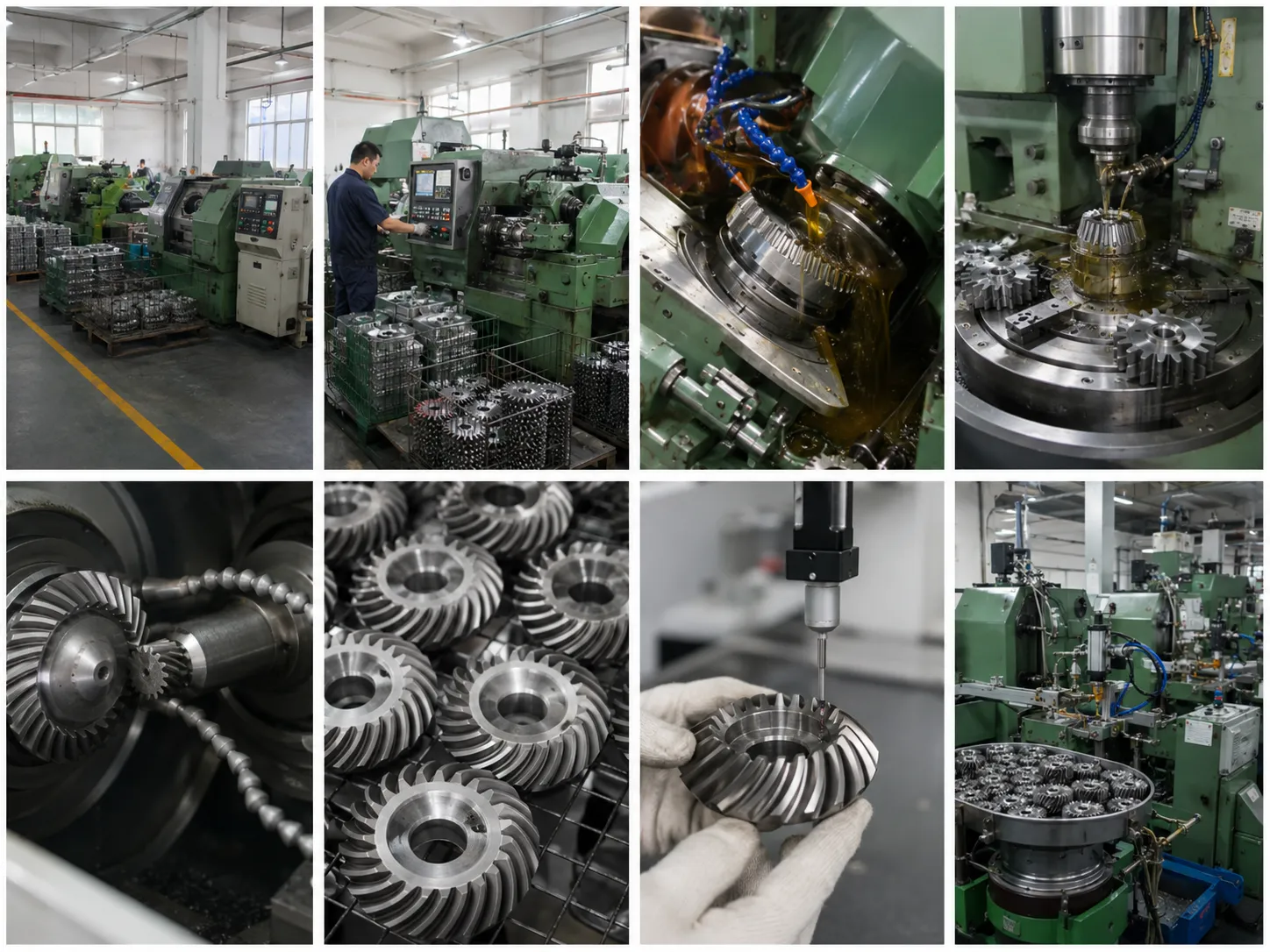
Aviation supply chain customers — whether OEM aircraft manufacturers, Tier 1 system integrators, maintenance organisations, or defence procurement programmes — require a documentation package that is more extensive and more precisely traceable than standard industrial supply. The following describes what Korea Ever-Power provides for aircraft bevel gear orders, and what can be added for customers with specific aviation documentation requirements.
Mill certificate and independent spectral analysis confirming alloy grade, chemical composition, and melt number. Issued with every aircraft bevel gear order. The melt number provides the first link in the traceability chain connecting the finished gear to the steel producer's original cast.
Tensile strength, yield strength, elongation, and Charpy impact energy from test pieces in the same heat as production parts. For aviation-grade alloy steels, minimum values are specified in the material standard (e.g., AMS 6265 for 9310) and the test results must meet these minimums before production parts ship.
Original time-temperature curves from carburising, quenching, and tempering furnace runs, traceable to the batch number. Includes case depth measurement result from cross-section metallographic inspection on sample pieces, confirming the effective case depth matches the design requirement.
Coordinate measuring machine verification of all critical dimensions: pitch cone angle, tooth spacing error, tooth profile form deviation, runout, bore diameter, hub dimensions. For AGMA 13 aircraft bevel gears, measurement is performed in a temperature-controlled metrology room (typically 20±1°C) to eliminate thermal expansion measurement error at this accuracy level.
For new aviation programmes, a first-article inspection report (FAIR) compares every drawing dimension against the measured value on the first production sample, confirms material and process compliance, and is submitted to the customer for approval before the production batch is released. Format follows the customer's requirement — AS9102 FAIR format is available on request.
Fluorescent penetrant inspection (FPI) and magnetic particle inspection (MPI) are available for 100% inspection of aircraft bevel gears where the application's criticality requires confirmation of surface and near-surface integrity on every part. Ultrasonic testing of the blank before gear cutting is also available per EN 10228-3 or the customer's specified standard.
Aircraft Bevel Gear Applications
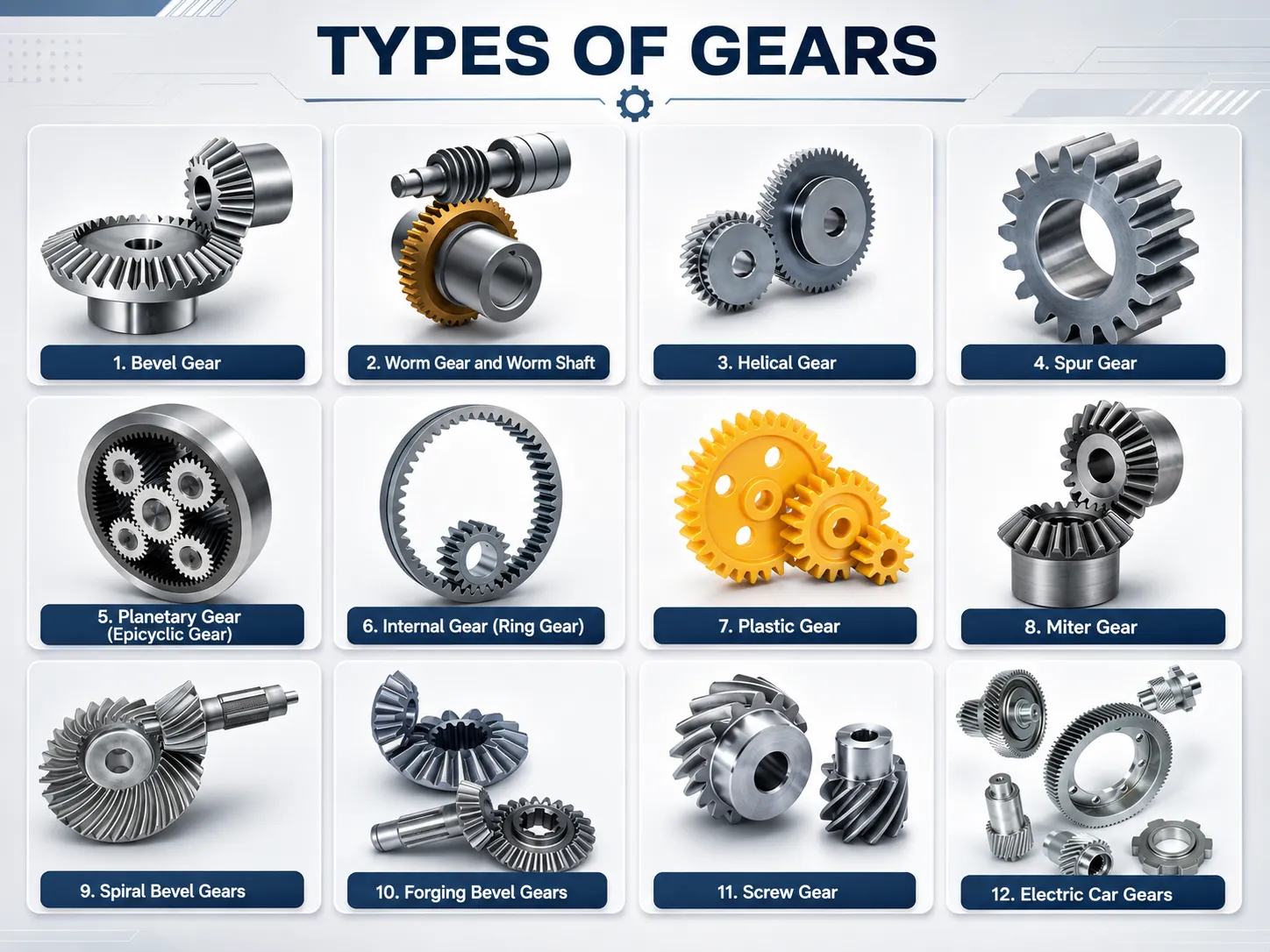
Korea Ever-Power aircraft bevel gears are produced for the following application sectors within aviation. Each has distinct combinations of accuracy grade, material, documentation, and surface treatment requirements.
🔎 Flight Instruments & Navigation
Gyroscope gimbal drives, altimeter and airspeed indicator mechanism gearheads, attitude indicator drives, and VOR/ILS receiver angle drives. These applications combine AGMA 13 accuracy requirements (transmission error directly corrupts instrument reading) with non-magnetic material requirements (brass, stainless, or aluminium — not carbon steel near magnetic flux instruments). Very small module — typically M0.15 to M0.8.
✈ Auxiliary Power Unit (APU) Gearboxes
APU accessory gearboxes use spiral bevel gear stages to drive oil pump, fuel pump, and starter-generator shafts from the APU turbine output shaft at 90° direction changes. Operating temperatures are elevated — the gearbox housing reaches 120–150°C under load — requiring alloy steel gears with heat-resistant surface coatings. Full traceability and first-article inspection are mandatory for APU gearbox components.
🚁 Helicopter Cockpit & Rotor Controls
Helicopter cockpit instrument drives, collective pitch mixing units, and tail rotor gearbox input stages use spiral bevel gears that combine compactness, high accuracy, and resistance to the high-frequency vibration environment of rotary-wing aircraft. 17-4PH stainless or 9310 alloy steel matched to the specific load and corrosion environment of the installation.
📷 Avionics Cooling & Actuators
Avionics bay cooling fan angle drives, antenna positioner drives, and cockpit panel actuators use small-module bevel gears at moderate accuracy (AGMA 12 typically) in aluminium or stainless for weight and corrosion reasons. These drives often operate continuously for the full flight duration and must meet defined MTBF (mean time between failures) targets as part of the avionics equipment specification.
🚢 UAV & Drone Propulsion
Fixed-wing UAV, tilt-rotor, and coaxial drone propulsion gearheads use bevel gear stages at the propeller hub or motor-to-rotor shaft junction. Weight minimisation is the dominant design driver: 7075-T6 aluminium hard-anodised, or carbon fibre composite housings with titanium gear inserts, are the directions being explored. Korea Ever-Power produces the aluminium and stainless gear elements for UAV drives at modules M0.5 to M2.2.
🔯 Military Aircraft & Targeting
Weapon aiming and stabilisation drives, targeting pod gimbals, and EO/IR turret angle drives use bevel gear pairs at the highest accuracy grades under shock and vibration environments that exceed civilian aviation standards. Non-magnetic materials (brass, stainless, aluminium) for electromagnetic compatibility. Full MIL-SPEC documentation support for procurement programmes with documented military standard compliance requirements.
Frequently Asked Questions
Why are straight bevel gears becoming less common in aircraft applications?
Two factors drive the shift. First, the manufacturing equipment for high-accuracy straight bevel gears uses a different generating principle from spiral bevel machines, and this equipment is no longer being widely built or supported — expertise and tooling are concentrating in the spiral bevel world. Second, and more fundamental to the performance engineer: straight bevel gear teeth cannot be ground after heat treatment, while spiral bevel teeth can. Grinding corrects the dimensional distortion introduced by carburising and quenching, achieving tooth accuracy and surface roughness that lapping cannot match. For aircraft applications where AGMA 13 accuracy is required and where tooth surface quality directly affects fatigue life, the grindable spiral bevel gear has a clear performance advantage that the non-grindable straight bevel cannot overcome.
Can you provide AS9100-compatible documentation for aircraft bevel gear orders?
Yes. Korea Ever-Power's quality management system is structured to support AS9100-compatible documentation for aviation customers. This includes the material certificate, mechanical performance test report, heat treatment record, CMM dimensional inspection report, and — for new programmes — a first-article inspection report in the AS9102 format. Non-destructive testing (fluorescent penetrant inspection, magnetic particle inspection) can be added for safety-critical parts. Specify the required documentation package at the enquiry stage and we will include the scope and any effect on lead time in the quotation.
What is the typical lead time for a new aircraft bevel gear programme?
For a first-article sample on a new programme with a customer-approved drawing, the typical lead time is three to five weeks for gears at module M0.5 to M2.2 in standard aviation alloy steels or 7075-T6 aluminium. Very small modules (below M0.3) may require additional tooling lead time on the first order. The first-article inspection report, once the sample is produced, takes an additional one to two weeks to prepare and submit in the required format. For repeat production orders after first-article approval, lead time is typically two to four weeks. If you are attending a fair and need to exhibit an example of the gear, contact us with the fair date and we will confirm whether the sample lead time allows attendance.
Can you consolidate shipment of aircraft bevel gears with other components in one freight consignment?
Yes. Korea Ever-Power is willing to help customers consolidate their shipment to reduce freight costs, where the other components are also sourced from our facility or can be arranged through our logistics partners. For aviation supply chain customers who are sourcing multiple component types, discuss the consolidation requirement with our team at the order stage and we will advise on the logistics arrangement. Note that aviation parts documentation (airworthiness release certificates, material certs) must accompany the parts correctly — consolidation must not compromise the documentation integrity for any aviation-grade component in the consignment.
How quickly can a sample aircraft bevel gear be produced for evaluation?
For a simple sample at a standard module and tooth count in a stock material, we can typically complete a sample within one week of drawing confirmation. More complex samples — non-standard modules, non-standard materials, or gears requiring non-destructive testing as part of the sample package — will take two to three weeks. Submit your drawing (or sample gear for reverse engineering) and specify any documentation required with the sample; we will confirm the sample lead time with the feasibility response within two working days of receiving the enquiry.
Do you support wholesale or small-quantity purchases of aircraft bevel gears?
Where aircraft bevel gears in certain configurations are held in inventory — typically common module and ratio combinations in frequently ordered materials — small quantities can be supplied immediately from stock. For configurations produced to order, the minimum production quantity for new tooling is determined by the gear's module and complexity; for most aircraft bevel gears at module M0.5 to M2.2, single-piece to small-batch production is achievable without a minimum quantity constraint. Contact our team with your specification and quantity requirement and we will confirm availability and lead time.
Customer Reviews
"We produce gyroscope assemblies for aviation navigation systems. The M0.5 brass bevel gears in the gimbal drive require JGMA 1 accuracy and must be non-magnetic. Three other suppliers confirmed feasibility at JGMA 1 in brass but failed the dimensional inspection on the first samples. Ever-Power's sample met the tolerance on the first submission and the first-article report was in the correct format for our QMS approval."
Baek Jae-sung | Component Engineer, Daejeon Aviation Instrument Systems · Q1 2026
"We manufacture APU accessory gearboxes for regional jet aircraft. The aircraft bevel gears in the oil pump drive stage operate at sustained 135°C oil inlet temperature. Ever-Power produced in 9310 alloy steel with the carburising and case depth documented to our process specification. Heat treatment records and CMM report were both in the correct format for our AS9100 supplier documentation folder."
Moon Hyeong-jun | Gearbox Programme Manager, Busan Aviation Components · Q3 2025
"We design lightweight UAV propulsion drives for fixed-wing reconnaissance aircraft. Our propeller angle gearhead uses M1.5 7075-T6 hard-anodised aluminium bevel gears. Ever-Power produced to AGMA 12 accuracy, with the anodising specification we gave them. Weight per pair matched the material calculation to within 2%. The gearhead has completed 180 flight hours in field testing without gear failure or wear beyond the initial running-in."
Jang Min-seok | Mechanical Systems Engineer, Seoul Unmanned Platforms · Q4 2025
"We needed to replace worn spiral bevel gears in a helicopter tail rotor feedback mechanism. The original manufacturer's documentation was no longer available. Ever-Power reverse-engineered from our worn sample, produced a complete production drawing for our approval, manufactured in 17-4PH stainless at AGMA 12, and included fluorescent penetrant inspection on every piece as required by our maintenance organisation approval. First installation passed the operational test without adjustment."
Park Soo-young | Maintenance Engineer, Gyeongnam Rotary Aviation Services · Q2 2025
"We supply targeting pod gimbals for military aircraft. The bevel gear stage uses M0.8 17-4PH stainless at AGMA 13 — the entire mechanism must pass shock and vibration to MIL-STD-810 and be non-magnetic. Four suppliers declined. Ever-Power confirmed feasibility within three days, produced the first-article sample in four weeks, and the dimensional report met AGMA 13 across all measured parameters. The NDA for IPR protection was signed before any drawings changed hands."
Shin Byeong-cheol | Systems Integration Lead, Seoul Defence Optronic Systems · Q1 2026
Request a Quotation for Aircraft Bevel Gears
Send us your drawing, worn sample, or application data — module, material, accuracy grade, temperature range, and documentation requirements. For AS9100-compatible programmes, specify the required documentation scope at the enquiry stage. Our engineering team returns a feasibility confirmation and price within two working days. Simple samples deliverable within one week.
追加情報
| Editor |
|---|
関連商品
-
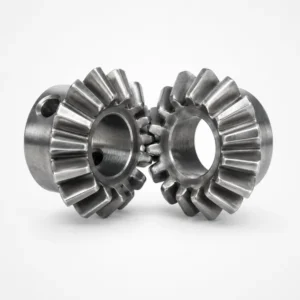
Zero-Degree Spiral Bevel Gear – Zerol, No Axial Thrust
-
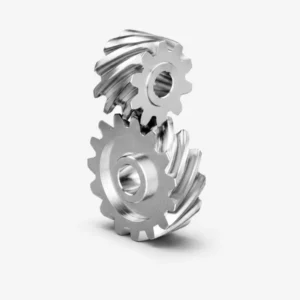
Helical Bevel Gear – Tangential Tooth, Low Noise Bevel Drive
-
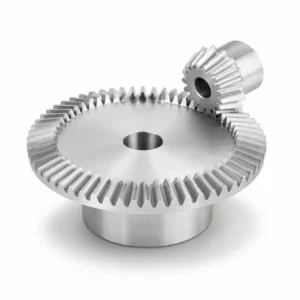
Straight Bevel Gear – M3 to M12, DIN6-9, Multi-Material
-
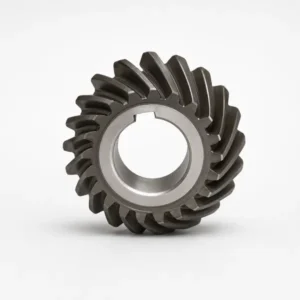
Industrial Bevel Gears – M3 to M20, Up to 1200mm Diameter
-
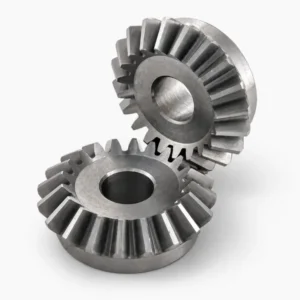
90 Degree Bevel Gears – Right-Angle Drive, All Materials
-
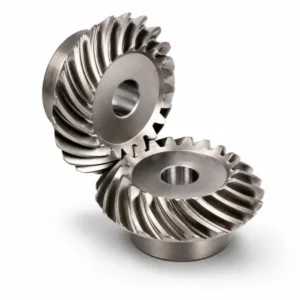
Spiral Bevel Gear – Localized Contact, Min 5 Teeth, M3-M12
-
Metal Bevel Gear – M0.15 to M2.0, 11 Alloys, AGMA 13
-
Sintered Metal Bevel Gears – Self-Lubricating, DIN 6–9
 Japanese
  English
  Italian
  Korean
  French