
Planetary Ring Gear – 42CrMo, Mn6 Z109, DIN Class 7
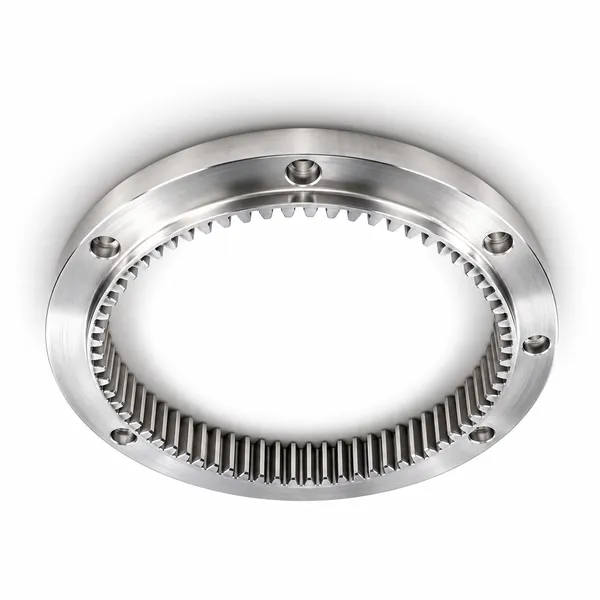
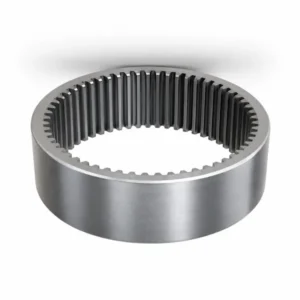
Korea Ever-Power planetary ring gears are large-format alloy steel ring gears for planetary gearbox stages — standard: 42CrMo, involute, 20° pressure angle, DIN 3962 Class 7, Mn=6 Z=109. Internal gear capability: OD to 2,500 mm; ID min 50 mm; face width to 500 mm; module to 45 mm (grinding); DIN Class 4 by tooth grinding, Ra 0.6. Materials: carbon steel (SAE1020, SAE1045), alloy steel (20CrMnTi, 16MnCr5, 42CrMo), brass/bronze. Module 1.0–8.0+. OD ±0.005 mm tolerance.
Product Overview
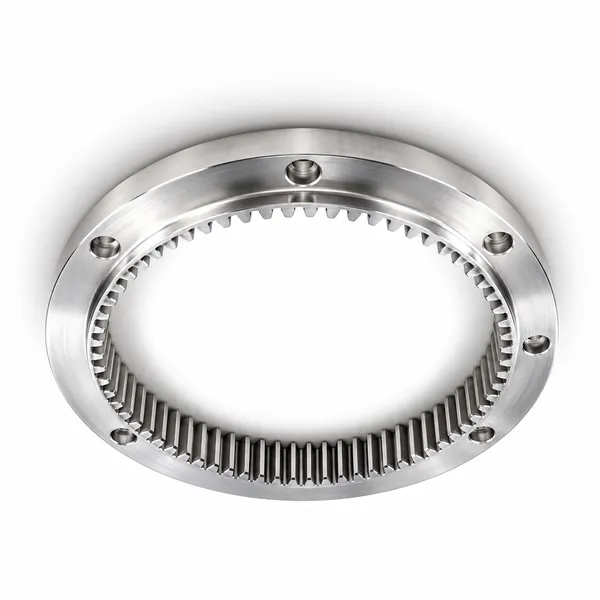
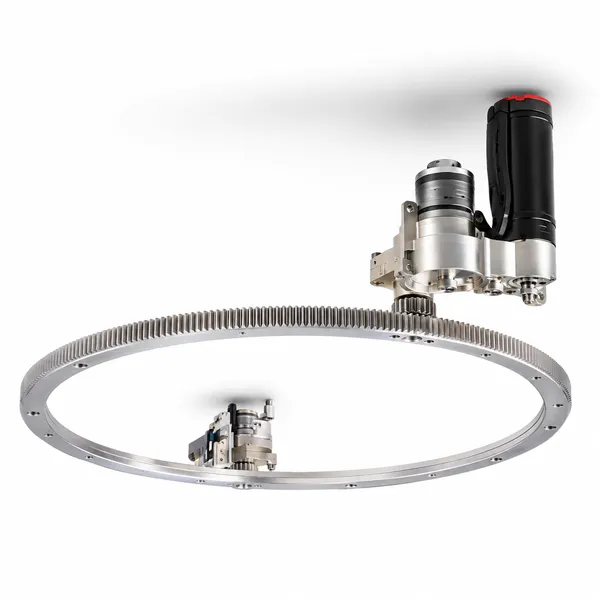
A planetary ring gear is the outermost fixed (or output) element of a planetary gear transmission — the annular internal gear whose inner teeth mesh simultaneously with multiple planet gears orbiting a central sun gear. The planetary transmission is a gear transmission in which at least one gear has a collective shaft that rotates around the central shaft; the outermost ring of this transmission is the ring gear. In a standard planetary stage the ring gear is on the same axis as the planet carrier, and it is the element that makes the planetary arrangement unique: by holding the ring gear fixed and driving the sun, the planet carrier produces an output speed reduction equal to 1 + Zring/Zsun — all within a coaxial, compact envelope no external gear train can match.
Korea Ever-Power produces precision planetary ring gears across module M3 to M12 and beyond in the full range of engineering materials — C45 steel, alloy steel, brass, stainless steel, copper, POM, aluminium. DIN 6–9 precision. Full surface treatment range. Sample 20 business days; bulk 25 days. T/T or L/C.
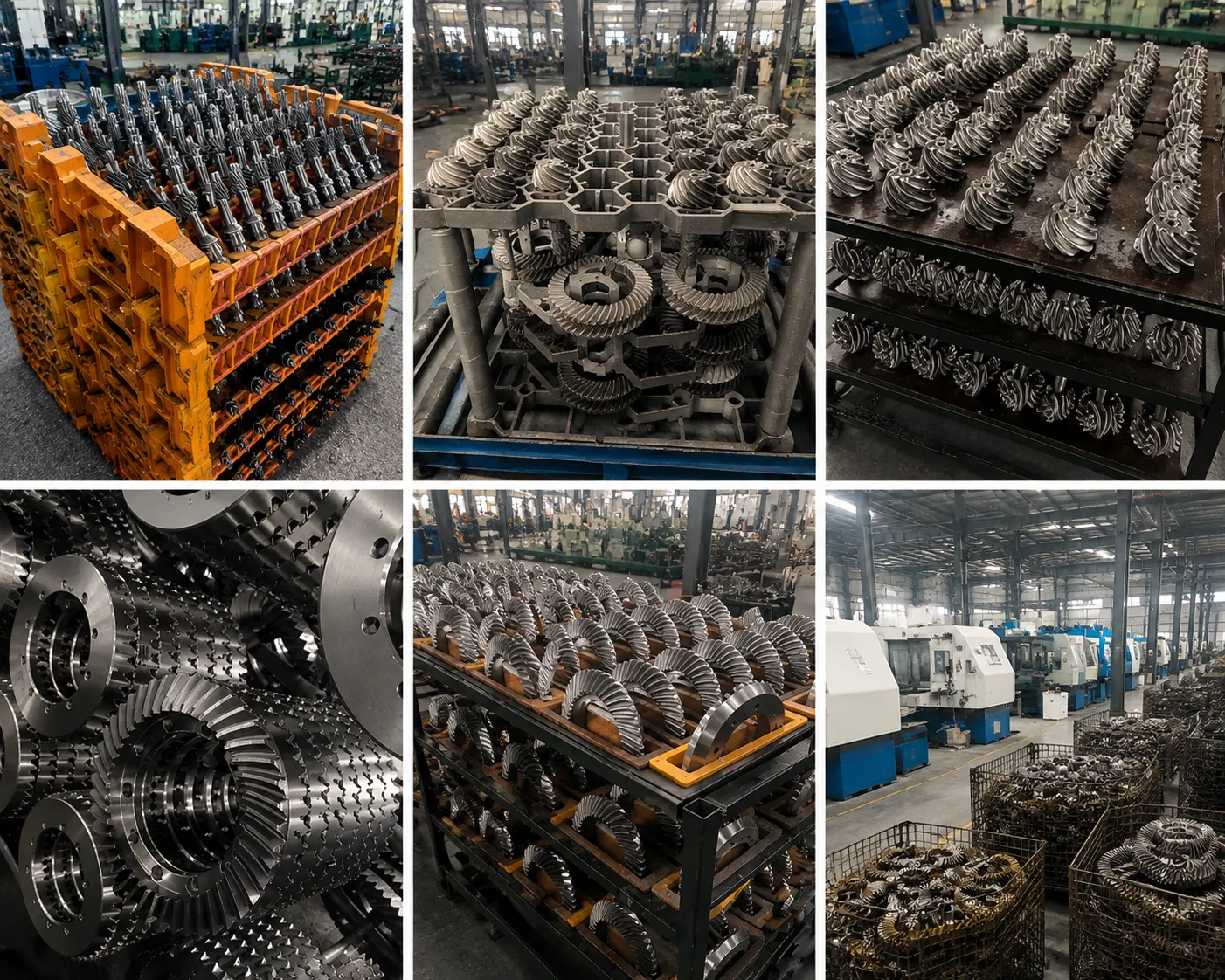
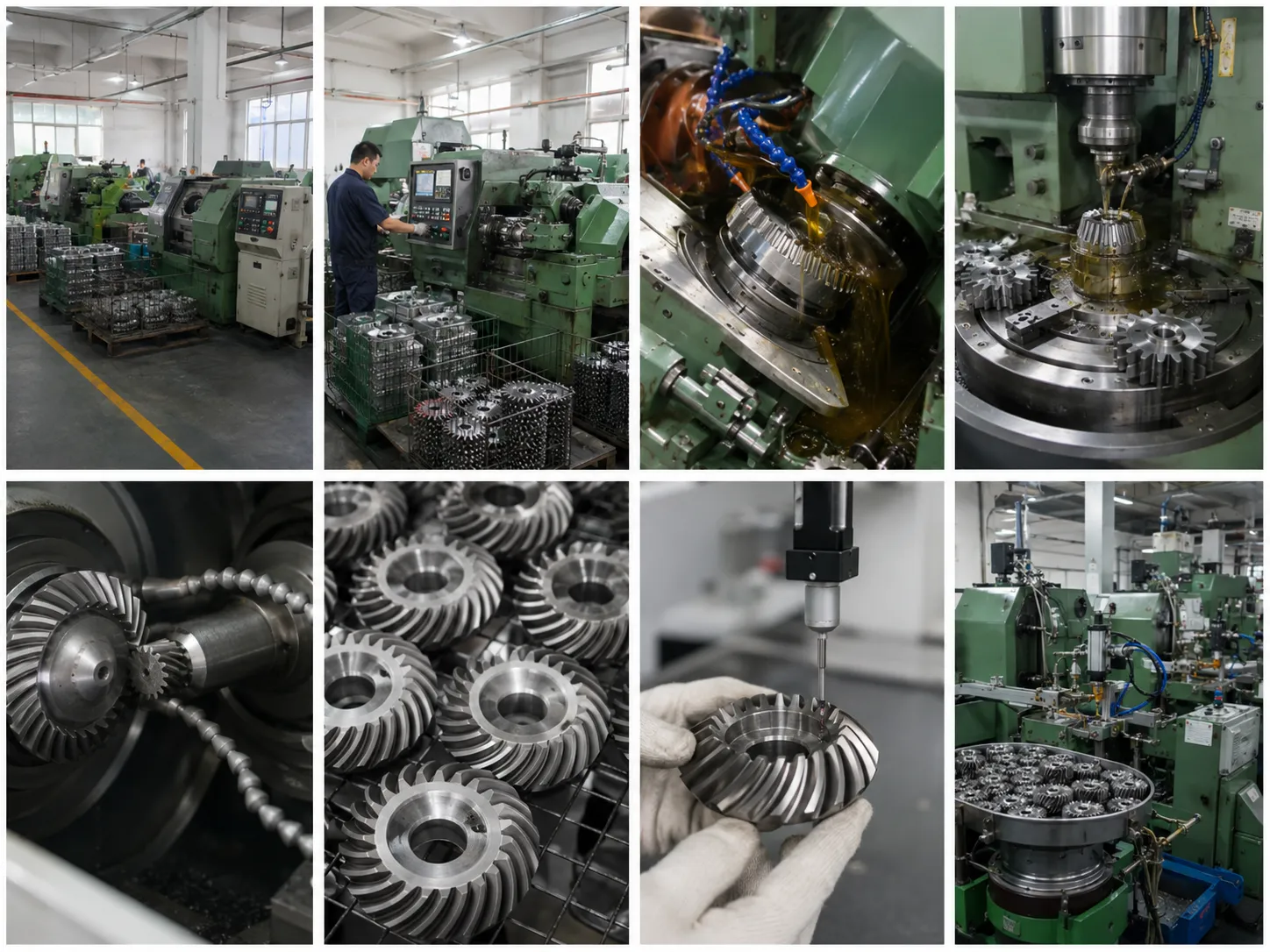
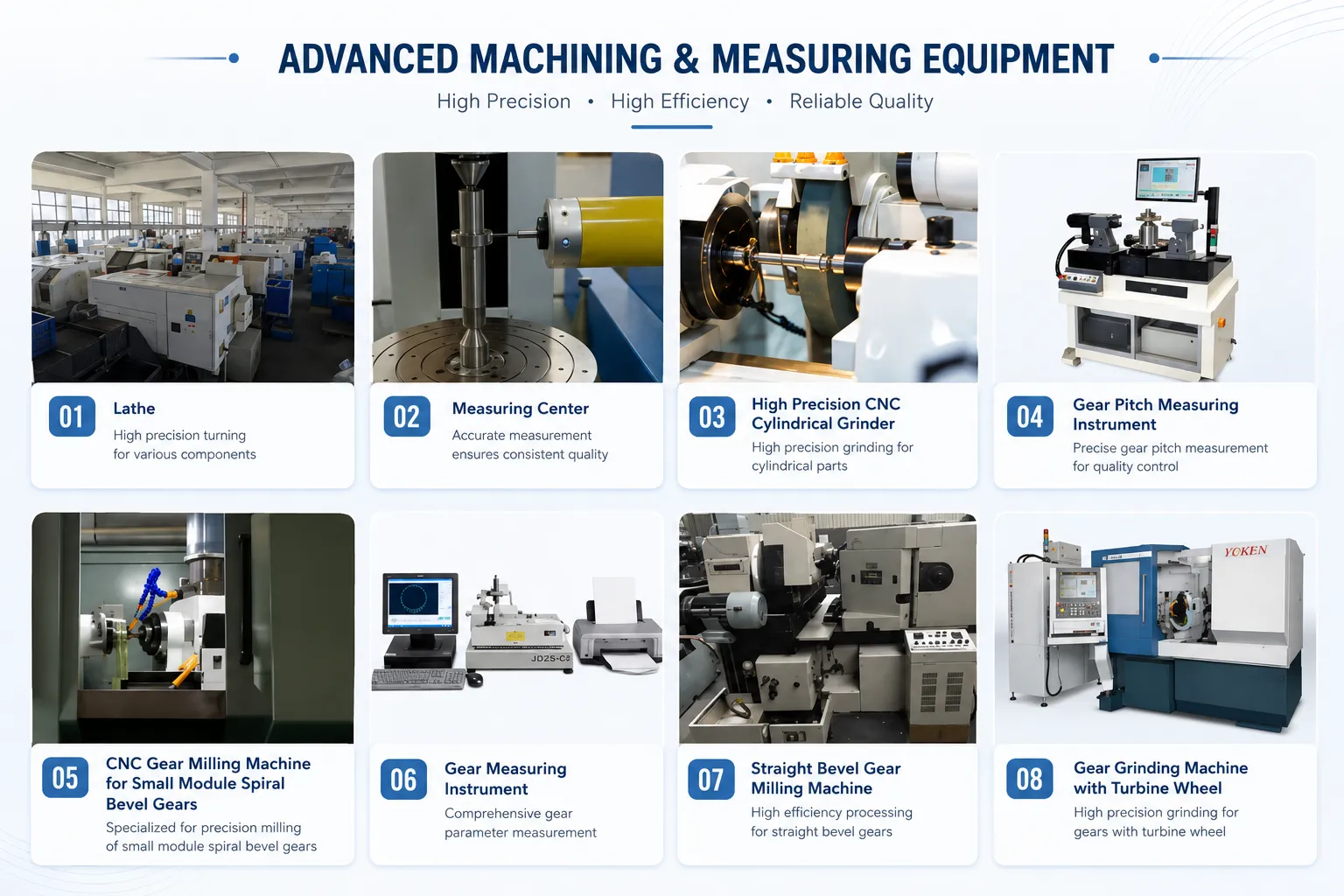
The traditional method of forming inner ring gear teeth — inserting, pushing, and pulling (broaching) — has low material utilisation, long process time, high energy consumption, and produces internal ring gears with comparatively low surface hardness. Korea Ever-Power applies modern CNC internal gear shaping and hard finishing processes that overcome all four limitations: higher material yield, shorter production cycle, lower per-unit energy, and tooth surface hardness matched to the application requirement.
How the Planetary Ring Gear Functions
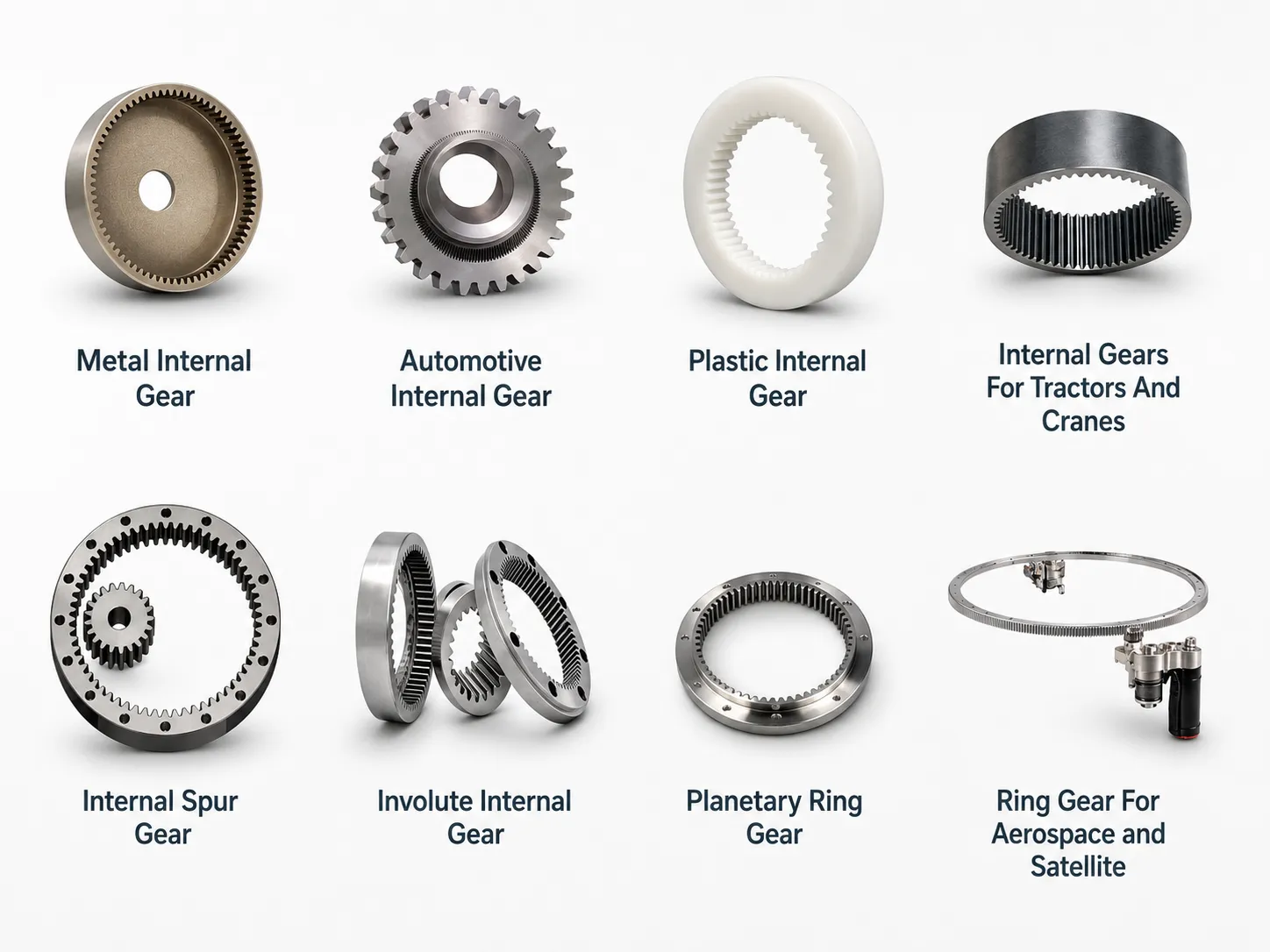
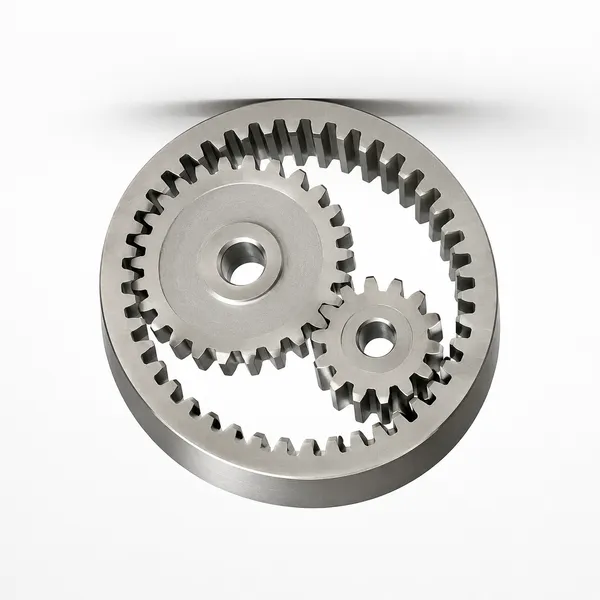
A planetary gear stage has four elements: the sun gear (input), the planet gears (idlers carried on the carrier), the planet carrier (output or fixed), and the ring gear (fixed or output). The ring gear's role and the resulting gear ratio depend on which element is held fixed:
| Fixed Element | Input | Output | Ratio Formula | Common Use |
|---|---|---|---|---|
| Ring gear ★ | Sun gear | Planet carrier | 1 + Zring/Zsun | Speed reducer — most common arrangement |
| Planet carrier | Sun gear | Ring gear | Zring/(Zring+Zsun) | Speed increaser (ring gear output) |
| Sun gear | Planet carrier | Ring gear | Zring/Zplanet + 1 | Differential / CVT applications |
In the most common arrangement (ring gear fixed, sun input, carrier output), the ring gear carries the full reaction torque of the stage at all times — which is why the ring gear is the most structurally loaded element in the planetary assembly and why its material, heat treatment, and tooth accuracy specifications are the primary design drivers for planetary gearbox performance.
Compact Structure — Small Size, Light Weight
Planetary transmission has the characteristics of planetary motion and power split. Multiple planet gears share the load simultaneously, and the coaxial arrangement means the ring gear and sun share the same centreline — producing a gearbox that is shorter and lighter than an equivalent-ratio external gear train. A 5:1 planetary stage is typically 40–60% of the volume of a 5:1 external gear pair at the same torque rating.
Power Split — Load Sharing
A three-planet stage splits the transmitted torque equally across three planet-ring gear meshes. Each planet gear contacts the ring gear at the same time, sharing one third of the total torque at each contact. This load splitting reduces the tooth load at each mesh to one third of what a single-planet stage would require — allowing a smaller ring gear module (and lighter assembly) for the same output torque.
High Transmission Efficiency
A single planetary stage achieves 97–99% power transmission efficiency — close to the efficiency of a single external spur gear pair. Multi-stage planetary gearboxes maintain high efficiency because each planet-ring gear mesh is an internal contact (conforming, lower friction than external convex-on-convex contact). This high efficiency is why planetary gearboxes are specified for servo drives, robot joints, and EV transmissions where thermal management of losses is a design constraint.
Wide Ratio Range
A single planetary stage achieves ratios from approximately 3:1 to 12:1 depending on the ring-to-sun tooth count ratio. Two stages in series achieve up to 144:1 in the same coaxial form factor. Three stages reach 1,728:1. This wide ratio range — all in a compact, coaxial package — is the primary reason planetary gearboxes dominate in robot joint drives, servo actuators, wind turbine pitch and yaw drives, and aerospace actuators.
Technical Specifications
| Planetary Ring Gear — Product Specification | |
|---|---|
| Module Range | M3, M4, M5, M8, M12 and non-standard — custom per drawing |
| Material | Brass, C45 steel, stainless steel, copper, POM, aluminium, alloy — per drawing |
| Surface Treatment | Zinc-plated, nickel plated, passivation, oxidation, anodisation, Geomet, Dacromet, black oxide, phosphatising, powder coating, electrophoresis |
| Standard | ISO, DIN, ANSI, JIS, BS, and non-standard |
| Precision | DIN 6, DIN 7, DIN 8, DIN 9 |
| Teeth Treatment | Hardened, milled, or ground |
| Tolerance | 0.001 mm – 0.01 mm – 0.1 mm per accuracy grade |
| 仕上げる | Shot/sandblast, heat treatment, annealing, tempering, polishing, anodising, zinc-plated |
| Packing | Plastic bag + cartons, or wooden packing for large ring gears |
| Payment Terms | T/T, L/C |
| Sample Lead Time | 20 business days; sample price USD 2–100; express freight paid by customer |
| Bulk Lead Time | 25 business days |
Material Selection
C45 Steel — Standard Grade
The most economical planetary ring gear material. Induction hardened to 50–58 HRC on the tooth surface. Suitable for general industry planetary gearboxes, conveyor drives, and servo reducer stages at moderate torque density. Surface treatment required for corrosion protection.
Alloy Steel — High Duty
42CrMo or 20CrMnTi carburised ring gears for high-torque planetary stages — robot joints, EV final drives, wind turbine pitch actuators. Case hardness 58–62 HRC; tough core absorbs shock loads from sudden load application.
Stainless Steel — Corrosive Environments
SS304 or SS316L planetary ring gears for food processing planetary drives, marine propulsion auxiliary stages, and medical robot joint actuators. Corrosion resistance maintained at the inner tooth surface without coating.
Brass / Aluminium — Light Duty
Brass ring gears for instrument planetary drives and non-sparking applications. Aluminium ring gears where weight is critical — UAV actuators, portable servo drives, and precision instrument gearboxes.
POM / Engineering Plastic
POM or PA planetary ring gears for low-load, low-noise plastic planetary drives in home appliances, toy drives, and light automation. Self-lubricating, non-magnetic, corrosion resistant — no surface treatment required.
Copper — Electrical Applications
Copper ring gears in planetary drives where the gear train must conduct a continuous electrical ground path — semiconductor handling equipment and precision measurement instrument planetary drives where static charge accumulation must be prevented.
Applications
Robot Joint Drives
Carburised 20CrMnTi planetary ring gears M3–M5 DIN 6–7 in collaborative robot (cobot) and industrial robot joint planetary reducers. High torque density and compact coaxial form factor are the two properties that make planetary ring gears the universal choice for robot joint drives.
Automatic Controlling Machines
C45 or alloy steel planetary ring gears M4–M8 in servo-driven positioning systems, CNC axis drives, and linear actuator planetary stages. The planetary gearbox's coaxial arrangement makes it the natural choice for servo motor output stages where motor and load share the same axis.
Solar Energy Equipment
Alloy steel planetary ring gears M5–M12 in solar tracker azimuth and elevation drive planetary gearboxes. The planetary stage's high torque density in a sealed housing suits the outdoor solar tracker's low maintenance, long service life requirement at moderate drive cycle frequency.
Medical Equipment
SS316L or aluminium planetary ring gears M3–M5 DIN 6 in surgical robot joint reducers, infusion pump drive planetary stages, and medical imaging table positioning planetary gearboxes. Non-magnetic and autoclave-compatible stainless steel for MRI-adjacent medical drives.
Parking Systems
Alloy steel planetary ring gears M5–M12 with Dacromet surface treatment in automated parking system lift drives. Outdoor corrosion protection and high drive torque in a compact, sealed planetary gearbox suit this intermittent-duty, high-cycle application.
High-Speed Rail and Aviation
Precision alloy steel planetary ring gears M5–M12 DIN 6–7 in rail vehicle door actuators, aircraft landing gear actuator planetary stages, and airport gate drive planetary gearboxes. Full material traceability and dimensional inspection report supplied as standard for rail and aviation procurement.
Advantages of Planetary Transmission
| Property | Planetary (Ring Gear) ★ | External Spur Stage | Worm Gear Stage | Cycloidal Stage |
|---|---|---|---|---|
| Shaft Arrangement | Coaxial ✓ | Parallel offset | Right angle | Coaxial |
| Torque Density | Highest ✓ | Moderate | Moderate | High |
| Efficiency (%) | 97–99% ✓ | 96–99% | 50–90% | 90–95% |
| Ratio Per Stage | 3:1 – 12:1 | 1.5:1 – 6:1 | 5:1 – 100:1 | 6:1 – 87:1 |
| Backlash | Low (arc-min) ✓ | Low | Moderate | Lowest ✓ |
| Self-Locking | No | No | Yes (high ratio) ✓ | No |
Frequently Asked Questions
Why does a planetary ring gear need to have more teeth than the sun gear?
In a valid planetary gear stage, the ring gear tooth count must equal the sum of the sun gear tooth count and twice the planet gear tooth count: Zring = Zsun + 2 × Zplanet. This is the assembly condition that ensures all planet gears can be assembled into the stage simultaneously. If this condition is not met, the planets will not align with the ring gear teeth at the same angular positions on the planet carrier, and the stage cannot be assembled. Additionally, the ring gear must have sufficiently more teeth than the mating pinion to avoid interference — typically at least 12–15 more teeth at standard 20° pressure angle.
Why is the inner ring gear difficult to process, and how does Korea Ever-Power overcome this?
The traditional internal ring gear tooth cutting methods — broaching (pulling teeth), shaping (inserting teeth), and slotting (pushing teeth) — are constrained by the limited space inside the ring gear bore, which restricts tool size, chip clearance, and coolant access. The result is a slow process with low material utilisation and limited achievable surface hardness after heat treatment. Korea Ever-Power uses modern CNC internal gear shaping machines with profile-ground form cutters that overcome the space constraint, combined with internal bore grinding after heat treatment to achieve DIN 6–7 accuracy on the finished tooth surface — producing planetary ring gears with the hardness and accuracy that the traditional methods cannot achieve.
What is the difference between a planetary ring gear and a flywheel ring gear?
A planetary ring gear (also called an annular ring gear or internal ring gear) has its teeth on the inner bore and meshes with an internal planet pinion running inside the ring — used in planetary gearboxes. A flywheel ring gear has its teeth on the outer rim and meshes with an external starter motor pinion — used in engine starting systems. Both are annular (ring-shaped) gears, but they differ in tooth location (inner vs outer), mesh geometry (internal vs external), and application. Korea Ever-Power produces both types; this page covers the internal planetary ring gear. The flywheel ring gear for agricultural tractor applications is a separate product in the range.
What surface treatment is recommended for planetary ring gears in outdoor or corrosive environments?
For outdoor applications (solar tracker planetary drives, parking system gearboxes), Dacromet or Geomet coating on the external surfaces of the ring gear housing provides 480–1,000+ hours salt spray resistance without hydrogen embrittlement risk — critical for hardened ring gears where electroplating could cause hydrogen embrittlement cracking. The internal tooth surface, being a precision ground surface running in oil, does not receive a coating — the tooth surface corrosion protection relies on the gear oil during operation and preservation oil (or VCI packaging) during storage and transit. Contact our team with the specific environment for a surface treatment recommendation.
Customer Reviews
"We manufacture collaborative robot joints and use 20CrMnTi carburised planetary ring gears M4 DIN 7 from Korea Ever-Power. The internal gear shaping and post-hardening grinding produces the DIN 7 tooth profile accuracy our planetary reducer requires for arc-minute backlash. Torque density confirmed to our calculations — the ring gear is the limiting element, and Korea Ever-Power's heat treatment process hits the 58–62 HRC surface hardness specification consistently."
Kim Jae-hyeon | Robot Joint Drive Engineer, Incheon Robotics Co. · Q1 2026
"We supply solar tracker drive systems and source alloy steel planetary ring gears M8 DIN 8 with Dacromet surface treatment from Korea Ever-Power. Four years of outdoor service in coastal salt air — zero ring gear failures across 240 tracker units in the field. The planetary gearbox's sealed design with Dacromet-coated ring gear housing eliminates corrosion in this aggressive outdoor environment."
Lee Gyeong-hun | Solar Tracker Drive Systems Engineer, Gyeonggi Renewable Energy Co. · Q4 2025
"We manufacture servo planetary gearboxes for CNC machine tool axes and source C45 induction-hardened ring gears M5 DIN 7 from Korea Ever-Power. Sample confirmed in 20 business days. Tooth profile accuracy checked by our gear analyzer — within DIN 7 on all 8 sample gears. Production batch (200 pieces) delivered in 25 days as quoted. T/T payment, no issues."
Park Cheol-min | CNC Drive Systems Engineer, Busan Machine Tool Systems Co. · Q2 2026
"We import planetary ring gears M3–M12 in five materials — steel, stainless, brass, aluminium, and POM — for distribution to servo drive manufacturers. Korea Ever-Power supplies all five materials across all modules from a single facility with a single quality system. DIN 6–9 per material and module confirmed by dimensional report. One supplier, full range."
Choi Byeong-min | Industrial Drive Parts Import Manager, Daejeon Servo Drive Distribution Co. · Q3 2025
"We need SS316L planetary ring gears M3 DIN 6 for surgical robot joint planetary stages. Korea Ever-Power produced sample ring gears in 20 days. Feritscope non-magnetic confirmation (≤ 1.4 Ferite number) provided with delivery. Autoclave sterilisation test passed (134°C, 50 cycles) — no dimensional change on our CMM re-measurement. Production order placed."
Yoon Seo-yeon | Medical Robot Component Engineer, Ulsan Medical Robotics Co. · Q1 2025
Related Products
Request a Quotation for Planetary Ring Gears
Send drawing or specify: module (M3–M12), tooth count, OD/ID, face width, material, heat treatment, surface treatment, accuracy grade (DIN 6–9), and quantity. Sample 20 days (USD 2–100); bulk 25 days. T/T or L/C.
追加情報
| Editor |
|---|
関連商品
-
Metal Internal Gear – M0.15-M3.0, 11 Materials, AGMA 13
-
Internal Gears for Tractors and Cranes – Mild Steel, MOQ10
-
Ring Gear For Aerospace and Satellite – Custom, Per Drawing
-
合金鋼製内歯車 – 平歯車/ヘリカル歯車、ISO9001
-
Internal Spur Gear – Custom Material & Size, MOQ 1 Unit
-
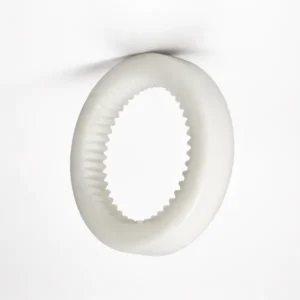
Plastic Internal Gear – POM/PEEK, M0.15-M2.0, AGMA 13
-
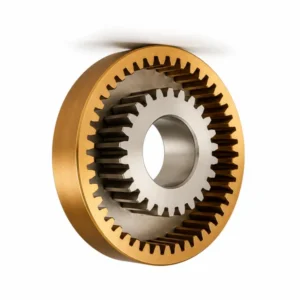
Industrial Internal Gear – Mild Steel, 60-70HRC, ISO9001
-
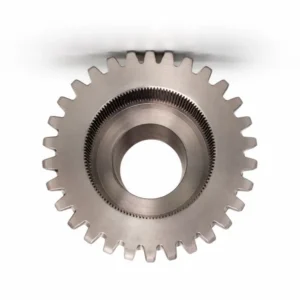
Automotive Internal Gear – Multi-Material, M0.15-M2.2 OEM
 Japanese
  English
  Italian
  Korean
  French