
Plastic Double Spur Gear – PA, POM, PEEK, M1-M12, Bi-Stage
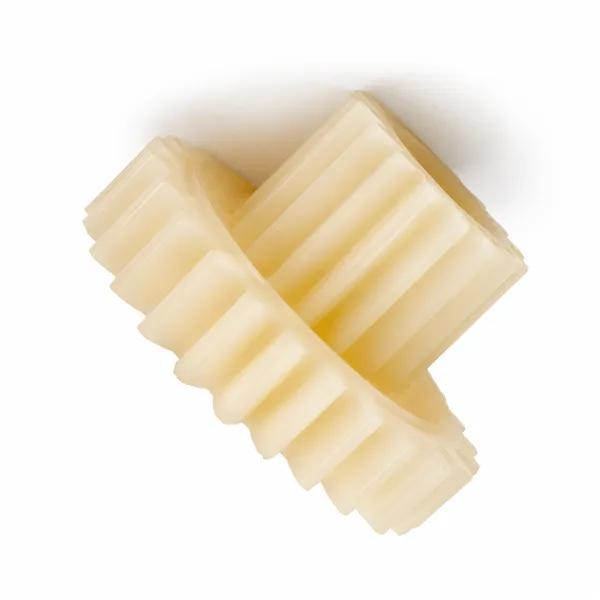
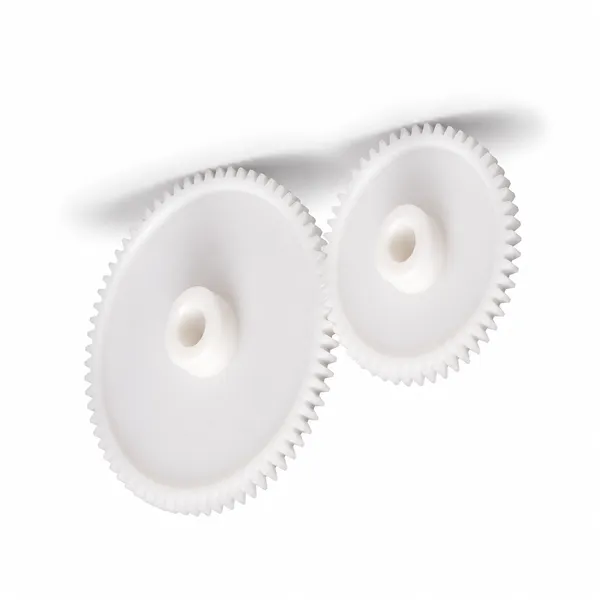
Korea Ever-Power plastic double spur gears are a co-axial two-stage gear unit moulded or machined as a single component in PA, POM, UHMWPE, ABS, PTFE, PPS, and PEEK. Module M1, M1.5, M2, M2.5, M3, M4, M5, M8, M12 and non-standard. The plastic double spur gear has two sets of spur teeth at different diameters on a common hub — the outer tooth set meshes with the driving gear; the inner (smaller) tooth set meshes with the driven gear — achieving two stages of speed reduction in the space normally occupied by a single gear. Precision DIN 6–9. Applications: robotics, toys, printer drives, stepping motor systems, small machinery, and multi-stage compact gear trains. Sample USD 2–100; bulk production 25 days. T/T or L/C.
Product Overview
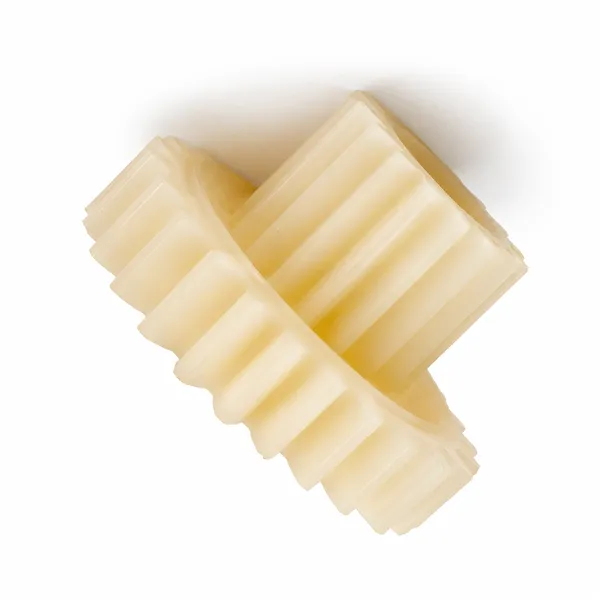
A plastic double spur gear is a single moulded or machined component carrying two sets of spur gear teeth at different pitch circle diameters on a common hub. The larger-diameter outer tooth set meshes with the driving pinion from the motor; the smaller-diameter inner tooth set meshes with the next driven stage or output shaft. The result is a two-stage speed reduction achieved in a single compact component — eliminating the separate intermediate shaft, shaft support bearings, and housing provisions that a conventional two-stage gear train requires. Korea Ever-Power produces plastic double spur gears across modules M1–M12 in PA, POM, UHMWPE, ABS, PTFE, PPS, and PEEK.
The plastic double spur gear configuration means that teeth are present on both stages of the spur gear body — the outer mesh receives the input torque; the inner (smaller) mesh delivers the output torque at a reduced speed and increased torque (less friction losses). Power can be transmitted simultaneously through both tooth sets, increasing the efficiency of the gear system relative to a conventional gear train with the equivalent number of separate components.
Plastic double spur gears are lightweight, cost-effective, and have good wear resistance in light-to-moderate duty applications. The moulded-in-one-piece construction eliminates the assembly steps of a two-stage gear train and guarantees correct axial alignment between the two tooth sets — a source of noise and premature wear in assembled multi-stage gear trains that is eliminated when both sets are cut on the same blank. Korea Ever-Power achieves DIN 6–9 precision with tooth treatment options including hardened, milled, and ground surfaces.
Technical Specifications
| Plastic Double Spur Gear — Product Specification | |
|---|---|
| Module | M1, M1.5, M2, M2.5, M3, M4, M5, M8, M12 and non-standard |
| 재료 | PA (Nylon), POM, UHMWPE, ABS, PTFE, PPS, PEEK |
| Standard | ISO, DIN, ANSI, JIS, BS, and non-standard |
| Precision | DIN 6, DIN 7, DIN 8, DIN 9 |
| Gear Configuration | Two sets of spur teeth on a common hub — outer (large) tooth set and inner (small) tooth set; different modules permitted per stage |
| Teeth Treatment | Hardened, Milled, or Ground |
| Tolerance | 0.001 mm – 0.01 mm – 0.1 mm (per accuracy grade) |
| 마치다 | Shot/sandblast, heat treatment, annealing, tempering, polishing, anodizing, zinc-plated |
| Packing | Plastic bag + cartons, or wooden packing |
| Payment Terms | T/T, L/C |
| Sample Lead Time | 20 business days |
| Bulk Lead Time | 25 business days |
| Sample Price | USD 2 – USD 100; express freight paid by customer |
How a Plastic Double Spur Gear Works
Stage 1 — Input (Outer Tooth Set)
The larger-diameter outer gear teeth mesh with the driving pinion from the motor or previous stage. The outer tooth set has a larger module or higher tooth count — it receives the input torque and rotates the entire double gear body at a reduced speed relative to the motor pinion.
Stage 2 — Output (Inner Tooth Set)
The smaller-diameter inner gear teeth on the same body mesh with the output shaft pinion or the next driven stage. Because the inner tooth set rotates with the outer body, it delivers a further speed reduction to the output — the total reduction is the product of Stage 1 ratio × Stage 2 ratio.
Result — Compact Two-Stage Reduction
A gear train that would normally require two separate gears on an intermediate shaft — with two shaft supports and associated housing provisions — is replaced by a single moulded component. The axial alignment between both tooth sets is guaranteed by the single-part construction, eliminating a major source of noise and wear in assembled two-stage gear trains.
The total reduction ratio of a plastic double spur gear train is i_total = i₁ × i₂, where i₁ is the ratio at the outer (first) mesh and i₂ is the ratio at the inner (second) mesh. Example design combinations:
| Outer z₁ (motor) | Double gear outer z₂ | Stage 1 ratio i₁ | Double gear inner z₃ | Output z₄ | Stage 2 ratio i₂ | Total ratio |
|---|---|---|---|---|---|---|
| 10 | 40 | 4.0 | 10 | 40 | 4.0 | 16 : 1 |
| 12 | 48 | 4.0 | 12 | 60 | 5.0 | 20 : 1 |
| 10 | 50 | 5.0 | 10 | 50 | 5.0 | 25 : 1 |
| 8 | 48 | 6.0 | 8 | 48 | 6.0 | 36 : 1 |
Total ratio = i₁ × i₂. All four examples use a single double spur gear component (z₂ outer + z₃ inner on one body) with one motor pinion and one output pinion.
Advantages of the Double Spur Gear Configuration
Eliminates the Intermediate Shaft
A conventional two-stage gear train needs an intermediate shaft with bearings or bushings at both ends — four bearing positions in total. The double spur gear eliminates the intermediate shaft entirely, replacing it with a single idle component that rotates on one bearing (or on the shaft it is mounted on). This reduces part count, assembly time, and housing complexity.
High Reduction Ratio in Compact Space
Two-stage reduction ratios of 16:1 to 36:1 (and higher) are achievable in a gear train with only one double gear component between the motor and output. At the module sizes used in plastic double spur gears (M1–M5), the resulting gear train fits within a very small envelope — suitable for toy drives, small actuators, and compact instrument gear trains where a worm gear would be larger and less efficient.
Guaranteed Stage Alignment
When two spur gears are machined as a single piece, the axial alignment between the two tooth sets is determined by the CNC machining process — not by the assembly process. This eliminates the wobble and misalignment that can occur when two separate gears are assembled on an intermediate shaft, and is a direct quality advantage for noise, backlash, and service life.
Lightweight and Low Cost
A plastic double spur gear is lighter than the equivalent two-gear metal assembly by a factor of approximately 7–8×. In battery-powered toys, hand tools, and portable devices, this weight advantage reduces the total product weight and extends battery life. The moulded plastic construction is also less expensive per unit than an equivalent two-piece metal gear assembly at the production volumes typical of consumer products.
응용 프로그램
Robotics and Servo Actuators
PA or POM double spur gears M1–M3 in small collaborative robot joint reduction stages and servo actuators. The guaranteed stage alignment and compact two-stage ratio suit the joint mechanism where backlash and noise must be minimised. PEEK for high-temperature servo applications.
Toys and Consumer Products
ABS or PA double spur gears M1–M2 in battery-powered toy drives — walking robots, remote-controlled vehicles, and motorised toy mechanisms. The single-component two-stage reduction minimises the part count in a toy gearbox, reducing assembly cost and potential points of failure.
Printer and Office Equipment Drives
POM double spur gears M0.5–M1.5 in laser printer paper-feed gear trains and multifunction copier drive stages. The double spur gear's two-stage reduction compresses the drive train into fewer components — reducing the printer mechanism's overall width and simplifying paper path design.
Stepping Motor Positioning
POM double spur gears M1–M2 in stepping motor reduction stages for linear positioning systems, camera actuators, and scanner drives. The double spur gear's compact two-stage reduction provides ratios of 16:1–36:1 from a single idle component — simplifying the mechanism envelope design for compact stepping motor drive stages.
Small Machinery and Power Tools
PA double spur gears M2–M5 in cordless drill reduction stages, electric screwdriver gear trains, and small appliance drives. The plastic double spur gear's lightweight, quiet operation, and compact two-stage ratio suit the sealed gear train in power tool housings where service access is not designed for in-service.
Semiconductor and Cleanroom
PEEK or PPS double spur gears M1–M3 in semiconductor handling automation where cleanroom-compatible (non-outgassing, zero metallic particle) materials and two-stage reduction ratios are both required. The double gear's single-piece construction minimises the number of metallic fasteners and assembly joints in the cleanroom mechanism.
Frequently Asked Questions
Can the two tooth sets on a plastic double spur gear have different modules?
Yes — the outer (Stage 1) and inner (Stage 2) tooth sets can have different modules, provided each meshes with its mating gear at the correct module and pressure angle. Different modules per stage allow the gear designer to achieve the required reduction ratios at both stages without being constrained to equal tooth sizes. For example, an outer M2 set and inner M1 set on a single double gear body allows the designer to run a larger motor pinion at Stage 1 and a finer-pitch output at Stage 2 — reducing the total gear train length. Specify each stage's module, tooth count, and bore clearance on the drawing and Korea Ever-Power will confirm feasibility.
What limits the torque capacity of a plastic double spur gear?
The torque capacity is limited by the weaker of the two tooth sets — typically the inner (smaller-diameter) set at Stage 2, which carries the higher torque at the lower speed. The torque at Stage 2 equals the Stage 1 input torque multiplied by the Stage 1 ratio (minus losses). For most plastic double spur gear applications (toys, instruments, light machinery), the operating torque is well within the material's capacity at the relevant module. For higher-torque applications above approximately 0.5–1 Nm at the output, consider a metal double spur gear or a larger module plastic gear. Contact Korea Ever-Power with the torque requirement, speed, duty cycle, and temperature for a material and module recommendation.
Is a plastic double spur gear more efficient than a worm gear at the same ratio?
Yes, significantly. A worm gear pair at a 20:1 ratio has a typical efficiency of 40–70% depending on lead angle and lubrication. A spur gear pair at the same ratio (achieved in two stages) has typical efficiency of 96–98% per stage — approximately 92–96% total for two stages. The plastic double spur gear's higher efficiency reduces the motor power required for a given output torque, extending battery life in portable applications and reducing heat generation in sealed mechanisms. The trade-off is that spur gear drives are not self-locking (a worm gear with a low lead angle cannot be back-driven), so if back-drive prevention is required, a plastic double spur gear needs a separate brake or detent.
Can Korea Ever-Power produce a plastic double spur gear from a sample (no drawing)?
Yes — Korea Ever-Power measures the original gear sample and produces a drawing for customer approval before production. The measurements required for a plastic double spur gear are: outer diameter and tooth count of both tooth sets, face width of each tooth set, bore diameter, spacing between the two tooth set faces, and the hub diameter and length. From these, both stage modules and the axial geometry are calculated. Send the sample and Korea Ever-Power will provide the reverse-engineered drawing and sample cost estimate within the confirmed lead time.
What is the difference between a plastic double spur gear and two single spur gears keyed to a shaft?
Both achieve two-stage reduction, but the single-piece double spur gear has several advantages: the axial alignment between both tooth sets is machined in, not assembled; there is no keyway, key, or set screw to loosen; there are no separate parts to misplace during assembly or service; and the total number of components in the gear train is reduced by at least two (the intermediate shaft and its two bearings or bushings). The assembled two-gear approach may be preferred when the two tooth sets need to be serviced or replaced independently in service — but for sealed, low-maintenance consumer products and instruments, the single-piece plastic double spur gear is the standard choice. Contact our team with your gear train layout for a recommendation.
Customer Reviews
"We design small servo actuators for collaborative robots and use POM double spur gears M1.5 / M1 (different modules per stage) from Korea Ever-Power. The single-piece construction guarantees stage alignment — our previous two-piece assembly had intermittent backlash from keyway loosening after 10,000 cycles. The double spur gear has run 200,000 cycles in our life test with no measurable backlash increase."
Kim Jun-hyeok | Actuator Mechanism Designer, Incheon Collaborative Robotics · Q1 2026
"We manufacture battery-powered toy cars and use ABS plastic double spur gears M1.5 from Korea Ever-Power in the drive train — a 25:1 total reduction in a single idle component. Part count in the gearbox dropped from 9 parts to 5 parts after switching to the double gear configuration. Assembly time per unit reduced by 35%. Sample cost was USD 8; production order followed within 25 days of sample confirmation."
Lee Byeong-jun | Toy Product Development Engineer, Gyeonggi Toy Manufacturing · Q4 2025
"We design cordless screwdrivers and specified PA double spur gears M2/M1 from Korea Ever-Power for the two-stage reduction section. Total ratio 20:1 in a single idle gear — the gearbox length reduced by 8 mm compared with our previous two-shaft design. Korea Ever-Power produced from our drawing with both stages on one body; tooth accuracy confirmed at DIN 8 by incoming CMM check."
Park Tae-jun | Power Tool Gear Train Engineer, Busan Power Tools Co. · Q2 2026
"We sent a worn plastic double spur gear sample (no drawing) to Korea Ever-Power. They measured both tooth sets, produced the reverse-engineered drawing, and submitted for our approval within the quoted lead time. The replacement gear fit and ran correctly on first installation. The sample cost was USD 25 — credited against the production order as agreed."
Choi Hyeon-jun | Equipment Maintenance Engineer, Ulsan Light Machinery Service · Q3 2025
"We import PEEK double spur gears M1 DIN 7 for semiconductor wafer transport robot reduction stages. Zero metallic particle generation confirmed at our incoming cleanroom particle count. PEEK gears pass our 200°C thermal soak test. Korea Ever-Power is the only supplier we found who can produce PEEK double spur gears to DIN 7 in our required lot size — 50 pieces per month."
Yoon Ji-woo | Cleanroom Robot Component Buyer, Daejeon Semiconductor Automation · Q1 2025
Related Products
Request a Quotation for Plastic Double Spur Gears
Send drawing or sample. Specify module per stage (may differ), tooth count per stage, bore, face width per stage, material, DIN accuracy grade, and quantity. Sample USD 2–100; bulk 25 days. T/T or L/C. Reverse engineering from sample available.
추가 정보
| Editor |
|---|
연관 상품
-
Spur Gears European Standard – M1 to M6, Steel, Custom
-
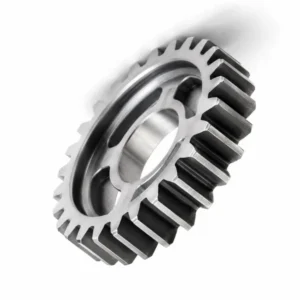
Forging Spur Gear – SAE1045, M6-M32, Hot Forged, DIN 6-9
-
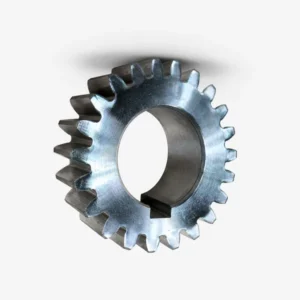
Steel Spur Gear – C45, M1-M12, OEM Custom, DIN 6-9
-
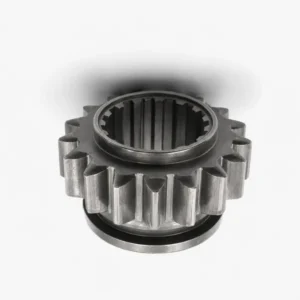
Tractor Spur Gear – Steel, 17T, OEM 50-1701212A, MOQ 30
-
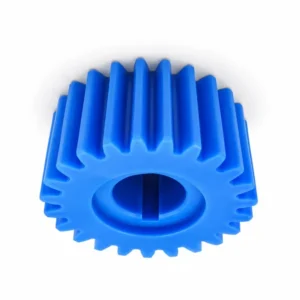
Nylon Spur Gears – PA, POM, PEEK, M1-M12, DIN 6-9, Custom
-
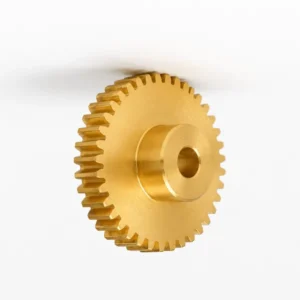
Brass Spur Gear – Copper, M0.15-M2.2, AGMA 13, ODM/OEM
-
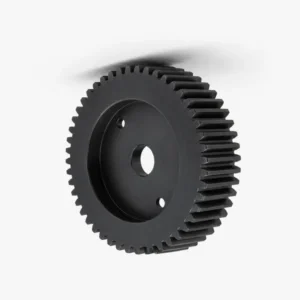
Automotive Spur Gear – M0.15-M2.2, Multi-Material, AGMA 13
-
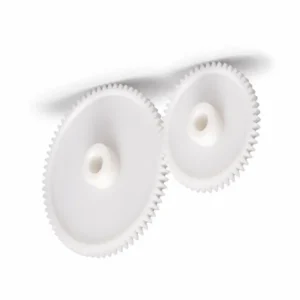
Plastic Spur Gears – POM, Nylon, M0.1-M2.0, OD 2-100mm
 Korean
  English
  Italian
  French
  Japanese