
Plastic Helical Gear
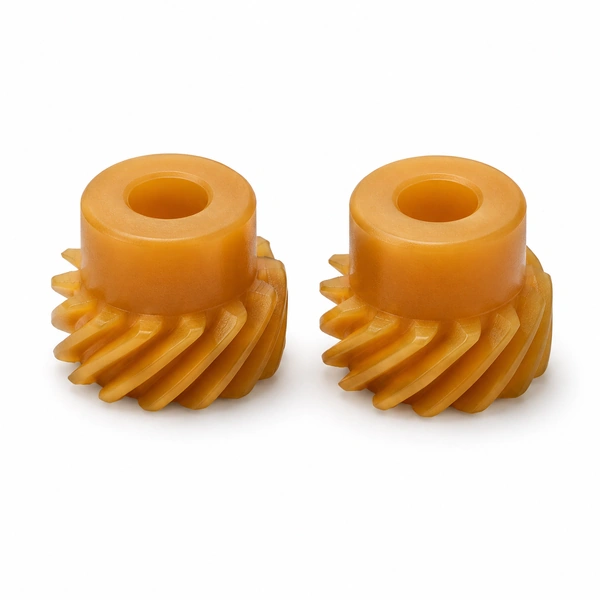
Custom Plastic Helical Gear from Korea Ever-Power — Hangzhou plastic gear manufacturer. POM, MC Nylon, PA66, PEEK, UHMWPE. ISO9001, SGS, FDA, RoHS certified. Custom size, colour, material. 24hr quote.
Product Overview
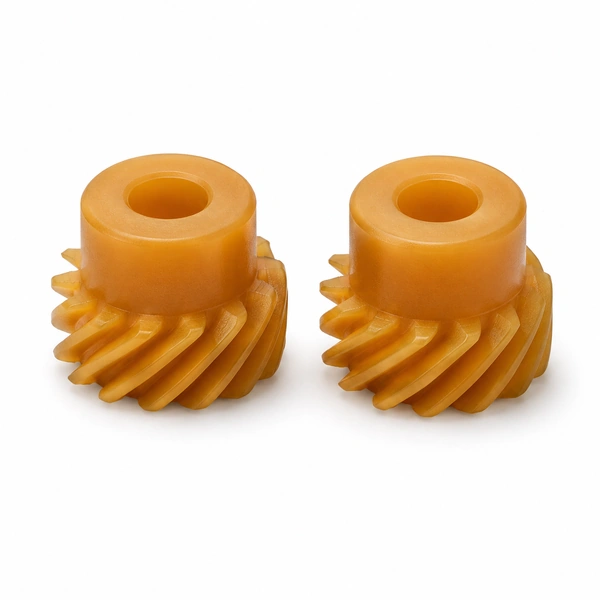
Plastic helical gears have teeth cut at an angle to the gear axis — the helix angle — making them quieter, smoother, and capable of higher contact ratios than spur gears of the same module. The meshing between two plastic helical gears is smoother and quieter than spur gears because the angled teeth engage gradually: when two teeth on the gear mesh, contact starts at one end of the tooth and spreads progressively along the tooth face as the gear rotates, until both teeth are fully engaged — then contact withdraws gradually from the other end. This gradual engagement eliminates the abrupt load impulse of spur gear tooth contact and produces the characteristic smooth, quiet operation of helical gears. Korea Ever-Power's plastic helical gears are available in POM (Polyacetal) and Nylon, module M0.1–M2.0, OD Ø10–Ø50 mm, bore Ø1.40–Ø3.05 mm, face width 2–10 mm.
Korea Ever-Power's plastic helical gears meet all kinds of needs for laser printers, digital cameras, scanners, CD-ROMs, stepping motors, medical equipment, vending machines, gear pumps, household appliances, fax machines, IP cameras, and other specialised products requiring transmission design. Custom gears per drawing or sample; prototype testing before mould making.
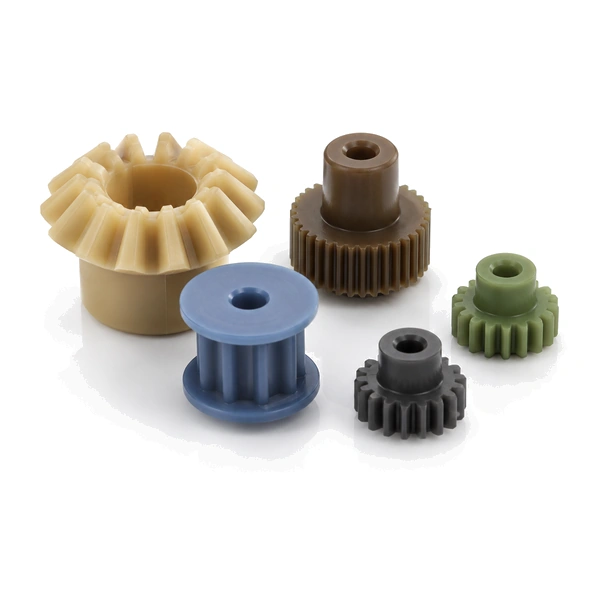
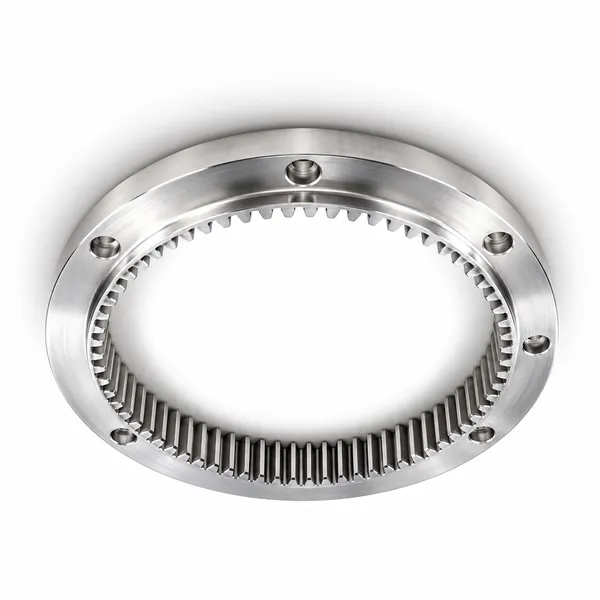
Custom Nylon Helical
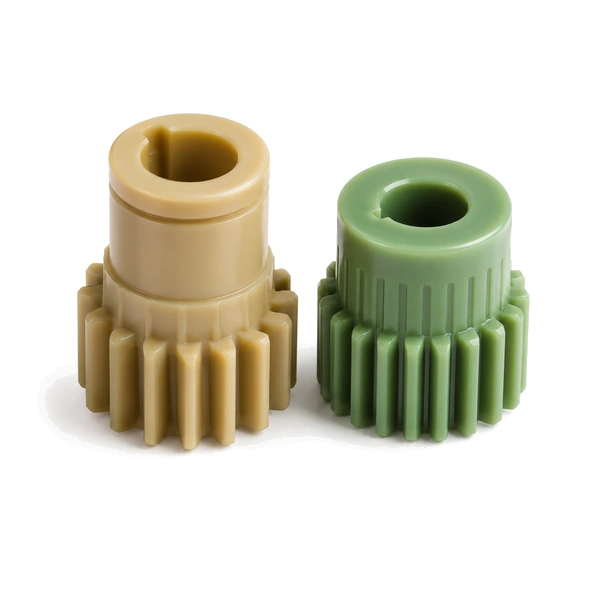
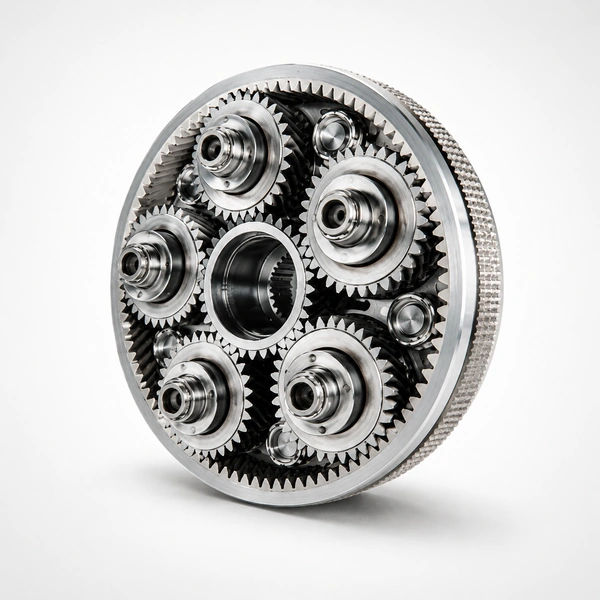
Helical Pinion
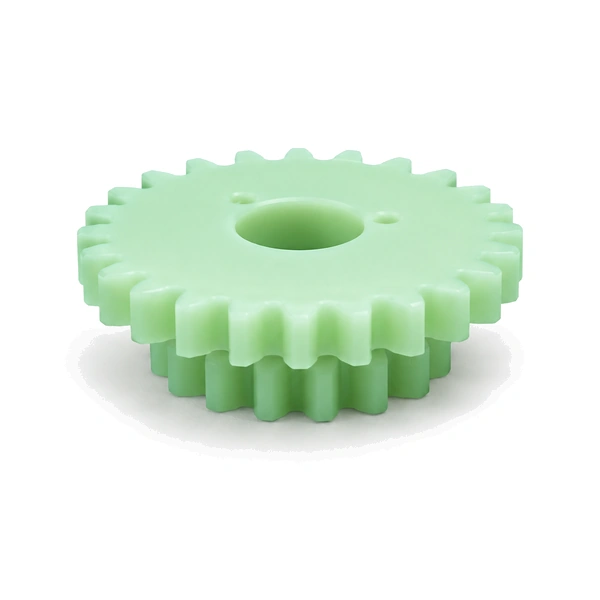
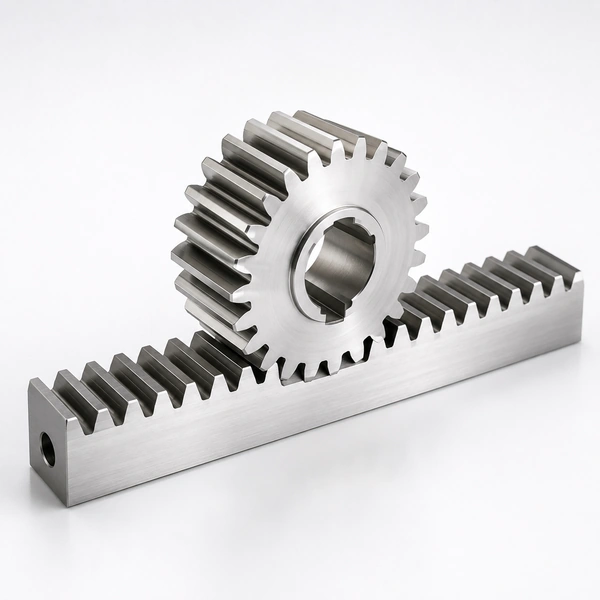
Precision Hobbed Nylon
Technical Specifications
Standard Specification Range
| Parameter | Range |
|---|---|
| Type | Plastic Helical Gear |
| Module | M0.1 – M2.0 |
| Material | POM (Polyacetal) / Nylon |
| Bore | Ø1.40 / 1.90 / 2.05 / 2.40 / 2.55 / 2.90 / 3.05 mm (flexible) |
| Outer Diameter | Ø10.0 mm – Ø50.0 mm (flexible) |
| Face Width (L) | 2.0 mm – 10.0 mm (flexible) |
| Helix Angle | Per customer specification (typically 10°–30°) |
| Hand | RH or LH per drawing |
Example Products
| Item | Detail |
|---|---|
| Product A | D-Hole Helical Gear, POM, M0.6, 16T, 0.95 g — camera/printer drives |
| Product B | ODM helical gear — IP camera / monitor application, custom specification |
| Surface | As-moulded (smooth tooth surface); CNC-hobbed for higher precision |
| Prototype | Machined / handmade before mould — test in application first |
Helical Gear Principles — Why Angled Teeth Matter
The helical gear's inclined teeth give it fundamentally different meshing characteristics from spur gears — and these differences are especially significant in plastic gear applications:
Gradual Tooth Engagement
The helix angle causes tooth contact to begin at one end of the tooth face and sweep progressively across the full face width as the gear rotates. At any instant during meshing, only a diagonal band of tooth surface is in contact — not the full face width simultaneously (as in spur gears). This gradual engagement distributes the tooth load across a longer contact line, reduces the load impulse at tooth engagement, and produces the smoother, quieter operation that defines helical gears. For plastic helical gears, this smoothness reduces the peak stress at the mould-formed tooth surface and extends fatigue life compared with equivalent spur gears.
Higher Contact Ratio
The helical gear's total contact ratio ε_total = ε_transverse + ε_overlap is higher than for the equivalent spur gear. The overlap ratio ε_overlap = b·sin(ψ) / (π·m_n) increases with face width b and helix angle ψ — adding to the transverse contact ratio. A typical plastic helical gear at M0.6, 16T, with 15° helix angle and 5 mm face width achieves ε_total ≈ 1.8–2.2, compared with ε ≈ 1.5 for the equivalent spur gear. This higher contact ratio means more tooth pairs simultaneously share the transmitted load — reducing the peak force per tooth and extending service life.
Helix Angle and Noise Reduction
Increasing the helix angle increases the overlap ratio, which increases smoothness and reduces noise — but also increases the axial thrust force on the gear shaft. For plastic helical gears, typical helix angles are 10°–20° — providing meaningful noise reduction over spur gears (2–5 dB(A) additional reduction beyond the inherent plastic damping advantage) without generating excessive axial force on the thin plastic shaft bosses. At 30°+ helix angles, the axial force requires careful plastic housing design to prevent deflection at the shaft support.
Axial Thrust Force — A Unique Challenge
Unlike spur gears, helical gears produce an axial thrust force F_a = F_t × tan(ψ) — where F_t is the tangential tooth force and ψ is the helix angle. This force acts along the gear shaft axis and must be reacted by the shaft bearings. In plastic gear mechanisms, the shaft bearings are often simple moulded bosses in the plastic housing — and these plastic bosses have much lower axial load capacity than steel bearings. The helical gear design must limit helix angle to keep the axial force within the plastic housing's structural capacity.
Injection Mould Design for Helical Gears
Helical gear injection moulds are more complex than spur gear moulds. A spur gear can be ejected axially from the mould after the die opens (straight pull). A helical gear tooth has an undercut in the axial direction — it cannot be ejected straight out. The mould must incorporate a rotating/unscrewing mechanism that rotates the gear as it is ejected, advancing it along the helix of the teeth until it clears the mould. This mechanical unscrewing mechanism increases mould cost compared with straight-pull spur gear moulds — one reason spur gears remain preferred for high-volume plastic gear applications when noise performance is adequate.
Normal vs Transverse Module
For helical gears, the module can be specified in two ways: normal module m_n (measured perpendicular to the tooth flanks) and transverse module m_t = m_n / cos(ψ) (measured in the plane of rotation). The normal module m_n is the standard specification — the hob or mould cutter works in the normal plane. For two helical gears to mesh, they must have the same normal module and pressure angle, but the helix angles may differ (for crossed-helical gears) or must be equal and opposite (for parallel-axis helical gears). Korea Ever-Power specifies all plastic helical gears by normal module for unambiguous quotation.
Plastic Helical vs Plastic Spur Gear — Which to Choose?
| Factor | Plastic Helical Gear ★ | Plastic Spur Gear |
|---|---|---|
| Noise level | Lower — gradual tooth engagement ✓ | Moderate — abrupt full-face engagement |
| Contact ratio | Higher (transverse + overlap) ✓ | Transverse only |
| Load capacity | Higher (more tooth pairs in contact) ✓ | Lower |
| Axial force on shaft | Yes — requires axial thrust constraint | None ✓ — simple radial bearings only |
| Mould complexity | Higher — unscrewing mechanism required | Lower — straight-pull ejection ✓ |
| Tooling cost | Higher | Lower ✓ |
| Best application | Noise-sensitive drives, higher-speed, camera/monitor pan/tilt | High-volume, cost-sensitive, positioning accuracy |
Applications
IP Cameras and Monitors
POM D-hole helical gears (M0.6, 16T, 0.95 g) in IP camera pan/tilt head drives. The helical gear's gradual tooth engagement is critical in camera drives — any gear mesh impulse causes image blur at the moment of direction reversal in pan-tilt scanning modes. The lower noise also meets the acoustic requirements of broadcast studio and home surveillance environments where camera motor noise is unacceptable.
Printers and Scanners
POM helical gears in high-speed laser printer paper feed drives and flatbed scanner carriage drives. At high print speeds (pages per minute), the printer gear train reaches significant RPM — the helical gear's superior noise performance at speed keeps the printer acoustic output within office environment acoustic standards. The higher contact ratio also improves torque capacity in the main drive train for paper-handling at maximum print speed.
Robots and Automation
Nylon helical gears in small robot joint drives, servo actuator gear heads, and automation positioning stages. For robot joint drives, the helical gear's higher load capacity per unit size allows more torque to be transmitted through a smaller gear pair — reducing robot joint mass and moment of inertia. The lower mesh noise also suits domestic and collaborative robot applications where human proximity makes gear noise a user experience issue.
Automotive Actuators
PA66 glass-filled helical gears in automotive electric window lift, mirror actuator, and seat adjustment drives. Automotive plastic helical gears must maintain dimensional stability and load capacity across −40°C to +85°C temperature range in typical automotive cabin environments. Glass-fibre-reinforced PA66 provides the higher stiffness and heat resistance needed at the upper end of this temperature range, while maintaining adequate toughness at cold temperatures to resist impact loading from door slams.
Gear Pumps
POM helical gears in chemical-resistant gear pumps where lower pulsation than spur gear pumps is required. The helical gear pump's gradually-varying displacement volume (from the progressive tooth engagement) produces lower pressure pulsation than spur gear pumps — important for precision dosing and metering applications where pulsation affects dispensing accuracy.
Medical Devices
POM helical gears in medical device drives where noise is a primary requirement — patient-worn and beside-bed devices must be as quiet as possible during nighttime use. A surgical infusion pump or CPAP machine's gear drive must be below 35 dB(A) in a quiet ward; the helical gear's inherent noise reduction versus spur gears, combined with POM's material damping, achieves the target noise levels in these demanding acoustic environments.
Frequently Asked Questions
Why are plastic helical gears quieter than plastic spur gears?
Plastic helical gears are quieter for two reasons: first, the gradual tooth engagement (contact line sweeps across the face rather than engaging all at once) reduces the load impulse at tooth engagement that is the primary source of gear mesh noise in spur gears. Second, the higher contact ratio means more tooth pairs are in contact simultaneously, distributing the load and reducing the load variation per tooth as teeth enter and leave mesh — this load variation is what drives the vibration that produces gear noise. Combined with plastic's inherent damping properties, plastic helical gears achieve the lowest noise levels of any plastic gear type.
What does "D-hole" mean in a plastic helical gear specification?
A D-hole (also called D-cut bore or flat-on-round bore) is a circular bore with a flat chord cut on one side — like the letter D. When a D-hole gear is mounted on a shaft with a matching D-cross-section, the flat prevents the gear from rotating on the shaft — providing positive rotational alignment without a keyway or set screw. The D-hole is widely used in small plastic gears for camera, printer, and instrument drives where the torque is too low to require a full keyway but the flat provides reliable angular alignment during assembly. Korea Ever-Power moulds D-hole bore gears directly — no secondary machining required.
Can I test a plastic helical gear prototype before committing to mould tooling?
Yes — Korea Ever-Power provides handmade / machined custom helical gear prototypes before mould making so tests can be done first. CNC hobbing of a helical gear from POM or Nylon rod is possible in small quantities (1–10 pcs) within a few days, allowing functional testing of helix angle, contact pattern, noise level, and tooth strength before the mould tooling investment is committed. Contact Korea Ever-Power with your gear specification to begin.
Customer Reviews
"We produce network cameras and source POM D-hole helical gears (M0.6, 16T, 0.95 g) from Korea Ever-Power for our pan/tilt drives. Noise during full-speed pan sweep: 28 dB(A) at 0.5 m — 7 dB below our acoustic spec. Image steadiness at direction reversal: no visible blur at 4K/30fps — confirmed by our image quality test rig. Mould lead time: 16 days. Dimensional repeatability: 100 consecutive shots from same mould, all within ±0.01 mm on critical OD dimension."
Kim Dong-hyeon | Camera Module Engineer, Incheon Network Surveillance Co. · Q2 2026
"We build collaborative robots and evaluated Korea Ever-Power Nylon helical gears for our wrist joint drive against POM spur gears. Noise difference: 6 dB(A) lower for the helical gear at 120 RPM joint speed. Torque capacity comparison: helical gear handles 18% more torque before audible tooth slip. Prototype delivery for testing: 3 days from drawing to parts. Chose helical for the final design. Now in series production with Korea Ever-Power, 2,000 gear sets quarterly."
Lee Byeong-woo | Collaborative Robot Drive Engineer, Gyeonggi Robotics Co. · Q4 2025
Related Products
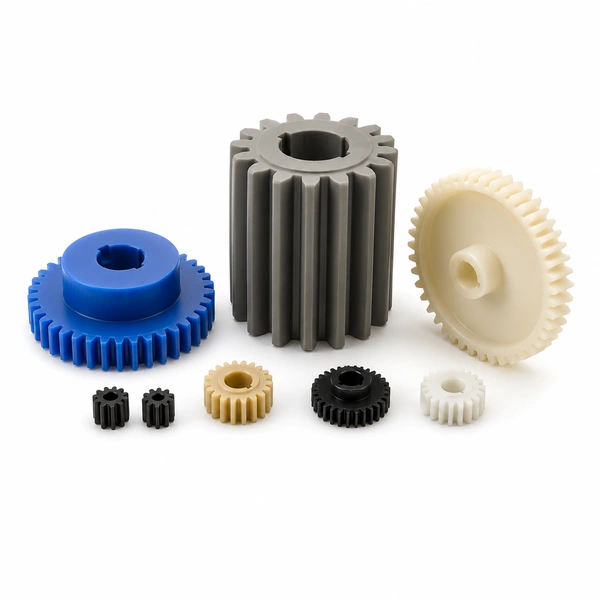
Request a Quotation for Plastic Helical Gears
POM and Nylon. M0.1–M2.0. Ø10–50 mm OD. D-hole and through-bore. RH/LH helix. Camera, printer, robot, medical, automotive. Prototype before mould. Custom helix angle and specification per drawing.
Additional information
| Editor |
|---|
Related products
-
High Precision Wear Resistant Mc Nylon Spur Pinion Gear
-
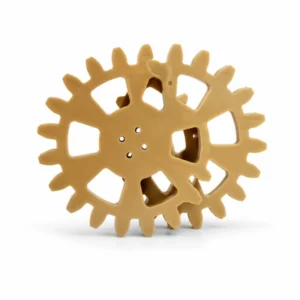
Factory Price Uhmw-pe Plastic Large Sprocket Wheel Plastic Gear
-
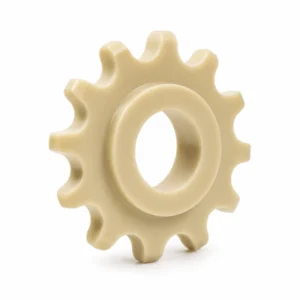
Black Pom Plastic Sprocket Wheel Plastic Gear
-
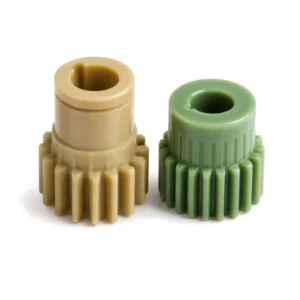
Gear Manufacturers Custom Nylon Plastic Pinion Gear
-
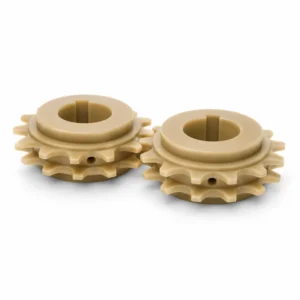
Wear Resistance Plastic Drive Uhmw-pe Chain Sprocket Wheel Plastic Gear
-
Injection Factory Custom Nylon Planetary Gear
-
Plastic Double Spur Gear
-
Plastic Internal Gear
 English
  Italian
  Korean
  French
  Japanese