
Spur Gears European Standard – M1 to M6, Steel, Custom
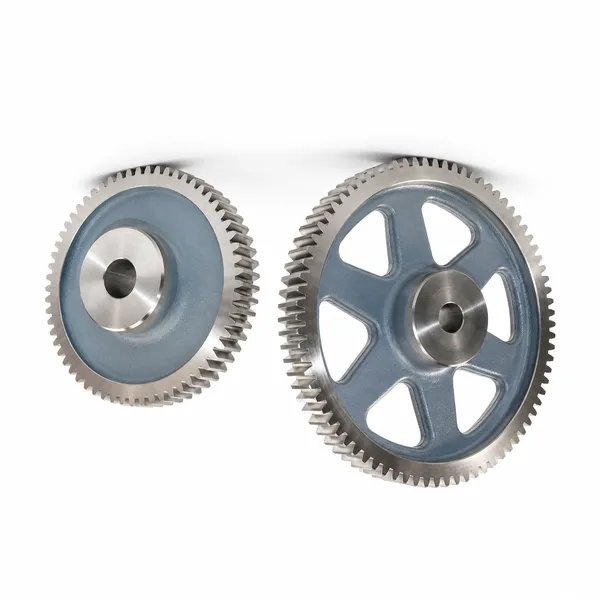
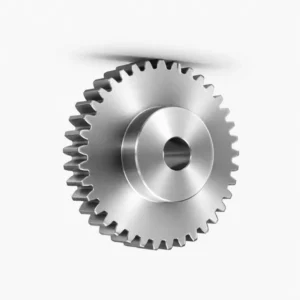
Korea Ever-Power spur gears to European standard cover modules M1, M1.5, M2, M2.5, M3, M4, M5, and M6 in steel and custom material grades. The spur gear is the simplest and most widely used gear type — straight teeth cut parallel to the rotation axis transmit torque between parallel shafts with high efficiency, predictable load-sharing geometry, and straightforward assembly. Unlike helical gears, spur gears generate no axial thrust, which simplifies bearing selection and housing design. Standard European module series, pressure angle 20°, ISO/DIN standard tooth profile. Custom module, tooth count, bore diameter, keyway, hub, and surface treatment available. OEM and wholesale service.
Product Overview
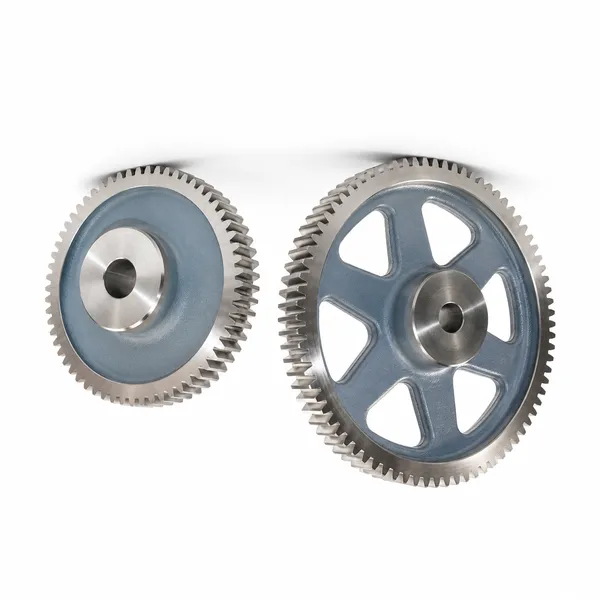
Spur gears to European standard are the most fundamental gear type in mechanical power transmission. The tooth profile is straight — cut parallel to the gear's rotation axis — and the gear form is cylindrical with external teeth on the outer surface. Spur gears transmit torque between two parallel shafts rotating in opposite directions, with high mechanical efficiency, predictable tooth load geometry, and a tooth profile manufactured on standard gear cutting machines. Korea Ever-Power's European standard spur gear range covers modules M1, M1.5, M2, M2.5, M3, M4, M5, and M6 — the complete fine-to-medium pitch range for industrial and instrument applications.
The European module system defines tooth size as the ratio of pitch circle diameter to tooth count. A module M2 gear with 30 teeth has a pitch circle diameter of 60 mm; a module M4 gear with 30 teeth has a pitch circle diameter of 120 mm. Korea Ever-Power's spur gears follow the ISO/DIN standard 20° pressure angle and full-depth tooth form — ensuring interchangeability with standard European gears from any supplier and compatibility with standard gear cutters for production of mating gears.
The spur gear is defined by three essential geometric parameters — module, tooth count, and pressure angle — from which all other dimensions are derived. Pitch circle diameter equals module × tooth count. Addendum (tooth height above pitch circle) equals 1 × module. Dedendum (tooth depth below pitch circle) equals 1.25 × module. Full tooth height is 2.25 × module. These relationships hold for all modules in the European standard series and are what make spur gears the most calculable and predictable gear type in use.
Technical Specifications — European Standard Module Series
| Module | Circular Pitch (mm) | Addendum (mm) | Full Tooth Height (mm) | Typical PCD Range |
|---|---|---|---|---|
| M1 | 3.14 | 1.00 | 2.25 | 12–100 mm |
| M1.5 | 4.71 | 1.50 | 3.38 | 18–150 mm |
| M2 | 6.28 | 2.00 | 4.50 | 24–200 mm |
| M2.5 | 7.85 | 2.50 | 5.63 | 30–250 mm |
| M3 | 9.42 | 3.00 | 6.75 | 36–300 mm |
| M4 | 12.57 | 4.00 | 9.00 | 48–400 mm |
| M5 | 15.71 | 5.00 | 11.25 | 60–500 mm |
| M6 | 18.85 | 6.00 | 13.50 | 72–600 mm |
| General Product Parameters | |
|---|---|
| Tooth Form | Straight spur — external cylindrical, teeth parallel to rotation axis |
| Standard | ISO 54 / DIN 867 full-depth involute tooth form |
| Pressure Angle | 20° standard; 14.5° available for legacy applications |
| Material | Steel standard; stainless, alloy steel, cast iron, brass, bronze, engineering plastics per drawing |
| Heat Treatment | Normalising, through-hardening, induction hardening, carburising — per drawing |
| Accuracy Grade | DIN Class 5–9 per configuration and manufacturing method |
| Shaft Interface | Plain bore, keyed bore (DIN 6885), splined bore, or hub per drawing |
| Surface Treatment | Black oxide, zinc plating, phosphate, case hardening, or as-machined per drawing |
| OEM Service | OEM marking and wholesale service available |
Spur Gear Fundamentals
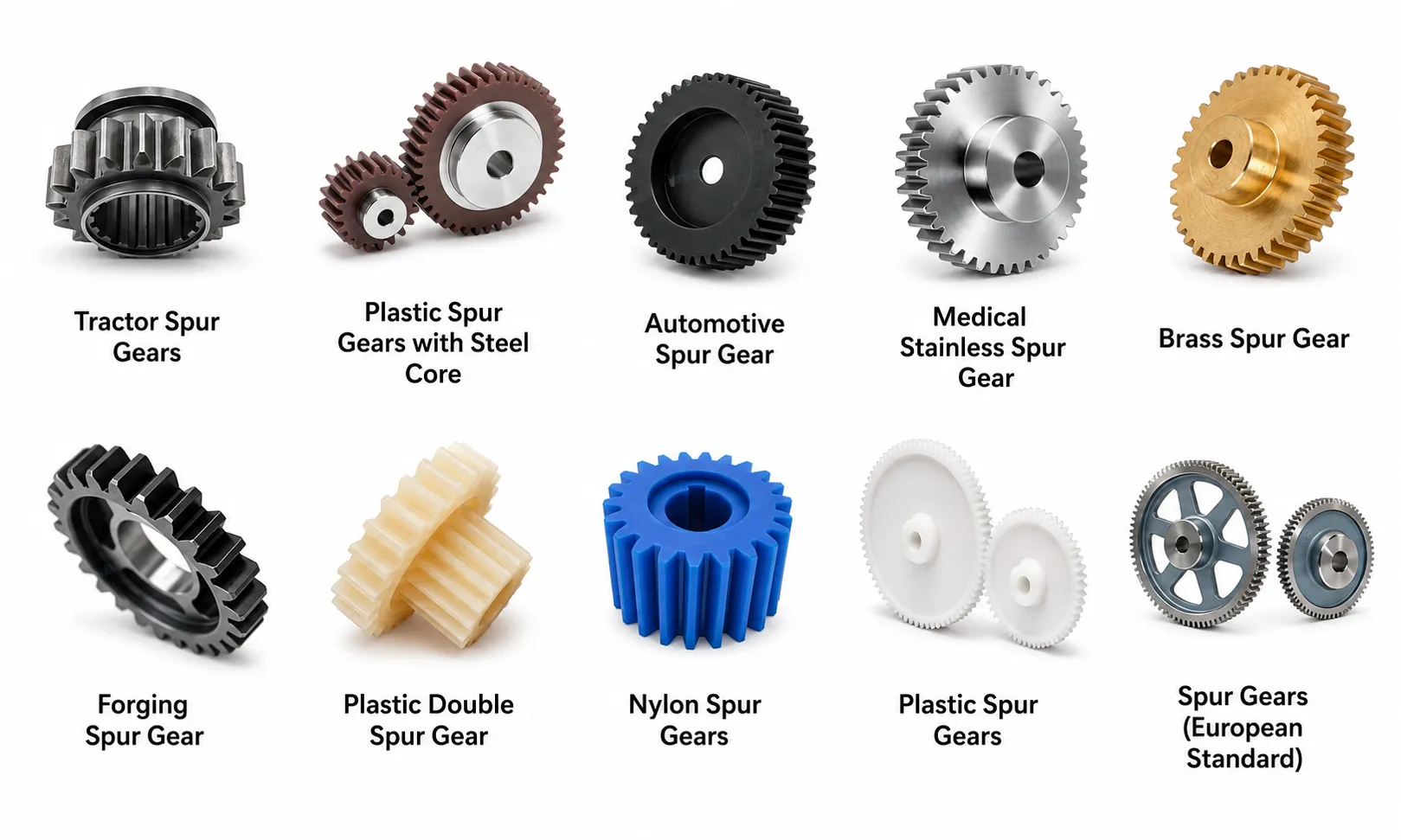
A spur gear transmits torque between two parallel shafts. The driving gear (pinion — the smaller gear) meshes with the driven gear (wheel — the larger gear). The gear ratio is the ratio of tooth counts: a 20-tooth pinion driving a 60-tooth wheel gives a ratio of 3:1 — the wheel rotates at one-third the pinion speed and produces three times the pinion torque (less friction losses). The direction of rotation of the two shafts is opposite; for the same direction of rotation, an intermediate idler gear is required.
The involute tooth profile is the geometric foundation of all standard spur gears. The involute curve is traced by a point on a taut string unwinding from the base circle. The key mechanical property of the involute profile is that two involute gears mesh with a constant velocity ratio regardless of small errors in centre distance — the pitch point stays fixed on the line of centres. This property, called the law of gearing, is what makes the involute the universal tooth profile for power transmission gears.
Module — The Master Dimension
Module (m) is the ratio of pitch circle diameter to tooth count: m = d / z. All tooth dimensions scale linearly with module. Two gears mesh correctly only if they share the same module and the same pressure angle. The European standard module series (M1, M1.5, M2, M2.5, M3, M4, M5, M6…) provides a geometric progression of tooth sizes, each approximately 25–33% larger than the previous. Selecting the module is the first step in any spur gear design: larger module means stronger teeth, larger centre distance, and lower speed per tooth — the correct selection balances tooth strength against available centre distance and speed.
Pressure Angle — 20° Standard
The pressure angle is the angle between the tooth contact force direction and the tangent to the pitch circle at the pitch point. The European standard pressure angle is 20°. At 20°, the tooth is thicker at the root (stronger in bending) and the radial separation force between the gears is moderate. The older 14.5° standard is still available for replacement and legacy system applications — two meshing gears must always share the same pressure angle.
Contact Ratio
The contact ratio is the average number of tooth pairs in simultaneous contact. For standard spur gears, this is typically 1.5–1.8 — meaning the load alternates between one and two tooth pairs throughout the meshing cycle. A contact ratio above 1.0 is required for continuous torque transmission. Increasing tooth count (while keeping module constant) increases the contact ratio, reducing load per tooth pair and the noise generated at the tooth engagement frequency.
No Axial Thrust
Straight teeth generate no axial (thrust) force component on the shaft — the entire tooth contact force is in the plane perpendicular to the shaft axis. Shaft bearings need only accommodate radial loads. Compared with helical gears, this simplifies bearing selection and housing design, reduces power loss, and makes spur gears the most straightforward type to assemble. The absence of axial force is the primary reason spur gears remain the default choice for parallel-shaft drives where noise is not the primary specification driver.
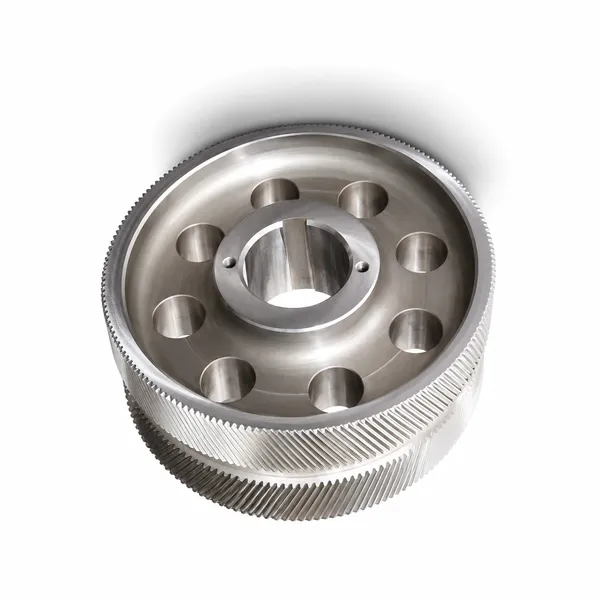
Spur Gears vs Other Gear Types
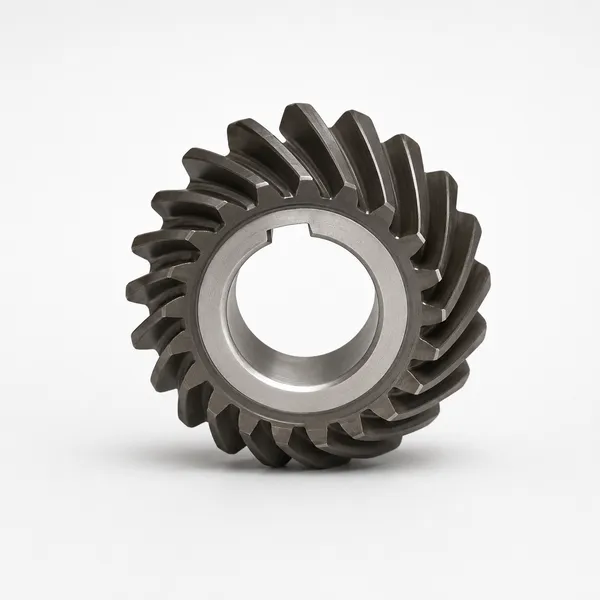
| Feature | Spur Gear ★ | Helical Gear | Bevel Gear |
|---|---|---|---|
| Shaft arrangement | Parallel | Parallel / crossed | Intersecting |
| Axial thrust | None ✓ | Single: yes / Double: none | Present |
| Noise level | Moderate | Lower than spur | Moderate–High |
| Load capacity | Good | Higher (face overlap) | Good |
| Manufacturing cost | Lowest ✓ | Low–Moderate | Moderate–High |
| Assembly complexity | Simplest ✓ | Low | Moderate |
| Speed range | Low–Medium | Low–High | Low–Medium |
| Efficiency | 98–99% ✓ | 97–99% | 97–99% |
| Sliding gear shift | Yes ✓ | No | No |
| Typical application | Conveyors, pumps, machine tools, instruments | High-speed reducers, automotive transmissions | Right-angle drives, differentials |
★ Spur gear is the recommended choice for parallel-shaft drives where noise is not the primary constraint and assembly simplicity is valued.
Centre Distance and Gear Ratio — Design Reference
The centre distance between two meshing spur gears is: C = m × (z₁ + z₂) / 2, where m is module, z₁ is the pinion tooth count, and z₂ is the wheel tooth count. The gear ratio is i = z₂ / z₁. These two equations, combined with the module, fully define the gear pair geometry.
| Module | Pinion z₁ | Wheel z₂ | Ratio i | Pinion PCD | Wheel PCD | Centre Distance |
|---|---|---|---|---|---|---|
| M1 | 20 | 60 | 3.0 | 20 mm | 60 mm | 40.0 mm |
| M2 | 18 | 54 | 3.0 | 36 mm | 108 mm | 72.0 mm |
| M3 | 15 | 45 | 3.0 | 45 mm | 135 mm | 90.0 mm |
| M4 | 20 | 80 | 4.0 | 80 mm | 320 mm | 200.0 mm |
| M5 | 16 | 64 | 4.0 | 80 mm | 320 mm | 200.0 mm |
| M6 | 12 | 60 | 5.0 | 72 mm | 360 mm | 216.0 mm |
PCD = pitch circle diameter = module × tooth count. Centre distance = (PCD₁ + PCD₂) / 2. Outer diameter (OD) = (tooth count + 2) × module.
Manufacturing and Quality
Gear Hobbing — Standard Process
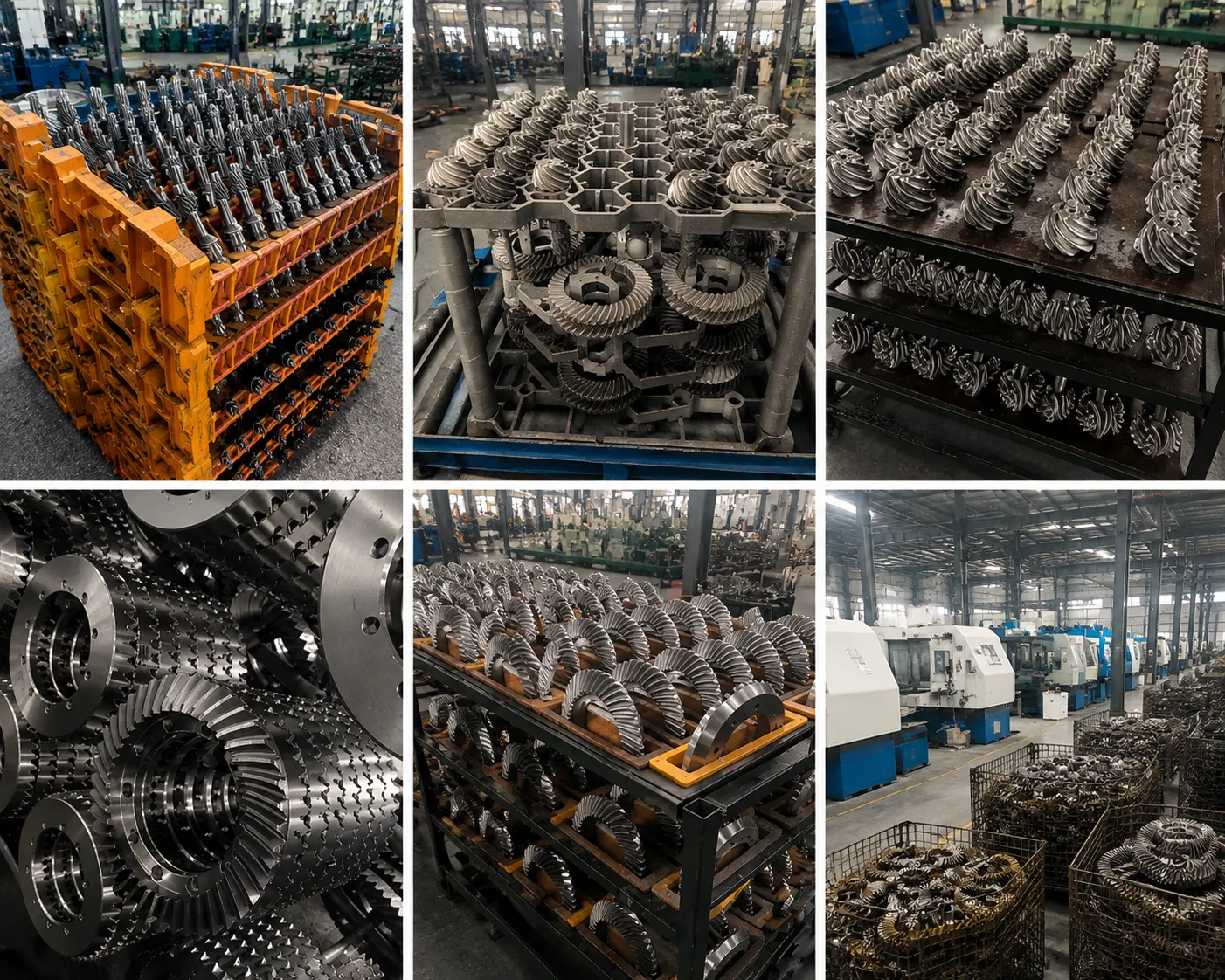
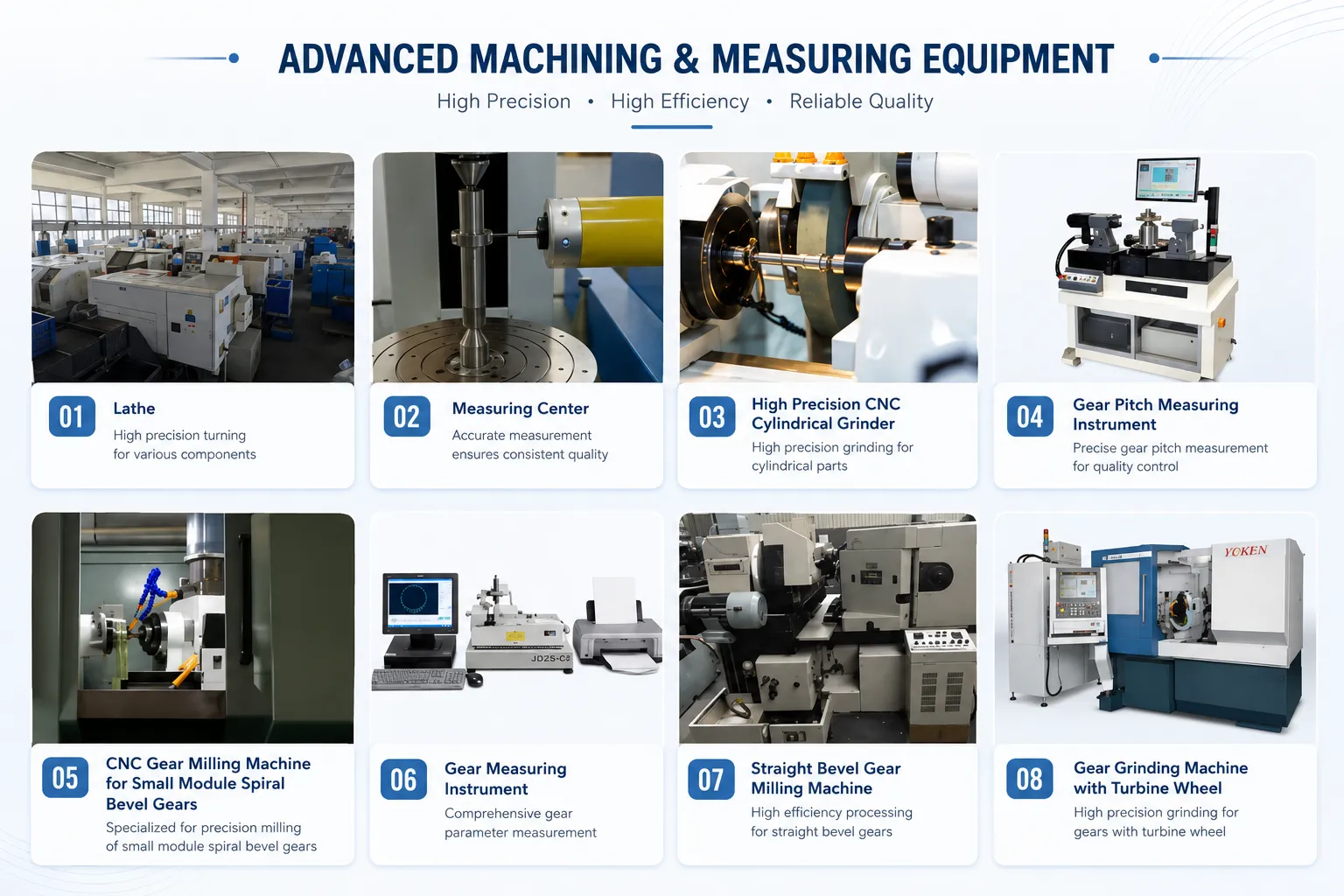
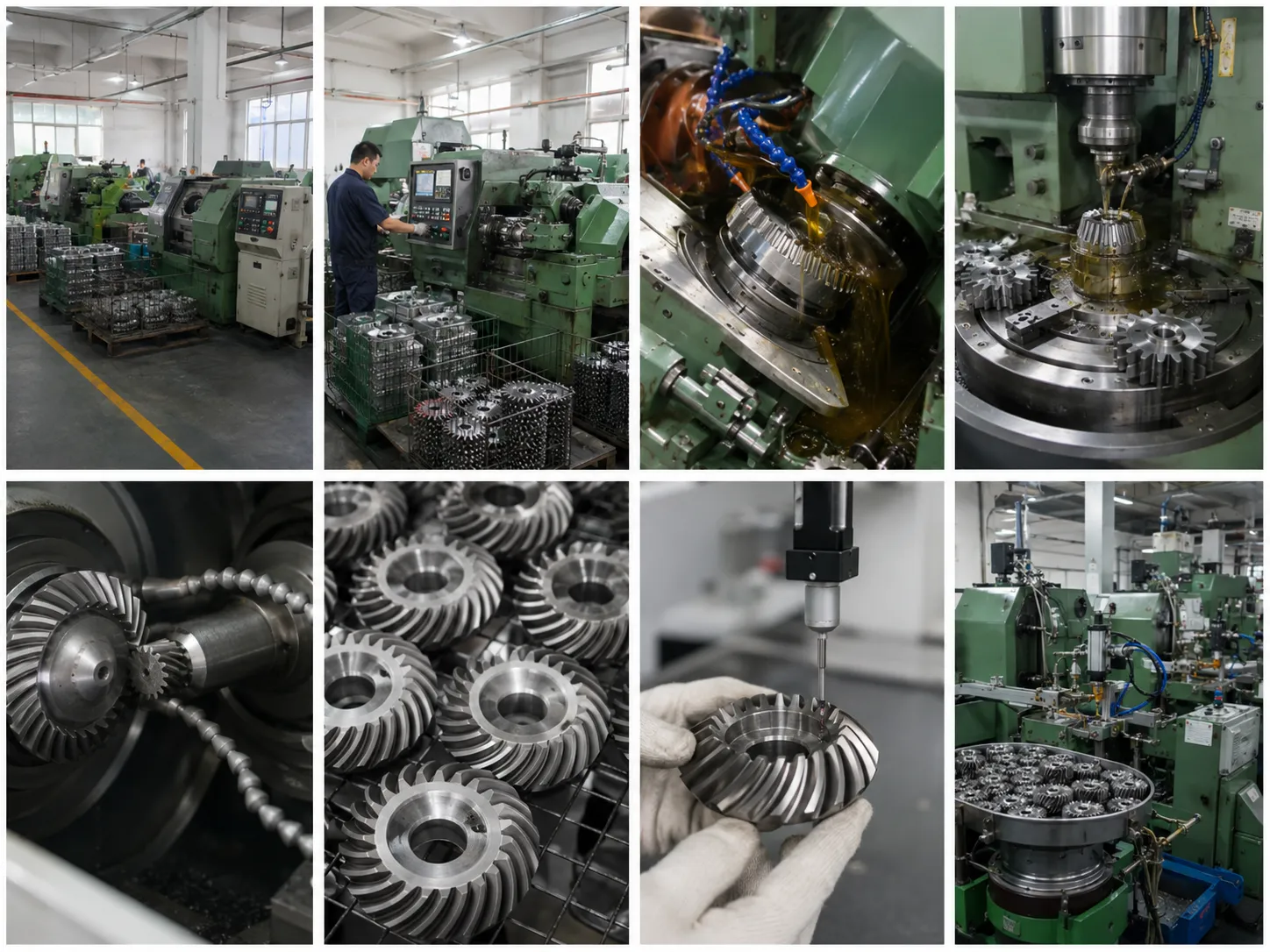
Gear hobbing is the standard production method for external spur gears. The hob is a cylindrical cutting tool with helical flutes; it rotates in timed mesh with the gear blank to generate the involute tooth profile by a continuous cutting action. Hobbing produces DIN 7–9 accuracy as a standard result and is the most economical method for production quantities. Korea Ever-Power uses CNC hobbing machines for consistent tooth spacing and profile accuracy across the M1–M6 range.
Gear Grinding — High Accuracy
After heat treatment, the tooth surface distorts slightly due to thermal gradients. Gear grinding after heat treatment corrects the profile to DIN 4–6 accuracy and achieves tooth surface finish Ra 0.6–0.8 μm. Ground spur gears are specified where low transmission error, low noise at high speed, or long tooth fatigue life after surface hardening are required — machine tool spindle drives, high-cycle instrument gear trains, and precision servo drives.
Heat Treatment Options
Through-hardening (45# steel, 40Cr): surface hardness 45–55 HRC, uniform hardness through the full tooth section. Induction hardening: surface hardness 50–58 HRC with a tough core — the standard for medium-duty industrial spur gears. Carburising (20CrMnTi): case hardness 58–62 HRC with controlled case depth — the specification for heavily loaded gears requiring maximum contact fatigue life.
Inspection and Certification
100% inspection before delivery. Dimensional report (pitch, profile, helix, runout, tooth thickness) available for each batch. Material certificate and hardness test report provided with production batches. ISO 9001:2015 certified quality management system. Third-party inspection available. One-year quality guarantee from customer receipt.
Applications
Industrial Conveyors and Mixers
M4–M6 steel spur gear pairs in conveyor drive gearboxes, agitator drives, and industrial mixer gearboxes. No-thrust property simplifies the housing design. High efficiency (98–99%) keeps power losses low in continuous-duty applications.
Machine Tool Gearboxes
M2–M5 hardened steel spur gears in lathe headstock gearboxes, milling machine speed selectors, and drill press drives. The sliding gear shift mechanism used in machine tool gearboxes requires spur gears — helical gears cannot be slid axially into mesh under load.
Instruments and Precision Drives
M1–M2 precision spur gears in medical instruments, laboratory equipment, and measurement devices. The M1–M2.5 range is widely used in instrument gear trains where small pitch circle diameter allows compact multi-stage reduction. Stainless steel and brass options for corrosion-resistant applications.
Agricultural Machinery
M4–M6 steel spur gears in tractor PTO gearboxes, seeder drives, and harvester feed mechanisms. The spur gear's straightforward assembly — no axial preload requirement — suits agricultural gearboxes assembled and serviced in the field. European standard module ensures global parts compatibility.
Pump and Compressor Drives
M3–M6 spur gear pairs in gear pump rotors and blower drives. Gear pumps use meshing spur gears directly as the pumping elements — the involute tooth profile's rolling contact minimises internal leakage while generating the pressure differential that drives the fluid.
OEM Wholesale Export
Wholesale supply to OEM machine builders and distributors in Europe, Australia, Netherlands, UK, Brazil, and South Korea. European standard module ensures dimensional compatibility with locally sourced replacements and simplifies incoming inspection against DIN/ISO drawings.
Frequently Asked Questions
What is the difference between European standard and JIS standard spur gears?
European standard (ISO/DIN) and JIS standard spur gears share the same module series and 20° pressure angle. The tooth form geometry — addendum, dedendum, and full tooth height — is identical at the same module. The practical difference lies in the manufacturing tolerance system: DIN uses a numbered quality grade system (DIN 5–12, lower numbers = higher accuracy); JIS uses a similar but independently defined system. Gears from both standards mesh correctly at the same module and pressure angle. Korea Ever-Power's European standard spur gears are manufactured and inspected to DIN/ISO tolerances and are fully interchangeable with JIS-dimensioned gear sets of the same module.
What is the minimum tooth count for a standard spur gear without undercut?
The theoretical minimum tooth count for a standard 20° pressure angle spur gear without undercut is 17 teeth. Undercut occurs when the tooth root is cut away by the generating tool during hobbing — it weakens the tooth at the root. For 14.5° pressure angle gears, the minimum non-undercut tooth count is 32 teeth. Profile shift (addendum modification) can produce gears with fewer teeth without undercut. Korea Ever-Power can apply profile shift per the customer's drawing — confirm tooth count and required profile shift at the enquiry stage.
Can spur gears run at a centre distance slightly different from the standard calculation?
Yes — the involute tooth profile maintains a constant velocity ratio even when the centre distance deviates from the standard value, as long as the gears remain in mesh. Increasing the centre distance increases the operating pressure angle, increases backlash, and reduces the contact ratio. Decreasing it risks tooth interference. For centre distances that differ significantly from standard, Korea Ever-Power can apply profile shift to restore the design contact ratio and eliminate the risk of interference. Provide the actual centre distance and required tooth counts for a profile-shift calculation.
What materials are available for European standard spur gears?
Korea Ever-Power produces European standard spur gears in steel (45# carbon steel standard), alloy steel (40Cr, 42CrMo, 20CrMnTi per heat treatment requirement), stainless steel (SS304, SS316L for corrosion-resistant applications), brass (for low-load, non-sparking applications), bronze (for marine and worm wheel mating applications), cast iron (for large-diameter low-speed gears), and engineering plastics (POM, nylon, PEEK). Material selection depends on torque, speed, operating environment, required surface hardness, and service life. Send the specification and we will recommend the most appropriate material and heat treatment.
How do I specify a European standard spur gear for quotation?
The minimum information needed for a complete spur gear quotation: module, tooth count, pressure angle (state 20° if standard), face width, bore diameter, keyway dimensions (if required), material grade, required hardness or heat treatment, surface finish, accuracy grade (DIN class), and quantity. If you have a drawing, send it directly — this is the fastest and most reliable path to a correct quotation. For replacement gears without a drawing, send photographs and these measurements: outer diameter (OD = (z + 2) × m), root diameter, face width, bore diameter, and tooth count. Korea Ever-Power will calculate the module from these measurements and confirm before production. Contact our team to begin the quotation process.
Customer Reviews
"We manufacture conveyor drives for food processing plants and source M4 steel spur gear sets from Korea Ever-Power. The European standard tooth profile means our DIN drawings are accepted without dimension conversion. Gears have run for 14 months in a daily washdown environment without measurable tooth wear at our quarterly inspection — we use stainless steel for drives in wet zones."
Kim Tae-won | Mechanical Design Engineer, Incheon Food Equipment Manufacturing · Q1 2026
"We import M2 and M3 European standard spur gears for instrument and automation equipment distributors in the Netherlands. The DIN/ISO tooth profile is fully interchangeable with locally available European stock gears. Korea Ever-Power's wholesale pricing makes it viable to stock the full module range M1–M6 in multiple tooth counts. Dimensional inspection report provided with each delivery batch."
Park Ji-hun | Import Manager, Seoul Mechanical Parts Distribution · Q4 2025
"We needed M1.5 spur gears for a precision laboratory instrument drive — 17 teeth in stainless steel with a 6 mm plain bore. Korea Ever-Power produced from our drawing, confirmed the 17-tooth pinion was free of undercut at 20° pressure angle, and delivered within the sample lead time. The gear runs at 2,400 rpm in our instrument with no measurable noise increase from the spur gear we replaced."
Lee Dong-hwan | Instrument Mechanism Engineer, Gyeonggi Scientific Instruments Co. · Q2 2026
"We build agricultural seeder drives and source M5 European standard spur gears in 45# steel from Korea Ever-Power. The gears are assembled in the field by dealers without precision tools — the spur gear's lack of axial engagement requirement means any competent mechanic can replace a gear set without special procedures. European standard compatibility confirmed with our local European dealer network."
Choi Sang-il | Drivetrain Component Engineer, Daejeon Agricultural Machinery Co. · Q3 2025
"We manufacture gear pumps for industrial hydraulic circuits and specified M3 steel spur gears as the pump rotor pair. Korea Ever-Power produced the gear pair at matched tooth counts with a confirmed tight radial clearance to the pump housing bore. The involute profile provided the lowest internal leakage we measured across three supplier samples. Running at 1,450 rpm for 18 months with mineral oil — no measurable backlash increase at quarterly inspection."
Yoon Hyeon-jun | Hydraulic Pump Design Engineer, Ulsan Industrial Hydraulics · Q1 2025
Related Products
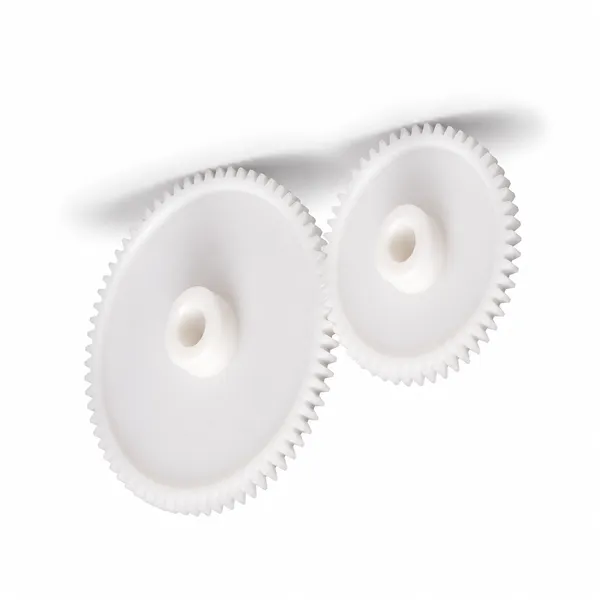
Request a Quotation for European Standard Spur Gears
Send drawing or specify: module (M1–M6), tooth count, bore diameter, face width, material, hardness, and quantity. DIN/ISO standard tooth form. Steel, stainless, brass, bronze, and plastic available. OEM marking and wholesale service.
Additional information
| Editor |
|---|
Related products
-
Plastic Double Spur Gear – PA, POM, PEEK, M1-M12, Bi-Stage
-
Tractor Spur Gear – Steel, 17T, OEM 50-1701212A, MOQ 30
-
Automotive Spur Gear – M0.15-M2.2, Multi-Material, AGMA 13
-
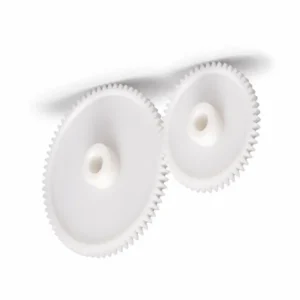
Plastic Spur Gears – POM, Nylon, M0.1-M2.0, OD 2-100mm
-
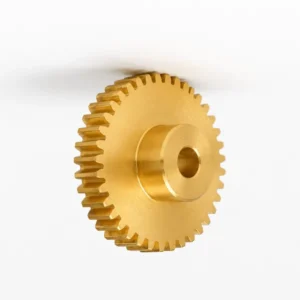
Brass Spur Gear – Copper, M0.15-M2.2, AGMA 13, ODM/OEM
-
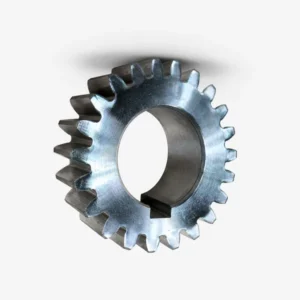
Steel Spur Gear – C45, M1-M12, OEM Custom, DIN 6-9
-
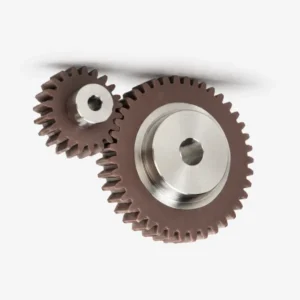
Plastic Spur Gears with Steel Core – MC Nylon, S45C Hub
-
Medical Stainless Spur Gear – SS, M0.15-M2.0, AGMA 13
 English
  Italian
  Korean
  French
  Japanese