
Engrenage hypoïde
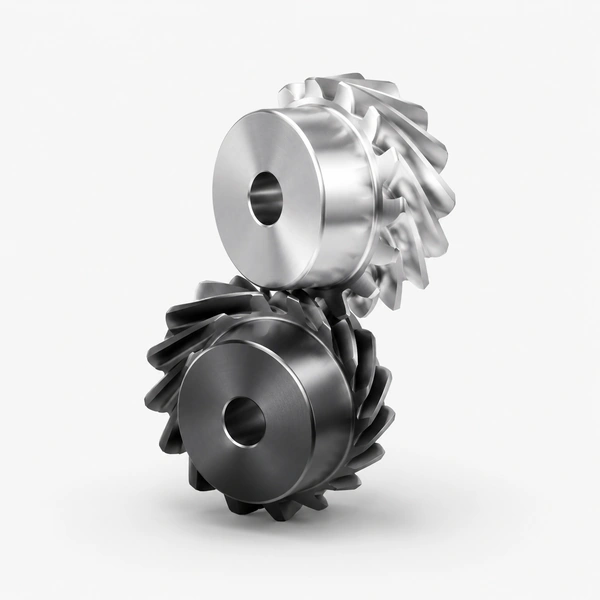
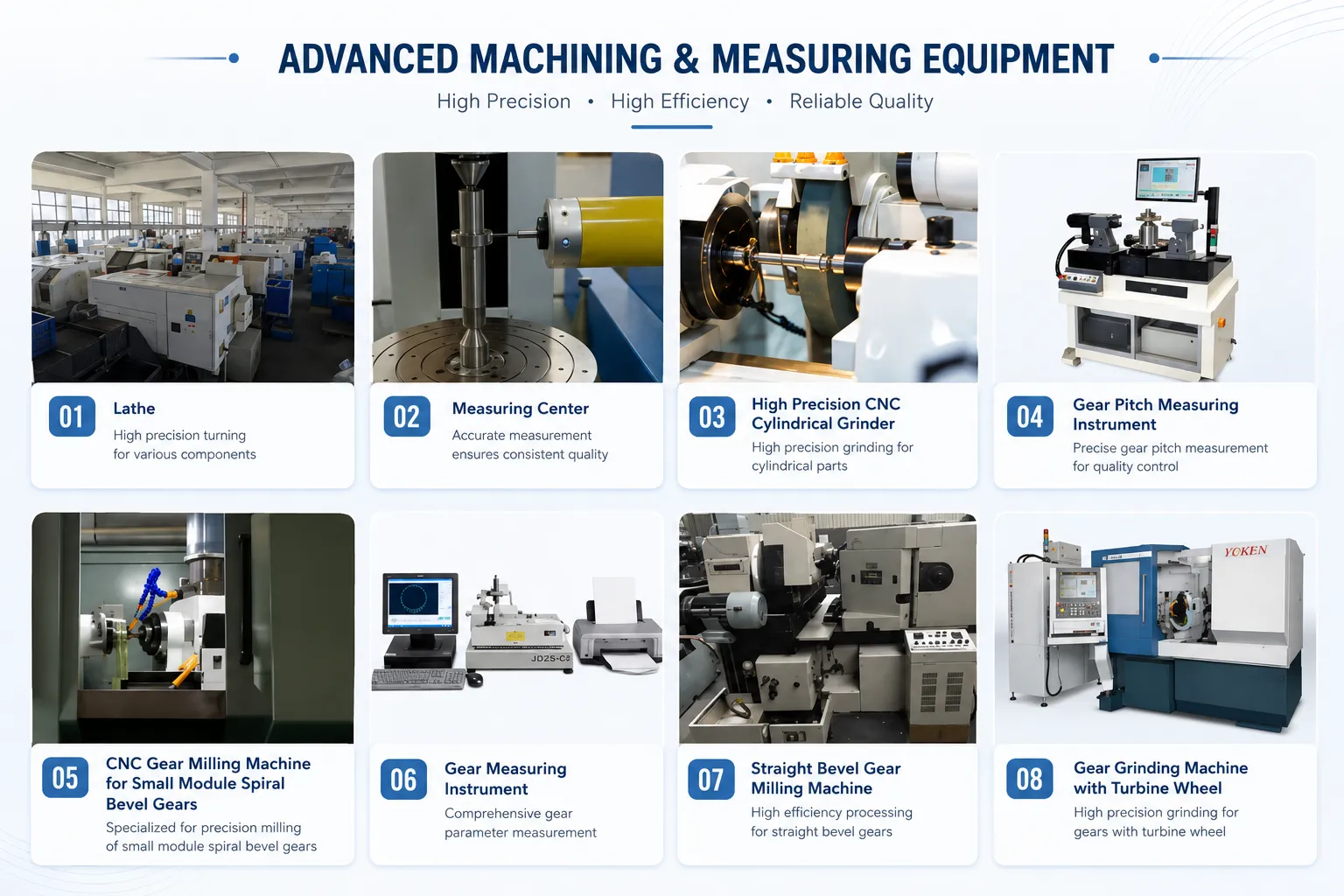
Hypoid gears are beveled gears similar to spiral ones, except they transmit motion between axes that do not intersect. The small gear shaft (hypoid pinion side) is offset from the giant gear shaft (hypoid gear side). Given the proper offset amount, the pinion shaft and large gear shaft can pass without interference, enabling the shafts to be supported securely on both ends. Korea Ever-Power — high-precision hypoid gear manufacturing since 1984. Automotive differentials, robotics, power tools, agricultural machinery, speed reducers. OEM per drawing (IGS/DWG/STEP) or sample. Sample 7–10 days.
Product Overview
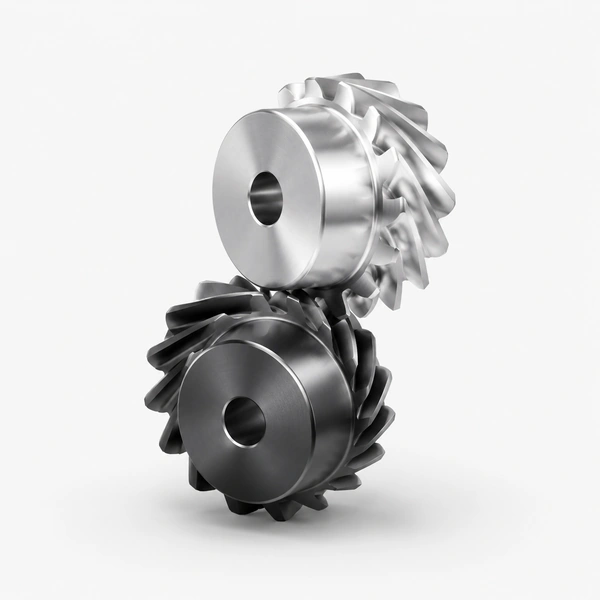
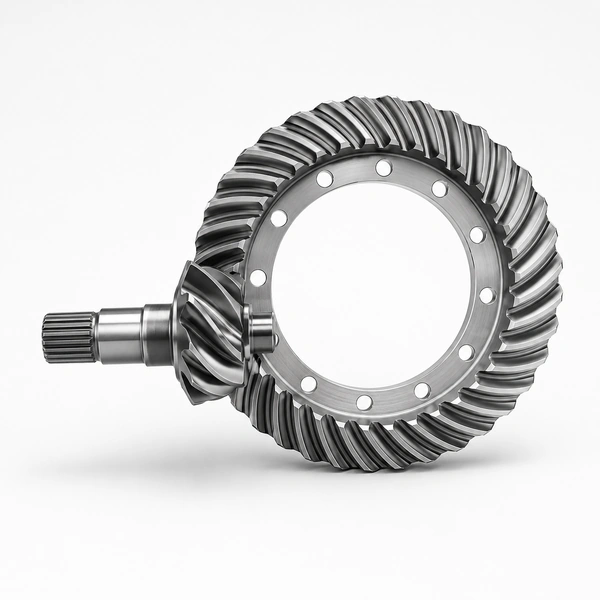
Hypoid gears are bevel gears similar to spiral bevel gears, except they transmit motion between axes that do not intersect — the small gear shaft (pinion) is offset from the large gear shaft (ring gear). This axle offset is the defining geometric characteristic of hypoid gearing and the source of all its unique properties. Given the correct offset amount, the pinion shaft and ring gear shaft can pass without interference, enabling the shafts to be supported securely at both ends — a structural advantage over spiral bevel gears that share a common intersection point and thus can be supported on only one side of the mesh. Korea Ever-Power manufactures high-precision hypoid gears for automotive differentials, industrial drives, robotic arms, pneumatic and power tools, and agricultural machinery.
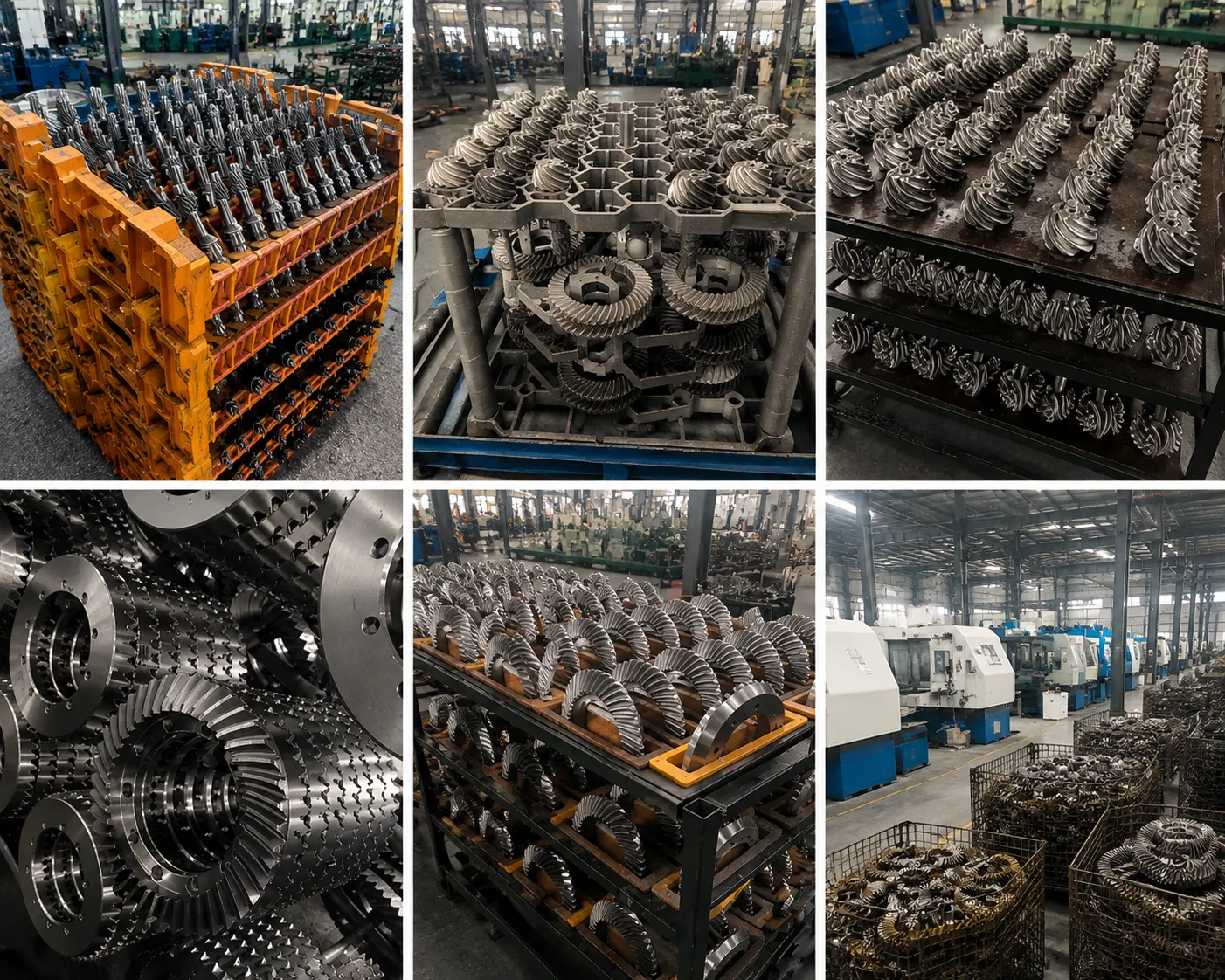
Korea Ever-Power has been committed to high-precision gear manufacturing since 1984, specialising in spiral bevel gears, hypoid gears, straight bevel gears, helical gears, worm gears, and gearboxes. Quality is always the priority. Custom OEM production per drawing (IGS, DWG, STEP) or sample, with sample delivery in 7–10 days. Drawing confidentiality guaranteed.
Compared with bevel gears, hypoid gears can obtain higher speed reduction per stage, have more extensive tooth contact ratios that allow heavier load transmission than equivalent bevel gears, and produce smooth meshing that further suppresses noise and vibration. These advantages make hypoid gears the standard gear type for rear axle differentials in passenger cars and trucks — the single most numerous precision gear application in the world. However, the meshing geometry of hypoid gears is more complex than bevel gears, and production requires specialised Gleason or Oerlikon hypoid gear machines and tooling.
Technical Specifications
| Hypoid Gear — Product Specification | |
|---|---|
| Gear Type | Hypoid — spiral bevel with offset (non-intersecting axes) |
| Reduction Ratio Range | 3:1 to 10:1 single stage; up to 100:1 with additional planetary stage |
| Shaft Angle | 90° (standard); offset between pinion and ring gear axes as specified |
| Matériel | Case-hardening alloy steel standard (20CrMnTi, 20CrMnMo); 42CrMo; custom per application |
| Heat Treatment | Carburising and quenching (case HRC 58–62); tempering; nitriding for corrosion environments |
| Lubrication | Hypoid gear oil required — EP and anti-wear additives essential for sliding contact lubrication |
| Manufacturing | Gleason or Oerlikon hypoid gear machine; lapping to confirmed contact pattern |
| Applications | Automotive differential, robotics, pneumatic tools, power tools, industrial sewing machines, speed reducers, agricultural machinery, fishing reels, multirotor UAV |
| Customisation | OEM per drawing (IGS, DWG, STEP) or sample; sample 7–10 days; drawing confidential |
| Experience | Korea Ever-Power: high-precision gear manufacturing since 1984 |
How Hypoid Gears Work — Geometry and Kinematics
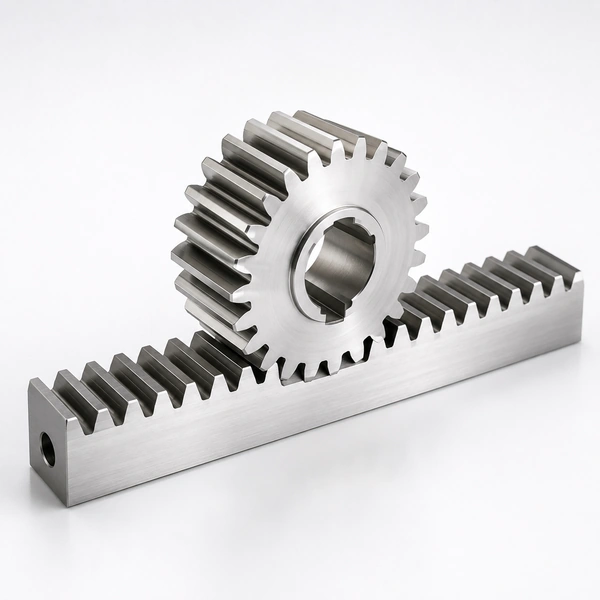
The hypoid gear's geometry can be understood as an evolution from the spiral bevel gear, with one critical change in the pinion's position relative to the ring gear:
The Hypoid Offset
In a spiral bevel gear, both shafts pass through a single common point — the gear cone apex. In a hypoid gear, the pinion axis is offset above or below the ring gear axis by the "hypoid offset" distance (E). This offset moves the pinion shaft away from the ring gear shaft so the two shafts are no longer in the same plane — they are skew (non-intersecting, non-parallel). The value of E determines the degree of offset: a larger hypoid offset allows higher torque transmission but reduces mechanical efficiency.
Shaft Support — Both Ends
Because the pinion shaft no longer intersects the ring gear shaft, there is no geometric interference at the shaft crossing point — both shafts can be supported by bearings on both sides of the gear mesh. This "straddle mounting" of both the pinion and ring gear produces a much stiffer and more robust gearbox structure than is possible with spiral bevel gears, where the pinion typically hangs on bearings on only one side (cantilever mounting). The stiffer structure under load deflects less, maintaining the tooth contact pattern closer to the designed position.
Sliding Contact
The hypoid offset introduces a component of motion along the tooth flanks — sliding in addition to rolling. The sliding is in the lengthwise direction of the tooth: as the hypoid gear pair rotates, the contact zone sweeps along the tooth face, and the offset introduces a sliding velocity component that is not present in spiral bevel gears. This sliding produces higher friction losses than spiral bevel gears (efficiency typically 70–90% vs 95–99% for spiral bevel), requires hypoid-specific gear oil with EP additives, and increases heat generation — all of which are traded against the structural and ratio advantages of the hypoid configuration.
Extensive Contact Ratio
The hypoid gear's extensive contact ratio (the number of tooth pairs simultaneously in contact) is higher than for spiral bevel gears of the same module and tooth count — typically 2.5–4 tooth pairs in simultaneous contact. This higher contact ratio distributes the tooth force over more tooth area simultaneously, giving the hypoid gear a heavier load-carrying capacity than a spiral bevel gear of the same module, and producing smoother, quieter operation with lower vibration — critical for the vehicle passenger compartment noise, vibration, and harshness (NVH) performance that automotive OEMs target.
Pinion Offset Below Crown Wheel
In rear-drive passenger car differentials, the pinion is offset below the ring gear (crown wheel) axis — the driveshaft that drives the pinion is therefore lower than the ring gear centreline. This lowers the propeller shaft toward the floor of the vehicle, reducing the "transmission tunnel" hump in the passenger compartment floor. The floor can be flatter, improving interior space. This packaging benefit was one of the primary reasons hypoid gearing replaced spiral bevel gearing in passenger car rear axles from the 1920s onward and remains a decisive advantage in modern vehicle design.
Hypoid vs Worm Gear at Similar Ratios
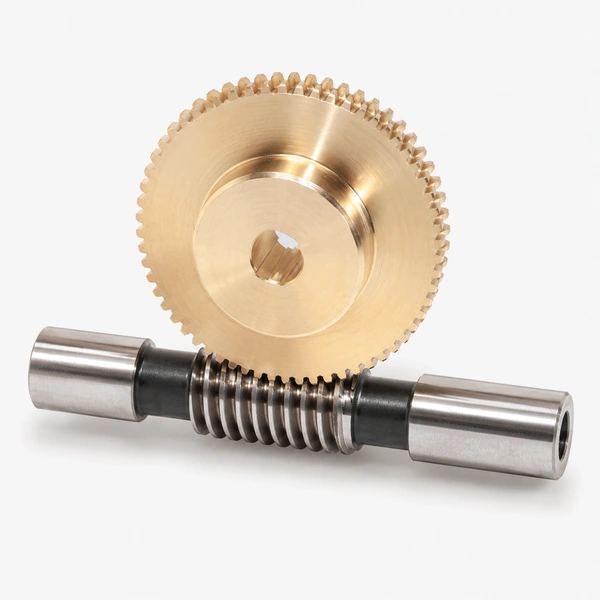
Both hypoid and worm gears can achieve ratios of 5:1 to 10:1 at a 90° shaft angle. Hypoid gears are superior in three ways: both pinion and ring gear can be case-hardened (worm gear: only the worm can be hardened — the wheel must remain soft for anti-scuffing), giving higher rigidity and allowing a smaller unit at the same torque; hypoid gears have less sliding than worm gears, giving higher efficiency and lower heat generation; and the hypoid's smaller offset vs the worm's large centre distance saves space. For ratios from 3:1 to 10:1, hypoid gears are the better choice when efficiency and compact size are more important than the worm gear's self-locking property.
Hypoid vs Spiral Bevel — Key Differences
| Property | Hypoid Gear ★ | Spiral Bevel Gear |
|---|---|---|
| Shaft Configuration | Non-intersecting (offset) ✓ | Intersecting (common apex) |
| Shaft Support | Both ends (straddle mount) ✓ | Pinion: one side only (cantilever) |
| Load Capacity | Higher (more tooth contact) ✓ | Lower |
| Noise and Vibration | Lower (higher contact ratio) ✓ | Moderate |
| Efficiency | 70–90% (sliding loss) | 95–99% (rolling dominated) ✓ |
| Conditionnement | Lower driveshaft (floor flat) ✓ | Higher driveshaft position |
| Ratio Range | Higher ratio achievable ✓ | Limited by tooth strength |
| Lubrication | Special hypoid oil required (EP/AW) | Standard gear oil adequate ✓ |
| Manufacturing Complexity | Higher (Gleason/Oerlikon machine) | Moderate ✓ |
Hypoid Gear Lubrication — Why Special Oil Is Essential
The hypoid gear's sliding contact between the tooth flanks subjects the gear oil to uniquely severe conditions that require specially formulated hypoid gear oil — and this is one of the most commonly overlooked maintenance requirements for vehicles with hypoid rear axles:
Why normal gear oil is insufficient for hypoid gears:
The sliding action in hypoid meshing squeezes the lubricant film from between the tooth flanks more aggressively than rolling contact does. Under the high pressures and elevated temperatures of the hypoid mesh, a standard gear oil without extreme pressure (EP) additives will be squeezed out entirely from the contact zone — allowing metal-on-metal grinding that rapidly destroys the tooth surface. Hypoid gear oils contain sulphur-phosphorus EP additives that chemically react with the tooth surface under the extreme conditions of the hypoid contact zone, forming a sacrificial protective layer that prevents adhesive wear (scuffing). Using standard gear oil in a hypoid axle will cause rapid gear destruction.
Hypoid Oil Viscosity Selection
Standard hypoid axle oil: API GL-5 grade, viscosity SAE 75W-90 (most passenger car rear axles) or SAE 80W-90 (older or heavier duty). Limited-slip differentials require LS-rated hypoid oil with friction modifier additives — using standard hypoid oil in an LSD causes clutch pack chatter. Always use the viscosity and API grade specified by the vehicle manufacturer for the specific axle model.
Oil Change Intervals
Regular oil changes remove wear particles, oxidation products, and water contamination. Hypoid gear wear particles are abrasive and accelerate further wear if left in the oil. Standard change interval: every 50,000–100,000 km for passenger cars; more frequent for towing or off-road use. Well-lubricated hypoid gears resist pitting and scuffing — poorly lubricated ones deteriorate rapidly through progressive tooth surface damage.
Applications
Automotive Rear Axle Differentials
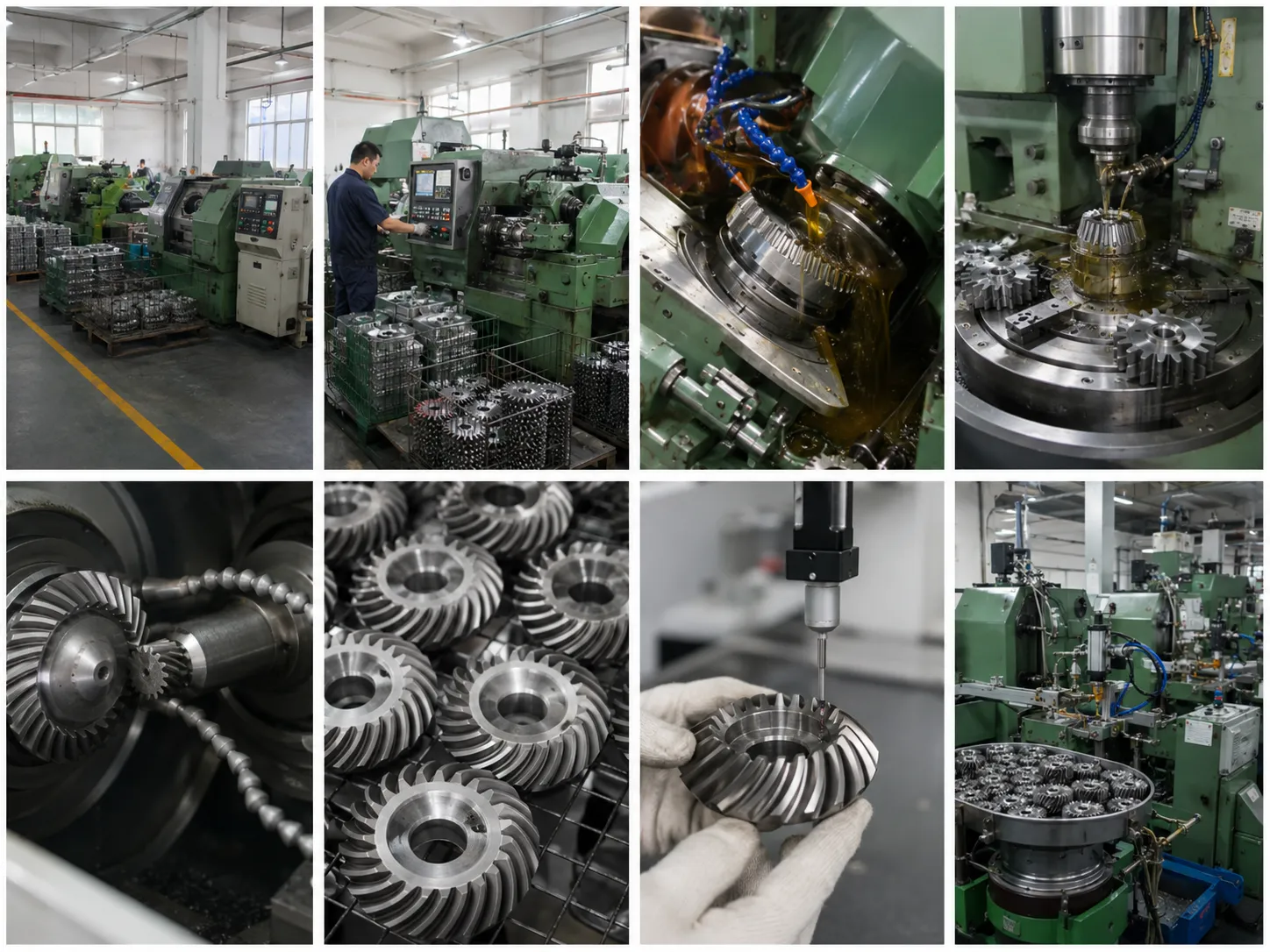
The primary application: hypoid ring and pinion gear sets in passenger car, SUV, and truck rear axle differentials. The hypoid offset lowers the propeller shaft for improved passenger compartment space. High contact ratio produces quiet operation — essential for NVH performance in premium vehicles. Korea Ever-Power's automotive hypoid gears are produced to OEM or aftermarket replacement specification in 20CrMnMo carburised alloy steel, lapped to certified contact pattern.
Robotic Arms and Automation
Miniature hypoid gear sets in robot wrist joint drives, camera pan/tilt mechanisms, and precision automation positioning heads. Hypoid gears in these applications provide the right-angle non-intersecting axis output needed to fit within the robot wrist's limited envelope, with higher ratio and quieter operation than equivalent worm gears and better efficiency than worm at the same ratio range.
Power and Pneumatic Tools
Hypoid gear sets in angle grinders, pneumatic angle screwdrivers, and power tool right-angle heads. The hypoid gear's compact offset configuration places the output shaft perpendicular to the motor shaft with a lower height profile than equivalent bevel gears — important for the ergonomic compactness of hand-held power tools. Both pinion and ring gear can be case-hardened for high rigidity, allowing a smaller tool head at the same torque capacity.
Agricultural Machinery
Hypoid gear sets in tractor final drive axles, combine harvester axle drives, and field implement drive units. Agricultural machinery hypoid gears operate in harsh conditions with shock loading from field surface impacts — requiring robust alloy steel (42CrMo or 20CrMnMo) with deep case hardening and, for exposed drives, corrosion-resistant surface treatment.
Railcar Transmissions
Hypoid gears in diesel-powered railcar transmissions — where the transmission allows the input shaft to rotate in one specific direction while the output shafts can reverse direction. This allows the vehicle to drive in either direction continuously without reversing the engine — a requirement for diesel multiple unit (DMU) railcars that run in both directions on tracks without turning loops.
Stage Lighting and Video Equipment
Miniature hypoid gears in moving head stage lighting fixtures, professional video camera pan/tilt heads, and broadcast equipment motorised mounts. The compact right-angle output, low noise, and high efficiency of small hypoid gear sets suit the quiet operation requirements of broadcast studio environments and the space constraints of moving head lighting fixtures.
Frequently Asked Questions
Can I replace hypoid gears with spiral bevel gears in an automotive rear axle?
In most automotive rear axle applications, spiral bevel gears cannot replace hypoid gears directly. The spiral bevel gear would need a much larger diameter to transmit the same torque as the existing hypoid gear set — because the hypoid's higher contact ratio gives it greater torque capacity per unit diameter. The larger diameter spiral bevel ring gear would require a larger housing, reducing vehicle ground clearance, increasing interior floor intrusion, and adding weight. These packaging and weight penalties are why hypoid gearing replaced spiral bevel gearing in automotive rear axles and has remained the standard since.
How do I get a quotation for custom hypoid gears?
Send drawings in IGS, DWG, or STEP format together with any requirements (material, heat treatment, quantity). If you have any specific requirements, note them — Korea Ever-Power will provide professional advice. If drawings are not available, send the sample or describe the application (ratio, input speed, output torque, centre distance, offset). Sample production: 7–10 days typically. Drawings are kept confidential and not released to third parties.
Why are hypoid gears preferred over worm gears in compact right-angle drives?
For ratios of 3:1 to 10:1 at a 90° shaft angle, hypoid gears offer three advantages over worm gears: both pinion and ring gear can be fully hardened (giving higher rigidity and smaller unit size at the same torque); hypoid gears have less sliding and higher efficiency (70–90% vs 40–60% for worm gears at similar low ratios), generating less heat and requiring less cooling; and the offset between pinion and ring gear axis is much smaller than the worm gear's centre distance, saving space. For long-term operating cost, hypoid gears with their higher efficiency and longer service life are the economically superior choice when the worm gear's self-locking property is not required. Contact Korea Ever-Power to specify the correct type for your application.
Customer Reviews
"We manufacture aftermarket rear axle components and source hypoid ring and pinion sets from Korea Ever-Power for 3–5 series passenger car rear axles. Contact pattern at incoming inspection matches the original equipment pattern exactly — Korea Ever-Power provided a contact pattern photograph with each batch for our QC records. No customer complaints in 18 months of sales across 200+ hypoid gear sets supplied. Lapping quality confirmed by our Gleason roll test."
Kim Min-jun | Automotive Driveline Parts Distribution Manager, Incheon Auto Parts Co. · Q1 2026
"We develop compact right-angle drives for industrial sewing machines and specified small hypoid gear sets M1.5 from Korea Ever-Power over the worm gear we previously used. Gearbox temperature at rated load: 38°C vs 64°C for the previous worm gear — confirming the efficiency improvement. Noise level at 1 metre from the gearbox: 52 dB(A) vs 61 dB(A) for the worm. Sample in 8 days. Drawing kept confidential — confirmed in writing before sending."
Lee Chan-jun | Industrial Sewing Machine Drive Engineer, Gyeonggi Sewing Equipment Co. · Q3 2025
Related Products
Request a Quotation for Hypoid Gears
High-precision hypoid gears since 1984. Automotive, robotics, power tools, agricultural, industrial. OEM per drawing (IGS/DWG/STEP) or sample. Sample 7–10 days. Drawings confidential. Send your specification to begin.
Informations complémentaires
| Editor |
|---|
 French
  English
  Italian
  Korean
  Japanese