
Metal Bevel Gear – M0.15 to M2.0, 11 Alloys, AGMA 13
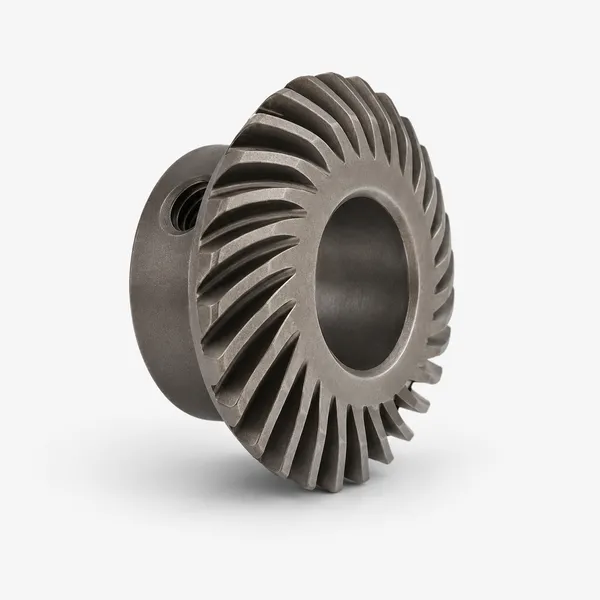
Korea Ever-Power metal bevel gears cover module M0.15 through M2.0 in eleven metallic materials — steel, alloy steel, bronze, brass, copper, zinc, aluminium, iron, and stainless steel. Precision grades reach JGMA 1, AGMA 13, and DIN 5. Applications span automotive, military, aircraft, industrial, and medical sectors. Where a plastic bevel gear is insufficient on load, temperature, or dimensional stability, a metal bevel gear is the correct specification. Full ODM and OEM service; customer drawings, samples, and IPR protection guaranteed. ISO 9001 and TS16949 certified. Vacuum-packed; DHL and UPS delivery.
Product Overview
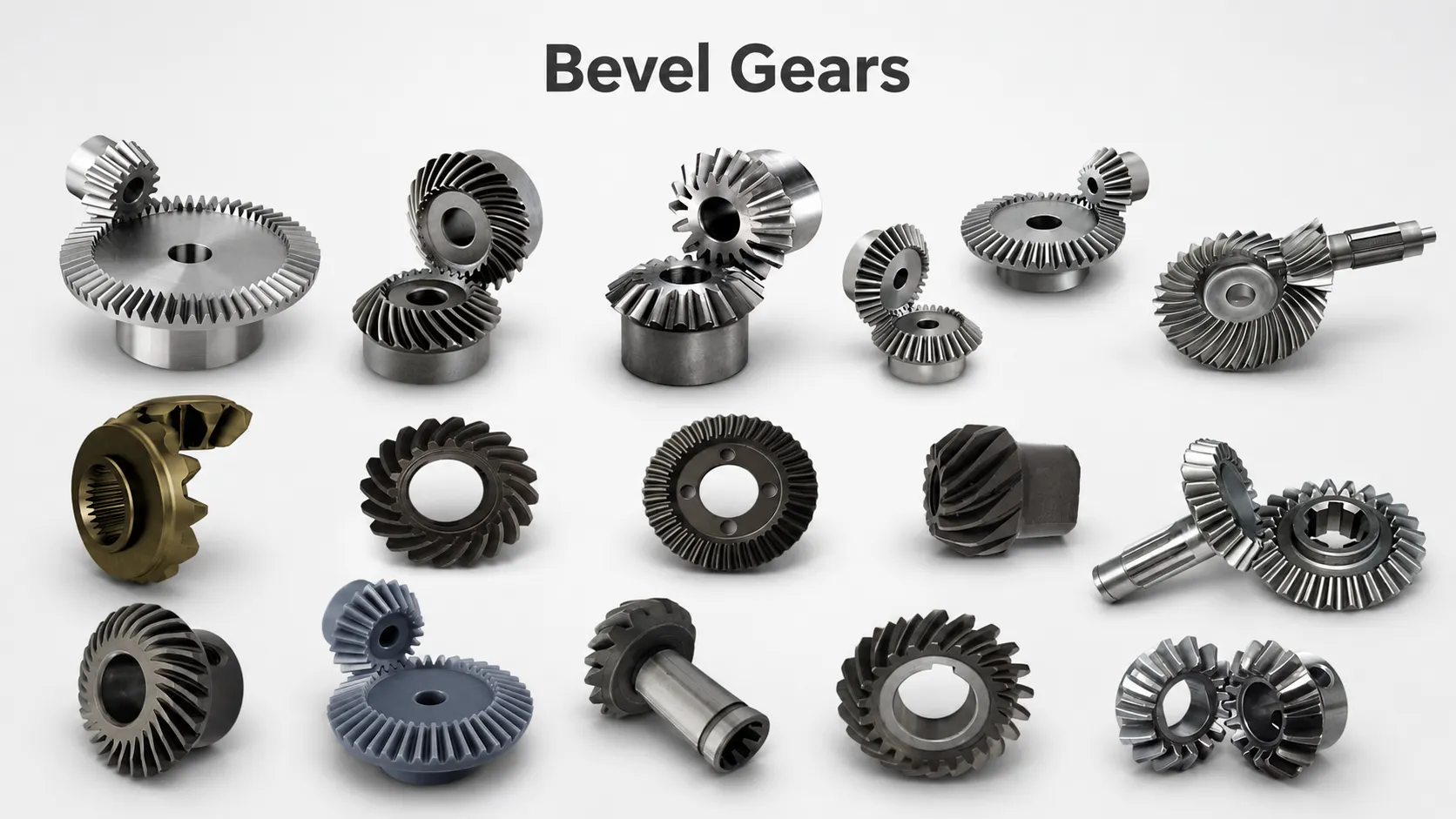
Korea Ever-Power metal bevel gears in the small-module range — M0.15 through M2.0, outer diameters Φ3 mm to Φ120 mm — are specified wherever plastic materials cannot meet the application's combination of load, temperature, dimensional stability, or service life requirements. Eleven metallic material options cover every operating environment from high-load carburised alloy steel in automotive and military drives to corrosion-resistant stainless and brass in medical and marine applications, to non-sparking copper and zinc alloys in hazardous atmosphere environments.
The distinction between choosing a metal or plastic bevel gear at this module range is not always obvious to a new designer. Plastic gears are self-lubricating, corrosion-immune, electrically insulating, and injection-mouldable at low per-unit cost — genuine advantages in the right application. But plastic tooth flanks creep under sustained load, soften at temperatures above 80°C (or 120°C for the better engineering plastics), absorb moisture and change dimensions, and fracture catastrophically under impact loads that a metal gear would survive with visible deformation but no fracture. When any one of these limitations is critical to the application, metal bevel gears are the specification.
All gears are produced using the most advanced design and development software — AutoCAD and SolidWorks — for drawing preparation, and precision CNC machining for production. IPR protection for customer designs is a firm policy: customer drawings, design files, and proprietary specifications are not shared, referenced, or applied to other customers' work. Sample gears are available before production batch approval. All production is vacuum-packed with a plastic tray; DHL and UPS express delivery are available.
When Metal Bevel Gears Are the Right Choice
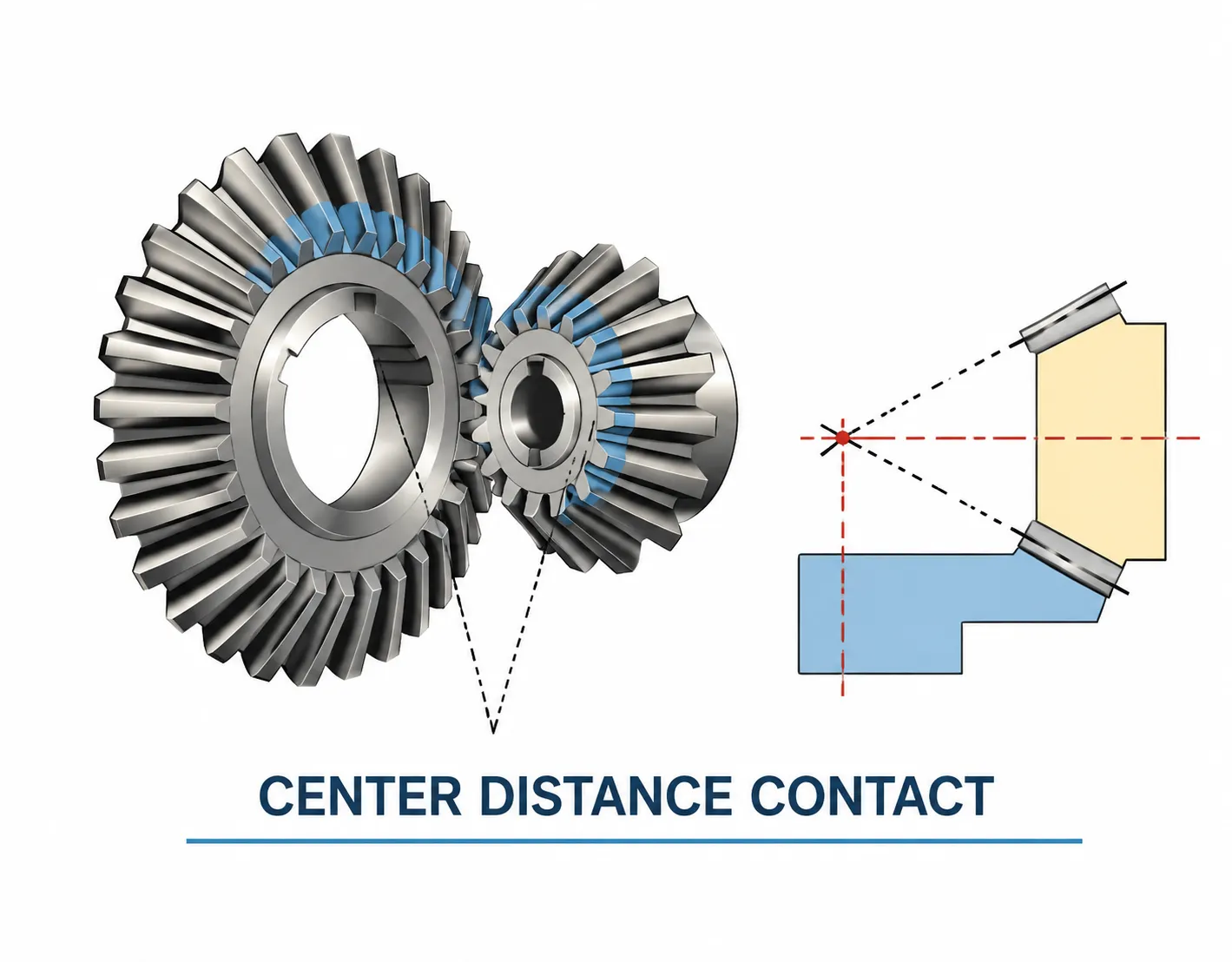
The decision between metal and plastic bevel gears at small module reduces to four engineering criteria. If any one of the following applies, a metal bevel gear is the correct specification.
Load exceeds the plastic material's capacity
At Module 1, a POM bevel gear handles approximately 0.5–1.0 Nm continuously at 25°C before tooth root bending stress reaches the fatigue limit. A steel bevel gear of the same module and tooth count handles 5–10 times that torque. Any application where the design torque exceeds the plastic material's allowable is a metal bevel gear application.
Operating temperature exceeds 80–120°C continuously
POM softens above 80°C and PPA above 120°C. Beyond these limits, plastic gears distort under load and dimensional tolerance is lost. Metal bevel gears in steel, stainless, or bronze maintain dimensional integrity from cryogenic temperatures through several hundred degrees Celsius depending on alloy. In engine compartments, near industrial furnaces, or in any environment with sustained elevated temperature, a metal bevel gear is the specification.
Dimensional stability over time is critical
Plastic gears change dimensions as they absorb moisture (PA: up to 3% weight gain, translating to measurable bore and pitch diameter growth). Metal gears do not absorb moisture. In precision instruments, medical diagnostic equipment, and military sighting systems where backlash and tooth spacing must remain within specified limits over years of service in variable humidity environments, metal bevel gears are specified regardless of load level.
Service life and maintenance access are both constrained
A plastic gear's wear rate under sustained load is higher than an equivalent metal gear. In sealed-for-life mechanisms where the gear cannot be replaced — implantable medical device drives, aircraft flight instrument gearheads, satellite pointing mechanisms — a metal gear is the only option that meets a multi-year service life without replacement access.
Technical Specifications
All specific values are confirmed against the customer's drawing or sample at the quotation stage. For OEM programmes with formal qualification requirements, a first-article inspection report and material certificate can be provided with the sample submission.
| Parameter | Specification |
|---|---|
| Gear Type | Metal bevel gear — straight, spiral, or zero-degree spiral; customised to customer drawing |
| Module Range | M0.15 – M2.0; larger modules reviewed on enquiry |
| Outer Diameter | Φ3 mm – Φ120 mm; confirmed per drawing |
| Material Options | Steel, Alloy steel, Bronze, Brass, Copper, Zinc alloy, Aluminium, Iron, Stainless steel (304/316) — 11 metallic options |
| Meshing Accuracy Grade | JGMA 1, JIS 6, AGMA 13, DIN 6, DIN 5, AGMA 12 |
| Application Sectors | Automotive, Military, Aircraft, Industrial, Mechanical, Medical |
| OEM / ODM Service | Full OEM and ODM capability; AutoCAD and SolidWorks for drawing preparation |
| IPR Protection | Strict IPR policy — customer design, logo, and artwork are protected and not shared |
| Échantillons | Available before production batch approval |
| Packing | Vacuum-packed with plastic tray |
| Delivery | DHL, UPS express |
| Certification | ISO 9001:2008; TS16949 |
Eleven Metal Materials — Selection Guide
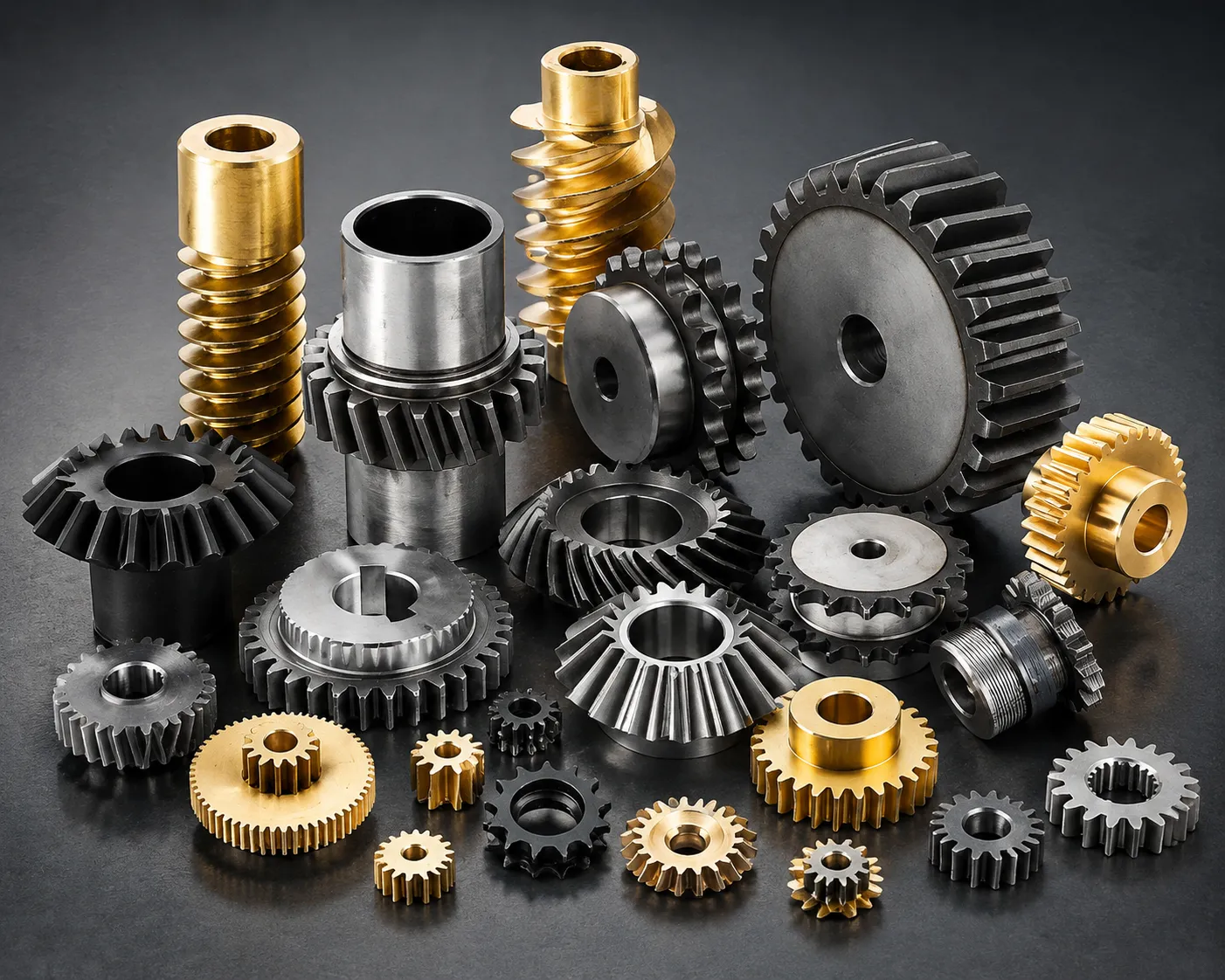
The eleven metallic material options for Korea Ever-Power metal bevel gears span a wide range of mechanical properties, density, corrosion resistance, and cost. The guide below matches each material to the application scenarios where it offers a clear advantage over the alternatives.
The standard starting point for metal bevel gears at small module. Normalised or through-hardened C45 delivers adequate tooth strength for moderate-load industrial and automotive auxiliary drives at lower cost than alloy steel. Machines readily to tight tolerances. Not suitable for corrosive environments without surface protection.
General-purpose drives, machine accessories, moderate-load instrument gearheads
The high-performance metal bevel gear material for automotive, military, and high-load industrial drives. Case-hardening grades (20CrMnTi) achieve 58–62 HRC tooth surface hardness with a tough low-carbon core; through-hardening grades (42CrMo) provide uniform hardness for shock-tolerant applications. Tooth load capacity is 5–10 times higher than an equivalent module and size in POM.
Automotive differentials, military drives, high-torque instrument drives, power tool gearheads
Corrosion-resistant metal bevel gears for food, medical, marine, and pharmaceutical applications where rust or metal-ion contamination from carbon steel is not acceptable. 316 adds molybdenum for chloride resistance. Passivation after machining is available with certificate for medical device supplier qualification. Load capacity is moderate — between carbon steel and brass at equivalent module.
Medical devices, food machinery, marine auxiliaries, pharmaceutical equipment, laboratory instruments
Bronze metal bevel gears offer excellent wear resistance against a steel pinion, good corrosion resistance in marine and wet environments, and inherent lubricity that reduces tooth friction. The bronze wheel driven by a hardened steel pinion is a classic pairing in long-life instrument and marine drives where quiet running and low maintenance are priorities. Phosphor bronze provides higher strength than standard tin bronze.
Marine drives, precision clocks and instruments, valve actuators, architectural hardware
Brass metal bevel gears machine to very tight tolerances and run quietly against a steel driver. The material's moderate strength, good corrosion resistance in atmospheric environments, and attractive appearance make it the traditional choice for precision instrument drives, decorative mechanical assemblies, and consumer product gearheads. Brass is non-magnetic and non-sparking — both relevant in sensitive measurement environments.
Precision instruments, clocks, decorative mechanisms, non-magnetic drives, gauges
Pure copper metal bevel gears are specified for their electrical conductivity, thermal conductivity, and non-sparking property. Used in grounding mechanism drives, EMI-sensitive control gearheads, and potentially explosive atmosphere angle drives where a metallic gear is required but sparking must be excluded. Load capacity is low; copper is not a structural gear material but a functional one where its physical properties matter more than tooth strength.
Electrical grounding drives, EMI-sensitive controls, ATEX-rated equipment, thermal management
Zinc die-cast metal bevel gears bridge the gap between injected plastic and fully machined metal — they are stronger and more dimensionally stable than POM or PA at small module, but produced near-net-shape by die-casting rather than cut from bar, keeping per-unit cost low at high volumes. Used in door mechanism drives, consumer appliance gearheads, and light-duty power tool auxiliary stages where the design load exceeds plastic capacity but full alloy steel precision is not required.
Consumer appliances, power tool accessories, door mechanisms, mid-volume light drives
Aluminium metal bevel gears are the lightest metallic option and machine to excellent dimensional accuracy. Anodising after machining provides hard-coat surface protection and can be colour-coded for ratio identification. Used in UAV and drone drives, motorsport gearheads, lightweight robotic wrist joints, and EV subsystem angle drives where rotating mass is a design parameter. 7075-T6 offers significantly higher strength than 6061 at similar weight.
UAV propulsion, motorsport, lightweight robotics, EV subsystems, satellite mechanisms
Cast iron metal bevel gears are heavy but provide excellent vibration damping and adequate wear resistance at low pitch-line speeds. Used in slow auxiliary drives — water pump angle stages, oil pump bevel drives in industrial equipment — where the gear's damping properties benefit the machine acoustics and the low operating speed does not demand the strength of alloy steel. Ductile iron adds impact resistance to the damping benefit of grey iron.
Slow industrial auxiliaries, pump drives, damping-sensitive machine drives
| Material | Load Capacity | Corrosion Resistance | Max Temp (cont.) | Weight | Non-Magnetic | Relative Cost |
|---|---|---|---|---|---|---|
| Alloy steel | Highest | Low (needs coating) | 400°C+ | Heavy | No | Moderate |
| Carbon steel | High | Low (needs coating) | 400°C+ | Heavy | No | Low |
| Stainless 316 | Moderate | Excellent | 800°C+ | Heavy | Partial | Moderate |
| Bronze | Moderate | Very good | 250°C | Heavy | Yes | Moderate |
| Brass | Low–Moderate | Good | 200°C | Heavy | Yes | Moderate |
| Copper | Low | Good | 200°C | Heavy | Yes | High |
| Aluminium 7075 | Moderate | Good (anodised) | 150°C | Light | Yes | Moderate |
| Zinc die-cast | Moderate | Good | 120°C | Heavy | Yes | Low–Moderate |
| Grey cast iron | Moderate | Low | 250°C | Heaviest | No | Low |
Manufacturing Routes for Small-Module Metal Bevel Gears
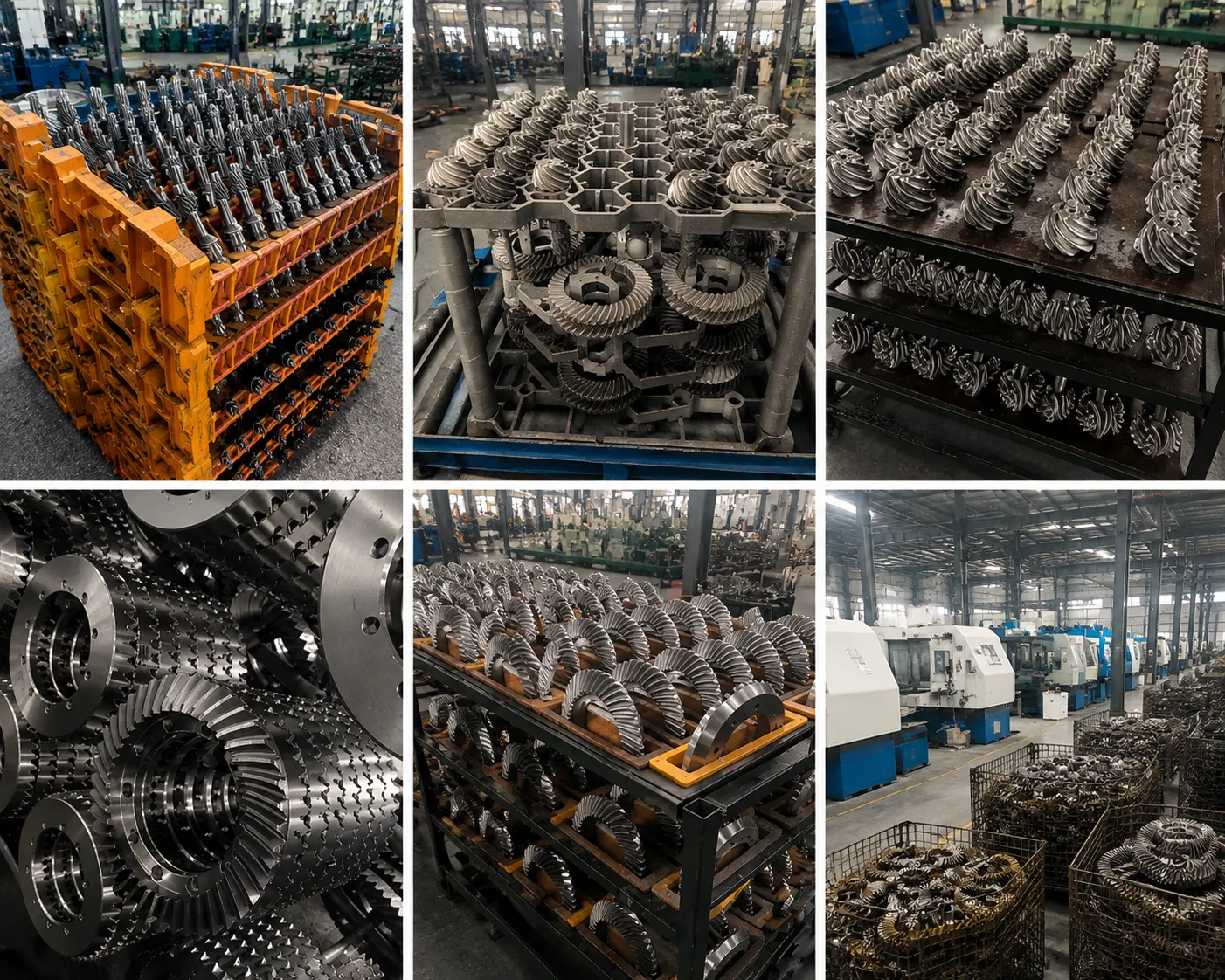
Small-module metal bevel gears can be produced by three distinct manufacturing routes, each with different implications for dimensional accuracy, surface finish, material options, and cost at volume.
CNC Precision Cutting + Grinding (Korea Ever-Power Standard)
Tooth profile is generated on CNC bevel gear cutting machines from a bar or forged blank, then finished by grinding (for high accuracy grades) or lapping (for matched pairs). This route achieves the highest accuracy grades — AGMA 13, DIN 5, JGMA 1 — and works in all eleven metallic materials. Unit cost is higher than casting or sintering but there is no tooling amortisation constraint: a single piece or a sample can be produced without die investment. Korea Ever-Power applies this route as the standard for all custom metal bevel gear orders.
Die Casting (Zinc, Aluminium, Brass)
Die casting fills a precision die with molten metal under high pressure, producing near-net-shape metal bevel gears with good surface finish and tight dimensional control — better than sand casting but less accurate than CNC machining. Per-unit cost is very low at high volumes once tooling is amortised. Suitable for zinc alloy, aluminium, and brass at small module. Tooth accuracy is limited to approximately AGMA 9–10 in practice. Bore and hub dimensions often require post-cast machining for closer tolerances.
Powder Metallurgy / Sintering (Steel, Iron)
Sintered metal bevel gears are produced by pressing metallic powder into a die at high pressure and then sintering in a furnace. The resulting gear has controlled porosity that can carry lubricant — useful in sealed-for-life applications. Dimensional accuracy is moderate — sintered parts shrink predictably during sintering, and this shrinkage is calibrated in the die design. Tooth accuracy is approximately AGMA 7–9. Best suited for very high volumes of moderate-accuracy steel or iron bevel gears in sealed consumer products.
Quality Control — From Raw Material to Shipment
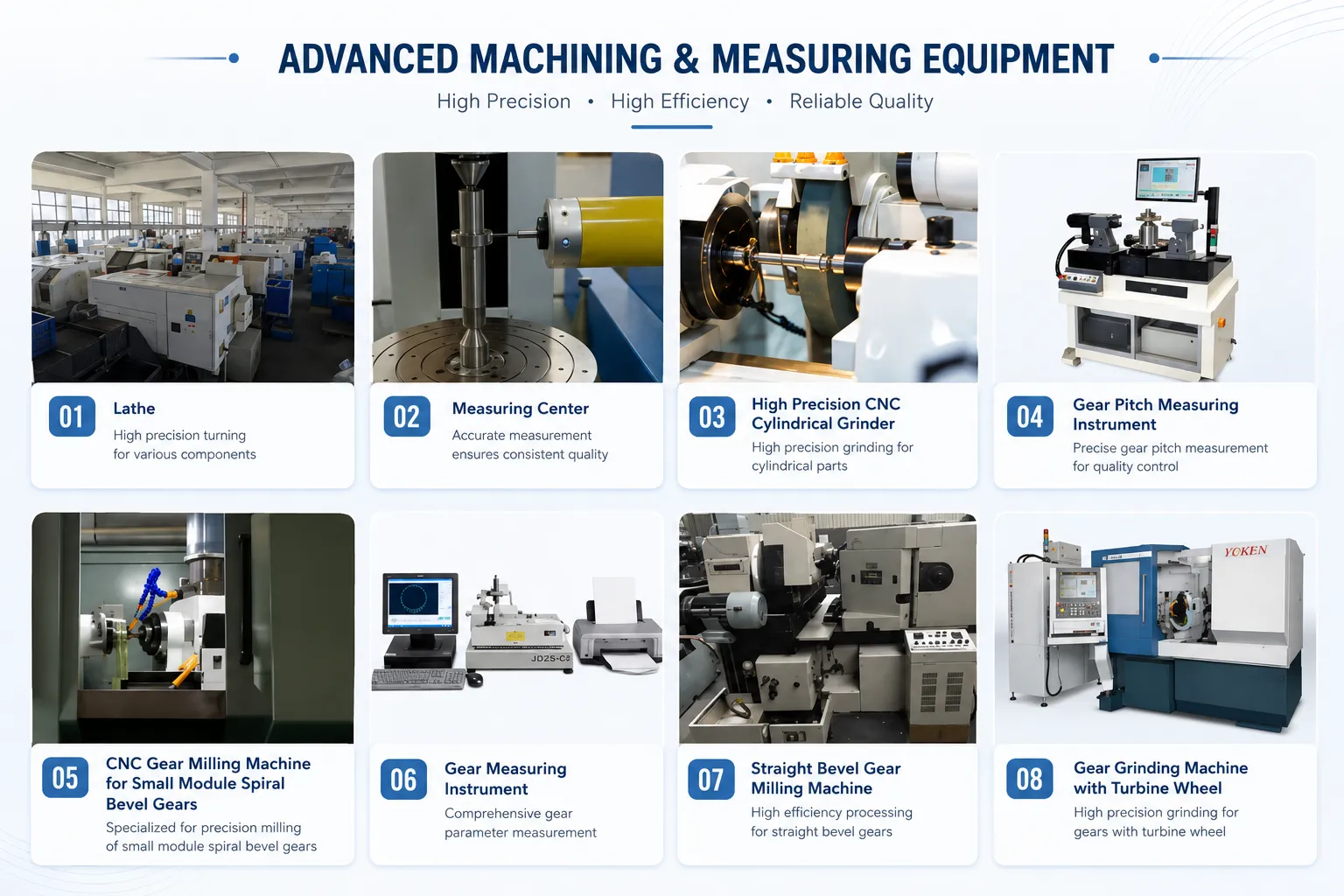
Korea Ever-Power's quality management approach for metal bevel gears operates on three levels: incoming material inspection, in-process inspection at each production stage, and final inspection before packing. The quality control department is responsible for inspection at every step — not sampling at the end only.
- Raw material incoming inspection — all metallic raw materials are verified for grade and chemical composition on arrival. Environmentally restricted substances (RoHS-relevant materials such as cadmium, hexavalent chromium, and restricted lead alloys) are checked against the applicable regulation before the material enters stock.
- In-process dimensional checks — skilled operators measure critical dimensions at each CNC machining stage. Deviations identified in-process are corrected before the part proceeds to the next operation, preventing non-conformances from compounding through the production sequence.
- Final CMM and tooth inspection — finished metal bevel gears are inspected on CMM for bore, OD, hub dimensions, and runout. Tooth spacing error and profile form are checked against the drawing tolerance for the specified accuracy grade. For matched spiral bevel pairs, a gear roll test with contact pattern photograph is performed before packing.
- Packaging quality — vacuum packing with plastic tray protects the tooth flanks and bore surfaces from transit damage and corrosion. Stainless steel gears are dried and packed with desiccant. Alloy steel gears are coated with a removable anti-corrosion oil before packing.
Applications
Automotive
Differential ring-and-pinion sets, power steering angle drives, throttle position actuators, and window regulator drives that exceed the load capacity of plastic gears. Alloy steel for high-load stages; stainless for corrosion-sensitive auxiliaries; zinc for mid-volume lightly loaded mechanisms.
Military
Targeting and sighting drives where dimensional stability over temperature and humidity cycles is non-negotiable. Brass and stainless metal bevel gears at AGMA 13 / JGMA 1 are specified for non-magnetic requirements. Alloy steel for high-torque vehicle drives that must survive shock loading from weapons or terrain.
Aircraft
Flight instrument drives, cockpit control surface feedback gearheads, and avionics cooling fan angle stages. Aluminium or titanium for weight-critical applications; steel for high-load flight control stages. Temperature range from −55°C (high altitude) to +150°C (near engine) requires metallic gears — no plastic meets this range.
Industrial & Mechanical
Machine tool angle heads, servo drive direction-change stages, encoder coupling drives, and process control actuators. Steel or alloy steel for load-bearing stages; brass for quiet precision drives; stainless for chemical or food-adjacent environments.
Medical
Surgical robotic wrist drives requiring autoclave sterilisation (316L stainless with passivation), diagnostic imaging gantry drives (dimensional stability over service life), and implantable device drives (titanium alloy, biocompatibility-validated materials). Metal bevel gears are the only option where PEEK plastic cannot meet the combined temperature, chemical, and biocompatibility specification.
Hazardous Atmospheres
Petrochemical, mining, and chemical plant drives in potentially explosive atmospheres require ATEX-rated equipment. Non-sparking metal bevel gears in bronze, brass, or copper eliminate the ignition risk from metal-on-metal sparking that carbon steel or iron gears would present. The metallic material is necessary here — the drive load exceeds plastic capacity, but the material must not spark.
Frequently Asked Questions
What is the IPR protection policy and how does it work in practice?
Korea Ever-Power applies a strict intellectual property protection policy to all OEM and ODM programmes. Customer drawings, design files, geometry data, and proprietary specifications are stored in a restricted-access system accessible only to personnel directly involved in that customer's production. They are not shared with other customers, not used as reference for similar designs, and not retained beyond the duration of the customer relationship unless the customer explicitly requests otherwise. Non-disclosure agreements (NDA) are available for customers who require a contractual IPR commitment in addition to the policy undertaking. When you submit a drawing to Ever-Power, the design remains your property; we are producing it as your contracted manufacturer only.
How do I choose between a machined, die-cast, or sintered metal bevel gear for my application?
The choice depends on annual production volume, required accuracy, and material. For any volume below approximately 5,000 pieces per year and for any application requiring AGMA 12 accuracy or better, CNC machining is the correct route — no tooling investment is required, all metallic materials are available, and accuracy is not constrained by die shrinkage. For volumes above 50,000 pieces per year in zinc or aluminium at accuracy requirements of AGMA 9 or below, die casting reduces per-unit cost significantly once tooling is amortised. Sintering suits very high volumes of steel or iron bevel gears at AGMA 7–9 in sealed consumer or appliance products where the porous structure's oil retention is also an advantage. Korea Ever-Power's engineering team will recommend the appropriate route for your specific volume, accuracy, and material combination at the quotation stage.
Can metal bevel gears run without lubrication the way plastic gears can?
Generally, no — metal bevel gears at significant load require lubrication to maintain a hydrodynamic film between tooth flanks and prevent adhesive wear. The exception is the brass-on-steel pairing, where the brass gear transfers a thin solid-film lubricant to the steel flank during running, allowing low-load, low-speed operation without applied oil or grease. Bronze similarly has some inherent lubricity. For very light-load instrument drives at very low speed, an initial oil application followed by sealed-for-life operation is sometimes acceptable. In all other cases, a lubricant — grease for enclosed sealed units, oil for splash-lubricated gearboxes, or open-gear grease for exposed drives — should be specified with the gear set.
What software do you use for custom metal bevel gear design, and what file formats do you accept?
Korea Ever-Power uses AutoCAD and SolidWorks for drawing preparation and 3D modelling. Customer drawings are accepted in PDF, DWG, DXF, STEP, and IGES formats. For a new custom programme, the customer provides the drawing; our team converts it to production documentation and returns a dimensioned first-article drawing for approval before production begins. If the customer has only a sample part rather than a drawing, we can reverse-engineer the sample, produce a production drawing for customer approval, and then manufacture to that drawing. The customer receives and approves the production drawing before any machining begins, ensuring the manufactured part matches the customer's original intent.
How is equipment failure handled during the warranty period?
If a metal bevel gear fails during the warranty period, email us with photographs or a short video showing the failure mode and the context of how the gear was installed and operating. Our engineering team reviews the failure evidence and determines whether the root cause is a manufacturing defect or an operating condition outside the gear's specified limits. For manufacturing defects — material non-conformance, dimensional error, incorrect heat treatment — replacement parts are sent at no charge. For failures caused by operating conditions beyond the specification (overload, wrong lubrication, installation error), we will advise on the corrective action required and can re-quote replacement parts at commercial terms with any specification upgrade recommended by the failure analysis.
Can I order a single sample metal bevel gear before committing to a production quantity?
Yes. Korea Ever-Power provides samples before production batch approval as standard practice. A sample order typically covers 3 to 10 pieces machined to the customer-approved production drawing. The sample is accompanied by a dimensional inspection report and material certificate so the customer can verify conformance before approving production. Sample express shipping is via DHL or UPS; the customer is responsible for express freight costs unless otherwise agreed. Once the sample is approved and the production order confirmed, the sample cost is credited against the first production invoice on orders above a minimum agreed value. Contact our team with your drawing or sample part to begin the qualification process.
Customer Reviews
"We design precision laboratory instruments and needed M0.8 brass bevel gears at AGMA 12 for a pH meter angle drive. The brass material was essential — the gear runs near an ion-sensitive electrode and any magnetic or ferrous material was excluded. Ever-Power produced to spec with tight dimensional control and the gears have run for 24 months in the field without measurable backlash change."
Yoo Min-seo | Instrument Design Engineer, Seoul Analytical Instruments · Q2 2025
"We switched from POM to 316L stainless metal bevel gears in an infusion pump angle drive after the POM version showed dimensional drift in high-humidity hospital environments. The stainless gears have held their bore tolerance after 18 months of operation through multiple sterilisation cycles. The passivation certificate from Ever-Power satisfied our medical QMS documentation requirement immediately."
Choi Jun-il | Medical Device Engineer, Daejeon Medical Systems · Q4 2025
"We needed M1.5 bronze metal bevel gears for a marine valve actuator on a ferry. The stainless option was evaluated but the bronze provides better lubricity against the hardened steel driver shaft, which runs dry. Ever-Power produced with phosphor bronze, confirmed the tooth geometry from our worn sample, and delivered with dimensional report. The actuator has completed 18 months of sea service without gear failure."
Im Sang-jun | Marine Engineer, Busan Ferry Operations · Q1 2026
"We manufacture UAV propulsion systems and specified M1.0 7075 aluminium bevel gears at AGMA 12 for a weight-critical propeller angle drive. Every-Power delivered anodised, within the drawing tolerance, and with a dimensional report. Weight per pair matched the material specification calculation. The drive has completed over 400 flight hours in testing with no sign of wear on the anodised tooth surfaces."
Han Ji-soo | Systems Engineer, Gyeonggi UAV Technologies · Q3 2025
"We produce power tool gearheads and had a POM bevel gear set failing under the peak torque during bit-jam conditions. The metal replacement — M1.5 alloy steel 20CrMnTi carburised — handles the jam torque without tooth fracture. Ever-Power produced from our SolidWorks model directly, provided the production drawing for approval, and manufactured within three weeks. The IPR undertaking in writing before production gave our engineering team confidence about design confidentiality."
Kang Tae-young | Product Engineer, Incheon Power Tool Manufacturing · Q2 2026
Request a Quotation for Metal Bevel Gears
Send us your drawing, worn sample, or application data — module, material, accuracy grade, and bore details. If the original drawing is not available, send us the sample and we will reverse-engineer it. Samples available before production approval. Full IPR protection guaranteed. Our engineering team returns a price and lead time within two working days.
Informations complémentaires
| Editor |
|---|
Produits similaires
-
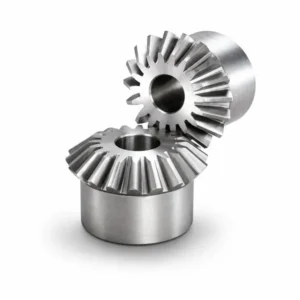
Miter Gears – 1:1 Straight & Spiral, Right-Angle Drive
-
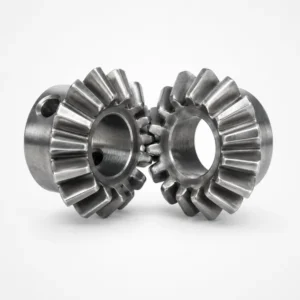
Zero-Degree Spiral Bevel Gear – Zerol, No Axial Thrust
-
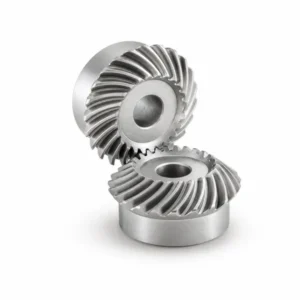
Spiral Miter Gears – 35° Spiral Angle, 1:1 High-Speed Drive
-
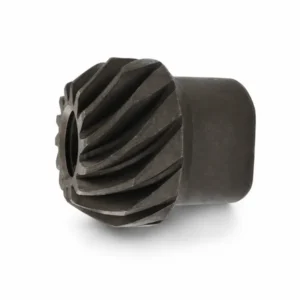
Spiral Bevel Gears – Helical Bevel Gear, Custom OEM Supply
-
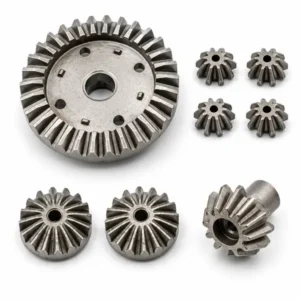
Sintered Metal Bevel Gears – Self-Lubricating, DIN 6–9
-
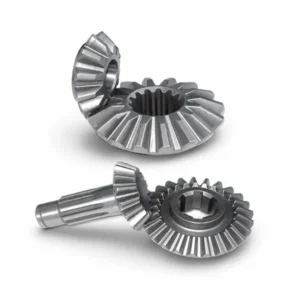
Forging Bevel Gears – Hot & Cold Forged, Custom OEM Supply
-
Automotive Bevel Gear – M0.15 to M2.2, AGMA 13 / DIN 5
-
Differential Gears – Open, LSD, Torque Vectoring, Forged PM
 French
  English
  Italian
  Korean
  Japanese