
Plastic Bevel Gears – POM PA PEEK, -40°C to 80°C, 1:1–5:1
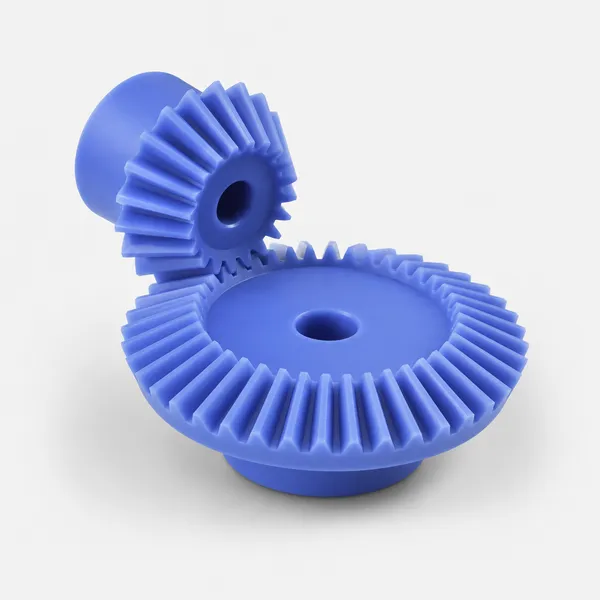
Korea Ever-Power plastic bevel gears transfer motion between intersecting shafts without metal-to-metal contact, lubrication requirements, or corrosion risk. Straight and spiral tooth forms available in POM, PA (nylon), PPA, PBT, and PEEK from module M0.15 to M2.0, outer diameter Φ3 mm to Φ120 mm. Standard ratios 1:1, 2:1, 3:1, 4:1, and 5:1. Optional brass insert and setscrew hub for positive shaft retention. Operating temperature -40°C to 80°C. Accuracy grades to AGMA 13, DIN 5, JGMA 1. TS16949 and ISO 9001 certified. Vacuum-packed; DHL, TNT, FedEx, UPS delivery.
Product Overview
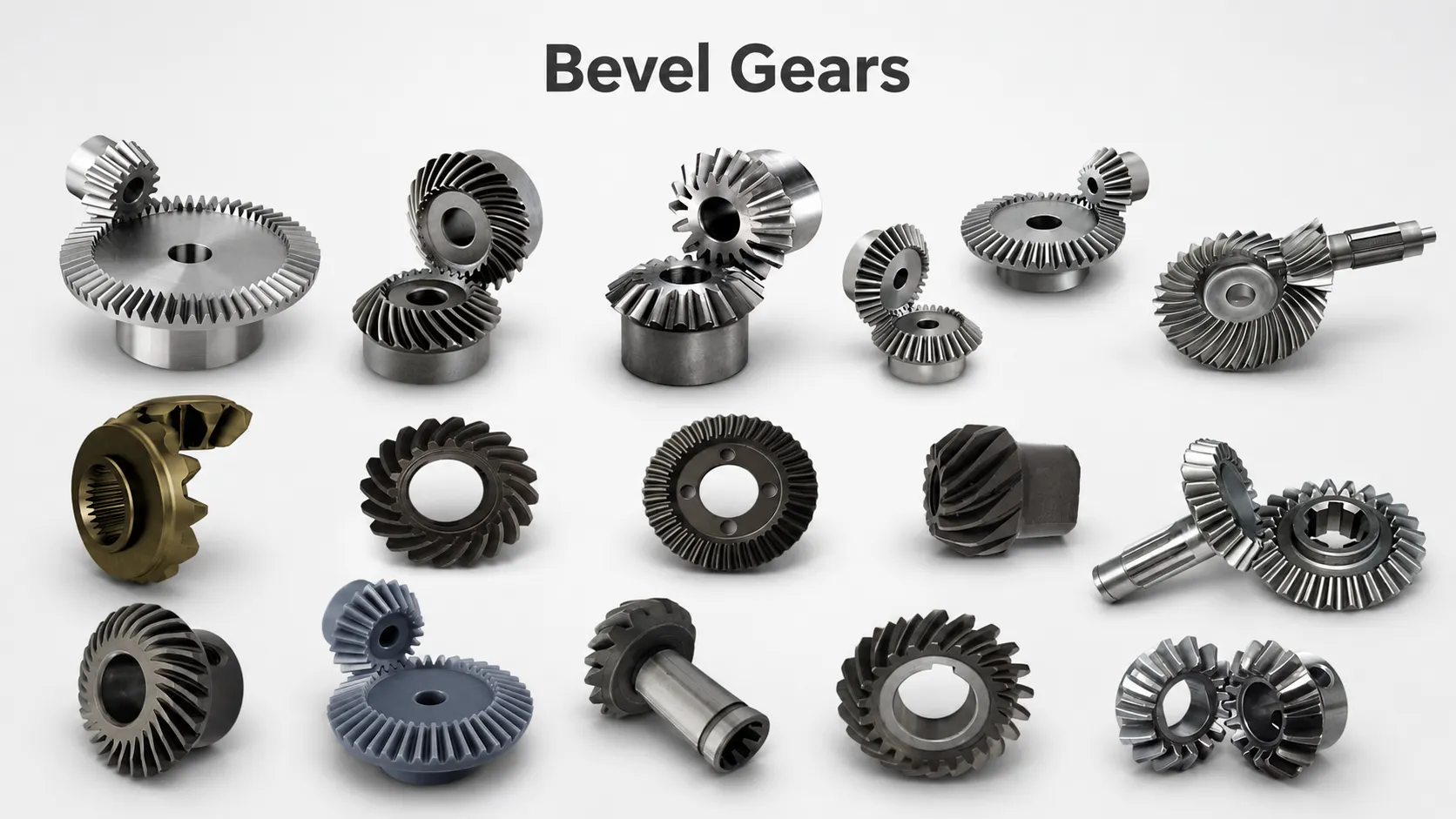
Plastic bevel gears transmit motion and light torque between intersecting shafts with a set of properties that no metal gear can offer simultaneously: self-lubrication, corrosion immunity, electrical insulation, low noise, and the ability to be injection-moulded to net shape at low per-unit cost in high volumes. Korea Ever-Power produces plastic bevel gears in straight and spiral tooth forms from module M0.15 through M2.0, covering outer diameters from Φ3 mm to Φ120 mm. Standard gear ratios — 1:1, 2:1, 3:1, 4:1, and 5:1 — are available in part-numbered series; custom ratios and modules are accepted to customer drawings.
The plastic materials available span five engineering polymer families: POM (acetal), PA (nylon, including PA66 and PA12), PPA (polyphthalamide), PBT (polybutylene terephthalate), and PEEK (polyether ether ketone). Each has a distinct combination of strength, temperature resistance, moisture absorption, and chemical resistance that determines which applications it suits. The operating temperature range of the standard series is −40°C to 80°C — covering the full ambient temperature range of most consumer, automotive, and light industrial applications. PEEK variants extend the upper limit significantly for higher-temperature environments.
For applications where the bore must be retained on a shaft positively — rather than relying on the plastic material's grip — Korea Ever-Power offers a brass insert and setscrew option (suffix "BS" in the part number). The brass insert is moulded or pressed into the hub, providing a metal-threaded bore that resists the setscrew load without risk of the thread stripping or the boss cracking under the clamp force. All plastic bevel gear sets are vacuum-packed with a plastic tray for transit protection; DHL, TNT, FedEx, and UPS delivery are available.
Standard Part Series — Ratios 1:1 to 5:1, Module 0.5 and 1
The table below covers the standard part-numbered plastic bevel gears in Module 0.5 (1:1 ratio) and Module 1 (1:1 through 5:1 ratios). Each pair is identified by its part number; the "BS" suffix denotes the brass insert and setscrew option. All dimensions are in millimetres. Custom modules, ratios, bore sizes, and materials outside this table are available to customer drawings — contact our engineering team with your requirements.
| Part No. | Module | Ratio | Teeth | OD (mm) | PD (mm) | Bore B (mm) | Hub Dia C (mm) | Tooth Width F (mm) | Brass Insert |
|---|---|---|---|---|---|---|---|---|---|
| 1 : 1 Ratio | |||||||||
| GB05M016 | 0.5 | 1:1 | 16 | 8.7 | 8.0 | 3.0 | 7.0 | 2.0 | No |
| GB1M016 | 1 | 1:1 | 16 | 17.6 | 16.0 | 5.0 | 8.0 | 4.7 | No |
| GB1M016BS | 1 | 1:1 | 16 | 17.6 | 16.0 | 5.0 | 8.0 | 4.7 | Yes (BS) |
| 2 : 1 Ratio — Module 1 (Pinion Z15 / Wheel Z30) | |||||||||
| GB1M215030 | 1 | 2:1 | 15 / 30 | 16.8 / 31.1 | 15.0 / 30.0 | 5.0 / 8.0 | 10.6 / 9.1 | 6.6 | No |
| GB1M215030BS | 1 | 2:1 | 15 / 30 | 16.8 / 31.1 | 15.0 / 30.0 | 5.0 / 4.0 | 10.6 / 9.1 | 6.6 | Yes (BS) |
| 3 : 1 Ratio — Module 1 (Pinion Z15 / Wheel Z45) | |||||||||
| GB1M315045 | 1 | 3:1 | 15 / 45 | 16.6 / 46.1 | 15.0 / 45.0 | 5.0 / 10.0 | 11.0 / 9.6 | 9.2 | No |
| GB1M315045BS | 1 | 3:1 | 15 / 45 | 16.6 / 46.1 | 15.0 / 45.0 | 5.0 / 6.0 | 11.0 / 9.6 | 9.2 | Yes (BS) |
| 4 : 1 Ratio — Module 1 (Pinion Z10 / Wheel Z40) | |||||||||
| GB1M410040 | 1 | 4:1 | 10 / 40 | 12.0 / 40.8 | 10.0 / 40.0 | 4.0 / 10.0 | 9.3 / 10.8 | 8.2 | No |
| GB1M410040BS | 1 | 4:1 | 10 / 40 | 12.0 / 40.8 | 10.0 / 40.0 | 4.0 / 6.0 | 9.3 / 10.8 | 8.2 | Yes (BS) |
| 5 : 1 Ratio — Module 1 (Pinion Z12 / Wheel Z60) | |||||||||
| GB1M512060 | 1 | 5:1 | 12 / 60 | 13.7 / 60.4 | 12.0 / 60.0 | 4.0 / 10.0 | 10.0 / 11.0 | 9.5 | No |
| GB1M512060BS | 1 | 5:1 | 12 / 60 | 13.7 / 60.4 | 12.0 / 60.0 | 4.0 / 6.0 | 10.0 / 11.0 | 9.5 | Yes (BS) |
Note on 5:1 ratio gears: Part numbers GB1M512 and GB1M512BS (pinion only, Z12) are geometry-matched to the 60-tooth wheel only. Their pitch cone geometry is not compatible with other wheels in the range. Always order the pinion and wheel as a matched pair at this ratio.
Product Specifications
| Parameter | Specification |
|---|---|
| Gear Type | Plastic bevel gear — straight or spiral tooth; conical pitch surface |
| Module Range | M0.15, M0.2, M0.25–M0.8, M0.8–M1.0, M1.5–M2.0 |
| Outer Diameter | Φ3 mm – Φ120 mm |
| Standard Ratios | 1:1, 2:1, 3:1, 4:1, 5:1; custom ratios per drawing |
| Operating Temperature | −40°C to 80°C (standard POM/PA); PEEK variants rated higher |
| Material Options | POM, PA (nylon), PPA, PBT, PEEK — as customised |
| Brass Insert Option | Available (suffix "BS") — brass insert + setscrew for positive shaft retention |
| Meshing Accuracy Grade | GB 6, ISO 6, JGMA 1, JIS 6, AGMA 13, DIN 6, DIN 5 |
| Application Sectors | Medical, Industrial, Automotive, Military, Aircraft, Mechanical |
| OEM / ODM | Full OEM and ODM capability; drawings, samples, or specifications accepted |
| Campioni | Available before production batch approval |
| Packing | Vacuum-packed with plastic tray |
| Delivery | DHL, TNT, FedEx, UPS |
| Certificazione | ISO 9001:2008; TS16949 |
Five Engineering Plastics — Which One to Specify
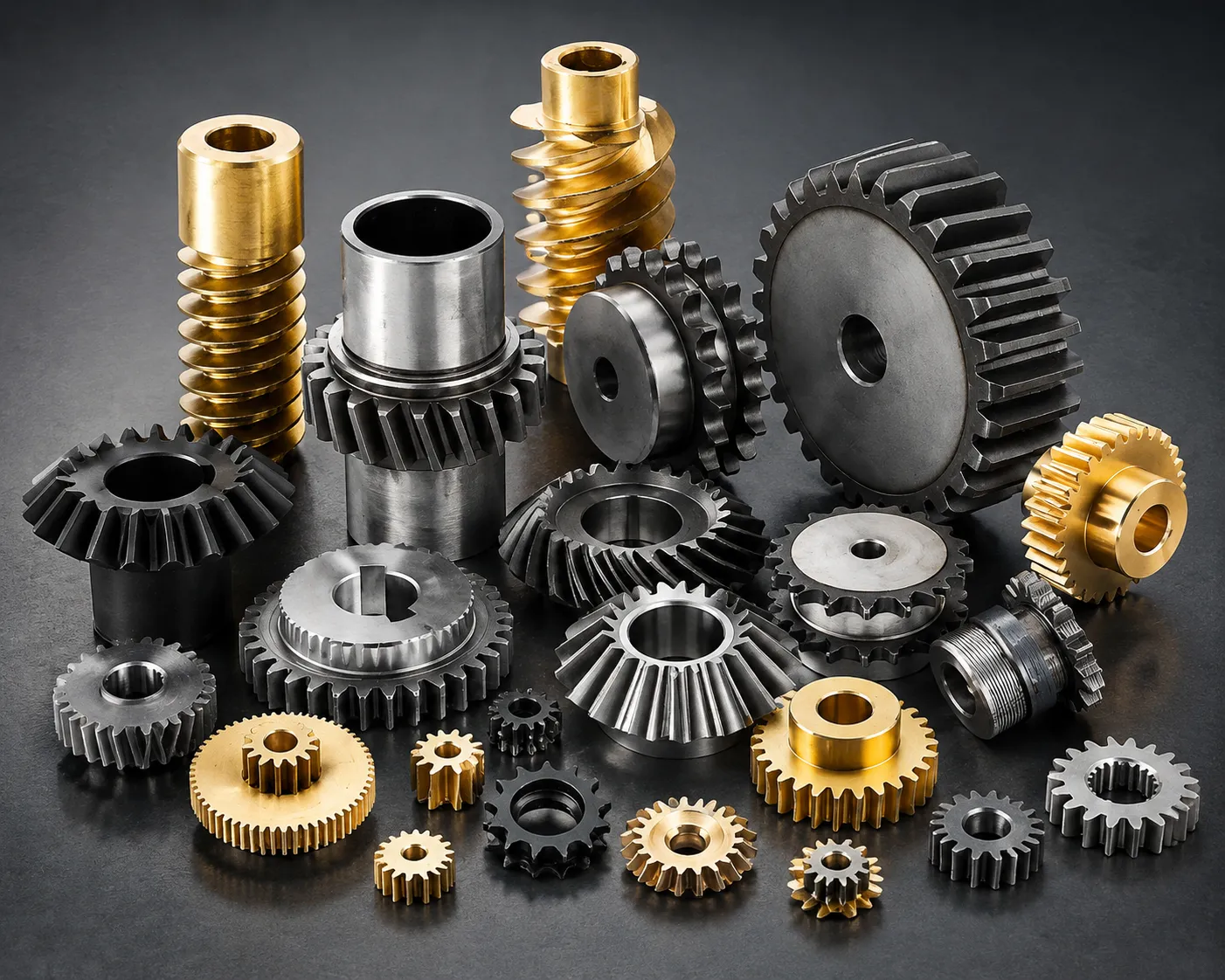
The performance of a plastic bevel gear depends on the polymer as much as the tooth geometry. Three properties drive material selection for most applications: dimensional stability (how much the gear changes size with temperature and moisture), load capacity (how much torque the tooth can carry before yielding), and chemical resistance (what lubricants, cleaning agents, and process fluids the gear can contact). The five materials below cover the practical range of plastic bevel gear applications.
POM (Acetal / Delrin) — Best Overall for Precision
Low moisture absorption (0.2% at equilibrium), high dimensional stability, self-lubricating surface layer, and excellent fatigue resistance make POM the default material for precision plastic bevel gears where dimensional consistency over time matters. POM gears retain their tooth profile dimensions reliably across the −40°C to 80°C operating range. Resistant to fuels, oils, and most solvents; not suitable for strong acids, bases, or concentrated oxidisers.
PA (Nylon, PA66 / PA12) — Best for Impact and Quiet Running
PA absorbs more moisture than POM (PA66: 2.5–3.5% at equilibrium in humid conditions) and its dimensions change accordingly — a 10 mm bore can grow by 0.05–0.10 mm after prolonged high-humidity exposure. However, moisture absorption also reduces brittleness and improves impact resistance. PA is quieter in mesh than POM at the same tooth geometry, and its lower tooth stiffness damps tooth engagement noise effectively. Specify PA12 rather than PA66 where moisture absorption must be minimised; PA12 absorbs approximately 0.7% moisture and offers better dimensional stability in humid environments.
PPA, PBT, PEEK — High-Performance for Demanding Conditions
PPA (polyphthalamide) and PBT (polybutylene terephthalate) extend the upper service temperature beyond standard nylon, resist automotive fluids more aggressively, and offer better stiffness at elevated temperature than PA66. PEEK is the premium option — with a continuous service temperature above 200°C, excellent chemical resistance including concentrated acids and bases, and dimensional stability that exceeds all other engineering plastics in the range. PEEK plastic bevel gears are used in sterilisable medical devices, aerospace actuators, and chemical process equipment where no other plastic meets the combined temperature, chemical, and load requirements.
| Property | POM | PA66 | PA12 | PPA | PBT | PEEK |
|---|---|---|---|---|---|---|
| Max cont. temp. | 80°C | 100°C | 90°C | 120°C | 120°C | 200°C+ |
| Moisture absorption | Very low | High | Low | Low | Low | Very low |
| Dimensional stability | Excellent | Moderate | Good | Good | Good | Excellent |
| Load capacity | Good | Good | Moderate | High | Good | Highest |
| Chemical resistance | Good | Moderate | Good | Very good | Very good | Excellent |
| Self-lubricating | Yes | Yes | Yes | Yes | Moderate | Yes |
| Relative cost | Low | Low | Moderate | High | Moderate | Highest |
| Best application fit | Precision, general purpose | Quiet drives, impact loads | Low moisture environments | High temp automotive | Automotive fluids exposure | Sterilisable, chemical, extreme temp |
Brass Insert and Setscrew Option — When to Specify "BS"
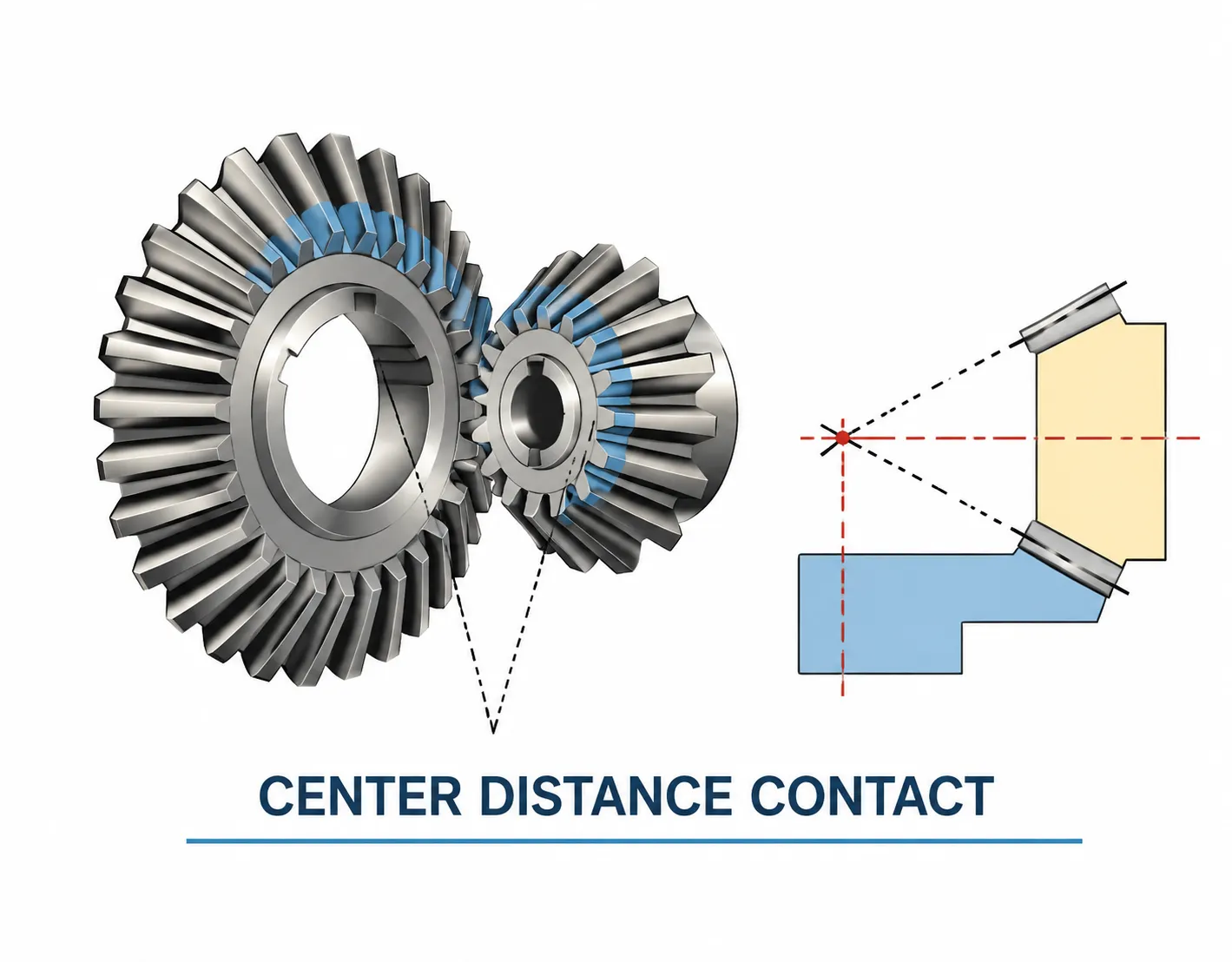
The standard plastic bevel gear has a bore machined directly in the plastic hub. This works reliably for light drives where the gear is a loose to transition fit on the shaft, relying on friction and an adhesive or retaining compound for axial and rotational retention. It is the lower-cost option and is appropriate for most consumer electronics, toy, and light instrument applications.
The brass insert option — indicated by the suffix "BS" in the part number — replaces the plain plastic bore with a brass insert that is either moulded into the hub during injection moulding or pressed in post-moulding. The brass insert carries a threaded setscrew hole. This configuration provides:
- Metal threads that resist stripping — the setscrew engages a brass thread rather than a plastic one. Under repeated tightening and release cycles (maintenance, adjustment), plastic threads strip and the gear becomes loose on the shaft. Brass threads maintain their grip over the product's service life.
- Resistance to clamp force cracking — tightening a setscrew against a plastic hub concentrates hoop stress in the boss material. POM and PA can crack under this stress, particularly at low temperatures where the material is more brittle. The brass insert carries the hoop stress in metal, protecting the surrounding plastic.
- Positive axial retention — the setscrew bears directly against the shaft, preventing axial movement even under the axial thrust loads that a bevel gear generates during operation. Without positive retention, a bevel gear on a smooth bore can walk axially along the shaft, shifting the contact zone toward the heel.
- Compatibility with flatted or grooved shafts — the setscrew can be tightened against a flat or keyway on the shaft, providing rotational retention that a plain bore cannot achieve without adhesive.
When to choose BS: Specify the brass insert option whenever the gear drives a continuous load (not just inertia), the shaft experiences axial load from the bevel tooth geometry, the drive reverses direction, or the setscrew will be tightened and released more than two or three times during the product life. For single-use or light inertial drives where the gear is never removed after assembly, the plain bore version is sufficient.
Plastic vs. Metal Bevel Gears — Choosing the Right Approach
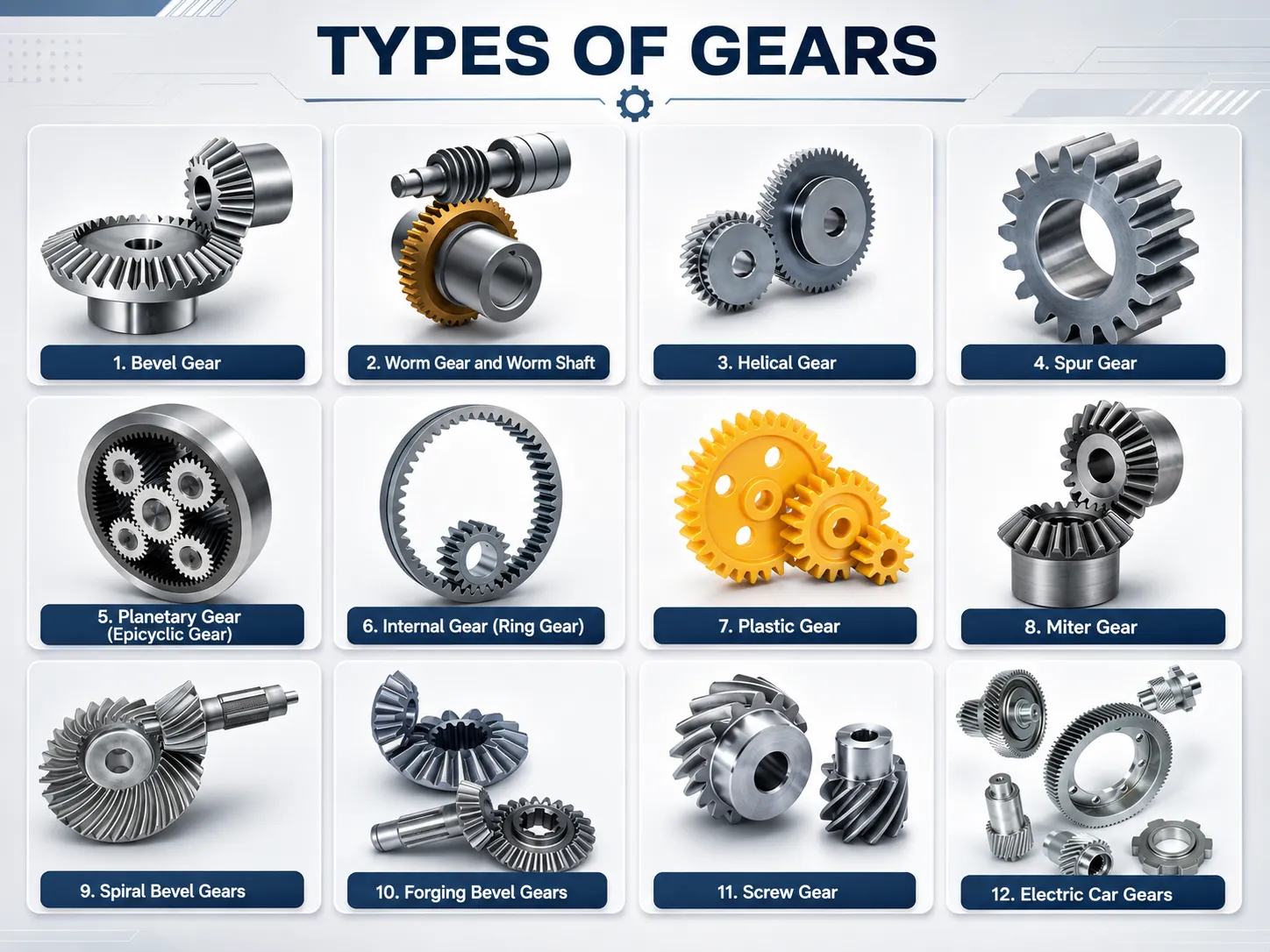
Plastic and metal bevel gears are not interchangeable alternatives — each suits a distinct range of applications. A common design approach mixes the two: a metal pinion drives a plastic wheel, or vice versa. Understanding when each material serves best avoids over-specifying expensive metal gears in lightly loaded applications and under-specifying plastic gears in drives where the load exceeds the polymer's capacity.
- Load is light — below approximately 2–5 Nm depending on module and material
- Lubrication is not available or not maintainable (sealed for life assemblies)
- Corrosion resistance is required in the gear bore area or tooth flanks
- Noise reduction matters and load allows a plastic gear to serve
- Weight minimisation is a design constraint
- High-volume production where injection moulding reduces per-unit cost
- A "sacrificial" driven gear is acceptable — the plastic gear wears first, protecting the metal driver
- Continuous torque exceeds the plastic material's tooth bending strength at operating temperature
- Operating temperature exceeds 80°C continuously (unless PEEK is specified)
- Dimensional tolerance of the bore and tooth profile must be held to metal-level accuracy over years of temperature cycling
- Shock loads or sudden reversal are present and plastic tooth impact resistance is insufficient
- Service life must extend beyond the wear limit achievable in plastic at the operating load
- The drive is classified as safety-critical and plastic gear failure is an unacceptable failure mode
A common pairing in office automation, consumer electronics, and light industrial drives: the steel or aluminium pinion (driver) meshes with a POM or PA wheel (driven). The metal driver maintains tooth accuracy and stiffness; the plastic wheel damps noise through its inherent vibration absorption and runs without lubrication against the metal surface. The plastic wheel wears at a slow, predictable rate and is a lower-cost replacement item than the machined metal pinion. Visual inspection of the plastic wheel's tooth wear indicates when the set is approaching replacement — the metal pinion typically outlasts three or four plastic wheels.
Applications
Korea Ever-Power plastic bevel gears ship to customers across the following sectors. Material selection, tooth form, and the optional brass insert choice vary by sector — the guide below outlines the typical combination for each.
💻 Office Automation & Consumer Electronics
Printer paper-feed drives, copier scan-head drives, barcode scanner angle drives, and camera pan-tilt mechanisms. POM at Module 0.5–1.0 with standard bore (no BS) is typical — the drives run intermittently at light load, are never opened for maintenance after assembly, and benefit from POM's dimensional stability in the controlled office environment.
🚗 Automotive Interior Mechanisms
Window regulators, seat position adjusters, sunroof drives, and HVAC damper actuators. POM or PPA with brass insert (BS) — the drive must retain positive shaft engagement through temperature cycles from −40°C to +80°C in the vehicle interior, and the setscrew must not loosen due to thermal expansion cycling. PPA suits applications near the engine compartment where peak temperatures exceed the POM limit.
🏰 Food Production Machines
Conveyor angle drives, filling machine actuators, and labelling machine angle heads where food-contact compliance is required. POM with no surface treatment — POM is FDA-listed for incidental food contact, does not require lubrication that could contaminate the product, and resists the cleaning chemicals used in food processing washdowns. Stainless steel or aluminium pinion driving a POM wheel is the standard configuration.
💊 Medical Equipment
Infusion pump angle drives, diagnostic instrument actuators, hospital bed adjustment mechanisms, and portable medical device drives. PEEK for sterilisable applications — it survives steam autoclave cycles at 134°C without dimensional change. POM for sealed non-sterilisable drives where cost is a constraint. Both materials are biocompatibility-validated under ISO 10993 for medical device applications.
🔥 Chemical & Hazardous Environments
Dosing pump angle drives, laboratory instrument actuators, and chemical processing equipment where contact with acids, bases, or solvents is possible. PEEK or PBT depending on the specific chemical and temperature. Both are corrosion-immune; PEEK additionally resists concentrated acids and ketones that attack PBT. Plastic gears are also non-sparking, making them suitable for drives in potentially explosive atmospheres.
🎁 Toys & Consumer Products
Battery-operated toys, hobby RC vehicles, domestic appliances, and personal care device drives. POM or PA at Module 0.5–0.8, injection-moulded at volume for lowest per-unit cost. Toy applications typically use pure plastic-on-plastic meshing without a metal driver — the loads are low enough that both gears can be plastic, and the absence of metal eliminates any risk of sharp-edge injury from a broken tooth.
Frequently Asked Questions
What is the maximum torque a plastic bevel gear can transmit?
This depends on the module, tooth count, material, and operating temperature. As a rough guide for POM at Module 1, a 16-tooth 1:1 pair transmitting torque at 500 rpm can handle approximately 0.5–1.0 Nm continuously at 25°C before the tooth root bending stress approaches the material's fatigue limit. At 60°C, the allowable torque drops by approximately 30% because POM's tensile strength falls with temperature. PA66 at equivalent size is slightly lower in stiffness and fatigue strength than POM. PEEK is significantly higher — up to three to four times the allowable torque of POM at the same module and operating temperature. For applications near the material limit, submit your torque, speed, and temperature data and our engineering team will run a tooth bending stress calculation before confirming suitability.
Why does PA nylon change size after installation and how do I account for it?
PA absorbs moisture from ambient air, and this absorption causes the gear to swell. A PA66 bevel gear with a 10 mm bore will grow by approximately 0.05–0.10 mm in bore diameter after reaching moisture equilibrium in a typical indoor environment — this is the bore becoming looser on the shaft. Simultaneously, the tooth pitch diameter grows, changing the gear's operating centre distance slightly. To account for this, two approaches are used: either design the initial fit with a slightly tighter bore and confirm the gear mesh still runs correctly at full moisture absorption, or specify POM instead of PA where dimensional stability is critical. PA12 absorbs significantly less moisture than PA66 and is the better choice in applications where this dimensional change is a concern.
Can plastic bevel gears be used without any lubrication?
POM, PA, and PEEK all have self-lubricating properties from their polymer microstructure — they transfer a thin molecular film to the mating surface during running-in, which reduces the friction coefficient at the tooth mesh. At light loads and moderate speeds, these materials can run without any applied lubricant indefinitely in a clean environment. At higher loads or speeds, where frictional heat build-up in the plastic tooth would raise the gear surface temperature toward the material's softening point, a light application of grease or oil at the mesh point extends tooth life significantly. The operating condition requiring lubrication varies by material and load; POM without lubrication can typically handle up to approximately 0.3–0.5 m/s pitch-line speed at light load before frictional heating becomes a concern. Above this level, a plastic-compatible grease is recommended.
Can you produce a custom module or ratio not listed in the standard part series?
Yes. The standard part series covers the most common module and ratio combinations. Custom modules from M0.15 upward, non-standard ratios, and custom bore configurations are accepted to customer drawings or sample parts. Our technical department produces production drawings from customer input and provides them for approval before tooling begins. Provide the module, tooth count on each gear, shaft intersection angle, bore diameter, hub dimensions, and material requirement. Custom tooling lead time varies by module size — for very small modules below M0.5, specialised tooling may add two to four weeks to the initial order lead time but does not affect repeat orders.
How do I specify the right plastic bevel gear for a food-contact application?
For food-contact applications, specify POM (natural white grade) or PEEK. Both materials are listed in FDA 21 CFR regulations as suitable for incidental food contact. POM covers most food machine drives at temperatures below 80°C and is the more economical option. PEEK covers applications where steam cleaning at temperatures above 100°C is used, or where chemical sanitisers aggressive to POM are employed. For the drive configuration, use a stainless steel metal pinion meshing with the plastic wheel — this keeps all tooth-contacting surfaces either stainless steel or FDA-listed plastic, with no lubricant required between them. Include "food contact" in your enquiry so we can confirm the specific POM or PEEK grade and supply the relevant compliance documentation.
Can I visit the factory or get drawings and technical data before ordering?
Factory visits are welcome — please notify us at least two weeks in advance so we can arrange the visit schedule. Our technical department produces and provides production drawings and technical data on request for all standard and custom plastic bevel gear products. Drawings are issued in PDF, DXF, or STEP format depending on your requirement. For new custom programmes, a dimensioned drawing showing the proposed tooth geometry and hub configuration is issued for customer approval before any tooling is commissioned. Contact our team with your application data and we will confirm feasibility and provide the relevant technical documentation.
Customer Reviews
"We use POM plastic bevel gears at Module 0.5 in a sealed paper-feed angle drive for a high-speed document scanner. The previous metal gear set required lubrication that eventually migrated onto the paper path. Switching to POM plastic bevel gears eliminated the lubrication entirely. No contamination incidents in 18 months across 1,200 units deployed in customer sites."
Lee Jin-su | Mechanical Design Lead, Seoul Office Equipment Co. · Q1 2026
"We assemble window regulator drives for three automotive OEM programmes. The plastic bevel gears with brass insert (GB1M016BS) have run through our cold-temperature test at −35°C without setscrew loosening — a problem we had with the previous plain-bore version whose plastic boss cracked at the setscrew hole. The brass insert solved the problem cleanly without any housing change."
Kim Sung-ae | Component Engineer, Gyeonggi Automotive Interior Systems · Q3 2025
"We manufacture small batch clinical infusion pumps and needed a PEEK bevel gear pair in Module 0.8 that survives 500 autoclave cycles at 134°C. Ever-Power confirmed PEEK feasibility within three days of our enquiry and provided a production drawing for approval. The gears met our dimensional specification after autoclave cycling in our validation test — no measurable change in bore or pitch diameter after 500 cycles."
Choi Hae-won | R&D Engineer, Busan Medical Device Manufacturing · Q4 2025
"We run stainless steel pinions against POM wheels in a food packing line angle drive. The POM wheels are the sacrificial member — they wear visibly while the stainless pinions remain in spec. Replacement is a two-minute job and the POM wheel cost is negligible. The drive has been running this way for three years with four POM wheel replacements and no stainless pinion changes. It is exactly the wear pattern we designed for."
Park Jun-hee | Process Equipment Engineer, Incheon Food Packaging Lines · Q2 2025
"We used POM bevel gears in a battery-operated RC vehicle drive train. Cost per unit was the main target — the whole vehicle retails below KRW 30,000. Ever-Power's Module 0.5 POM bevel pair hit the price point we needed at our production volume, dimensional consistency was good across five production batches, and we have had no warranty returns attributable to gear failure in the first season of sales."
Oh Se-jin | Product Manager, Gyeongnam Consumer Toy Manufacturing · Q1 2026
Request a Quotation for Plastic Bevel Gears
Send us your module, ratio, bore diameter, material requirement, and any food-contact, medical, or automotive compliance needs. Standard series parts can be quoted immediately from the part number table. Custom modules and ratios are quoted after drawing review. Samples available before production approval. DHL, TNT, FedEx, and UPS delivery.
Informazioni aggiuntive
| Editor |
|---|
Prodotti correlati
-
Spiral Bevel Gear – Localized Contact, Min 5 Teeth, M3-M12
-
Zero-Degree Spiral Bevel Gear – Zerol, No Axial Thrust
-
Precision Bevel Gear – M0.15 to M2.2, AGMA 13, 5 HT Routes
-
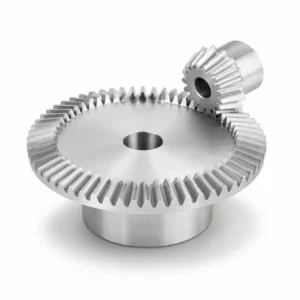
Straight Bevel Gear – M3 to M12, DIN6-9, Multi-Material
-
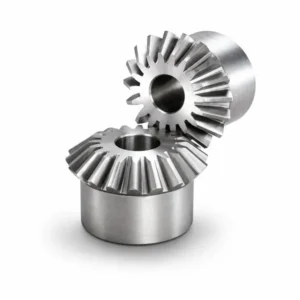
Miter Gears – 1:1 Straight & Spiral, Right-Angle Drive
-
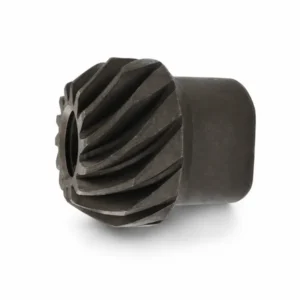
Spiral Bevel Gears – Helical Bevel Gear, Custom OEM Supply
-
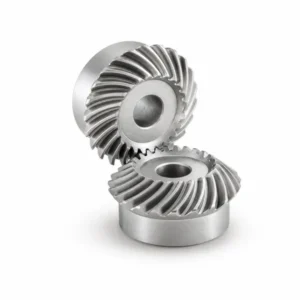
Spiral Miter Gears – 35° Spiral Angle, 1:1 High-Speed Drive
-
Forging Bevel Gears – Hot & Cold Forged, Custom OEM Supply
 Italian
  English
  Korean
  French
  Japanese