
Plastic Worm Gears – POM/Nylon, M0.2-M2.0, Low Noise
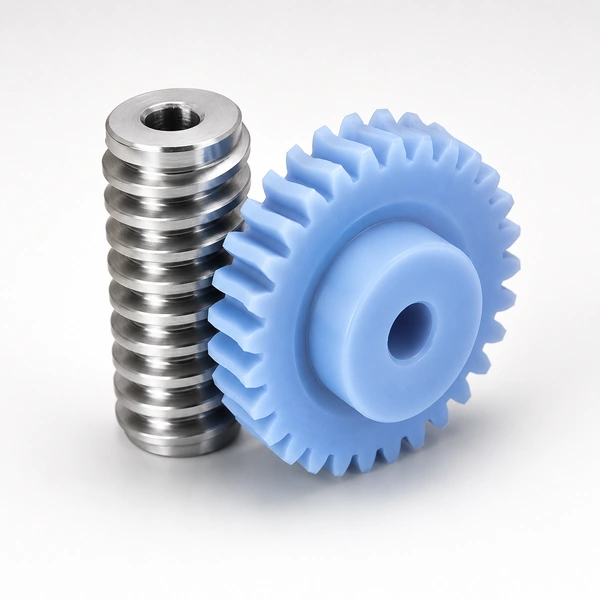
Korea Ever-Power plastic worm gears are precision injection-moulded worm gear pairs in POM (polyacetal) and nylon — module M0.2–M2.0, bore Ø1.40 mm / Ø1.90 mm, outer diameter Ø4–Ø6 mm, length 6–10 mm (all flexible). Features: high efficiency, irreversible motion, compact design, high load capacity, reduced vibration and noise. Quieter than spur gears. Custom gear/worm pairs produced from handmade or machined samples before mould-making — no mould risk. Applications: laser printers, digital cameras, scanners, CD-ROMs, stepping motors, medical equipment, vending machines, gear pumps, household appliances, fax machines, watches, toys. Worm gear valve drives, worm gear pumps, and linear actuators available. ODM accepted.
Product Overview
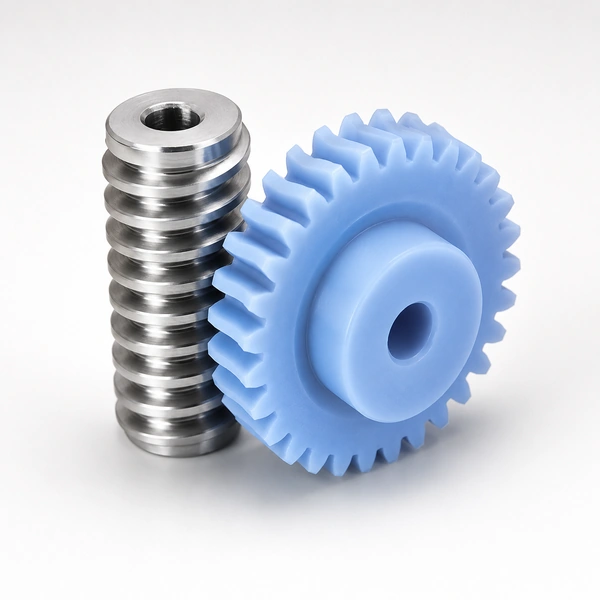
Plastic worm gears are precision worm-and-wheel gear pairs moulded from engineering thermoplastics — primarily POM (polyacetal / Delrin) and nylon — delivering the inherent advantages of plastic gears (self-lubrication, low noise, light weight, chemical resistance) in the worm gear transmission format. Compared with metal spur gears, plastic worm gears offer significantly quieter force driving — the worm's helical sliding action and the plastic material's inherent damping properties together suppress the tooth impact noise that characterises spur and bevel gears at the same speed. The worm gear pair's 90° shaft angle, high single-stage ratio, and compact cross-section make plastic worm gears the first choice for light-load compact drives in consumer electronics, medical devices, automotive comfort actuators, and household appliances.
Korea Ever-Power supplies plastic worm gears and worm gear-related products — including worm gear valve drives, worm gear pumps, and linear actuators — with the best quality and price. Handmade or machined custom gear/worm prototypes are produced and tested before mould-making, eliminating mould investment risk before the specification is confirmed. ODM accepted.
A worm gear pair consists of a worm (a helical screw-like gear whose threads mesh with the wheel's teeth) and a worm wheel (a gear with specially curved teeth that wrap around the worm's thread). The worm's thread is analogous to a single tooth on a standard gear — a one-start worm advances the worm wheel by exactly one tooth per revolution, producing a speed ratio equal to the number of teeth on the worm wheel. This extremely simple relationship between thread starts and ratio is unique to worm gearing: a 40-tooth worm wheel mating with a 2-start worm produces a 20:1 ratio; with a 1-start worm, a 40:1 ratio — all in the same compact, right-angle package.
Technical Specifications
Standard Plastic Worm Specification
| Parameter | Specification |
|---|---|
| Tipo | Worm (cylindrical, single or multi-start) |
| Module Range | M0.2 – M2.0 |
| Material | POM (polyacetal / Delrin) / Nylon (PA) |
| Bore | Ø1.40 mm / Ø1.90 mm (flexible) |
| Outer Diameter | Ø4.0 / Ø5.0 / Ø6.0 mm (flexible) |
| Length | 6.0 / 8.5 / 10.0 mm (flexible) |
| Customisation | ODM — handmade/machined sample before mould |
Example Configurations
| Item | M0.4 Gear+Worm | M0.4 RH Worm |
|---|---|---|
| Material | TEPCON M90-10 | TEPCON M90-10 |
| Module | M0.4 | M0.4 |
| Teeth | 30T / 1T | 1T (RH) |
| Weight | 0.75 g/pcs | 0.22 g/pcs |
| Application | IP camera, monitor | Automotive rearview mirror gearbox |
Worm Gear Fundamentals — How Worm Gearing Works
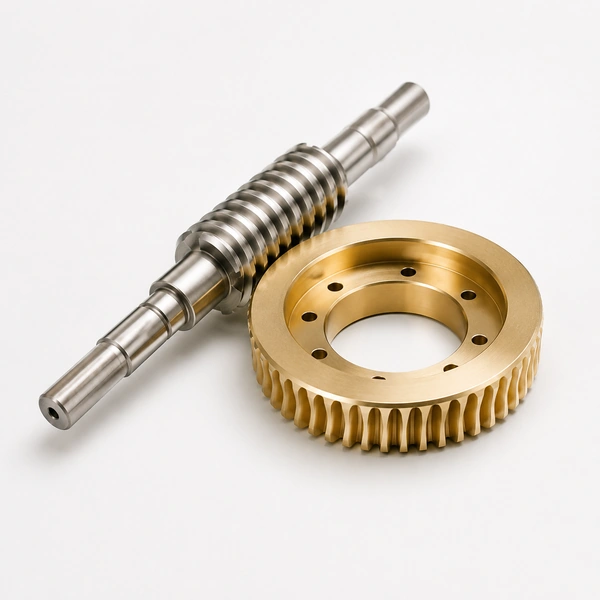
The worm gear pair is unique among gear transmission types in several fundamental ways that set it apart from spur, helical, bevel, and planetary gears:
90° Shaft Angle
The worm and worm wheel shafts are perpendicular — the worm axis is at 90° to the worm wheel axis. This right-angle arrangement is the defining geometric characteristic of worm gearing and the primary reason for its widespread use in applications requiring a right-angle drive without the additional complexity of bevel gears. The worm typically mounts on the input (motor) shaft at the top or side, and the worm wheel on the output shaft below or at 90°.
High Single-Stage Ratio
Worm gear pairs achieve transmission ratios from 5:1 to 300:1 in a single stage — a range that would require two or three stages of spur or helical gearing. The ratio equals the number of worm wheel teeth divided by the number of worm starts: i = Zwheel / nstarts. A 1-start worm with a 60-tooth wheel gives 60:1. This high single-stage ratio in a small package makes worm gearing the standard for compact right-angle reducers in conveyors, actuators, and positioning drives.
Self-Locking (Irreversible Motion)
When the worm lead angle is smaller than the friction angle of the mesh (typically when the lead angle is below ~6°), the worm gear pair is self-locking — the worm wheel cannot back-drive the worm. This irreversible motion property is unique to worm gearing and eliminates the need for a separate brake or backstop in applications where the load must be held stationary when the motor stops — such as lifting gates, adjustable seats, valve actuators, and security shutters.
Sliding Contact — Low Noise
Unlike spur and helical gears which transmit force primarily through rolling contact at the pitch line, worm gearing transmits force through continuous sliding contact along the worm thread. This sliding action, combined with the soft plastic worm wheel material (POM or nylon) mating against the steel worm, produces very smooth, quiet operation with minimal vibration — a key advantage for automotive comfort actuators, household appliances, and consumer electronics where gear noise in the passenger compartment or living space is a quality differentiator.
Worm Lead Angle and Efficiency
Worm gear efficiency depends primarily on the lead angle (λ) of the worm thread. Lead angle = arctan(nstarts × pitch / π × dworm). Efficiency η ≈ tan(λ) / tan(λ + φ), where φ is the friction angle. At λ = 5° (self-locking region), η ≈ 40–50%. At λ = 20°, η ≈ 80–85%. For plastic worm gears in light-duty applications, the self-locking benefit at low lead angles outweighs the efficiency penalty — and the absolute power loss at light loads is small.
Right-Hand vs Left-Hand Thread
Worms are produced in right-hand (RH) and left-hand (LH) thread forms, which determine the output rotation direction of the worm wheel for a given input rotation direction. Most standard worm gears are right-hand; left-hand worms are specified where the output rotation direction needs to be reversed without changing the motor direction. Korea Ever-Power's M0.4 RH worm for the automotive rearview mirror actuator is a practical example — the RH/LH designation is part of the specification.
Five Features of Plastic Worm Gears
① High Efficiency for Light Loads
Plastic worm gears in light-duty consumer and medical applications achieve adequate efficiency (40–75% depending on lead angle) while providing the irreversibility and noise benefits not available in spur gears. At the low torque levels of consumer electronics and medical devices, the absolute power loss is negligibly small even at moderate efficiency — making plastic worm gears the optimal transmission choice where self-locking and quiet operation are the primary requirements.
② Irreversible Motion
Self-locking worm gearing holds position without power — the worm wheel cannot back-drive the worm when the motor is off. This eliminates the need for a separate position-holding brake in valve actuators, adjustable seating mechanisms, security shutters, and medical bed adjustment drives. Plastic worm gears with small lead angles (below 6°) are reliably self-locking even at the thin-film lubrication conditions of moulded plastic gear meshes.
③ Compact Design
Plastic worm gears achieve 20:1 to 60:1 ratios in a package smaller than a 50-cent coin at M0.4 module. The 90° right-angle arrangement allows the motor to mount perpendicular to the driven axis — fitting within the very limited space envelopes of automotive door mirror actuators, camera lens drives, and smart home device motors where a parallel-axis gear train would be physically impossible.
④ High Load Capacity for Plastic
The worm wheel's crowned tooth form engages the worm thread over a long line of contact — distributing the tooth load across a larger area than an equivalent spur gear mesh at the same module. This conformal contact geometry gives worm gearing disproportionately high load capacity for the gear size, which is preserved in plastic worm gears at the light-to-medium loads of consumer and medical devices.
⑤ Reduced Vibration and Noise
The continuous sliding contact of the worm thread eliminates the tooth impact event that generates gear noise at each tooth engagement in spur and helical gears. POM and nylon's inherent damping properties further attenuate any residual vibration. The result is the quietest compact gear drive available at these module sizes — a critical requirement for automotive cabin drives (rearview mirrors, window regulators, seat adjusters) and household appliances where gear noise in quiet home environments is unacceptable.
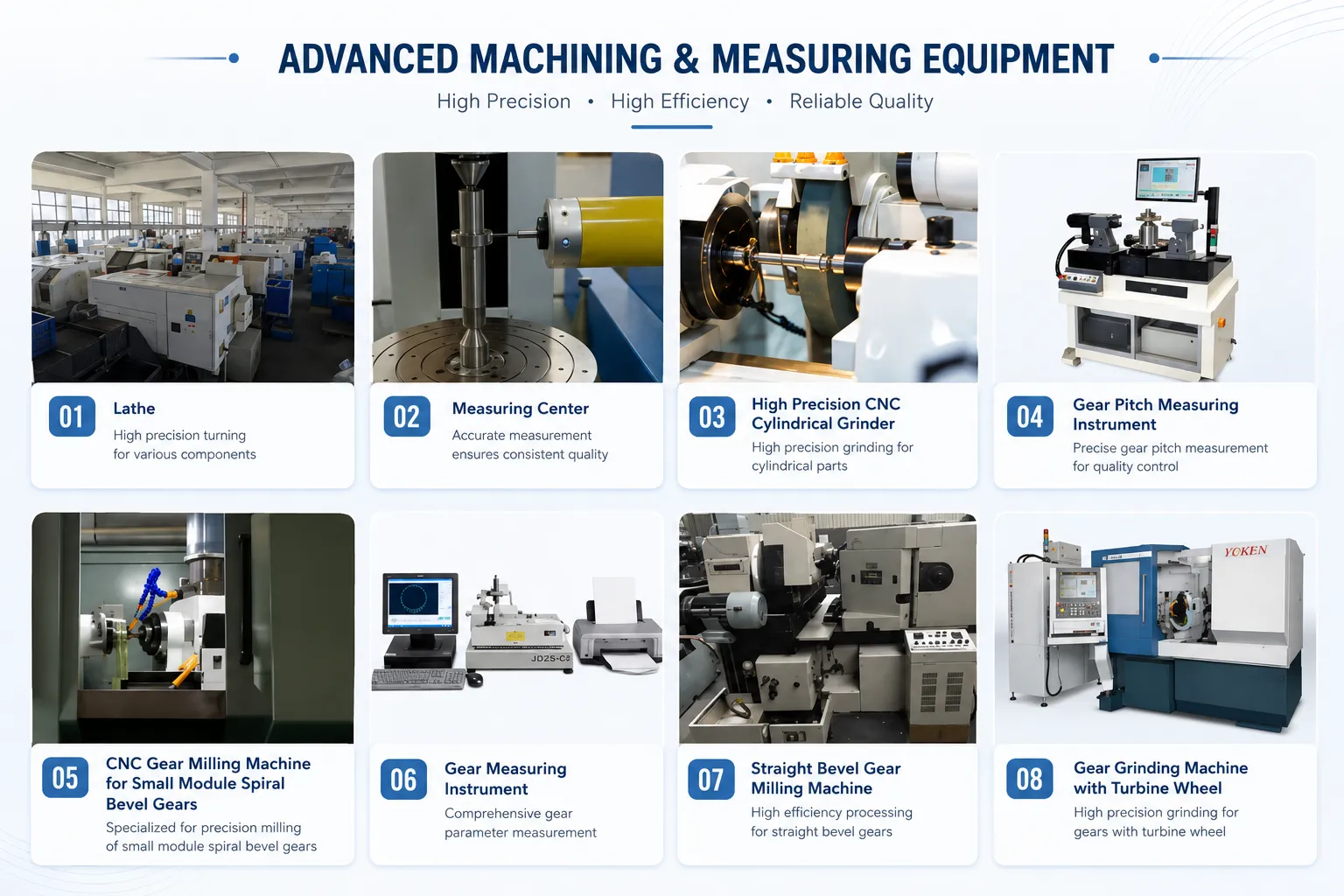
Advantages of Plastic Worm Gears Over Metal
| Property | Plastic Worm Gear ★ | Metal Worm Gear |
|---|---|---|
| Moulding Flexibility | Moulded into any shape in one operation ✓ | Machined — limited geometry |
| Cost | Lower in volume production ✓ | Higher machining cost |
| Weight | ~7× lighter (1.1–1.4 g/cm³) ✓ | Steel: 7.85 g/cm³ |
| Corrosion Resistance | Excellent (no rust, no coating) ✓ | Needs coating/treatment |
| Operating Noise | Quieter and smoother ✓ | Higher mesh noise |
| Self-Lubrication | Yes (POM/PA inherent) ✓ | Requires external lubrication |
| Temperature Resistance | Limited (POM: −40 to +90°C) | Higher (−50 to +300°C+) ✓ |
| Load Capacity | Light–moderate loads | High to very high loads ✓ |
| Design Configurations | Wide range via moulding ✓ | More limited |
While plastic worm gears offer these many advantages over metal gears, their practical use requires proper design and engineering to account for possible dimensional and property variations over the expected range of operating conditions — particularly thermal expansion (POM expands significantly with temperature change) and moisture absorption (nylon absorbs moisture from the environment, causing dimensional change and stiffness reduction). Korea Ever-Power's engineering team accounts for these factors in the worm gear tooth geometry design to maintain correct backlash and contact pattern across the operating temperature range.
Applications
Laser Printers and Scanners
M0.4–M0.8 POM worm gears in laser printer paper feed drives, scanner document feed mechanisms, and CD-ROM disc spindle drive stages. Low noise is critical for office equipment; self-lubrication eliminates maintenance; and the self-locking property holds the paper feed position precisely when the motor is de-energised between print steps.
Digital Cameras and IP Cameras
M0.4 POM worm gears (30T wheel / 1T worm) in camera lens zoom drives, camera pan/tilt mechanisms, and IP camera angle adjustment actuators. The self-locking property holds the zoom or pointing angle without motor power — eliminating drift in battery-powered cameras and PTZ surveillance units.
Automotive Comfort Actuators
M0.4–M0.8 POM worms (RH/LH) in automotive rearview mirror fold/tilt gearboxes, seat adjuster drives, and sunroof positioning mechanisms. The rearview mirror application specifically requires: low noise (cabin acoustic quality), self-locking (mirror holds position without motor power), compact size (fits within the mirror housing), and corrosion resistance (exposed to humidity and washdown).
Medical Equipment
M0.4–M1.0 POM or nylon worm gears in infusion pump drives, medical bed adjustment mechanisms, rehabilitation device actuators, and diagnostic instrument positioning drives. Medical device worm gears require non-magnetic materials, autoclave-resistant polymers (PEEK for sterilisation), and the self-locking property for fail-safe position retention in patient support systems.
Household Appliances
M0.5–M1.5 plastic worm gears in kitchen appliance drive units, electric blind and curtain actuators, fax machine paper feed drives, and smart home device motors. Self-lubrication eliminates the grease maintenance that metal worm gears require in long-life consumer appliance applications — and the plastic's corrosion resistance suits the humid bathroom and kitchen environments where these appliances operate.
Worm Gear Valve Drives and Pumps
Plastic worm gear valve drives in water treatment, irrigation, and HVAC zone control valves. Plastic worm gear pumps in dosing pump heads and peristaltic pump drives. The self-locking property of the worm gear valve drive holds the valve position without continuous motor power — critical for normally-closed fail-safe valve designs where power loss must not cause an open-valve condition.
Linear Actuators and Stepping Motor Drives
Plastic worm gears in compact linear actuator rotary-to-linear conversion stages, stepping motor gear head reducers, and small servo actuator drives. The worm gear's single-stage ratio of 20:1 to 60:1 reduces the stepping motor's output speed to the appropriate linear actuator speed in one step — eliminating the additional planetary reduction stage that a spur gear alternative would require at the same ratio.
Vending Machines, Toys, and Watches
M0.2–M0.5 micro plastic worm gears in watch movement gear trains, toy motor drives, and vending machine dispensing mechanisms. At M0.2 — the smallest standard module — Korea Ever-Power's plastic worm gears are too fine for metal machining at competitive cost but straightforward in injection moulding, enabling gear drive solutions at a scale that no other gear type can address economically.
Frequently Asked Questions
How do I get a custom plastic worm gear without mould investment risk?
Korea Ever-Power produces handmade or machined custom plastic worm gear prototypes before any mould-making begins. This allows engineering testing of the gear geometry, contact pattern, backlash, and tooth strength at the actual module and material specification before the customer commits to mould tooling investment. The prototype test confirms the specification is correct — only then is the mould designed and produced. This process eliminates the most common risk in custom plastic gear projects: discovering a design flaw after the mould has been cut.
Why is POM preferred over nylon for most plastic worm gears?
POM (polyacetal) is preferred for most plastic worm gears because of its lower moisture absorption (0.2% vs 1–3% for PA6), better dimensional stability (critical for fine-pitch worm gearing where even 0.05 mm of dimensional change affects backlash significantly), and excellent self-lubrication. Nylon (PA) is preferred when higher toughness is required — PA has better resistance to impact and tooth root fracture under shock loads. For automotive and medical applications where dimensional stability at varying ambient conditions is critical, POM is the standard choice; for applications with moderate shock and impact loads, PA or PA+GF is specified.
What is the TEPCON M90-10 material specified in some configurations?
TEPCON M90-10 is a grade-specific engineering POM compound used by Korea Ever-Power for high-precision automotive-grade plastic worm gears — the M0.4 worm for the rearview mirror gearbox and the M0.4 worm-wheel set for IP cameras. The M90-10 designation refers to the specific blend formulation (melt flow, lubricant additive level, and nucleating agent) that achieves the required dimensional stability, surface quality, and wear resistance for these applications. For enquiries requiring this or an equivalent grade, specify the application conditions (temperature range, lubricant contact, required service life) and Korea Ever-Power will confirm the appropriate POM grade.
Do plastic worm gears meet the requirements of all the listed applications?
Korea Ever-Power's plastic worm gears meet the requirements of laser printers, digital cameras, scanners, CD-ROMs, stepping motors, medical equipment, vending machines, gear pumps, household appliances, fax machines, watches, toys, and other specialised products. Proper design and engineering are required to account for dimensional and property variations over the operating conditions — particularly thermal expansion, moisture absorption, and creep under sustained load. Korea Ever-Power provides application engineering support to confirm the correct module, material, and tooth geometry for each specific application requirement. Contact our team with the application conditions to begin.
Customer Reviews
"We manufacture automotive rearview mirror fold mechanisms and source M0.4 RH POM worm gears from Korea Ever-Power. The TEPCON M90-10 material maintains our required backlash tolerance across the −30°C to +85°C automotive temperature range. Self-locking at the 4° lead angle eliminates the position-retention spring our previous mechanism required. Noise at our cabin acoustic test: below 28 dB(A) — within our OEM specification."
Kim Sang-woo | Automotive Mirror Actuator Engineer, Incheon Automotive Systems Co. · Q1 2026
"We develop IP camera pan/tilt mechanisms and use M0.4 POM plastic worm gears (30T/1T set) from Korea Ever-Power. Korea Ever-Power's handmade prototype process allowed us to test the worm gear geometry in our housing before committing to mould tooling — we identified a backlash issue and requested a tooth profile adjustment before the mould was cut. The corrected production worm gears have zero pointing-angle drift when the pan/tilt motor is off."
Lee Min-jun | IP Camera Mechanism Engineer, Gyeonggi Security Systems Co. · Q4 2025
"We manufacture medical infusion pump drives and specified POM worm gears M0.8 from Korea Ever-Power. The self-locking worm gear eliminates motor power requirement for flow-rate position holding — reducing battery consumption by 34% compared with our previous spur gear drive that required continuous motor brake current. Non-magnetic confirmation and autoclave-resistant material certification included for our FDA submission package."
Park Hyeon-jun | Medical Device Actuator Engineer, Busan Medical Devices Co. · Q2 2026
"We distribute plastic worm gears for laser printer and scanner OEMs. Korea Ever-Power's application engineering support confirmed the correct M0.4 POM specification for our customers' paper feed drives before we placed stock orders — avoiding the compatibility issues we previously encountered with other suppliers who supplied gears without application review. Supply consistent over 16 months; no dimensional non-conformances."
Choi Byeong-su | Office Equipment Parts Distribution Manager, Daejeon Precision Components Co. · Q3 2025
Related Products
Request a Quotation for Plastic Worm Gears
M0.2–M2.0, POM/nylon, bore Ø1.4–Ø1.9 mm, RH or LH thread. Handmade prototype before mould commitment. ODM accepted. Worm gear valve drives, pumps, and linear actuators available. Send gear specifications to begin.
Informazioni aggiuntive
| Editor |
|---|
Prodotti correlati
-
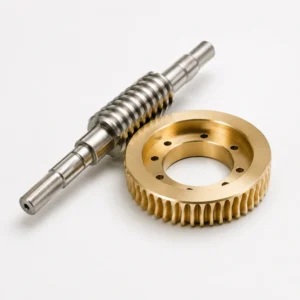
Worm and Wheel – High Precision Brass, M3-M12, 20:1-300:1
-
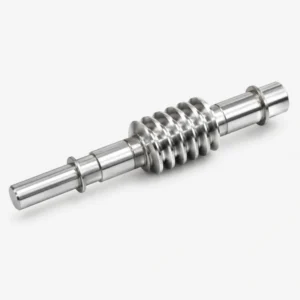
Worm Gear Shaft (Worm Gear Drive Shaft) Customized Worm Shaft
-
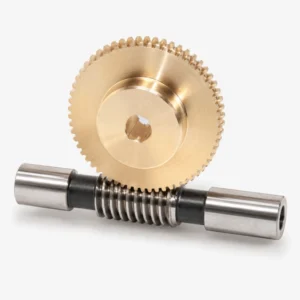
Customized Worm Gear Set – OEM, All Materials, No MOQ
-
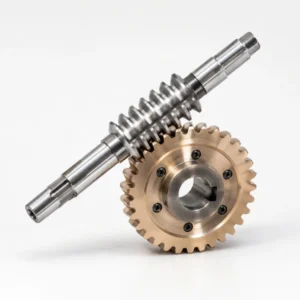
Cylindrical Worm Wheel – ISO/DIN, Line Contact, All Materials
-
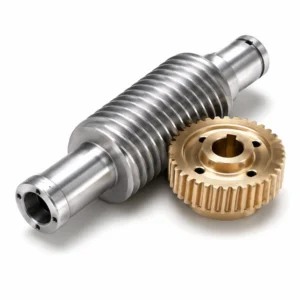
Duplex Worms Gear – Adjustable Backlash, Zero Backlash Precision
-
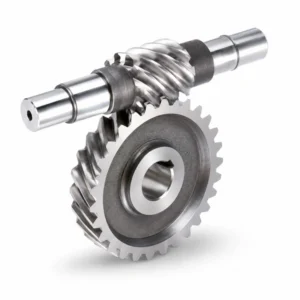
Stainless Steel Worm Gear for CNC Machinery – DIN 5-7, M1-M4
-
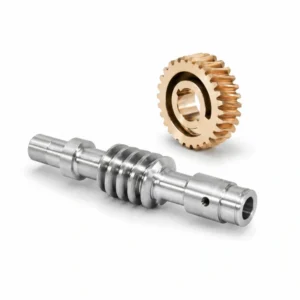
Alloy Steel Worm And Worm Gear for Auto Parts – M0.2-M2.2, ODM
-
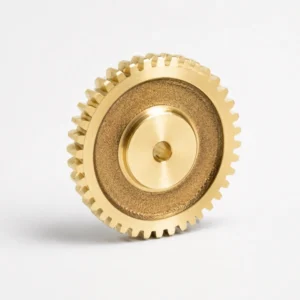
Brass Worm Wheel – M0.5, 20T, Complete Set with Worm Shaft
 Italian
  English
  Korean
  French
  Japanese