
Metallurgy Machinery Soft Tooth Flank Helical Gear – ≤350HB
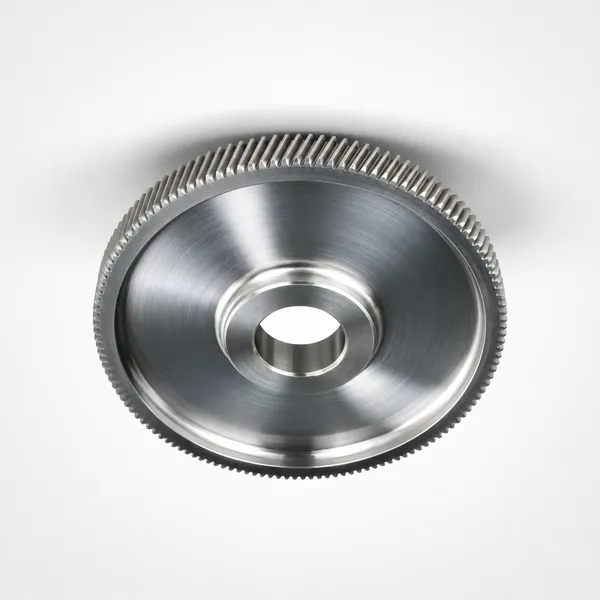
Korea Ever-Power metallurgy machinery soft tooth flank helical gears are produced in 45# carbon steel through forging, turning, hobbing, external grinding, keyway milling, and tooth grinding to DIN 3962 class 6 accuracy. The standard production example is Mn3, Z128, β11.5°, α20°, left-handed — a large, multi-tooth wheel typical of metallurgy gearbox output stages. Soft tooth flank (280–340 HB through-hardened) is specified in metallurgy machinery where impact resistance, field repairability, and predictable wear behaviour are prioritised over the maximum surface hardness of carburised gears. German HÖFLER gear grinding machines are used for the tooth grinding stage; traceability marking is applied to every gear.
Product Overview
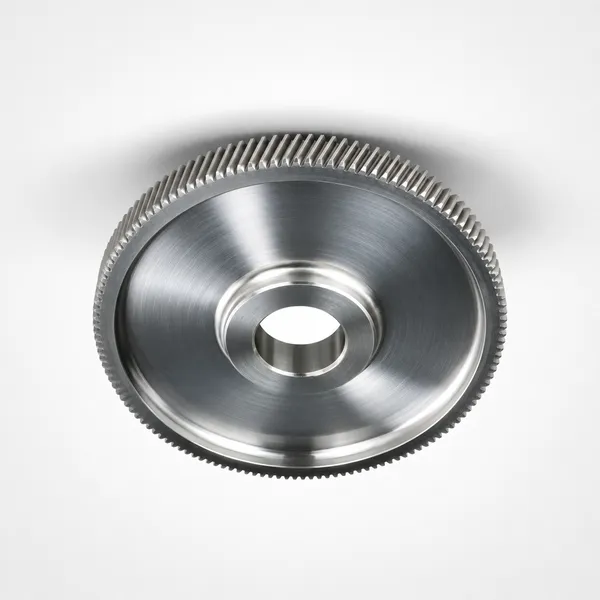
The term soft tooth flank helical gear describes a through-hardened gear — typically 280 to 340 HB — in contrast to a case-hardened (carburised) gear with a 58–62 HRC surface. This distinction matters critically in metallurgy and heavy industrial drives: while carburised gears achieve higher load capacity per unit of tooth volume, soft tooth flank gears offer properties that carburised gears cannot match — resistance to tooth root fracture under impact loading, the ability to be field-repaired by re-machining the tooth profile without re-hardening, and a wear mode that is gradual and visible rather than sudden and catastrophic.
Korea Ever-Power produces metallurgy machinery soft tooth flank helical gears in 45# carbon steel through a six-step process sequence: forging, turning, hobbing, external grinding, keyway milling, and tooth grinding. The standard production example — Mn=3, Z=128, β=11.5°, α=20°, left-handed — is a large, high-tooth-count wheel typical of the output stage in a metallurgy gearbox, where a large wheel mates with a smaller pinion in a high-ratio reduction stage driving a rolling mill, crane, or processing line.
Korea Ever-Power employs German HÖFLER gear grinding machines for the tooth grinding stage of these gears. HÖFLER is the industry's reference-quality gear grinding equipment, capable of producing spur cylindrical, helical cylindrical, herringbone, inner spur, and inner helical gears with precision class DIN 2 to DIN 3 in small batches and DIN 5 to DIN 6 in mass production. A fluorescent magnetic particle flaw detector performs 100% magnetic powder inspection on all grinding surfaces, ensuring no surface flaws — including grinding cracks — are present in the finished gear. A permanent traceability code is applied to each workpiece, linking it to its specific heat treatment furnace number and raw material batch.
Technical Specifications
| Gear Basic Data | |
|---|---|
| Gear Tooth Shape | Involute |
| Gear Material | 45# carbon steel (through-hardened); soft tooth flank specification |
| Gear Process | Forging → turning → hobbing → external grinding → keyway milling → tooth grinding |
| Pressure Angle | 20° (α = 20°) |
| Quality Level | DIN 3962 class 6 |
| Gear Type (Example) | Mn = 3, Z = 128, β = 11.5°, α = 20°, left-handed |
| Tooth Hardness | Soft tooth flank: 280–340 HB through-hardened (not carburised) |
| Tooth Grinding Equipment | German HÖFLER gear grinding machines (spur, helical, herringbone, inner spur, inner helical) |
| Grinding Precision | DIN 2–3 (small batch); DIN 5–6 (mass production) |
| Flaw Detection | 100% fluorescent magnetic particle inspection on all grinding surfaces; grinding cracks verified absent |
| Traceability | Permanent traceability code on each workpiece — links to heat treatment furnace number and raw material batch |
| OEM / Custom | Customer drawings, PPAP files, reverse engineering; design cooperation where no drawing is available |
Production Capabilities — Internal Gears and Internal Splines
| Milling | Shaping | Tooth Grinding | |
|---|---|---|---|
| Maximum O.D. | 2,500 mm | 2,500 mm | 2,500 mm |
| Minimum I.D. | 650 mm | 50 mm | 100 mm |
| Maximum Face Width | 500 mm | 500 mm | 500 mm |
| Maximum Module | 26 mm | 26 mm | 45 mm |
| AGMA / DIN Level | DIN Class 8 | DIN Class 8 | DIN Class 4 |
| Tooth Surface Finish | Ra 3.2 | Ra 3.2 | Ra 0.6 |
| Maximum Helix Angle | ±22.5° | ±22.5° | ±45° |
Production Capabilities — External Gears and External Splines
| Hobbing | Milling | Tooth Grinding | |
|---|---|---|---|
| Maximum O.D. | 1,250 mm | 2,500 mm | 2,500 mm |
| Minimum O.D. | 20 mm | 200 mm | 20 mm |
| Maximum Face Width | 500 mm | 500 mm | 1,480 mm |
| Maximum Module | 26 mm | 26 mm | 45 mm |
| AGMA / DIN Level | DIN Class 8 | DIN Class 8 | DIN Class 4 |
| Tooth Surface Finish | Ra 3.2 | Ra 3.2 | Ra 0.6 |
| Maximum Helix Angle | ±45° | ±45° | ±45° |
Soft Tooth Flank vs Hard Tooth Flank — When to Choose Each
The choice between soft tooth flank and hard tooth flank is not simply a matter of one being better than the other — it is a design decision that reflects the application's specific combination of load type, maintenance regime, replacement logistics, and cost constraints.
| Criterion | Soft Tooth Flank (280–340 HB) | Hard Tooth Flank (58–62 HRC) |
|---|---|---|
| Load type | Shock and reversing loads — core ductility absorbs impact | Steady or unidirectional high load |
| Surface hardness | 280–340 HB (uniform through section) | 58–62 HRC (case) / 30–45 HRC (core) |
| Load capacity | Moderate — lower pitting resistance than carburised | High — hard case resists pitting and scuffing |
| Impact / fracture resistance | High — uniform ductile material through section | Lower — hard case can chip or spall under shock |
| Field repairability | Yes — tooth profile can be re-machined without re-hardening | No — re-machining destroys the hard case |
| Wear mode | Gradual, visible — wear is detectable before failure | Pitting onset can be rapid once initiated |
| Post-hardening grinding | Not required — dimensions stable after normalising/through-hardening | Mandatory for DIN 6 after carburising |
| Material | 45# carbon steel, 40Cr, 42CrMo | 18CrNiMo6, 20CrMnTi, 20CrNiMo |
| Typical applications | Rolling mills, cranes, metallurgy drives — reversing and shock loads | Mining drives, turbines, marine — sustained high load |
Why Choose Korea Ever-Power Custom Gear Service
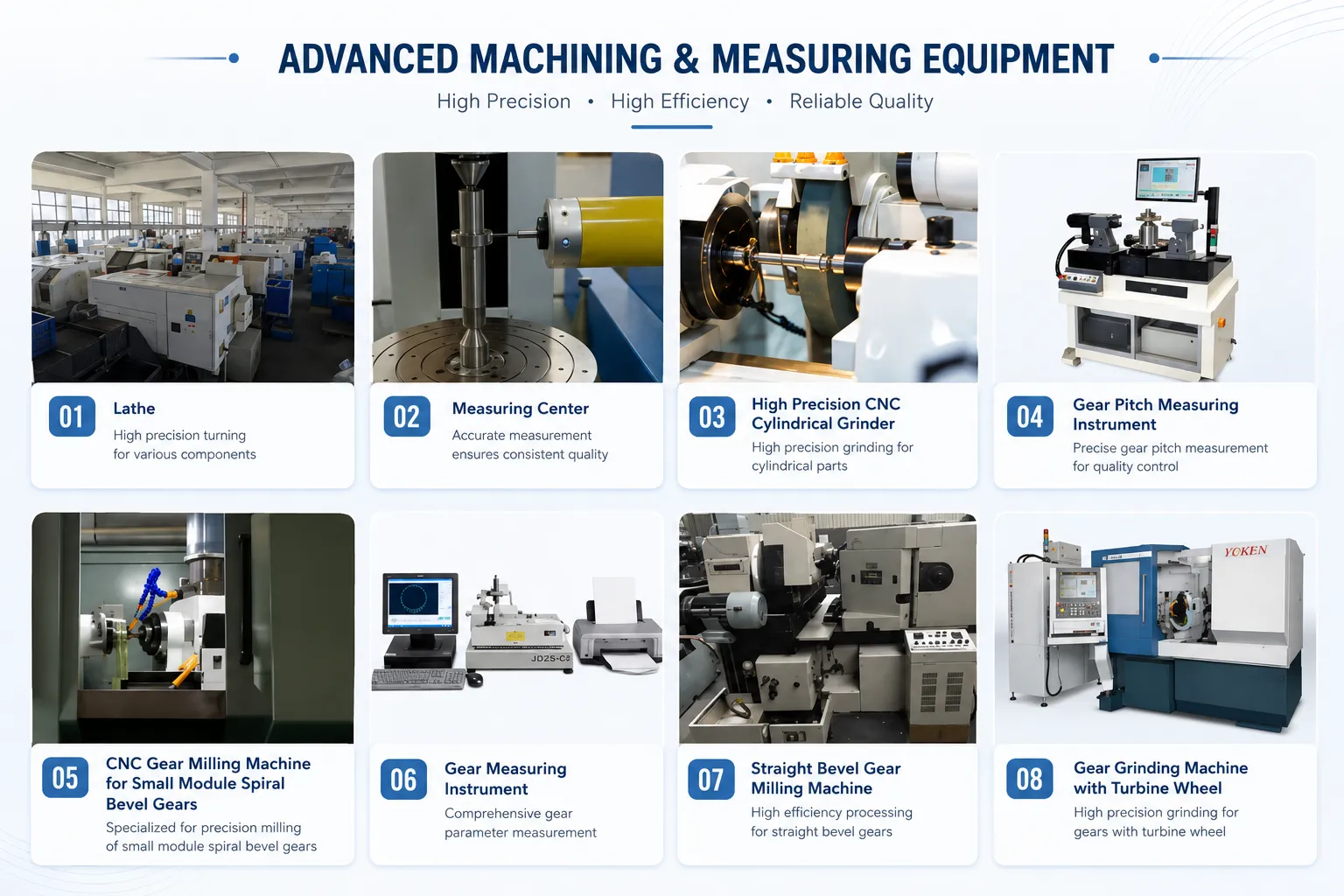
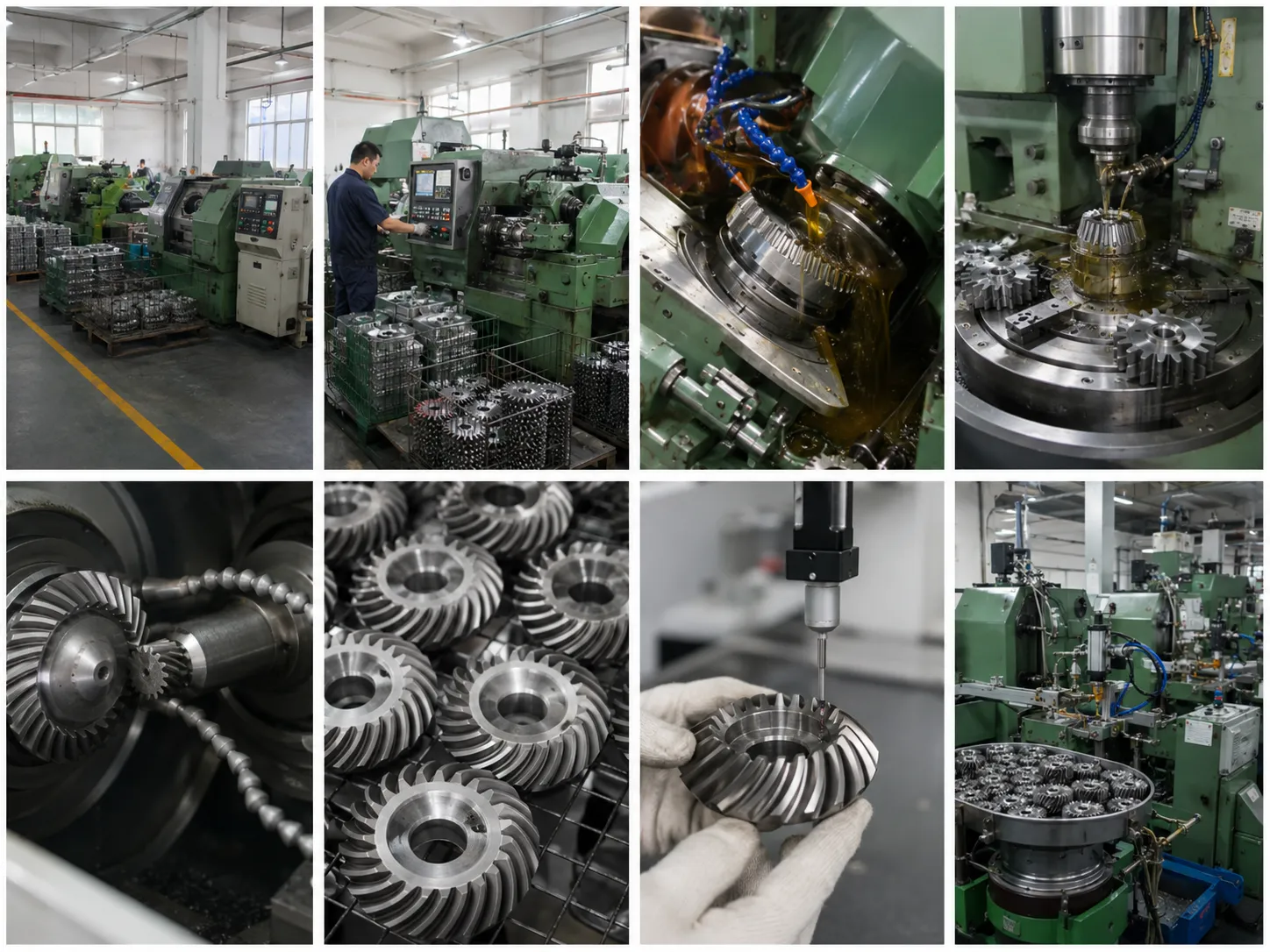
- R&D centre and world-class design software — Korea Ever-Power has established an R&D centre in collaboration with leading national universities, introducing world-leading gear design software. Our engineering team has professional gear and gearcase design capability, allowing us to optimise gear geometry for the specific application rather than adapting a standard design.
- Complete tooth-forming equipment — tooth milling, tooth shaping, and tooth hobbing equipment is on-site for both gear forming and inspection. Equipment selection controls quality and maximises process efficiency. German HÖFLER gear grinding machines deliver DIN 2–3 precision in small batches and DIN 5–6 in volume production.
- 100% fluorescent magnetic particle flaw detection — a professional fluorescent magnetic particle flaw detector inspects 100% of all grinding surfaces on every gear. This step ensures the final gear has no surface flaws — including the grinding cracks that can initiate fatigue fracture at the tooth root — before shipment.
- Optimised logistics and packaging — unique transportation jig design and a complete logistics packaging plan are used to ensure large gear sets arrive undamaged. For gears with precision-ground tooth flanks, transportation vibration can introduce fretting damage if the packaging is not designed to prevent it.
- Full traceability on every gear — a permanent traceability code is marked on each workpiece surface. This code links the gear to its specific heat treatment furnace number and raw material batch number. Each product has an individual identity that can be traced through every process stage, providing the documentation base for quality system audits and failure investigations.
Applications
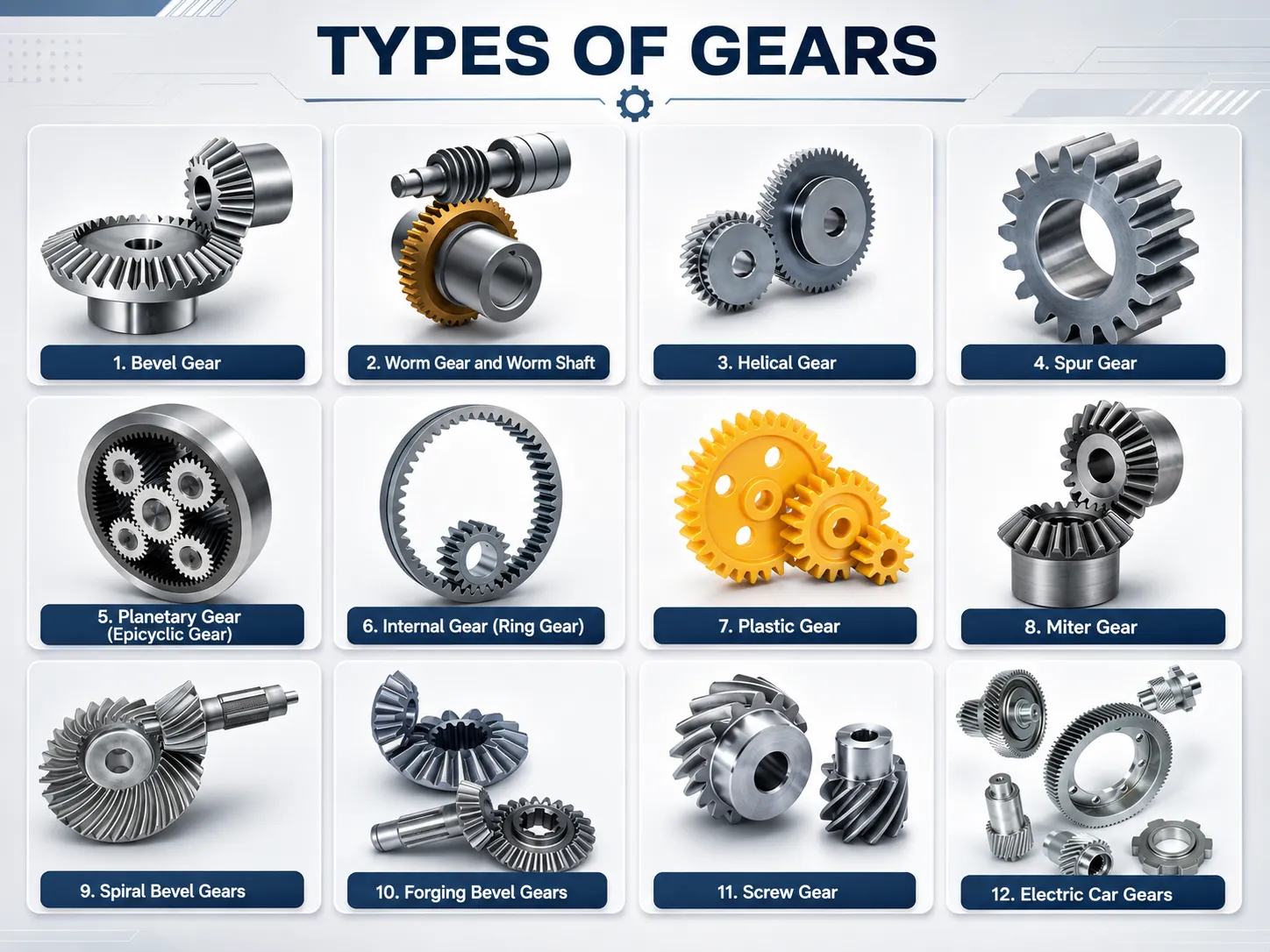
Steel Rolling Mills
Main drive and pinion stand gearboxes in hot and cold strip rolling mills, plate mills, and bar mills. The reversing nature of hot strip rolling, combined with the shock load when the bar or strip enters the rolls, makes the impact resistance and gradual wear mode of soft tooth flank gears preferable to the brittle fracture risk of heavily carburised alternatives.
Metallurgy and Smelting
Blast furnace auxiliary drives, ladle turret drives, continuous casting withdrawal drives, and converter tilting drives in steelmaking plants. These drives operate in high-temperature environments with thermal cycling and frequent start/stop operation — conditions that favour the toughness of through-hardened gears over the higher but more brittle surface hardness of carburised gears.
Heavy Cranes
Overhead crane hoisting gearboxes, bridge travel drives, and slewing ring drives in steelworks, shipyards, and construction. Cranes experience the most extreme start/stop and load reversal cycles of any gear application — 45# carbon steel soft tooth flank gears have the impact toughness to survive these cycles without tooth root fracture.
Industrial Mixers and Agitators
Large industrial mixer drives in chemical processing, water treatment, and materials handling. Mixer drives start under varying load conditions and experience torque peaks when mixing material changes consistency. Soft tooth flank gears with their uniform cross-section toughness handle these load variations without the risk of case spalling.
Field-Repair Applications
Any drive where the operational requirement includes the ability to re-machine the tooth profile in the field during a planned maintenance shutdown, without removing the gear for heat treatment. Soft tooth flank gears in 45# carbon steel can be re-hobbed or re-ground in the gearbox housing using portable gear cutting equipment — carburised gears cannot.
Frequently Asked Questions
Why is 45# carbon steel used for soft tooth flank metallurgy gears rather than a higher-alloy steel?
45# carbon steel (equivalent to C45 or SAE 1045) is the standard for soft tooth flank gears because it achieves the required 280–340 HB range through normalising or through-hardening with good dimensional stability and without the risk of cracking during heat treatment that can arise with higher-alloy grades. The 45# grade provides the combination of ductility (for impact resistance), machinability (for tooth grinding and field re-machining), and cost-effectiveness that the metallurgy industry requires. For applications with heavier loads or higher shock severity, 40Cr or 42CrMo through-hardened steels are used — both available from Korea Ever-Power.
What is fluorescent magnetic particle inspection and why is it performed on every gear?
Fluorescent magnetic particle inspection (FMPI) is a surface and near-surface flaw detection method applied to ferromagnetic materials. The gear is magnetised and then coated with a fluorescent iron oxide particle suspension; the particles collect at any discontinuity in the magnetic field — a crack, seam, or inclusion — and fluoresce under UV light, making the flaw visible. For ground gear surfaces, the primary concern is grinding cracks: if the grinding parameters are incorrect, thermal stresses from the grinding heat can introduce cracks in the hardened surface. These cracks, invisible to the naked eye, initiate fatigue fracture at the tooth root under service loads. 100% FMPI on all grinding surfaces guarantees that no grinding-cracked gear leaves the production facility.
Can Korea Ever-Power provide design cooperation if we have no drawing?
Yes. Our design cooperation service covers the situation where a customer has application data — required ratio, input speed, required output torque, centre distance, shaft diameters — but no finished gear drawing. Korea Ever-Power's R&D team simulates and optimises the gear geometry for the application, produces a detailed drawing, and submits it for customer approval before production. PPAP files are prepared as part of this service for automotive or critical industrial programmes. This service is particularly useful for customers replacing obsolete equipment where no OEM documentation survives.
What does the traceability code on each gear contain?
Each gear receives a permanent traceability code — typically engraved or stamped — that links to the workpiece's complete production record. This record contains the raw material batch and chemical analysis, the heat treatment furnace number and time-temperature curves, the hobbing and grinding batch records, the dimensional inspection report, and the FMPI result. In the event of a field failure investigation, the traceability code allows the complete production history of the specific gear to be retrieved and reviewed, identifying any process anomaly that may have contributed to the failure.
What after-sales support is provided if a quality issue arises?
Quality complaints receive feedback within 24 hours. An 8D (eight disciplines) corrective action report is submitted within 48 hours of complaint receipt, covering root cause analysis, containment actions, and permanent corrective measures. If required, Korea Ever-Power's professional staff are available for on-site attendance at the customer's facility to inspect the installation, participate in failure analysis, and communicate solutions face-to-face. Contact our team with any quality concern and we will respond within the same business day.
Customer Reviews
"We operate a hot strip rolling mill and had persistent tooth root fracture problems with carburised pinion gears from two previous suppliers. Korea Ever-Power recommended 45# through-hardened soft tooth flank gears — the impact resistance of the ductile core was the correct solution for the shock loading during strip entry. Twenty months since conversion, no tooth fractures. The gradual wear pattern visible at inspection allows planned gear replacement instead of emergency shutdowns."
Kim Yong-su | Rolling Mill Chief Engineer, Pohang Steel Processing Plant · Q1 2026
"We supply gearboxes for ladle turret drives in a continuous casting plant and qualify suppliers against a strict documentation standard including material certificate, heat treatment record, dimensional inspection, and FMPI certificate. Korea Ever-Power's soft tooth flank helical gears passed our incoming QA on first delivery. The fluorescent magnetic particle certificate format and content met our specification without modification."
Lee Byeong-hyun | Quality Manager, Incheon Steelworks Equipment Co. · Q3 2025
"We maintain a large overhead crane fleet in a shipyard and required Mn=3, Z=128 helical wheels in 45# carbon steel to match the production example specification. Ever-Power produced with the traceability code marked on each gear as required by our maintenance system. At annual inspection, wear measurement on both gears of each pair allows us to predict replacement date and plan the next shutdown window — only possible with soft tooth flank gears."
Park Cheol-min | Crane Maintenance Superintendent, Busan Shipbuilding Yard · Q4 2025
"We used Korea Ever-Power's design cooperation service for a converter tilting drive replacement. Our original OEM had no documentation for the gear geometry; we provided the input/output parameters and the gearbox envelope dimensions. Ever-Power's team designed the optimised gear pair, produced the drawing, and had it approved within our engineering review cycle. HÖFLER-ground gears delivered to DIN 6 at the first submission."
Choi Seung-jun | Maintenance Engineer, Gwangyang Steelworks · Q2 2025
"We had a quality issue with grinding cracks on the first batch from Korea Ever-Power — detected at our incoming inspection. Their 8D report arrived within 43 hours, root cause identified as a grinding parameter setting drift. Corrective action implemented and documented. All subsequent batches have passed our FMPI incoming check. The speed and quality of the 8D response demonstrated that their corrective action process is genuine and not just a paperwork exercise."
Ryu Hyeon-tae | Component Quality Engineer, Daejeon Metallurgy Equipment · Q1 2026
Related Products
Request a Quotation for Soft Tooth Flank Helical Gears
Send drawing or application data (ratio, speed, torque, centre distance). Design cooperation available where no drawing exists. PPAP files, 8D after-sales support, and full traceability documentation provided as standard. Quality feedback within 24 hours.
Additional information
| Editor |
|---|
Related products
-
Helical Angle 7° Internal Helical Ring Gear, DIN 4-8
-
Industrial Alloy Steel Double Helical Gears – Custom OEM
-
Rolling Mill Double Helical Gear – 42CrMo, 50-55 HRC, OEM
-
Plastic Helical Gear – POM, Nylon, M0.5-M3, Custom Moulded
-
Steel Double Helical Gear – SS, 20mm+, Polished, Custom OEM
-
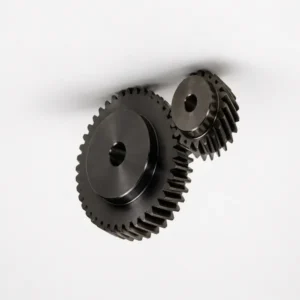
Ground Helical Gears – DIN 4-6, M0.5-M10, Precision Ground
-
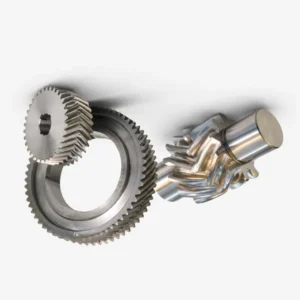
Customized Double Helical Gear – OD 100-5000mm, OEM Design
-
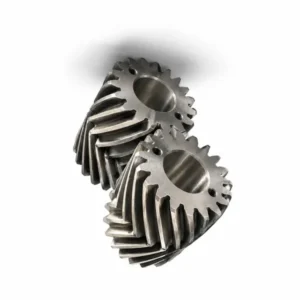
Aircraft Double Helical Gear – M0.15-M2.0, Multi-Material
 English
  Italian
  Korean
  French
  Japanese