
Duplex Worms Gear – Adjustable Backlash, Zero Backlash Precision
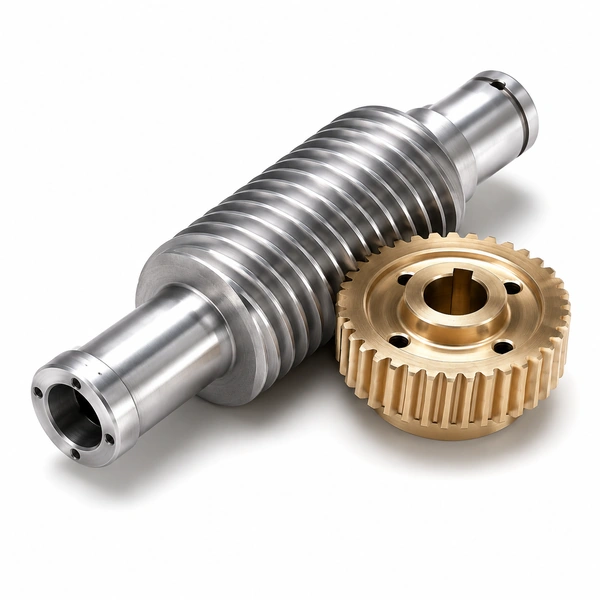
High-precision duplex worm gear with superior strength. A range of backlash values can be obtained by shifting the worm axially. A duplex or dual-lead worm is a worm gear set where the two flanks are manufactured with slightly different modules and diameter quotients, producing different lead angles on both tooth profiles so the tooth thickness continuously increases along the worm length. Backlash adjustment by axial worm shift — zero contact-pattern degradation, no reduction in load capacity. Reference backlash ±0.045 mm at V-groove reference tooth position. Assembly orientation verified by matched arrow marks on worm and worm wheel. Involute tooth profile — insensitive to centre distance variation. Applications: rotary and tilting tables, milling machines, presses, CNC bidirectional positioning drives.
Product Overview
A duplex worm gear — also called a dual-lead worm gear — is a precision worm gear set in which the two flanks of the worm thread are manufactured with slightly different modules and diameter quotients. This intentional asymmetry produces different lead angles on the left and right tooth flanks, so the thread tooth thickness continuously increases along the worm length while the tooth gap between threads decreases. The result is an elegant engineering solution to the most important limitation of standard worm gearing: backlash that cannot be adjusted after assembly without compromising the tooth contact geometry. With duplex worm gears, backlash is controlled by shifting the worm axially — moving the worm to a position where the thread section with the required tooth thickness engages the worm wheel, giving exactly the desired backlash.
Korea Ever-Power's duplex worm gears offer high precision with superior strength, adjustable backlash from near-zero (±0.045 mm reference position) to any desired value, and geometric accuracy maintained through the adjustment — unlike other backlash adjustment methods that degrade tooth contact when the backlash is changed.
At the mating worm wheel, the different modules of the two flanks produce different addendum modification coefficients and different rolling-circle diameters at the front and rear of each tooth. The profiles therefore differ on the two flanks. The key consequence: although the worm thread tooth thickness varies along the worm's axis, the tooth thickness of each worm wheel tooth and the tooth gap between adjacent worm wheel teeth remain constant around the wheel circumference — ensuring that the worm wheel meshes correctly regardless of the axial position of the worm.
Technical Specifications
| Duplex Worm Gear — Product Specification | |
|---|---|
| Type | Duplex (dual-lead) — different modules on left and right flanks |
| Backlash Adjustment | Axial shifting of worm — continuous, delicate, zero contact-pattern degradation |
| Reference Backlash | ≈ 0 (±0.045 mm) when reference tooth aligned with worm wheel rotation centre at rated centre distance |
| Assembly Marking — Worm | Arrow stamped on worm indicating orientation direction |
| Assembly Marking — Wheel | Arrow stamped on worm wheel front face — must match worm arrow direction |
| Reference Tooth Mark | V-groove (60°, 0.3 mm deep) on worm thread tip — marks the reference tooth position |
| Gear Tooth Profile | Involute — insensitive to centre distance variation |
| Contact Geometry | Geometrically accurate line contact maintained through all backlash adjustments |
| Precision | High precision — suitable for repeated bidirectional positioning applications |
| Primary Applications | Rotary and tilting tables, milling machines, presses, CNC positioning drives |
How Duplex Worm Gear Backlash Adjustment Works
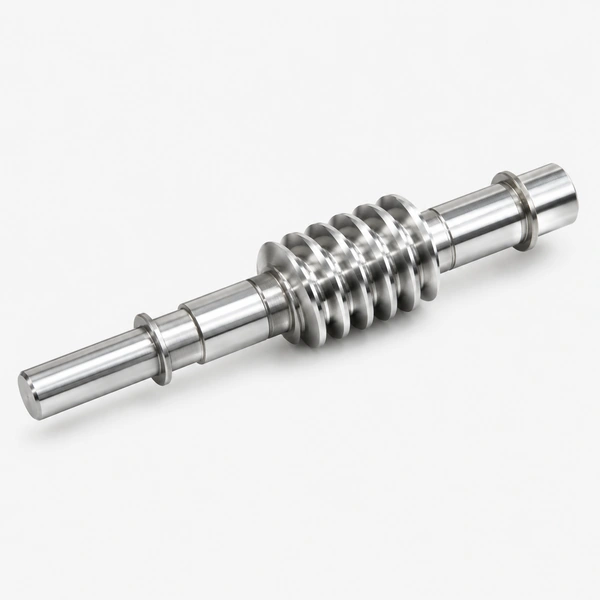
The duplex worm gear's backlash adjustment mechanism is one of the most elegant solutions in precision gear engineering. Understanding it fully is important for correct installation and maintenance:
The Dual-Lead Principle
In a standard single-lead worm, both flanks of the thread are manufactured with identical module and lead angle — the thread tooth thickness is constant along the entire worm length. In a duplex worm, the left flank is manufactured with module mL and the right flank with module mR, where mL ≠ mR. The difference causes the effective tooth thickness to increase progressively from one end of the worm to the other. Shifting the worm axially changes which section of the worm thread engages the worm wheel — and therefore changes the effective tooth thickness at the mesh, which is the backlash.
Zero Contact-Pattern Degradation
The critical advantage of duplex backlash adjustment — compared with all other worm gear backlash adjustment methods — is that the tooth contact pattern (the area of tooth flank that actually carries the load) is not altered by the adjustment. Because the worm wheel tooth thickness and gap are constant around the circumference, any axial position of the worm produces the same contact pattern form and size. The load-carrying capacity and efficiency are therefore unaffected by the backlash adjustment — even worn gears can be readjusted to near-zero backlash without sacrificing tooth contact or creating interference.
Involute Profile — Centre Distance Insensitivity
Korea Ever-Power's duplex worm gear teeth are executed as involute profiles. The involute profile's defining property — that it maintains correct conjugate action across a range of centre distances — makes the duplex worm gear insensitive to centre-distance variation caused by worm shaft deflection under load, thermal expansion of the gearbox housing, or bearing clearance. This insensitivity is essential in precision machine tool and press drives where the centre distance is not perfectly controlled under all operating conditions.
Why Other Methods Are Inferior
The four alternative worm gear backlash adjustment methods — eccentric hub rotation, conical worm axial shift, split worm half-rotation, split wheel disk rotation — all share fundamental disadvantages: (1) they shift or deform the tooth contact zone, reducing the load-carrying contact area; (2) they reduce effective load capacity; (3) each adjustment causes significant start-up wear as the tooth contact re-establishes at the new geometry; (4) incorrect assembly can destroy the gear set. The duplex method avoids all four disadvantages simultaneously.
Assembly Procedure — Critical Points
The duplex worm gear differs from standard worm gearing in that correct assembly orientation is mandatory. Because the left and right flanks of the worm thread have different modules, the worm and worm wheel must be assembled in the correct relative orientation — incorrect orientation places the wrong flank in engagement, causing increased centre distance, difficult assembly, and improper gear engagement. Two checks must be made before assembly proceeds:
⚠️ Check 1 — Arrow Orientation
An arrow indicating the correct assembly orientation is stamped on both the duplex worm and the worm wheel. Before assembly, view the worm wheel from the front and confirm that the arrow direction on the worm coincides with the arrow direction on the worm wheel. Both arrows must point in the same direction when the worm and worm wheel are assembled. If the arrows are opposed, the worm must be reversed (flipped 180°) before proceeding. Incorrect orientation results in a centre distance greater than the design value, making assembly mechanically difficult and producing incorrect tooth engagement that will destroy the gear set in service.
⚠️ Check 2 — Reference Position
A V-groove (60°, 0.3 mm deep) is machined on the tip peripheral surface of one duplex worm thread — this marks the reference tooth. The gear set is designed to produce backlash of approximately zero (±0.045 mm) when the reference tooth is positioned in alignment with the centre of rotation of the worm wheel, with the centre distance set to the rated value. Set this as the starting position when commissioning the gear set, then adjust axially from this reference point to achieve the desired operating backlash. The V-groove reference also allows the worm to be returned to the zero-backlash reference position after maintenance.
Duplex vs Other Backlash Adjustment Methods
| Method | Contact Zone Maintained? | Load Capacity Preserved? | Start-up Wear on Adjust? | Assembly Risk? |
|---|---|---|---|---|
| Duplex worm ★ | Yes ✓ | Yes ✓ | Minimal ✓ | Low ✓ |
| Eccentric hub rotation | Shifted ✗ | Reduced ✗ | High ✗ | Moderate |
| Conical worm axial shift | Shifted ✗ | Reduced ✗ | High ✗ | High ✗ |
| Split worm halves (Ott) | Degraded ✗ | Reduced ✗ | High ✗ | Very High ✗ |
| Split wheel disks | Degraded ✗ | Reduced ✗ | High ✗ | Very High ✗ |
Applications
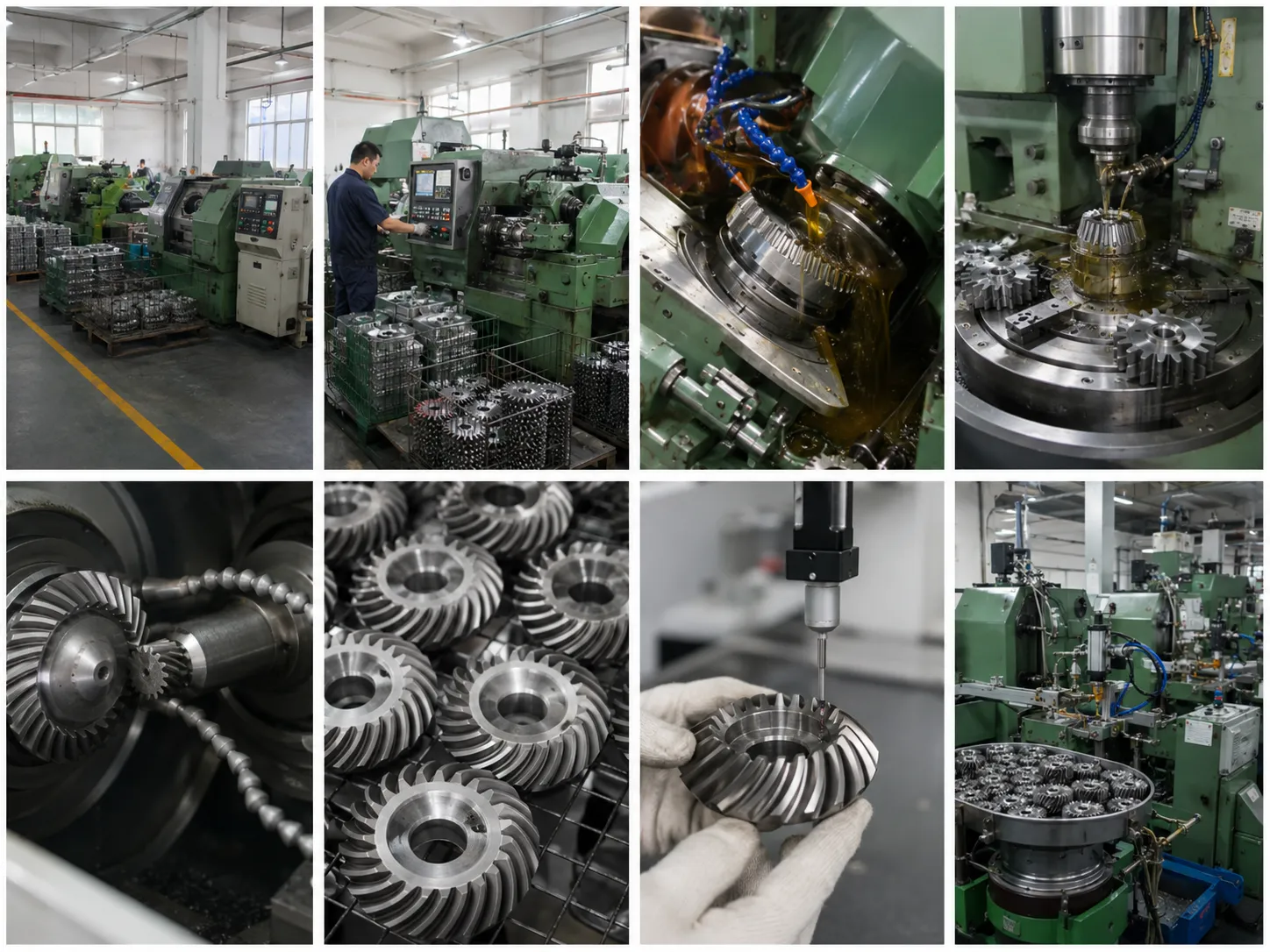
Duplex worm gears are used where any backlash is unwanted or harmful — to maintain repeated high-precision positioning in both directions, to prevent impulse-load damage from backlash impact, and when the contact flanks are alternating (bidirectional drive). Typical applications include:
Rotary and Tilting Tables
Duplex worm gears in CNC rotary table indexing drives and precision tilting table positioning drives. The zero-backlash requirement for bidirectional CNC positioning (where the control commands alternating clockwise and counter-clockwise rotations) makes duplex worm gears the standard for precision rotary table worm drives. The ability to readjust to zero backlash after the worm wheel surface has worn extends the rotary table's useful life and avoids premature replacement of the entire worm gear set.
Milling Machines
Duplex worm gears in milling machine table feed drives and dividing head worm drives. Milling machine tables require zero backlash in the feed direction to prevent chatter (the table must not move backward when the feed load reversal occurs at each milling tooth engagement). The duplex worm gear's continuous backlash adjustability allows the machine tool operator to compensate for wear as the machine ages, maintaining the zero-backlash condition without replacing the worm gear set.
Presses
Duplex worm gears in press stroke adjustment drives and fine-blanking press ram positioning drives. Presses apply alternating impact loads to the worm gear drive — the ram decelerates abruptly at the end of each stroke, reversing the load direction suddenly. Standard worm gear backlash allows the gear teeth to separate and re-engage with each stroke reversal, producing impact loading on the tooth flanks. Duplex zero-backlash worm gears eliminate this impact by keeping the flanks continuously in contact through the load reversal.
Precision Positioning Drives
Duplex worm gears in telescope mount polar axis drives, optical instrument positioning mechanisms, and precision semiconductor handling equipment. Any application requiring bidirectional positioning repeatability better than the backlash of a standard worm gear — typically better than 0.05 mm at the output — is a candidate for duplex worm gearing. The ability to adjust to near-zero backlash (±0.045 mm at the reference position) after assembly and after wear makes this performance level achievable and maintainable over the service life.
Frequently Asked Questions
Can a worn duplex worm gear set be readjusted to near-zero backlash?
Yes — this is the defining advantage of duplex worm gearing. Even when the worm wheel tooth surface has worn in service, the worm can be shifted axially to a new position where the thicker section of the worm thread engages the worm wheel, restoring near-zero backlash continuously and delicately. The contact pattern form and size are not affected by this readjustment — the load capacity remains unchanged. This re-adjustability is not possible with standard worm gears, and makes duplex worm gear sets significantly more economical over the service life of precision machine tools.
What happens if the duplex worm is assembled in the wrong orientation?
If the duplex worm is assembled with the arrows pointing in opposite directions, the effective centre distance becomes larger than the design value — the worm and worm wheel are pushed apart by the incorrect tooth engagement. This makes assembly mechanically difficult (the housing may not close properly) and produces incorrect, heavily loaded tooth contact that will rapidly damage or destroy the gear set if operated. Always verify arrow alignment before assembly. If the arrows are opposed, reverse the worm (rotate 180° around the worm wheel axis) and verify again before proceeding.
How do I set the duplex worm gear to the zero-backlash reference position?
The V-groove mark on the worm thread tip identifies the reference tooth. Set the centre distance to the rated value; then shift the worm axially until the reference tooth (V-groove) is positioned in alignment with the centre of rotation of the worm wheel. At this position, the designed backlash of ±0.045 mm is achieved. For less backlash than this reference value, shift the worm axially toward the thicker-thread end; for more backlash, shift toward the thinner end. Contact Korea Ever-Power for application-specific assembly guidance.
Customer Reviews
"We build CNC rotary tables and use Korea Ever-Power's duplex worm gears in all our indexing drives. After 8,000 operating hours, we readjusted the worm axially from the worn position to restore near-zero backlash — bidirectional positioning repeatability back to ±0.03 mm. No change in contact pattern at the readjusted position; torque signature unchanged. With a standard worm gear set, we would have replaced the worm wheel at 4,000 hours — the duplex set has now run twice as long with two readjustments."
Kim Tae-jun | CNC Rotary Table Design Engineer, Incheon Precision Machine Tools Co. · Q1 2026
"We manufacture fine-blanking presses and specified duplex worm gears from Korea Ever-Power for our ram stroke adjustment drive. The zero-backlash requirement was absolute — backlash in the stroke adjustment drive causes inconsistent part thickness at the press bottom-dead-centre position. Korea Ever-Power's duplex worm gear set, adjusted to the V-groove reference position, achieved ±0.04 mm backlash at initial assembly. No impact noise at stroke reversal. 14 months in production, no readjustment required yet."
Lee Byeong-ho | Fine-Blanking Press Engineer, Gyeonggi Precision Press Co. · Q4 2025
Related Products
Request a Quotation for Duplex Worm Gears
High-precision duplex worm and wheel sets with adjustable backlash to near-zero. Arrow orientation and V-groove reference marking standard. Ideal for CNC rotary tables, milling machines, presses, and bidirectional precision positioning drives.
Additional information
| Editor |
|---|
Related products
-
Plastic Worm Gears – POM/Nylon, M0.2-M2.0, Low Noise
-
Alloy Steel Worm And Worm Gear for Auto Parts – M0.2-M2.2, ODM
-
Customized Worm Gear Set – OEM, All Materials, No MOQ
-
Stainless Steel Worm Gear for CNC Machinery – DIN 5-7, M1-M4
-
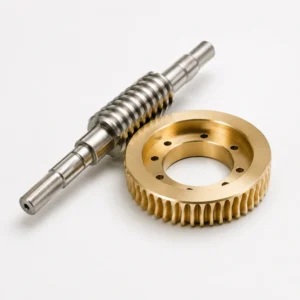
Worm and Wheel – High Precision Brass, M3-M12, 20:1-300:1
-
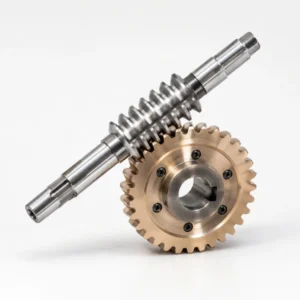
Cylindrical Worm Wheel – ISO/DIN, Line Contact, All Materials
-
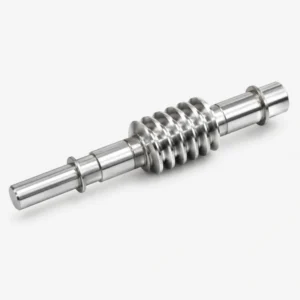
Worm Gear Shaft (Worm Gear Drive Shaft) Customized Worm Shaft
-
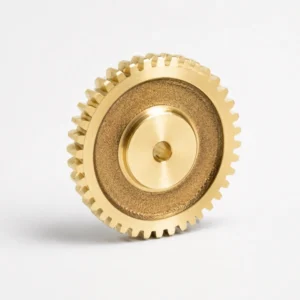
Brass Worm Wheel – M0.5, 20T, Complete Set with Worm Shaft
 English
  Italian
  Korean
  French
  Japanese