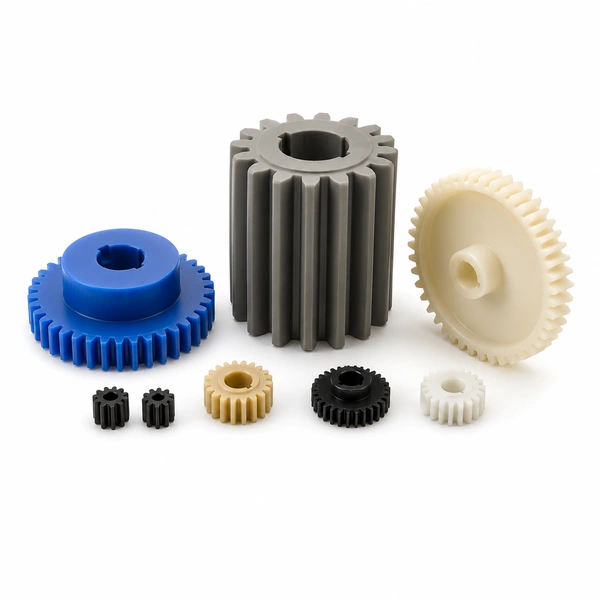
GEAR APPLICATION GUIDE · PLASTIC GEAR · PL01

Plastic Gears for Office Automation:
Material Selection and Noise Reduction

Office automation equipment — laser printers, copiers, scanners, fax machines, and paper shredders — uses plastic gears in almost every drive train stage. Their self-lubricating properties, lightweight, corrosion resistance, low noise, and low cost make plastic gears technically superior to steel alternatives in these applications. This guide covers material selection, tooth design, noise reduction and common failure modes for office automation plastic gear drives.

POM · PA66 · PPS · LCP · PEEK
Module M0.3 – M2.5 · Injection Moulded
Printer · Copier · Scanner · Shredder Drive

MODULE RANGE

M0.3 – M2.5

Office automation plastic gear module range — laser printer paper feed at M0.5–M1.5; copier main drive at M1.0–M2.5; shredder drive at M1.5–M2.5

WEIGHT SAVING

75–85%

POM plastic gear weight vs equivalent steel gear — density 1.41 g/cm³ (POM) vs 7.85 g/cm³ (steel). Directly reduces motor size, inertia, and power consumption in printer and copier drive trains

NOISE REDUCTION

8–12 dB(A)

Plastic gears quieter than equivalent steel gears at the same speed and load — due to higher damping coefficient, lower elastic modulus absorbing mesh impact, and smoother tooth surface Ra achievable by injection moulding

SELF-LUBRICATING

μ ≈ 0.10–0.25

POM and PA (Nylon) friction coefficients running dry against themselves or against steel — no external lubrication required, eliminating oil contamination of paper paths and sensitive optical components in office equipment

Why Office Automation Uses Plastic Gears — Not Steel

The universal adoption of plastic gears in office automation equipment is not a cost-reduction compromise — it is the correct engineering choice driven by several performance requirements that steel gears cannot meet simultaneously. The most important is noise: a 45 dB(A) total printer operating noise budget leaves very little headroom for the gear drive train. Steel gears at the pitch line velocities and loads of a laser printer paper feed drive (typically 0.5–3 m/s, 0.5–2 Nm torque) generate 8–12 dB(A) more mesh noise than equivalent plastic gears because steel has very low internal damping. The viscoelastic damping of engineering polymers absorbs the impulsive mesh contact energy before it can be radiated as airborne noise from the gear body.

Korea Ever-Power’s plastic gears for office automation are injection moulded in POM (Delrin/Duracon), PA66/PA46 with glass or carbon fibre reinforcement, PPS and LCP for high-temperature printer components, and PEEK for the most demanding precision positioning applications. All plastic gear moulds for office automation are machined to ±0.002 mm tool accuracy to achieve the tooth profile tolerances needed for quiet gear drives in office equipment.

The self-lubricating property of POM and Nylon is equally important: laser printer paper paths, copier platen assemblies, and scanner optical rails cannot tolerate oil contamination. A steel gear drive in these assemblies would require grease or oil that, over the product lifetime, would inevitably migrate to contaminate paper, printed surfaces, or optical components. Plastic gears eliminate this lubricant exclusion zone entirely — no lubricant is needed, applied, or at risk of migrating.

Noise — The Dominant Requirement

Office equipment operating noise (IEC 62368-1 / ISO 7779) must be below 45–52 dB(A) for class A office environments. The gear drive train is a major noise source in printers and copiers. Plastic gears’ viscoelastic damping absorbs impulsive mesh contact energy, and their lower elastic modulus (POM: 3.2 GPa vs steel: 200 GPa) reduces the dynamic stiffness of the gear mesh — resulting in 8–12 dB(A) quieter operation than equivalent steel gears without any change to gear ratio, pitch line velocity, or transmitted torque. No comparable noise reduction technique for steel gears at these small modules and low loads is commercially practical.

Lubrication-Free Operation

POM and PA66 plastic gears run dry at friction coefficients of 0.10–0.25 against each other and 0.08–0.15 against steel — acceptable for the low-to-medium loads of office equipment drives without external lubrication. This eliminates the lubricant contamination risk to paper, printed media, and optical scanning components. It also eliminates periodic relubrication from the maintenance schedule — a practical requirement for office equipment that must operate for years without maintenance attention from users.

Low Inertia and Precision Positioning

Plastic gear density (POM: 1.41 g/cm³; PA66: 1.14 g/cm³) is 80–85% lower than steel (7.85 g/cm³). In a laser printer paper feed drive with dozens of small gears, the cumulative inertia reduction from plastic vs steel gears allows the stepper motor to achieve accurate step positioning at higher stepping frequencies — directly improving paper feed accuracy and print registration. The lower inertia also reduces motor current demand during stop-start cycling, enabling smaller, less costly stepper motors throughout the printer drive train.

Plastic Gear Material Selection for Office Automation
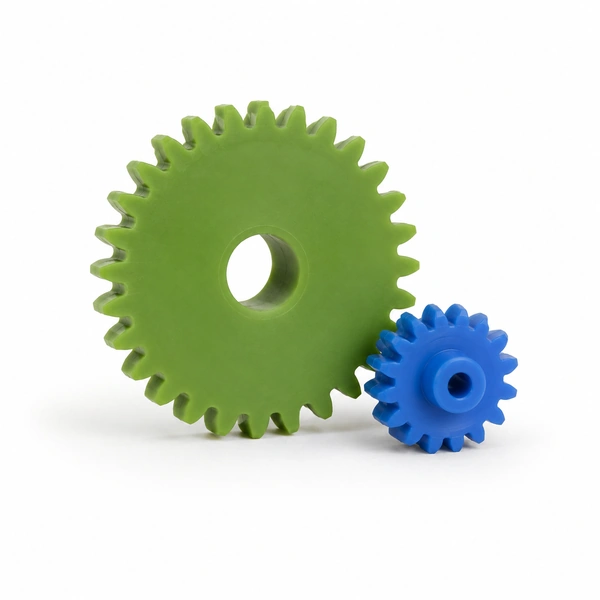
nylon plastic spur gear office automation printer copier Korea Ever-Power
Korea Ever-Power nylon (PA66) plastic spur gears for office automation drive applications — injection moulded, Module M1.5, 30T–60T, OD tolerance ±0.05 mm, tooth profile tolerance DIN 7–8 class confirmed by optical gear measurement. Self-lubricating, moisture-stable (PA66 GF30 with 30% glass fibre reinforcement for dimensional stability in humid environments), noise measured 9 dB(A) lower than equivalent steel spur gears at 600 RPM 0.5 Nm. Available as standard catalogue items in natural, black and custom colours for brand differentiation in OEM printer and copier applications.
MATERIAL TENSILE STRENGTH MAX TEMP (continuous) MOISTURE ABSORPTION MAIN OFFICE AUTOMATION USE
POM (Delrin/Duracon) 65–70 MPa 90°C 0.2% (low — dimensionally stable) Paper feed rollers, drum drive, scanner, shredder — most common office automation gear material
PA66 (Nylon 66) 80–85 MPa 105°C 2.5% (moderate — use GF30 for stability) Higher-torque copier drive stages and fuser drive; GF30 reinforced for dimensional stability
PA66 GF30 (Glass-filled Nylon) 160–180 MPa 120°C 0.7% (low with glass fibre) Fuser drive gears (high temperature zone), heavy-duty copier paper transport, stepper motor output gear
PPS (Polyphenylene Sulphide) 130–170 MPa (GF40) 220°C 0.01% (extremely low) Laser printer fuser unit drive gears (175–200°C operating zone) — highest temperature plastic gear material commonly used in office automation
LCP (Liquid Crystal Polymer) 150–200 MPa 240°C 0.01% Precision scanner drive gears requiring very tight dimensional tolerances at elevated temperature and humidity cycling; also used for miniature M0.3–M0.5 module printer gears
PEEK 100–210 MPa 250°C 0.1% Highest-performance printer/copier gears: precision positioning drives, ESD-sensitive environments, sterilisable medical equipment document drives

Office Automation Drive Applications

DRIVE 01

LASER PRINTER
PAPER FEED

Gear specification: Module M0.5–M1.5, POM or PA66, injection moulded, helical tooth form preferred for lowest noise. Paper feed gear trains in laser printers (A4 monochrome to A3 colour) typically contain 8–25 individual plastic gears between the stepper motor and the paper pickup roller, paper feed roller, separation pad roller, and registration roller assemblies. The critical requirement is cumulative backlash management — each gear pair in the chain contributes to the total backlash seen at the paper drive rollers, and excessive backlash causes registration error visible as misaligned text in high-resolution laser prints. Korea Ever-Power moulds paper feed gears to backlash tolerance below 0.05 mm per pair for laser printer OEM applications.

DRIVE 02

COPIER DRUM
& FUSER DRIVE

Gear specification: Module M1.5–M2.5, PPS or PA66 GF30 for fuser (175–200°C); POM for drum drive and photosensitive drum coupling gears. The fuser unit drive in laser printers and copiers operates at the highest temperature in the machine — typically 175–200°C at the fuser roller surface. POM would soften and deform at this temperature; PPS with 40% glass fibre reinforcement (operating range to 220°C continuous) is the standard material. The drum drive gears operate at ambient temperature but require very uniform angular velocity — transmission error in the photosensitive drum drive creates density banding in the printed image. Korea Ever-Power supplies drum drive gears with transmission error below 0.01 mm for high-resolution 1200 dpi colour copier OEM production.

DRIVE 03

FLATBED
SCANNER DRIVE

Gear specification: Module M0.5–M1.5, POM or LCP, high helix angle (20°–30°) for ultra-low noise, precision tooth profile for minimum transmission error, backlash below 0.03 mm per pair. Flatbed scanner carriage drive gear trains must move the scan carriage at uniform velocity — velocity non-uniformity caused by backlash, transmission error, or pitch errors in the gear train appears directly as horizontal scan line irregularity in the scanned image. 600–1200 dpi scanner mechanisms cannot tolerate velocity variation above 0.5%. Korea Ever-Power supplies scanner drive plastic gears in POM and LCP with tooth profile deviation below 4 μm and pitch error below 3 μm for OEM flatbed scanner programmes.

DRIVE 04

PAPER
SHREDDER DRIVE

Gear specification: Module M1.5–M2.5, PA66 GF30 or POM, spur tooth form, ratio 5:1–15:1 from motor to shredder cutter shaft. Paper shredder plastic gear drives must handle frequent shock loads when paper jams — the shredder reverses direction to clear jams, creating momentary torque spikes 3–5× the running torque. PA66 GF30 is preferred over POM for shredder drives because its higher impact strength and higher fatigue limit handle these repeated shock events better than unfilled POM. For heavy-duty office shredders above 10 sheets per pass, Korea Ever-Power recommends PA66 GF30 or glass-filled PBT for the main drive gear set, confirmed for the required shock torque cycle count by accelerated fatigue testing on request.

Plastic Gear Failure Modes and Solutions in Office Equipment

COMMON FAILURE MODES

  • Tooth root fatigue fracture: most common in shredder and heavy copier drives — occurs when design torque is exceeded by paper jam shock loads above the material’s fatigue limit. Prevent with PA66 GF30 or GF40 and a service factor ≥ 2.0 for jam reversal loads
  • Creep deformation: POM and PA66 creep under sustained load at elevated temperature — the tooth tip dimension changes over years of intermittent loading in warm printer environments. Select PA66 GF30 or PPS for drives in heated zones above 60°C
  • Moisture absorption distortion: unfilled PA66 absorbs 2.5% moisture by weight, causing tooth OD to increase by ~0.3 mm per 100 mm diameter — enough to increase backlash or cause gear binding. Specify PA66 GF30 (0.7% absorption) or POM (0.2%) for gears in high-humidity environments
  • Mould shrinkage tooth profile error: plastic gears shrink 0.5–2.5% during injection moulding cooling. Tooth profile accuracy depends on precisely compensating shrinkage in the mould tool. Korea Ever-Power compensates mould geometry by material-specific shrinkage calculation and validates tooth profile by CMM before accepting the mould for production

DESIGN RECOMMENDATIONS

  • Use helical teeth (helix 10°–20°): helical plastic gears are 4–6 dB(A) quieter than equivalent spur plastic gears at the same pitch line velocity — important for printer and copier noise specifications
  • Minimum 17 teeth on pinion: plastic gear pinions with fewer than 15 teeth suffer from root undercut in standard tooth proportions — use profile shift x ≥ +0.3 for pinions with 10–14 teeth to avoid root weakening
  • Gate location on mould: gate directly on the gear face introduces residual stress that distorts the tooth profile after moulding. Specify submarine or pinpoint gate in the hub area, with balanced runners for multi-cavity moulds
  • Steel core hub for bore accuracy: plastic gear bores >10 mm in diameter should use a moulded-in steel insert hub for bore accuracy, dimensional stability, and shaft fit retention — pure plastic bores creep under the shaft press-fit force over time

Frequently Asked Questions

Q 01

My laser printer’s paper feed makes a grinding noise after 2–3 years of operation. Which plastic gear is typically at fault and why?

The most common cause of paper feed noise in aged laser printers is wear of the smallest module gears in the paper pickup and separation roller drive train — typically M0.5–M0.8 POM gears that have accumulated wear sufficient to increase backlash beyond the original specification. POM, while the most dimensionally stable of the common office gear plastics, does wear under the repeated start-stop cycling of paper feed duty. The gear most frequently at fault is the one with the highest rotational speed and lowest tooth count (highest surface speed per tooth) — typically the stepper motor output pinion or the first reduction gear in the paper feed train. Diagnosis: remove the paper feed gear train cover and inspect all gears for visible tooth tip wear (the tip should be sharp and flat; worn tips become convex and shiny). Replace the worn gear and the gear it meshes with as a pair — replacing only the more obviously worn gear leaves a mismatch of tooth geometry that generates noise even with one new gear. Korea Ever-Power supplies laser printer paper feed plastic gear replacement sets by printer model or by module/tooth count specification.

Q 02

Can Korea Ever-Power reverse-engineer a broken plastic gear from a failed sample, and what information is needed?

Yes — Korea Ever-Power reverse-engineers plastic gears from failed or worn samples as a standard service for office equipment OEM and aftermarket customers. Minimum information required: (1) The original gear (or a matched gear it meshes with) for measuring tooth count, OD, bore, face width, helix hand, and tooth form; (2) The material if known, or the operating environment (temperature, chemical exposure) from which the Korea Ever-Power material engineering team will recommend the correct replacement material. From these inputs, Korea Ever-Power calculates the module, pressure angle, and profile shift; produces a 3D tooth profile drawing; designs the injection mould; and manufactures first-article samples for dimensional and functional approval before series production. Minimum order for new mould tooling: 500–1,000 pieces depending on gear size. For small quantities (below 100 pieces), Korea Ever-Power can supply CNC-machined plastic gear replacements in POM or PA66 bar stock in 10–15 days without new tooling investment, at higher per-piece cost than injection moulded production parts.

Q 03

Should I use POM or PA66 as the base material for a new laser printer gear design?

The choice between POM and PA66 for a new printer gear design depends on five criteria: (1) Dimensional stability in humidity: POM absorbs only 0.2% moisture vs 2.5% for unfilled PA66 — POM is the better choice for printer gears exposed to humidity variation (storage to operating environment). PA66 with 30% glass fibre reinforcement (PA66 GF30) closes this gap to 0.7%; (2) Temperature: POM is limited to 90°C continuous; PA66 GF30 handles 120°C; PPS handles 220°C — for fuser zone gears, PPS is mandatory; (3) Chemical resistance: POM is sensitive to strong acids and alkalis; PA66 has better chemical resistance for gears exposed to cleaning solvents; (4) Impact and fatigue: PA66 GF30 has higher impact strength and higher fatigue limit than POM for shock-load applications (shredder reversal, paper jam clearing); (5) Cost: POM granulate is typically 15–25% less expensive than PA66 GF30. General recommendation: use POM for standard paper feed and transport gears below 60°C with no shock load; use PA66 GF30 for higher-torque or higher-temperature stages; use PPS for fuser drive gears. Korea Ever-Power engineers will advise on the optimal material selection for your specific printer gear application requirements.

Q 04

What are the minimum order quantities and lead times for injection moulded plastic gears for office automation OEM applications?

Korea Ever-Power plastic gear OEM production for office automation: New tooling (new gear design): mould design and manufacturing 15–25 days, first article samples 5–10 days after mould completion, first production batch minimum 1,000–5,000 pieces depending on gear size, total first-article-to-production lead time approximately 30–45 days. Existing tooling (repeat orders): minimum order quantity 500 pieces, lead time 12–18 days from order confirmation. CNC machined prototypes (no tooling required, single pieces to 50 pieces): 10–15 days in POM, PA66, or PPS bar stock. Annual volume pricing is available for office automation OEM programmes above 50,000 pieces per year — mould tooling cost may be waived for qualifying OEM programmes. Contact Korea Ever-Power with the gear module, material, tooth count, quantity, and delivery requirement for a specific quotation.

Explore Korea Ever-Power Gear Categories

Seven precision gear product lines for industrial, automotive, agricultural and specialist applications worldwide.
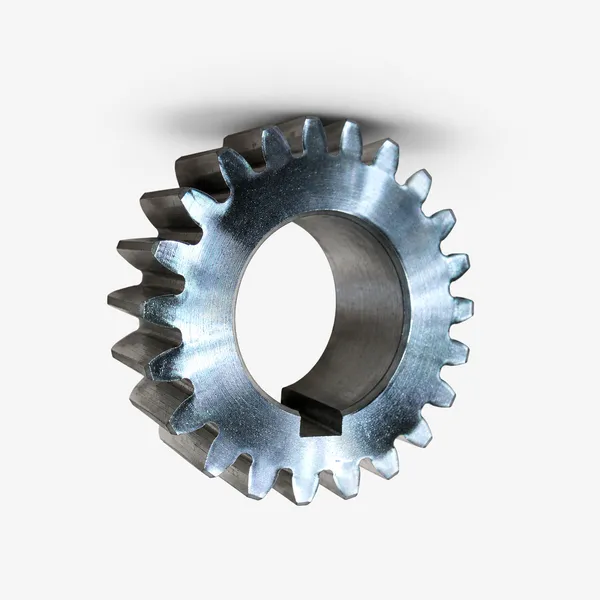
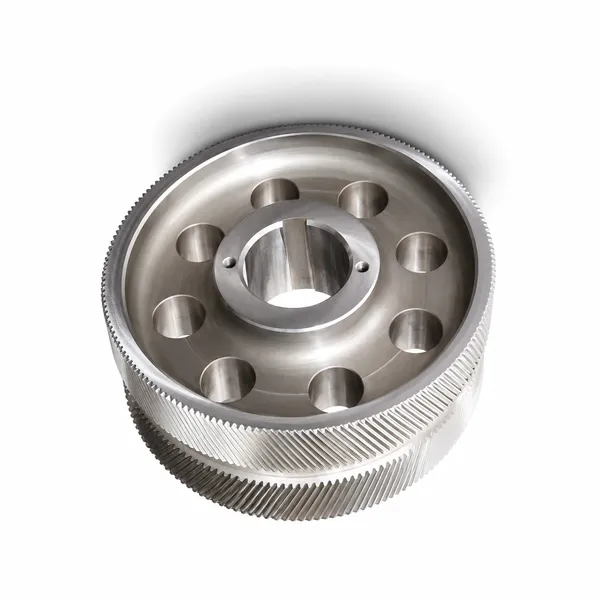
spur gear

Spur Gears

M1–M20 · C45, 20CrMnTi, 316L, Nylon

helical gear

Helical Gears

Low noise · high contact ratio · gearbox, wind

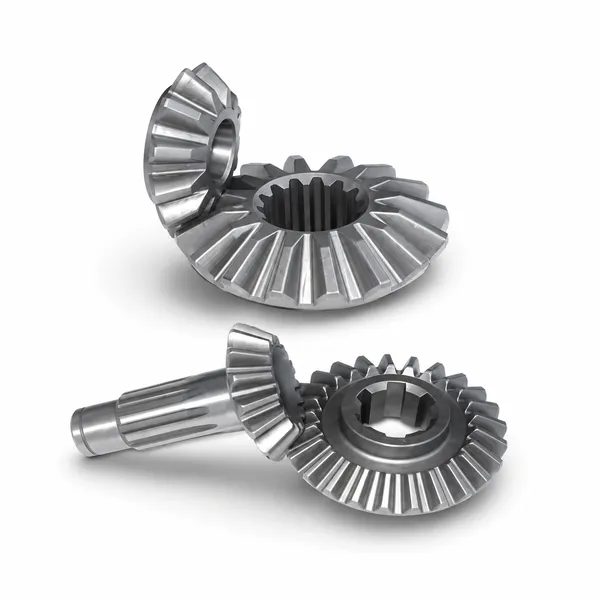
bevel gear

ベベルギア

Right-angle drives · straight & spiral

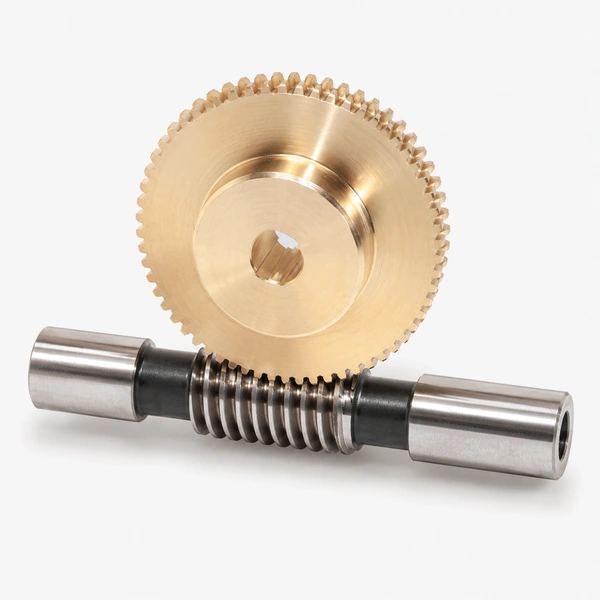
worm gear

Worm Gears

High ratio · self-locking · valve, hoist

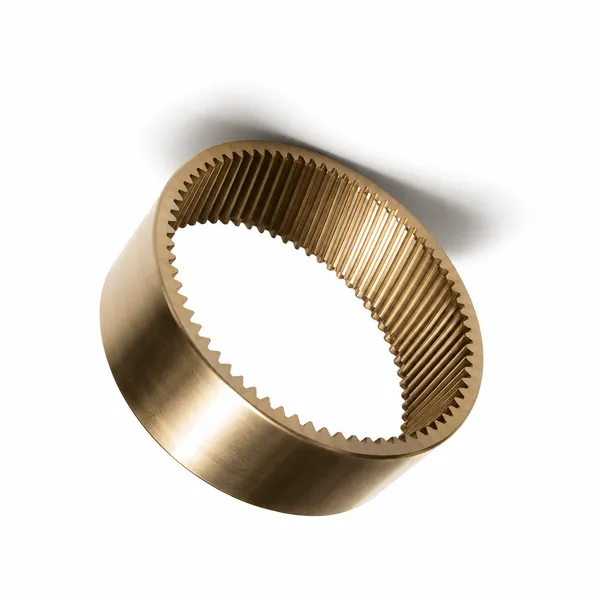
ring gear

Ring Gears

Internal · planetary stage · wind, excavator

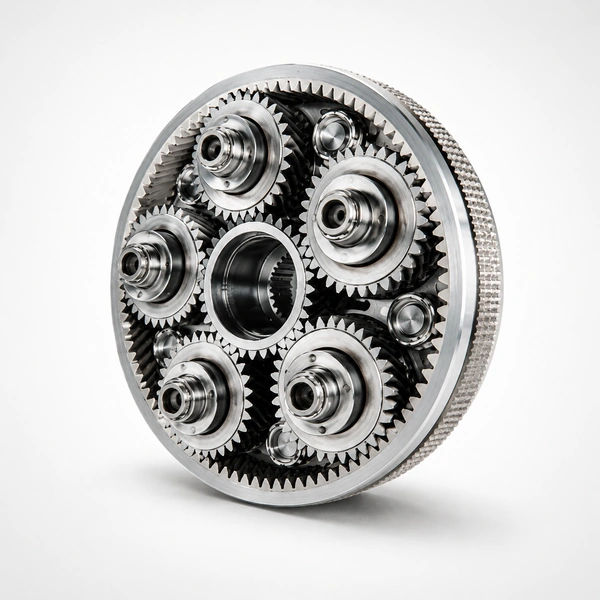
planetary gear

Planetary Gears

Compact · high torque density · servo, EV

plastic gear POM nylon office automation

Plastic Gears

POM · PA66 · PPS · PEEK · self-lubricating

GET A QUOTATION · KOREA EVER-POWER

Need Plastic Gears for Office Automation?

Korea Ever-Power injection moulds and CNC machines plastic gears in POM, PA66, PA66 GF30, PPS, LCP and PEEK for all office automation drive applications — Module M0.3 to M2.5, spur and helical, minimum order 500 pieces injection moulded. Prototype CNC-machined gear samples 10–15 days. Reverse engineering from failed gear samples. OEM tooling and series production programmes for laser printer, copier, scanner and shredder manufacturers. ISO 9001:2015 quality documentation included.

Request a Quotation →

編集者: Cxm

VR Tour of Our Factory

TAGs:

ギアラック

当社は、ギアラックの大手メーカー、サプライヤー、輸出業者の一つとして、ギアラックをはじめとする様々な製品を提供しています。

詳細についてはお問い合わせください。

郵便:[email protected]

ギアラックの製造業者、サプライヤー、輸出業者

最近の投稿

jaJapanese