
Straight Bevel Gear – M3 to M12, DIN6-9, Multi-Material
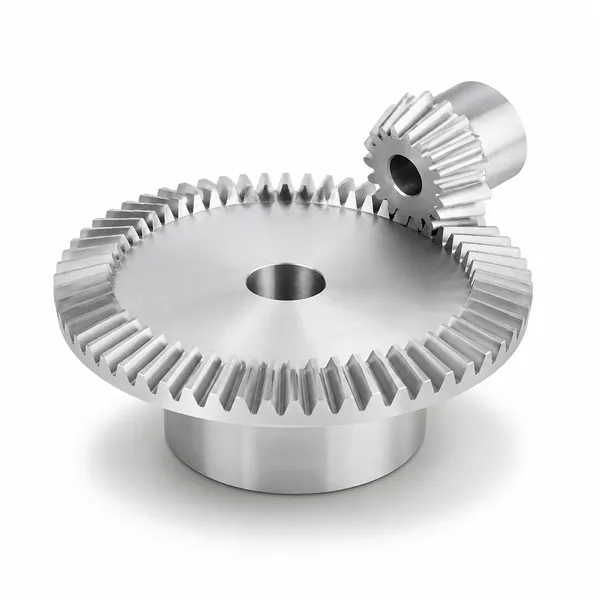
Korea Ever-Power straight bevel gears are the simplest and most widely manufactured bevel gear form. Radial tooth lines run parallel to the cone generatrix and taper proportionally from the large end to the small end, intersecting at the pitch cone apex. Available in modules M3 through M12 and beyond, precision grades DIN 6 to DIN 9, in carbon steel, alloy steel, stainless steel, brass, copper, aluminium, and POM. All manufacturing standards covered: ISO, DIN, ANSI, JIS, BS, and non-standard. Full QA documentation including UT inspection and heat treatment curves supplied.
Product Overview
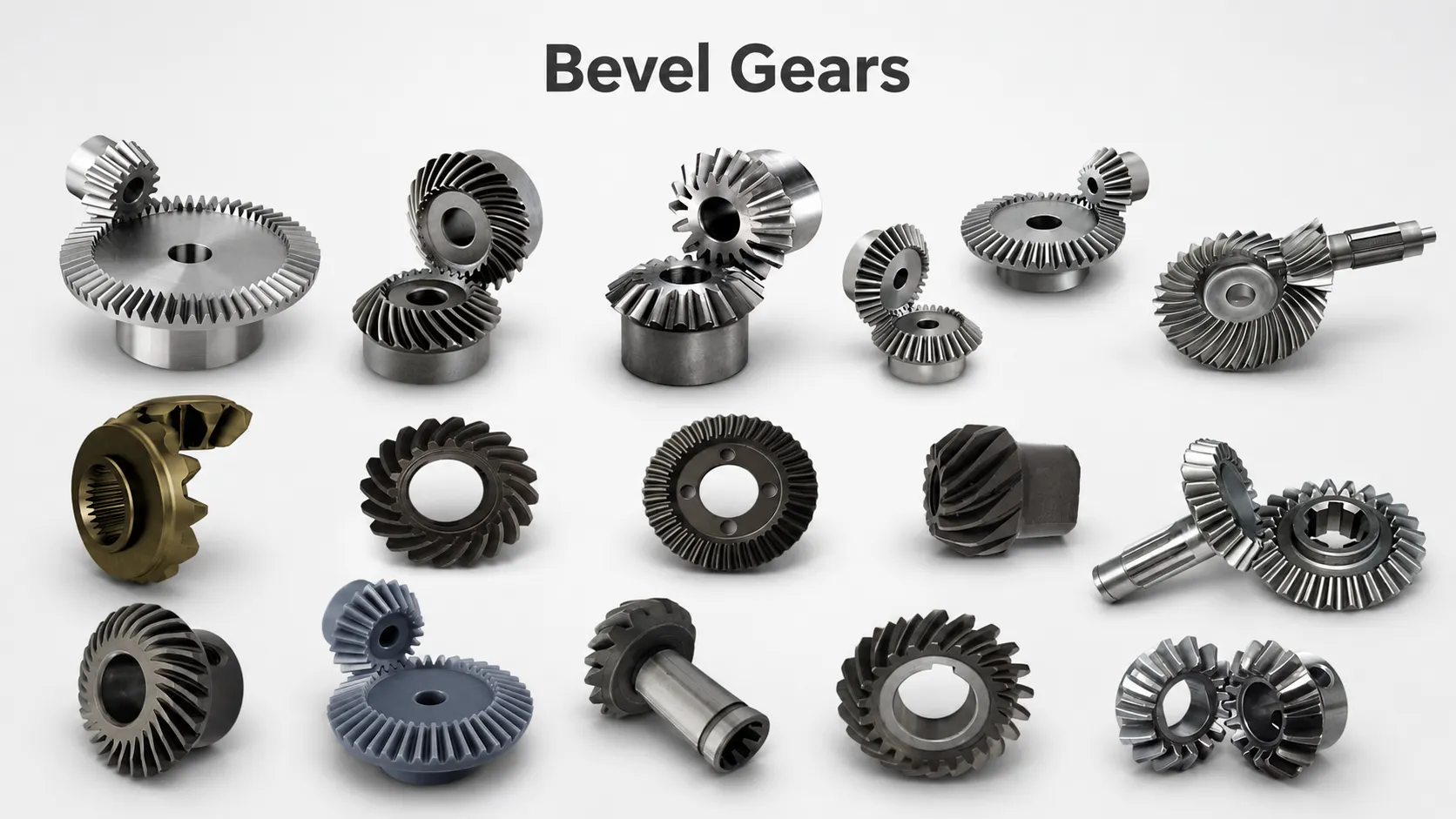
The straight bevel gear is the most fundamental form in the bevel gear family. Its defining geometric feature is simple: the tooth line on the pitch cone is a radial straight line — each tooth runs parallel to the cone generatrix from the large end toward the apex, with no curvature or twist along its length. The tooth depth and thickness taper proportionally from the large end (heel) to the small end (toe) so that they converge at the pitch cone apex, the point where the axes of the two meshing gears meet in space.
This geometric simplicity translates into manufacturing simplicity: straight bevel gears can be produced by more machine types, in a wider range of sizes, and with fewer cutting stages than spiral or hypoid bevel gears. The trade-off is that all teeth along the full face width engage simultaneously at each mesh cycle, producing instantaneous full-load contact rather than the progressive engagement of a spiral tooth. At low to moderate pitch-line speeds this characteristic is entirely acceptable — the sudden engagement does not generate significant noise or dynamic overload. It is only above roughly 3 to 5 m/s pitch-line speed that the impact excitation of straight teeth becomes a practical constraint on noise or vibration.
Korea Ever-Power produces straight bevel gears in modules M3 through M12 as standard, with larger modules available to customer drawings. Material options span carbon steel (C45), alloy steel, stainless steel (304/316), brass, copper, aluminium, and engineering plastic (POM). Manufacturing standards covered include ISO, DIN, ANSI, JIS, BS, and non-standard configurations. Precision grades from DIN 6 through DIN 9 are available, covering the full range from precision servo drives to general-purpose industrial drives. Each order ships with a full quality assurance documentation package.
The Tapered Tooth — Geometry of a Straight Bevel Gear
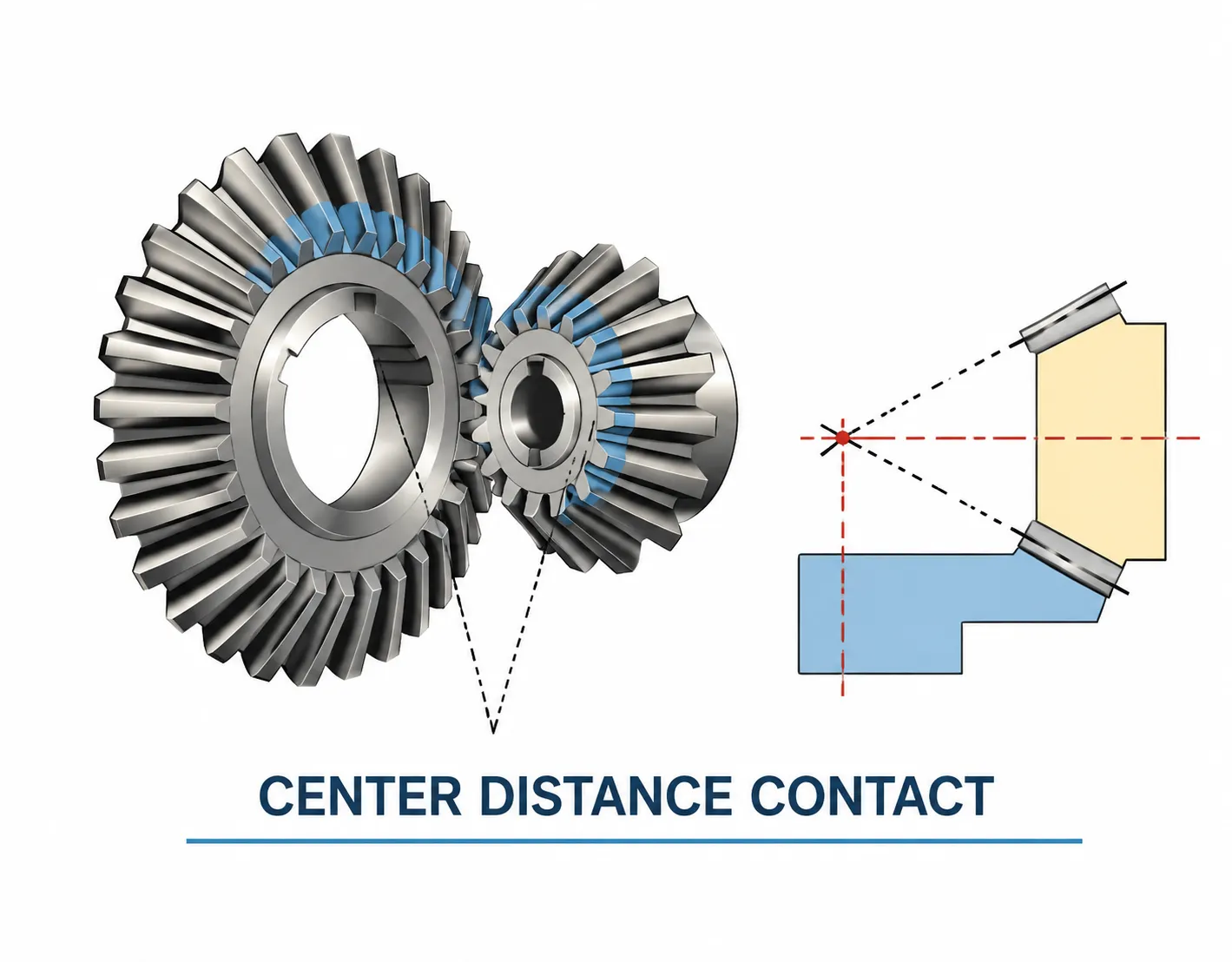
Understanding the tapered tooth geometry is the starting point for correctly mounting and loading a straight bevel gear pair. Several terms define the geometry:
Pitch cone and cone angle
The pitch surface of a bevel gear is a cone whose apex coincides with the point where the two shaft axes meet. The pitch cone angle — the angle between the gear axis and the pitch cone surface — depends on the gear ratio: for a 1:1 miter gear it is 45°; for a 3:1 ratio bevel set, the larger gear has a pitch cone angle of approximately 71.6° and the pinion approximately 18.4°. These angles are fixed by the ratio and cannot be independently adjusted.
Heel and toe
The large end of the tooth is called the heel; the small end pointing toward the apex is the toe. All tooth dimensions — depth, thickness, and height — taper proportionally from heel to toe. This proportional taper ensures that the tooth pressure angle and the involute profile at any cross-section, when viewed on the back cone (a plane perpendicular to the pitch cone at the heel), follows the same form as an equivalent cylindrical involute gear. The back cone is used as the reference for tooth strength calculations.
Contact line under load
When two straight bevel gear teeth mesh, the contact is theoretically along a straight line from toe to heel. In practice, elastic deflection of the gear body and shaft under load shifts the contact pattern. Correct mounting distance ensures the contact pattern sits near the centre of the tooth face under design load — not at the heel or toe edge. This is why tooth contact verification after installation is essential for any straight bevel gear pair carrying significant load.
Technical Specifications
The parameters below describe Korea Ever-Power's production capability for straight bevel gears. Values listed as ranges are confirmed against your drawing at the quotation stage; standard-series items in common modules are available on shorter lead times than fully custom designs.
| Parameter | Standard Range / Options |
|---|---|
| Gear Type | Straight bevel gear — radial tooth lines, tapered tooth depth |
| Module (Standard) | M3, M4, M5, M8, M12 and others; confirm with enquiry |
| Pressure Angle | 20° standard; 14.5° and other angles per drawing |
| Shaft Intersection Angle | 90° standard; other angles per customer specification |
| Precision Grade | DIN 6, DIN 7, DIN 8, DIN 9 (per DIN 3961/3962) |
| Manufacturing Standard | ISO, DIN, ANSI, JIS, BS, and non-standard; customer drawings accepted |
| Tolerance | 0.001 mm – 0.01 mm – 0.1 mm (grade-dependent) |
| Tooth Treatment | Hardened, milled, or ground (per accuracy grade and application) |
| Material — Ferrous | C45 carbon steel, alloy steel (40Cr, 42CrMo, 20CrMnTi), stainless steel (304, 316) |
| Material — Non-Ferrous | Brass, copper, aluminium alloy |
| Material — Non-Metallic | POM (acetal / Delrin), engineering resins |
| Surface Treatment | Zinc-plated, nickel-plated, passivation, black oxide, phosphating, anodisation, Dacromet, powder coating, electrophoresis |
| Finish Options | Shot/sandblast, heat treatment, annealing, tempering, polishing, anodising, zinc-plating |
| QA Documentation | Chemical composition, mechanical performance, UT, heat treatment curve, dimensional inspection |
| Packing | Plastic bag + carton, or wooden crate for large gears |
Precision Grades DIN 6 to DIN 9 — Choosing the Right Grade
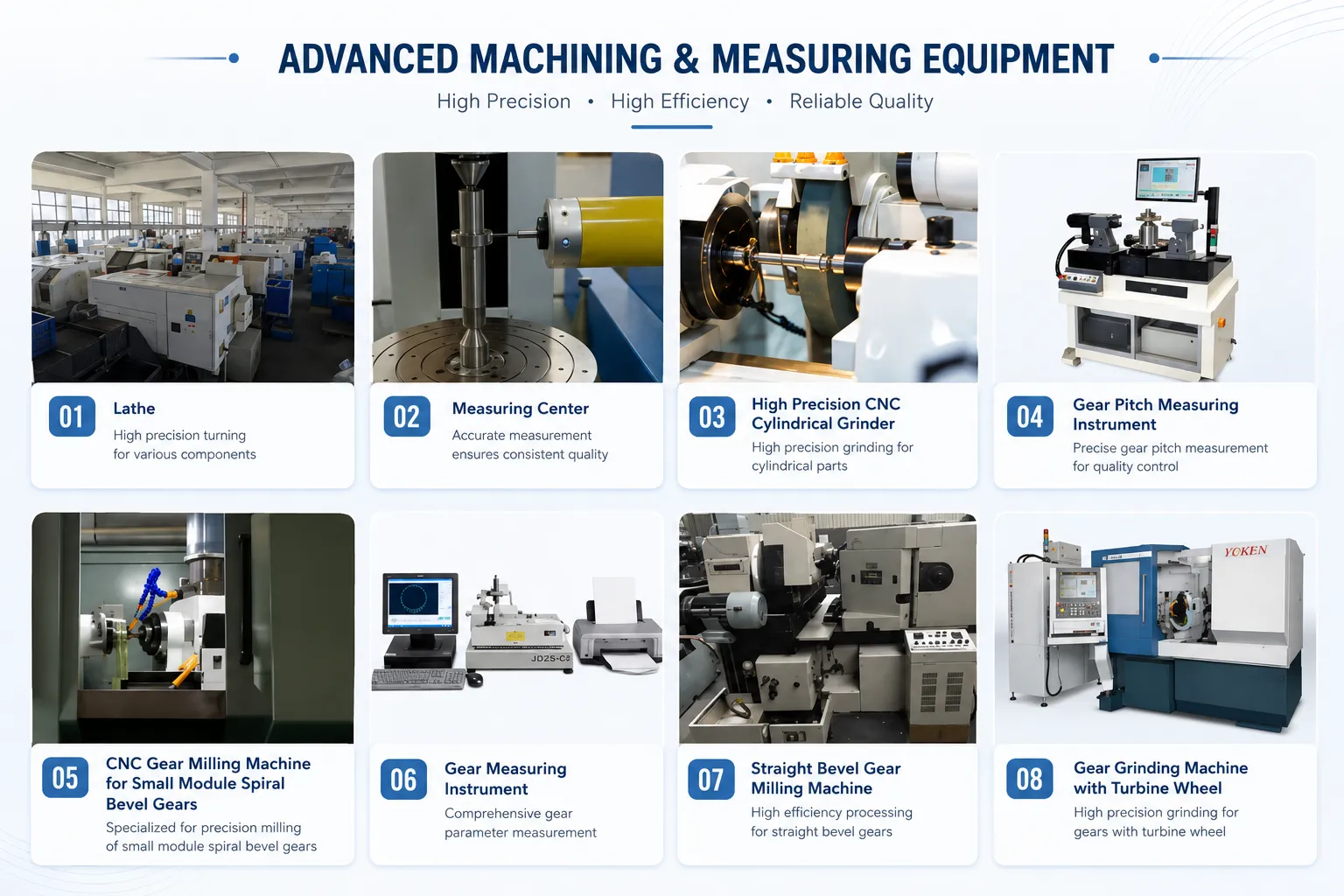
DIN gear accuracy grades define the permissible error in tooth spacing, profile form, pitch variation, and runout. For straight bevel gears, a lower DIN grade number means tighter tolerances and better accuracy. The four grades available from Korea Ever-Power cover the practical range from precision servo drives down to general-purpose power transmission:
DIN 6 — High precision
Produced by gear grinding after heat treatment. Applied in servo-driven positioning systems, precision machine tool sub-axes, and high-accuracy instrumentation. Requires close control of heat treatment distortion and post-hardening grinding on both tooth flanks. Lead time and cost are highest at this grade.
DIN 7 — Precision industrial
Ground or high-quality milled. Used in machine tool spindle drives, semi-conductor handling equipment, medical devices, and solar tracking systems where smooth, low-vibration operation is required but absolute precision instrument accuracy is not. Broadly equivalent to AGMA Quality 10–11 and JIS 3–4.
DIN 8 — Standard industrial
Milled or hardened-and-milled finish. The most common grade for general industrial machinery, conveyor drives, packaging equipment, agricultural machinery, and automotive replacement parts. Provides reliable operation with controlled noise at moderate pitch-line speeds. Equivalent to AGMA Quality 8–9.
DIN 9 — General purpose
As-cut, normalised finish. Suited to low-speed, low-load drives where cost is the primary constraint — parking system drives, hand-operated mechanisms, building services equipment, and non-critical indexing. The widest tooth spacing and profile tolerances of the four grades; not suitable above moderate pitch-line speeds or in applications with regulated noise limits.
Material Selection Guide
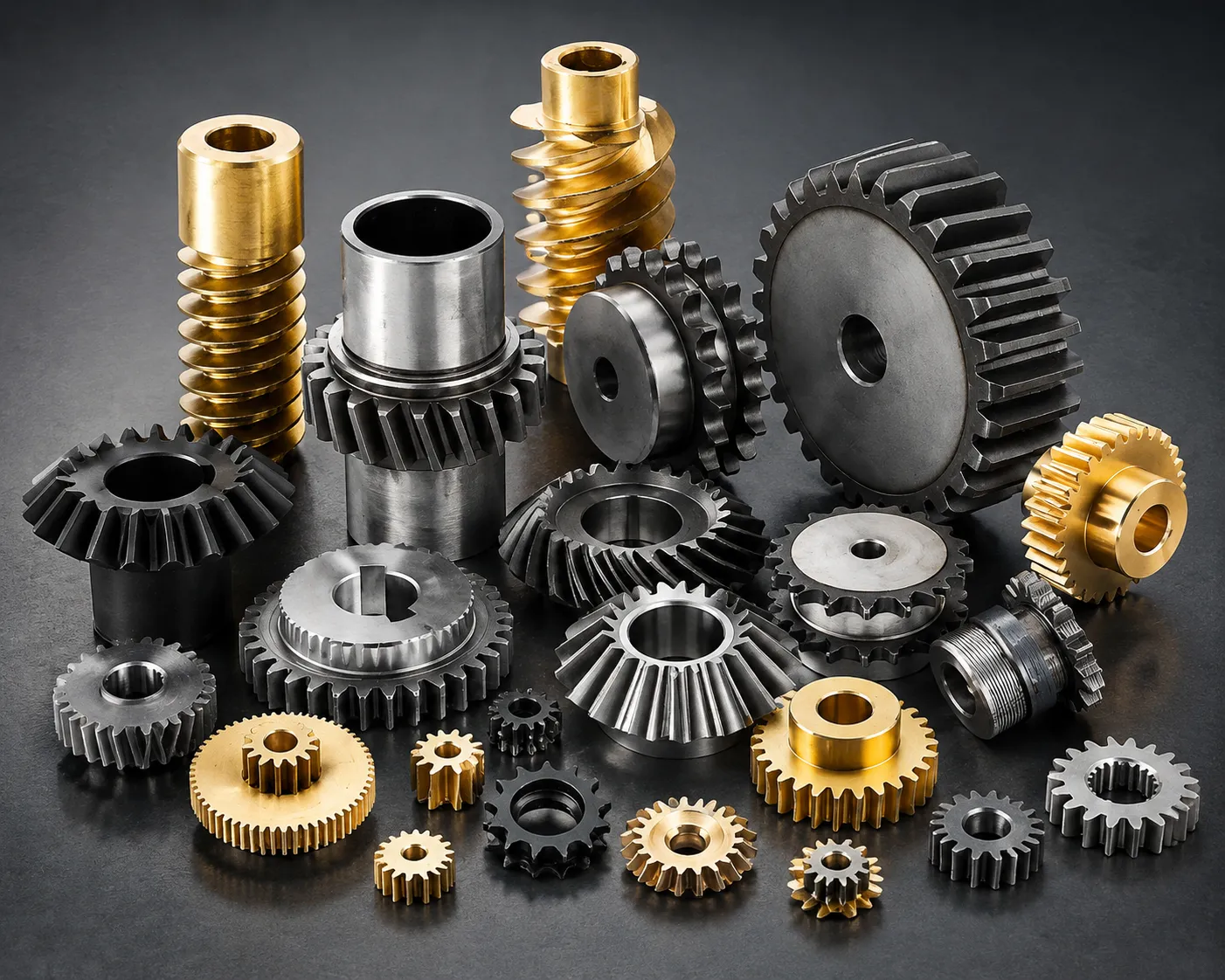
Korea Ever-Power stocks material in all the following grades for straight bevel gear production. The correct choice depends on load magnitude, operating environment, lubrication availability, and cost target. The guide below maps each material to its principal application scenarios.
The standard workhorse material for industrial straight bevel gears. Good machinability, adequate strength for moderate load applications, and widely available in the module range M3–M12. Can be normalised, through-hardened, or induction-hardened depending on load and wear requirements. Not suitable for corrosive environments without surface protection.
Best for: general industrial drives, agricultural machinery, conveyor heads, power tools at moderate speed
Higher load capacity than C45 through the combination of alloy content and heat treatment response. Case-hardening grades (20CrMnTi) produce a hard case over a tough core; through-hardening grades (42CrMo) provide uniform hardness. The correct grade depends on whether impact resistance (favour case-hardening) or dimensional stability after hardening (favour through-hardening) is the priority.
Best for: automotive differentials, heavy industrial machinery, high-load farm equipment, marine drives
For environments where corrosion resistance takes priority over maximum load capacity. 304 suits most food and pharmaceutical drives; 316 adds molybdenum for chloride resistance in wash-down and marine environments. Surface passivation after machining optimises the corrosion resistance of the passive oxide layer. Load rating is lower than alloy steel at equivalent module — upsize module or increase face width if the application requires higher torque in stainless.
Best for: food processing, medical equipment, pharmaceutical packaging, marine drives, laboratory instruments
Brass machines to tight tolerances, runs quietly against a steel driver gear, and resists corrosion in atmospheric and humid environments. Copper alloys are used in specific electrical and thermal applications where the material's conductivity is also needed. Both are non-sparking, which is relevant in hazardous atmosphere environments. Load capacity is modest — typically used for instruments, light industrial and commercial drives.
Best for: instrumentation, consumer products, light industrial drives, hazardous atmosphere environments
Aluminium bevel gears are chosen where minimum weight is a design constraint — robotics, aerospace auxiliary mechanisms, and portable machinery. The material's low density, excellent machinability, and good corrosion resistance (anodised) make it suitable for moderate loads at moderate speeds. Anodising the finished gear increases surface hardness and provides corrosion protection simultaneously.
Best for: robotics, portable machinery, lightweight automation, aerospace auxiliary drives
POM straight bevel gears run quietly, require minimal lubrication, and resist many chemical environments that would corrode metal gears. Their light weight and low friction make them suitable for consumer electronics, office equipment, light instrumentation, and small actuators. Operating temperature should stay below 80–90°C; beyond this, POM softens and dimensional stability degrades. Load capacity is low — use a larger module than an equivalent steel gear for the same torque.
Best for: office equipment, consumer electronics, light actuators, chemical-resistant drives, no-lube applications
Quality Assurance & Testing Process
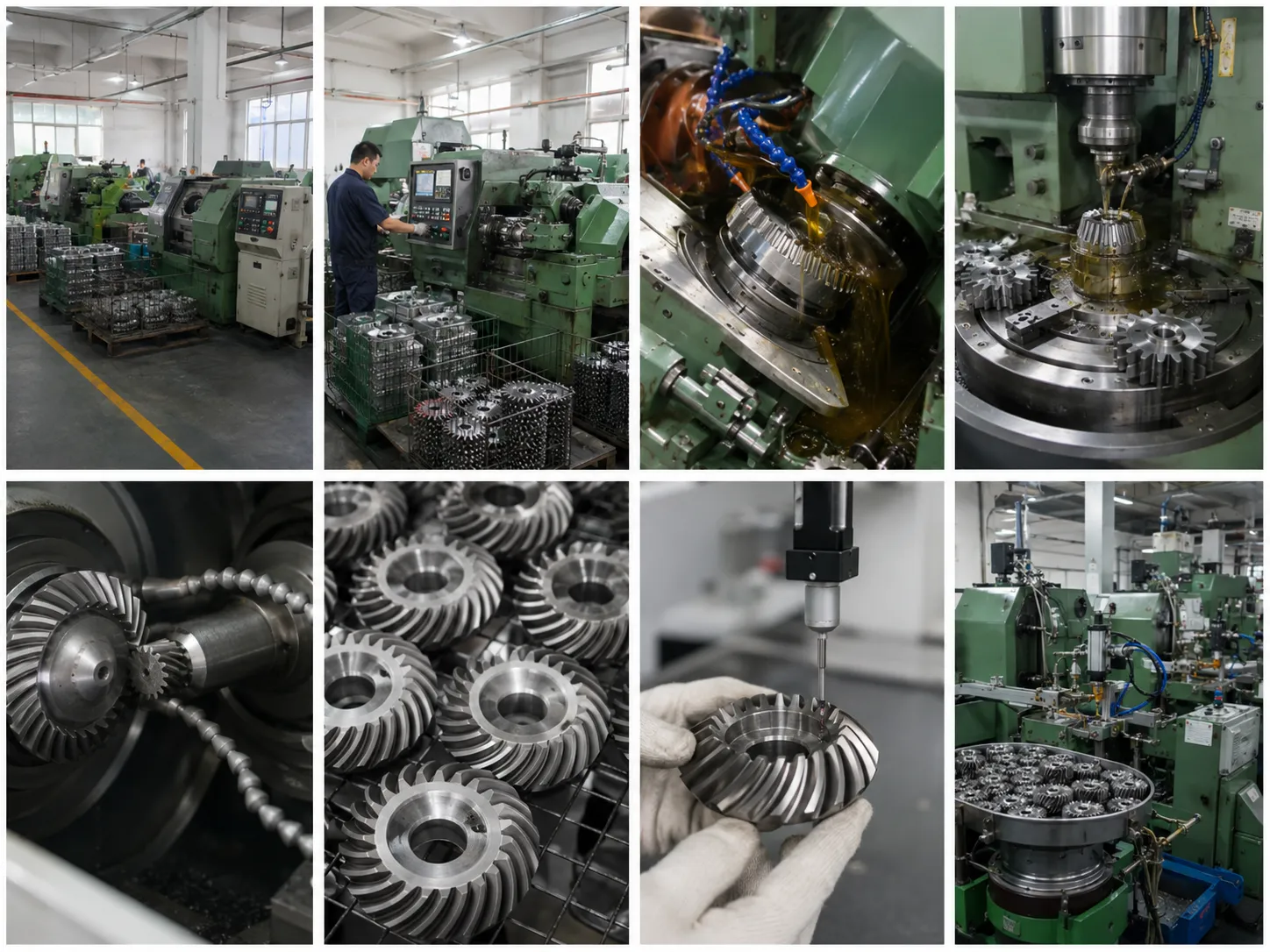
Korea Ever-Power applies a full quality assurance sequence to straight bevel gear production. The following tests and documents are issued with every order:
- Chemical composition report — mill certificate and independent spectral analysis confirming the steel grade matches the specified material before any machining begins. Raw material entering production without this verification does not proceed.
- Mechanical performance report — tensile strength, yield strength, elongation, and impact toughness test results on test pieces from the same heat as the production parts. Critical for gears intended for load-bearing applications in automotive, construction, or power generation.
- Ultrasonic test (UT) — 100% ultrasonic inspection per EN 10228-3, SA388, or the customer's specified standard. UT detects internal voids, inclusions, and laminar defects in the gear blank that surface inspection cannot find and that could cause premature fracture under load. This is standard for safety-critical and aerospace-adjacent applications.
- Heat treatment report — original time-temperature curve from the heat treatment furnace confirming that the carburising or hardening cycle reached the specified temperature, held for the correct duration, and quenched at the correct rate. Retained per batch for traceability.
- Dimensional inspection report — CMM measurement of critical tooth geometry parameters (pitch cone angle, tooth spacing error, runout, back-cone distance) and mechanical dimensions (bore, OD, face width, hub geometry) compared against the drawing tolerances. Any non-conformance is quarantined before shipment.
In addition to the above, Korea Ever-Power performs incoming inspection of raw material at goods receipt, random dimensional checks during machining (in-process inspection), and 100% visual and dimensional inspection before packing. The inspection sequence covers every stage from raw steel to finished gear. Additional non-destructive tests — magnetic particle inspection (MPI), dye-penetrant (DP), or hardness traverse on cross-section samples — can be added at the quotation stage for applications that require them.
Applications
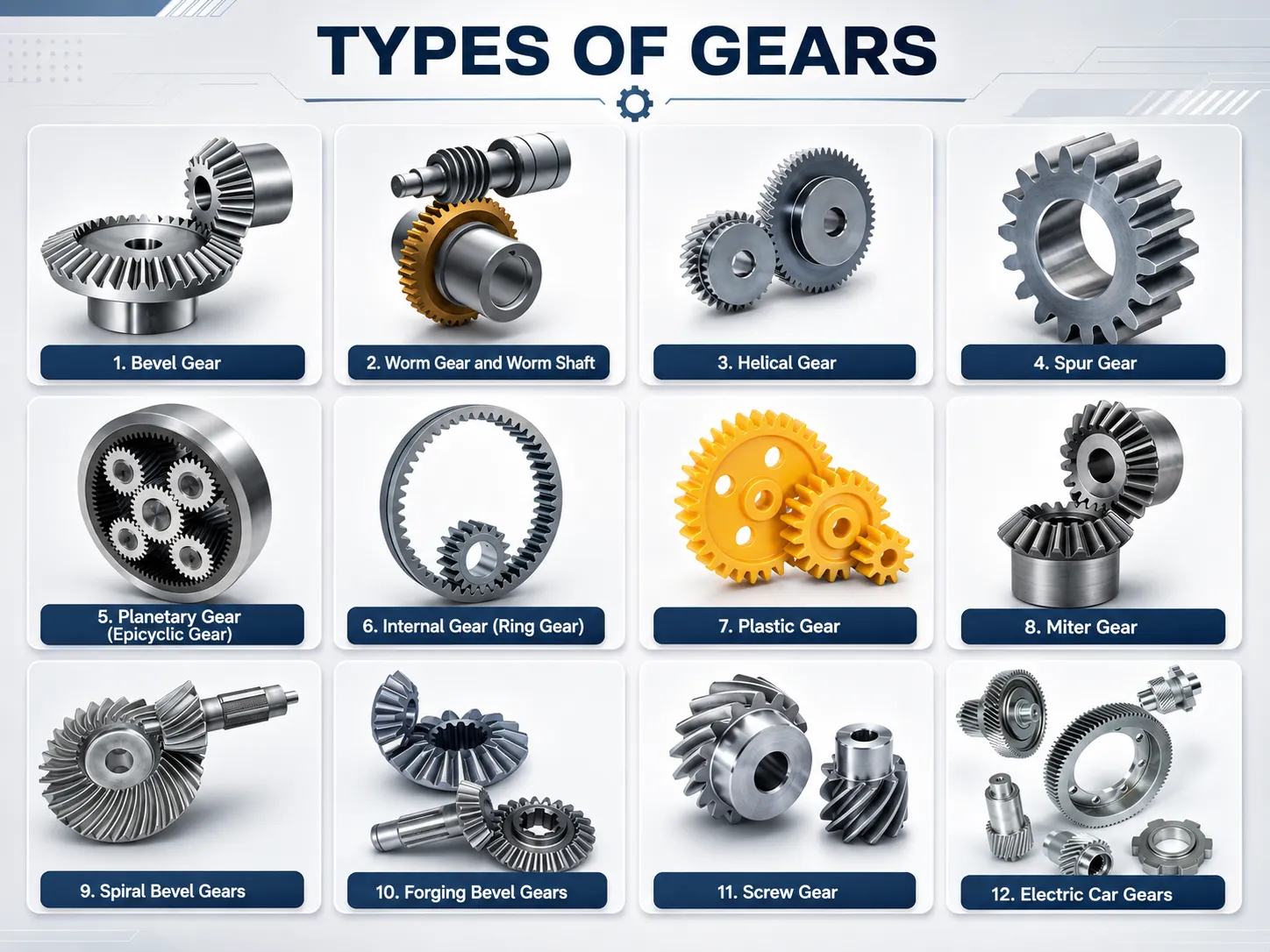
Straight bevel gears are deployed across an exceptionally broad range of industries precisely because of their manufacturing flexibility — the same gear form can be produced in a 5 mm POM gear for a consumer product and in a 500 mm alloy steel gear for a mining drive, using the same fundamental cutting principles. The following covers the primary application sectors served by Korea Ever-Power straight bevel gear production.
Automotive
Differential gears in rear-wheel drive vehicles, transfer cases in 4WD systems, and auxiliary drives for power steering and HVAC compressors. The automotive sector demands tight production tolerances, consistent heat treatment, and full material traceability — all provided as standard with Korea Ever-Power automotive-grade bevel gears.
Industrial Machinery
Machine tools, printing presses, conveyors, and packaging equipment all use straight bevel gears to transmit power at right angles between shafts that cannot be co-axially aligned. The gear's ability to handle both constant and cyclic loads makes it the reliable choice for production machinery running multiple shifts.
Power Generation
Wind turbine yaw and pitch drives, hydroelectric auxiliary systems, and solar tracker drives use straight bevel gears for low-to-moderate speed angular transmission. The UT inspection and full material certification routinely required for power generation contracts are standard documentation in Korea Ever-Power's QA package.
Agricultural Machinery
Tractors, combines, and harvesters use straight bevel gears in PTO drives, header gearboxes, and steering mechanisms. The intermittent-duty and moderate-speed nature of most agricultural drives makes the straight tooth profile entirely suitable, and the simpler manufacturing versus spiral bevel keeps replacement costs accessible for farm equipment owners.
Construction & Marine
Excavator final drives, crane slewing mechanisms, and marine propulsion angle drives rely on large-module straight bevel gears in alloy steel with full UT certification. Stainless grades serve marine auxiliary machinery in contact with seawater-contaminated environments. Physical size and load ratings in these sectors often require custom modules and non-standard gear geometries.
Automation & Semi-Conductor
Robotic wrist joints, wafer-handling robots, and automated parking systems use small-module straight bevel gears in aluminium, stainless, or POM. In semi-conductor applications, material purity and particle generation are critical — electropolished stainless or anodised aluminium versions are specified where contamination risk must be minimised.
Frequently Asked Questions
Everything on your site is made to order — does that mean I cannot get a straight bevel gear quickly?
Made-to-order production allows us to confirm your exact bore, module, and material before cutting begins, which eliminates the dimensional mismatch problems that arise when adapting a stocked part to a housing it was not designed for. For straight bevel gears in common modules (M3, M4, M5, M8) in C45 steel, our lead times are competitive with distributor stock for custom dimensions. For urgent requirements, please contact our team with the module, tooth count, bore, and material and we will confirm the fastest available schedule.
I cannot identify the module of my worn gear. What should I send you?
The best approach is to send us the worn gear itself — Korea Ever-Power specialises in reverse engineering from physical samples. If sending the gear is not practical, provide: a photograph showing the tooth profile at the large end; the outer (large-end) diameter; the tooth count; the hub diameter; the hub length; the face width; and the bore diameter. From these measurements our engineering team can calculate the module, identify the gear series, and prepare a quotation. Worn teeth tend to give a slightly low module reading from the outer diameter method, so sending the sample is the most reliable approach when the original drawing is not available.
What is the difference between milled, hardened, and ground tooth treatments?
Milled teeth are produced by the gear cutting machine and used in the as-cut condition — no further tooth finishing is performed. This is the baseline for DIN 8–9 grades and is appropriate for low-to-moderate speed, general-purpose drives. Hardened teeth are milled first and then subjected to heat treatment (carburising and quenching, or through-hardening) to increase surface hardness and wear resistance; heat treatment introduces some dimensional distortion that slightly degrades accuracy class relative to the pre-hardened state. Ground teeth are produced by gear grinding after hardening, correcting the distortion and delivering the highest accuracy class — DIN 6 or DIN 7 — at the cost of additional machining time. Choose the treatment based on the required accuracy grade and the load level: light load and low speed typically do not justify the cost of grinding; high load and higher accuracy requirements do.
Can you manufacture metric straight bevel gears to non-DIN standards such as JIS or ANSI?
Yes. Korea Ever-Power holds tooling and process documentation for ISO, DIN, ANSI, JIS, BS, and non-standard bevel gear production. Metric module gears per JIS B 1704 and inch diametral pitch gears per ANSI/AGMA 2003 are both within our production capability. If you specify the standard on your enquiry drawing, we will confirm coverage and any tool procurement requirements before order placement. For non-standard configurations — custom module, non-standard intersection angle, or unconventional tooth geometry — submit the drawing and we will review feasibility within two working days.
Is ultrasonic testing mandatory or optional on Korea Ever-Power straight bevel gears?
Ultrasonic testing (UT) per EN 10228-3 or SA388 is a selectable option at the quotation stage, not a mandatory addition to every order. It is specified for safety-critical, pressure-vessel-adjacent, and aerospace-adjacent applications where internal material defects must be ruled out before the part enters service. For standard industrial drives — conveyors, agricultural equipment, general machinery — the chemical composition report and hardness verification are typically sufficient. If your application requires UT, specify the applicable standard (EN 10228-3 for wrought steels, SA388 for large forgings, or your customer-specified standard) in the enquiry and we will include it in the QA scope and adjust the lead time accordingly.
Can straight bevel gears be customised with special surface coatings or treatments?
Yes. Korea Ever-Power offers a comprehensive range of surface finishes beyond the standard phosphating and black oxide: zinc plating (hot-dip or electroplated), nickel plating, Dacromet, Geomet, powder coating, electrophoresis, and anodisation for aluminium gears. Each surface treatment adds a small dimensional layer that must be accounted for in the bore and mating face tolerances — specify any surface treatment at the drawing stage so we can apply the appropriate pre-treatment dimensions. For gears in food-contact or pharmaceutical environments, passivation after machining is the correct treatment for stainless steel, and we can provide the passivation certificate with the shipment. Contact our team with your surface treatment requirement and we will confirm suitability and lead time.
Customer Reviews
"We replaced straight bevel gears in a series of agricultural PTO drives. The original gears were C45, DIN 8, and Ever-Power matched the specification exactly. Full material certification and the heat treatment report gave us the documentation we needed for our ISO quality audit. Gears have been running through two harvest seasons with no wear issues."
Park Seung-cheol | Procurement Manager, Jeonbuk Agricultural Machinery · Q2 2025
"We specified M5 alloy steel straight bevel gears with UT inspection for a wind turbine yaw auxiliary drive. The EN 10228-3 UT report came with the delivery as promised. Dimensional report matched our incoming inspection on every piece. This level of documentation is what our turbine OEM customer requires and Ever-Power delivered it without issue."
Kwon Tae-min | Component Engineer, Gyeongnam Wind Energy Systems · Q4 2025
"We sent Ever-Power a worn straight bevel gear from a packaging machine with no drawing — just the sample and the outer diameter and tooth count measured by our maintenance team. They identified the module correctly, produced the replacement in 316L stainless for our food-contact application, and included a passivation certificate. Fitted first time with no housing modification."
Kim Yu-ri | Engineering Supervisor, Chungnam Food Packaging Lines · Q1 2026
"We designed a parking system using M3 aluminium straight bevel gears to keep weight down. Ever-Power produced anodised aluminium versions to our DIN 7 drawing. The anodising dimensional allowance was factored in correctly — the finished bore was within 0.01 mm of the nominal. Noise level in the installed system is within our product specification."
Lee Chang-ho | Mechanical Designer, Seoul Smart Parking Systems · Q3 2025
"We produce semi-conductor wafer handlers that use miniature POM straight bevel gears in a cleanroom environment. Ever-Power produced M3 POM gears to our ANSI drawing with the bore and hub geometry we needed. Particle generation in testing was below our cleanroom threshold. The gears have been running in the handler for eight months without measurable wear."
Choi Byeong-hun | Automation Engineer, Suwon Semi-Conductor Equipment Co. · Q2 2025
Request a Quotation for Straight Bevel Gears
Send us your drawing, worn sample, or key dimensions — module, tooth count, bore, material, and required standard. If you cannot identify your gear, send us the sample directly. Our engineering team responds within two working days with a feasibility review and price.
Additional information
| Editor |
|---|
Related products
-
Spiral Miter Gears – 35° Spiral Angle, 1:1 High-Speed Drive
-
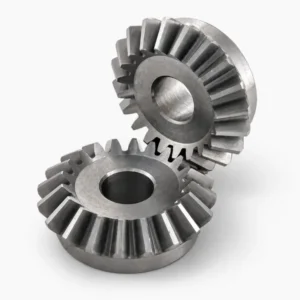
90 Degree Bevel Gears – Right-Angle Drive, All Materials
-
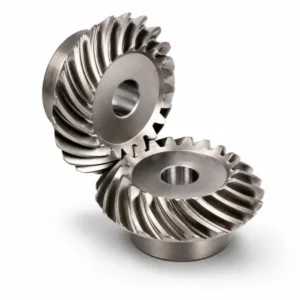
Spiral Bevel Gear – Localized Contact, Min 5 Teeth, M3-M12
-
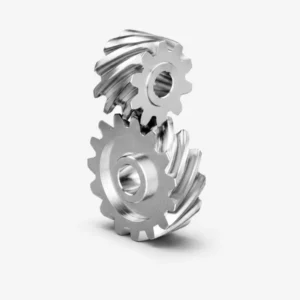
Helical Bevel Gear – Tangential Tooth, Low Noise Bevel Drive
-
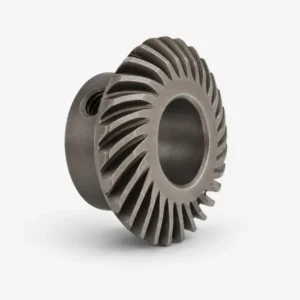
Metal Bevel Gear – M0.15 to M2.0, 11 Alloys, AGMA 13
-
Automotive Bevel Gear – M0.15 to M2.2, AGMA 13 / DIN 5
-
Bevel Gears European Standard – DIN Type A & B, 1:1 to 1:4
-
Industrial Bevel Gears – M3 to M20, Up to 1200mm Diameter
 English
  Italian
  Korean
  French
  Japanese