
Helical Bevel Gear – Tangential Tooth, Low Noise Bevel Drive
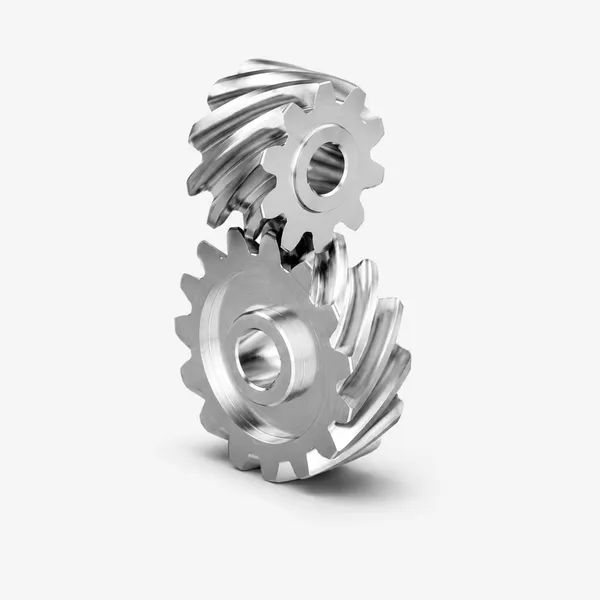
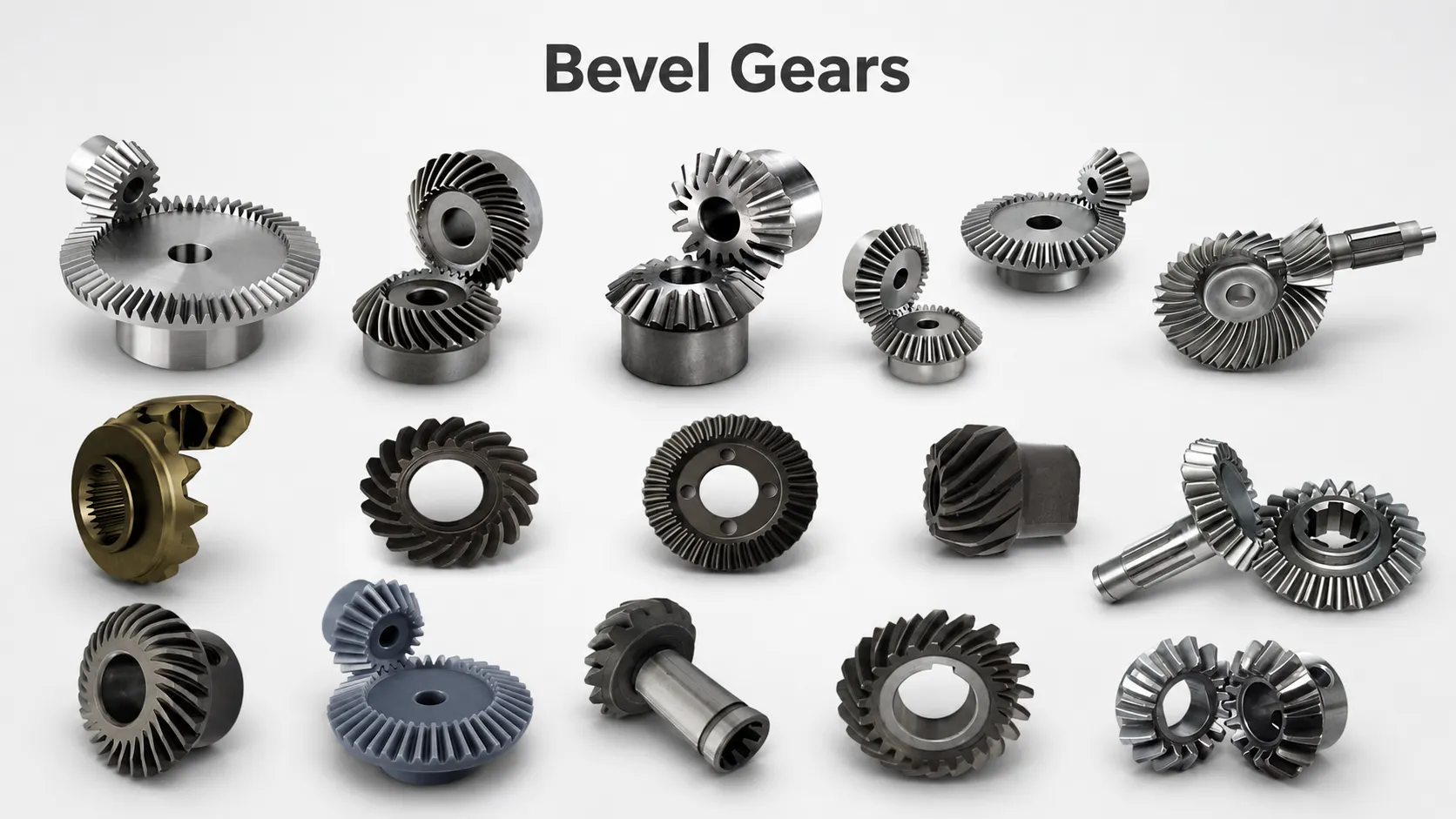
Korea Ever-Power helical bevel gears feature tooth lines that are tangent to a concentric circle on the pitch cone development — also called tangential bevel gears. The oblique tooth angle increases the contact ratio beyond a straight bevel gear, reducing impact load and noise during high-speed operation while allowing a smaller tooth count for a given transmission ratio. Available in modules M3 through M12 and beyond, in carbon steel, alloy steel, stainless steel, brass, copper, aluminium, and POM. Multi-standard coverage: ISO, DIN, ANSI, JIS, BS. Full QA documentation with every order.
Product Overview
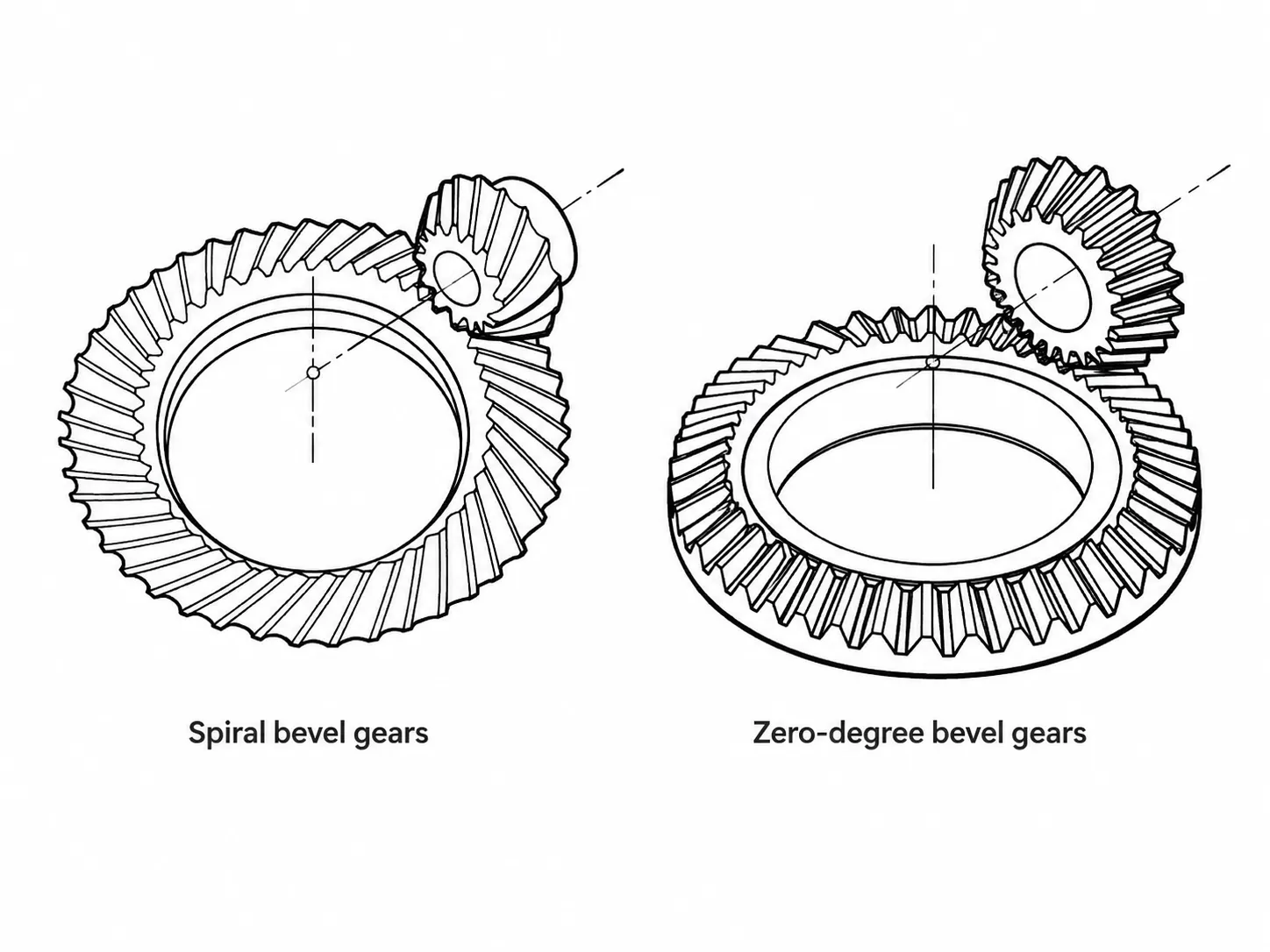
The helical bevel gear — also referred to as a tangential bevel gear — is defined by its tooth line geometry on the pitch cone development. When the pitch cone surface is unrolled into a flat plane, the tooth lines of a helical bevel gear are tangent to a circle concentric with the pitch cone axis, rather than running straight through the cone apex as in a straight bevel gear. This tangential orientation means the tooth has an oblique angle that increases progressively from the small end to the large end of the face, creating a form of helical engagement across the tooth width.
This geometry gives the helical bevel gear a higher contact ratio than a straight bevel gear pair of equivalent module and tooth count. Multiple tooth pairs share the load at any instant, reducing the impact spike at each tooth mesh cycle. The result is smoother rotation, lower noise during high-speed operation, and the ability to achieve a given transmission ratio with fewer teeth on each gear — producing a more compact gearset than a straight bevel pair at the same ratio. The bull gear and pinion of a helical bevel gear pair carry equal and opposite helix angles, which balances the axial thrust components across the pair.
It is worth noting where helical bevel gears sit relative to other bevel gear types in the technology hierarchy. They represent a step above straight bevel gears in noise and load-sharing performance, but are produced by a more complex cutting process than spiral bevel gears and do not achieve the same efficiency of mass production. As spiral bevel gear cutting machines became widely available in the second half of the twentieth century, spiral bevel gears gradually displaced helical bevel gears in most new high-volume designs. Helical bevel gears today are produced primarily for replacement of existing machinery, for specific applications where their tooth geometry offers an advantage, and for designs where a customer drawing calls for this tooth form explicitly. Korea Ever-Power produces helical bevel gears to customer drawings and samples across the full module range M3 to M12 and beyond.
Tooth Geometry — What Makes a Helical Bevel Gear Different
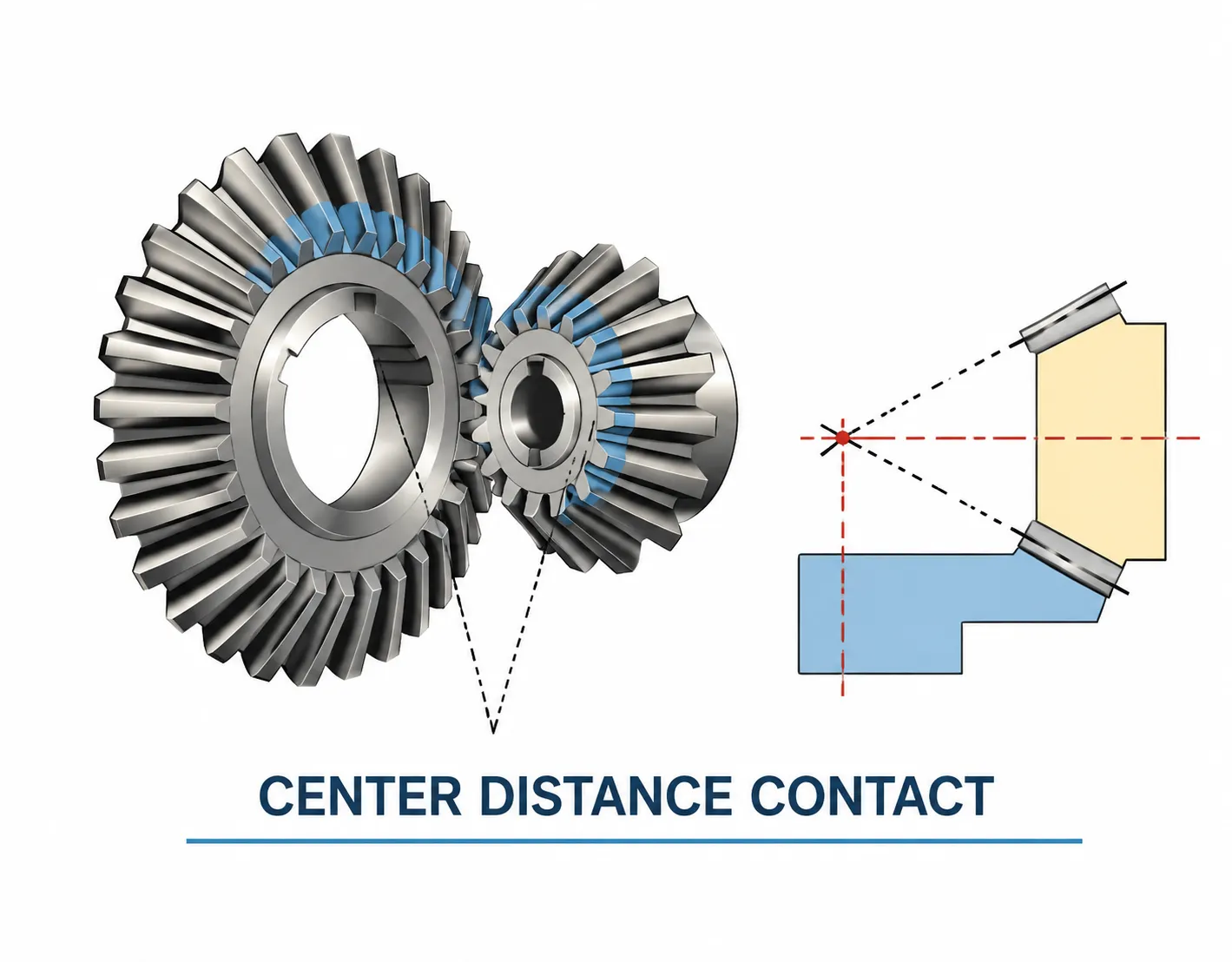
To understand the geometry of a helical bevel gear, it helps to compare it directly with the two other bevel gear forms that bracket it in the design space — the straight bevel gear below and the spiral bevel gear above.
Straight bevel gear — tooth line through apex
The tooth line on the pitch cone development passes directly through the pitch cone apex. All teeth along the face width engage simultaneously at each mesh cycle, producing instantaneous full-load contact. Contact ratio is at its lowest among the three forms.
Helical bevel gear — tooth line tangent to concentric circle
The tooth line on the pitch cone development is tangent to a circle concentric with the pitch cone axis — it does not pass through the apex. This oblique orientation creates an angle between the tooth direction and the cone generatrix, similar in effect to the helix angle on a cylindrical helical gear. Contact begins at one end of the tooth and progresses across the face, raising the contact ratio and allowing smoother load transfer than a straight bevel gear.
Spiral bevel gear — curved tooth along spiral line
The tooth follows a curved spiral across the cone face, with a defined mean spiral angle. This form achieves the highest contact ratio, lowest noise, and greatest load capacity among the three. It is also produced most efficiently by dedicated bevel gear cutting machines at high volume, which is why it has displaced the helical bevel form in most modern high-volume applications.
The helical bevel gear occupies the middle position: quieter and better-loaded than a straight bevel gear, but without the curved tooth of a spiral bevel gear. The equal and opposite helix angles on bull gear and pinion mean that the axial thrust forces on the two shafts largely cancel — each gear's thrust pushes in the opposite direction along its own axis, so the net reaction load on the common gearbox housing is lower than with a spiral bevel pair where the thrust directions do not cancel in this way.
Helical Bevel vs. Straight Bevel vs. Spiral Bevel
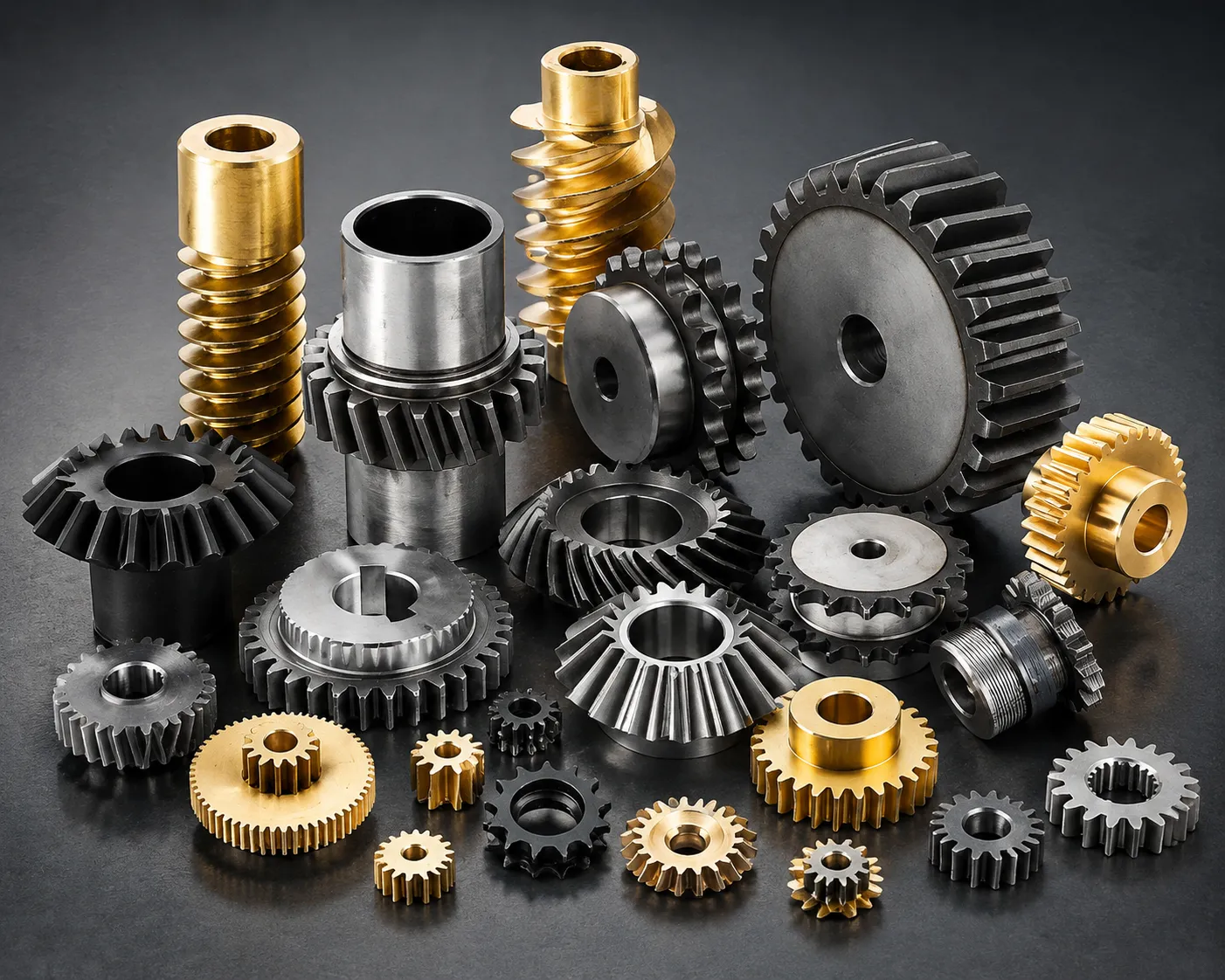
The three main bevel gear forms represent a progressive scale of tooth geometry complexity, manufacturing difficulty, and operating performance. Understanding where the helical form sits helps engineers decide when to specify it and when a straight or spiral alternative is more practical.
| Criterion | Straight Bevel Gear | Helical Bevel Gear | Spiral Bevel Gear |
|---|---|---|---|
| Tooth line on pitch cone | Straight, passes through apex | Straight, tangent to concentric circle — does not pass through apex | Curved spiral across face |
| Contact ratio | Lowest | Higher than straight | Highest |
| Noise at speed | Higher | Reduced vs straight | Lowest |
| Load sharing | Single tooth pair | Partial multi-tooth sharing | Full multi-tooth sharing |
| Axial thrust | None | Equal & opposite on two shafts — partially self-cancelling | Present; direction depends on hand of spiral |
| Min teeth for ratio | Higher minimum tooth count | Reduced minimum tooth count | Lowest minimum tooth count |
| Manufacturing | Simplest | More complex than straight; lower production rate than spiral | Most complex; highest mass-production rate with dedicated machines |
| When to choose | Low speed, simple drives, cost priority | Replacement of existing helical bevel; specific design requiring this tooth form | High speed, high torque, noise-sensitive, new designs |
For new designs where there is no legacy constraint, the spiral bevel gear is the standard recommendation at all but the lowest speeds. The helical bevel form is principally relevant for replacement parts in existing machinery where the original designer specified helical bevel geometry, and for specific applications where the partially self-cancelling axial thrust of equal-and-opposite helix angles is an advantage over a spiral bevel pair.
Technical Specifications
Korea Ever-Power produces helical bevel gears to customer drawings and samples. The parameters below describe the general production capability; all specific values are confirmed at the quotation stage against your drawing or application data.
| Parameter | Standard Range / Options |
|---|---|
| Gear Type | Helical bevel gear (tangential bevel gear) — oblique tooth line tangent to concentric circle on pitch cone development |
| Module (Standard) | M3, M4, M5, M8, M12; other modules per customer drawing |
| Helix Angle | Equal and opposite on bull gear and pinion; per customer drawing or calculated from application data |
| Pressure Angle | 20° standard; other angles per drawing |
| Shaft Intersection Angle | 90° standard; other angles per drawing |
| Precision Grade | DIN 6, DIN 7, DIN 8, DIN 9 |
| Manufacturing Standard | ISO, DIN, ANSI, JIS, BS, non-standard; customer drawings accepted |
| Tolerance | 0.001 mm – 0.01 mm – 0.1 mm (grade-dependent) |
| Tooth Treatment | Hardened, milled, or ground (per accuracy grade and application) |
| Material — Ferrous | C45 carbon steel, alloy steel (40Cr, 42CrMo, 20CrMnTi), stainless steel (304, 316) |
| Material — Non-Ferrous | Brass, copper, aluminium alloy |
| Material — Non-Metallic | POM (acetal), engineering resins |
| Surface Treatment | Zinc-plated, nickel-plated, passivation, black oxide, phosphating, anodisation, Dacromet, powder coating, electrophoresis |
| Finish | Shot/sandblast, heat treatment, annealing, tempering, polishing, anodising, zinc-plating |
| QA Documentation | Chemical composition report, mechanical performance report, UT report, heat treatment curve, dimensional inspection report |
| Packing | Plastic bag + carton, or wooden crate for large gears |
Advantages and Design Considerations
Performance advantages over straight bevel gears
- Higher contact ratio — the tangential tooth orientation increases the overlap between successive tooth pairs, so load is shared more smoothly at each mesh cycle. This is the same principle as the advantage of a helical cylindrical gear over a spur gear: the oblique contact line means teeth enter and leave mesh progressively rather than all at once.
- Reduced impact load — because contact is not instantaneous across the full face width, the dynamic force spike at each tooth engagement is lower. This extends tooth fatigue life and reduces bearing loads compared with a straight bevel pair transmitting the same torque.
- Lower noise during high-speed operation — the gradual engagement eliminates the high-frequency impact excitation that produces audible gear noise in straight bevel pairs above moderate pitch-line speeds.
- Smaller tooth count possible — the higher contact ratio allows a smaller number of teeth on each gear for a given transmission ratio, producing a more compact gearset. This is relevant when the gear body outer diameter must fit within a constrained housing envelope.
- Partially self-cancelling axial thrust — the equal-and-opposite helix angles on bull gear and pinion mean the axial thrust forces on the two shafts act in directions that partially counteract each other in the housing. This reduces the net reaction load on the gearbox casing relative to a spiral bevel pair.
Design considerations
- Lower mass-production efficiency than spiral bevel gears — helical bevel gears cannot be produced at the throughput rates achievable with modern Gleason or Klingelnberg spiral bevel cutting machines. For new high-volume designs, spiral bevel gears are the economically preferred choice. Helical bevel gears are the correct specification when replacing existing helical bevel gears in machinery already in service.
- Axial thrust still present — unlike straight bevel gears, which generate no axial thrust, helical bevel gears do produce axial loads on both shafts. Bearings must be designed to carry these loads even though the self-cancelling effect reduces the net housing reaction. Angular contact bearings or taper roller bearings are the standard choice.
- Helix angle must match on both gears — the bull gear and pinion must carry exactly equal and opposite helix angles. Replacing only one gear of a helical bevel pair with a different helix angle will produce incorrect tooth contact and rapid damage to both gears. Always replace the pair together when one gear is worn.
Applications
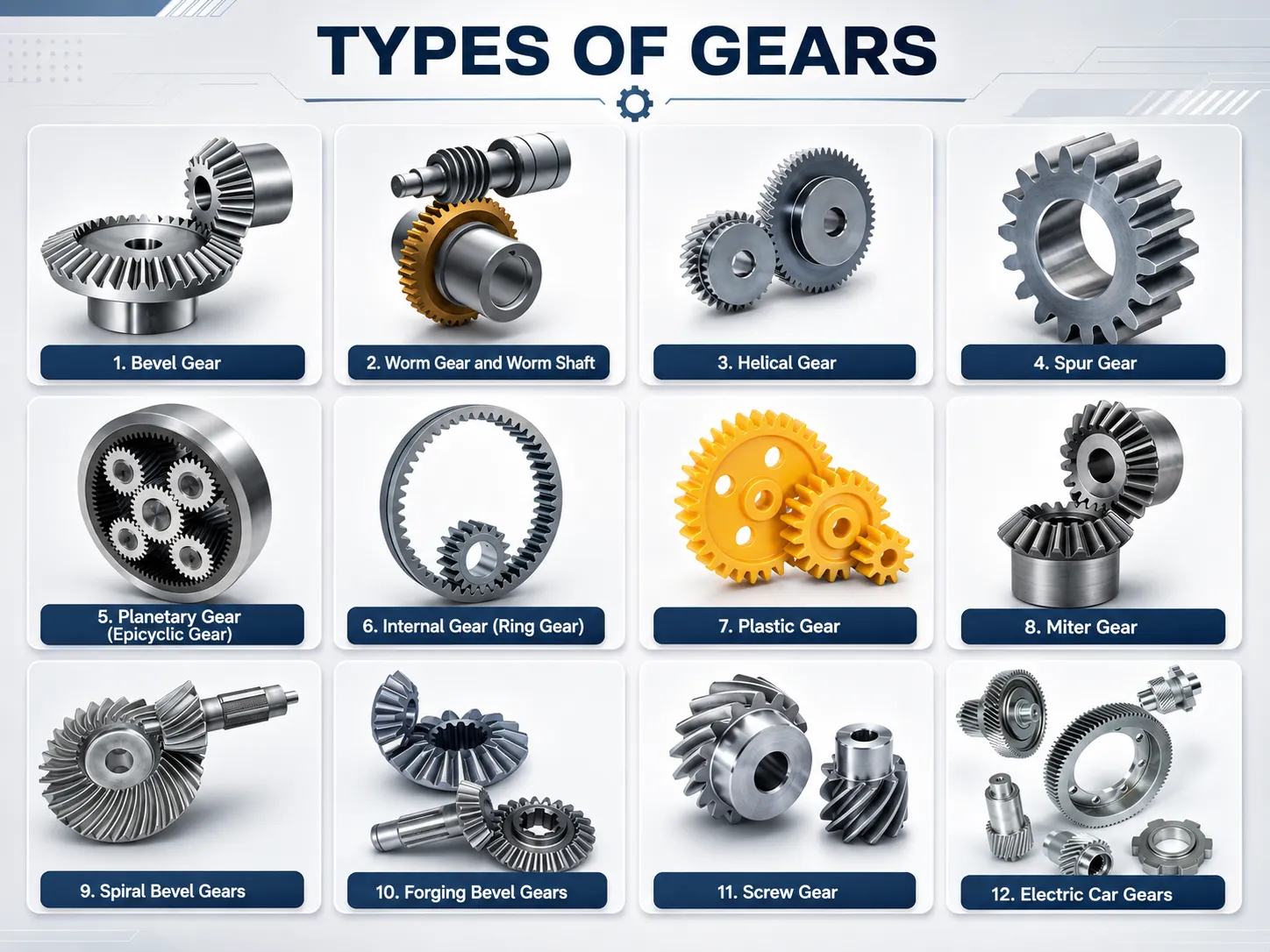
Helical bevel gears are specified in two broad contexts: replacement of existing helical bevel gear sets in equipment already in service, and new applications where the tooth form's particular combination of characteristics — higher contact ratio than straight bevel, partially self-cancelling thrust, compact tooth count — is specifically advantageous. Korea Ever-Power produces for both.
General Industrial Machinery
Industrial gearboxes, machine tools, conveyors, and packaging lines that were originally designed with helical bevel gears require like-for-like replacement to maintain housing fit and bearing load design. Korea Ever-Power's reverse engineering capability from worn samples ensures dimensional accuracy without requiring an original drawing.
Machine Tools
Certain milling machine heads and lathe bevel gear trains were designed with helical bevel gears to achieve quieter operation than straight bevel at spindle speeds, while using tooling available before modern spiral bevel cutting machines became widespread. Replacement gears for these machines require exact helix angle matching.
Automatic Controlling Machines
Servo-driven positioning axes and cam-controlled automatic machines use bevel gears to change drive direction inside compact housings. Helical bevel gears in these applications reduce noise and vibration transmission to the sensing and measurement elements of the machine.
Semi-Conductor Equipment
Wafer handling robots and precision positioning stages in semi-conductor fabrication use small-module helical bevel gears in stainless steel or aluminium where low particle generation and smooth motion are required. The higher contact ratio of the helical form reduces vibration transmission to the wafer carrier.
High-Speed Rail & Aviation
Older high-speed rail bogies and aviation auxiliary drives were designed with helical bevel gear stages before spiral bevel cutting became universal. Replacement gears for in-service fleets require the original tooth form and helix angle, full material traceability, and non-destructive testing documentation matching the original specification.
Solar & Medical Equipment
Solar tracker angle drives and medical imaging gantry systems require smooth, quiet angular transmission. Helical bevel gears in stainless or anodised aluminium suit both applications — the stainless grade for medical sterilisation environments and the aluminium grade for lightweight solar tracker yoke structures where torque is modest but weight is a design constraint.
Quality Assurance & Testing
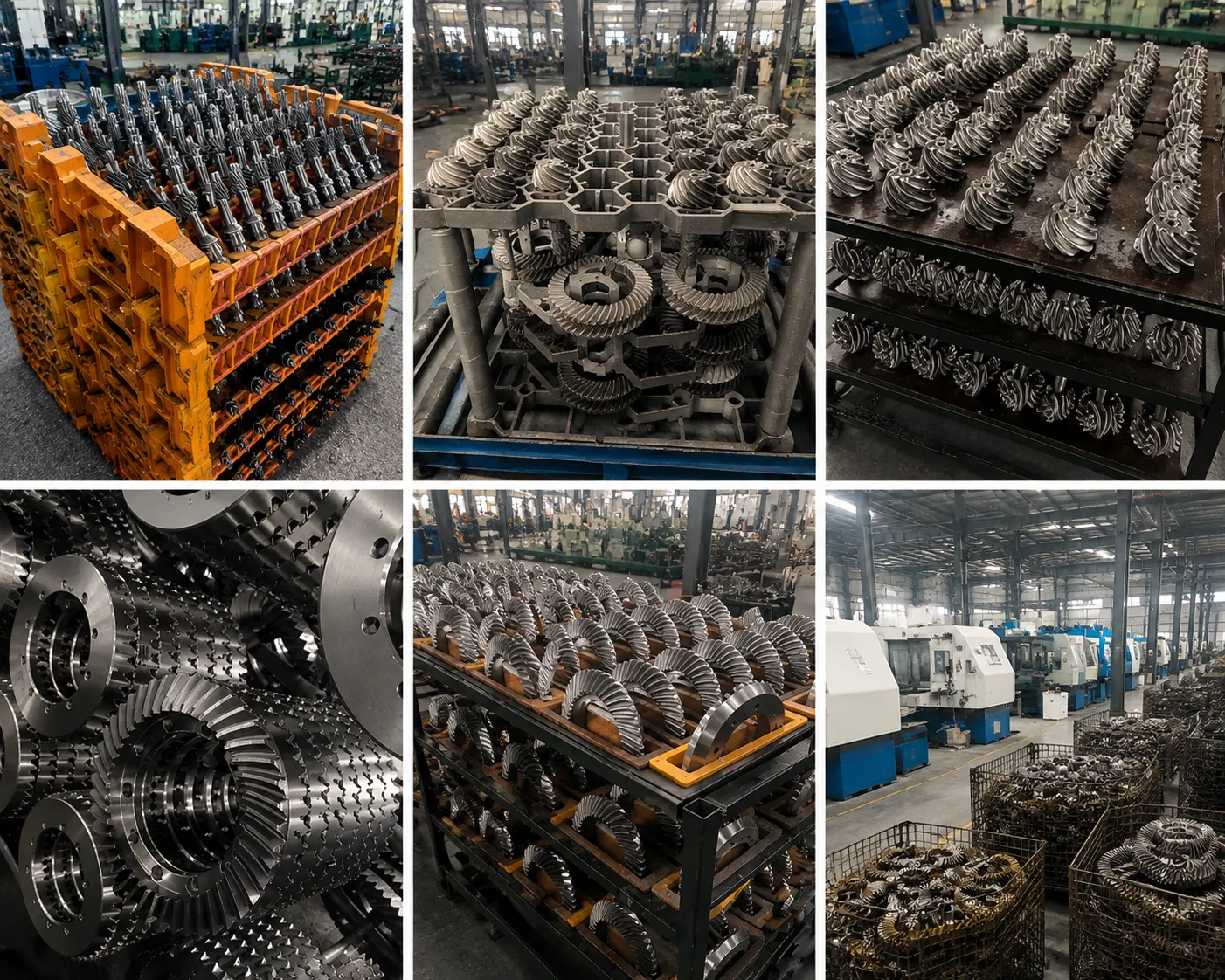
Korea Ever-Power applies its full quality assurance sequence to helical bevel gear production. For high-speed rail, aviation, and safety-critical industrial applications where the gear must carry full traceability from raw material to finished part, the complete QA documentation package covers:
- Chemical composition report — mill certificate and independent spectral analysis confirming the steel grade before machining. Mandatory for aerospace-adjacent and rail applications.
- Mechanical performance report — tensile strength, yield strength, elongation, and impact toughness from test pieces in the same heat as production parts.
- Ultrasonic test (UT) — 100% UT per EN 10228-3, SA388, or the customer-specified standard, detecting internal voids and inclusions before the gear blank enters the cutting stage.
- Heat treatment report — time-temperature curve from the furnace run, retained per batch, confirming the hardening cycle met specification.
- Dimensional inspection report — CMM measurement of tooth spacing error, pitch cone angle, runout, helix angle, bore, and OD compared against the drawing tolerances before packing.
Raw material inspection at goods receipt, in-process random dimensional checks during machining, and 100% final inspection before packing are standard at every production stage. Additional tests — magnetic particle inspection (MPI), dye-penetrant (DP), or metallographic cross-section for case depth verification — are added at the quotation stage for applications that specify them.
Frequently Asked Questions
What exactly is a helical bevel gear and how does it differ from a spiral bevel gear?
The term "helical bevel gear" is used in two ways in the industry, and it is important to be precise. In the strict technical sense — which Korea Ever-Power follows in this product specification — a helical bevel gear is a tangential bevel gear whose tooth lines, when the pitch cone is developed into a flat plane, are tangent to a concentric circle rather than passing through the apex. The tooth is straight in the lengthwise direction but oblique to the cone generatrix. A spiral bevel gear has curved teeth — the tooth line follows a spiral (usually an arc of a circle) across the cone face. The helical form has a lower contact ratio than the spiral form and is produced by a different cutting process. Both improve on straight bevel gears, but spiral bevel gears are now the dominant form in new designs due to their superior performance and availability of dedicated high-efficiency cutting machines.
Why does the helical bevel gear pair need equal and opposite helix angles?
For the teeth of the bull gear and pinion to mesh correctly — with the tooth faces making proper conjugate contact along a line rather than at a point — the helix angle on one gear must be exactly equal in magnitude and opposite in sign to the helix angle on the other. If both gears carried the same sign helix angle, the tooth lines would not align along the contact zone and the gears would bind rather than mesh smoothly. The equal-and-opposite arrangement also produces the partially self-cancelling axial thrust described in the product overview: each gear pushes its shaft axially in the direction opposite to the other, so the net force on the gearbox housing casing is reduced.
Can you manufacture a helical bevel gear to replace one in existing machinery without a drawing?
Yes. Korea Ever-Power specialises in reverse engineering from worn or damaged samples. For a helical bevel gear replacement, send us the gear (or both gears of the pair if possible), along with your measurements of the outer diameter, tooth count, bore diameter, face width, and hub dimensions. Our engineering team measures the helix angle directly from the sample, calculates the module, and prepares a full production drawing for your approval before cutting begins. This approach is more reliable than estimating the helix angle from dimensions alone, because even small errors in helix angle produce poor tooth contact in the mated pair.
Which materials are available for helical bevel gears used in food processing or pharmaceutical environments?
316 stainless steel is the standard choice for food-contact and pharmaceutical applications — its molybdenum content provides chloride corrosion resistance suitable for wash-down environments and sterilisation cycles. For gears that must operate in contact with potable water or direct food contact, passivation after machining maximises the passive oxide layer and we supply a passivation certificate with the delivery. POM (acetal) is an alternative for lightly loaded, non-lubricated applications in food-contact environments where metallic contamination from wear particles must be avoided — POM does not corrode and produces no metallic wear debris.
Is UT inspection standard or optional on helical bevel gear orders?
Ultrasonic testing is a selectable option that can be added to any order at the quotation stage. It is routinely specified for safety-critical, rail, and aerospace-adjacent applications. For standard industrial replacement gears in machinery operating well within rated loads, the chemical composition report, mechanical performance report, and dimensional inspection report are typically sufficient. If your application or procurement specification requires UT, state the applicable standard (EN 10228-3, SA388, or your own standard) in the enquiry and we will include it in the QA scope and confirm the effect on lead time.
Should I specify a helical bevel gear for a new design, or use a spiral bevel gear instead?
For most new designs, a spiral bevel gear is the practical recommendation — it offers higher contact ratio, lower noise, greater load capacity, and is produced more efficiently by modern gear cutting machines. Helical bevel gears are the correct specification when you are replacing gears in existing machinery that was designed with helical bevel geometry, or when a specific design constraint — such as the partially self-cancelling axial thrust or the precise tooth geometry required by the mating housing — makes this tooth form necessary. If you are designing from scratch and have no legacy constraint, the spiral bevel gear will typically deliver better performance, better supply chain availability, and lower cost at volume. Contact our engineering team with your application data and we will advise on the most suitable bevel gear type for your specific requirements.
Customer Reviews
"We maintain a fleet of older milling machines that use helical bevel gear sets in the bevel drive head. The original German manufacturer no longer supplies replacement parts. Ever-Power reverse-engineered the helix angle from our worn sample, produced the replacement pair in 42CrMo through-hardened, and delivered with a full dimensional report. Both gears fitted the original housing without adjustment."
Jo Hyun-taek | Machine Shop Manager, Gyeonggi Precision Machining Centre · Q2 2025
"We source helical bevel gears in M4 316L stainless for a pharmaceutical tablet press angle drive. Passivation certificate is required by our GMP audit. Ever-Power included the passivation cert with the delivery documentation. Three annual replacement cycles completed with consistent dimensional conformance on each delivery."
Park Mi-ra | Engineering Buyer, Chungbuk Pharma Equipment · Q1 2026
"We needed helical bevel replacement gears for a solar tracker yaw drive originally designed with this tooth form. The aluminium alloy versions from Ever-Power matched the helix angle from our sample, came with anodising as specified, and the pair runs as quietly as the original set. Weight was critical for the tracker arm structure and the aluminium saved 2.1 kg per drive unit versus steel."
Shin Dong-min | Mechanical Engineer, Jeollanam Solar Systems · Q3 2025
"Our semi-conductor handling equipment uses M3 helical bevel gears in an aluminium alloy. The helix angle in the original design was not documented — we sent Ever-Power both gears of the pair and they measured the helix angle directly. The replacement pair was produced to the measured geometry and runs without any detectable vibration step change in the wafer position sensor output."
Lim Jae-young | Equipment Engineer, Suwon Semi-Conductor Systems · Q4 2025
"We specified helical bevel gears for an automatic packaging machine angle drive. The original machine supplier had discontinued support. Ever-Power produced from our worn sample in C45 DIN 8 grade, with the UT report required by our plant maintenance standard. Lead time was three weeks — faster than the alternatives we evaluated — and the documentation package satisfied our maintenance audit requirements."
Kim Bo-ram | Maintenance Engineer, Daejeon Food Packaging Plant · Q2 2026
Request a Quotation for Helical Bevel Gears
Send us your drawing, worn sample gear, or key dimensions — module, tooth count, helix angle, bore, and material. If the helix angle is unknown, send both gears of the pair and we will measure it directly. Our engineering team returns a feasibility review and price within two working days.
Additional information
| Editor |
|---|
Related products
-
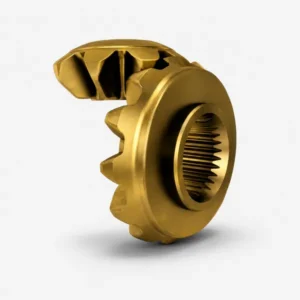
Differential Gears – Open, LSD, Torque Vectoring, Forged PM
-
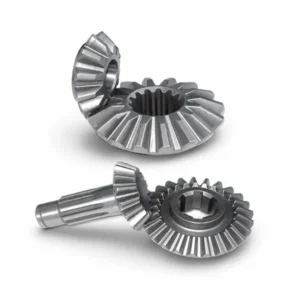
Forging Bevel Gears – Hot & Cold Forged, Custom OEM Supply
-
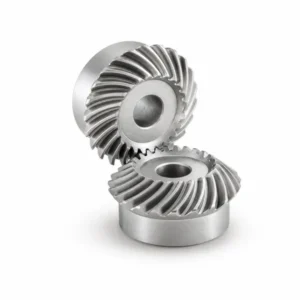
Spiral Miter Gears – 35° Spiral Angle, 1:1 High-Speed Drive
-
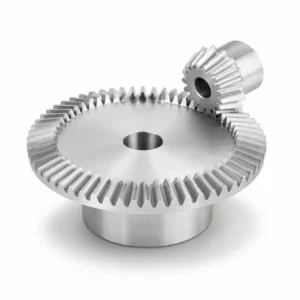
Straight Bevel Gear – M3 to M12, DIN6-9, Multi-Material
-
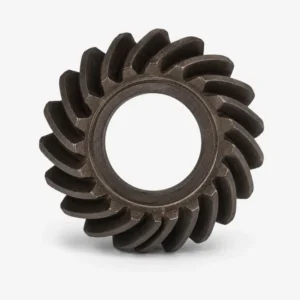
Precision Bevel Gear – M0.15 to M2.2, AGMA 13, 5 HT Routes
-
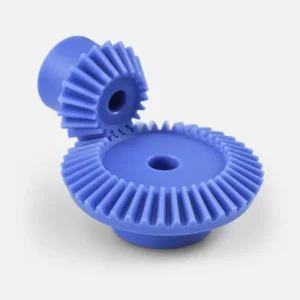
Plastic Bevel Gears – POM PA PEEK, -40°C to 80°C, 1:1–5:1
-
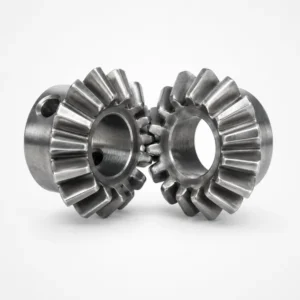
Zero-Degree Spiral Bevel Gear – Zerol, No Axial Thrust
-
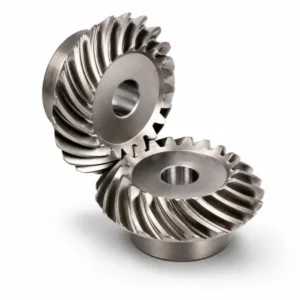
Spiral Bevel Gear – Localized Contact, Min 5 Teeth, M3-M12
 English
  Italian
  Korean
  French
  Japanese