GEAR APPLICATION GUIDE · PLANETARY GEAR · P01

Planetary Gears for Servo Motor Drives:
Backlash, Stiffness and Accuracy

Servo motor planetary gearboxes are the standard output stage for CNC machine tool axes, industrial robots, semiconductor handling systems, and precision positioning equipment. Unlike industrial planetary gearboxes where load capacity is the primary driver, servo planetary design is dominated by backlash, torsional stiffness, inertia matching, and transmission error — the parameters that determine positioning accuracy and dynamic response of the servo axis.

20CrMnTi · 17-4 PH · DIN 4–6 · ISO 6336
Backlash <3 arcmin · Ratio 3:1–100:1
CNC · Robot · Semiconductor · AGV

BACKLASH (PRECISION)

<3 arcmin

Standard precision class servo planetary gearbox backlash. Ultra-precision: <1 arcmin. Standard class: <8 arcmin. Backlash is the lost motion between motor reversal and output shaft reversal

TORSIONAL STIFFNESS

3–30 Nm/arcmin

Output shaft angular deflection per unit torque under load — the spring stiffness of the gearbox. Higher stiffness = faster servo settling time and better dynamic contour tracking

INERTIA RATIO

1:1 – 10:1

Recommended load-to-motor inertia ratio for good servo dynamic response. Planetary gearbox reduces reflected load inertia by ratio² — the primary reason planetary gearboxes are used on servo axes

EFFICIENCY

94 – 97%

Per stage. Much higher than worm gearboxes (30–90%) — critical for servo applications where regenerative braking energy must be recovered through the gearbox back to the drive

Why Servo Motor Axes Use Planetary Gearboxes

The servo motor and planetary gearbox are engineering partners: the servo motor delivers high torque at high speed with precise angular position feedback, and the planetary gearbox multiplies that torque while reducing speed to match the driven axis — all within the tightest backlash and stiffness envelope of any gear type at equivalent ratio and output torque. No other gear type simultaneously achieves the combination of compact dimensions, coaxial (in-line) input/output shaft arrangement, high efficiency, and low backlash that servo planetary gearboxes provide.

Korea Ever-Power’s planetary gears for servo motor drives are manufactured in 20CrMnTi case carburized alloy steel for standard and precision servo gearboxes, and in 17-4 PH precipitation-hardened stainless steel for servo applications in corrosive or food-processing environments. All servo planetary gears are ground to DIN 4–6 quality class after case hardening, with tooth spacing error below 3–6 μm depending on accuracy class, to achieve the transmission error target that determines the positioning accuracy of the servo axis.
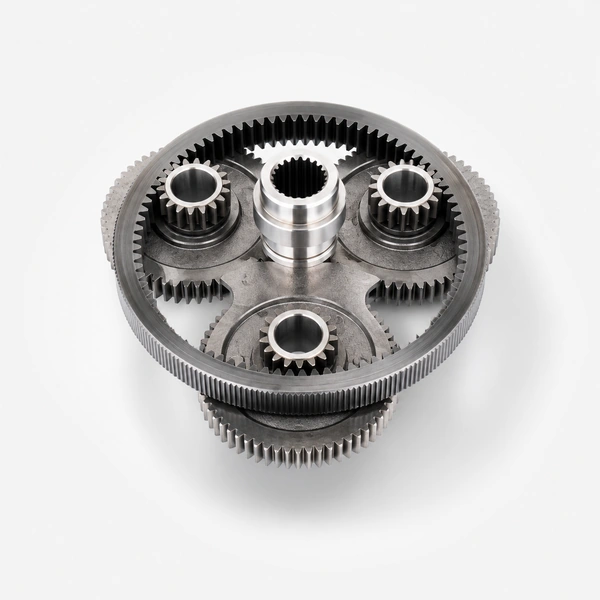
Internal Planetary Gear Kit

The reflected inertia reduction is the reason servo engineers specify planetary gearboxes even when the torque multiplication alone does not justify the cost: a planetary gearbox with ratio i reduces the load inertia seen at the motor shaft by a factor of i². An axis with a 10:1 planetary gearbox between the motor and a 100 kg·cm² load inertia presents only 100/10² = 1 kg·cm² reflected inertia to the motor — enabling a dramatically smaller servo motor with faster dynamic response. Without the gearbox, the same 100 kg·cm² load would require a much larger motor with correspondingly lower servo bandwidth. See also: planetary gearboxes selection guide for servo and robotics applications.

Backlash — the Positioning Limit

Backlash is the angular play at the output shaft when the motor reverses direction while the output shaft is held fixed — caused by the clearance between gear tooth flanks. In a servo axis, backlash is the dead band: the motor must rotate by the backlash angle before the output shaft begins to move after a direction reversal. For a 3 arcmin backlash gearbox on a servo axis with a 100 mm output moment arm: positional uncertainty at the tool point = 100 × tan(3/60 × π/180) = 0.087 mm — just under 0.1 mm. Standard servo gearboxes (<8 arcmin) are adequate for positioning above 0.2 mm; precision (<3 arcmin) for 0.05–0.2 mm; ultra-precision (<1 arcmin) for below 0.05 mm.

Torsional Stiffness — Dynamic Accuracy

After the backlash dead band is taken up, the gearbox acts as a torsional spring between the motor and load. Low stiffness means the output shaft lags the motor angle under dynamic torque variation — the lag appears as contour error in CNC machining. Stiffness of a servo planetary gearbox is dominated by the tooth contact stiffness of the sun-planet-ring gear mesh — higher tooth accuracy, wider face width, and more planet gears all increase stiffness. Korea Ever-Power servo planetary gears are ground to DIN 4 with tight tooth profile tolerances to maximise the mesh stiffness contributing to gearbox torsional rigidity.

Inertia Matching — Motor Sizing

Reflected load inertia Jload,motor = Jload ÷ i². A 5:1 planetary gearbox reduces reflected load inertia by 25×; a 10:1 by 100×. The servo drive amplifier is most stable and achieves the highest servo bandwidth when the inertia ratio Jload,motor ÷ Jmotor is between 1:1 and 10:1. Without a gearbox, many CNC and robot axis applications have inertia ratios of 100:1 or greater — the servo system cannot be tuned for adequate bandwidth without oscillation. The planetary gearbox corrects this by compressing the reflected load inertia into the acceptable range.

Servo Planetary Accuracy Classes and Gear Specifications
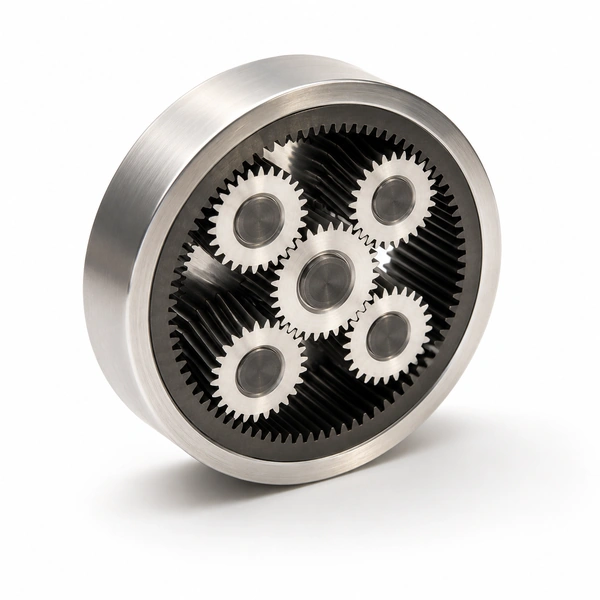
precision planetary gear servo motor drive Korea Ever-Power
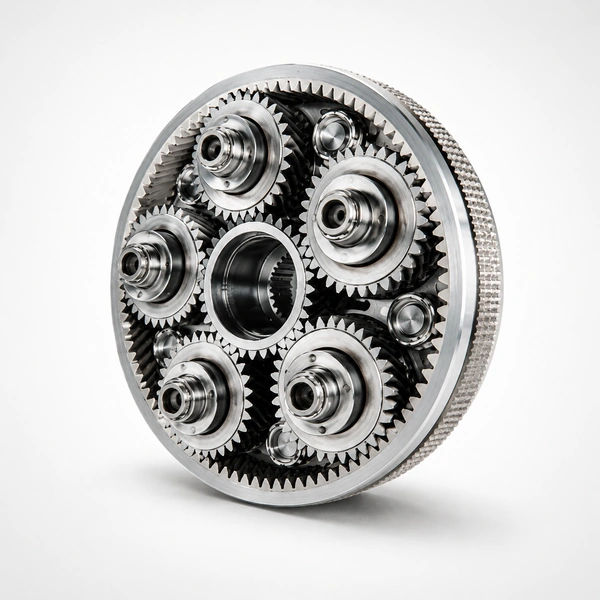
Korea Ever-Power precision planetary gear set for servo motor drive applications — 20CrMnTi alloy steel sun gear, planet gears, and ring gear, case carburized, HRC 60–62 tooth surface, ground to DIN 5 quality class. Tooth spacing error <4 μm, profile form error <3 μm. Assembled in precision housing with needle roller planet bearings, backlash measured and confirmed <3 arcmin before shipment. Torsional stiffness test result included with each gearbox. Available as standalone planetary gear sets or complete gearbox units with standard servo motor interface flanges (IEC B5, NEMA 23/34, Neugart, Apex, and other OEM interfaces on request).
ACCURACY CLASS BACKLASH TOOTH QUALITY TRANSMISSION ERROR TYPICAL SERVO APPLICATION
Standard <8 arcmin DIN 6–7 <30 μrad General servo positioning, AGV drives, conveyor indexing, rotary tables with accuracy >0.5 mm
Precision <3 arcmin DIN 5–6 <15 μrad CNC machine tool linear axes, industrial robot joint drives, laser cutting gantry, pick-and-place
Ultra-Precision <1 arcmin DIN 4–5 <5 μrad CNC grinding and EDM axes, semiconductor wafer handling, optical lens positioning, medical robotics
Zero Backlash (preloaded) <0.5 arcmin DIN 4 <2 μrad Telescope drives, antenna positioning, precision rotary axis without reversal dead band requirement

INERTIA MATCHING WORKED EXAMPLE — CNC MACHINE TOOL LINEAR AXIS

Given

Ball screw J = 0.8 kg·cm²; table and workpiece Jlinear = (mass × lead²) ÷ (2π)² = (60 kg × (0.01 m)²) ÷ 39.5 = 0.152 kg·cm²; total load Jload = 0.95 kg·cm². Motor Jmotor = 0.40 kg·cm² (AC servo, 1 kW). Inertia ratio without gearbox = 0.95 ÷ 0.40 = 2.4:1.

With Direct Drive

Motor speed = 3,000 RPM; ball screw at 3,000 RPM, lead 10 mm: axis speed = 3,000 × 10/1,000 = 30 m/min — acceptable. Inertia ratio 2.4:1 is within the 1:1–10:1 servo recommendation. Direct drive acceptable IF the motor produces adequate torque at 3,000 RPM.

With Heavy Workpiece (300 kg)

Jload = (300 × 0.0001) ÷ 39.5 + 0.8 = 0.76 + 0.8 = 1.56 kg·cm². Ratio = 1.56 ÷ 0.40 = 3.9:1 — within limit but borderline. If workpiece grows to 600 kg: ratio = 7.4:1 — still within 10:1. At 1,200 kg workpiece: 14.8:1 — exceeds 10:1 recommendation. Solution: 2:1 planetary gearbox reduces reflected inertia by 4× → ratio = 14.8 ÷ 4 = 3.7:1

Servo Planetary Applications by Axis Type
APP 01

CNC MACHINE
TOOL AXES

Planetary gear specification: Ratio 3:1–10:1 (linear axes), 5:1–20:1 (rotary axes/indexing tables), precision class <3 arcmin, 20CrMnTi ground DIN 5, torsional stiffness ≥ 10 Nm/arcmin for heavy-duty cutting axes. CNC machining centre linear axes (X, Y, Z) typically use direct drive or low-ratio (3:1–5:1) planetary gearboxes to maintain high rapid traverse speed while improving inertia ratio for heavy workpiece applications. CNC rotary table and tilting axis (A, B, C axes) use higher ratios (10:1–40:1) with ultra-precision backlash (<1 arcmin) because rotary positioning error directly becomes angular position error in the machined surface. Korean Ever-Power precision planetary gear sets for CNC axes are supplied with torsional stiffness test certificates and backlash measurement at 5% and 100% rated torque.

APP 02

INDUSTRIAL
ROBOT JOINTS

Planetary gear specification: Ratio 5:1–40:1 (varies by robot joint: J1 waist = high ratio for high torque; J4/J5/J6 wrist = lower ratio for high speed), ultra-precision <1 arcmin backlash, DIN 4–5, aluminium or titanium carrier for minimum weight on distal joints. Industrial 6-axis robot joint drives use planetary gearboxes as the primary speed reduction element in joints 1–3 (the arm joints carrying the full robot and workpiece weight) and as the final stage in joints 4–6 (the wrist joints requiring fast, light, accurate motion). The wrist joint planetary gears are among the smallest and lightest precision gear products Korea Ever-Power produces — M0.8–M1.5, three planets, ground to DIN 4, in 17-4 PH stainless for corrosion resistance in washdown robot cells.

APP 03

SEMICONDUCTOR
WAFER HANDLING

Planetary gear specification: Ratio 5:1–25:1, ultra-precision <1 arcmin, M0.5–M1.5, 17-4 PH or titanium for cleanliness, zero-backlash preloaded or spring-loaded planet configuration, vacuum-compatible lubrication (ionic fluid or dry MoS2). Semiconductor wafer handling robots (atmospheric and vacuum SCARA and articulated arm types) position 200–450 mm diameter silicon wafers to within ±0.05 mm repeatability at each process station. The planetary gearbox must contribute zero contamination to the clean room or process vacuum environment — standard hydrocarbon gear lubricants are incompatible with semiconductor process gases and outgas in vacuum chambers. Korea Ever-Power supplies semiconductor-rated planetary gear sets in 17-4 PH with ionic liquid lubrication and verified outgassing rate <10−6 Pa·m³/s on request.

APP 04

AGV & AMR
DRIVE WHEELS

Planetary gear specification: Ratio 10:1–30:1, standard class <8 arcmin (AGV position accuracy dominated by wheel slip and floor variation, not gearbox backlash), 20CrMnTi ground DIN 6, compact in-wheel planetary for minimum turning radius. AGV (automated guided vehicle) and AMR (autonomous mobile robot) drive wheels use servo motor-driven planetary gearboxes as the final drive — the planetary’s in-line coaxial geometry allows the servo motor to mount concentrically with the drive wheel hub, minimising the AGV body width. For warehouse AGVs carrying 500–2,000 kg payloads, the planetary gear set must handle the full vehicle weight as wheel bearing radial load combined with the drive torque — requiring careful consideration of planet bearing life under the combined radial and torque loading.

types of gears 2

Frequently Asked Questions

Q 01

How do I select the optimal gear ratio for a servo motor planetary gearbox on a CNC axis?

Servo planetary ratio selection involves balancing four criteria simultaneously: (1) Inertia matching: select ratio i such that Jload/i² is within 1–10× Jmotor. The optimal ratio for minimum motor size is i = √(Jload/Jmotor). (2) Speed: confirm motor speed at maximum axis rapid traverse is within the motor’s rated speed: nmotor = (axis speed × 60) ÷ (ball screw lead × gearbox ratio). (3) Torque: confirm gearbox output torque rating exceeds peak cutting torque × service factor (1.5–2.0 for CNC). (4) Backlash: specify the accuracy class based on axis positioning requirement — <3 arcmin for machining centre linear axes, <1 arcmin for grinding and EDM axes. In practice, the ratio is constrained by the available motor frame sizes (larger motors have higher inertia, requiring higher ratios to maintain the inertia ratio within specification) and by standard gearbox ratio steps (3, 4, 5, 7, 10, 14, 20, 25, 35, 50:1 for standard servo planetary series). Korea Ever-Power can provide inertia ratio calculations for your specific servo motor model and axis load specification.

Q 02

What causes backlash to increase over the service life of a servo planetary gearbox, and can it be restored?

Servo planetary gearbox backlash increases over service life through two mechanisms: (1) Tooth wear — the gradual reduction of tooth thickness at the pitch line contact, which increases the clearance between mating flanks. Tooth wear rate in a well-lubricated precision planetary gearbox is extremely low — a correctly specified and lubricated servo planetary gearbox should maintain its initial backlash specification within ±1 arcmin over 10,000–20,000 service hours. Accelerated wear occurs from inadequate lubrication, overloading above the rated peak torque, or abrasive contamination entering the gearbox. (2) Planet bearing wear — worn planet pin bearings allow increased radial play of the planet gears, which increases the effective backlash at the output shaft. This is the more common failure mode in high-cycle servo applications. Backlash can sometimes be partially restored by adjusting the sun gear axial position (in designs with adjustable sun gear pre-load) or by replacing the planet bearings. In most precision servo planetary gearboxes, however, full backlash restoration requires replacement of the complete planet gear and bearing set, or replacement of the gearbox unit. Korea Ever-Power supplies planet gear and bearing replacement kits for common servo planetary frame sizes.

Q 03

What motor flange interfaces does Korea Ever-Power servo planetary gearboxes support?

Korea Ever-Power supplies servo planetary gear sets and complete planetary gearbox units with the following motor interface options as standard: IEC B5 flange in frame sizes IEC 40, 56, 63, 71, 80, 90, 100, 112 (for European servo motors from Siemens, B&R, Beckhoff, Bosch Rexroth, Lenze, and others); NEMA 23, 34, 42 flange (for North American servo motors and hybrid stepper motors); and direct bore with clamping ring for round-shaft motors (Fanuc, Mitsubishi, Yaskawa, Panasonic, and other Japanese servo motor standards). Custom input flanges machined to the customer’s motor drawing are available for OEM servo drive packages with a specific motor frame that does not match any standard interface. The gearbox output can be configured as: solid output shaft (keyed or keyless); hollow bore output shaft for direct fitting over a ball screw end; flange output for direct coupling to a rotary table bearing ring; or shrink disc output for zero-play connection to the driven shaft without a key or set screw.

Explore Korea Ever-Power Gear Categories

Seven precision gear product lines for servo, CNC, robotics, industrial and automotive applications worldwide.
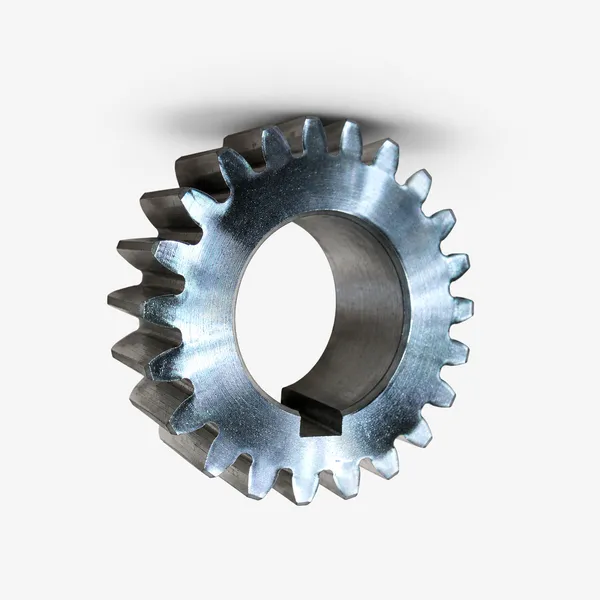
spur gear

Spur Gears

M1–M20 · C45, 20CrMnTi, 316L

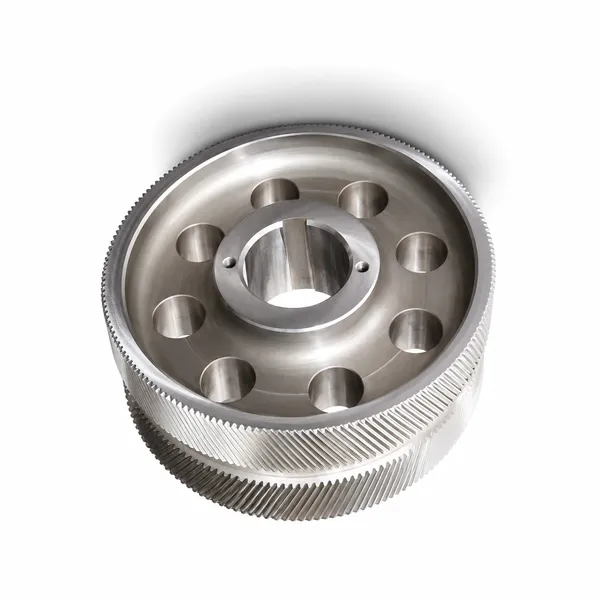
helical gear

Helical Gears

Low noise · high contact ratio · gearbox

bevel gear

Bevel Gears

Right-angle drives · straight & spiral

worm gear

Worm Gears

High ratio · self-locking · valve, hoist

ring gear

Ring Gears

Internal · planetary stage · wind, excavator

planetary gear servo

Planetary Gears

Compact · low backlash · servo, CNC, robot

plastic gear

Plastic Gears

POM · PA66 · PEEK · self-lubricating

GET A QUOTATION · KOREA EVER-POWER

Need Planetary Gears for Servo Motor Drives?

Korea Ever-Power supplies 20CrMnTi and 17-4 PH stainless planetary gear sets for all servo motor applications — standard (<8 arcmin), precision (<3 arcmin), and ultra-precision (<1 arcmin) backlash classes, DIN 4–6 quality, ratio 3:1–100:1. IEC, NEMA, and custom motor flange interfaces. CNC, robot, semiconductor, AGV, and telescope drives. Torsional stiffness and backlash certificates with every order.

Request a Quotation →

Editor: Cxm

VR Tour of Our Factory

TAGs:

gear rack

As one of leading gear rack manufacturers, suppliers and exporters of products, We offer gear rack and many other products.

Please contact us for details.

Mail:[email protected]

Manufacturer supplier exporter of gear rack

Recent Posts

en_USEnglish