GEAR APPLICATION GUIDE · HELICAL GEAR · H02

Helical Gears for Automotive Transmissions:
Manual, DCT and EV Gearbox Design

Automotive transmission helical gears must simultaneously satisfy the most demanding combination of noise, fatigue life, efficiency, weight, and dimensional constraints of any gear application. This guide covers helical gear specification for manual transmissions, dual-clutch transmissions (DCT), and electric vehicle reduction gearboxes — including material grades, heat treatment, DIN quality class, tooth flank modification, and gear noise (whine) management.

SCM420H · 20CrMnTi · 18CrNiMo7 · SAE 8620
AGMA 10–12 · DIN 4–6 · ISO 6336
Manual · DCT · EV Single-Speed · Hybrid

NOISE TARGET

<65 dB(A)

Transmission noise specification at gearbox housing surface in passenger car — the most stringent gear noise specification in any application. Achieved through AGMA 11–12 quality, tip relief, and crowned lead

MODULE RANGE

M1.75 – M3.5

Passenger car manual and DCT transmission helical gear module range. Commercial vehicle transmission: M3–M5. EV single-speed reduction: M2–M4 at high PLV up to 35 m/s

HELIX ANGLE

20° – 30°

Automotive transmission standard helix angle range — higher than industrial gearboxes due to the overriding priority of noise reduction over axial thrust minimisation in automotive design

CASE DEPTH

0.4 – 0.8 mm

Automotive transmission helical gear case depth — shallower than industrial gears (which use 0.8–1.5 mm) to preserve core toughness in small-module thin-tooth gear bodies

Automotive Transmission Helical Gear Requirements

Automotive transmission helical gears must satisfy a combination of performance requirements that collectively define the most demanding gear design environment in volume production. Noise (gear whine) is the primary driver — passenger car buyers perceive transmission noise as a direct indicator of vehicle quality, and automakers allocate a significant portion of total transmission development budget to noise, vibration, and harshness (NVH) management at the gear level. A helical gear pair that produces gear whine above 65 dB(A) at the transmission housing during a specific vehicle speed range (typically 50–130 km/h) requires expensive redesign — profile modification, quality class upgrade, or helix angle adjustment — to bring the noise into specification before Job 1 production.

Korea Ever-Power manufactures helical gears for automotive transmission applications in SCM420H (JIS), 20CrMnTi (GB), SAE 8620, and 18CrNiMo7 (DIN) case-carburizing steels — all to AGMA 10–12 or DIN 4–6 quality class as required by the automotive OEM specification. Tooth flank modifications (tip relief, lead crown, bias correction) are applied as standard on automotive transmission helical gears to optimise the contact pattern under operating load and minimise transmission error in the gear whine frequency band.

The compact packaging requirement of automotive transmissions drives module selection to the smallest value that satisfies the fatigue life requirement — automotive transmission helical gears typically use modules of M1.75–M3.5 in passenger car and M3–M5 in commercial vehicle applications, far smaller than industrial gearbox gears at equivalent transmitted torque. This compact module requires the highest accuracy (AGMA 11–12) to achieve the transmission error targets needed for the noise specification, and the most controlled heat treatment process to achieve the required case depth without distortion that would degrade the post-grind accuracy.
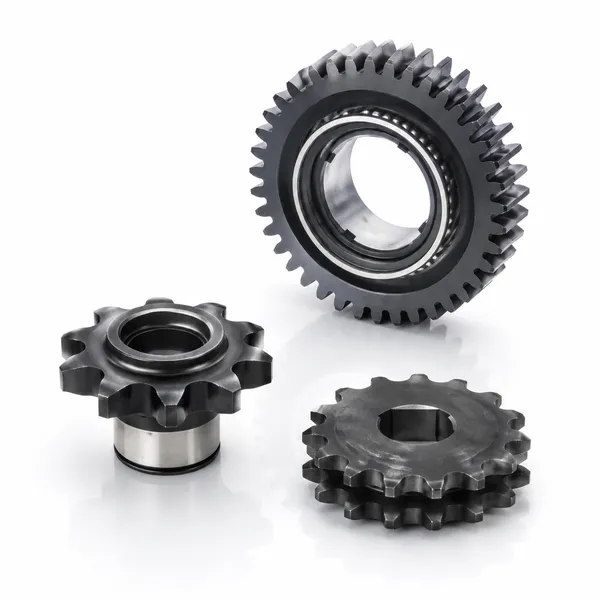
automotive automatic transmission helical gear Korea Ever-Power
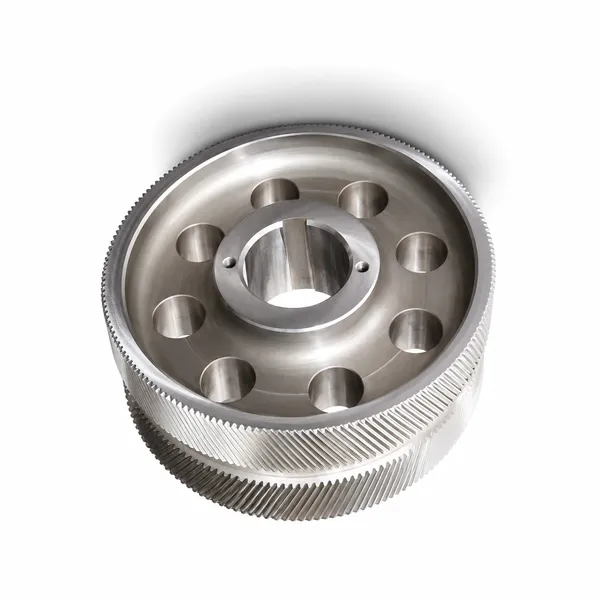
Korea Ever-Power automotive transmission helical gears — SCM420H case carburized, M2.5, 30° helix angle, AGMA 11 quality class. Case depth 0.5–0.7 mm, HRC 60–63 tooth surface, core HB 330–380. Tooth tip relief 6–10 μm, lead crown 4–6 μm applied to reduce load-dependent gear whine at the OEM’s noise specification operating conditions. Full dimensional and gear measurement report including single-flank transmission error measurement provided with automotive OEM gear orders.

Transmission Types and Helical Gear Specifications

TYPE 01

MANUAL
TRANSMISSION

Helical gear specification: Module M2–M3.5, SCM420H or 20CrMnTi case carburized, AGMA 10–11, helix angle 20°–30°, case depth 0.4–0.7 mm, HRC 58–62. Manual transmission constant-mesh helical gears (all ratio gears are always in mesh; engagement is by synchroniser sleeve, not by sliding the gear in and out of mesh) must maintain low noise across all gears and all vehicle speeds. The gear whine frequency equals pitch line velocity divided by base pitch × 1,000 Hz/m — at 100 km/h in 4th gear (typically 1:1 ratio) on a vehicle with 65 mm pitch radius first gear: PLV ≈ 28 m/s, mesh frequency ≈ 1,800 Hz. Tip relief of 6–12 μm is applied to all constant-mesh helical gears to reduce the dynamic increment at this critical frequency.

TYPE 02

DUAL-CLUTCH
TRANSMISSION (DCT)

Helical gear specification: Module M1.75–M3, SCM420H or 18CrNiMo7, AGMA 11–12, helix angle 25°–30°. The DCT uses two independent clutches and two concentric input shafts — odd gears on one shaft, even gears on the other — allowing pre-selection of the next gear before the clutch change. The compact twin-shaft arrangement demands even smaller module than the equivalent manual transmission, with tighter centre distance tolerances (±0.015–0.025 mm) to ensure all helical gear pairs on both shafts share the correct backlash without interaction. DCT helical gears require AGMA 12 accuracy for the lowest transmission error and gear whine at the very high pitch line velocities (>30 m/s) of the high-ratio (overdrive) gear pairs.

TYPE 03

ELECTRIC VEHICLE
REDUCTION GEARBOX

Helical gear specification: Module M2–M4, 18CrNiMo7 or SCM420H, AGMA 11–12, helix angle 20°–30°, 1 or 2 stage reduction, ratio 7:1–15:1 total, PLV 25–40 m/s at maximum motor speed (12,000–20,000 RPM). EV reduction gearboxes impose the highest pitch line velocities of any automotive gear application. At 16,000 RPM motor speed and a 60 mm pitch radius pinion: PLV = 2π × 0.030 × 16,000/60 = 50.3 m/s. Gear noise at these speeds requires AGMA 12 quality, ultra-smooth ground tooth surface Ra < 0.4 μm, and precisely applied tip relief to avoid dynamic tooth separation at maximum speed. EV gearbox helical gears are typically ground on 5-axis CNC generating grinders with simultaneous profile and lead control to achieve the required NVH performance at all motor speeds.

TYPE 04

COMMERCIAL VEHICLE
GEARBOX

Helical gear specification: Module M3–M5, 18CrNiMo7-6 or 20CrMnTi, AGMA 10–11, helix angle 20°–25°, case depth 0.6–1.0 mm, ISO 6336 safety factors SH ≥ 1.2 and SF ≥ 1.3 at peak torque. Heavy truck and bus transmissions transmit peak input torques above 3,000 Nm through 9–16 forward gear ratios — the helical gear fatigue life requirement at these torques and duty cycles (truck gearboxes accumulate 1,000,000 km over 10–15-year service lives) drives module selection to the minimum that satisfies ISO 6336 fatigue criteria with the specified safety factors. Commercial vehicle transmission helical gears use wider face widths (b = 10–16 × module) than passenger car gears (b = 6–10 × module) to distribute the higher torque over more tooth face area.

TOOTH FLANK MODIFICATIONS FOR AUTOMOTIVE TRANSMISSION HELICAL GEARS

Tip Relief (Involute Crowning)

Removal of 5–15 μm from the tooth tip involute form over the last 10–20% of active flank length. Eliminates the load-dependent dynamic tooth engagement impact as the incoming tooth tip contacts the flank of its mating tooth before the theoretical contact point — the primary source of gear whine at the gear mesh frequency harmonic. Optimised tip relief amplitude equals the tooth deflection under peak transmitted load.

Lead Crown (Lengthwise Crowning)

A slight barrel shape applied to the tooth face width — typically 4–8 μm convex relief from the crown to each end of the tooth. Lead crown concentrates the contact pattern in the centre one-third to one-half of the face width, preventing edge loading when shaft deflection under load shifts the contact toward the tooth end. Essential for automotive transmission helical gears where assembly tolerances and shaft deflection under peak torque would otherwise cause end contact.

Bias Correction (Twist)

A diagonal surface modification that compensates for the predictable contact pattern shift caused by gear shaft deflection under load (which moves the contact diagonally across the tooth face). Bias correction is applied as an additional helical deviation superimposed on the normal lead crown and tip relief — it is gear-pair and load-specific and requires finite element analysis of the gearbox shaft deflection under rated load to calculate the correct bias angle and amplitude.

Material and Heat Treatment: Automotive Transmission Grade
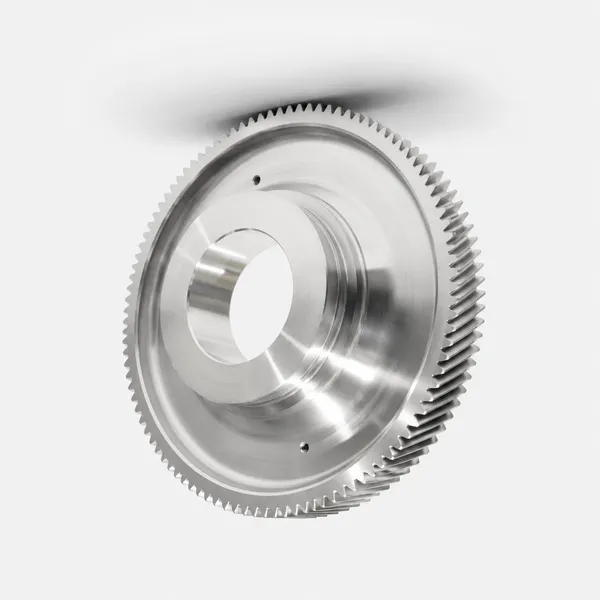
hard tooth flank helical gear automotive high speed transmission Korea Ever-Power
Hard tooth flank helical gears for high-speed transmission applications — 20CrMnTi case carburized and ground, M2.5, helix angle 25°, AGMA 11 quality class. Case depth 0.5–0.7 mm, HRC 60–62 tooth surface, Ra < 0.4 μm post-grinding. Tip relief 8 μm over top 15% of active flank, lead crown 5 μm. Batch production for automotive and high-speed mechanical transmission OEM applications with 100% gear measurement and dimensional inspection report per gear before shipment.

SCM420H / SAE 8620 (Cr-Mo)

The most widely used automotive transmission helical gear steel worldwide. SCM420H (JIS B 4052) and SAE 8620 are both chromium-molybdenum case-carburizing steels with excellent carburizing response, good core toughness, and consistent hardenability within the specified H-band. Case depth 0.4–0.7 mm for passenger car transmission gears, HRC 58–63 surface, core HB 330–380. The H-band specification tightly controls core hardness variation, which directly influences the compressive residual stress profile that determines tooth bending fatigue strength.

✓ Standard passenger car transmission gear material

20CrMnTi (Chinese Standard)

China’s most widely specified automotive transmission gear steel — functionally equivalent to SCM420H for most transmission applications, with established carburizing process data across Chinese heat treatment suppliers. σF = 380–430 MPa, σH = 1,400–1,550 MPa. Korea Ever-Power uses 20CrMnTi for automotive transmission helical gear orders targeting Chinese domestic vehicle OEM programmes and cost-competitive replacement parts for global markets where the property specification rather than the specific grade designation is the controlling factor.

✓ Chinese OEM transmission, cost-effective global

18CrNiMo7-6 (High Performance)

Premium transmission gear steel for maximum fatigue life and impact resistance — specified in commercial vehicle transmissions, high-performance sports car gearboxes, and EV reduction gearboxes where peak torque margins are minimal and fatigue safety factors must be confirmed to ISO 6336 with SF ≥ 1.3. The higher Ni content (1.4–1.7%) provides superior core impact toughness at low temperatures — important for commercial vehicle transmissions operating in cold climates. AKV > 80 J at −20°C for 18CrNiMo7-6 vs 50–60 J for SCM420H.

✓ Commercial vehicle, EV, high-performance transmission

Frequently Asked Questions

Q 01

What causes gear whine in automotive transmissions and how is it reduced at the gear level?

Gear whine (transmission whine) is tonal airborne noise generated at the gear mesh frequency and its harmonics — produced by the variation in the transmitted force as successive tooth pairs engage and disengage. This force variation is called transmission error (TE), defined as the deviation from perfectly uniform angular velocity ratio between the gear and pinion. Even gears manufactured to tight accuracy tolerances exhibit TE because elastic tooth deflection under load causes a predictable error that grows with transmitted torque. Reduction strategies at the gear level: (1) Tip relief — reduces the dynamic load spike as the incoming tooth engages by removing material from the tip zone proportional to the tooth deflection at rated load; (2) Higher accuracy class — moving from AGMA 10 to AGMA 12 reduces the tooth-to-tooth spacing error contribution to TE by approximately 50%; (3) Increased helix angle — higher helix increases the total contact ratio, which buffers tooth spacing errors and smooths the instantaneous torque transmission; (4) Lead crown — prevents end contact that introduces periodic high-force events at each tooth width end. Korea Ever-Power applies tip relief and lead crown to all automotive transmission helical gears as standard and can model the TE reduction from each modification on request.

Q 02

Why do EV transmissions require higher quality class helical gears than conventional ICE transmissions?

EV reduction gearboxes impose two unique conditions that conventional ICE transmissions do not: (1) Much higher pitch line velocities — EV motors commonly reach 15,000–20,000 RPM maximum speed, producing gear pitch line velocities of 40–55 m/s at the gearbox high-speed stage, compared to 20–30 m/s for ICE manual transmissions. At these PLVs, the dynamic factor Kv in the ISO 6336 contact stress formula rises sharply unless gear accuracy is AGMA 12 or DIN 4. (2) No masking noise from the combustion engine — in an EV with no engine noise, the passenger compartment sound level in the 500–4,000 Hz gear mesh frequency band is typically 15–20 dB(A) lower than in an ICE vehicle at the same road speed. Any gear whine that was previously masked by engine noise becomes clearly audible, imposing much stricter NVH requirements on the EV gearbox helical gears than the equivalent manual transmission gear would need. These two factors together require EV reduction gearbox helical gears to be manufactured and inspected to AGMA 12 / DIN 4 quality class as a minimum — the tightest quality class in standard volume gear production.

Q 03

Can Korea Ever-Power supply automotive transmission helical gears for aftermarket replacement and performance applications?

Yes — Korea Ever-Power manufactures automotive transmission helical gears for two distinct aftermarket segments: (1) OEM-equivalent replacement gears — same material grade, case depth, module, helix angle, and quality class as the original OEM gear, for high-kilometre transmission overhaul where the original gear has worn below serviceable limits. (2) Performance-upgraded replacement gears — same module and geometry as the OEM gear but manufactured in 18CrNiMo7 (vs SCM420H original) with AGMA 12 quality and refined tip relief, for motorsport, track-day, and high-performance street transmission applications where the standard gear durability under sustained high-speed, high-torque operation is insufficient. Korea Ever-Power produces both types from customer-supplied drawings or from measurements of the worn original gear. Lead time: 20–40 days for standard automotive transmission helical gear sets from drawing approval, depending on quality class and quantity.

Q 04

What documentation does Korea Ever-Power provide for automotive-grade helical gear orders?

Korea Ever-Power provides a standard automotive documentation package with all automotive transmission helical gear orders: (1) Material certificate — mill certificate confirming steel grade with chemical composition and mechanical properties per heat number, traceable to the shipped gear lot; (2) Heat treatment report — carburization cycle, case depth cross-section photograph, surface hardness HRC at five tooth positions, core hardness HB; (3) Gear measurement report — tooth profile deviation, lead deviation, pitch spacing error, total profile form error, total lead form error, pitch diameter, runout, surface roughness Ra — all measured on a Klingelnberg or Zeiss gear measurement machine and reported per AGMA 915 or DIN 3960 format; (4) Flank modification confirmation — tip relief amplitude and roll angle range, lead crown amplitude, and any bias correction applied, confirmed by flank form measurement; (5) 100% dimensional inspection sheet for bore, OD, face width, and keyway dimensions; (6) ISO 9001:2015 conformance certificate. For OEM automotive production programmes, PPAP (Production Part Approval Process) documentation including Control Plan, PFMEA, and measurement system analysis (MSA) can be provided on request.

Explore Korea Ever-Power Gear Categories

Seven precision gear product lines for automotive, industrial, wind energy and specialist applications worldwide.
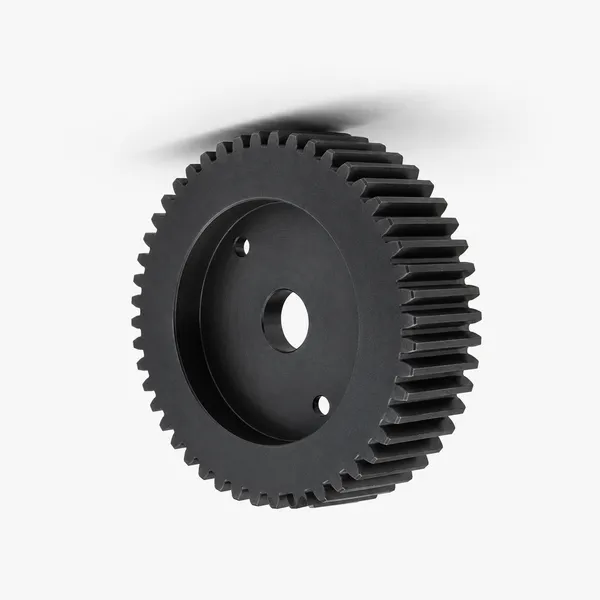
spur gear automotive

Spur Gears

M1–M20 · C45, 20CrMnTi, 316L

helical gear transmission

Helical Gears

Low noise · high contact ratio · AGMA 10–12

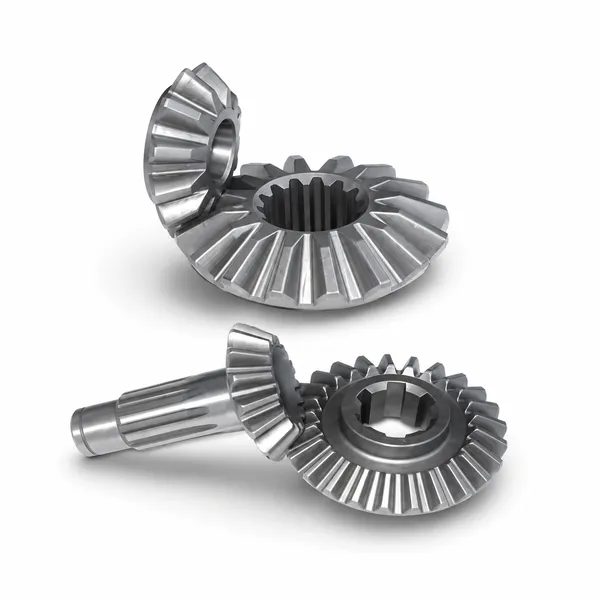
bevel gear differential

Ingranaggi conici

Right-angle drives · differential · automotive

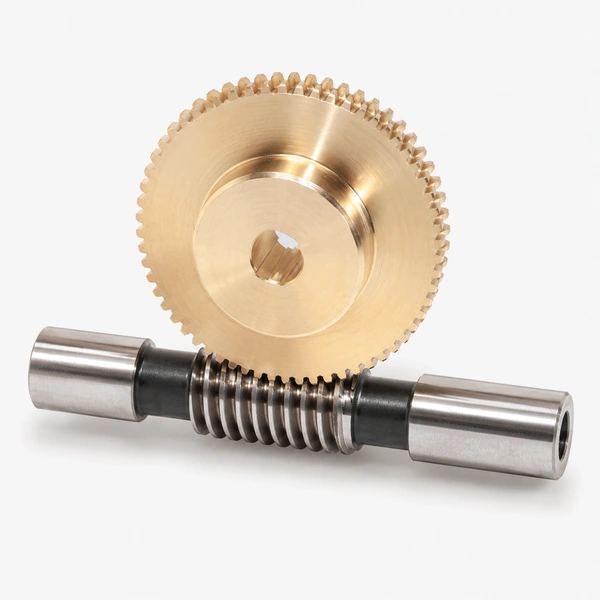
worm gear

Worm Gears

High ratio · self-locking · valve, hoist

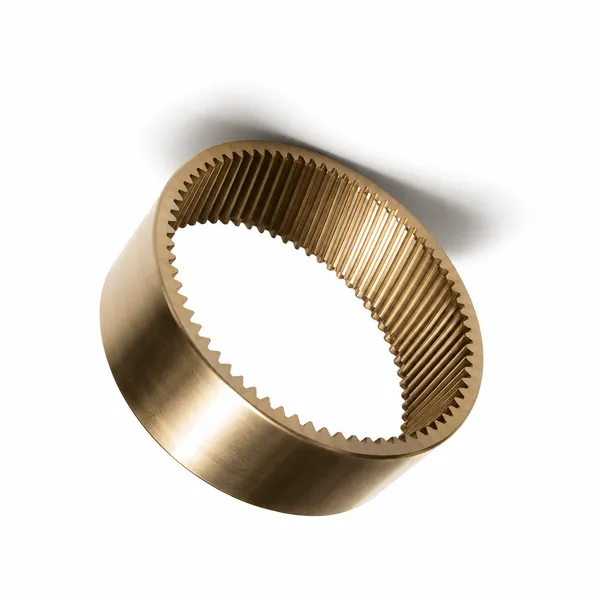
ring gear automotive

Ring Gears

Internal · planetary · automatic transmission

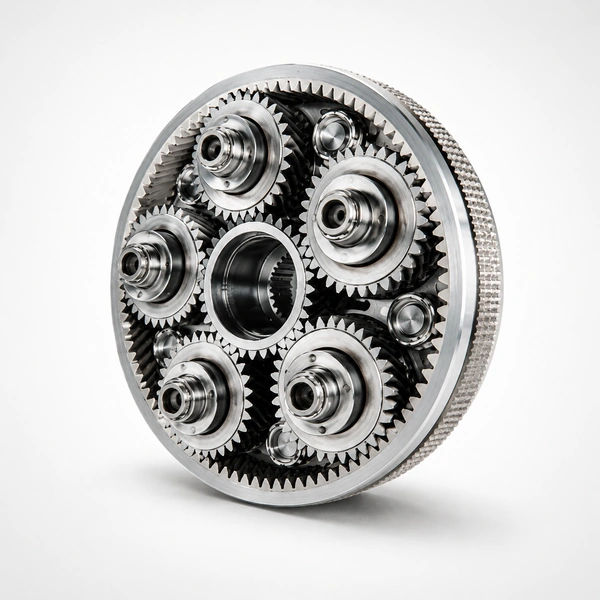
planetary gear EV

Planetary Gears

Compact · high torque density · EV, hybrid

plastic gear

Plastic Gears

POM · PA66 · PPS · self-lubricating

GET A QUOTATION · KOREA EVER-POWER

Need Helical Gears for Automotive Transmission?

Korea Ever-Power manufactures SCM420H, 20CrMnTi, and 18CrNiMo7 helical gears for manual, DCT, EV, and commercial vehicle transmissions — module M1.75–M5, AGMA 10–12 / DIN 4–6, case depth 0.4–1.0 mm, tip relief and lead crown applied. OEM production, performance aftermarket, and transmission overhaul replacement sets. PPAP documentation for automotive OEM programmes on request.

Request a Quotation →

Redattore: Cxm

VR Tour of Our Factory

TAGs:

cremagliera degli ingranaggi

In qualità di uno dei principali produttori, fornitori ed esportatori di cremagliere, offriamo cremagliere e molti altri prodotti.

Vi preghiamo di contattarci per maggiori dettagli.

Posta:[email protected]

Produttore, fornitore ed esportatore di cremagliere

Articoli recenti

it_ITItalian