GEAR APPLICATION GUIDE · SPUR GEAR · S02

Spur Gears for Conveyor Systems:
Drive Design and Gear Selection Guide

Steel spur gears power belt, chain, bucket elevator and food processing conveyor drives worldwide. This guide covers module selection, speed ratio calculation, material hardening, plastic spur gear alternatives and mounting — from M2 light-duty to M16 mining head gear.

C45 · 20CrMnTi · 316L · Plastic
Module M2 – M16 · AGMA / DIN
0.37 – 400 kW Coverage

MODULE RANGE

M2 – M16

Light-duty belt conveyor to heavy mining bucket elevator spur gear head drive

SPEED RATIO

3:1 – 25:1

Single stage 3:1–8:1; two spur stages in series up to 25:1 for high-reduction conveyor drives

TOOTH HARDNESS

HRC 58–62

Case carburized 20CrMnTi; induction hardened C45 reaches HRC 48–54 for medium conveyors

DIN QUALITY

DIN 5–9

DIN 7–9 standard conveyor spur gears; DIN 5–6 ground pinion for pitch line velocity above 6 m/s

Why Spur Gears Dominate Conveyor Drives

The spur gear is the default engineering choice for conveyor drive design — not by convention but by technical logic that holds across virtually every industrial conveyor category. Straight parallel teeth transmit torque between parallel shafts with zero axial thrust, which means the conveyor head pulley shaft bearings only carry radial load from belt tension rather than an additional axial force component that helical gears would impose. This simplifies both the bearing selection and the head pulley mounting arrangement, reducing assembly cost and potential sources of misalignment-induced bearing failure.
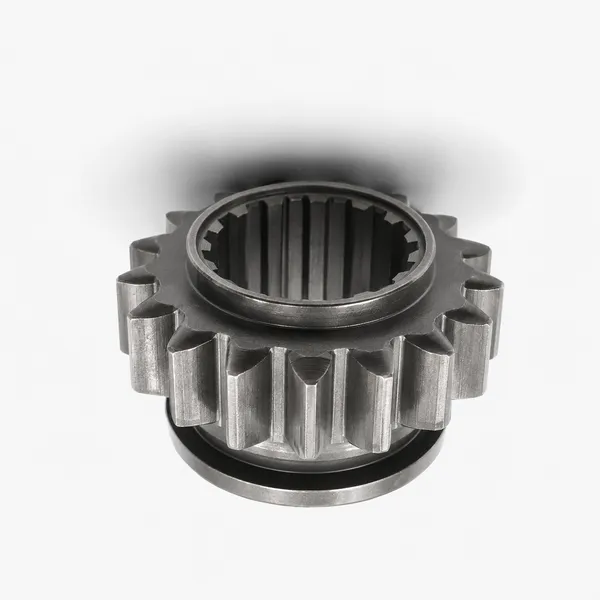
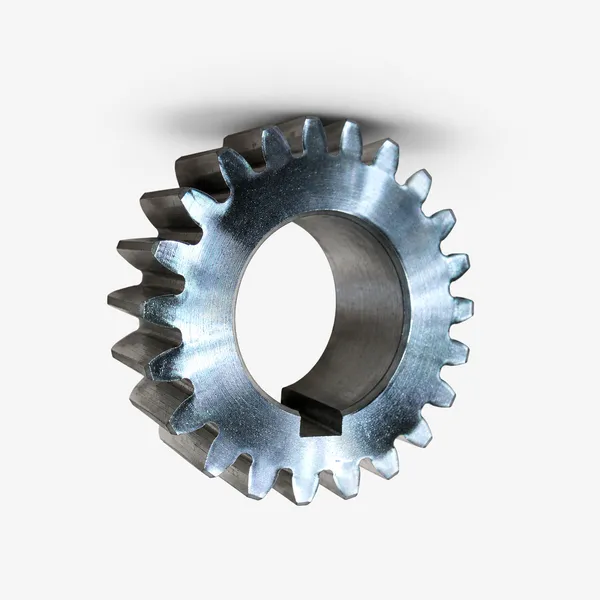
Tractor Spur Gear - Steel

Open-gear spur gears on large conveyor head drives — the pinion mounted on the motor gearbox output shaft meshing with a large spur wheel keyed directly to the conveyor head pulley shaft — expose the entire tooth contact zone to visual inspection at every maintenance walkthrough. Unlike enclosed helical gearboxes where deterioration requires either oil analysis or internal inspection, spur gear conveyor drives allow operators to detect pitting, spalling, and tooth tip cracking at a glance. This practical maintainability advantage is commercially significant in bulk materials handling operations where unplanned conveyor stoppages carry production costs that dwarf the cost of the gear itself.

Korea Ever-Power’s spur gears for conveyor drives span module M2 through M16 in C45, 20CrMnTi alloy steel, 316L stainless and engineering plastics — covering the full range from food processing line to open-pit mining conveyor head drive. All steel spur gears for conveyor applications are hobbed and shaved or ground to the specified DIN quality class, with tooth hardening by induction or case carburization matched to the conveyor’s duty cycle and shock loading requirements.

⚙️

No Axial Thrust Load

Straight teeth engage parallel shafts with zero axial force component. Conveyor head shaft bearings carry only radial load from belt tension — bearing selection is straightforward, and there is no axial pre-load requirement that would complicate the head pulley mounting arrangement or increase bearing operating temperature.

🔍

Field-Inspectable Tooth Wear

Open-gear spur gears on large conveyor head drives show tooth flank wear, pitting, and root cracking visually at every shift walkthrough. Operators can confirm acceptable wear margins without removing guards or opening gearbox housings — the most practical condition monitoring method available in dusty, wet, outdoor mining and aggregate plant environments.

📈

Lowest Cost per kW Transmitted

Spur gear hobbing is simpler than helical hobbing and far less expensive than bevel or worm manufacture. For the majority of conveyor drive environments where gear noise is not a primary design constraint — outdoor, mining, aggregate, bulk handling — a spur gear drive consistently delivers the lowest capital cost, lowest maintenance cost, and longest service life per kW of transmitted power among all gear drive types.

FOUR STANDARD SPUR GEAR CONVEYOR DRIVE CONFIGURATIONS

01 — Open Gear Head Drive

Large spur wheel (OD 400–1,200 mm) keyed directly to conveyor head pulley shaft; driven by motor-mounted pinion through an exposed gear mesh. Standard for bucket elevators, cement plant conveyors, grain handling systems and aggregate plant conveyor head drives where enclosed gearbox dimensions and cost are not justified.

02 — Enclosed Spur Gearbox

Cast iron or fabricated steel housing, splash-lubricated ISO VG 220–320 gear oil, flanged to motor and conveyor head shaft coupling. Standard for 2.2–75 kW industrial belt and chain conveyors where dust, weather, or safety regulations exclude open-gear arrangements. Service life 40,000–80,000 hours with correct oil selection and change intervals.

03 — Two-Stage In-Line Reducer

Two spur gear pairs in series within a single cast housing achieve total ratios up to 25:1 — used where motor speed is high and conveyor belt speed is very low, such as precision assembly conveyors, slow slat conveyors for automotive body panels, and temperature-controlled storage conveyors requiring precise indexing speed.

04 — Anti-Runback Backstop

Ratchet or sprag clutch backstop integrated with the spur gear drive on inclined belt conveyors above 10° — prevents the loaded belt from running back under gravity on motor trip or soft-start failure. Standard design requirement for all inclined mining and aggregate conveyors above 5° inclination and all inclined bucket elevator drives.

Module Selection for Conveyor Spur Gear Drives

Module — the ratio of the pitch circle diameter to the tooth count — is the single most important parameter in conveyor spur gear drive design. Module determines tooth size and therefore the load-carrying capacity per unit face width, the centre distance achievable for a given gear ratio, and the pitch line velocity at a given rotational speed. Under-selecting module for a heavy conveyor drive is the most common cause of premature spur gear tooth root fatigue failure; over-selecting increases cost, weight, and centre distance without benefit.

The table below gives Korea Ever-Power’s first-pass module recommendations by conveyor type and power class. These are starting points for preliminary drive layout — full confirmation via Lewis bending stress calculation and AGMA or ISO 6336 pitting resistance calculation at the final design stage is always required for conveyor drives above 7.5 kW or above service factor 1.5.

CONVEYOR TYPE POWER MODULE FACE WIDTH MATERIAL SERVICE FACTOR
Light belt / roller conveyor 0.37–2.2 kW M2 – M4 20–40 mm C45 / Nylon 1.25
Medium belt / chain conveyor 2.2–15 kW M4 – M8 40–80 mm C45 / 40Cr 1.50
Heavy industrial conveyor 15–75 kW M6 – M10 80–140 mm 20CrMnTi 1.75
Bucket elevator / mining 75–400 kW+ M10 – M16 140–250 mm 20CrMnTi / 18CrNiMo 2.00–2.50
Food processing conveyor 0.37–7.5 kW M2 – M5 25–50 mm 316L / POM 1.25

SPEED RATIO WORKED EXAMPLE — 7.5 kW BELT CONVEYOR AT 1.2 m/s

1

Head pulley RPM: Belt speed 1.2 m/s, head pulley ∅315 mm → RPM = (1.2 × 60) ÷ (π × 0.315) = 72.8 RPM

2

Total ratio needed: 4-pole motor 1,450 RPM ÷ 72.8 RPM = 19.9:1 → split into two spur gear stages for compactness

3

Stage split: Stage 1 = 4.5:1 (20T pinion / 90T wheel); Stage 2 = 4.4:1 (18T / 79T) → total 19.8:1 ✓ — within 1% of target

4

Module from power: Design power = 7.5 kW × service factor 1.5 = 11.25 kW. Pinion torque at 1,450 RPM = 74 Nm → select M5 C45 induction hardened, 20T pinion, 50 mm face width → root bending stress 138 MPa, within C45 induction hardened allowable 245 MPa ✓

Spur Gear Material and Hardening Selection
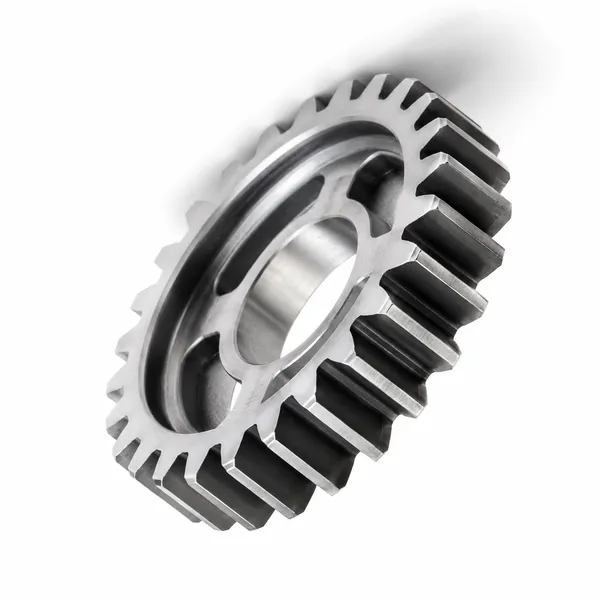
forged spur gear 20CrMnTi case carburized heavy duty conveyor drive Korea Ever-Power
Korea Ever-Power forged spur gears for heavy-duty conveyor head drives — 20CrMnTi alloy steel forging blank, case carburized to 1.0–1.5 mm depth, quenched and tempered to HRC 58–62 tooth surface, finish-ground to DIN 6 quality class. Core hardness HB 310–360 provides impact toughness for bucket elevator shock loading while the hard tooth case resists pitting and abrasive wear at mining conveyor pitch line velocities of 1–4 m/s. Bending fatigue endurance σF ≥ 400 MPa vs 170 MPa for normalised C45 — allowing smaller module or narrower face width at the same transmitted power. Korea Ever-Power supplies matched spur pinion-and-wheel sets for bucket elevator head drive replacement with individual gear measurement report confirming DIN quality class.

C45 Carbon Steel

The standard spur gear material for light and medium belt conveyor drives up to 15 kW. Normalised C45: HB 170–210, allowable bending stress σF = 145–175 MPa, allowable contact stress σH = 520–580 MPa. Induction hardening the tooth flank and root raises surface hardness to HRC 48–54 and increases σH to 900–1,050 MPa, extending conveyor spur gear service life 2–3× vs normalised without the cost and distortion risk of full case carburization. Korea Ever-Power stocks C45 normalised and induction-hardened spur gear blanks in standard modules for fast-turnaround conveyor repair orders.

✓ Best value for indoor M4–M8 belt conveyor

20CrMnTi Alloy Steel

China’s most widely used case-carburizing alloy steel for heavy-duty conveyor spur gears. Case carburization to 0.8–1.5 mm depth followed by quench and low-temperature temper produces: HRC 58–62 tooth surface, σF = 380–430 MPa, σH = 1,400–1,550 MPa. The hard case resists abrasion at mining conveyor pitch line velocities; the ductile core (HB 310–360) absorbs the shock torques of rock-jam events and emergency stops that would fracture a through-hardened gear. Ground to DIN 5–6 for high-speed conveyor pinions above 6 m/s pitch line velocity.

✓ Standard for M8–M16 heavy and mining conveyor

316L Stainless Steel

The material of choice for food processing, dairy, beverage and pharmaceutical conveyor spur gears where daily CIP washdown with NaOH or hypochlorite solution would corrode carbon steel within weeks. 316L with 2–3% molybdenum provides enhanced chloride pitting resistance. HB 160–200, σF = 130–150 MPa — lower than carbon steel; use the next module up from the C45 calculation. NSF H1 food-grade lubricant is compatible. CIP-proof to 85°C NaOH 2% daily. FDA and REACH documentation provided by Korea Ever-Power for food conveyor spur gear orders.

✓ Required for daily CIP washdown conveyor

POM / MC Nylon / UHMWPE

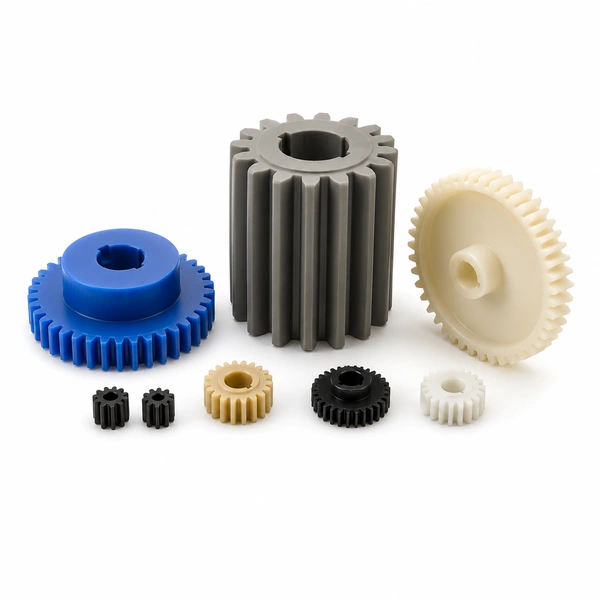
Plastic spur gears for sealed light-duty conveyor drives to 1.5 kW. POM: self-lubricating (μ ≈ 0.10), moisture-stable, FDA-listed, ideal for food and clean-room conveyors. MC Nylon oil-containing grade (green colour): μ ≈ 0.06, higher impact strength than POM, preferred for sealed pharmaceutical and sorting conveyor drives. UHMWPE: lowest friction, immune to virtually all chemical attack, for chemical plant conveyor drives where carbon steel would corrode in weeks.

✓ Food, pharma, chemical conveyor <1.5 kW

Spur Gear Specifications by Conveyor Type

Each major conveyor type creates distinct demands on the spur gear drive in terms of shock loading, environmental exposure, speed, and duty cycle. The following breakdown covers the four most common conveyor categories handled by Korea Ever-Power.

TYPE 01

FLAT BELT
CONVEYOR

Specification: M4–M8, C45 induction hardened, 20–24T pinion, ratio 4:1–6:1, pitch line velocity 2–5 m/s, enclosed splash-lubricated gearbox. Service factor 1.25–1.5. Motor power typically 1.5–22 kW. The most common conveyor spur gear application worldwide — logistics and distribution centres, automotive assembly line transfer, food production belt conveyors, general manufacturing. Anti-runback: inclined belt conveyors above 10° require ratchet or sprag backstop integrated with the spur gear drive output shaft.

TYPE 02

ROLLER CHAIN
CONVEYOR

Specification: M5–M10, 20CrMnTi case carburized HRC 58–62, ratio 3:1–5:1 to the drive sprocket shaft, open-gear or enclosed gearbox. Critical design note: roller chain chordal action generates periodic impulse loads at each chain pitch engagement — always apply service factor 1.5–2.0 minimum. Motor power typically 3.7–37 kW. Applications: automotive body shop paint booth chain conveyors, foundry casting line slat conveyors, overhead power-and-free chain conveyors in appliance assembly.

TYPE 03

BUCKET
ELEVATOR

Specification: M10–M16, 20CrMnTi or 18CrNiMo7 ground to DIN 6, large spur wheel OD 600–1,200 mm on head shaft, service factor 1.75–2.25. Motor power typically 30–400 kW. The highest-load spur gear conveyor application — cement plant clinker elevators, grain handling, coal handling, aggregate bucket elevators. Belt takeup transient loads during start-up and belt jam events impose peak torques 3–5× rated; 20CrMnTi case carburized with ductile core is essential. Korea Ever-Power supplies matched sets with individual gear measurement report.

TYPE 04

FOOD
CONVEYOR

Specification: M2–M5, 316L stainless or POM plastic, NSF H1 food-grade lubricant, enclosed IP67 for twice-daily CIP washdown. POM spur gears (self-lubricating, zero metal contamination risk, FDA-listed) for bakery and confectionery conveyors below 1.0 kW; 316L for meat, dairy, and beverage conveyors to 7.5 kW where higher torque capacity is required. Korea Ever-Power provides FDA 21 CFR, EU 10/2011, and REACH SVHC documentation for food conveyor spur gear orders.

Mounting, Lubrication and Maintenance Intervals
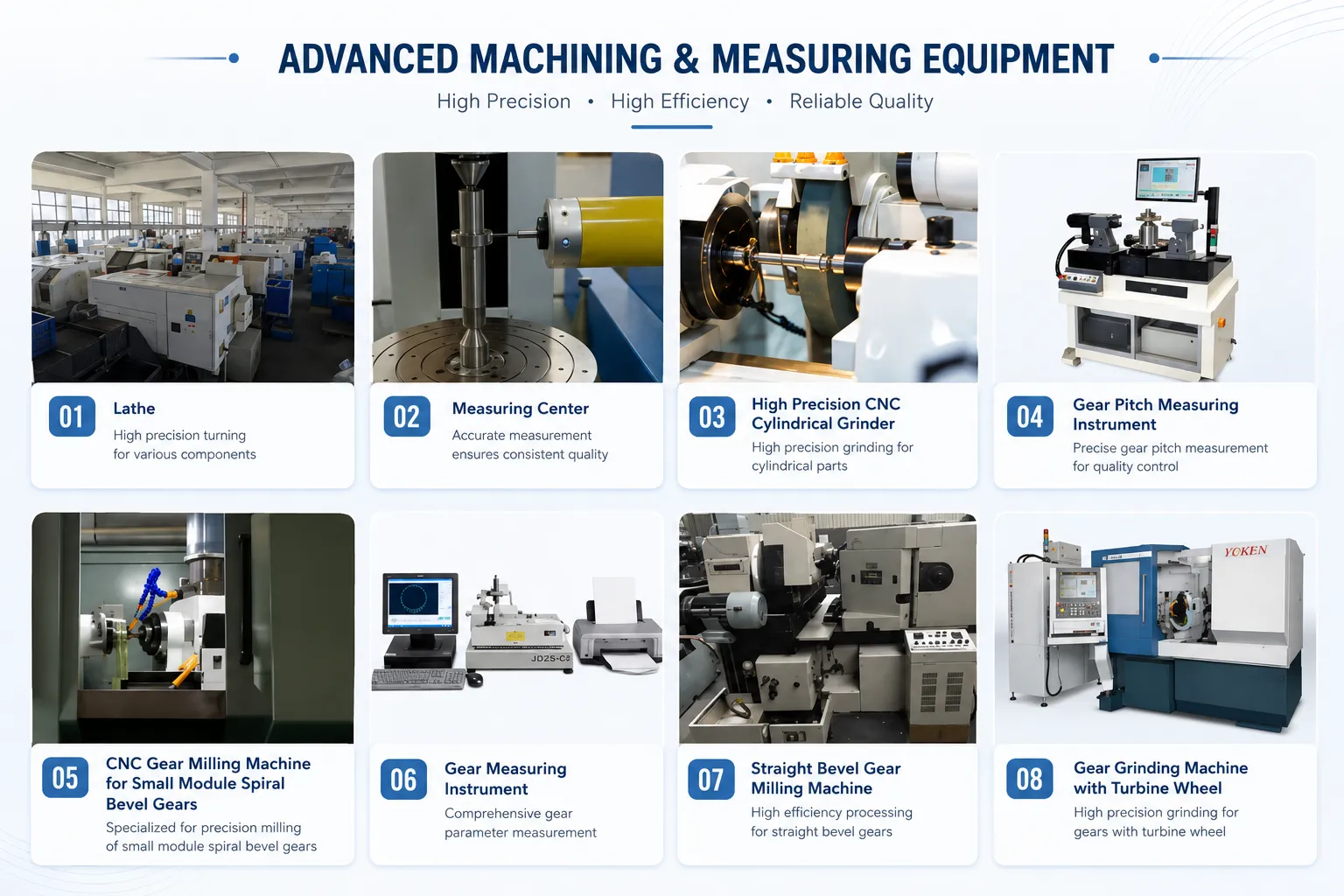
conveyor spur gear quality inspection measurement Korea Ever-Power
Korea Ever-Power gear measurement and quality inspection for conveyor drive spur gears — tooth spacing error, profile form error, lead error, pitch diameter, runout, and surface roughness Ra measured by Klingelnberg gear analyser and CMM and reported to the specified DIN quality class for each production batch. All conveyor spur gear orders shipped with individual measurement certificate; case-hardened gears additionally include heat treatment report (case depth cross-section, surface HRC at five tooth positions, core HB).

MOUNTING REQUIREMENTS

  • Centre distance: hold to ±0.10 mm for M5 and below; ±0.15 mm for M6–M10 conveyor spur gears
  • Shaft parallelism: ≤ 0.05 mm per 100 mm face width on enclosed conveyor drives
  • Backlash: 0.10–0.30 mm — never eliminate; thermal expansion on heated conveyors causes tooth binding if insufficient clearance is left
  • Bore fit: H7 bore; keyway JS9. Press-fit interference for pinions on shock-loaded conveyor drives above service factor 2.0

LUBRICATION & INSPECTION

  • Open gear (mining/elevator): Bituminous or synthetic open gear compound applied by spray or brush every 250–500 hours of operation
  • Enclosed gearbox: ISO VG 220–320 mineral gear oil; change interval 5,000–8,000 hours; check oil level weekly on mining conveyors
  • Food conveyor: NSF H1 white mineral oil or food-grade PAO; PTFE grease for pitch line velocity < 0.5 m/s
  • Visual inspection: every 500 hours — check for pitting, spalling, scoring on tooth flanks and abnormal noise
  • Replace when: tooth thickness at pitch circle worn >15% of original; conveyor noise increase >5 dB(A) at constant load

Conveyor Spur Gear — Frequently Asked Questions

Q 01

How do I calculate the replacement module if I only know the tooth count and OD of a worn conveyor spur gear?

For a standard external spur gear with addendum coefficient 1.0: module = OD ÷ (tooth count + 2). Example: OD = 232 mm, z = 56 teeth → m = 232 ÷ 58 = 4.0. Verify: pitch diameter = 4 × 56 = 224 mm; addendum = 4 mm; OD = 224 + 8 = 232 mm ✓. If the calculation gives a non-standard module (e.g. 3.87), the original gear was manufactured to DP (diametral pitch) standard rather than metric module — convert: DP = 25.4 ÷ module. Korea Ever-Power reproduces conveyor spur gears to any module including obsolete DP standards from customer photographs, tooth count measurement, and OD measurement. Send these three data points and receive a quotation within 24 hours without needing a formal drawing.

Q 02

When should I specify helical gears instead of spur gears for a conveyor drive?

Spur gears produce 6–10 dB(A) more mesh noise than equivalent helical gears at the same module, speed, and transmitted load. In the majority of industrial conveyor environments — mining, aggregate, outdoor logistics, bulk materials handling — where ambient noise is already 80–95 dB(A) from belt slip, material impact, and structure-borne vibration, this difference is commercially irrelevant and spur gears are the correct choice. Specify helical gear drives for conveyor applications only when there is a documented noise specification below 72 dB(A) at 1 metre from the gearbox housing: indoor distribution centres with operator hearing protection regulations, food manufacturing facilities with staff comfort requirements, or pharmaceutical plant conveyors adjacent to quality control laboratories. For all other conveyor environments, spur gears deliver lower capital cost, simpler maintenance, and equivalent transmission efficiency at all practical conveyor pitch line velocities below 8 m/s.

Q 03

Can Korea Ever-Power supply a matched spur gear set for urgent conveyor breakdown repair?

Yes — Korea Ever-Power routinely supplies matched conveyor spur gear sets (pinion and wheel measured and confirmed for correct backlash as a matched pair before shipment) for breakdown replacement. For standard modules M4, M5, M6, M8, M10 in C45 normalised and induction-hardened stock, Korea Ever-Power can finish the required bore, keyway, and hub specification in 5–12 working days from drawing confirmation. For non-standard modules, large OD above 500 mm, or case-carburized 20CrMnTi spur gears requiring heat treatment and grinding: 20–35 days from drawing approval. Emergency orders with a plant shutdown timeline can be assessed individually on request — contact Korea Ever-Power with the full spur gear specification, current stock of spare gear if any, and the operational deadline for restart.

Q 04

What service factor should I apply for a mining conveyor spur gear drive?

AGMA service factor (Ks) accounts for the transient torques above rated load that occur during motor start-up, belt jam, material surge, and emergency stop events on conveyor drives. Recommended Ks by conveyor type: smooth-running indoor belt conveyor = 1.25; general industrial belt conveyor, outdoor or variable loading = 1.50; roller chain conveyor (chordal impulse at each chain pitch engagement) = 1.50–1.75; bucket elevator (belt takeup transient during start-up) = 1.75–2.00; underground mining conveyor (rock impact, emergency stop shock, high-inertia start-up) = 2.00–2.50. Design power = nameplate motor power × Ks. A 7.5 kW motor on an underground mining conveyor at Ks = 2.25 requires spur gears rated for 16.9 kW — equivalent to selecting M8 or M10 where a simple power calculation without the service factor would suggest M6. This single adjustment is the most common reason a replacement conveyor spur gear appears over-specified vs the original: the original was correctly designed for actual shock loads, not just the motor nameplate.

Q 05

My 316L stainless food conveyor spur gear is corroding despite the stainless specification — what are the causes and solutions?

Three mechanisms cause 316L stainless spur gear corrosion in food conveyor service even when the material specification is correct: (1) Crevice corrosion under the keyway, at the bore-shaft interface, or in threaded fastener recesses where CIP cleaning solution is trapped in a low-oxygen confined space — the depleted-oxygen crevice is significantly more aggressive than the bulk CIP solution; (2) Chloride concentration pitting in the recessed tooth root zone where hypochlorite cleaning agents dry and concentrate between wash cycles; (3) Heat-affected zone sensitisation if the stainless spur gear is adjacent to any welded conveyor structure and received heat input above 450°C during fabrication, causing chromium carbide precipitation at grain boundaries and reducing local corrosion resistance. For drives below 1.0 kW, switching to POM or UHMWPE plastic spur gears eliminates all three mechanisms — plastic has zero electrochemical corrosion susceptibility. For higher-power food conveyors where plastic is insufficiently strong, specify electropolished and passivated 316L spur gears with NSF H1 lubricant to displace CIP solution from tooth roots. Korea Ever-Power can advise on and supply both solutions.

Explore Korea Ever-Power Gear Categories

Beyond spur gears — precision gear manufacturing across seven product categories for industrial, automotive, agricultural and specialist applications worldwide.
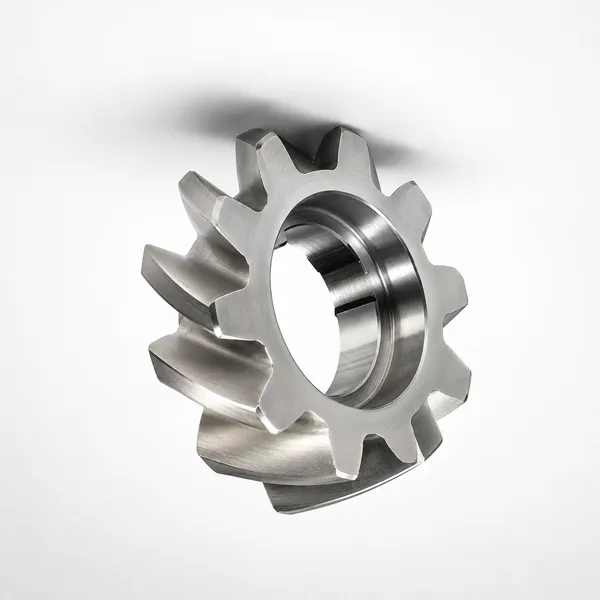
spur gear for conveyor drive

Spur Gears

M1–M20 · C45, 20CrMnTi, 316L, Nylon

helical gear gearbox automotive wind

Helical Gears

Low noise · high contact ratio · gearbox, auto, wind

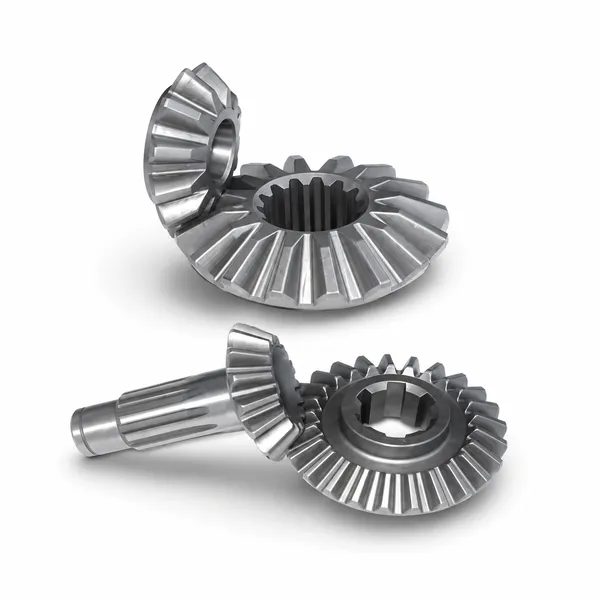
bevel gear right angle drive differential

Ingranaggi conici

Right-angle drives · straight & spiral · differential, PTO

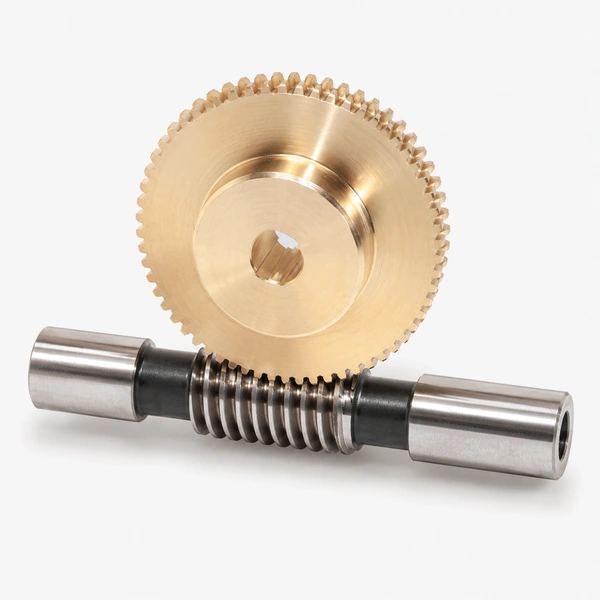
worm gear reducer self-locking bronze

Worm Gears

High ratio · self-locking · bronze wheel · valve, hoist

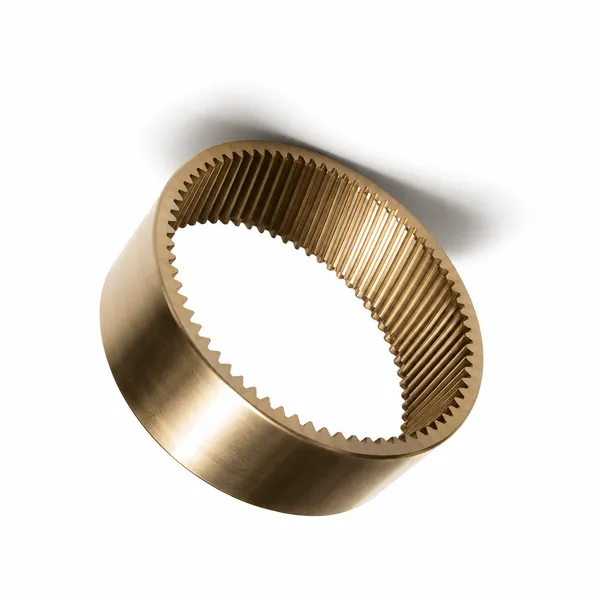
ring gear internal planetary wind turbine excavator

Ring Gears

Internal gear · planetary stage · wind turbine, excavator

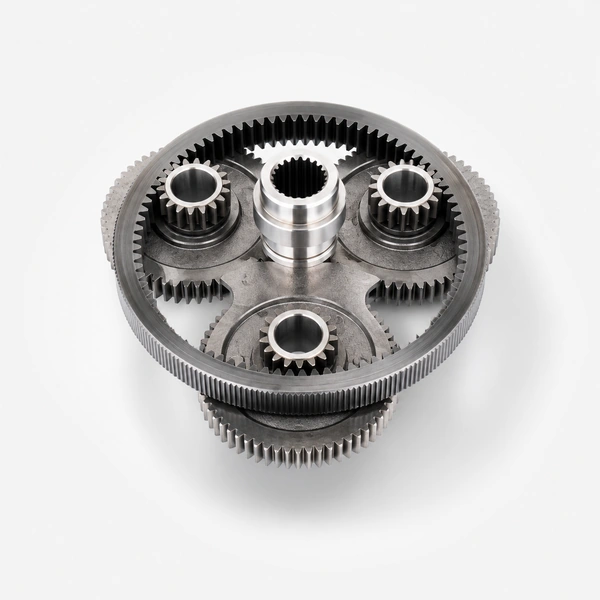
planetary gear set servo robotics EV

Planetary Gears

Compact · high torque density · servo, robotics, EV

plastic gear POM nylon FDA food grade self-lubricating

Plastic Gears

POM · MC Nylon · UHMWPE · self-lubricating, FDA

GET A QUOTATION · KOREA EVER-POWER

Need Spur Gears for a Conveyor Drive?

Korea Ever-Power supplies C45, 20CrMnTi, 316L stainless and plastic spur gears for all conveyor types — module M2 to M16, matched pinion-and-wheel sets, large open-gear spur wheels and enclosed gearbox replacement sets. 5 to 35-day delivery. ISO 9001:2015 quality documentation and material certificates included with every order.

Request a Quotation →


Redattore: Cxm

VR Tour of Our Factory

TAGs:

cremagliera degli ingranaggi

In qualità di uno dei principali produttori, fornitori ed esportatori di cremagliere, offriamo cremagliere e molti altri prodotti.

Vi preghiamo di contattarci per maggiori dettagli.

Posta:[email protected]

Produttore, fornitore ed esportatore di cremagliere

Articoli recenti

it_ITItalian