GEAR APPLICATION GUIDE · WORM GEAR · W01

Worm Gears for Valve Actuators:
Self-Locking Design and Torque Output

Worm gear actuators are the dominant drive type for industrial valve control — their self-locking property holds the valve position without power, and their single-stage reduction ratios of 10:1 to 100:1 convert low-torque motor output to the high torque required to seat gate valves, butterfly valves, and ball valves against full line pressure.

Self-Locking · 10:1 – 100:1 Single Stage
Bronze Wheel · Stainless Worm · ISO 9001
Gate · Butterfly · Ball · Globe Valve

REDUCTION RATIO

10:1 – 100:1

Single-stage worm gear reduction in one compact package — vs multiple spur or helical stages needed to achieve the same ratio

SELF-LOCKING

Lead angle <6°

Worm gears with lead angle below 6° are self-locking — the valve remains fully closed or open without motor power, no mechanical brake required

EFFICIENCY RANGE

30 – 90%

Efficiency falls with increasing ratio: 10:1 ≈ 85–90%; 30:1 ≈ 65–75%; 60:1 ≈ 45–55%; 80:1 ≈ 35–45%. High ratio = lower efficiency but guaranteed self-locking

STANDARD MATERIAL

Bronze / Steel

Phosphor bronze worm wheel + hardened alloy steel worm — the dissimilar material pair provides self-lubrication and galling resistance for long-life valve actuator service

Why Worm Gears Are the Standard for Valve Actuators

The worm gear is the dominant drive mechanism for industrial valve actuation for three engineering reasons that no other gear type simultaneously provides: high single-stage reduction ratio (eliminating the multi-stage gear trains that spur or helical gear actuators require), self-locking property (the valve remains in its last position when the actuator motor is de-energised, without any brake mechanism), and compact 90° right-angle drive geometry (allowing the actuator to be mounted directly to the valve stem with a minimal footprint regardless of valve size or orientation).

Korea Ever-Power’s worm gears for valve actuators cover single-start to four-start worm gear sets in phosphor bronze wheel and 20CrMnTi or 42CrMo4 hardened steel worm — reduction ratios from 10:1 to 100:1 in a single stage, output torques from 50 Nm to over 50,000 Nm for the full range of industrial valve actuation requirements from DN50 gate valves to DN1000 butterfly valves on large diameter pipelines.

The self-locking characteristic of worm gears at lead angles below approximately 6° (corresponding to worm gear ratios above 20:1 for single-start worms) is the key safety property for valve actuation: a motor failure or power interruption does not cause the valve to open or close under pipeline pressure. This fail-safe position-holding behaviour is a regulatory requirement for many critical valve applications in oil and gas, water treatment, chemical plant, and power generation — applications where the cost of an uncontrolled valve movement far exceeds the cost of the worm gear actuator itself.

Self-Locking — The Safety Property

A worm gear is self-locking when the lead angle of the worm thread is less than the friction angle at the worm-wheel contact (approximately arctan(μ), where μ is the friction coefficient ≈ 0.08–0.15 for lubricated bronze-on-steel). Self-locking occurs when lead angle < arctan(0.10) ≈ 5.7° — corresponding to gear ratios above approximately 20:1 for single-start worms. At these ratios, a reverse torque applied to the wheel output shaft cannot back-drive the worm, because the reaction force at the worm thread helix produces a contact normal force that generates more friction than the thread can overcome. The valve stays closed under line pressure without motor holding torque or mechanical brake.

High Ratio, Compact Package

A worm gear set achieves 10:1 to 100:1 reduction in a single stage — a ratio that would require three or four stages of spur or helical gearing. This compactness is critical for valve actuators that must fit within the restricted space of a process plant valve manifold. The 90° right-angle geometry of the worm gear — worm input shaft perpendicular to worm wheel output shaft — directly matches the typical valve actuator mounting arrangement where the electric motor shaft is horizontal and the valve stem is vertical.

Bronze Wheel — Essential for Life

The worm gear contact involves significant sliding velocity between the worm thread and the wheel tooth — much higher sliding than in spur or helical gear contacts. Phosphor bronze (PB2 or AB2 centrifugal cast) for the worm wheel is the standard material choice because its excellent anti-galling property prevents seizure at the high sliding contact, its sacrificial wear behaviour protects the hardened steel worm, and its self-lubricating property (through the absorbed lubricant in the porous bronze microstructure) reduces the sensitivity to lubricant film breakdown during infrequent valve cycling that can damage lubrication-dependent steel-on-steel contacts.

Worm Gear Actuator Design: Ratio, Torque and Self-Locking
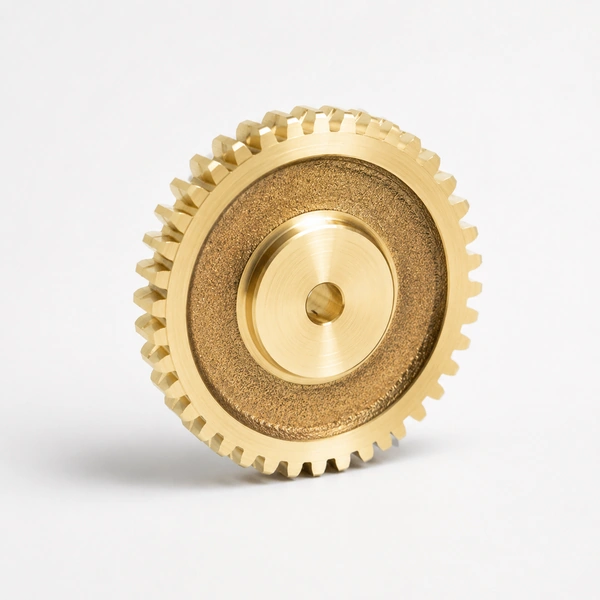
brass bronze worm wheel valve actuator Korea Ever-Power
Korea Ever-Power phosphor bronze worm wheel for valve actuator applications — centrifugal cast PB2 phosphor bronze, CNC hobbed to ISO quality class, bore and keyway machined to H7/JS9 tolerance for valve actuator shaft mounting. Paired with 42CrMo4 or 20CrMnTi hardened and ground worm at lead angle 3°–5° for assured self-locking in valve fail-safe applications. Output torque range 50 Nm to 50,000 Nm. Worm wheel dimensions and face width confirmed to drawing before shipment with gear measurement report.
WORM GEAR RATIO LEAD ANGLE (1-START) SELF-LOCKING? EFFICIENCY (lubricated) TYPICAL VALVE SIZE
10:1 ~5.7° Borderline 85–90% Small ball / butterfly valve DN50–DN100, low seating torque
20:1 ~2.9° Yes ✓ 72–80% Gate / globe valve DN100–DN200, medium seating torque
40:1 ~1.4° Yes ✓ 55–65% Gate valve DN200–DN400, high seating torque, high line pressure
60:1 ~0.95° Yes ✓ 45–55% Large gate / rising stem valve DN400–DN600, very high seating torque
80:1 – 100:1 <0.72° Yes ✓ (strong) 30–45% Large diameter gate / sluice valve DN600–DN1000, extreme seating torque

ACTUATOR OUTPUT TORQUE CALCULATION

Motor Torque → Valve Torque

Tout = Tmotor × i × η where Tmotor is motor output torque (Nm), i is worm gear ratio, η is worm gear efficiency. Example: 5 Nm motor, 40:1 ratio, η = 60%: Tout = 5 × 40 × 0.60 = 120 Nm. This output torque must exceed the valve maximum seating torque including a service factor of 1.3–1.5 for valve wear and line pressure variation.

Valve Seating Torque

Gate valve seating torque (Nm) ≈ 0.05 × DN × P, where DN is valve nominal diameter (mm) and P is line pressure (bar). Example: DN300 gate valve at 16 bar: Tseat ≈ 0.05 × 300 × 16 = 240 Nm. With service factor 1.4: design torque = 336 Nm. At worm gear ratio 40:1, η = 60%: motor required = 336 / (40 × 0.60) = 14 Nm motor torque.

Back-Driving Torque Check

For self-locking verification: back-driving torque required Tbd = Tout × (tan(λ − ρ) / tan(λ + ρ)) where λ = lead angle, ρ = friction angle. If this value is negative, the gear is self-locking. At ratio 40:1 (λ = 1.4°) with μ = 0.10 (ρ = 5.7°): tan(1.4° − 5.7°) is negative → self-locking confirmed. Korea Ever-Power confirms self-locking status for every worm gear valve actuator order.

Valve Actuator Applications by Valve and Process Type
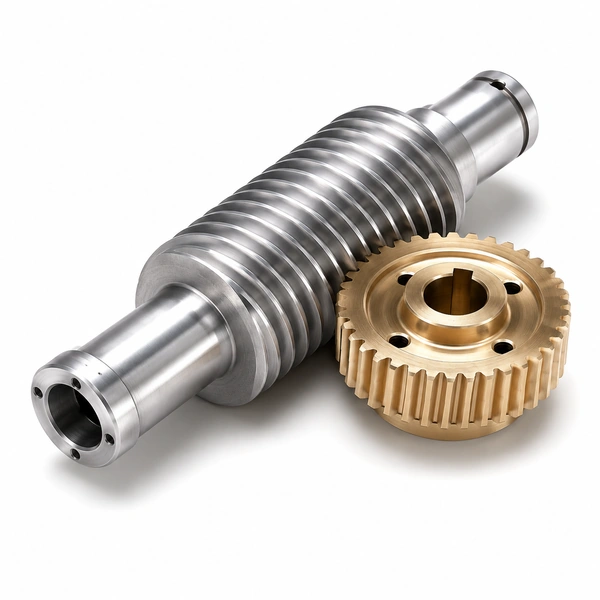
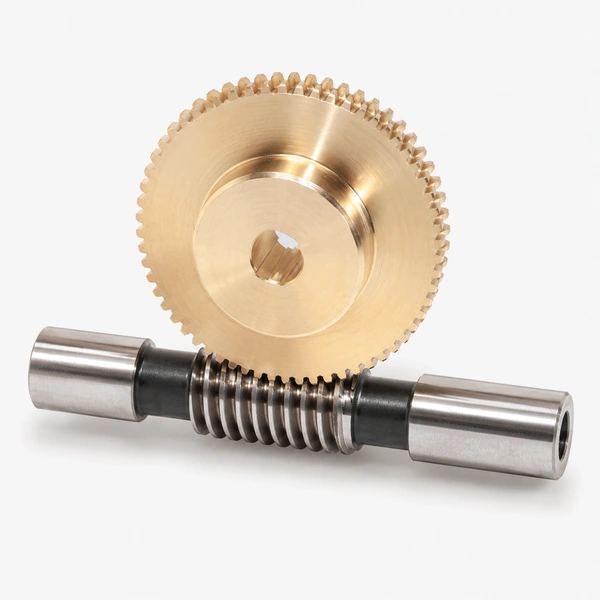
duplex worm gear set valve actuator Korea Ever-Power
Korea Ever-Power worm gear sets for valve actuator applications — 20CrMnTi hardened and ground worm (left) with centrifugal cast PB2 phosphor bronze worm wheel (right). Ratio 40:1, centre distance 80 mm, output torque 350 Nm at 60% efficiency. The matched worm gear set is assembled in the customer’s actuator housing with confirmed backlash 0.10–0.15 mm and tooth contact pattern verified before shipment. Self-locking confirmed at lead angle 1.4° < friction angle 5.7°.

TYPE 01

GATE & GLOBE
VALVES

Worm gear specification: Ratio 20:1–80:1 depending on valve size and line pressure. Rising stem gate valves require the worm wheel to rotate the valve stem through the full travel (100–400 stem turns for large gate valves) while the worm must produce sufficient torque to seat the gate against line pressure at end of closing stroke. The worm gear must withstand the peak seating torque — typically 2–3× the running torque — without permanent deformation of the bronze wheel teeth. ISO 5210 mounting interface is standard for gate valve worm gear actuators. Korea Ever-Power confirms output torque, self-locking status, and ISO 5210 interface compliance for all gate valve worm gear orders.

TYPE 02

BUTTERFLY
VALVES

Worm gear specification: Ratio 10:1–40:1 for quarter-turn butterfly valve worm gear actuators — the worm wheel rotates exactly 90° (quarter-turn) from fully open to fully closed. The worm gear must hold the butterfly disc in any intermediate throttling position against flow-induced torque from the pipeline flow, making the self-locking property essential for throttling butterfly valve applications. Large diameter butterfly valves (DN600–DN1200) on high-pressure water supply and HVAC systems use worm gear actuators with ratios up to 60:1 to achieve the high torque required to overcome flow-induced disc torque under full line pressure and maximum flow velocity.

TYPE 03

OIL & GAS
PIPELINE VALVES

Worm gear specification: Ratio 40:1–100:1, phosphor bronze wheel + 42CrMo4 or stainless steel worm for H2S-resistant sour service, API 6D compliant, ISO 5211 interface, stainless worm gear housing for subsea and offshore applications. Oil and gas pipeline valve worm gear actuators must meet the most demanding combination of torque output (pipeline ball valves DN600 at 150 bar line pressure can require seating torques above 30,000 Nm), reliability (expected service life 20+ years), and environmental resistance (offshore corrosion, sour gas, subsea water ingress). Korea Ever-Power supplies API-6D documentation and material traceability for pipeline valve worm gear actuator orders. External link: worm gear reducer selection guide for high-ratio actuator applications.

TYPE 04

WATER &
WASTEWATER

Worm gear specification: Ratio 20:1–60:1, ductile iron or 316L stainless housing for corrosive wastewater service, IP67 or IP68 sealed housing for submerged sluice gate and flap gate worm gear actuators, NSF 61 compliance for potable water applications. Water treatment and distribution valve actuators must operate reliably after years of infrequent cycling in damp, corrosive environments. The self-locking worm gear retains the exact valve position set during commissioning for months or years without re-adjustment — a practical advantage that spring-return or solenoid valve actuators cannot provide for large-diameter water supply isolation valves.

Frequently Asked Questions

Q 01

What ratio worm gear should I select for a DN400 gate valve at 25 bar line pressure?

Step 1 — estimate valve seating torque: Tseat ≈ 0.05 × 400 × 25 = 500 Nm. With service factor 1.4: design torque = 700 Nm. Step 2 — select motor torque: a standard 3-phase gear motor for valve actuation provides 8–15 Nm output torque at 4–20 RPM output shaft speed for mid-size gate valves. Using a 10 Nm motor: worm gear ratio required = 700 / (10 × η). At ratio 60:1, η ≈ 50%: Tout = 10 × 60 × 0.50 = 300 Nm — insufficient. Try ratio 80:1, η ≈ 40%: Tout = 10 × 80 × 0.40 = 320 Nm — still insufficient. Conclusion: either select a larger motor (15 Nm) or combine ratio 40:1 worm gear (η = 55%) with a two-stage spur gear pre-reducer. Korea Ever-Power can design the complete valve actuator gear train for the specified valve and motor — contact with valve DN, line pressure, motor torque and speed.

Q 02

Can a worm gear valve actuator fail to self-lock if it has been running for many years? What causes this?

Yes — self-locking can be lost over service life through three mechanisms: (1) Wear of the bronze wheel teeth increases backlash and changes the effective lead angle geometry, reducing the friction contribution that causes self-locking; (2) Lubricant degradation can paradoxically increase self-locking tendency (dried lubricant increases friction) or reduce it (extreme-pressure additive breakdown reduces friction at the worm thread contact, approaching the self-locking boundary); (3) Bronze wheel tooth profile change due to plastic deformation under overload shifts the contact to the tooth tip, where the effective lead angle is different from the pitch line value used in the self-locking calculation. In practice, loss of self-locking in worm gear valve actuators is rare if the gear is correctly sized (not operated above the rated torque) and the lubricant is maintained. If a worm gear valve actuator with a history of overload or lubricant neglect begins to allow the valve to drift from its set position, Korea Ever-Power recommends replacement of the worm gear set with a higher-ratio pair to increase the self-locking safety margin.

Q 03

What lubrication does a worm gear valve actuator require, and how often should it be changed?

Worm gear valve actuators require a lubricant specifically formulated for worm gear contact — the high sliding velocity at the worm-wheel contact demands a lubricant with strong film formation under mixed-film and boundary lubrication conditions, which standard gear oils provide inadequately. Recommended lubricant types: NLGI 00 or 0 semi-fluid grease with high EP additive for enclosed valve actuator housings (most common for multi-turn gate valve actuators); ISO VG 220–460 mineral or synthetic worm gear oil for larger actuators with splash lubrication. Oil change interval: every 5 years or 2,000 operating hours (whichever occurs first) for valve actuators in moderate environments; every 2 years for valve actuators in offshore, subsea, or high-temperature service. For valve actuators that operate infrequently (less than 10 full-travel cycles per year), lubricant degradation by oxidation and water absorption is often more significant than mechanical wear — check lubricant condition annually and replace if discoloured or contaminated regardless of hours. Korea Ever-Power recommends lubricant type and specification for each worm gear valve actuator order.

Q 04

What documentation does Korea Ever-Power provide for worm gear valve actuator orders requiring API or ISO compliance?

Korea Ever-Power provides the following documentation for worm gear valve actuator orders: (1) Worm gear data sheet — ratio, lead angle, centre distance, output torque at rated efficiency, self-locking confirmation with lead angle vs friction angle calculation; (2) Material certificates — mill certificate for worm alloy steel (42CrMo4 or 20CrMnTi) with chemical composition and mechanical properties per heat; material certificate for worm wheel bronze (PB2 phosphor bronze) with chemical composition and tensile/hardness values; (3) Heat treatment report — for hardened worm: surface hardness HRC, core hardness HB, and hardening depth where specified; (4) Dimensional inspection report — worm OD, thread lead, centre distance, wheel bore, face width confirmed against drawing; (5) ISO 9001:2015 quality certificate; (6) For API 6D compliance orders: traceability records per API 6D monogram requirements, including material test reports (MTRs) with heat numbers traceable to the shipped gear set. Third-party inspection (Bureau Veritas, Lloyds, DNV) for offshore and subsea worm gear valve actuator orders can be arranged on request.

Explore Korea Ever-Power Gear Categories

Seven precision gear product lines for industrial, process, automotive and specialist applications worldwide.
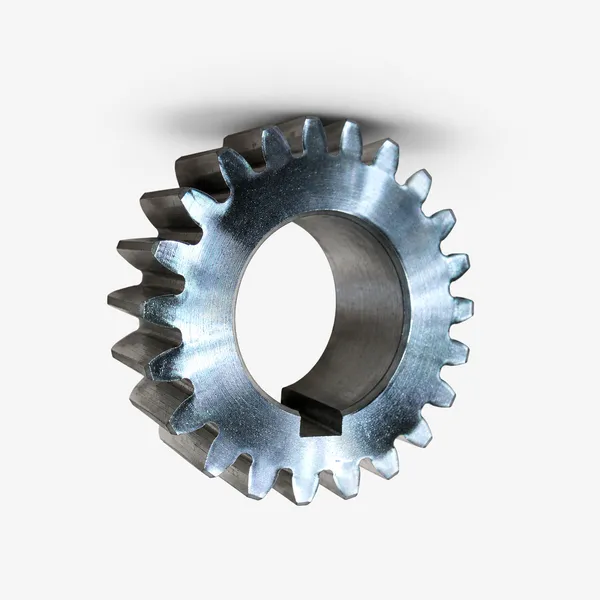
spur gear

Spur Gears

M1–M20 · C45, 20CrMnTi, 316L, Nylon

helical gear

Helical Gears

Low noise · high contact ratio · gearbox, wind

bevel gear

Ingranaggi conici

Right-angle · straight & spiral · differential

worm gear

Worm Gears

High ratio · self-locking · valve, hoist, solar

ring gear

Ring Gears

Internal · planetary stage · wind turbine, excavator

planetary gear

Planetary Gears

Compact · high torque density · servo, EV

plastic gear

Plastic Gears

POM · MC Nylon · UHMWPE · self-lubricating

GET A QUOTATION · KOREA EVER-POWER

Need Worm Gears for a Valve Actuator Application?

Korea Ever-Power supplies phosphor bronze worm wheel and hardened steel worm gear sets for all valve actuator applications — ratio 10:1 to 100:1, output torque 50–50,000 Nm, ISO 5210/5211 interface, self-locking confirmation, API 6D documentation for oil and gas pipeline valves. Gate, butterfly, ball and globe valve applications. ISO 9001:2015 quality documentation included.

Request a Quotation →

Redattore: Cxm

VR Tour of Our Factory

TAGs:

cremagliera degli ingranaggi

In qualità di uno dei principali produttori, fornitori ed esportatori di cremagliere, offriamo cremagliere e molti altri prodotti.

Vi preghiamo di contattarci per maggiori dettagli.

Posta:[email protected]

Produttore, fornitore ed esportatore di cremagliere

Articoli recenti

it_ITItalian