
Planetary Gears for Construction Equipment:
Excavator Final Drives, Crane Slewing and Wheel Motor Hubs
Construction equipment planetary gear drives operate at the intersection of the most demanding mechanical conditions in any mobile machinery application: peak output torques exceeding 100,000 Nm in excavator travel drives, continuous shock loading from rock impact in crusher and hydraulic breaker hydraulic circuits, operation in abrasive mud and water environments that challenge every shaft seal in the system, and service intervals of 4,000–6,000 hours between major gearbox overhauls. This guide covers planetary gear specification for excavator final drives and travel motors, mobile crane slewing ring drives, compact track loader wheel motor hubs, and piling machine crowd drives — the four most demanding planetary gear applications in the construction equipment sector.
Up to 150,000 Nm · ISO 4:1–40:1 · SF 1.5–2.5
Excavator · Crane · Track Loader · Piling Rig
Why Planetary Gears Dominate Construction Equipment Power Transmission
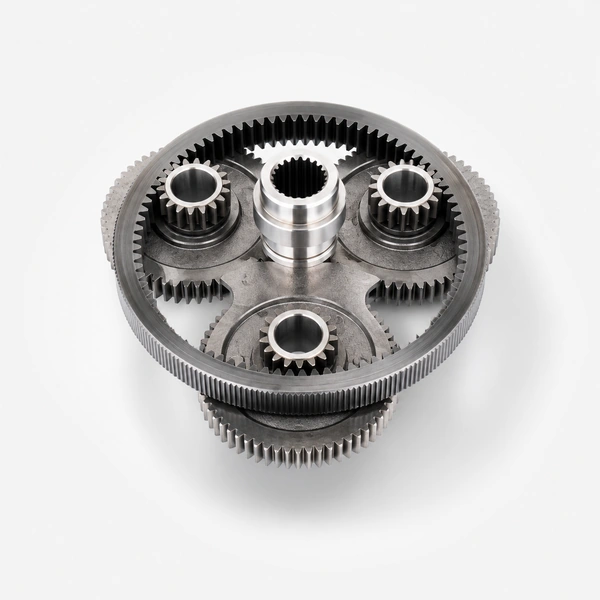
The design constraints of construction equipment — extreme output torque in a compact package, ability to withstand continuous shock loading, sealed-for-life operation in abrasive and water-contaminated environments, and the physical need to integrate the gearbox inside or adjacent to a hydraulic motor — make the planetary gear arrangement the only practical solution for the primary drive stages of excavators, mobile cranes, compact loaders, and piling equipment. No other gear arrangement comes close to the planetary gear’s power density — the simultaneous engagement of three or more planet gears with the ring gear and sun gear distributes the output torque across multiple load paths, allowing the same output torque to be achieved in a package 30–50% smaller in diameter than a single-mesh spur gear stage.
Korea Ever-Power’s planetary gears for construction equipment are manufactured in 18CrNiMo7-6 (the material of choice for all high-duty construction equipment planetary gears, case carburized to HRC 58–62 with shot peened tooth root) and 20MnCr5 (for lower-cost construction equipment applications where the slightly lower fatigue resistance of this material grade is acceptable within the service factor). Planet gear bores are ground to H6 tolerance for precision needle roller bearing fit — the needle roller bearing arrangement in construction equipment planet gears allows the planet shaft to be smaller diameter for the same load rating than a journal bearing, reducing the overall stage diameter. All construction equipment planetary gears from Korea Ever-Power are available with ISO 6336 fatigue life calculation reports and B10 life certification on request. See also the planetary gearbox design guide for complete drive unit specification including bearing, housing, and seal selection for construction machinery applications.
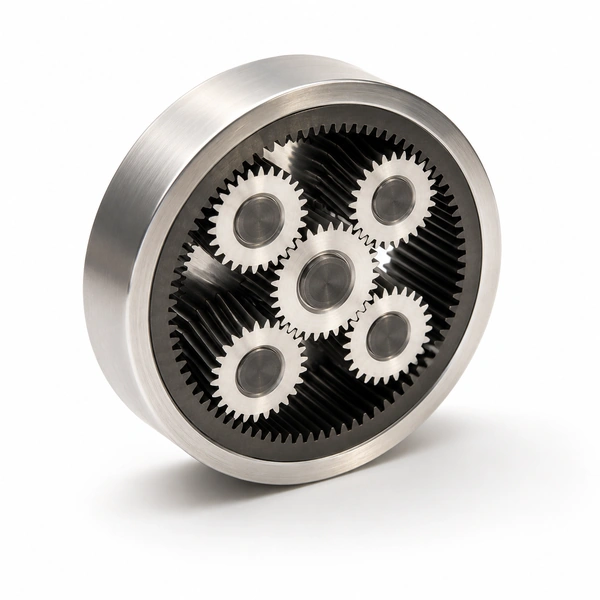
Shock load tolerance is the construction equipment planetary gear design parameter that most clearly distinguishes this application from industrial or servo planetary gears. An excavator final drive planetary gear set experiences the following shock events during a typical working shift: multiple impacts when the machine contacts hard rock or concrete during trenching or demolition; torque reversal events when the machine stops and reverses direction on grades; hydraulic pressure spikes when the travel motor control valve switches; and periodic stall events when the track hits an obstacle that stops travel briefly before the machine hydraulic system forces through. Each of these events generates a torque spike that is typically 2.5–4× the rated continuous torque — which is why construction equipment planetary gears are designed to ISO 6336 with service factors of 1.8–2.5 applied to the peak instantaneous torque, not just the average operating torque.
Construction Equipment Application Types
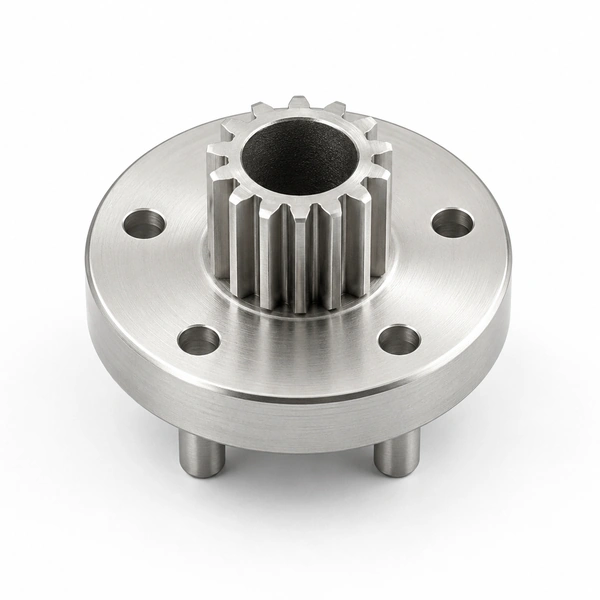
Sealing, Lubrication, and Maintenance for Construction Equipment Planetary Gearboxes
Construction equipment planetary gearbox lubrication and sealing design are as important as the gear tooth specification — a correctly specified gear set can fail prematurely if the sealing allows abrasive contamination to reach the gear oil, or if the oil specification is incorrect for the operating temperature range. Excavator final drive gearboxes are typically filled for life with ISO VG 220 or VG 320 gear oil at commissioning, with a mandatory oil change at 2,000–4,000 hours (depending on the OEM specification) to remove metal wear particles accumulated during the initial running-in period.
CONSTRUCTION EQUIPMENT PLANETARY GEARBOX — MAINTENANCE REFERENCE
OIL SPECIFICATION
- • ISO VG 220: standard for ambient above 0°C
- • ISO VG 150: cold climate below -10°C ambient
- • ISO VG 320: piling rig crowd drives >80°C
- • Synthetic PAO: extended service to 6,000 h
- • GL-5 EP additive: confirmed compatible with all steel planetary gears
OIL CHANGE INTERVALS
- • Initial change: 250–500 hours (running-in particles)
- • Mineral oil: every 2,000–3,000 hours or annually
- • Synthetic PAO: every 4,000–6,000 hours
- • After any suspected water ingress: immediate drain
- • Magnetic drain plug check every oil change
SEAL CONDITION MONITORING
- • Check oil level every 250 hours (loss = seal failure)
- • Inspect lip seal track for groove wear at every oil change
- • Replace all seals at every second oil change as preventive
- • Water contamination test: white emulsion in oil = reseal immediately
- • Seal replacement timing: earlier than failure = lowest total cost
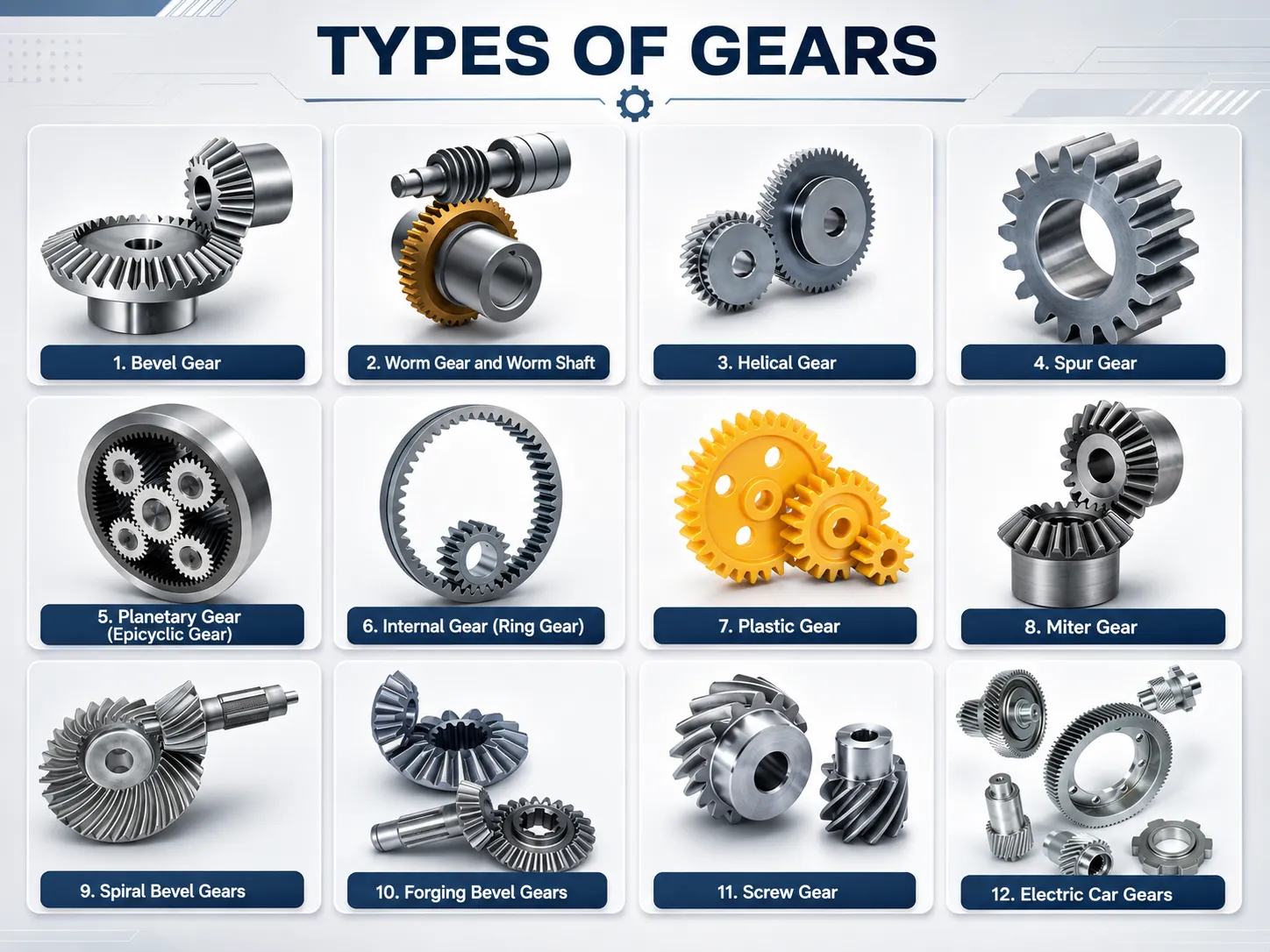
Frequently Asked Questions — Planetary Gears for Construction Equipment
Explore Korea Ever-Power Gear Categories
Seven precision gear product lines for construction equipment, mining, industrial and specialist applications worldwide.
Éditeur : Cxm
 French
  English
  Italian
  Korean
  Japanese