
Helical Gears for Marine Propulsion:
Naval Reduction Gearboxes, Ferry Drives and Offshore Vessel Propulsion
Marine propulsion helical gears operate in one of the most demanding combined environments in mechanical engineering — the propulsion gearbox of a vessel at sea must transmit megawatts of power continuously for 20–30 years, in a saltwater-saturated atmosphere that corrodes standard materials within months, subject to shock loads from propeller cavitation, wave slam, and emergency full-astern manoeuvres that can triple the normal transmitted torque in milliseconds, while maintaining the dimensional stability and bearing alignment needed for quiet, vibration-free operation that meets the ship’s noise signature requirement. This guide covers helical gear specification for commercial ferry propulsion, offshore supply vessel drives, naval patrol vessel gearboxes, and large yacht main drives.
Lloyd’s · DNV GL · BV · ABS · 20–25 yr Life
Ferry · Naval · Offshore · Luxury Yacht
Marine Propulsion Helical Gear Engineering — Classification, Materials and Design
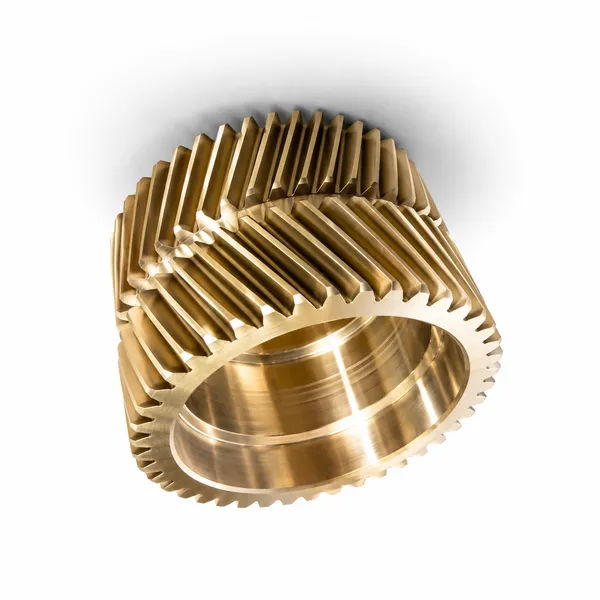
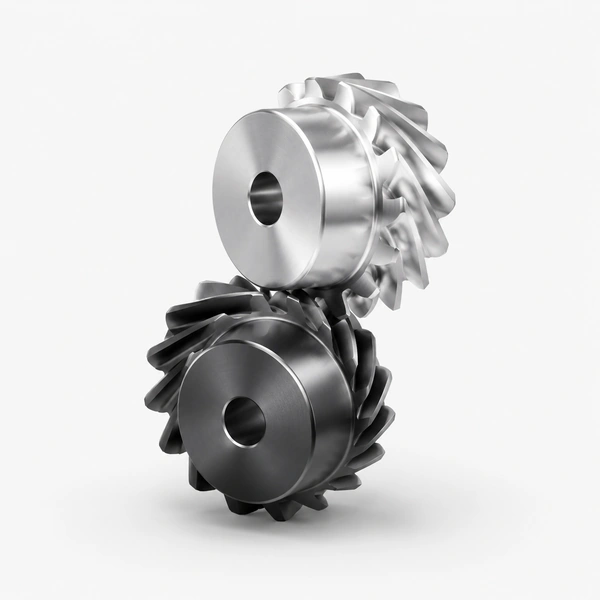
Marine propulsion gearboxes represent the highest power density and longest design life requirement of any helical gear application. A 10 MW ferry propulsion gearbox weighs approximately 40–60 tonnes and transmits 10,000 kW through gears that must sustain this load for 20,000–30,000 operating hours over the vessel’s 25-year class period between major surveys. The power density of marine propulsion gears is achieved through the combination of high-strength alloy steel (18CrNiMo7-6 case carburized, or 42CrMo4 for lower-power stages), double-helical tooth form (which maximises the tooth contact ratio and distributes the load over a longer arc of engagement for any given centre distance), and DIN 4–5 quality class profile grinding (which maintains the EHL film thickness under the extreme Hertzian contact stresses of multi-megawatt gear mesh contact).
Korea Ever-Power’s helical gears for marine propulsion are manufactured from 18CrNiMo7-6 VAR (vacuum arc remelted) steel for the highest-loaded first and second stage gears where the combination of deep case depth, tough core, and maximum cleanliness is required, and 42CrMo4 QT for lower-loaded auxiliary marine drives. VAR steel is specified for critical marine propulsion gears because the vacuum arc remelting process removes oxide inclusions and reduces hydrogen content in the steel — both of which can initiate sub-surface fatigue cracks in large gear tooth cross-sections under the millions of high-Hertzian-stress load cycles of propulsion gearbox service. The VAR process adds approximately 15–20% to the steel cost but extends the sub-surface fatigue initiation life by 2–3× compared to standard VIM (vacuum induction melted) or air-melted steel.
The classification society approval process for marine propulsion helical gears requires Korea Ever-Power to submit a Technical File to the class society (e.g. Lloyd’s Register) containing: the gear design calculation per ISO 6336 with all service factors, the material specification and heat treatment procedure, the NDT (non-destructive testing) procedure and acceptance criteria (UT per SEP 1921 Class B/B for forgings, MPI per EN ISO 23278 Level 1 for all tooth surfaces), the dimensional inspection procedure, and the qualification test records. The class surveyor then witnesses the critical manufacturing stages — forging review, heat treatment, final MPI, and dimensional inspection — and issues the Type Approval Certificate for the gear. Korea Ever-Power provides full classification documentation support for Lloyd’s Register, DNV GL, Bureau Veritas, ABS, and ClassNK approvals, with a dedicated class society liaison team managing the documentation submission and surveyor scheduling.
Marine Application Specifications by Vessel Type
Marine Gear Lubrication, Corrosion Protection and Service Life
Marine propulsion gearbox lubrication differs from standard industrial gearbox lubrication in two key respects: the lubricant must function in an atmosphere with water vapour at 90–100% relative humidity (from seawater spray infiltrating the engine room) for decades without emulsifying or losing its anti-wear protection, and the lubricant change interval must be minimised because large marine gearboxes hold 500–5,000 litres of gear oil — every oil change is a significant cost and waste disposal event. The standard lubricant for marine propulsion helical gear drives is ISO VG 220 or VG 320 gear oil with marine-specific additive packages that provide enhanced water separation (demulsibility), rust and corrosion inhibition for the saltwater environment, and anti-wear protection compatible with silver-bearing alloys (silver is used in some high-performance marine gearbox bearings).
MARINE PROPULSION HELICAL GEAR — CORROSION AND PRESERVATION
TOOTH SURFACE PROTECTION
- • During manufacture: VCI (Volatile Corrosion Inhibitor) film applied immediately after profile grinding to prevent flash corrosion during transport and storage — extends protection for 24 months in sealed packaging
- • Before installation: cosmoline (petroleum wax) or thin-film corrosion inhibitor on all machined surfaces, removed with solvent wipe before gear oil fill
- • In service: the marine gear oil’s rust inhibitor provides continuous corrosion protection on all submerged tooth surfaces — maintenance requirement is to verify oil moisture content <0.1% at annual service
OIL SYSTEM REQUIREMENTS
- • Marine gearbox oil system: forced lubrication with cooled-and-filtered oil recirculation — oil temperature controlled to 55–75°C at the gear mesh inlet by the oil cooler seawater flow
- • ISO VG 220 or VG 320 per Lloyd’s Rules for Ships: confirmed demulsibility ≤30 minutes per ASTM D1401 (oil-water separation speed in the presence of seawater contamination)
- • Oil change interval: 8,000 hours or at each class survey (5 years), whichever is sooner — oil analysis recommended at 4,000 hours to detect early wear debris before the scheduled change
SPARE GEAR STRATEGY
- • Classification societies require each vessel to carry a minimum spare gear set on board for primary propulsion gearboxes: at minimum one first-stage pinion and one second-stage wheel for each propulsion gearbox
- • Spares packaged in VCI-sealed plywood crates designed for 10-year on-board storage without degradation of the tooth surface finish or dimensional accuracy
- • Korea Ever-Power maintains an online spare gear registry for vessels where our gears are installed, enabling rapid identification and dispatch of a replacement set when required at port or dry dock
Frequently Asked Questions — Marine Propulsion Helical Gears
Explore Korea Ever-Power Gear Categories
Seven precision gear product lines for marine propulsion, offshore, naval and vessel auxiliary applications worldwide.
Éditeur : Cxm
 French
  English
  Italian
  Korean
  Japanese