
Spur Gears for Textile Machinery:
Weaving Looms, Spinning Frames and Knitting Machine Drives
Textile machinery spur gears occupy a demanding niche that combines the precision demands of printing machine gears with the high-cycle fatigue requirements of industrial conveyors — a modern high-speed rapier loom runs at 900 picks per minute, completing nearly 500 million weaving cycles per year, placing every spur gear in its pattern drive and takeup mechanism in the ultra-high cycle fatigue regime where even minor tooth surface defects progressively reduce load-carrying capacity to failure. At the same time, the textile industry imposes unique cleanliness requirements — lubrication must not contaminate the fabric being processed, and in medical textile and food packaging fabric production, the gear oil and housing materials must meet the same regulatory standards as pharmaceutical manufacturing environments. This guide covers spur gear specification, material selection, noise reduction, and fibre contamination prevention for weaving, spinning, knitting, and nonwoven fabric production machinery.
500M cycles · Fibre-Free Housing · Low Noise
Loom · Spinning · Knitting · Nonwoven
Spur Gear Requirements in Textile Machinery — Precision, Speed, and Fabric Cleanliness
The textile machinery industry presents an unusual gear application context — machines that are simultaneously high-precision (the pattern drive of a dobby loom must position the heddle frames with sub-millimetre accuracy at 900 picks per minute), high-speed (air-jet loom main shafts reach 1,100 RPM, placing spur gear pitch line velocities in the 5–15 m/s range for M2–M4 gears), and contamination-sensitive in a way that has no parallel in most industrial gear applications. Fibre contamination of the gear oil — loose fibres from the warp, weft, or pile yarn being woven or spun that enter the gearbox through shaft clearances or breather openings — is the primary cause of premature spur gear and bearing failure in textile machinery drives. A cotton fibre lodged between a tooth flank and its mating tooth face introduces a hard abrasive particle (cotton seed hull fragments have hardness approaching HRC 20) that scores both tooth surfaces and initiates a chain of progressive abrasive wear that shortens gear life from the designed 5+ years to 12–18 months.
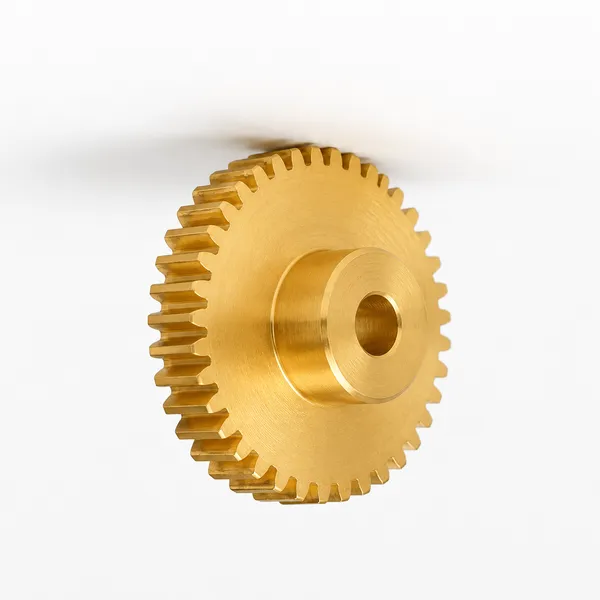
Korea Ever-Power’s spur gears for textile machinery are manufactured in 20CrMnTi case carburized (for all high-speed loom and knitting machine drives where the combination of fatigue life and surface hardness is the specification driver), C45 induction hardened (for slower-speed takeup and letoff mechanisms in weaving looms where cost is the primary criterion), and 316L stainless (for medical textile, surgical drape, and food-contact fabric production where oil contamination of the fabric surface would render the product unusable). The production range covers the complete spectrum of textile industry module and quality requirements — from M1 dobby latch gears ground to DIN 5 for the most demanding Belgian rapier loom manufacturers, through M8 carding machine gears for nonwoven production facilities. All textile machine spur gears from Korea Ever-Power are supplied with sealed housing mounting provisions and dual-lip shaft seal compatibility to prevent fibre ingress.
Noise control is the second critical requirement that distinguishes textile machinery spur gears from standard industrial gears. A weaving shed operating 100 rapier looms at 850 picks per minute generates ambient noise levels of 85–95 dB(A) — well above the 85 dB(A) action level that requires hearing protection for workers in the EU and most jurisdictions. Spur gears are a significant contributor to this noise — each loom contains 40–80 spur gears of various sizes, and their combined gear mesh frequency noise at 850 RPM × 20–40 teeth = 283–567 Hz falls in the most hearing-sensitive frequency range of the human ear. The noise reduction benefit of upgrading from DIN 7 to DIN 5–6 quality class in the key loom pattern drive gears is typically 3–5 dB(A) at the operator position — a significant improvement at a cost premium of 20–35% per gear, but justified by the occupational health compliance and the operator comfort and productivity improvement in quieter working conditions.
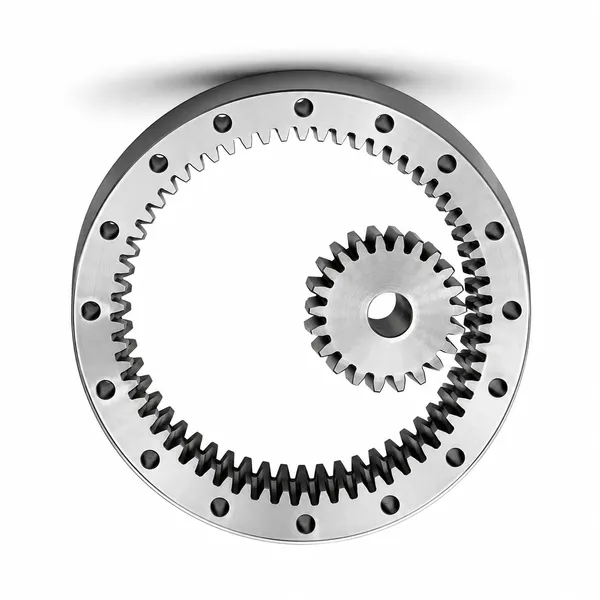
Textile Machine Application Drive Specifications
Fibre Contamination Prevention and Lubrication for Textile Machine Spur Gears
The prevention of fibre ingress into textile machine spur gear housings is an engineering challenge with no close parallel in other industries — the gear housing is surrounded by airborne fibres, fly, and dust that arise from the yarn and fabric processing, at concentrations that would be considered extreme in any other manufacturing environment. A weaving shed processing cotton fabric at 500 looms generates airborne fibre concentrations of 2–5 mg/m³ in the machine zone — each cubic metre of air in the machine area contains enough fibre to fill the gear housing void of a loom pattern drive gearbox within weeks if the sealing is inadequate. These fibres, once inside the housing, absorb moisture from the oil and form compacted plugs in oil circulation passages, causing localised oil starvation and tooth surface scoring.
TEXTILE MACHINERY SPUR GEAR — FIBRE CONTAMINATION PREVENTION
SHAFT SEALING
- • Primary seal: double-lip polyacrylate (ACM) or fluorocarbon (FKM) lip seal — ACM tolerates textile sizing agents (starch, PVA) better than NBR. FKM for high-temperature applications above 100°C ambient (near heating elements in yarn sizing)
- • Secondary exclusion: labyrinth or scraper ring on yarn-side shaft entry to catch long fibres before they reach the lip seal
- • Positive air purge: optional low-pressure clean air supply to gearbox interior maintains slight positive pressure, preventing fibre-laden air from entering through shaft clearances
LUBRICATION
- • Loom pattern and cam box gears: ISO VG 68–100 textile machinery oil with anti-sizing agent additive. The anti-sizing agent prevents PVA or starch sizing agents that enter from warp yarn from emulsifying the oil
- • Spinning and winding: ISO VG 100–150 with rust inhibitor. Humid spinning rooms (65–80% RH) accelerate oil oxidation — oil change every 1,000–1,500 hours
- • Medical and food-contact textile: NSF H1 synthetic food-grade oil mandatory
HOUSING MATERIAL
- • Standard loom gearbox: aluminium alloy housing, powder-coated cream or grey (textile industry standard colour)
- • Medical textile: 316L stainless housing, electropolished, Ra ≤ 0.8 μm, EPDM gaskets, NSF H1 food-grade oil
- • High-humidity spinning: cast iron with epoxy interior coating to prevent internal rust contaminating the oil with iron particles that would then contaminate white yarn
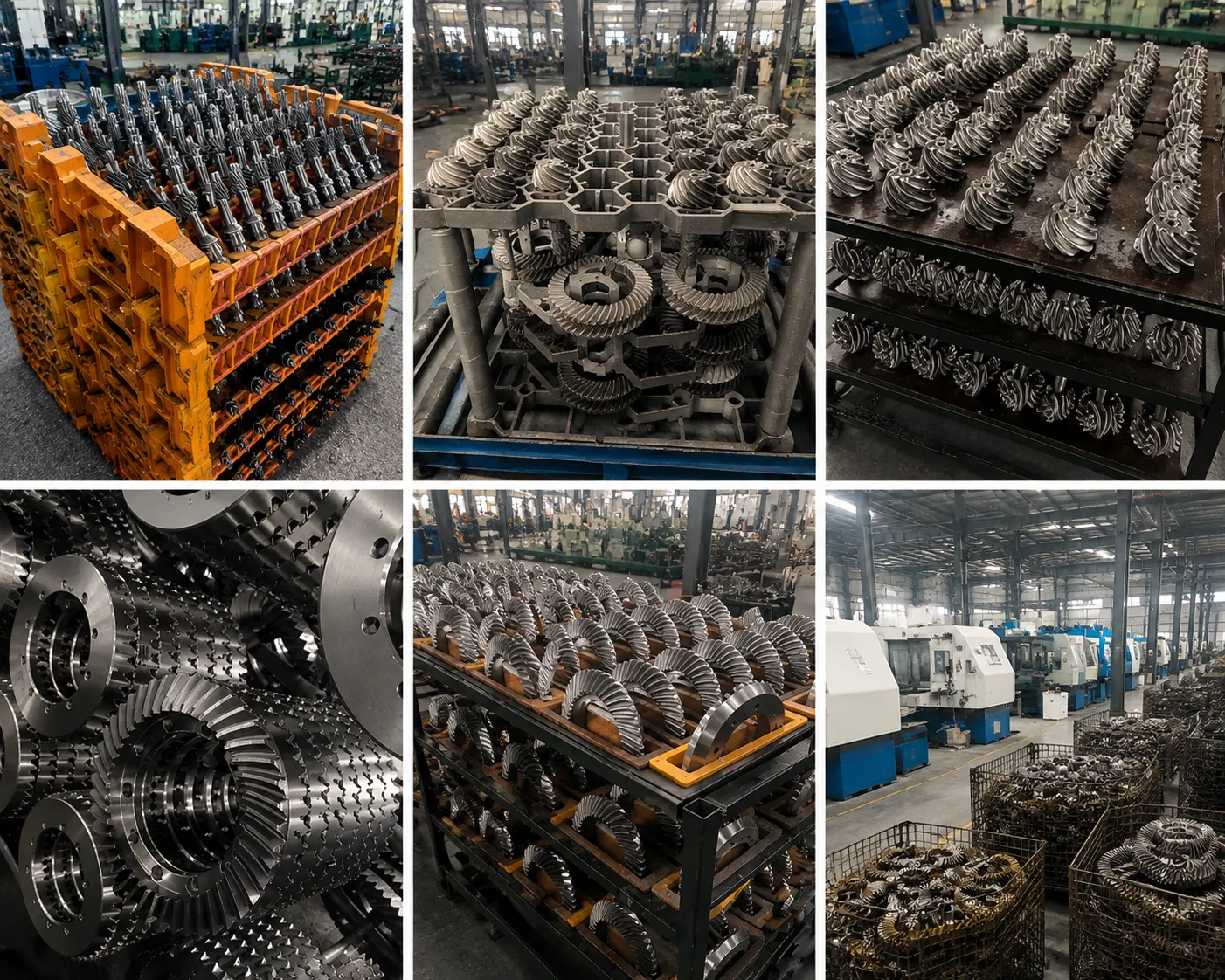
Frequently Asked Questions — Textile Machinery Spur Gears
Explore Korea Ever-Power Gear Categories
Seven precision gear product lines for textile machinery, food processing, packaging and industrial applications worldwide.
Éditeur : Cxm
 French
  English
  Italian
  Korean
  Japanese