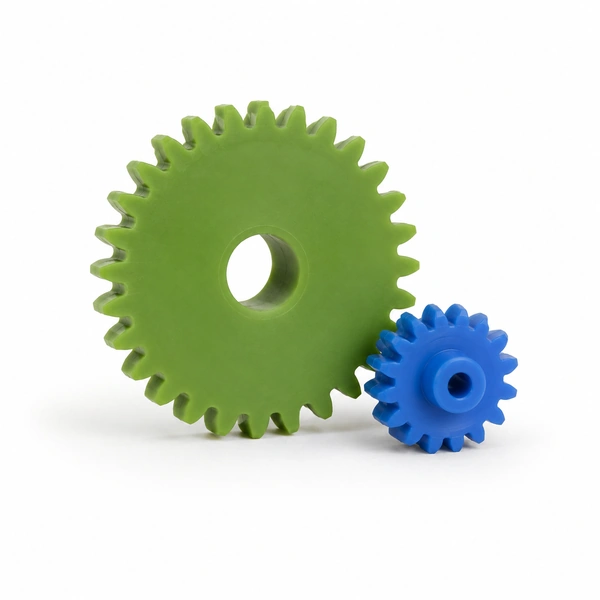
GEAR APPLICATION GUIDE · BEVEL GEAR · B08

Miter Gears and 90° Bevel Drives:
Direction Change, Speed-Neutral Right-Angle Drives and Design Principles

Miter gears — a specific subset of bevel gears where the ratio is exactly 1:1 and both gears are identical — are the most widely used mechanical element for changing the direction of a rotating shaft by exactly 90° without changing the speed or torque, making them essential in countless industrial machines, agricultural implements, food processing equipment, and precision instruments. This guide covers straight miter gears, spiral miter gears, and angular bevel drives from 10° to 170° shaft angle, with detailed specification guidance for the principal industrial and commercial applications and selection criteria for choosing between straight and spiral tooth forms across different speed and load ranges.

20CrMnTi · C45 · 316L · Brass · M1–M12
1:1 Ratio · Straight & Spiral · DIN 6–9
Industrial · Instrument · Food · Agricultural

DEFINING FEATURE

Ratio = 1:1

A miter gear pair is uniquely defined by its 1:1 ratio — both gears are identical (same number of teeth, same pitch cone angle of 45°, same module) and the pair changes shaft direction by exactly 90° without any speed change. This is the key distinction from a standard bevel gear set where the ratio is ≠ 1:1

MODULE RANGE

M1 – M12

Miter gear module range. Instrument and food tray drive: M1–M2. General industrial direction change: M2–M5. Machine tool auxiliary: M3–M6. Agricultural implement: M5–M10. Heavy industrial direction change drive: M8–M12. The same gear pair can be used for 45°+45° = 90° total shaft angle, or any equivalent

TOOTH FORM

Straight / Spiral

Straight miter gears: for PLV below 5 m/s or where cost is primary. Spiral miter gears: for PLV above 3 m/s, or where noise <70 dB(A) is required, or where load capacity must be maximised in the available housing space. No thrust cancellation advantage of double-helical — each shaft still carries net axial load from the spiral helix

KEY DESIGN RULE

45° Pitch Angle

Both gears in a miter pair have a pitch cone angle of exactly 45° — this is the geometric consequence of the 1:1 ratio and 90° shaft angle. For non-90° shaft angles with 1:1 ratio (e.g. 60° or 120°), both gears have a pitch cone angle of half the shaft angle (30° or 60° respectively)

Miter Gear Design Principles — Geometry, Materials, and Application Engineering

The miter gear is perhaps the most elegantly simple power transmission element in mechanical engineering — two identical gears, each at 45° to their shaft axis, meshing to redirect power through a precise 90° turn with no change to speed, torque, or power. This simplicity is also its greatest commercial advantage: because both gears in a miter pair are identical, a manufacturer needs only one part number to supply both positions, reducing inventory cost and simplifying procurement. The geometric consequence of the 1:1 ratio and 90° shaft angle — that the pitch cone half-angle equals 45° — also means that the spiral bevel tooth geometry of a miter gear is symmetric: the hand of spiral on one gear is opposite to the other, so either gear can be placed on either shaft position, further simplifying assembly and spare parts management.

Korea Ever-Power’s miter gears and 90° bevel drives are manufactured in a comprehensive range of materials matched to the application environment and load rating: 20CrMnTi case carburized (for high-speed, high-load industrial miter gear drives), C45 induction hardened (for medium-duty general industrial direction changes), 316L stainless (for food, pharmaceutical, and chemical industry miter gear drives where corrosion resistance is required), brass CuZn39Pb3 (for low-duty instrument, control, and light auxiliary drives), and nylon MC901 (for completely dry-running, non-contaminating miter gears in food packing and filling lines). The production range covers M1 through M12 in both straight and spiral miter gear forms, in DIN 6 through DIN 9 quality class depending on the application speed and load requirements.

The principal design decision in selecting a miter gear for a new application — or replacing a worn miter gear — is the choice between straight bevel and spiral bevel tooth form. This choice is determined by three criteria: (1) Pitch line velocity: at PLV below 3 m/s, straight bevel gears are acceptable and lower in cost. Above 3 m/s, the tooth impact frequency of straight bevel gear engagement generates audible noise that exceeds the machine’s noise specification in most applications — spiral bevel is required. (2) Load capacity: spiral bevel miter gears have 20–35% higher load capacity than straight bevel in the same pitch diameter, because the overlapping tooth contact of the spiral form distributes the load over a longer arc of contact. If the straight bevel design is marginal in load capacity, upgrading to spiral bevel may allow the same centre distance to carry the required load without increasing the module. (3) Axial thrust handling: straight bevel miter gears produce equal and opposite axial thrust loads on both shafts — the net axial force on the gear pair is zero, but each shaft individually carries an axial component. Spiral bevel miter gears produce axial thrust that varies with the hand of helix — selecting the correct hand of helix is important for ensuring the axial thrust acts in the preferred direction on each shaft bearing.
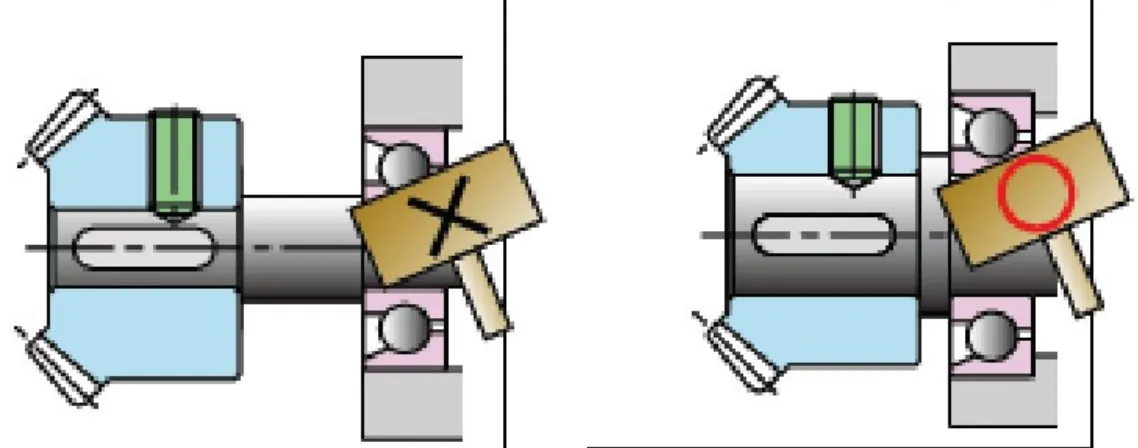
bevel gear installation miter gear 90 degree drive Korea Ever-Power
Korea Ever-Power miter gear pair installation and contact pattern verification — M4 straight bevel miter gears, 20 teeth each, 45° pitch cone angle, C45 induction hardened HRC 48–54, DIN 8 quality class, industrial direction-change drive application. Contact pattern shown under blue marking at 50% rated torque: tooth face coverage 50–60% of tooth width, centred on the pitch cone mid-point — the correct contact pattern for straight bevel gears that spreads toward the heel (large end) under full rated torque from housing deflection. Mounting distance of both gears is confirmed at assembly by adjusting the axial position on each shaft until the contact pattern is centred at 50% load. Korea Ever-Power supplies miter gear pairs with the nominal mounting distance dimensions on the measurement certificate to facilitate field installation and contact verification.

Miter Gear Application Specifications by Industry

Industrial Machinery — M2 to M8

The largest volume miter gear application category — industrial machines in every sector use miter gears to redirect power between shafts that cannot be co-planar due to the machine’s physical layout. Conveyor take-off drives (redirecting a motor shaft to a right-angle take-off for a perpendicular conveyor branch), machine tool cross-slide drives, agricultural fertiliser distributor drives, and wood processing machine feed roll drives all use straight or spiral miter gears in the M3–M8 module range with C45 induction hardened or 20CrMnTi carburized tooth surfaces. The selection between these two materials follows the module and duty: M3–M5 up to 5 kW: C45 induction hardened is cost-effective. M5–M8 above 5 kW or at duty above 2,000 hours/year: 20CrMnTi carburized for the improved fatigue life. Korea Ever-Power maintains stock of the most common industrial miter gear sizes in M2, M2.5, M3, M4, M5, M6 with tooth counts of 16T, 18T, 20T, 24T — the standard sizes used in the majority of industrial machine designs globally.

Standard stock: M2–M6, 16T–24T, C45 or 20CrMnTi

Food and Pharmaceutical — Stainless and Food-Grade

Food processing, pharmaceutical production, and medical device assembly require miter gears manufactured in 316L stainless steel or food-grade nylon MC901 for operation in washdown environments and direct or incidental product contact zones. 316L stainless miter gears at M1.5–M4 are used in filling machine drive trains, conveyor direction changes on stainless conveyor systems, and packaging line right-angle drives where CIP cleaning with NaOH and peracetic acid is applied daily. The stainless miter gear cannot be case carburized (austenitic stainless is not hardenable by carburizing) — the tooth surface hardness is limited to approximately HB 200 in the annealed condition, or HV 900 after gas nitriding (a specialty process for 316L that is more expensive than standard nitriding of carbon steel). Korea Ever-Power supplies 316L stainless miter gears to the food industry in both standard module sizes and custom tooth counts, with NSF H1 lubricant compatibility and electropolished surfaces Ra ≤ 0.8 μm for EHEDG hygienic design compliance.

316L stainless · NSF H1 compat. · EHEDG design

Instruments and Control — Brass and Plastic

Precision instruments, flow meters, position encoders, valve actuators, and HVAC control drives use miter gears in M1–M2 module sizes, where the material requirements are dominated by low torque, high cycle life, and dimensional precision rather than by high load capacity. Brass CuZn39Pb3 miter gears are used in instrument applications where non-magnetic properties (near sensitive sensors), corrosion resistance without plating, or low friction against a complementary material are required. Delrin (POM) and nylon MC901 plastic miter gears are used in applications where zero metal contamination risk (near food, pharmaceutical contact, or electronic assembly) and inherent self-lubrication (running dry without periodic maintenance) are required. Korea Ever-Power’s instrument miter gears in M1–M2 are available in brass and POM from stock in 16T, 20T, and 24T configurations, with bore diameters from 3 mm through 16 mm and set screw retention as standard.

Brass CuZn39Pb3 · POM Delrin · M1–M2 stock
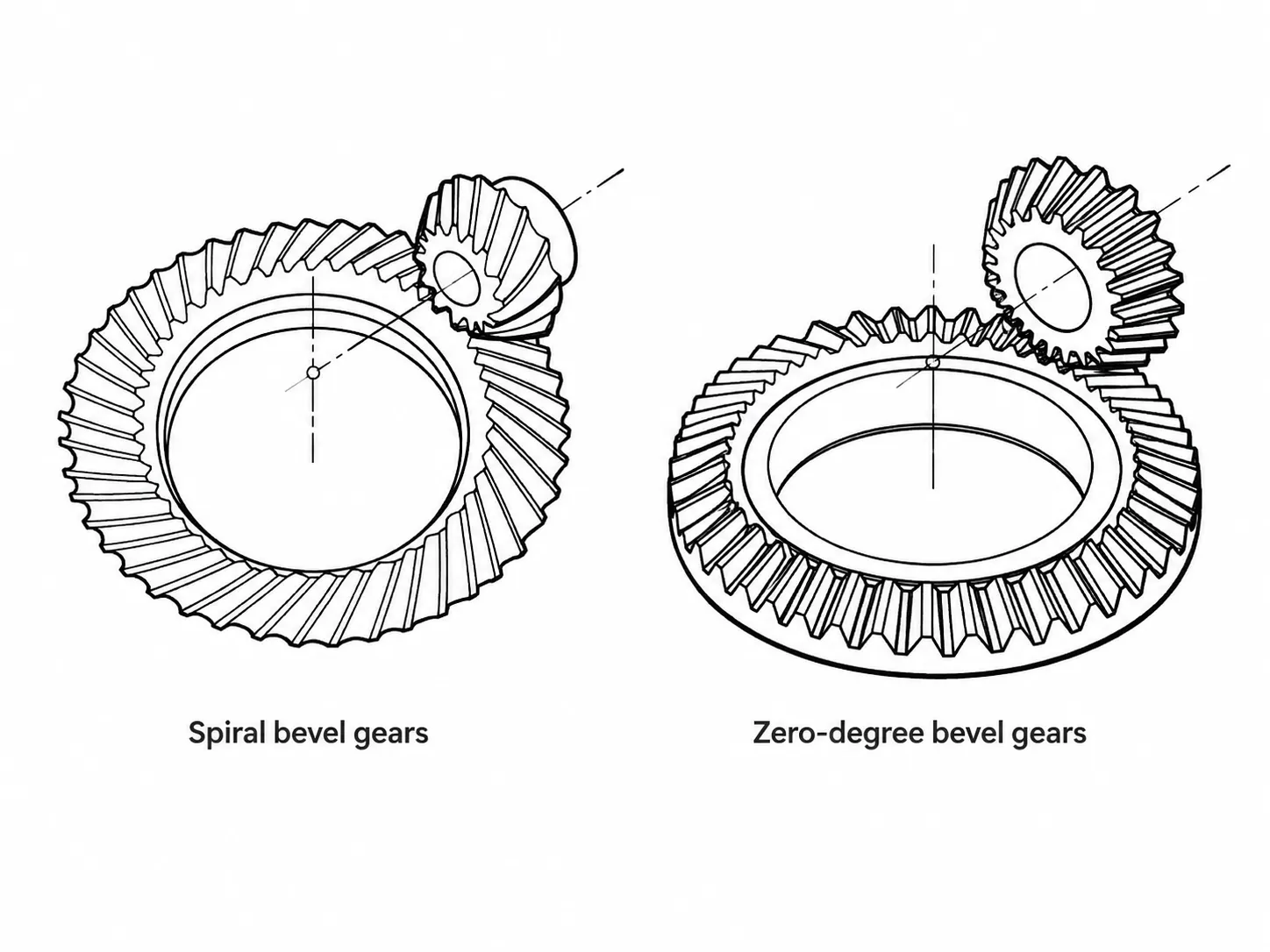
straight and spiral bevel miter gear comparison Korea Ever-Power
Korea Ever-Power straight bevel and spiral bevel miter gear comparison — M4 pairs, 20T each, 45° pitch cone angle. Left: 20CrMnTi case carburized spiral bevel miter gears (helix angle 35°) for high-speed direction-change drives above 3 m/s pitch line velocity — the spiral tooth engagement provides smooth, gradual tooth contact that reduces dynamic mesh force by 30–40% vs straight bevel at the same speed. Right: C45 induction hardened straight bevel miter gears for low-speed drives below 3 m/s where cost is the primary criterion. Both pairs are available from Korea Ever-Power stock in M2–M6 module range, with custom module and tooth count manufactured to order in 10–18 days. The spiral miter pair is supplied as a matched left-hand and right-hand pair from the same production run to ensure contact pattern compatibility — individual gears from different production runs should not be mixed in a spiral miter application as helix angle variations between runs can alter the contact pattern.

Non-90° Angular Bevel Drives — Design and Application

While 90° is the most common shaft angle for bevel gear drives, non-right-angle bevel gear pairs are used in a significant minority of applications where the machine layout requires a shaft redirection at a different angle. Agricultural PTO-driven implements (where the PTO shaft is horizontal and the implement drive must connect at 70°–80° due to the tractor chassis clearance), marine steering gear bell cranks (60°–75° shaft angles), and some machine tool cross-slide arrangements use bevel gears at non-90° angles. The geometric design of non-90° bevel gears follows the same principles as standard bevel gears, with the pitch cone angles of the two gears (δ₁ and δ₂) determined by: tan(δ₁) = sin(Σ) / (z₂/z₁ + cos(Σ)), where Σ is the shaft angle and z₁/z₂ is the gear ratio. For non-90° miter gear (ratio 1:1), both pitch cone angles = Σ/2.

NON-90° BEVEL GEAR SHAFT ANGLE REFERENCE

45° SHAFT ANGLE

For 1:1 ratio at 45° shaft angle: δ₁ = δ₂ = 22.5°. Used in: some paper handling machine deflectors, angle iron processing machinery. Less common commercially — most bevel gearbox designs avoid 45° because the tooth geometry becomes less efficient at acute shaft angles. Korea Ever-Power produces 45° bevel pairs M2–M6 on order.

60° SHAFT ANGLE

For 1:1 ratio at 60° shaft angle: δ₁ = δ₂ = 30°. Applications: marine steering gear, some agricultural seeder drive arrangements, special machine tool auxiliary drives. The 60° bevel gear has a compact configuration compared to 90° in some machine layouts. Korea Ever-Power stocks M3 and M4 at 60° shaft angle in C45 and 20CrMnTi.

120° SHAFT ANGLE

For 1:1 ratio at 120° shaft angle: δ₁ = δ₂ = 60°. Applications: direction reversal in confined spaces where co-planar shafts intersect at an obtuse angle. The 120° bevel gear pair reverses shaft direction while maintaining a compact crossing geometry. Custom manufacture M2–M8 from Korea Ever-Power in 15–22 days from drawing confirmation.
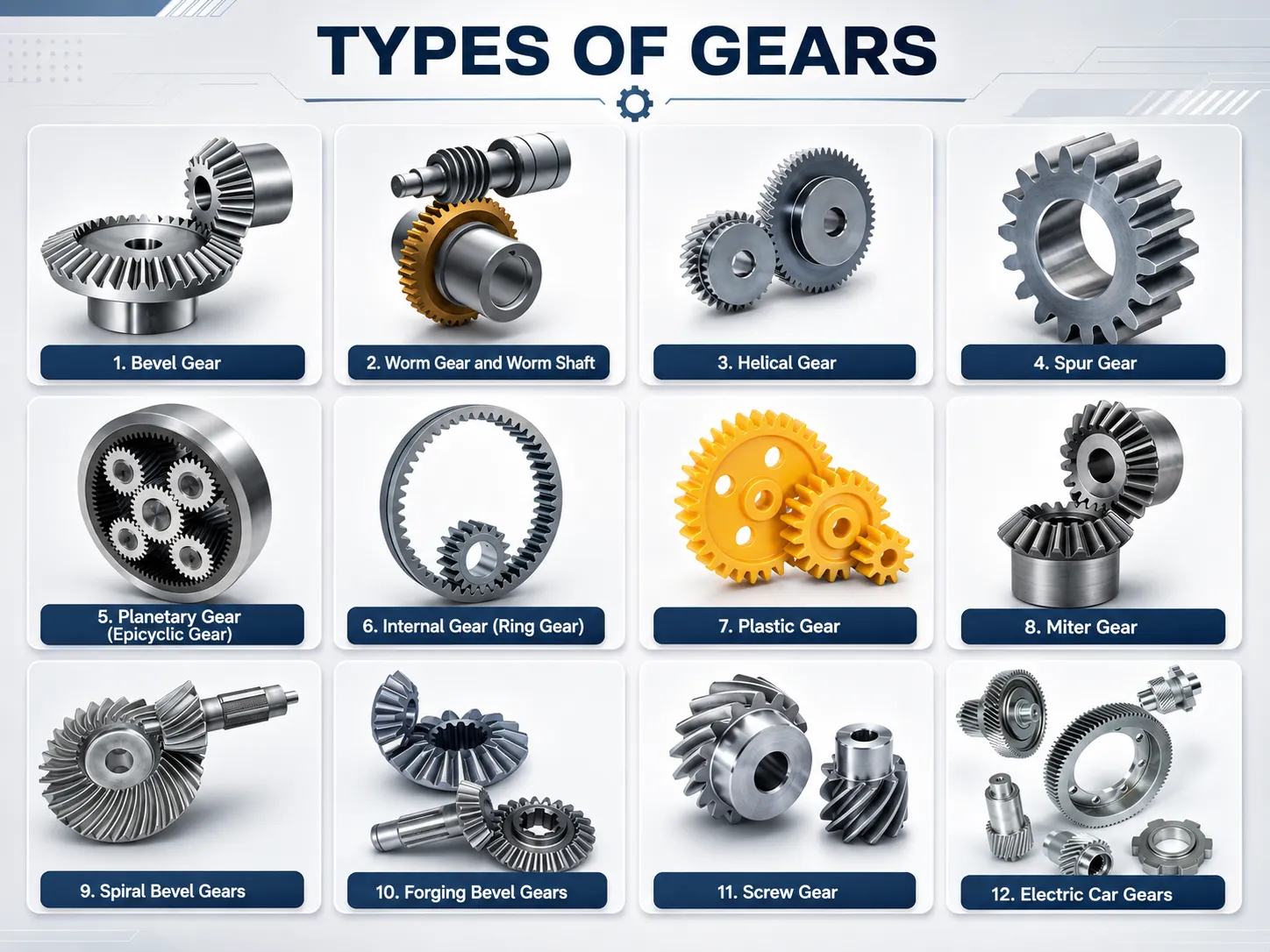
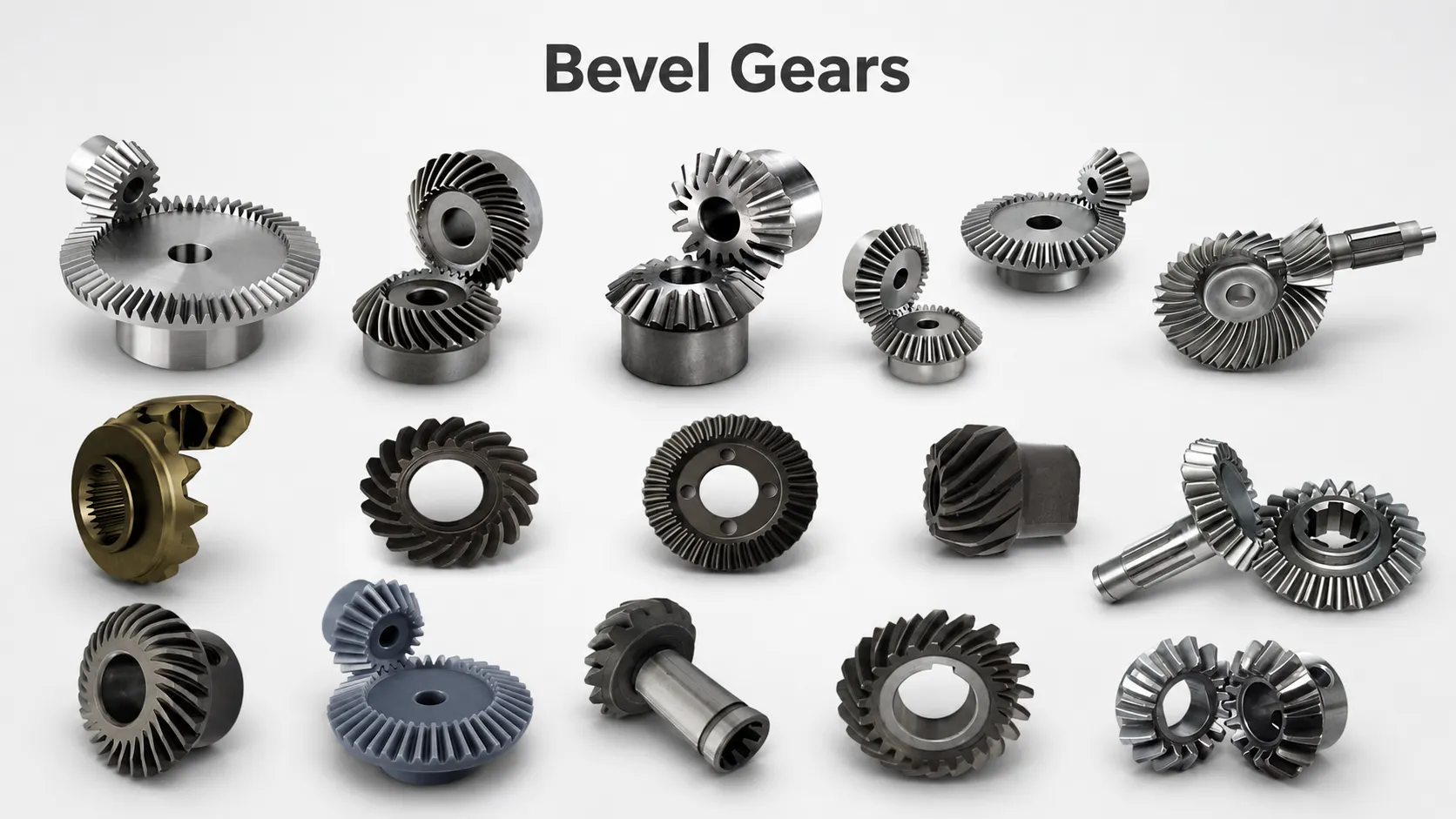
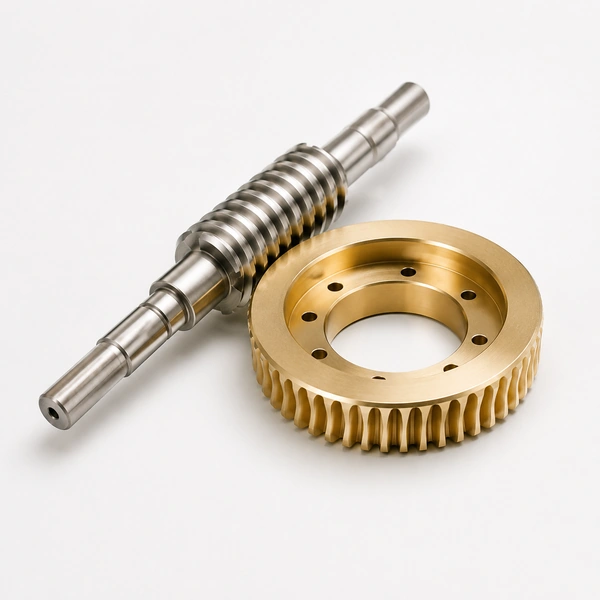
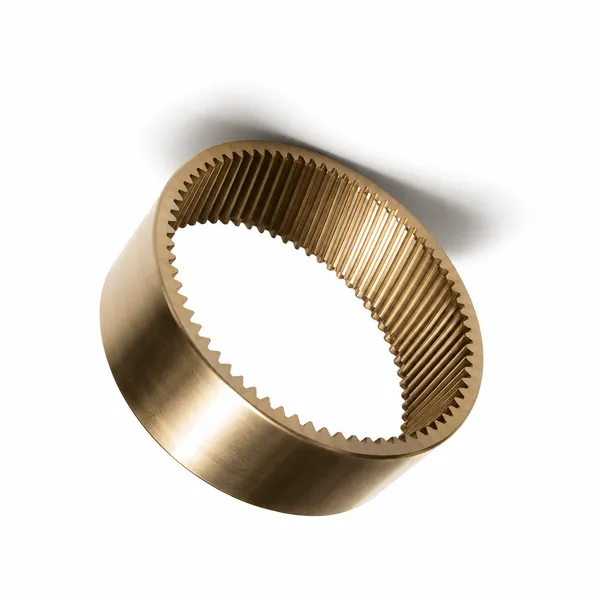
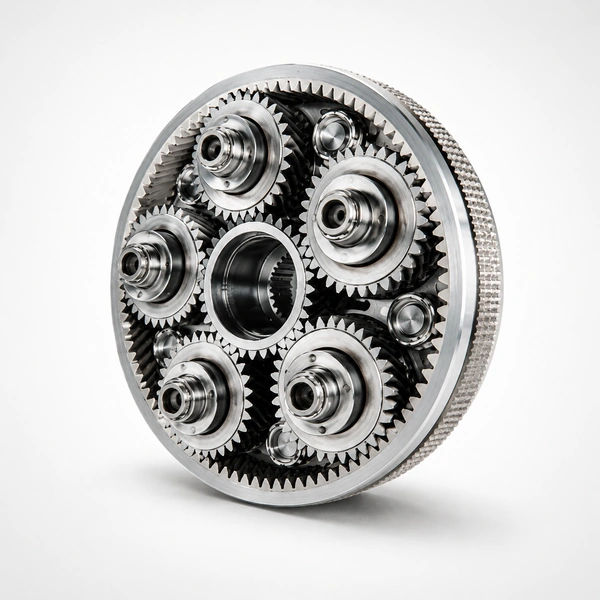
types of gears bevel miter spur helical Korea Ever-Power
Korea Ever-Power complete gear type reference — including miter bevel gears, spiral bevel gears, spur gears, helical gears, worm gear sets, and ring gears. Miter gears are available as part of Korea Ever-Power’s standard bevel gear product range, not a separate product category — the miter gear pair is treated as a bevel gear pair with ratio 1:1 and all the same design, material, quality class, and documentation options apply. The gear selection guide for miter vs standard bevel vs worm for right-angle drives is summarised: miter gear (1:1 ratio, 90° direction change only, no ratio change), standard bevel gear (any ratio, 90° or non-90°, ratio change), worm gear (high ratio, self-locking option, lower efficiency than bevel). For all three types in the same right-angle drive application, the decision tree starts with the required ratio — if 1:1, miter is the simplest and lowest-cost choice.

Frequently Asked Questions — Miter Gears and 90° Bevel Drives

Q 01

Can I replace one gear in a worn miter pair without replacing both? The pinion is more worn than the wheel.

Replacing only one gear in a worn miter pair is not recommended for miter gears at any significant duty level, even though both gears are identical and replacement of either is geometrically possible. The reason: a new gear engaging with an old, worn gear partner will not achieve the designed contact pattern from the first operating cycle. The worn gear’s tooth surfaces are not the smooth, accurately profiled surfaces that the new gear was designed to mesh with — the worn tooth flanks have irregular surface profiles from micro-pitting and abrasive wear, and the new gear’s teeth will make contact with the worn surface at different points along the tooth profile than the theoretical contact ellipse. The result: the new gear will wear at a significantly accelerated rate against the worn partner, exhausting its fatigue life in approximately 40–60% of the time it would achieve against a new partner. For miter gear applications up to M3 module and low duty (under 2 hours/day): replacing the more worn gear alone is a reasonable short-term decision if cost constraints prevent full pair replacement. For M4 and above, or at duty above 4 hours/day: always replace both gears simultaneously. Because miter gears are identical, the cost of replacing both is only double the single gear cost — not the higher cost premium that applies when replacing a large and small gear in a non-unity-ratio bevel pair.

Q 02

What is the correct backlash setting for a miter gear pair and how do I measure it at installation?

Miter gear backlash is controlled by the axial mounting distance of both gears on their shafts — moving either gear axially toward or away from the apex of the pitch cone changes the tooth contact and the backlash simultaneously. The recommended backlash range for miter gears by module: M1–M2: 0.04–0.07 mm; M2–M4: 0.07–0.12 mm; M4–M6: 0.10–0.16 mm; M6–M10: 0.14–0.22 mm. These ranges are the circumferential (tangential) backlash measured at the back cone — not the normal backlash on the tooth face. To measure backlash at installation: lock one shaft and mount a dial indicator tangentially against a tooth on the other shaft’s gear at the back cone radius. Rotate the unlocked shaft through the backlash dead band and read the dial indicator displacement — compare to the module-appropriate range above. Adjustment: move one gear axially toward the apex (reduces backlash) or away from the apex (increases backlash) by adjusting the shim thickness behind the gear hub or adjusting the shaft-to-housing register. Re-check contact pattern after any backlash adjustment — the contact pattern and backlash cannot be optimised completely independently, so iterate between pattern checking and backlash measurement until both are within specification.

Q 03

What is Korea Ever-Power’s availability and lead time for standard miter gear pairs, and what is the minimum order quantity for catalogue sizes?

Korea Ever-Power miter gear availability by category: (1) Stock items (immediate dispatch): straight bevel miter gears in M2, M2.5, M3, M4 with 16T, 20T, 24T tooth counts in C45 induction hardened and 20CrMnTi carburized, bore 8–50 mm. Standard stock bores are 8, 10, 12, 14, 16, 20, 25, 30 mm — most orders can be shipped within 3–5 working days without minimum order quantity. (2) Made-to-order standard sizes (M1–M1.5, M5–M6, non-standard tooth counts, custom bores): lead time 10–16 days from order confirmation, minimum order 2 pairs (4 gears). (3) Custom miter gears (M6–M12, spiral bevel, non-standard materials including 316L stainless, brass, and MC nylon, non-90° shaft angles): lead time 15–25 days from drawing confirmation, minimum order 1 pair for M6 and above, 3 pairs for M1–M5 custom. Spiral miter gears at M2–M5 are available as made-to-order items in 12–18 days — these are the most common upgrade path from straight miter for customers experiencing noise or load capacity issues with their existing straight bevel miter installation. Korea Ever-Power also provides a free gear selection service for customers replacing worn miter gears of unknown specification — provide the worn gear for measurement (or submit tooth count, OD, bore, and face width measurements) and Korea Ever-Power will identify the module, calculate the pitch cone angle, and quote a matched replacement pair within 24 hours.

Explore Korea Ever-Power Gear Categories

Seven precision gear product lines for industrial direction change, food processing, instrument and specialist applications worldwide.
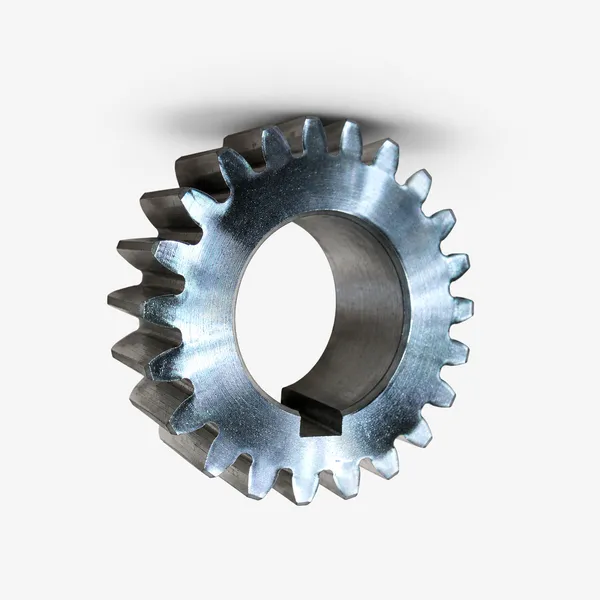
spur gear

Spur Gears

M1–M20 · in-line · industrial drive

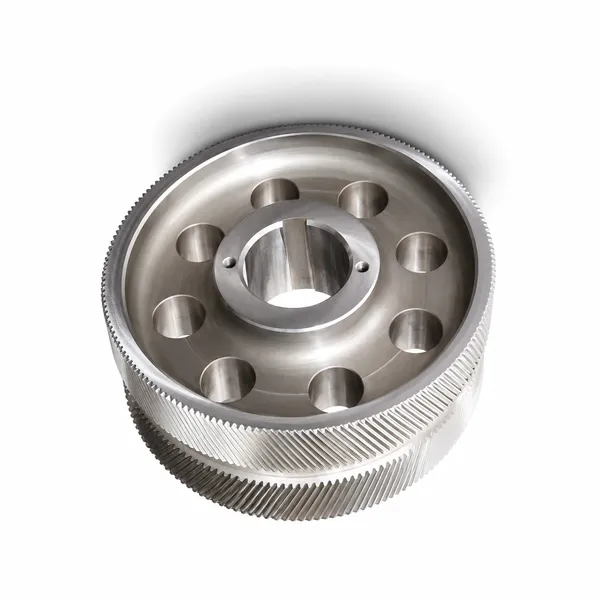
helical gear

Helical Gears

Low noise · compact gearbox · industrial

bevel miter gear 90 degree

Engrenages coniques

Miter 1:1 · 90° · straight & spiral

worm gear

Worm Gears

High ratio right-angle · self-locking

ring gear

Ring Gears

Internal · planetary · indexing table

planetary gear

Planetary Gears

Compact · high ratio · servo

plastic gear miter

Plastic Gears

Nylon miter · dry-run · food safe

GET A QUOTATION · KOREA EVER-POWER

Need Miter Gears or 90° Bevel Drives?

Korea Ever-Power manufactures C45, 20CrMnTi, 316L stainless, brass, and nylon miter gear pairs for all industrial direction change, food processing, instrument and agricultural applications — M1–M12, straight and spiral bevel, 90° and non-standard shaft angles. Stock in M2–M6 standard sizes for same-week dispatch. Custom 316L stainless and spiral miter gears 12–22 days. Free gear identification service for unknown specification replacements. ISO 9001:2015 certified.

Request a Quotation →

Éditeur : Cxm

VR Tour of Our Factory

TAGs:

porte-bagages

Figurant parmi les principaux fabricants, fournisseurs et exportateurs de crémaillères, nous proposons des crémaillères et de nombreux autres produits.

Veuillez nous contacter pour plus de détails.

Mail:[email protected]

Fabricant, fournisseur et exportateur de crémaillères

Articles récents

fr_FRFrench