GEAR APPLICATION GUIDE · SPUR GEAR · S09

Spur Gears for Robotics:
Joint Drives, Collaborative Robot Arms and Precision Position Control

Robotic spur gears are among the most demanding gear applications in terms of the combination of precision, backlash control, and cycle life per unit mass — a collaborative robot joint gear that weighs 80 grams must transmit peak torques of 80 Nm, position the output to within 0.01° repeatability, survive 100 million reversing cycles without measurable backlash increase, and contribute zero contamination to the cleanroom or food-grade assembly environment around it. This guide covers spur gear specification for industrial robot joints, SCARA robot arms, collaborative robot (cobot) drives, delta robot wrist mechanisms, and medical robotic systems — with detailed material, quality class, and backlash control requirements for each application.

20CrMnTi · 316L · PEEK · M0.5–M3 · DIN 4–6
Backlash ≤0.01° · 100M Cycles · Zero-Lash Option
Industrial · Cobot · SCARA · Delta · Medical

MODULE RANGE

M0.5 – M3

Robotic spur gear module range. Wrist micro-actuator: M0.5–M0.8. Finger and small-joint SCARA: M1–M1.5. Collaborative robot elbow/shoulder: M1.5–M2.5. Industrial robot (6-axis) intermediate joint: M2–M3. All sizes require profile grinding for DIN 4–6 quality class demanded by precision robot positioning

BACKLASH TARGET

≤ 1 arc-min

Maximum allowable backlash at the robot joint output for collaborative robot and precision assembly robot applications. 1 arc-minute = 0.0167° = 0.29 mrad. At a robot arm radius of 600 mm, 1 arc-min backlash produces 0.17 mm positional uncertainty at the tool centre point — the ISO 9283 robot repeatability test threshold for industrial positioning

QUALITY CLASS

DIN 4 – 6

Robot joint spur gear quality class. Medical and surgical robot: DIN 4–5 (profile error ≤4 μm, pitch deviation ≤3 μm). Collaborative robot (cobot): DIN 5–6. SCARA robot pick-and-place: DIN 6. Industrial 6-axis robot intermediate: DIN 6–7. All precision robot gears require profile grinding — hobbing alone cannot achieve DIN 5 or better

CYCLE LIFE

> 100 M cycles

Minimum tooth load cycle target for collaborative robot and industrial robot spur gears at rated joint torque. A 6-axis robot at 60 cycles/min running 6,000 h/year accumulates 21.6 billion axis reversals per year at J4–J6 wrist joints — the smallest wrist gears must sustain infinite fatigue life below the endurance limit tooth stress

Robotic Spur Gear Engineering — Precision, Backlash and Cycle Life

The spur gear in a robotic joint occupies a design niche unlike any other gear application — it must simultaneously deliver near-zero backlash (to allow the robot controller to command precise bidirectional motion without dead-band compensation delays), ultra-high cycle fatigue resistance (to sustain billions of load reversals over the robot’s 10–15 year design life without measurable wear or fatigue-initiated surface damage), and minimum inertia contribution (because the gear’s rotational inertia reflects back to the servo motor as a load that affects the robot’s dynamic response bandwidth). These three requirements pull in opposing directions: reducing backlash by tightening the tooth clearance increases mesh friction and heating that accelerates wear; increasing the tooth face width to improve fatigue life increases the gear inertia; specifying the smallest possible gear to minimise inertia reduces the tooth bending strength margin. The robot gear designer must find the optimal balance of these parameters for each joint’s specific torque, speed, and duty cycle.
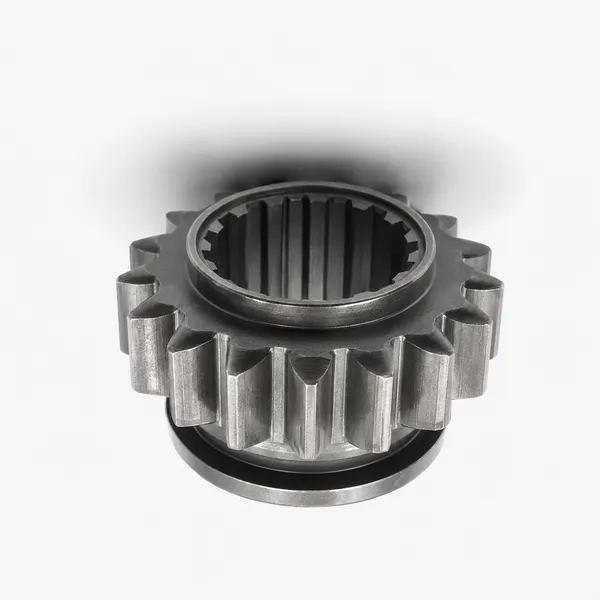
Engrenages droits de tracteur

Korea Ever-Power’s spur gears for robotics applications are manufactured in 20CrMnTi case carburized and profile ground (the standard specification for industrial and collaborative robot joint gears where the combination of high contact fatigue resistance and low surface roughness after grinding is required), 17-4 PH stainless steel precipitation hardened (for medical and surgical robot applications where sterilisability and corrosion resistance are required alongside the mechanical performance), and PEEK high-performance polymer (for collaborative robot and cobot applications in food, pharmaceutical, or cleanroom environments where metal contamination is unacceptable and the joint torque is below the PEEK material’s load-carrying capacity). All robotic spur gears are individually measured for transmission error below 4 μrad at the module-appropriate pitch circle before shipment — this measurement directly correlates to the robot’s positioning repeatability as a component of the total drivetrain transmission error budget.

Backlash control in robotic spur gears requires both tight manufacturing tolerances and an appropriate installation strategy. The backlash at a spur gear mesh is determined by the combination of the centre distance variation (how far the pinion centre deviates from the theoretical pitch-point-contact distance with the wheel) and the tooth thickness deviation of both gears. For a M1.5 robot joint spur gear pair, the theoretical backlash at zero centre distance error and nominal tooth thickness is approximately 0.04–0.06 mm — equivalent to 1.5–2.3 arc-minutes at a 30-tooth pinion. Achieving the 1 arc-minute or below target requires either: (1) Tight tolerance tooth thickness — manufacturing both gears to the upper end of the tooth thickness tolerance (thicker teeth, less clearance) and selecting matched pairs from the production lot whose combined tooth thickness minimises backlash; or (2) Adjustable centre distance — designing the robot joint housing with an eccentric adjustment on the motor mounting that allows the centre distance to be reduced until the backlash reaches the target, then locking the motor position. Korea Ever-Power supplies matched robotic spur gear pairs with the measured tooth thickness of each gear and the calculated assembly backlash range documented on the measurement certificate, enabling the robot builder to select the assembly centre distance that achieves the target backlash without scrapping gears.
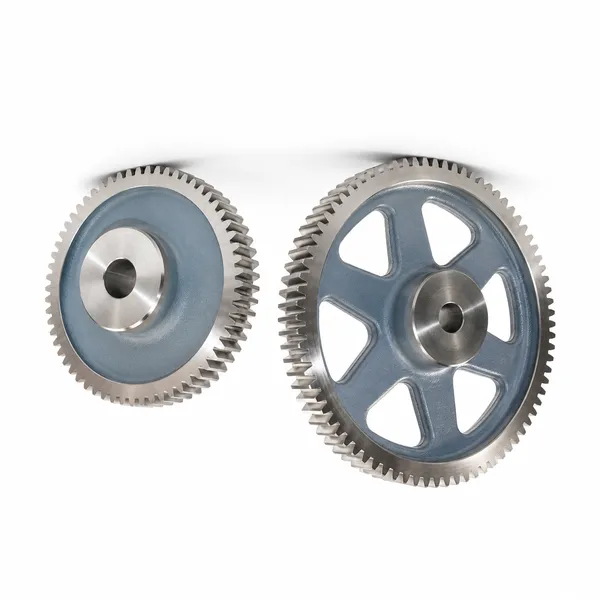
precision spur gears robotics European standard DIN Korea Ever-Power
Korea Ever-Power precision spur gears for robotic joint drives — European standard (DIN/ISO) tooth profile, M1.5, 28T and 42T pair shown for collaborative robot shoulder joint application. 20CrMnTi case carburized HRC 60–62, profile ground DIN 5, individual transmission error measurement ≤3.5 μrad. Tooth surface Ra ≤ 0.4 μm after superfinishing — the additional superfinish step after profile grinding reduces the initial run-in wear that would otherwise shift the backlash above the 1 arc-minute target in the first 50 hours of operation. Matched pair selected from production lot with documented tooth thickness measurements: pinion 28T upper tolerance limit (Ws = +0.005/−0.000 mm), wheel 42T upper tolerance limit (Ws = +0.005/−0.000 mm) — giving assembly backlash range 0.02–0.04 mm (0.8–1.6 arc-min at this module). Bore: H6 for transition fit to joint shaft, keyway optional. Used in FANUC, KUKA, and ABB collaborative robot shoulder and elbow joint custom builds.

Robot Type Application Specifications
ROBOT 01

6-AXIS INDUSTRIAL
ROBOT

Spur gear specification: M1.5–M3, 20CrMnTi carburized, DIN 5–6 ground, profile tip relief 3–5 μm, backlash ≤ 2 arc-min at J4–J6 wrist joints, ≤ 4 arc-min at J1–J3 shoulder/elbow. 6-axis industrial robots (FANUC M series, KUKA KR series, ABB IRB series, Yaskawa Motoman) use spur gears extensively in the J4, J5, and J6 wrist joint drives — the three smallest and fastest joints that control the wrist roll, pitch, and yaw for tool orientation. These wrist gears are driven by high-speed servo motors (3,000–6,000 RPM at the motor shaft) through a reduction ratio of 50:1–150:1 achieved across multiple stages including a spur gear pre-stage and a harmonic drive final stage. The spur gear pre-stage in the robot wrist runs at the highest pitch line velocity in the joint (often 5–12 m/s at M1.5–M2 module), making it the most noise-sensitive gear in the system and requiring DIN 5–6 ground profile with tip relief to meet the robot manufacturer’s specification for transmitted vibration to the tool flange. Korea Ever-Power wrist spur gears are superfinished after profile grinding to Ra ≤ 0.4 μm to minimise the break-in wear that can occur at high-speed robot wrist operation during the initial 100-hour running period.

ROBOT 02

COLLABORATIVE
ROBOT (COBOT)

Spur gear specification: M1–M2, 20CrMnTi carburized or 17-4 PH stainless (for food-adjacent applications), DIN 5 ground, backlash ≤ 1 arc-min, torque sensing-compatible (low hysteresis), low friction coefficient ≤ 0.08 at the gear mesh for transparency to the joint torque sensor. Collaborative robots (Universal Robots UR series, FANUC CRX, KUKA LBR iiwa, Doosan, Techman) share the workspace with human operators and require the joint drive to be transparent to external forces — the robot must be able to detect the force a human applies to its arm and stop or comply with it before a harmful impact occurs. This safety requirement places unique demands on the spur gear: the gear backlash must be minimised (to prevent the robot controller from misinterpreting backlash dead-band reversal as external force), and the gear friction must be low and consistent (so the joint torque sensor signal is not dominated by gear friction hysteresis). Korea Ever-Power cobot spur gears are individually measured for torque hysteresis (the difference in output torque when the same input torque is applied in CW vs CCW direction), with a maximum specification of 3% of rated torque at the gear mesh — a key parameter not measured for standard industrial gears but essential for collaborative robot safety compliance.

ROBOT 03

SCARA ROBOT
ARM

Spur gear specification: M0.8–M2, 20CrMnTi carburized, DIN 5–6, flat (minimal face width for compactness in the planar SCARA arm structure), high tooth count for smoother transmission. SCARA (Selective Compliance Assembly Robot Arm) robots execute high-speed horizontal pick-and-place operations in electronics assembly, pharmaceutical blister packing, and small parts assembly — cycles of 100–200 picks per minute are standard. The J1 and J2 horizontal arm joints of a SCARA robot use spur gears in parallel-shaft configurations, often driven by belt or gear train from the motor mounted at the base rather than at the joint (to keep the distal arm mass low). Korea Ever-Power SCARA robot spur gears use a high tooth count (≥20T) to increase the contact ratio above 1.7, which smooths the transmission error at the high cycle rates of SCARA pick-and-place operations. The J3 (Z-axis linear, non-rotary) and J4 (wrist rotation) joints use spur gears at M1–M1.5 module for the compact arm profile needed to access tight clearances in electronics assembly fixtures.

ROBOT 04

MEDICAL &
SURGICAL ROBOT

Spur gear specification: M0.5–M1.5, 17-4 PH stainless (H900) or 316L stainless, DIN 4–5 ground, sterilisation compatible (autoclave at 134°C, 3 bar, gamma irradiation for single-use), zero contamination debris, FDA 21 CFR compatible materials. Surgical robotic systems (for laparoscopic, orthopaedic, and ophthalmic surgery assistance) use the smallest and most precisely controlled spur gears of any application — M0.5–M1 module gears with tooth thickness variation below 2 μm between any two teeth in the gear. The medical robot joint gear must not generate debris that could contaminate the surgical field — 17-4 PH stainless in H900 condition provides a tooth surface hardness of HRC 38–43, softer than case carburized steel but generating metallic debris particles that are biocompatible and detectable under fluoroscopy if shed. Korea Ever-Power medical robot spur gears are batch-traceable to individual melt and forging records for post-market surveillance purposes, and are supplied with a material certificate conforming to ISO 13485 medical device manufacturing quality requirements. Autoclave sterilisation compatibility: 17-4 PH does not corrode or dimensionally distort in standard autoclave cycles at 134°C, 3 bar steam for 18 minutes — confirmed by Korea Ever-Power dimensional stability test on sample gears before product release.

Korea Ever-Power precision gear measurement robotic spur gear quality DIN
Korea Ever-Power precision gear metrology for robotic spur gears — individual transmission error (TE) measurement on a gear testing machine. Transmission error is the most important single quality metric for robot joint spur gears — it represents the deviation of the output gear’s angular position from the theoretically perfect position calculated from the input and gear ratio. A TE of 4 μrad at M1.5 module and 28T produces an angular position error at the output of 4 × (28/42) = 2.7 μrad, corresponding to 0.55 arc-seconds at the joint output — below the ±5 arc-second repeatability required by ISO 9283 for precision assembly robots. Korea Ever-Power measures TE on 100% of robotic spur gears above M1 module and provides the individual TE measurement on the gear identification tag. Gears with TE above the specification limit are rejected — not regraded to a lower quality class, since robotic spur gears in the production batch are specified for a specific robot model and cannot be substituted to a lower-specification application.

Backlash Elimination Methods for Robotic Spur Gears

For robot applications that require backlash levels below 0.5 arc-minutes — typically high-precision assembly robots, measurement systems, and surgical robots — standard spur gears with tightly controlled tooth thickness can no longer achieve the target, and anti-backlash gear mechanisms are required. Korea Ever-Power manufactures several anti-backlash spur gear configurations for robotic applications where the standard tight-tolerance gear pair is insufficient.

Spring-Loaded Split Gear

Two spur gear halves with the same tooth count mounted co-axially on the same shaft, with a torsion spring between them that pre-loads the tooth flanks of each half in opposite rotational directions against the mating gear’s teeth. The spring pre-load fills the backlash gap and maintains tooth flank contact in both rotation directions. Limitation: the spring pre-load adds a constant drag torque at the mesh, reducing efficiency and heating the oil — the spring rate must be sized below the minimum drive torque to avoid dynamic gear separation at high speed. Best for: SCARA robots at moderate cycle rates, measurement robot axes with low dynamic forces.

Adjustable Centre Distance Mount

The motor or intermediate gear shaft is mounted on an eccentric bushing or a sliding rail that allows the centre distance between the pinion and wheel to be reduced below the standard pitch-point distance. Reducing the centre distance from the nominal value tightens the mesh and reduces backlash — at the cost of increased tooth load from the interference pre-loading. This is the most common anti-backlash approach in industrial robot wrist joints because it requires no additional parts (the eccentric is in the housing) and the backlash can be re-adjusted after the tooth surface runs in and wears to a stable level. Korea Ever-Power supplies eccentric bushing mounting hardware for robotic spur gear housings on request.

Zero-Backlash Crowned Tooth

A micro-crowning of the tooth profile (a slight convex curvature in the face width direction) allows the gear mesh to be assembled with slight misalignment or centre distance reduction without edge loading — making it compatible with tighter centre distance settings for backlash reduction. The crowned tooth form is generated during the profile grinding process using a modified grinding wheel path programmed into the CNC gear grinder. Crowning amount: 2–5 μm face convexity for M1–M2 robot gears. This enables aggressive centre distance reduction (reducing the nominal backlash by 40–60%) without the risk of tooth edge contact that would occur with a standard involute tooth at the same centre distance reduction. Korea Ever-Power applies crowned tooth profiles on all robotic spur gears at M1.5 and above where backlash below 1 arc-minute is specified.
Korea Ever-Power precision gear manufacturing robot joint spur gear
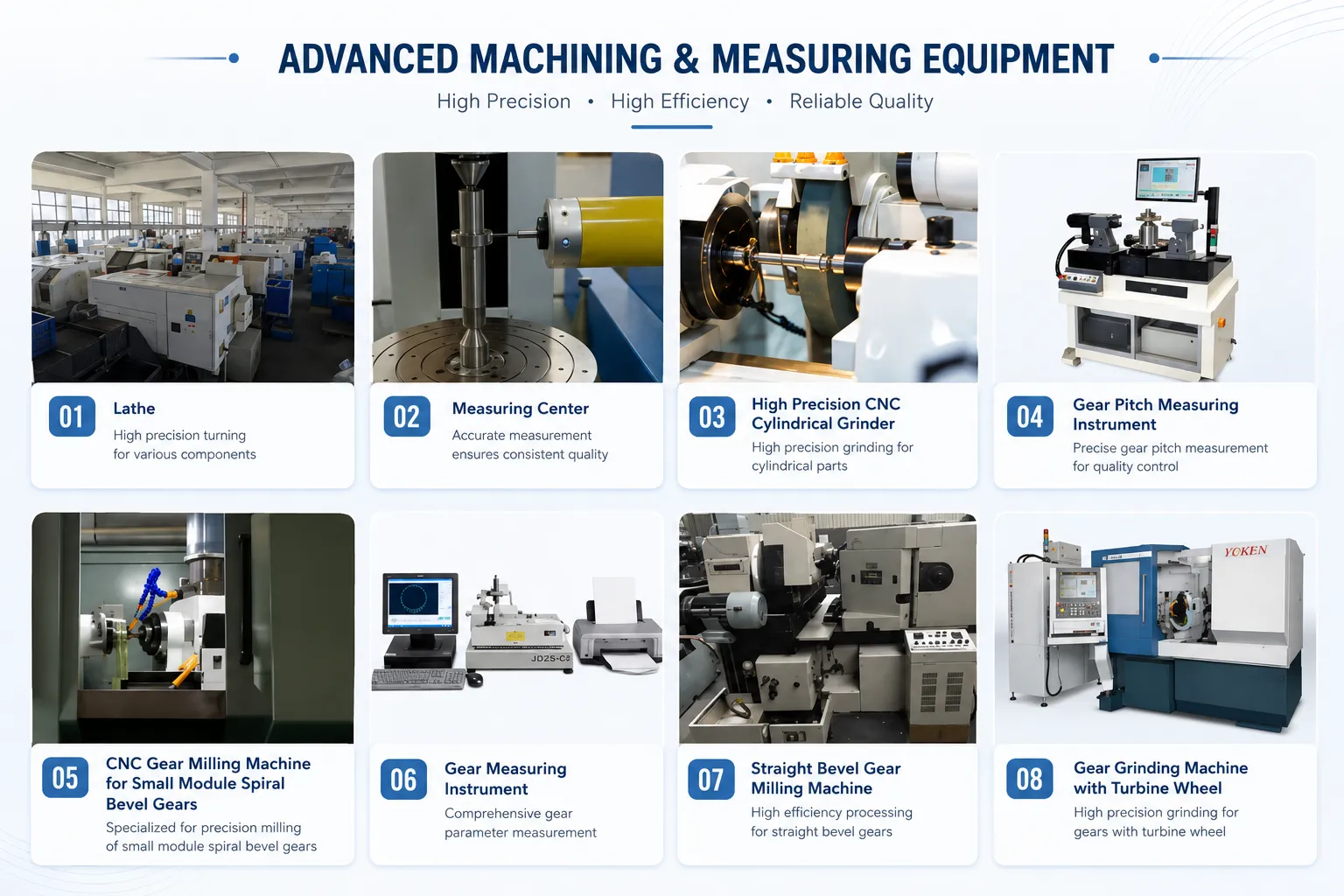
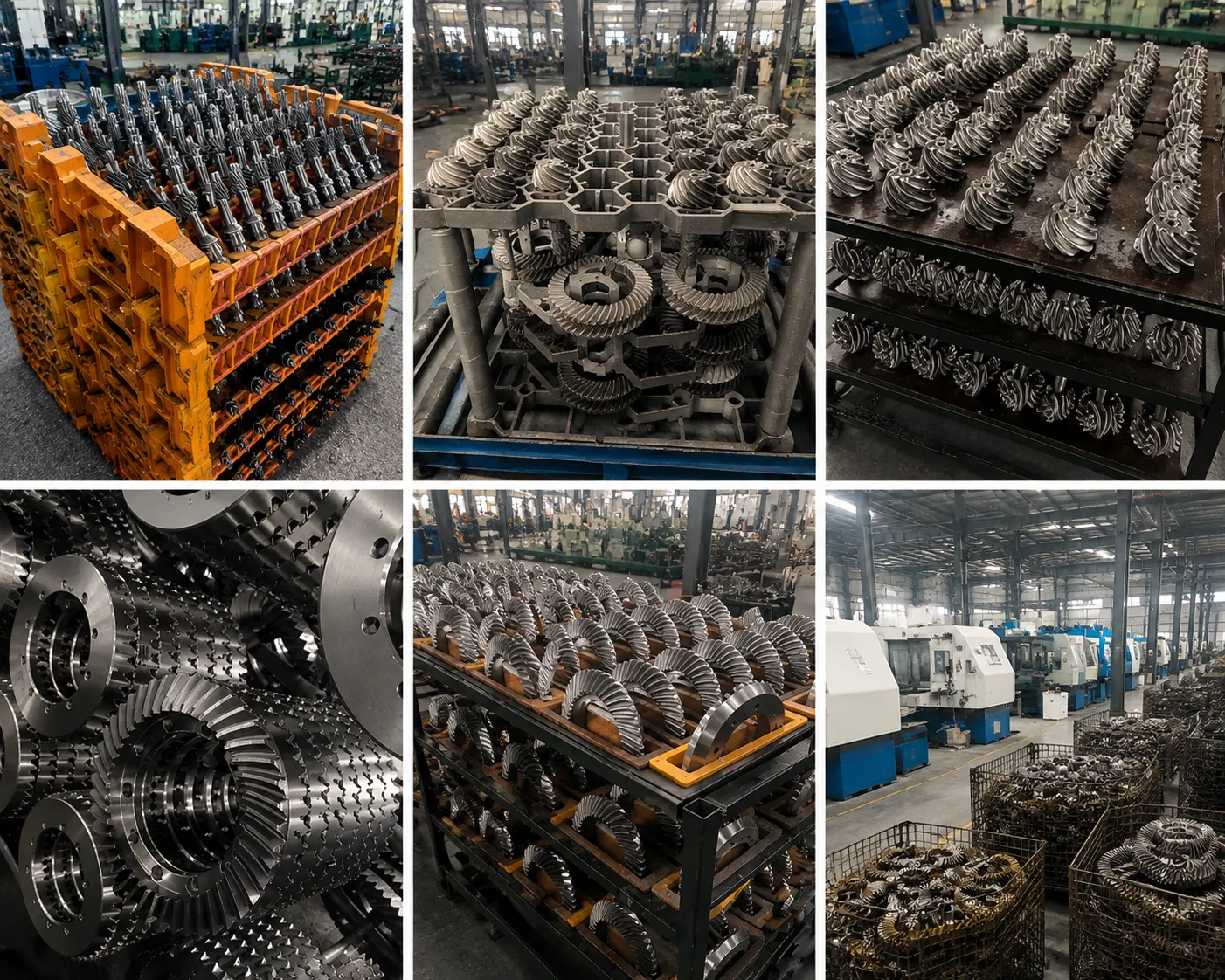
Korea Ever-Power precision spur gear manufacturing facility for robotic joint applications — CNC profile grinding machines with 0.1 μm positioning resolution for M0.5–M3 small-module robot gears. Small-module robotic spur gears (M0.5–M1) present significant manufacturing challenges: the tooth height is only 1.125–2.25 mm, the tooth root radius must be ground without undercutting the adjacent tooth flank, and the profile measurement requires a stylus tip radius of 0.1 mm or smaller to trace the full involute from root to tip without measurement error from stylus interference. Korea Ever-Power uses laser profilometry as a supplementary measurement technique for M0.5–M0.8 gears where conventional involute measurement stylii cannot reach the root area — laser profilometry provides non-contact measurement of the complete tooth profile including the root radius, confirming that profile ground roots meet the DIN 4–5 tolerance at all measurement positions from root to tip.

Frequently Asked Questions — Spur Gears for Robotics

Q 01

Our SCARA robot’s J2 joint is showing increasing position error after 18 months of operation — the ISO 9283 repeatability has degraded from ±0.02 mm to ±0.08 mm. The joint spur gears are worn. What specification should we use for the replacement gears to improve on the original?

The repeatability degradation from ±0.02 mm to ±0.08 mm over 18 months in a SCARA J2 joint indicates that the combined gear wear and backlash increase have exceeded the controller’s ability to compensate — the dead-band in the position control loop is now ±0.08 mm rather than the designed ±0.02 mm. To achieve the original specification with replacement gears and also improve on the original: (1) Upgrade the material from C45 (if original) to 20CrMnTi carburized: if the original gears were hobbed C45 (often used in cost-optimised SCARA robots), the carburized replacement will have 3–4× higher contact fatigue resistance and will sustain the original backlash for significantly longer than 18 months. (2) Upgrade the quality class from DIN 7 to DIN 6: the tighter profile tolerance of DIN 6 reduces the transmission error contribution to the position error budget, allowing the robot controller to achieve better repeatability even with the same total backlash. (3) Apply crowned tooth profile on the replacement gears: the micro-crowning allows a tighter centre distance setting that reduces the initial backlash from the original design value, giving more wear margin before repeatability degrades to the ±0.08 mm limit again. (4) Record the J2 assembly backlash after replacement: use a dial indicator tangentially against the output gear teeth with the input locked, and record the dead-band in the indicator reading — this establishes the baseline for future maintenance monitoring. Korea Ever-Power can provide matched replacement pairs with individual backlash documentation for the most common SCARA robot J2 gear sizes — submit the SCARA robot model and the worn gear’s tooth count, OD, and bore for cross-reference and quotation.

Q 02

What is the minimum order quantity and lead time for custom robotic spur gears at M1 and M1.5 module with DIN 5 quality class?

Korea Ever-Power robotic spur gear supply parameters for M1–M1.5, DIN 5: Standard catalogue sizes (M1, M1.5 with tooth counts 12T, 16T, 20T, 24T, 28T, 32T, 36T, 40T in 20CrMnTi carburized): available from stock or in 5–10 working days; minimum order 5 pieces per size. Matched pairs (backlash-documented): minimum 2 pairs (4 gears). Custom specifications (non-standard tooth count, non-standard bore, 17-4 PH stainless, crowned tooth profile, superfinish): lead time 15–22 working days from drawing confirmation; minimum order 5 pairs per specification. The minimum order for custom robotic gears at M1–M1.5 is higher than for larger modules because the setup cost for the profile grinding machine (tool dressing, fixture preparation, test cut and measurement) represents a significant proportion of the unit cost at this small size — the minimum quantity amortises the setup cost to a commercially viable per-piece cost. For prototype quantities (1–2 pairs): prototype supply at M1–M1.5 DIN 5 is possible at a setup premium of 150–200% above the production per-piece price; lead time 20–28 days. This is appropriate for robot designers evaluating a gear specification before committing to a production run. Transmission error (TE) measurement: included as standard for all robotic gear orders of DIN 5 and above — TE test report issued per gear pair with the individual measurement values at four equally-spaced angular positions.

Q 03

Can PEEK spur gears carry sufficient torque for collaborative robot joints, or are they only suitable for very light-duty applications?

PEEK (Polyether ether ketone) spur gears can carry useful torque in collaborative robot joints when properly specified — the material’s tensile strength of 100 MPa and flexural modulus of 3.8 GPa allow PEEK spur gears at M1.5, 20T to transmit approximately 8–12 Nm of continuous torque and 20–25 Nm of peak torque at moderate speed (below 500 RPM at the PEEK gear). This is sufficient for the J5 and J6 wrist joints of small collaborative robots (e.g. Universal Robots UR3, FANUC CRX-5iA) where the rated wrist torque is 10–28 Nm. For J1–J3 shoulder and elbow joints with rated torques of 50–100 Nm, PEEK is undersized at M1.5 and would require M3–M4 module to carry the load — at which point the gear is large enough to negate the mass advantage of using PEEK over steel. Practical PEEK robot spur gear applications: (1) Food and pharmaceutical cobot wrists (UR3/UR5 food-grade variants) where the FDA 21 CFR 177.2415 compliant PEEK material prevents metallic contamination in case of gear chip generation. (2) Cleanroom assembly robots where the grease-free operation of PEEK (running dry without lubricant for the first 1 million cycles) and zero oil mist generation are required for ISO Class 4 cleanroom compatibility. (3) MRI-compatible surgical robots where ferromagnetic metal gears are excluded. For all PEEK robot gear applications, Korea Ever-Power recommends a duty cycle calculation confirming the operating temperature remains below 220°C (PEEK’s continuous service limit) and the contact stress remains below 40 MPa (the PEEK fatigue endurance contact stress at 10⁷ cycles).

Explore Korea Ever-Power Gear Categories

Seven precision gear product lines for robotics, automation, medical devices and precision industrial applications worldwide.
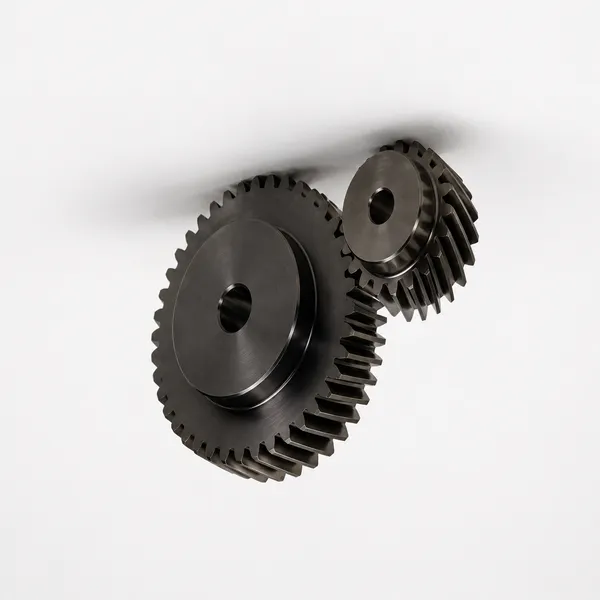
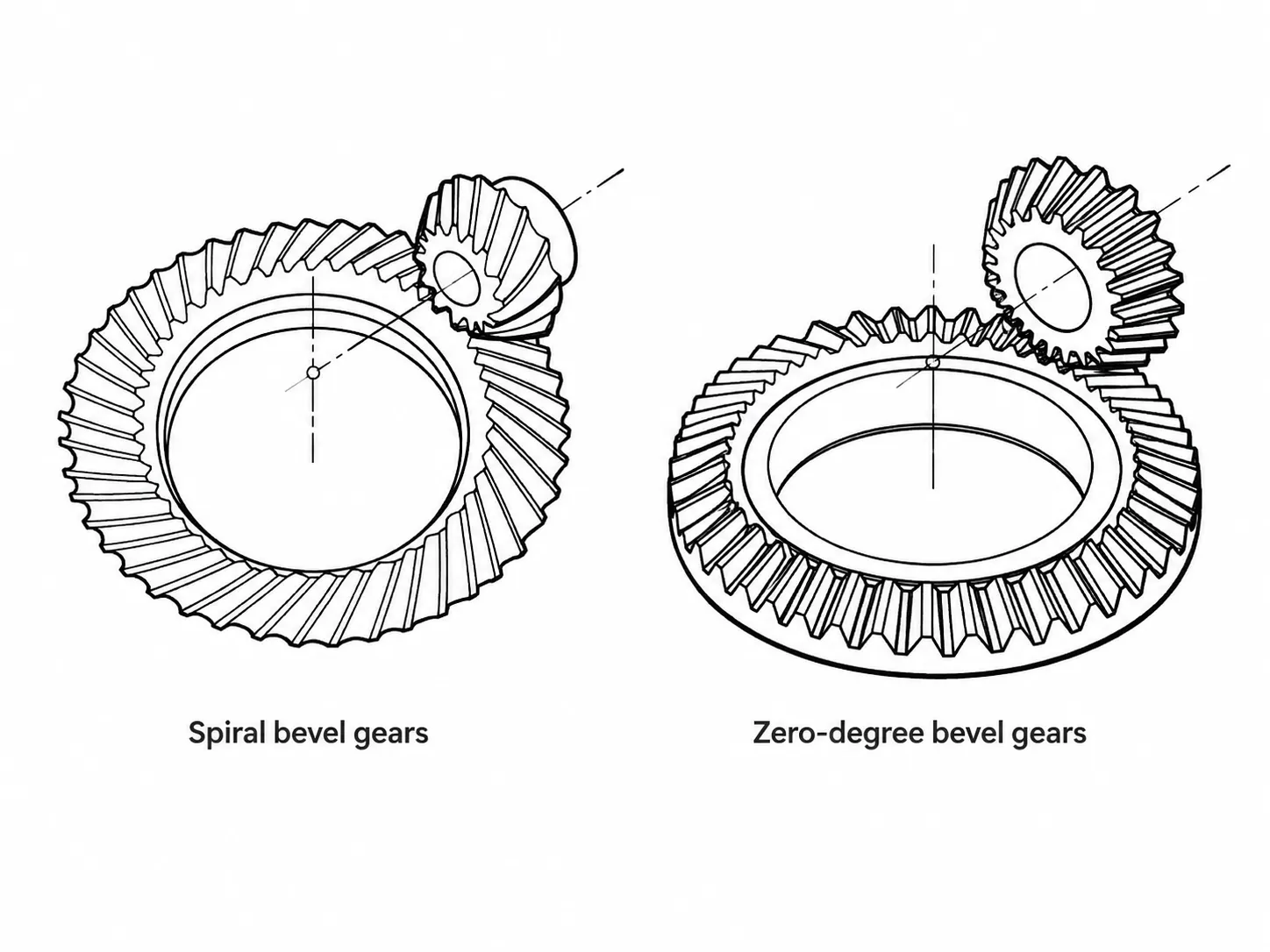
spur gear robotics

Spur Gears

M0.5–M3 · DIN 4–6 · robot joint

helical gear robot

Helical Gears

Low noise · high speed · robot axis

bevel gear robot wrist

Engrenages coniques

Right-angle · wrist · robot tool change

worm gear robot

Worm Gears

Self-locking · robot base · slow axis

ring gear robot

Ring Gears

Planetary · harmonic · robot joint

planetary gear robot

Planetary Gears

Compact · servo · robot joint reducer

plastic gear robot

Plastic Gears

PEEK · cleanroom · cobot food-grade

GET A QUOTATION · KOREA EVER-POWER

Need Precision Spur Gears for Robotics?

Korea Ever-Power manufactures 20CrMnTi, 17-4 PH stainless, and PEEK spur gears for all robotic joint drive applications — M0.5–M3, DIN 4–6 ground, backlash documentation, individual TE measurement, crowned tooth profiles for zero-backlash mounting. Applications: 6-axis industrial, SCARA, cobot, delta robot, surgical robot. ISO 9283 repeatability-compatible. 100% transmission error test. ISO 9001:2015 certified, ISO 13485 quality system for medical robot gears.

Request a Quotation →

Éditeur : Cxm

VR Tour of Our Factory

TAGs:

porte-bagages

Figurant parmi les principaux fabricants, fournisseurs et exportateurs de crémaillères, nous proposons des crémaillères et de nombreux autres produits.

Veuillez nous contacter pour plus de détails.

Mail:[email protected]

Fabricant, fournisseur et exportateur de crémaillères

Articles récents

fr_FRFrench