GEAR APPLICATION GUIDE · WORM GEAR · W06

Bronze Worm Wheels for Industrial Applications:
Material Selection, Casting Methods and Wear Mechanism Engineering

The bronze worm wheel is the defining component of the worm gear drive — its material selection, casting method, and heat treatment determine the load rating, wear life, and efficiency of the entire gearbox more than any other single design decision. The choice between phosphor bronze PB2, aluminium bronze AB2, manganese bronze, nickel bronze, and centrifugal vs sand casting is not cosmetic — it is the fundamental engineering decision that separates a worm drive that runs for 50,000 hours from one that fails in 5,000. This comprehensive guide covers all industrial worm wheel bronze materials, casting methods, running-in procedures, lubrication requirements, and the failure modes that distinguish one material choice from another in real industrial service.

PB2 · AB2 · CC480K · C95500 · Centrifugal Cast
Ratio 5:1–100:1 · 42CrMo4 Worm · VG 220–460
Conveyor · Hoist · Mixer · Material Handling

STANDARD MATERIAL

PB2 / CC480K

Phosphor bronze CuSn12 (GB/ISO designation PB2, European EN CC480K) — the most widely used worm wheel material globally. Tensile strength 230–270 MPa (centrifugal cast), σ_H permissible ≈ 180–210 MPa for case-hardened steel worm pair

HEAVY DUTY OPTION

AB2 / C95500

Aluminium bronze CuAl10Ni5Fe4 (ISO AB2, ASTM C95500) — tensile strength 650–700 MPa, permissible contact stress σ_H up to 280 MPa. 35–50% higher load rating than PB2. Required for high-duty worm gears above 100 kW, hoists above 10 tonne, and continuous-duty industrial conveyors

CASTING METHOD

Centrifugal

Centrifugal casting produces a superior grain structure in worm wheel blanks vs sand casting — the centrifugal force segregates impurities to the bore cavity (which is machined away), leaving a dense, fine-grained bronze rim with 15–25% higher tensile and fatigue strength than equivalent sand-cast material

WORM SHAFT MATERIAL

42CrMo4 HRC 55–60

Induction hardened 42CrMo4 (or case carburized 20CrMnTi) worm shaft paired with PB2 or AB2 bronze wheel is the universal standard for industrial worm gear sets. The hardness differential (HRC 56–60 worm vs HB 75–100 bronze wheel) ensures the worm thread polishes under running-in rather than wearing

Bronze Worm Wheel Material Selection — The Complete Engineering Guide

The selection of the correct bronze alloy for an industrial worm wheel is the single most impactful design decision in worm gear engineering. Unlike spur or helical gear design, where the tooth material contributes primarily to fatigue strength and the surface treatment provides hardness, the worm wheel bronze must simultaneously provide: (1) adequate contact fatigue strength to resist pitting under the high Hertzian contact stresses at the worm-wheel tooth contact ellipse; (2) adequate bending fatigue strength to resist tooth root fracture under the cyclic bending load from the worm thread engagement; (3) low friction coefficient against the hardened steel worm thread to minimise efficiency losses and heat generation; and (4) compatibility with the specified gear oil at the operating temperature — some bronze alloys, particularly aluminium bronze AB2, react with certain extreme pressure (EP) oil additives and should be paired with only approved lubricant types.

Korea Ever-Power’s bronze worm wheels for industrial applications are available in four principal materials — PB2 phosphor bronze centrifugal cast (standard for the majority of industrial worm gear applications), AB2 aluminium bronze centrifugal cast (for high-duty and hoist applications), CC499K manganese bronze (for moderate-duty applications where PB2’s cost is a constraint), and nickel silicon bronze (for food industry corrosion resistance combined with higher strength than PB2) — all manufactured in-house from Korea Ever-Power’s own bronze casting furnace to controlled chemical composition, with material certification supplied with every worm wheel order.

The distinction between centrifugal-cast and sand-cast bronze worm wheels is significant enough to specify explicitly in purchasing documentation, even though many suppliers default to sand casting for all but the largest worm wheels. In centrifugal casting, the liquid bronze is poured into a rotating cylindrical mould — the centrifugal force compresses the molten metal outward toward the mould wall (where the rim section, including the future tooth surface, is located) while the centrifugal segregation of porosity and impurities drives them toward the bore axis, which is subsequently machined away. The result is a rim section with 15–25% higher tensile strength and 20–30% higher contact fatigue resistance than sand-cast material of identical alloy composition. For worm wheels above 80 mm OD, Korea Ever-Power specifies centrifugal casting as the default production method — sand casting is used only for small worm wheels below 60 mm OD where centrifugal casting is impractical.
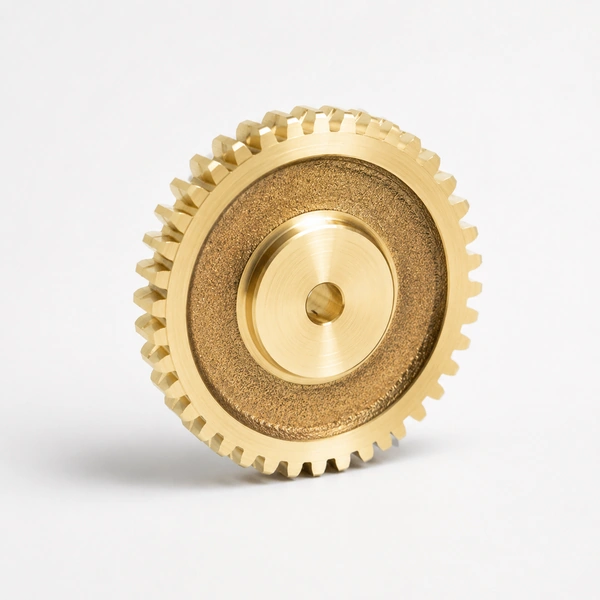
bronze phosphor brass worm wheel industrial application Korea Ever-Power
Korea Ever-Power centrifugal-cast phosphor bronze PB2 (CuSn12) worm wheel for industrial conveyor and material handling worm gear application — OD 280 mm, centre distance 100 mm, 40 teeth, ratio 40:1 (1-start worm). Material chemical composition: Cu ≥ 87%, Sn 11–13%, P 0.05–0.4%, Pb ≤ 0.1%. Hardness: HB 75–100. Centrifugal cast blank — rim section density ≥ 8.85 g/cm³ (theoretical maximum 8.90). Brinell hardness 75–100 HB throughout rim cross-section (uniform, confirming sound centrifugal cast structure without porosity). Material certificate with chemical analysis and hardness results supplied with each worm wheel. Hobbed teeth with Ra ≤ 1.6 μm — requires running-in at reduced load for the first 50–100 hours to achieve the polished contact surface that improves efficiency and extends service life.

Bronze Alloy Comparison — Properties and Application Selection

MATERIAL / DESIGNATION UTS (MPa) σ_H PERM. VS HARDENED WORM EP OIL COMPAT. BEST FOR
PB2 — CuSn12 (CC480K) 230–270 180–210 MPa Excellent All grades Standard industrial, conveyor, packaging, up to 100 kW
AB2 — CuAl10Ni5Fe4 (C95500) 650–700 250–280 MPa Excellent with grade Sulfur EP NOT OK Heavy-duty >100 kW, hoist above 10T, marine
PB4 — CuSn12Ni2 (CC484K) 290–320 200–230 MPa Excellent All grades Improved-spec alternative to PB2, medium-heavy duty
Nickel Si Bronze — CuNi2Si (C64700) 620–660 240–270 MPa Good All grades Food, corrosive env., high strength + corrosion resistance
Plastic (POM/MC Nylon) wheel 60–90 30–50 MPa OK (special pairing) Grease only Very light duty, corrosion-free, no lubrication access

ALUMINIUM BRONZE (AB2) — SPECIAL REQUIREMENTS

AB2 aluminium bronze worm wheels require specific lubrication attention that is not required for PB2 phosphor bronze. Sulfur-bearing extreme pressure (EP) additives — present in virtually all GL-5 hypoid gear oils and many GL-4 industrial gear oils — react with the aluminium in AB2 bronze to form aluminium sulfide compounds that precipitate on the tooth surface, causing accelerated wear and surface roughening. The consequence: using a standard GL-5 gear oil in a worm gearbox fitted with AB2 worm wheels typically reduces the worm wheel life to 30–40% of the expected life for that bronze material.

Correct lubricants for AB2 aluminium bronze worm wheels: phosphate ester-based or polyglycol (PG) worm gear oils without sulfur EP additives; or mineral oil with non-sulfur anti-wear additives (zinc-phosphate ZDDP type). Klüber Klüberoil GEM 1-150 N and Shell Omala S4 WE series are examples of worm gear oils confirmed as compatible with AB2 bronze. Always verify lubricant compatibility with the worm wheel material before specifying — contact Korea Ever-Power or the oil supplier for AB2 compatibility confirmation of any specific oil grade.

WORM WHEEL RUNNING-IN PROCEDURE

New worm wheels — whether PB2 or AB2 — must be run in at reduced load for the first 50–100 operating hours to allow the bronze tooth surface to polish under the sliding contact with the hardened worm thread. This running-in process smooths the initial hobbing surface roughness (Ra 1.6–3.2 μm) to the polished surface (Ra 0.2–0.4 μm) that provides optimal EHL oil film formation and minimises ongoing wear rate. A worm gearbox put immediately into full-load service without running-in typically shows 2–3× higher wear rate in the first 500 hours than one that has been properly run in.

Recommended running-in schedule: Hours 0–20: 25% of rated load. Hours 20–50: 50% of rated load. Hours 50–100: 75% of rated load. Hours 100+: full rated load. After running-in period: drain the initial oil charge (which will contain fine bronze wear particles from the polishing process), flush with clean oil, and refill with fresh oil to the specified grade before returning to full-load service. The bronze particle contamination in the first oil change is normal and expected — it does not indicate a fault.
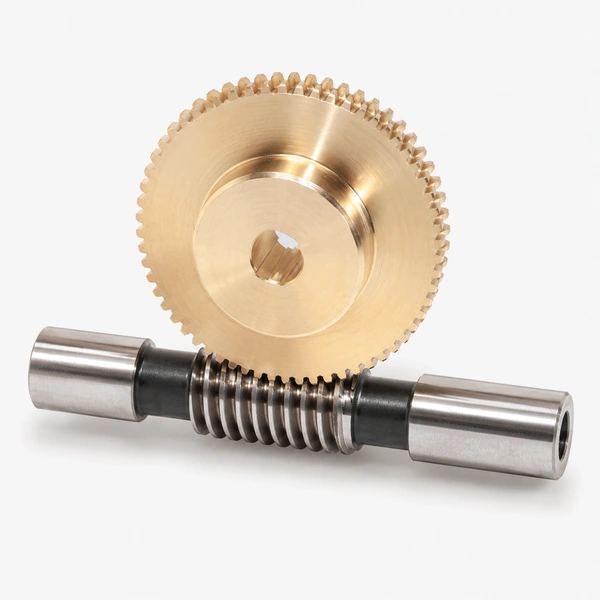
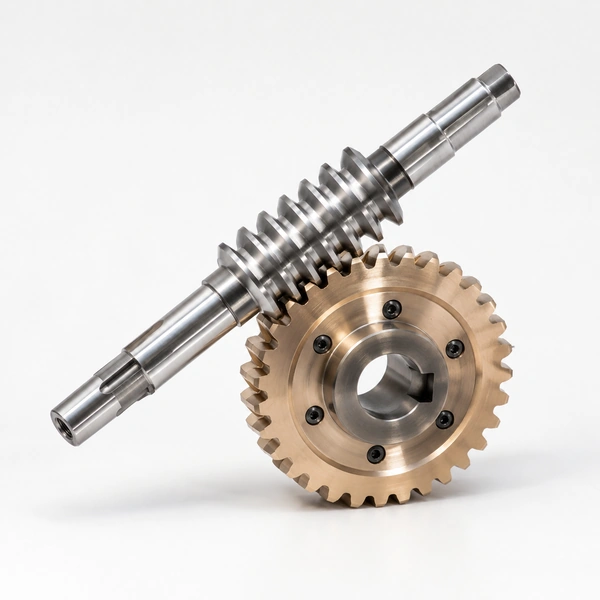
customized worm gear set industrial bronze wheel Korea Ever-Power
Korea Ever-Power customised worm gear set for heavy-duty industrial conveyor application — 42CrMo4 induction hardened worm shaft (HRC 56–60 thread surface, ground to Ra ≤ 0.4 μm), paired with AB2 aluminium bronze centrifugal-cast worm wheel. Centre distance 160 mm, ratio 30:1 (2-start worm), input 1,450 RPM, output torque 4,200 Nm. Permissible contact stress verified against ISO 14521 worm gear standard at σ_H = 258 MPa (below AB2 limit of 280 MPa at continuous rated load). Supplied as matched set with shaft bore dimensions, keyway, and oil fill type specified per customer gearbox drawing. Individual material certificate and dimensional inspection report. Also available: complete custom worm gearbox assembly in K-series cast iron housing or stainless housing for hygienic applications.
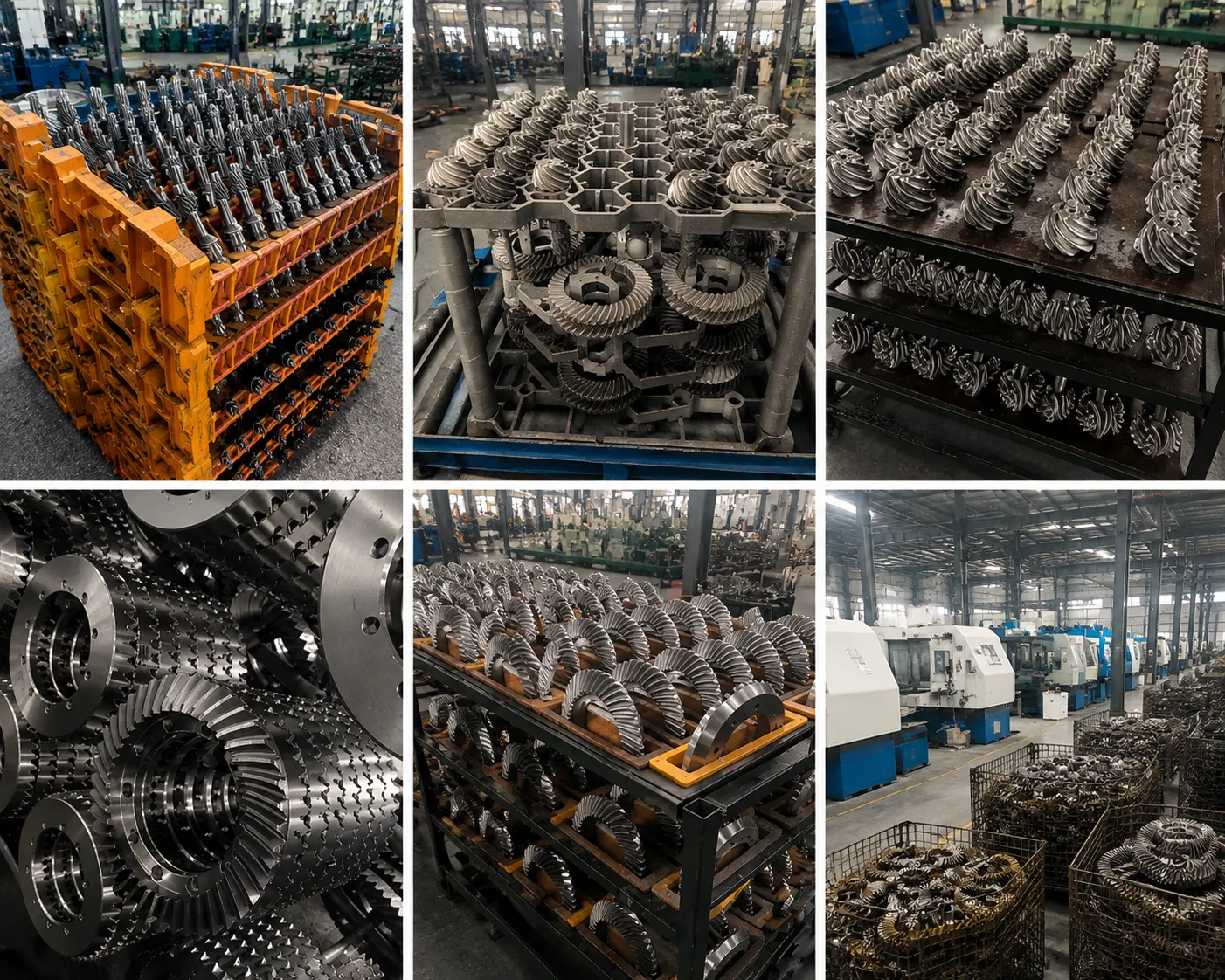
Korea Ever-Power worm gear manufacturing workshop bronze worm wheel production
Korea Ever-Power worm gear manufacturing and bronze casting facility — in-house centrifugal casting furnace for PB2 (CuSn12) and AB2 (CuAl10Ni5Fe4) bronze worm wheel blanks in OD 50–1,200 mm, followed by CNC hobbing and tooth profile measurement on dedicated worm gear inspection equipment. Chemical composition analysis by optical emission spectrometry (OES) on every bronze casting batch — Cu, Sn, Al, Ni, Fe, P concentrations confirmed against EN CC480K (PB2) or EN CC212E (AB2) alloy specification before machining begins. Hardness banding test on every centrifugal-cast blank rim cross-section to confirm sound casting without internal porosity that would reduce the effective bronze fatigue strength below the rated material value.

Industrial Applications by Bronze Material Grade

PB2 APPLICATIONS

STANDARD
INDUSTRIAL

Phosphor bronze PB2 (CuSn12) centrifugal-cast worm wheels are the standard for industrial conveyor drives, industrial gearbox NMRV/NMR series, packaging machine worm drives, material handling drives, textile machinery drives, elevator auxiliary drives, and all worm gear applications below 100 kW at continuous duty. PB2 is compatible with all standard industrial gear oil types (GL-4, GL-5, synthetic PAO, polyglycol) without restriction — making it the lowest-complexity specification choice. Annual production volume at Korea Ever-Power is the highest of any worm wheel material, with standard sizes held in stock for same-week delivery. Standard worm wheels for SEW-Eurodrive SA/SK/R series, Nord Drivesystems, Motovario NMRV series, and all GB/T standard worm gearbox series are stocked in PB2 and available without minimum order quantity for replacement supply. The primary limitation of PB2 is its relatively modest tensile strength (230–270 MPa) — it is not suitable for shock-loaded applications such as crusher auxiliary drives or for continuous duty above 100 kW without a size penalty that may make AB2 the more economical choice at larger centre distances.

AB2 APPLICATIONS

HEAVY DUTY
INDUSTRIAL

Aluminium bronze AB2 (CuAl10Ni5Fe4) centrifugal-cast worm wheels are specified for high-duty industrial applications where PB2’s load rating is insufficient at the available centre distance: overhead crane hoists above 10 tonne lift capacity, heavy material handling conveyors above 100 kW, marine bow thruster worm gears, mining equipment auxiliary drives, and large press and injection moulding machine hydraulic pump drives. The AB2 worm wheel’s 35–50% higher contact fatigue resistance vs PB2 allows the worm gear pair to transmit the same power in a smaller centre distance — in some cases avoiding the need for a larger gearbox frame size that would be required if PB2 were specified. The mandatory compatibility check between AB2 and the gear oil is the primary complication — Korea Ever-Power supplies AB2 worm wheels with a lubricant compatibility data sheet confirming which specific oil grades have been tested and confirmed compatible with the supplied AB2 alloy batch.

SPECIALTY

CORROSION &
FOOD GRADE

Nickel silicon bronze (CuNi2Si, C64700) and duplex (bimetal) worm wheels with a steel hub and a bronze rim bonded by centrifugal casting are the two specialty options for demanding corrosion or cost contexts. Nickel silicon bronze combines the corrosion resistance of a copper-nickel alloy with higher strength than PB2, making it suitable for food processing, chemical plant, and marine worm gear applications where the combination of corrosion exposure, NSF H1 lubricant compatibility, and moderate-to-high load rating is required. Duplex (bimetal) worm wheels — steel hub shrink-fit or centrifugal-bonded with a bronze rim — are the most economical solution for large worm wheels above 400 mm OD where a solid bronze wheel would require an excessively large and expensive casting, but where the full load rating of solid bronze is still required at the tooth contact surface. Korea Ever-Power manufactures duplex worm wheels with centrifugal-bonded PB2 or AB2 bronze rims on steel hubs up to 1,200 mm OD for large industrial worm gear applications. See also: worm gear reducer selection guide for worm gear centre distance and ratio optimisation for heavy industrial drives.

Frequently Asked Questions — Bronze Worm Wheels for Industrial Applications

Q 01

How do I identify whether my failed worm wheel is PB2 or AB2 bronze when ordering a replacement, if the original specification is unknown?

Identification of the bronze alloy from a failed worm wheel can be performed by three methods in ascending order of certainty: (1) Visual colour identification: PB2 phosphor bronze has a distinctly reddish-gold to pale gold colour (similar to copper), while AB2 aluminium bronze has a distinctly yellowish-gold to yellow colour (similar to brass). This method gives a confident answer in approximately 70% of cases — in well-worn wheels where the colour is obscured by oil staining, the other methods are needed. (2) Hardness test: PB2 phosphor bronze Brinell hardness is 75–100 HB; AB2 aluminium bronze is 150–200 HB — approximately double. A simple Brinell or Rockwell surface hardness test on the wheel hub face (not the tooth surface, which has different hardness from wear) will distinguish PB2 from AB2 reliably. A workshop Rockwell B test result below 60 HRB = PB2; above 80 HRB = AB2. (3) Chemical spot test: a drop of 10% hydrochloric acid on the freshly machined surface of PB2 releases a faint smell of hydrogen sulfide (from the tin-sulfide phase in phosphor bronze); AB2 shows no such reaction. This is a confirmatory test, not a primary identification method. When ordering a replacement worm wheel and the material is uncertain: if the gearbox is a standard catalogue frame size (NMRV, K series, WP series, etc.), Korea Ever-Power can identify the original material from the gearbox type designation and size. If the gearbox is custom or non-standard, specify the application duty (power, speed, duty cycle) and Korea Ever-Power will recommend the correct bronze grade.

Q 02

My worm wheel is showing progressive pitting on the tooth flanks — is this a material problem, a lubrication problem, or a load rating problem?

Bronze worm wheel tooth flank pitting requires root cause identification before replacement — if the replacement wheel is the same material and operating under the same conditions, it will fail at the same rate. Root cause diagnosis by pitting pattern and rate: (1) Rapid pitting within 500 hours at rated load (material problem): the bronze alloy is incorrect for the application duty — either PB2 in a duty that requires AB2, or a sand-cast wheel where centrifugal cast is required. The pitting initiates at porosity or inclusion sites in the sand-cast rim and propagates rapidly. Remedy: replace with centrifugal-cast wheel of the same or upgraded alloy, confirm centre distance and alignment. (2) Progressive pitting after 5,000–15,000 hours (wear end-of-life): normal fatigue failure at the end of the design life. The wheel has run its useful life; replacement with the same specification is appropriate. Examine the worm shaft thread surface — if the worm thread shows glazing or wear lines, the worm shaft should be replaced or re-ground simultaneously with the wheel to restore the hardness differential. (3) Edge pitting on one side of the tooth face (lubrication or alignment problem): pitting concentrated at one tooth face end indicates misalignment between worm and wheel axes, or inadequate face-width contact due to worm shaft deflection at rated load. Check worm shaft deflection at maximum rated torque — should not exceed 0.05 mm at the worm thread centre. (4) Uniform thin layer of surface material removed (oil-related pitting): caused by inadequate EHL film from incorrect oil viscosity (too low), contaminated oil, or overheated oil above 80°C. Drain and refill with correct ISO VG grade; if oil temperature exceeds 80°C at full load, upgrade to the next higher viscosity grade.

Q 03

What is the minimum order quantity and lead time for custom bronze worm wheels at Korea Ever-Power, and can I order a single replacement piece?

Korea Ever-Power operates three supply tiers for bronze worm wheels with different MOQ and lead time structures: (1) Stock worm wheels (common NMRV, K-series, WP-series sizes in PB2): MOQ 1 piece, immediate dispatch from Korea Ever-Power’s Hangzhou warehouse within 2 working days. These cover the 30 most common worm wheel sizes used in standard catalogue gearboxes. (2) Made-to-order standard sizes (PB2 or AB2, OD 50–300 mm, standard gear geometry): MOQ 3 pieces, lead time 10–18 days. For MOQ 1 piece on made-to-order: lead time 15–22 days (single piece incurs higher setup cost per piece but is supplied without MOQ restriction). (3) Large custom worm wheels (OD above 300 mm, duplex bimetal, or specialty alloy): MOQ 1 piece, lead time 20–35 days depending on size and alloy. For emergency replacement of a failed worm wheel causing production line downtime, Korea Ever-Power can prioritise production of a single replacement wheel ahead of batch orders — contact Korea Ever-Power’s emergency supply team directly with the wheel dimensions (OD, number of teeth, module, bore diameter and keyway, face width, and bronze grade) and the production restart deadline for availability assessment.

Explore Korea Ever-Power Gear Categories

Seven precision gear product lines for industrial, food processing, marine and specialist applications worldwide.
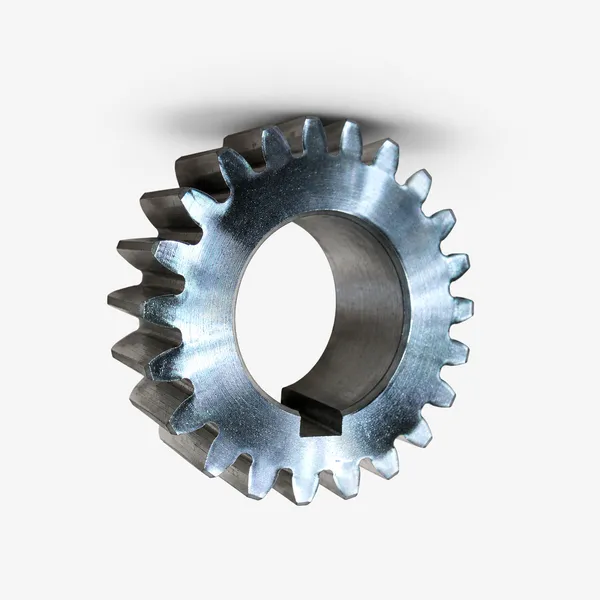
spur gear

Spur Gears

M1–M20 · industrial · conveyor · 316L

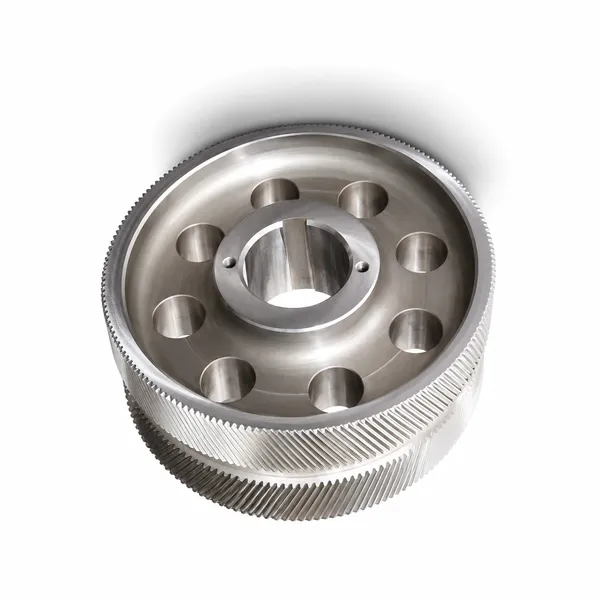
helical gear

Helical Gears

Low noise · high load · double helical

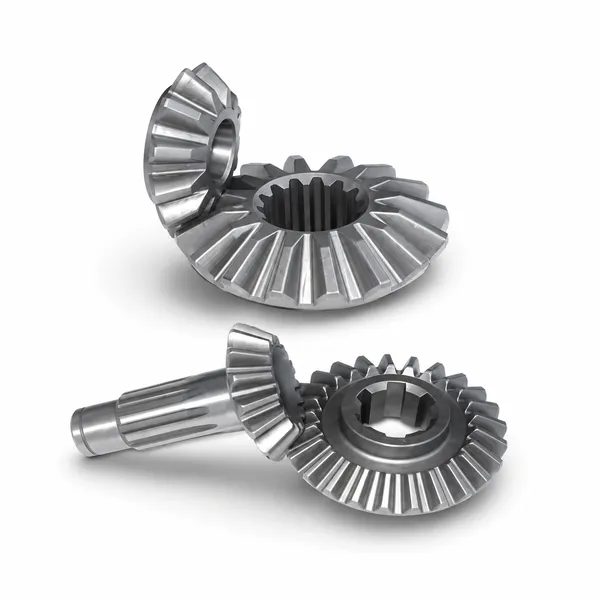
bevel gear

ベベルギア

Right-angle · spiral · industrial drive

worm gear bronze wheel

Worm Gears

PB2 · AB2 · centrifugal cast · industrial

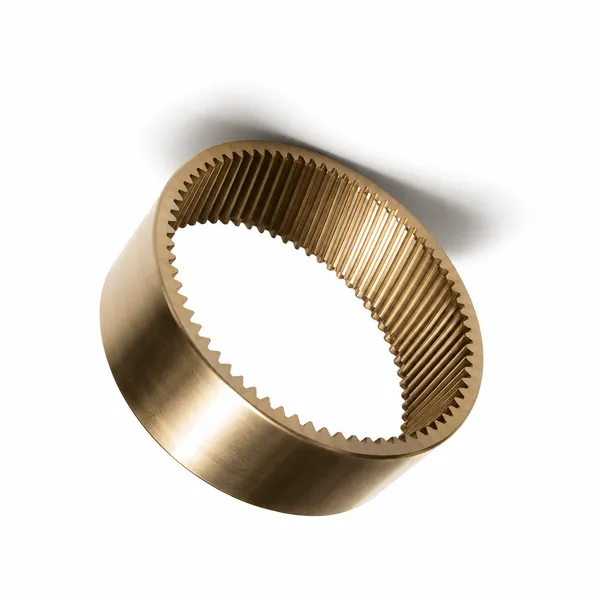
ring gear

Ring Gears

Internal · large ring · wind · slewing

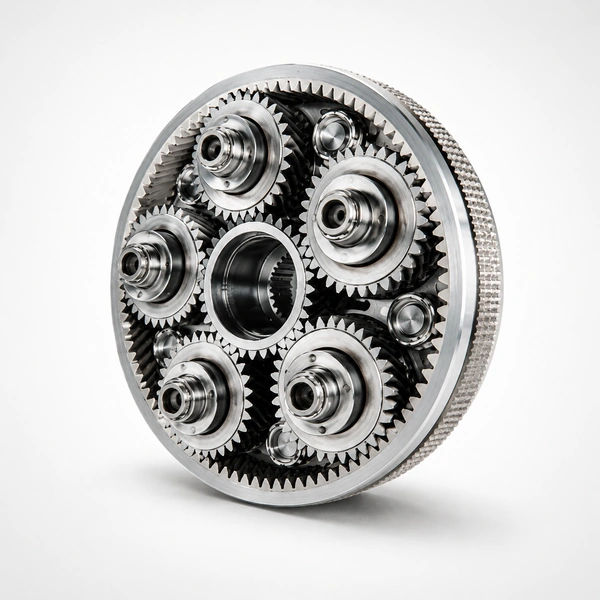
planetary gear

Planetary Gears

Compact · high torque density · servo

plastic gear

Plastic Gears

POM · MC Nylon · light worm wheel alt.

GET A QUOTATION · KOREA EVER-POWER

Need Bronze Worm Wheels for Industrial Applications?

Korea Ever-Power manufactures centrifugal-cast PB2 phosphor bronze and AB2 aluminium bronze worm wheels for all industrial worm gear applications — OD 50–1,200 mm, module M1–M20, standard and custom tooth geometry. Matched worm shaft sets in 42CrMo4 induction hardened. Stock for NMRV, K-series, and WP-series replacements. Duplex bimetal worm wheels for large-diameter applications. AB2 lubricant compatibility data sheet supplied. ISO 9001:2015 certified with individual material and dimensional certificates.

Request a Quotation →

編集者: Cxm

VR Tour of Our Factory

TAGs:

ギアラック

当社は、ギアラックの大手メーカー、サプライヤー、輸出業者の一つとして、ギアラックをはじめとする様々な製品を提供しています。

詳細についてはお問い合わせください。

郵便:[email protected]

ギアラックの製造業者、サプライヤー、輸出業者

最近の投稿

jaJapanese