GEAR APPLICATION GUIDE · PLANETARY GEAR · P03

Planetary Gear Sets for Wind Turbines:
Low-Speed Stage Design, Materials and 20-Year Fatigue Life

The planetary gear stage in a wind turbine gearbox is the highest-torque, most structurally critical gear component in the drivetrain — handling the full rotor torque from 5–20 RPM input through a 4:1–6:1 ratio first reduction before the parallel helical stages. The compound nature of the planetary system — with 3–4 planet gears sharing the load simultaneously around the sun and ring gear — makes it uniquely suited to this role, but also imposes demanding requirements on gear quality, planet bearing design, and ring gear material that differ from all other industrial planetary applications. This guide covers planetary gear set specification for wind turbine gearbox first-stage applications under IEC 61400-4 and AGMA 6006.

18CrNiMo7-6 · 20MnCr5 · DIN 4–5
3–4 Planets · 20-year life · IEC 61400-4
1–6 MW · Low-Speed Stage · AGMA 6006

INPUT SPEED

5 – 20 RPM

Wind turbine rotor shaft speed at rated wind speed. 3 MW turbine: approximately 12–16 RPM at rated. The planetary stage must transmit full rated torque at this very low speed — highest torque stage in the gearbox

PLANET COUNT

3 – 4 Planets

Standard planet count for wind turbine gearbox first stage. 3 planets: most common, simpler load sharing. 4 planets: 33% higher torque density at same ring diameter — used in large turbines above 3 MW where nacelle envelope is critical

RATIO (1ST STAGE)

4:1 – 6:1

First planetary stage ratio in a wind turbine gearbox. Overall gearbox ratio 75:1–120:1 typically achieved with one planetary stage (4:1–6:1) followed by two parallel helical stages, or with two planetary stages followed by one helical stage

RATED TORQUE

Up to 5 MNm

Rotor shaft torque for large offshore wind turbines (5–6 MW). 2 MW turbine: approximately 1.0–1.5 MNm rotor torque. 3 MW turbine: 1.5–2.5 MNm. The planetary stage must transmit this torque to the IMS shaft at 4:1–6:1 speed increase

Why Planetary Gear Sets Are Used at the First Stage of Wind Turbine Gearboxes

The wind turbine gearbox first stage planetary arrangement is chosen over a parallel helical first stage because the planetary system shares the full rotor torque among 3–4 planet gears simultaneously, reducing the torque per gear mesh by a factor of 3–4 compared to a single-mesh parallel helical stage at the same ratio. This load sharing allows the first stage planetary gears to be significantly smaller and lighter than equivalent parallel helical gears at the enormous torques of modern multi-megawatt turbines — a 3 MW turbine rotor shaft torque of 1.8 MNm divided among 3 planets is 600 kNm per planet mesh, vs the full 1.8 MNm at a single helical gear mesh for an equivalent parallel shaft design. The weight saving in the first stage is multiplied by the structural cost of supporting that weight at 80–120 m hub height.

Korea Ever-Power’s planetary gear sets for wind turbines are manufactured in 18CrNiMo7-6 case carburized for sun and planet gears, and in nitrided 18CrNiMo7-6 or 34CrNiMo6 for ring gears — all ground to DIN 4–5 quality class, shot peened, and measured with individual gear reports per AGMA 915. Planet carrier and ring gear housing are forged and precision-machined to maintain planet position accuracy within the tolerance required for equal load sharing across all planets. See also: planetary gearboxes application data for wind turbine gearbox stage specification parameters.
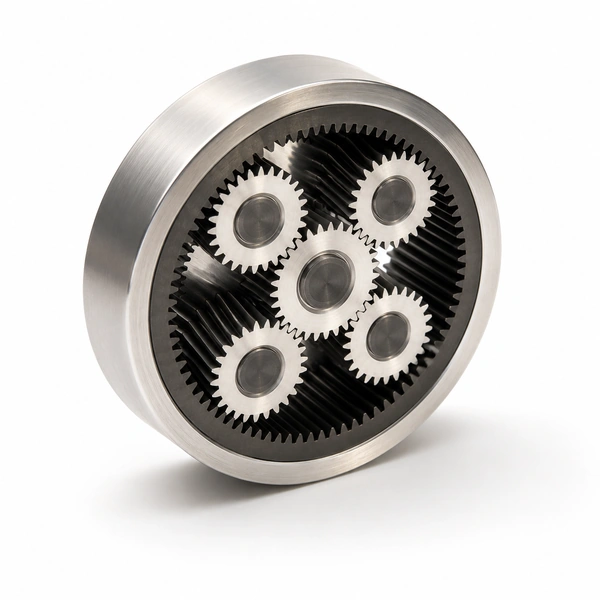
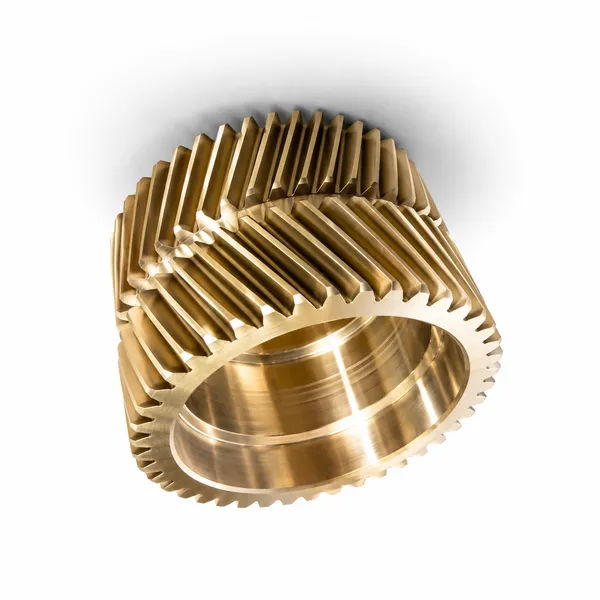
Internal Planetary Gear - Steel/POM/SS

The critical manufacturing challenge in wind turbine planetary gear sets — compared to standard industrial planetary gearboxes — is achieving equal load sharing among the 3–4 planets under the variable rotor loads and the elastic deformation of the ring gear, planet carrier, and main shaft under rated torque. At 1.8 MNm first-stage torque, the ring gear OD deflects elastically, the carrier arm bends under the planet bearing radial forces, and the main shaft deflects under the combined rotor weight and torque — all of which shift the planet gear positions from their theoretical ideal positions and cause unequal tooth contact on different planets. Korea Ever-Power compensates for these elastic deflections by applying precisely calculated lead crowning to the planet gear teeth — 10–25 μm depending on the calculated deflection at rated torque — to ensure the tooth contact migrates to the tooth centre under load rather than concentrating at the edge.

WIND TURBINE PLANETARY GEAR SET — COMPONENT SPECIFICATIONS

SUN GEAR

  • Material: 18CrNiMo7-6
  • Heat treatment: Case carburized, HRC 60–62
  • Quality class: DIN 4–5, ground
  • Surface: Shot peened + ground
  • Tooth form: Involute helical, helix 0°–10°
  • Profile crowning: 8–15 μm
  • Floating sun: most designs allow sun gear to float radially to self-centre among the planet loads

PLANET GEARS

  • Material: 18CrNiMo7-6
  • Heat treatment: Case carburized, HRC 60–62
  • Quality class: DIN 4–5, ground
  • Lead crowning: 10–25 μm (elastic deflection compensation)
  • Bore: precision-bored for planet pin or needle bearing
  • Count: 3 or 4 per stage; matched sets within 0.01 mm OD tolerance

RING GEAR

  • Material: 34CrNiMo6 or 18CrNiMo7-6
  • Heat treatment: Nitrided (case depth 0.35–0.55 mm, HV 600–750) — nitriding preferred over carburizing to minimise distortion on large OD ring
  • Quality class: DIN 5–6 (internal tooth ground)
  • Mounting: Tight interference fit or bolted flange to gearbox housing

Load Sharing, Planet Bearing Design and Carrier Stiffness
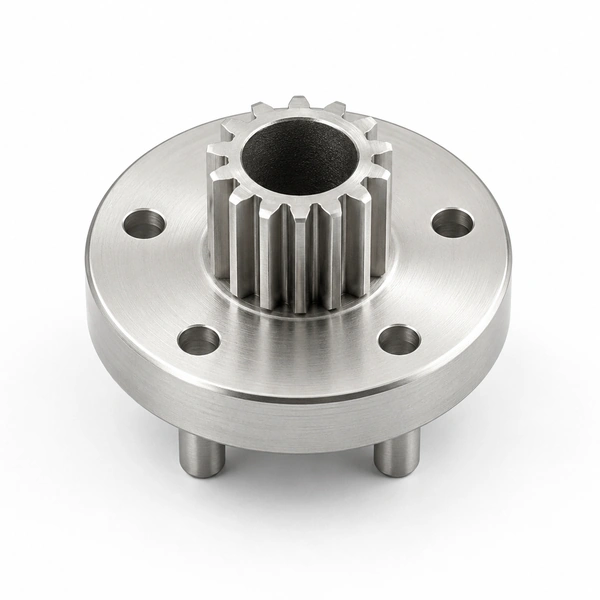
planetary carrier wind turbine gearbox Korea Ever-Power
Korea Ever-Power forged and precision-machined planetary carrier for wind turbine first-stage planetary gearbox — 42CrMo4V forged steel, QT heat treated HB 290–330, three planet pin bores machined in one clamping operation to positional accuracy ±0.015 mm at rated torque (FEA-validated). Planet pin bore diameter tolerance H6 for press-fit planet pins. Carrier output flange face machined to flatness 0.010 mm TIR for IMS shaft coupling. Available in 3-planet and 4-planet configurations for 1–5 MW turbine gearbox first stage applications. Supplied with CMM report confirming all bore positions and flange face runout.

LOAD SHARING FACTOR

The load sharing factor KΓ accounts for unequal load distribution among the 3–4 planets due to manufacturing tolerances in planet position, planet pin parallelism, and carrier arm stiffness under torque. For a rigidly pinned 3-planet carrier (fixed sun), KΓ = 1.25–1.35 per ISO 6336 / AGMA 2001. For a floating sun arrangement (sun gear free to translate radially to self-centre): KΓ = 1.10–1.20. Wind turbine planetary gearboxes almost universally use a floating sun to achieve the lower KΓ and reduce the required gear tooth size — the sun gear is supported radially only through the planet mesh contacts, not by bearings, allowing it to find its load-balanced position among the three planets automatically.

Lower KΓ → smaller gear → lighter nacelle

PLANET BEARING TYPES

Three planet bearing configurations used in wind turbine first-stage planetary gearboxes: (1) Cylindrical roller bearing (CRB) on a fixed planet pin: most common for turbines below 2 MW — simple, well-understood, easily replaced. (2) Tapered roller bearing (TRB) pairs on a fixed planet pin: used for larger planets where the axial load from helix angle is significant — more complex replacement. (3) Integrated bearing (IB) — needle rollers running directly on the planet pin OD as the inner race: highest load density, no separate bearing inner ring — used in the most compact large-turbine first stages (above 3 MW) where minimum carrier OD is the constraint. Korea Ever-Power machines the planet pin OD to bearing-quality surface finish (Ra 0.1–0.2 μm, roundness 0.003 mm) for integrated bearing configurations.

Planet bearing is the #1 failure mode in wind gearboxes

Frequently Asked Questions

Q 01

Why is the ring gear typically nitrided rather than carburized in wind turbine planetary gearboxes?

Ring gear nitriding vs carburizing is a trade-off between case depth, distortion, and practicality for large-diameter thin-walled ring gears. Carburizing produces a deeper, harder case (1.0–1.8 mm, HRC 60–62) with higher contact fatigue resistance than nitriding (0.35–0.55 mm, HV 600–750 ≈ HRC 57–61). However, carburizing requires quenching from austenizing temperature (850–900°C) which causes large-diameter ring gears to distort significantly — a 600 mm OD ring gear can distort by 0.3–0.8 mm after carburize quench, requiring substantial finish-grinding to achieve the DIN 5–6 quality class. Nitriding is a low-temperature process (500–550°C gas nitriding) that causes minimal distortion — a 600 mm ring gear nitrided typically distorts less than 0.05 mm, making it much more practical to achieve the internal tooth quality class with minimal post-nitriding grinding. For wind turbine first-stage ring gears with OD above 400 mm: nitriding + hobbing to DIN 5 (with minimal stock removal after nitriding) is standard practice. For ring gears below 300 mm OD: carburizing with subsequent internal grinding is practical and gives higher contact fatigue resistance. Korea Ever-Power can supply either route depending on ring gear diameter and the client’s gearbox design contact stress requirement.

Q 02

What is the correct procedure for replacing the first-stage planetary gear set in a wind turbine gearbox without removing the gearbox from the nacelle?

In-nacelle planetary gear set replacement (without gearbox removal) is possible on gearbox designs where the high-speed side cover can be removed and the planet carrier and HSS shaft assembly can be extracted through the nacelle service hatch. The procedure requires: (1) Rotor lock — mechanical or hydraulic rotor locking to prevent rotation during work. (2) HSS shaft disconnection — decouple generator coupling and HSS shaft from gearbox. (3) HSS and IMS shaft extraction — remove the IMS and HSS shaft assembly, giving access to the planetary stage. (4) Planet carrier extraction — on most designs, the carrier can now be pulled axially through the gearbox body. (5) Planet and sun gear exchange — replace planet bearings and planet gears on the extracted carrier (or replace the full carrier assembly with a pre-assembled spare). (6) Ring gear replacement (if required) — ring gear replacement in-nacelle requires partial gearbox housing disassembly and is typically deferred to a full gearbox exchange if the ring is also damaged. Korea Ever-Power can supply pre-assembled first-stage planet carrier assemblies (with new planet gears, bearings, and planet pins) as a direct exchange unit to support this procedure — contact Korea Ever-Power with the gearbox OEM model and turbine capacity for carrier assembly availability and lead time.

Q 03

When replacing the first-stage planet gears in a wind turbine gearbox, should I also replace the ring gear and sun gear or only the damaged planet gears?

Planet gear replacement strategy depends on the failure mode and the hours since the last gear set replacement or installation: (1) Isolated planet gear failure (one planet, early life at below 50% of design life): if the ring gear and sun gear surfaces show no pitting, micro-pitting, or tooth profile wear (confirmed by borescope inspection), and if the failure was caused by a specific event (oil contamination, impact overload) rather than fatigue accumulation, it may be acceptable to replace only the failed planet and planet bearing. However, replace all three (or four) planet gears as a matched set — installing one new planet with two worn planets will cause unequal contact pattern and accelerate wear on the new planet. (2) Multiple planet gear failure or fatigue pitting reaching 10–20% of tooth face area: replace complete planetary gear set (sun + all planets + planet bearings). Inspect ring gear — if ring gear shows pitting exceeding 10% of any tooth face, replace ring gear at the same time to avoid new gear meshing against a worn ring profile. (3) At design life (175,000+ hours) or at any second failure in the same stage: replace full planetary gear set including ring gear as a proactive measure — the cost of leaving a partially worn ring gear with a new planet set and suffering an early re-failure in a turbine at 80+ m hub height far exceeds the cost of the ring gear itself. Korea Ever-Power supplies complete matched planetary gear sets (sun + planets + ring) as a standard replacement package for all common wind turbine gearbox first-stage configurations.

Explore Korea Ever-Power Gear Categories

Seven precision gear product lines for wind energy, industrial, robotics and specialist applications worldwide.
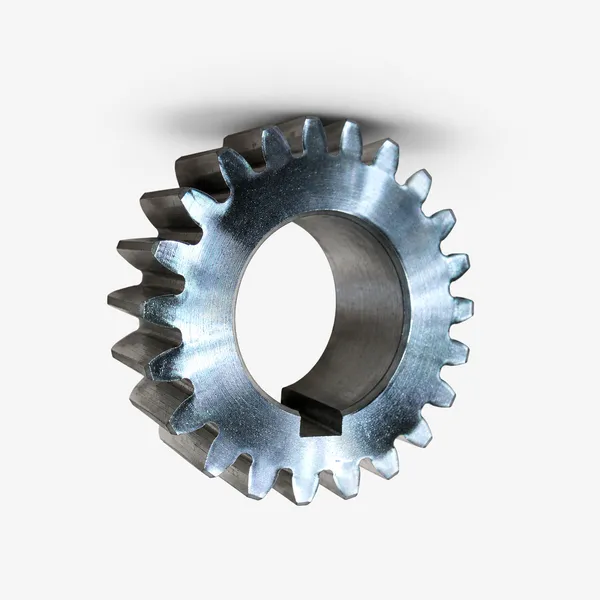
spur gear

Spur Gears

M1–M20 · C45, 20CrMnTi, forged

helical gear wind

Helical Gears

18CrNiMo7-6 · wind turbine IMS/HSS

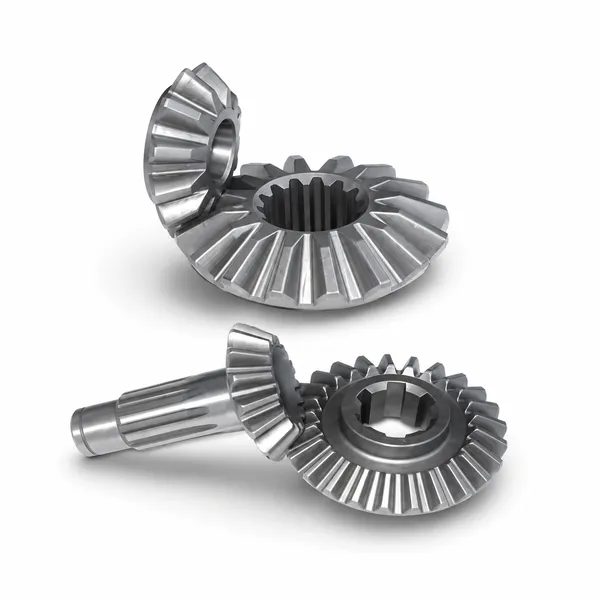
bevel gear

Engrenages coniques

Right-angle drives · auxiliary equipment

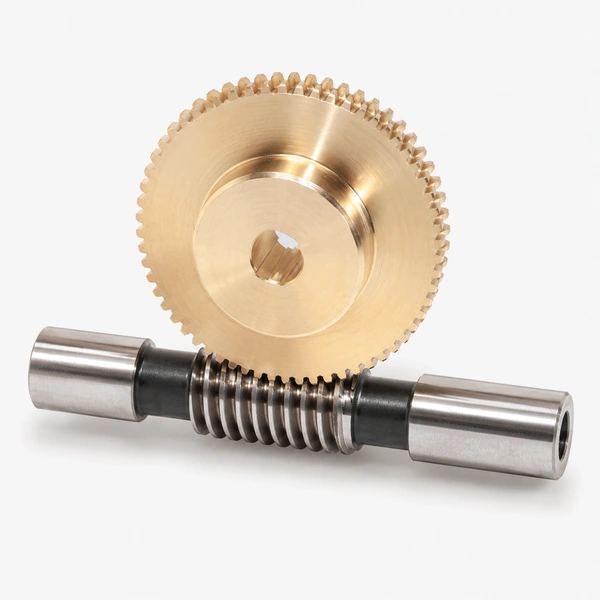
worm gear yaw

Worm Gears

Self-locking · yaw brake · pitch drive

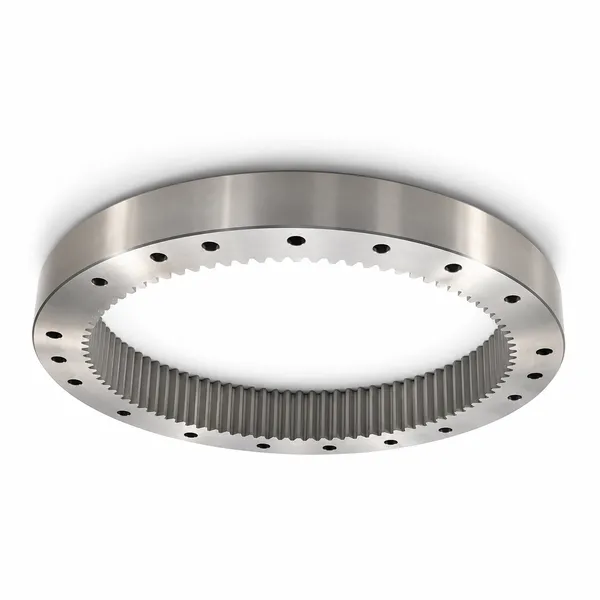
ring gear wind turbine

Ring Gears

Wind turbine · yaw & pitch ring · nitrided

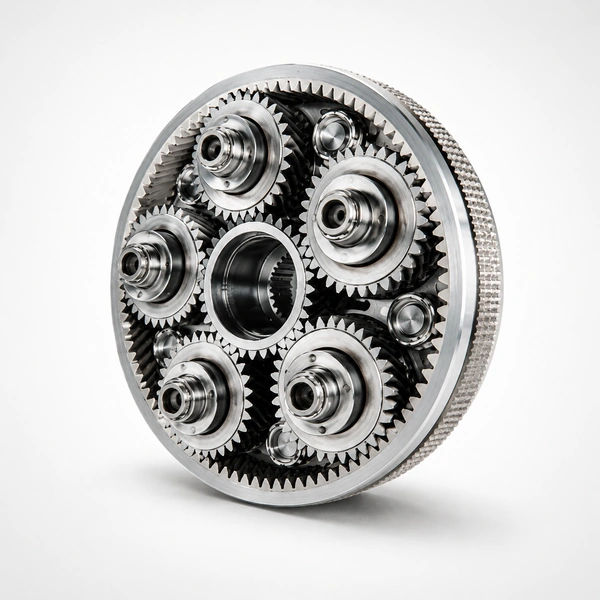
planetary gear wind turbine

Planetary Gears

Wind turbine · 3–4 planet · DIN 4–5

plastic gear sensor

Plastic Gears

POM · Nylon · auxiliary · sensor drive

GET A QUOTATION · KOREA EVER-POWER

Need Planetary Gear Sets for Wind Turbines?

Korea Ever-Power manufactures 18CrNiMo7-6 and 20MnCr5 planetary gear sets for all wind turbine gearbox first-stage applications — sun gear, matched planet gear sets, nitrided ring gear, precision-machined planet carriers. 3-planet and 4-planet configurations, 1–6 MW turbine capacity. Pre-assembled planet carrier exchange units for in-nacelle replacement. AGMA 915 individual gear measurement reports included. ISO 9001:2015 certified. Selection guidance at planetary-gearboxes.com.

Request a Quotation →

Éditeur : Cxm

VR Tour of Our Factory

TAGs:

porte-bagages

Figurant parmi les principaux fabricants, fournisseurs et exportateurs de crémaillères, nous proposons des crémaillères et de nombreux autres produits.

Veuillez nous contacter pour plus de détails.

Mail:[email protected]

Fabricant, fournisseur et exportateur de crémaillères

Articles récents

fr_FRFrench