GEAR APPLICATION GUIDE · SPUR GEAR · S05

Spur Gears for Printing Machines:
Register Accuracy, Speed Synchronisation and Ink Transfer Drives

Printing machine spur gears must maintain perfect rotational synchronisation between impression cylinders, plate cylinders, and blanket cylinders across the full press speed range — any transmission error in the gear train produces a periodic image registration defect that renders the printed output unusable. This guide covers spur gear specification for sheet-fed offset presses, web offset presses, flexographic printing machines, and gravure presses — including quality class selection, ghost-free tooth geometry, and the ink transfer cylinder drive requirements that make printing machine gears one of the most demanding precision spur gear applications.

20CrMnTi · Cronidur · Cast Iron · DIN 4–6
TE <3 μrad · M2–M8 · PLV 3–15 m/s
Sheet-Fed · Web Offset · Flexo · Gravure

QUALITY CLASS

DIN 4 – 6

Printing machine cylinder gear quality class range. Gravure and precision sheet-fed press: DIN 4. Standard sheet-fed offset: DIN 5. Web offset and flexographic press: DIN 5–6. All cylinder gears must be ground, never hobbed or shaved

TRANSMISSION ERROR

<3 μrad

Peak-to-peak transmission error target for precision printing machine cylinder spur gears. TE above 5–8 μrad produces visible ghosting or banding on the printed sheet at commercial print quality standards

MODULE RANGE

M2 – M8

Printing press spur gear modules. Cylinder gears on small format sheet-fed presses: M2–M4. Medium format (B1–B2): M4–M6. Large format or wide web presses: M6–M8. Feed and delivery gears: M2–M4

PRESS SPEED

5,000–18,000 iph

Impressions per hour of modern commercial sheet-fed and web offset printing presses. At 18,000 iph on a B1 format press with circumference 1,050 mm, pitch line velocity at the cylinder gear = 5.25 m/s — DIN 5 mandatory at this speed

Spur Gears in Printing Machine Drive Systems

The printing machine cylinder gear train is one of the most precision-demanding spur gear applications in manufacturing. Every impression cylinder, plate cylinder, blanket cylinder, and transfer cylinder in a multi-colour offset press must rotate in perfect angular synchronisation — any deviation from the ideal synchronised rotation, at the pitch line velocity of the cylinder gears, produces a periodic velocity variation that translates directly into a registration error between colour separations on the printed sheet. At commercial printing quality (register tolerance ±0.05 mm on a 500 mm format sheet), the allowed angular registration error at the cylinder is approximately 0.1 mrad — placing the cylinder gear transmission error requirement in the range of DIN 4–5, significantly tighter than the DIN 7–8 quality class used for most industrial gear applications.
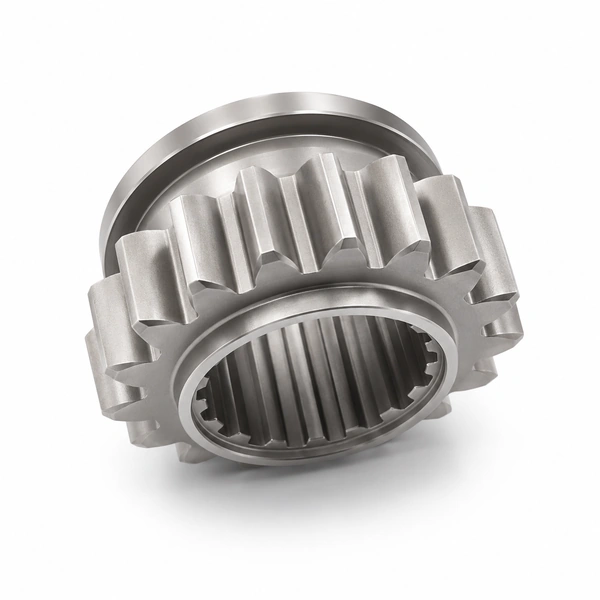
Tractor Spur Gears | Korea Ever-Power

Korea Ever-Power’s spur gears for printing machines are manufactured in 20CrMnTi case carburized (standard for cylinder and main drive gears), nodular cast iron GGG60 (traditional for large-diameter printing press body gears where cast iron’s self-damping reduces noise and vibration), and Cronidur 30 stainless bearing steel (for waterless offset and UV printing machine applications where corrosion resistance is required). All printing press cylinder gears are ground to DIN 4–5 quality class with tip relief applied to reduce dynamic mesh force and eliminate the “tooth entry impact” that is the primary source of printing machine ghost images.

The phenomenon of “gear ghosting” in offset printing — a periodic density variation in solid ink areas corresponding to the gear mesh frequency — is entirely caused by tooth-to-tooth transmission error in the cylinder gear drive. When the impression cylinder and plate cylinder are driven by spur gears with DIN 7 quality, the tooth spacing error produces a periodic speed variation at the mesh frequency, which modulates the ink transfer rate at each revolution of the cylinder. The result is a faint but visible horizontal band pattern in solid printed areas. Replacing the cylinder gears with DIN 5 quality ground gears reduces tooth spacing error by approximately 50%, reducing the ghost pattern amplitude below the threshold of visibility for commercial print quality.

Ghost-Free Tooth Geometry

Anti-ghosting spur gear design for printing presses uses three geometric measures beyond standard DIN quality class compliance: (1) Profile tip relief — 5–12 μm tip relief on both driver and driven gear tooth tips reduces the tooth entry impact load spike that is the primary TE harmonic visible as ghosting. (2) Tooth crowning — 5–10 μm lead crowning prevents load concentration at the gear tooth ends from press body deflection under cylinder contact pressure. (3) Matched pairs — cylinder gear pairs are matched on a rolling test rig to confirm the combined transmission error of the assembled pair is below the specified TE limit, not just that each individual gear meets the DIN tolerance. Korea Ever-Power supplies all printing press cylinder spur gears as matched pairs with measured TE certificate.

Cast Iron vs Steel Cylinder Gears

Nodular cast iron GGG60 (also called ductile iron) has been the traditional material for large printing press body gears and main drive bull gears because: (1) Its internal graphite microstructure provides acoustic damping that reduces gear noise by 3–5 dB(A) vs steel gears at equivalent quality class — important in commercial print shops where press operators work in proximity to the press. (2) Large-diameter cast iron gears can be cast near-net-shape, reducing machining cost vs forged steel for gears above 400 mm OD. (3) Cast iron gears are more tolerant of contamination (ink mist, paper dust) in the oil than steel gears. The limitation of cast iron: it cannot be carburized or induction hardened to the hardness level of steel — maximum HB 300 vs HRC 58–62 for carburized steel. Korea Ever-Power supplies both GGG60 and 20CrMnTi cylinder gear options depending on the press size and load rating.

Ink Contamination and Lubrication

Printing press spur gears operate in an environment where ink mist and solvent vapour contaminate the gear oil continuously. Sheet-fed offset press cylinder gears typically run in an enclosed gear oil bath (ISO VG 100–150), with the oil changed at 1,000–2,000 hour intervals depending on ink solvent content. UV-cured ink printing machines require particular attention — UV inks contain acrylate monomers that polymerise on contact with UV radiation, and if UV-cured ink enters the gear housing it can progressively increase the oil viscosity and restrict gear lubrication. Korea Ever-Power recommends specifying UV-resistant shaft seals and quarterly oil viscosity checks for printing machine spur gear housings in UV ink printing lines. Waterless offset (toray process) presses require Cronidur 30 stainless cylinder gears and stainless housings due to the silicone plate cleaning chemistry.

Printing Machine Type Applications
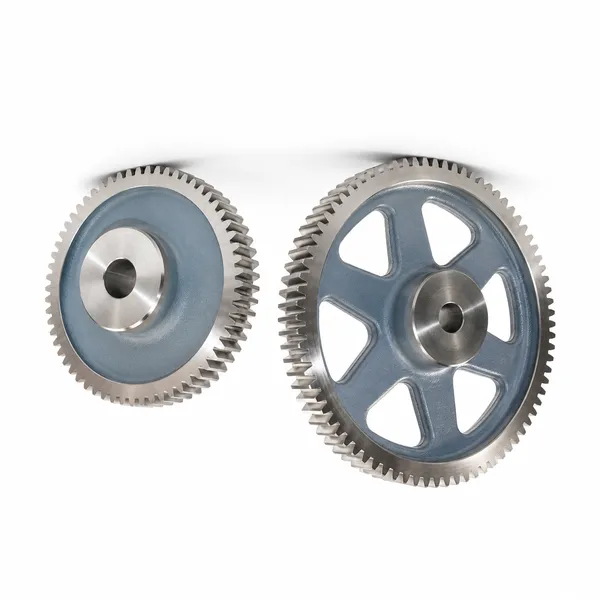
European standard spur gear printing machine Korea Ever-Power
Korea Ever-Power DIN-standard precision spur gears for printing machine cylinder drives — 20CrMnTi case carburized, M4, 60 teeth, bore 40 mm H7, ground to DIN 5 quality class. Profile tip relief 8 μm applied to both driver and driven gear tooth tips to eliminate tooth entry impact peak. Lead crowning 6 μm. Peak-to-peak transmission error <2.8 μrad measured on gear rolling test rig at 100 RPM under 50% of rated tangential force — below the ghosting threshold for B1 format sheet-fed offset presses at 15,000 iph. Individual TE measurement certificate supplied with each matched pair. Replacement supply for Heidelberg, KBA, Manroland, Komori, and Ryobi cylinder gear series.

TYPE 01

SHEET-FED
OFFSET PRESS

Spur gear specification: M3–M6, 20CrMnTi case carburized or GGG60 nodular cast iron, DIN 4–5 ground, matched pairs with TE <3 μrad, tip relief 6–10 μm. The sheet-fed offset press (Heidelberg SM/XL series, KBA Rapida, Komori Lithrone) uses a spur gear train running the full width of the press body to synchronise all printing units. The gear body gear train typically uses GGG60 for the large main drive gears at the press ends, with 20CrMnTi for the smaller timing gears and feeder gear sets. Replacement cylinder gears for sheet-fed offset presses are the most common printing machine gear replacement item — Korea Ever-Power maintains stock of the most common Heidelberg and Komori cylinder gear sizes for immediate supply to press service engineers.

TYPE 02

WEB OFFSET
PRESS

Spur gear specification: M4–M8, 20CrMnTi case carburized, DIN 5–6, PLV 5–15 m/s at rated web speed, wide face width for high torque at continuous web tension. Web offset presses (newspaper and commercial web presses — Goss, MAN Roland Colorman, Koenig & Bauer Compacta) run continuously at web speeds up to 15 m/s, placing the cylinder gear pitch line velocity in the range where DIN 6 quality class is the minimum and DIN 5 is preferred for noise and TE control. Web press cylinder gears experience higher continuous loads than sheet-fed presses due to the web tension and continuous non-stop running duty — 20CrMnTi case carburized with wide face width (b/m ≥10) is the standard specification. Gear failure in a web press at full production causes a web break and a lengthy press restart — replacement parts must be available immediately.

TYPE 03

FLEXOGRAPHIC
PRESS

Spur gear specification: M2–M5, 20CrMnTi or 316L stainless (for aqueous ink flexo presses), DIN 5–6, corrosion-resistant shaft seals. Flexographic printing presses (used for flexible packaging, labels, corrugated board, and wide-web film printing) use spur gears to synchronise the anilox roll, impression cylinder, plate cylinder, and substrate nip roll at high web speeds up to 400 m/min. The water-based and UV-cured inks used in flexography are aggressive to zinc and cast iron gear materials — 20CrMnTi case carburized in a sealed housing with stainless shaft extensions is the standard for food packaging flexographic press cylinder drives. Gear backlash in a flexo press must be closely controlled — excessive backlash causes register variation between colour stations on multi-colour flexo presses, particularly on thin film substrates where the web has minimal rigidity to resist speed oscillations from the gear drive.

TYPE 04

GRAVURE
PRESS

Spur gear specification: M3–M6, 20CrMnTi case carburized, DIN 4 mandatory (gravure is the most demanding printing process for gear accuracy), solvent-resistant shaft seals. Gravure printing (intaglio printing from engraved copper cylinders, used for publication gravure, packaging gravure, and security printing) requires the highest gear accuracy of any printing process — the gravure cylinder impression is directly proportional to the cylinder surface velocity at each cell, and any velocity variation from gear transmission error modulates the ink density in the printed output. Gravure press cylinder gear transmission error must be below 2 μrad peak-to-peak to achieve the flat ink density required for security printing and premium publication gravure. Korea Ever-Power is one of the few manufacturers offering DIN 4 ground spur gears for gravure press cylinder replacement supply, with individual TE measurement below 2.5 μrad confirmed for each matched pair.

Frequently Asked Questions

Q 01

My sheet-fed offset press shows a repeating horizontal band or ghost image in solid areas. Can replacing the cylinder gears solve this, and how do I identify which gear is causing it?

Gear ghosting in solid ink areas is identified by the spatial period of the ghost relative to the cylinder circumference and the printing speed. The diagnostic process: (1) Print a large solid on a single printing unit with the other units off impression. If the ghost disappears, it is a multi-unit register issue, not a single-cylinder gear issue. If the ghost remains, it is in the cylinder drive train of the printing unit. (2) Measure the spatial period of the ghost band (in mm along the sheet travel direction). Divide by the impression speed (mm/min) to get the temporal frequency (Hz). Compare to the calculated gear mesh frequencies at the current press speed: mesh frequency = (RPM of cylinder × tooth count) ÷ 60. Matching the ghost frequency to a specific gear pair identifies the worn gear. (3) Confirm by rotating the cylinder gear pair by half a tooth pitch — if the ghost position shifts correspondingly, the identified gear is confirmed. Korea Ever-Power can analyse the ghost period and press specification to identify the responsible gear pair — contact with the press model, cylinder circumference, press speed at ghosting, and measured ghost period in mm.

Q 02

What quality class and tip relief should be specified for replacement cylinder gears on a Heidelberg SM 102 press to eliminate ghosting at 15,000 iph?

The Heidelberg SM 102 (Speedmaster 102) cylinder gear specification for ghosting elimination at 15,000 iph: Module M5, tooth count and bore per Heidelberg SM 102 cylinder gear drawing (Korea Ever-Power has this in the reference database). Quality class DIN 5 (minimum) — DIN 4 is preferred if ghosting has been a persistent quality issue at maximum press speed. Material: 20CrMnTi case carburized, HRC 60–62. Tip relief: 8–10 μm linear tip relief applied from approximately 25% tooth height from the tip — this value is specifically calculated for the SM 102 cylinder gear operating torque and tooth geometry; do not use a generic tip relief value from another press model. Lead crowning: 6 μm at the tooth face ends. TE measurement: matched pair measured below 3 μrad peak-to-peak at 150 RPM (equivalent to 15,000 iph on SM 102) on the gear rolling test rig before shipment. Korea Ever-Power supplies SM 102 cylinder gear replacement sets with all of the above specifications and a measurement certificate — lead time 18–25 days from order confirmation.

Q 03

How long do cylinder gears typically last in a modern commercial sheet-fed offset press, and what are the signs that replacement is due?

Cylinder gear life in a commercial sheet-fed offset press depends on lubrication quality, press utilisation, and printing stock: under good lubrication conditions (correct viscosity ISO VG 100–150, clean oil, annual oil change) a 20CrMnTi case carburized cylinder gear set can last 50,000–100,000 hours of press running — representing 15–30 years at typical commercial print shop utilisation of 3,000–4,000 running hours per year. Signs that cylinder gear replacement is due: (1) Progressive ghosting that worsens with press age — tooth flank micro-pitting and wear increase TE gradually; when ghosting first appears at lower press speeds than before, tooth flank wear is accumulating. (2) Increased backlash — measure by locking one cylinder and rotating the mating cylinder by hand; more than 0.05 mm of movement at the cylinder surface indicates tooth flank wear. (3) Increasing gear noise — a rising pitch or irregular clatter from the gear housing at specific speeds indicates tooth spacing error development or early pitting. (4) Visible surface marking on the gear tooth flanks — micro-pitting appears as a dull grey patch (frosting) on the pitch line area of the tooth face, visible on gear inspection during press maintenance access. Contact Korea Ever-Power with the press model and running hours for a gear wear assessment consultation.

Explore Korea Ever-Power Gear Categories

Seven precision gear product lines for printing, packaging, industrial and specialist applications worldwide.
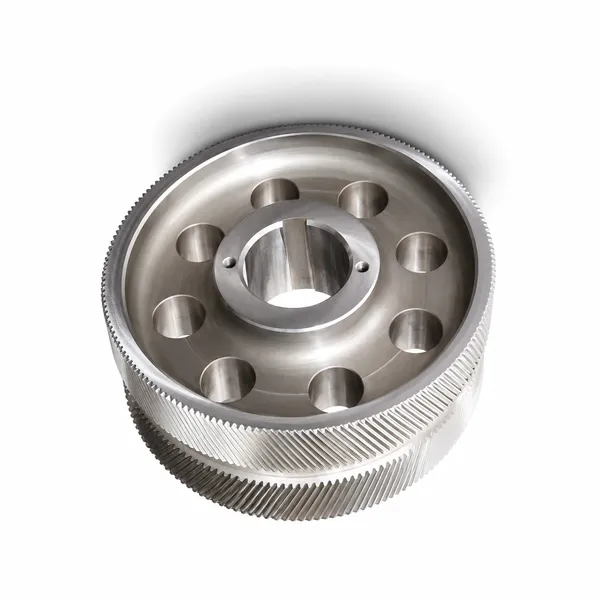
spur gear printing

Spur Gears

DIN 4–5 · printing press · matched pairs

helical gear

Helical Gears

Low noise · high contact ratio · gearbox

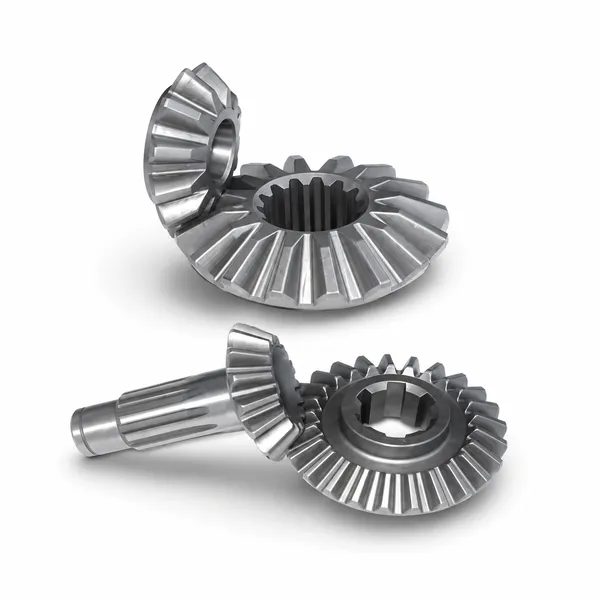
bevel gear

ベベルギア

Right-angle · press auxiliary · spiral

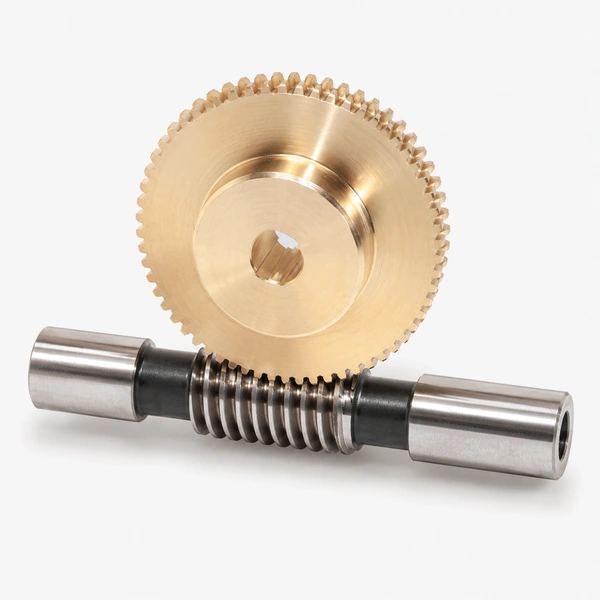
worm gear

Worm Gears

High ratio · self-locking · register control

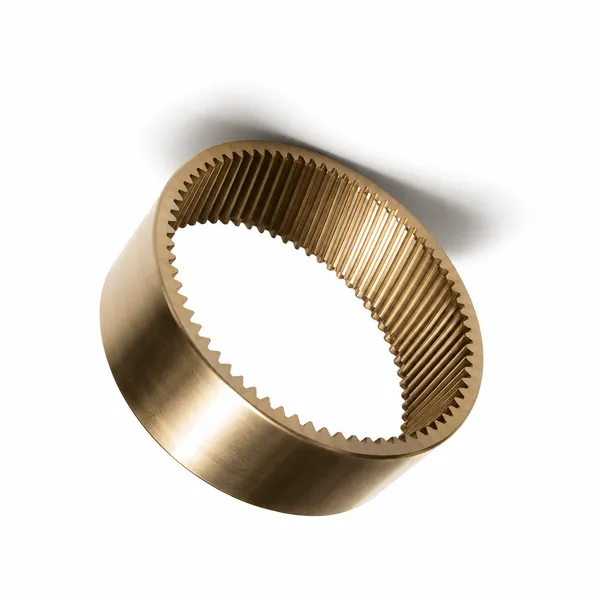
ring gear

Ring Gears

Internal · planetary · press drive

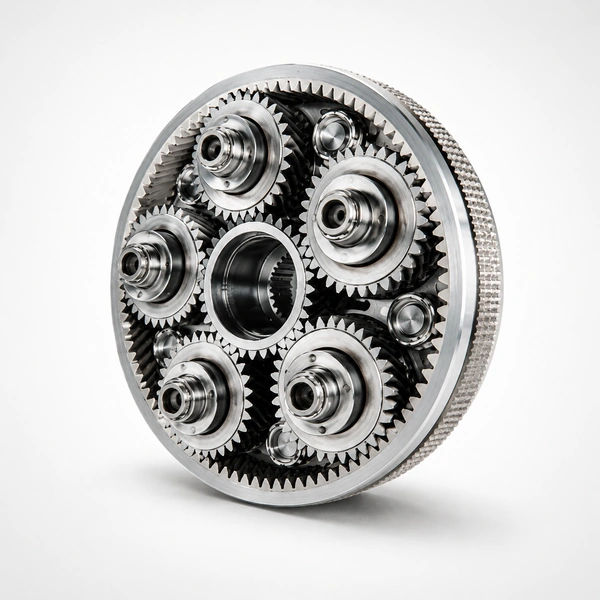
planetary gear

Planetary Gears

Compact · servo · infeed & delivery

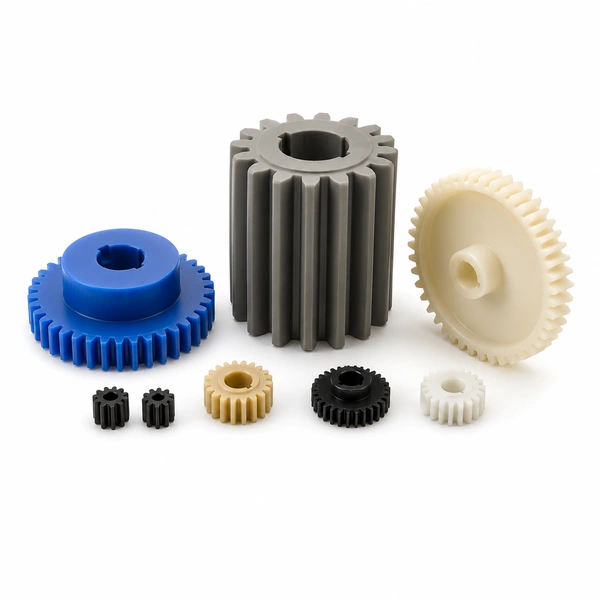
plastic gear

Plastic Gears

POM · PEEK · ink system · light drives

GET A QUOTATION · KOREA EVER-POWER

Need Spur Gears for Printing Machines?

Korea Ever-Power manufactures 20CrMnTi, GGG60, and Cronidur 30 spur gears for all printing press cylinder drive applications — DIN 4–5 quality class, tip relief applied, matched pairs with TE certificate <3 μrad. Replacement supply for Heidelberg, KBA, Manroland, Komori, Ryobi sheet-fed and web presses. Flexographic and gravure press cylinder gears. ISO 9001:2015 certified.

Request a Quotation →

編集者: Cxm

VR Tour of Our Factory

TAGs:

ギアラック

当社は、ギアラックの大手メーカー、サプライヤー、輸出業者の一つとして、ギアラックをはじめとする様々な製品を提供しています。

詳細についてはお問い合わせください。

郵便:[email protected]

ギアラックの製造業者、サプライヤー、輸出業者

最近の投稿

jaJapanese