
Bevel Gears for Power Tools:
Angle Grinders, Drills, Sanders and Industrial Pneumatic Tools
Power tool bevel gears operate at the extreme end of the speed range for any commercial gear application — angle grinder bevel gear pairs running at 10,000–12,000 RPM disc speed push the tooth pitch line velocity to 20–40 m/s in a gear the size of a large coin, with no forced lubrication, sparse grease packing, and a life requirement of 500–1,500 hours in the hands of professional users. The combination of ultra-high speed, compact dimensions, light weight constraints, and the need to survive intermittent stall events (disc jam in a cut) and drop impacts makes power tool bevel gear design one of the most demanding applications per unit mass of gear material in manufacturing. This guide covers bevel gear materials, heat treatment, geometry, and lubrication for angle grinders, professional drills, reciprocating saws, and heavy industrial pneumatic tools.
Spiral Bevel · 500–2,000 h Life · Grease-Packed
Angle Grinder · Drill · Sander · Pneumatic
Power Tool Bevel Gear Engineering — Speed, Impact and the Disc Jam
The angle grinder is the power tool that most severely tests bevel gear design — at 10,000–12,000 RPM disc speed and 115–230 mm disc diameter, the pitch line velocity at the pinion gear (the small gear on the motor shaft) is 20–40 m/s. At these speeds, dynamic effects dominate the tooth load far more than the rated motor torque. The dynamic tooth load factor Kv for a power tool bevel gear at PLV 25 m/s with DIN 7 quality class is approximately 1.8–2.2 — meaning the effective tooth load is 1.8–2.2 times the static load from the motor torque alone. This is why power tool bevel gears must be DIN 5–6 quality class (ground spiral bevel) even though their actual transmitted power is only 50–200 W — because the static load calculation would suggest a much smaller quality requirement. Downgrading to DIN 7 or 8 at this pitch line velocity increases the dynamic load factor to 2.5–3.0, which in combination with the disc jam stall torque is a tooth fracture prescription.
Korea Ever-Power’s bevel gears for power tools are manufactured in 20CrMnTi case carburized (for Chinese and Korean power tool OEM supply) and SCM420H case carburized (for Japanese OEM supply and for replacement supply requiring JIS material certificates). Both alloys achieve identical mechanical properties after case carburizing — HRC 58–62 tooth surface, HRC 38–44 core, core impact energy above 60 J at room temperature (essential for stall impact resistance). Korea Ever-Power also manufactures power tool bevel gears in 17-4 PH stainless for industrial pneumatic tool applications in corrosive environments (shipyards, chemical plants) where standard carbon steel bevel gears would rust rapidly.
The disc jam event — when an angle grinder disc binding in a cut causes the motor to stall or the disc to stop abruptly — is the design-governing case for tooth root bending fatigue in angle grinder bevel gears. At 10,000 RPM motor speed, the rotating inertia of the motor armature and the bevel pinion represents a significant kinetic energy store. When the disc jams, this kinetic energy is released as a single torque spike into the bevel gear — peak torques during a disc jam can reach 5–10× the rated motor torque, applied for 50–150 ms. The bevel gear must survive this spike without tooth fracture, and then continue to provide the rated service life after the event. Shot peening of the tooth roots is mandatory in professional power tool bevel gears — the compressive residual stress layer from shot peening provides the additional bending fatigue margin that allows the gear to survive multiple disc jam events within its rated service life.
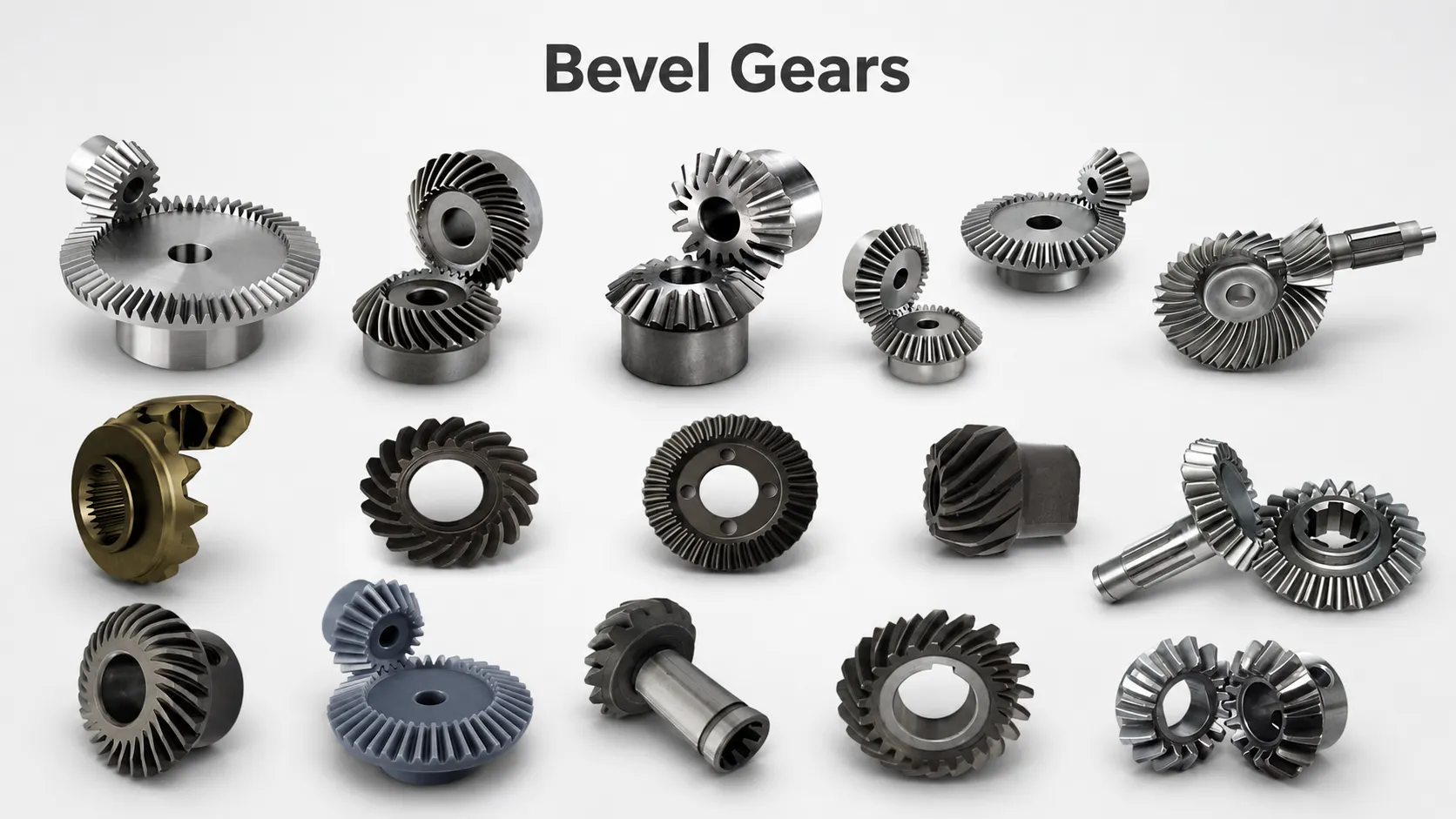
Power Tool Application Specifications
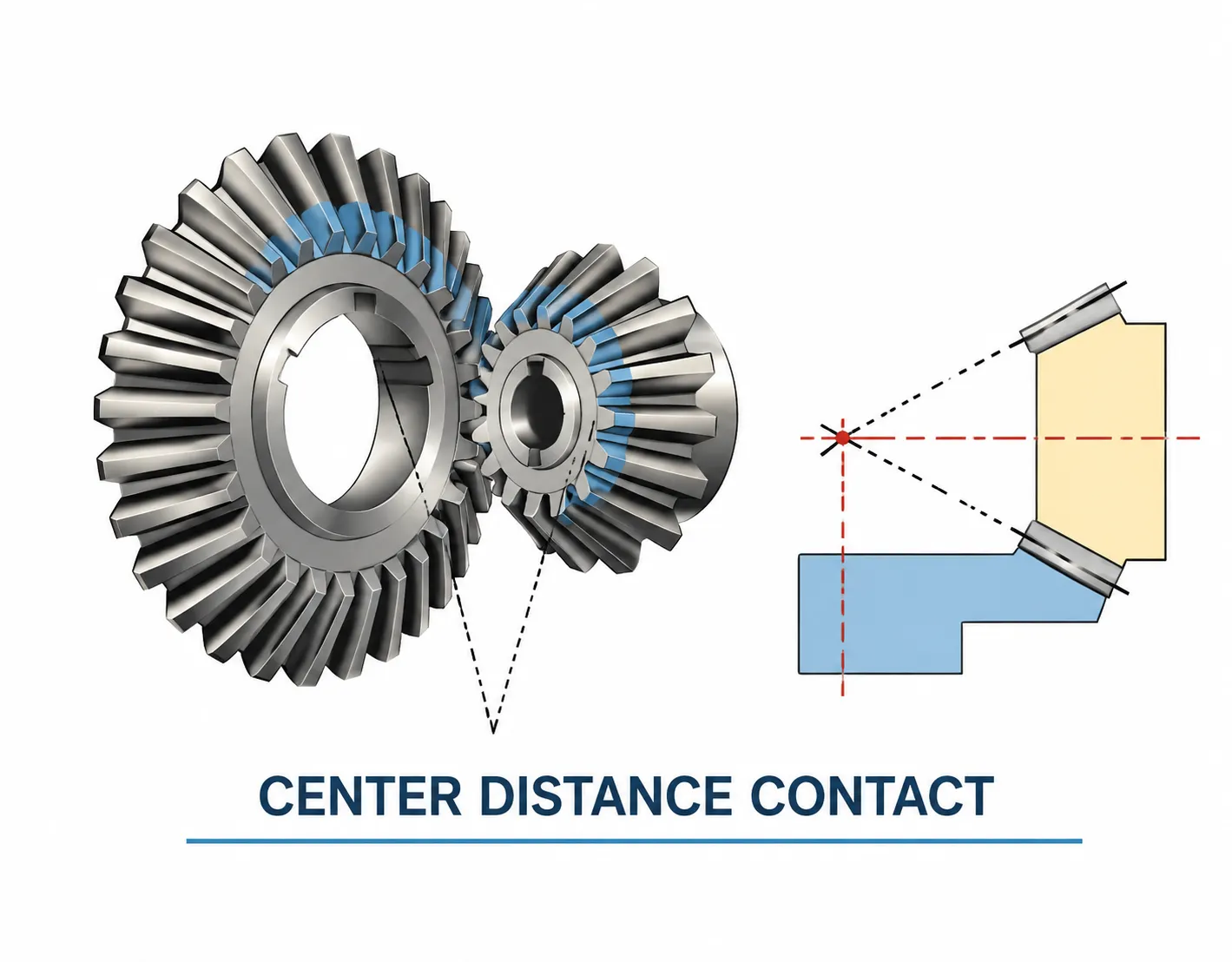
Grease Selection and Lubrication Life for Power Tool Bevel Gears
Power tool bevel gears are grease-lubricated for life in most designs — the grease is packed into the gear head housing at assembly and is intended to last for the rated service life of the tool (500–2,000 hours for professional tools) without replenishment. Grease lubrication at PLV 15–40 m/s is a demanding application for the grease itself — at these speeds, centrifugal action flings the grease away from the tooth contact zone, and the grease must flow back by capillary action between tooth mesh events to maintain a lubricant film. Grease consistency (NLGI grade) selection is critical: NLGI 1 flows too readily and is flung out of the tooth mesh zone before it can provide a film; NLGI 3 does not flow adequately at tooth contact zone temperatures above 80°C and leaves the bevel gear tooth running semi-dry. NLGI 2 lithium complex is the standard specification for angle grinder and drill bevel gears at PLV up to 25 m/s.
Frequently Asked Questions — Power Tool Bevel Gears
Explore Korea Ever-Power Gear Categories
Seven precision gear product lines for power tools, automotive, industrial and specialist applications worldwide.
Editor: Cxm
 English
  Italian
  Korean
  French
  Japanese