GEAR APPLICATION GUIDE · WORM GEAR · W07

Worm Gears for Solar Tracking Systems:
Slew Drive Actuators, Self-Locking Design and Outdoor Durability

Solar tracking worm gear drives represent one of the largest and fastest-growing volume applications for worm gears in the 21st century — the global solar PV installation rate of 200+ GW per year requires hundreds of millions of worm gear slew drives to move single-axis and dual-axis solar panel arrays from sunrise to sunset, 365 days a year, in some of the most challenging outdoor environments on earth. The design requirements for solar tracking worm gears differ fundamentally from industrial worm gears: absolute weatherproofing for 20–25 year outdoor life, self-locking under wind load without any power supply, backlash below 0.1° for accurate sun tracking, and the ability to survive sandstorm, freeze-thaw cycling, and UV radiation that would destroy standard commercial gear components within a few seasons. This guide covers worm gear slew drive selection, self-locking design, outdoor sealing, and maintenance requirements for single-axis and dual-axis solar tracker applications.

PB2 Bronze · 42CrMo4 Worm · IP67/IP68 Housing
Self-Locking · Ratio 40:1–180:1 · 20–25 yr Life
Single-Axis · Dual-Axis · SAT · CPV · Slew Drive

DESIGN LIFE

20 – 25 years

Solar tracking worm gear design life aligned with the solar panel warranty period. At 2 full tracking cycles per day (dawn-to-dusk east→west, then overnight reset west→east), 365 days/year, 25 years = 18,250 full tracking cycles. The worm and wheel must achieve this cycle count without exceeding allowable tooth wear

RATIO RANGE

40:1 – 180:1

Single-axis tracker (SAT) azimuth drive: 60:1–120:1. Dual-axis tracker elevation axis: 40:1–80:1. Dual-axis azimuth axis: 80:1–180:1. CPV (concentrating PV) precision tracker: 120:1–180:1 for ≤0.05° tracking accuracy

SELF-LOCK CONDITION

Lead angle <5°

Self-locking is achieved when the lead angle of the worm is smaller than the friction angle of the worm-wheel contact. For steel worm on bronze wheel with good lubrication, friction angle ≈ 5°–7°. Ratios above 40:1 with single-start worm (lead angle ≈ 1.4°–2.5° at standard module) are reliably self-locking under wind load without motor power

SEALING

IP67 / IP68

IP67 minimum for all solar tracker worm gear slew drives — defined as submersion in water up to 1 m for 30 minutes. IP68 for tracker arrays in flood-prone areas or desert environments with heavy seasonal rain after dry periods. IP69K for utility-scale cleaners that spray water on the array for dust removal

Why Worm Gears Are the Standard Drive for Solar Tracking Systems

The solar tracking drive must satisfy three requirements that collectively make the worm gear the uniquely suitable choice among all gear types: it must hold the panel array at any position under wind load without consuming electrical power (self-locking), it must provide a high reduction ratio in a compact slew drive package to step down from the electric motor speed to the very slow panel rotation rate (approximately 0.0042°/second for east-to-west sun tracking), and it must do so maintenance-free for 20–25 years in outdoor conditions ranging from desert heat to arctic cold, from coastal salt spray to inland dust. No other gear type satisfies all three of these simultaneously — helical gears cannot self-lock, spur gears require a separate holding brake, and bevel gears cannot achieve the required 80:1+ ratio in a single compact stage.

Korea Ever-Power’s worm gears for solar tracking systems are manufactured as complete slew drive assemblies — combining the worm and wheel with a precision slewing ring bearing, IP67/IP68 sealed housing, and output mounting flange dimensioned to the customer’s solar tracker torque tube or pier mount. The worm shaft is 42CrMo4 induction hardened (HRC 52–56) for the long wear life required at 18,000+ tracking cycles; the worm wheel is PB2 centrifugal-cast phosphor bronze (CuSn12) for the best combination of contact fatigue resistance and low sliding friction. For utility-scale installations where total cost of ownership over 25 years is the dominant selection criterion, Korea Ever-Power also offers AB2 aluminium bronze worm wheels for tracker drives exceeding 15,000 Nm output torque — the higher contact fatigue resistance of AB2 allows the worm gear to be specified at a smaller centre distance, reducing the total slew drive size and cost per tracker. The complete design guide for solar worm gear reducer selection and sizing is available at the worm gear reducer specification resource.

Backlash in a solar tracker worm gear drive affects tracking accuracy directly — each 0.1° of backlash at the worm gear output allows the panel array to drift by 0.1° under wind load reversals before the worm gear re-engages to resist the wind. At typical tracker panel tilt angles and wind loading (design wind speed typically 130–160 km/h for utility-scale trackers), the panel rotates through the backlash dead band on every wind gust reversal. Accumulated position error from backlash excursions reduces the tracker’s ability to precisely follow the sun’s position, reducing the average annual energy yield of the tracked array. Korea Ever-Power solar tracker worm gear slew drives are manufactured with backlash below 0.05° (3 arcminutes) at the output shaft for standard SAT applications, and below 0.025° for CPV precision tracker applications.
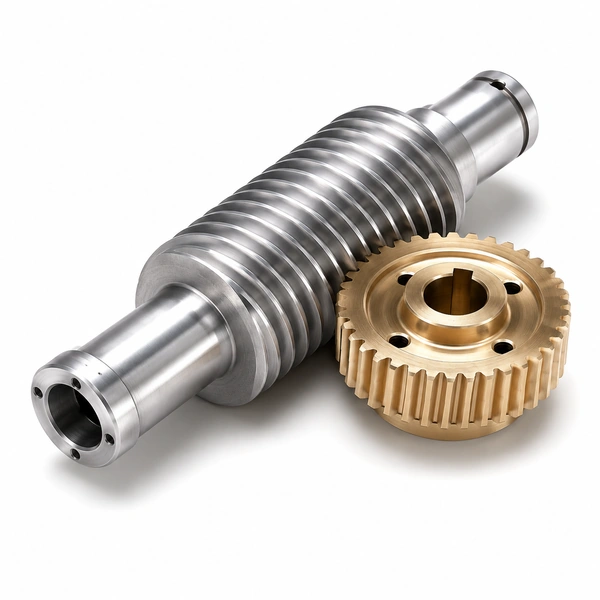
duplex worm gear solar tracking slew drive Korea Ever-Power
Korea Ever-Power duplex worm gear for solar tracking slew drive application — 42CrMo4 duplex worm shaft (tapered thread with left and right flank contact simultaneously), PB2 centrifugal-cast bronze wheel, centre distance 100 mm, ratio 80:1 (single start), output torque 8,500 Nm. The duplex (anti-backlash) worm design eliminates backlash by allowing axial adjustment of the worm position to take up tooth thickness clearance as the worm wheel wears — the opposing flanks of the tapered worm thread contact both flanks of the wheel tooth simultaneously, reducing backlash to below 0.02° (1.2 arcminutes). Used in dual-axis CPV trackers where tracking accuracy better than ±0.05° is required for concentrating optics. IP68 housing with FKM (Viton) shaft seals and stainless external hardware for 25-year outdoor life. Grease fill port accessible from the outside of the housing for lubrication top-up without disassembly in the field.

Solar Tracker Application Types and Drive Specifications
TYPE 01

SINGLE-AXIS
TRACKER (SAT)

Worm gear specification: centre distance 80–130 mm, ratio 60:1–120:1, PB2 bronze wheel, 42CrMo4 induction hardened worm, output torque 5,000–25,000 Nm per drive unit, IP67 housing, backlash ≤ 0.05°, stall torque withstand ≥ 3× rated (for emergency wind stow). Single-axis trackers (SAT) are the dominant type in utility-scale ground-mount solar PV installations — they rotate all panels in a row simultaneously around a north-south horizontal axis by ±60° from horizontal, tracking the sun from east in the morning to west in the evening. Each tracker row is typically 50–120 m long, carrying 20–50 solar panels (each panel 1.8 m × 1.1 m, weighing 25–30 kg), with the whole row driven by a single slew drive worm gearbox at the centre of the torque tube. The single-row worm drive output torque is dominated by the wind load moment — which for a 100 m row at design wind speed (130–160 km/h) can exceed 15,000 Nm. The worm gear must hold this torque without any motor power (self-locking) to avoid the array blowing through the stow position during a grid outage. Korea Ever-Power SAT slew drives are wind load rated to 3× the continuous rated torque at the emergency stow condition, with the self-locking confirmed by independent testing at the rated wind load torque with the motor supply disconnected.

TYPE 02

DUAL-AXIS
TRACKER (DAT)

Worm gear specification: azimuth axis: centre distance 100–150 mm, ratio 80:1–180:1, output torque 5,000–40,000 Nm; elevation axis: centre distance 80–120 mm, ratio 40:1–80:1, output torque 2,000–15,000 Nm; both axes: IP67, backlash ≤ 0.05°, FKM shaft seals. Dual-axis trackers (DAT) independently control both the east-west (azimuth) rotation and the north-south (elevation) tilt angle of the panel array, allowing the panel to point directly at the sun throughout the day and throughout the year (compensating for seasonal variation in sun altitude). Dual-axis tracking achieves 30–40% higher annual energy yield than fixed-mount PV in many locations, justifying the higher drive cost compared to single-axis. The azimuth axis requires the higher reduction ratio because it must rotate the entire panel and elevation mechanism assembly through 360° over 24 hours — the azimuth worm gear ratio is typically 2× the elevation ratio for the same motor speed. Korea Ever-Power dual-axis tracker worm gear slew drives are supplied as matched pairs (azimuth and elevation) with dimensionally matched mounting flanges for the customer’s pedestal pier design.

TYPE 03

CPV PRECISION
CONCENTRATOR

Worm gear specification: duplex (anti-backlash) worm design, centre distance 80–120 mm, ratio 120:1–180:1, backlash ≤ 0.025° (1.5 arcminutes), position accuracy ±0.05°, output torque 2,000–8,000 Nm per axis. Concentrating photovoltaic (CPV) systems use multi-junction III-V solar cells that must be pointed at the sun with accuracy better than ±0.1° for the concentrating Fresnel lens optics to focus sunlight onto the cell. This precision tracking requirement is significantly tighter than standard flat-panel SAT or DAT applications and requires duplex (anti-backlash) worm gear pairs where both flanks of the worm thread simultaneously engage the wheel tooth, eliminating the backlash dead band. The duplex worm gear allows the CPV tracker to maintain ±0.05° pointing accuracy even during wind gust reversals that would cause a standard worm gear with ±0.05° backlash to temporarily drift off-aim. Korea Ever-Power CPV tracker worm gear slew drives incorporate axially adjustable worm shaft bearings that allow field adjustment of the worm position to eliminate backlash growth from wheel wear over the tracker lifetime.

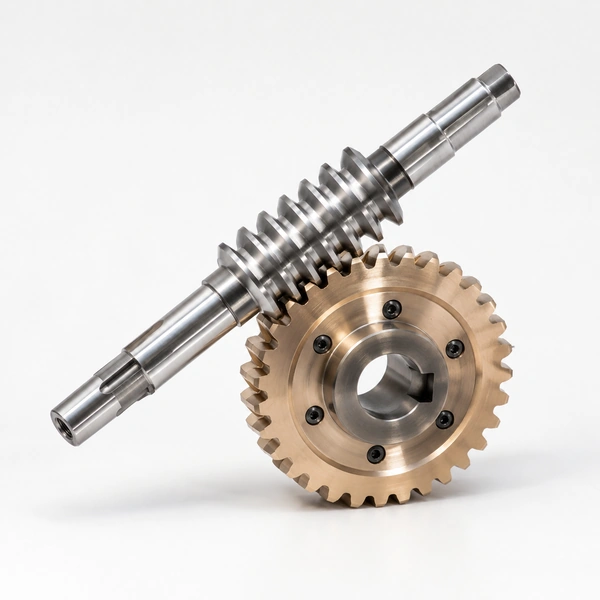
cylindrical worm wheel solar tracker bronze Korea Ever-Power
Korea Ever-Power PB2 centrifugal-cast phosphor bronze worm wheel for solar tracker slew drive — CuSn12, OD 420 mm, 80 teeth, ratio 80:1 (with single-start 42CrMo4 worm shaft), centre distance 100 mm. Tooth profile hobbed to match the mating worm shaft thread profile precisely — any profile mismatch between the worm thread and the wheel tooth results in point contact instead of line contact at the mesh, dramatically reducing the load-bearing area and the fatigue life. Korea Ever-Power uses a dedicated worm hobbing process where the hob is dressed to match the actual ground worm thread profile (measured on a gear CMM) rather than a nominal design profile, ensuring full line contact across the entire tooth width from the first tracking cycle. This process eliminates the 200–500 hour running-in period that standard hobbed worm wheels require, and delivers the full rated life from day one of tracker commissioning.

25-Year Outdoor Durability — Sealing, Lubrication, and Environmental Design

The 25-year outdoor service requirement for solar tracker worm gear drives is without precedent in most industrial gear applications — industrial gearboxes are typically designed for 10,000–20,000 hours of service life in sheltered factory environments, while solar tracker worm gears must achieve equivalent longevity in the harshest outdoor climates on earth. Desert installations in the Middle East, North Africa, and Australian outback experience ambient temperatures from -5°C (winter nights) to +55°C (summer afternoons), wind-blown dust with 80+ μm silica particles that abrade through poor seals within one season, and UV radiation that degrades standard elastomers and coatings within 5–8 years. Coastal installations add salt spray to the challenge.

SOLAR TRACKER WORM GEAR — 25-YEAR DURABILITY SPECIFICATION

HOUSING AND SEALING

  • • Housing: EN-GJL-250 grey cast iron or GGG50 ductile iron, hot-dip galvanised (80–100 μm Zn), or powder coated RAL 7040 (window grey, UV-stable, 120 μm DFT)
  • • Shaft seals: FKM (Viton) lip seals — not NBR. FKM resists desert temperature cycling and UV ozone degradation. Service life 15+ years vs 5–8 years for NBR in outdoor solar service
  • • Gasket material: EPDM for housing joints — EPDM resists UV and ozone degradation for 20+ years
  • • External fasteners: A4-80 stainless steel (M8–M16) for all accessible hardware

LUBRICATION

  • • Lubricant: synthetic polyglycol (PG) worm gear oil ISO VG 220. PG oil provides superior EHL film at high sliding velocity and excellent temperature range (-30°C to +80°C bulk oil temperature)
  • • Alternative: full PAO synthetic VG 220 for installations where PG is not preferred
  • • Fill level: worm shaft horizontal — oil level at worm shaft centre. Worm shaft vertical — confirm with Korea Ever-Power application team
  • • Change interval: PG or PAO synthetic — 5 years or 10,000 operating hours, whichever comes first

ENVIRONMENTAL RATINGS

  • • Ingress protection: IP67 standard. IP68 for flood-prone sites. IP69K for sites with robotic panel cleaning systems
  • • Corrosion: salt spray test 1,000 hours per ISO 9227 on housing coating before shipment
  • • Temperature: operating -40°C to +70°C (oil viscosity permitting at cold end)
  • • Thermal cycling: tested to 1,000 cycles -20°C to +60°C without seal or gasket failure per Korea Ever-Power solar drive qualification test protocol
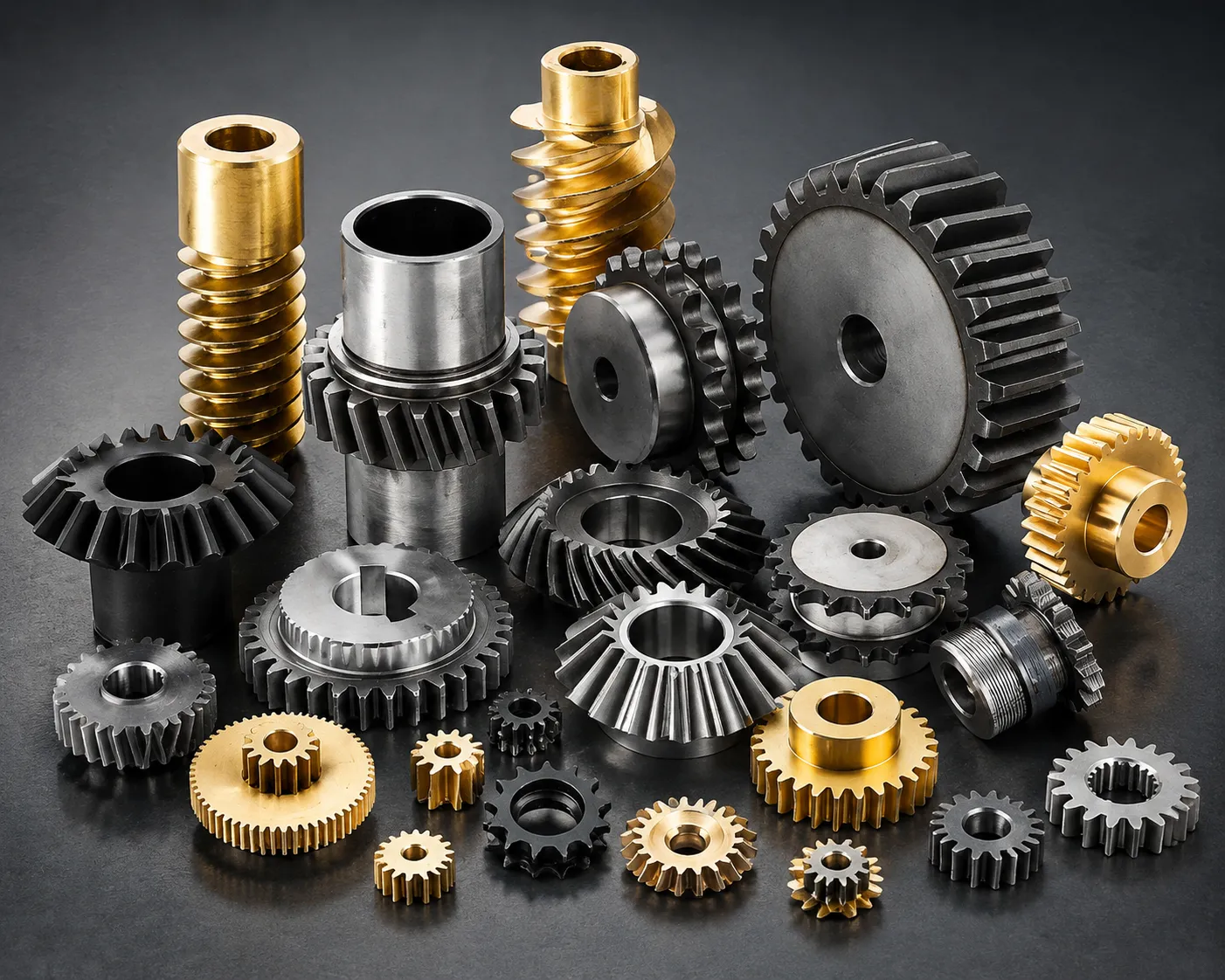
types of gears worm spur bevel Korea Ever-Power solar tracker selection
Korea Ever-Power gear product range for solar energy applications — worm gear slew drives for solar tracker azimuth and elevation axes, spur gear drives for array positioning and accessory drives, and planetary gear compact drives for rooftop solar tracking applications with restricted installation space. The worm gear is uniquely suited for solar tracker applications because its self-locking characteristic eliminates the need for a separate holding brake on the panel array — the worm gear’s inherent self-lock holds the panel at any position between tracking moves without power consumption, reducing the overall electrical consumption of the tracking system by 0.5–1.5% of annual panel generation vs brake-equipped alternative drives.

Frequently Asked Questions — Worm Gears for Solar Tracking

Q 01

How do I verify that the worm gear slew drive I am specifying for my solar tracker project is genuinely self-locking under the design wind load torque, not just theoretically self-locking from the ratio?

Self-locking verification for a solar tracker worm gear requires checking three conditions, not just the ratio: (1) Lead angle vs friction angle: calculate the worm lead angle λ = arctan(z₁ × m / d₁) where z₁ = number of worm starts, m = module, d₁ = worm reference diameter. For self-locking, λ must be less than the friction angle φ’ = arctan(μ), where μ is the coefficient of friction at the worm-wheel mesh. For a well-lubricated steel-on-bronze worm gear, μ = 0.03–0.06, so φ’ = 1.7°–3.4°. Your lead angle must be below φ’ with a margin — typically lead angle ≤ 3° for reliable self-locking on a well-lubricated PG oil worm gear. (2) Wind load torque vs rated output torque: the worm gear must hold the design wind load torque safely within the self-lock condition. Calculate the wind load moment on the panel array at the design wind speed (use the tracker OEM’s wind load calculation or IEC 61400-1 wind class data). Confirm this wind moment is below the worm gear’s rated output torque × 2.0 safety factor. (3) Test at the rated wind load torque: apply the rated wind load torque to the output flange with the motor supply disconnected and the worm shaft free to rotate — the worm shaft should not rotate. Korea Ever-Power tests all solar slew drive worm gears for self-locking at 1.5× the rated output torque as a production inspection step and provides a self-lock torque certificate with each shipment.

Q 02

Our single-axis tracker in a desert environment is showing oil leakage from the worm gear housing after 18 months in service. What is causing this and how do we prevent recurrence?

Oil leakage from a solar tracker worm gear housing after 18 months in desert service has three common root causes: (1) Thermal cycling-induced housing gasket failure: desert trackers experience diurnal (day-night) temperature swings of 40–50°C, causing repeated expansion and contraction of the housing joint faces. If the housing gasket is standard NBR rubber, it hardens and cracks within 12–18 months in UV and ozone-rich desert air, allowing oil to seep through the joint face on each heating cycle. Solution: replace the failed NBR gasket with a UV-stabilised EPDM gasket — EPDM retains its elasticity for 15+ years in desert UV exposure. (2) Shaft seal lip hardening from NBR material: as above — NBR lip seals in desert outdoor service typically harden and allow oil leakage from the worm shaft clearance within 12–24 months. Solution: replace with FKM (Viton) shaft seals — the only material grade suitable for 25-year outdoor solar service at desert temperatures. Confirm the replacement seal is the same OD and bore dimensions as the original. (3) Positive internal pressure from thermal expansion: if the housing has no pressure relief vent, the air inside the housing pressurises as the oil temperature rises on a hot afternoon, pushing oil past the lip seal pressure relief direction. Solution: install a desiccant breather valve on the housing — these allow pressure equalisation while excluding water vapour and dust from the housing interior. Korea Ever-Power solar tracker worm gear housings are supplied with FKM shaft seals, EPDM housing gaskets, and a desiccant breather as standard — request upgrade confirmation if your existing units were supplied with standard NBR seals.

Q 03

What is the typical supply lead time and MOQ for Korea Ever-Power solar tracker worm gear slew drives for utility-scale projects?

Korea Ever-Power solar tracker worm gear slew drive supply: Standard sizes (SE series: centre distance 80, 100, 120, 130 mm; ratio 60:1, 80:1, 100:1, 120:1) from stock: lead time 15–25 days from order; MOQ 10 units for stocked sizes. Project-specific quantities for utility-scale SAT installations (50–500 MW, requiring 1,000–20,000 slew drive units per project): Korea Ever-Power establishes a dedicated production schedule and project supply agreement. Typical lead time from final technical approval: 45–70 days for the first production batch (1,000–2,500 units), with subsequent monthly batches of 1,500–3,000 units to match the project’s installation rate. The first-batch lead time includes: drawing and specification approval (7–10 days), production scheduling confirmation with material procurement (7–14 days), manufacturing (20–35 days), quality inspection and batch testing including self-lock torque test on 5% sample (5–7 days). Documentation for utility-scale solar projects: IEC 61400 wind class compliance statement, self-lock torque test certificate (per batch), IP67/IP68 ingress protection test certificate, salt spray test certificate (1,000 h per ISO 9227), thermal cycling test certificate, material certificates for worm shaft and wheel bronze, dimensional inspection report for first article. Contact Korea Ever-Power’s solar energy team at least 90 days before the first planned installation date for utility-scale project supply planning.

Explore Korea Ever-Power Gear Categories

Seven precision gear product lines for solar energy, industrial, agricultural and specialist applications worldwide.
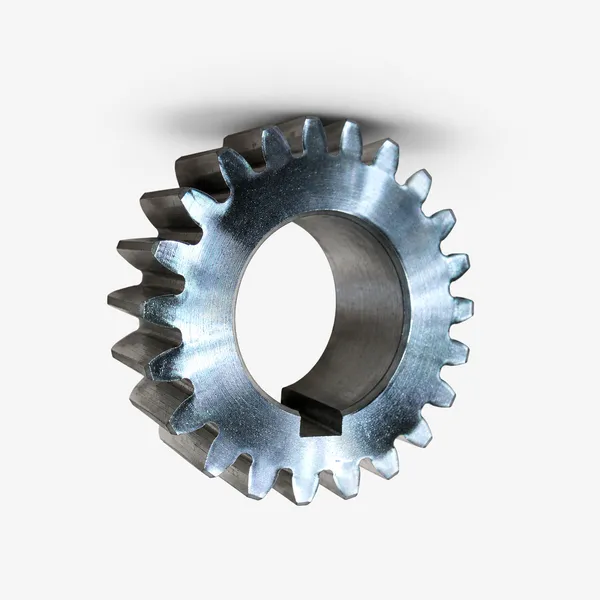
spur gear solar

Spur Gears

Rooftop solar · positioning · auxiliary

helical gear

Helical Gears

Low noise · gearbox · wind turbine

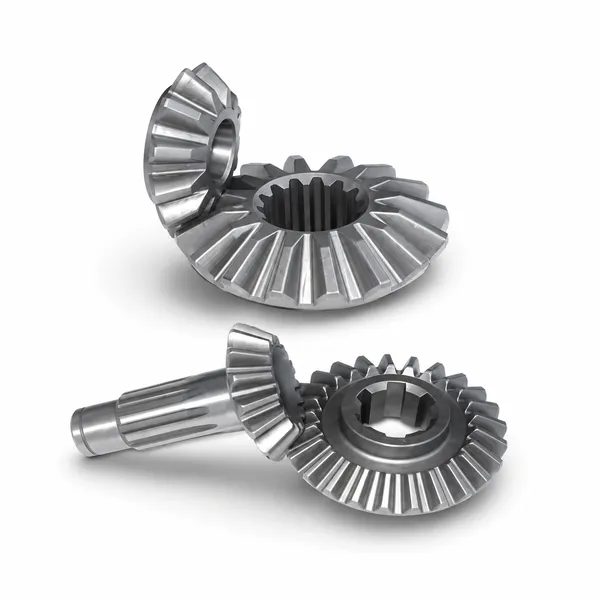
bevel gear

Bevel Gears

Right-angle · solar pump · auxiliary

worm gear solar tracking

Worm Gears

Solar tracking · self-lock · IP67/IP68

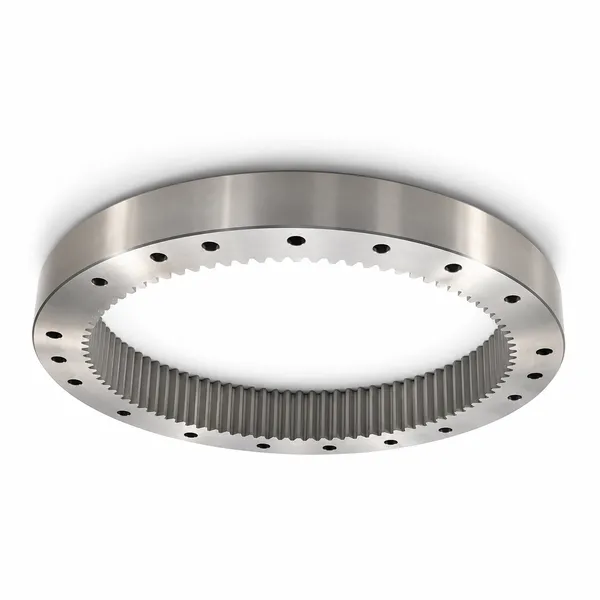
ring gear

Ring Gears

Slewing ring · azimuth · large diameter

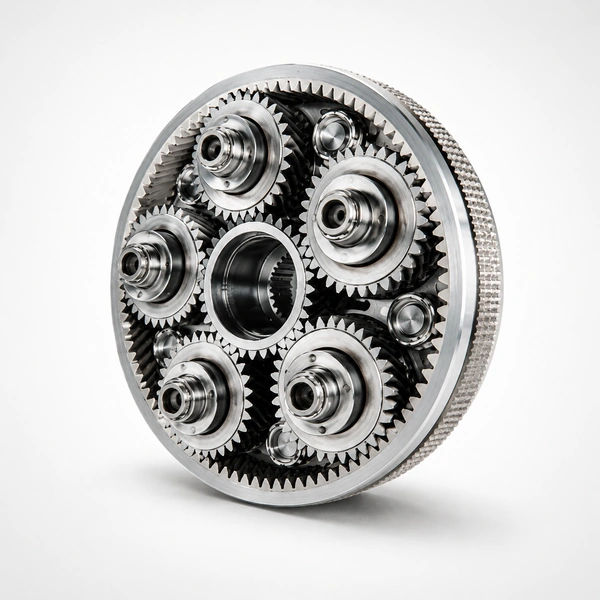
planetary gear

Planetary Gears

Rooftop SAT · compact · servo drive

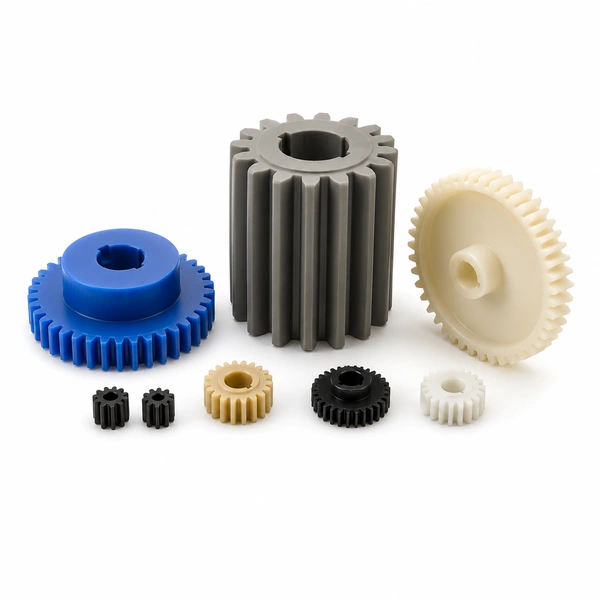
plastic gear

Plastic Gears

UHMWPE · sensor · corrosion-free

GET A QUOTATION · KOREA EVER-POWER

Need Worm Gear Slew Drives for Solar Trackers?

Korea Ever-Power manufactures complete worm gear slew drive assemblies for all solar tracker applications — single-axis trackers (SAT) up to 25,000 Nm, dual-axis trackers (DAT), and CPV precision trackers with duplex anti-backlash worm design. IP67/IP68 housing, FKM shaft seals, EPDM gaskets, synthetic PG or PAO gear oil, 25-year outdoor life design. Self-lock torque certificate with every shipment. Utility-scale project supply 1,000–20,000 units per project. ISO 9001:2015 certified.

Request a Quotation →

Editor: Cxm

VR Tour of Our Factory

TAGs:

gear rack

As one of leading gear rack manufacturers, suppliers and exporters of products, We offer gear rack and many other products.

Please contact us for details.

Mail:[email protected]

Manufacturer supplier exporter of gear rack

Recent Posts

en_USEnglish