
Spur Gears for Mining Equipment:
Crusher Drives, Conveyor Systems and Underground Machinery
Mining equipment spur gears operate under conditions that would destroy components designed to industrial standards — cyclic shock loads from crusher jaw and cone impacts, continuous heavy-duty torque on conveyor belt drives running 20 hours per day, corrosive atmospheres from sulphide ores and mine water, and service intervals measured in years rather than months. From open-pit coal mine feeder conveyor drives to underground hard-rock development drill auxiliary gears, spur gears in mining equipment must combine maximum bending fatigue resistance, shock tolerance, and contamination immunity in a package that is economical enough to replace when worn without shutting down the mine. This guide covers spur gear specification for the principal mining equipment applications.
SF 1.8–3.0 · DIN 6–8 · 24h Duty · 10,000 h Life
Crusher · Conveyor · Dragline · Drill Rig
Spur Gears in Mining Equipment — Design Challenges and Material Demands
Mining is the most demanding service environment for spur gears in any industrial sector — a characterisation that is not hyperbole but a direct consequence of the physical realities of rock extraction and material handling at industrial scale. The three primary challenges that differentiate mining spur gears from standard industrial spur gears are severity and unpredictability of shock loading, the scale of the equipment (which pushes gear dimensions beyond what carburizing heat treatment can reliably cover), and the unforgiving consequences of unexpected gear failure (a failed crusher drive or conveyor gear can halt production at a cost of hundreds of thousands of dollars per hour at a large mine).
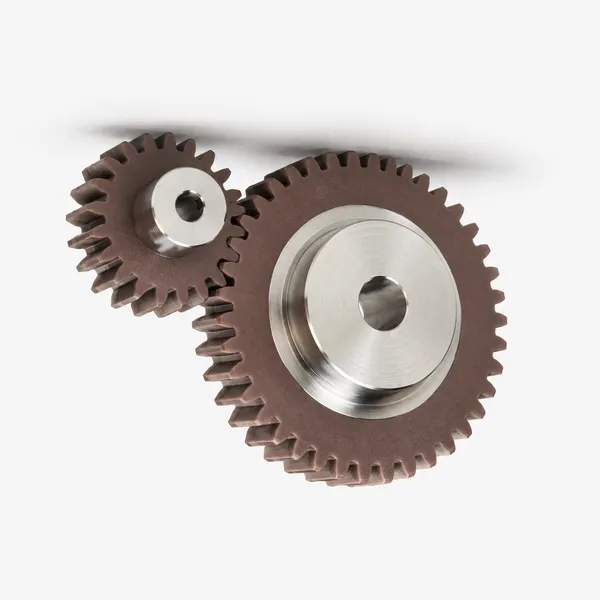
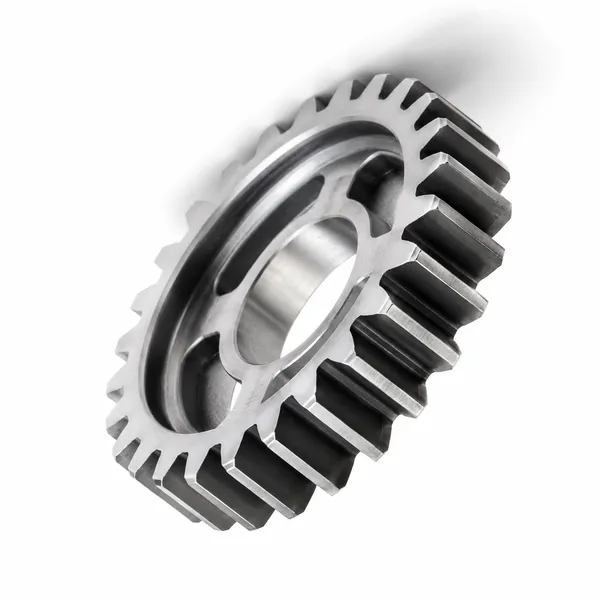
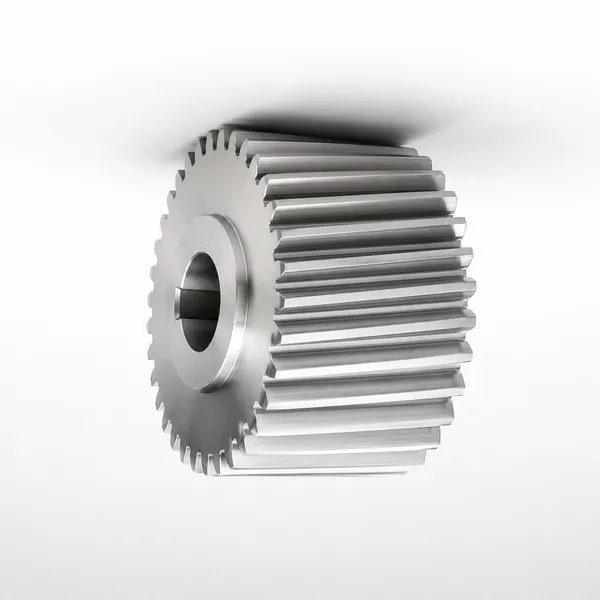
Korea Ever-Power’s spur gears for mining equipment are manufactured in three material tiers matched to the gear size and application shock level: 18CrNiMo7-6 case carburized (HRC 58–62, for mining auxiliary gears up to approximately 400 mm OD where case carburizing can achieve the required uniform case depth), 34CrNiMo6 through-hardened (HB 310–360, for large gear bodies above 400 mm OD in crusher and dragline applications where uniform through-hardening is more consistent than case carburizing at large section thickness), and 42CrMo4 QT (HB 260–310, for budget-conscious conveyor and screen drive gear replacements where the application duty is within the reduced contact fatigue resistance of this material). All large mining spur gears are manufactured from forged blanks — forging breaks the as-cast dendritic grain structure of the steel ingot, producing a refined grain that improves fatigue strength by 20–35% vs equivalent cast steel at the same hardness level.
The service factor is the most important single parameter in mining spur gear specification, and the parameter most frequently underestimated in budget-driven replacement gear orders. A belt conveyor drive at rated capacity running uniformly on a flat gradient uses SF 1.8 — but the same conveyor starting under full load on a 15° upgrade, or experiencing a belt jam that causes the drive motor to stall against the locked conveyor, generates instantaneous torque spikes that are 3–5× the rated torque. If the spur gear was sized to SF 1.8 and the actual peak torque is 4× rated, the gear is in catastrophic overload — tooth fracture is instantaneous. Korea Ever-Power specifies mining conveyor spur gears to a minimum of SF 2.0 for flat conveyor drives with soft-start control, SF 2.5 for inclined conveyor drives, and SF 3.0 for all crusher applications where the jaw or cone contact with an uncrushable tramp metal object is a credible event.
Mining Equipment Application Drive Specifications
Contamination Control and Lubrication for Mining Spur Gear Drives
Mining gear oil contamination is the primary life-limiting factor for spur gears in belt conveyor drives and crusher auxiliary gearboxes — responsible for the majority of premature gear failures that occur before the calculated fatigue life is reached. The mine environment provides a relentless supply of abrasive contaminants: silica dust from blasting and crushing operations (Mohs hardness 7 — harder than any gear tooth surface), iron oxide and sulphide minerals from the ore itself, water from mine dewatering sprays and natural ground water ingress, and diesel combustion products from underground LHD vehicles and trucks. Any one of these contaminants entering the gear oil at concentrations above their threshold level causes three-body abrasive wear on the gear tooth flank surface, progressively increasing the surface roughness and reducing the EHL film parameter Λ below 1.0 — triggering micro-pitting and ultimately macro-pitting failure at a fraction of the calculated fatigue life.
Oil Viscosity Selection for Mining Drives
Mining conveyor and crusher gearbox gear oil viscosity must be selected to balance two competing requirements: adequate EHL film thickness at the operating temperature (which requires higher viscosity) and adequate churning loss at cold start (which requires lower viscosity). The standard for most mining gear drives is ISO VG 220 at ambient above 10°C, ISO VG 150 at cold climate operations below 0°C, and ISO VG 320 for large crusher gearboxes where the oil sump temperature at full load exceeds 75°C. Synthetic PAO gear oil (equivalent viscosity to mineral ISO VG 220 but with significantly better viscosity-temperature characteristics) is increasingly specified for mining applications — the synthetic base oil maintains adequate viscosity at both cold start (-25°C) and high operating temperature (+95°C), eliminating the seasonal oil change between summer mineral VG 220 and winter mineral VG 150 that is common at open-pit mines in continental climates.
Mine ambient 10–40°C: ISO VG 220 mineral or VG 150 PAO synthetic
Sealed Gearbox Design for Mining
Mining gearbox sealing for spur gear drives must address three ingress paths simultaneously: (1) Shaft seal entries — the most common ingress point. Mining conveyor gearboxes use triple-lip shaft seals (two oil-retention lips + one exclusion lip facing the mine environment) on the high-speed input shaft and a single or double-lip seal with water and dust excluder on the low-speed output shaft. (2) Housing joint faces — the bolted split of a conveyor gearbox housing must be sealed with a cured silicone RTV compound applied to the joint face, not just metal-to-metal contact, to prevent fine silica dust ingress through micro-gaps at the joint. (3) Breather valves — gearboxes must breathe to accommodate thermal expansion and contraction of the oil; the breather must include a filter element rated for the mine atmosphere dust concentration (typically 5 mg/m³ or higher in open-pit blast areas). Korea Ever-Power recommends desiccant breathers with 3-micron filtration for all mining conveyor gearboxes — these breathers both filter the incoming air and capture water vapour from the incoming air column.
Triple lip seal + desiccant breather = mine-proven sealing system
Frequently Asked Questions — Mining Equipment Spur Gears
Explore Korea Ever-Power Gear Categories
Seven precision gear product lines for mining, heavy industry, construction and specialist applications worldwide.
Editor: Cxm
 English
  Italian
  Korean
  French
  Japanese