
Helical Gears for Food Processing Equipment:
Hygienic Drives, CIP-Compatible Gearboxes and Stainless Food-Grade Applications
Food processing helical gears must satisfy an intersection of requirements that rarely appear together in any other industrial application — they must transmit substantial mechanical power with high efficiency and low noise (as the default advantages of the helical tooth form), while simultaneously meeting food safety regulations that restrict materials, lubricants, and surface geometry in ways that directly conflict with standard industrial gear design practice. A helical gearbox driving a meat processing conveyor at 7.5 kW must provide the same efficiency and load capacity as its equivalent industrial counterpart, yet the housing must drain completely when tilted, the shaft seals must survive daily 90°C caustic washdown, and the gear oil must be food-grade NSF H1. This guide covers helical gear specification for the full range of food processing machinery — from bakery and confectionery drives through meat and poultry processing to beverage and dairy production.
M3–M12 · DIN 6–7 · CIP 90°C · Washdown
Meat · Bakery · Beverage · Dairy · Confectionery
Helical Gear Advantages in Food Processing — Efficiency, Noise, and Load Capacity
The helical gear has three fundamental advantages over the worm gear that make it increasingly preferred for food processing machine drives above 3 kW output power and at ratios below 60:1. First, efficiency: a single-stage helical gear pair at ratio 4:1 achieves 97–98% mechanical efficiency, compared to 60–75% for an equivalent single-stage worm gear at the same ratio. For a food processing conveyor running at 15 kW nominal load for 6,000 hours per year, the efficiency difference represents 1.1–1.5 kW of energy saving — approximately 6,600–9,000 kWh per year and a proportional reduction in the motor’s heat output into the food processing environment, where excess heat can affect temperature-sensitive food products near the drive. Second, noise: the helical tooth’s overlapping contact produces 5–10 dB(A) less mesh frequency noise than a worm gear at the same power and speed — important in food processing plants where operator noise exposure must comply with the 85 dB(A) action level and where customer-facing areas (bakery retail areas, winery tours) require low ambient noise. Third, load capacity: a helical gear pair at M8 in 316L stainless can transmit 40–60% more torque than a worm gear of the same size in the same material — allowing compact helical drives to handle the high-torque conveyor and mixer applications that previously required large, heavy worm drives.
Korea Ever-Power’s helical gears for food processing equipment are manufactured in 316L stainless steel (for all food processing gearboxes in product-contact or washdown zones), 17-4 PH stainless (for high-torque helical gear shafts where 316L strength is insufficient), and standard 20CrMnTi carburized (for enclosed helical gearboxes in utility areas of the food plant outside the product-contact zone, where the gear drives auxiliary equipment such as refrigeration compressors, boiler feed water pumps, and clean-in-place (CIP) chemical dosing pumps). The food processing helical gear range covers M3 through M12 in both single-helical (for drives up to M8 where the axial thrust is manageable in the bearing arrangement) and double-helical (for M8 and above or for applications where zero axial load on the output shaft bearing is required for pump coupling or other connected equipment reasons).
The EHEDG (European Hygienic Engineering and Design Group) requirements for food processing helical gearboxes follow the same principles as for worm gearboxes — no horizontal ledges on the housing exterior, no upward-facing surfaces that accumulate food residue or cleaning solution, full drainability when the housing is tilted 10° from its operating orientation. However, helical gearboxes present an additional EHEDG challenge that worm gearboxes do not: the helical gear tooth produces an axial thrust force on its shaft that must be absorbed by the shaft bearing, and the thrust bearing arrangement creates a housing geometry (the bearing endcap and its bolted or threaded joint with the housing body) that can harbour contamination if not carefully designed. Korea Ever-Power’s food processing helical gearboxes use a continuous-weld 316L stainless housing (no bolted or gasketed split joints on the external surface) with externally accessible bearing endcaps that are flush with the housing side faces — eliminating the recessed endcap joint that would trap cleaning solution between the endcap and the housing bore.
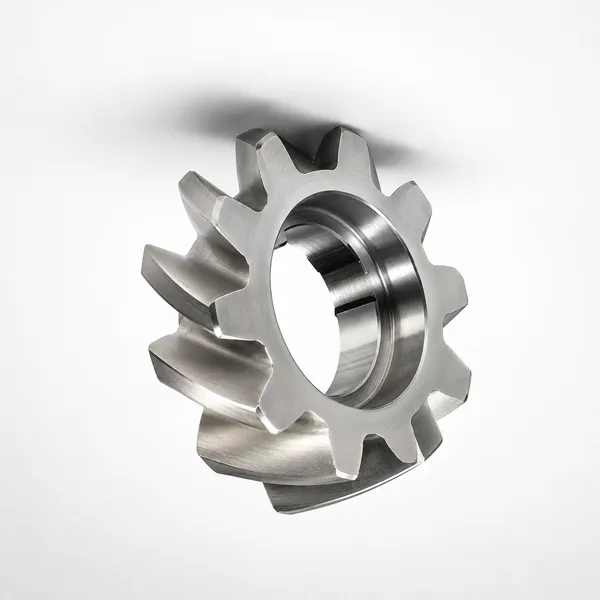
Food Processing Sector Helical Gear Specifications
Comparing Helical and Worm Gear Drives for Food Processing — Selection Guide
The choice between helical and worm gear drives for food processing equipment is one of the most common specification decisions that food plant engineers and machine builders face. Both offer hygienic gearbox designs in 316L stainless with NSF H1 lubricant — the selection between them should be made on the basis of the ratio, the efficiency requirement, and the installation geometry.
Frequently Asked Questions — Helical Gears for Food Processing
Explore Korea Ever-Power Gear Categories
Seven precision gear product lines for food processing, dairy, meat, beverage, bakery and hygienic industrial applications worldwide.
Éditeur : Cxm
 French
  English
  Italian
  Korean
  Japanese