Helical Gears for Food Processing Equipment: Hygienic Drives, CIP-Compatible Gearboxes and Stainless Food-Grade Applications
Food processing helical gears must satisfy an intersection of requirements that rarely appear together in any other industrial application — they must transmit substantial mechanical power with high efficiency and low noise (as the default advantages of the helical tooth form), while simultaneously meeting food safety regulations that restrict materials, lubricants, and surface geometry in ways that directly conflict with standard industrial gear design practice. A helical gearbox driving a meat processing conveyor at 7.5 kW must provide the same efficiency and load capacity as its equivalent industrial counterpart, yet the housing must drain completely when tilted, the shaft seals must survive daily 90°C caustic washdown, and the gear oil must be food-grade NSF H1. This guide covers helical gear specification for the full range of food processing machinery — from bakery and confectionery drives through meat and poultry processing to beverage and dairy production.
316L stainless for standard food processing helical gear housings and low-to-medium load gear shafts. 17-4 PH stainless in H900 condition (HRC 38–43) for helical gear shafts in heavy food processing drives where 316L’s yield strength (210 MPa) is insufficient for the applied torque. Standard carbon steel helical gears are not acceptable in food-contact zones
MODULE RANGE
M3 – M12
Food processing helical gear module range. Filling machine and labeller: M3–M5. Conveyor main drive: M5–M8. Mixer and blender: M6–M10. Large pasteuriser or tunnel oven conveyor: M8–M12. Helix angle: 15°–25° for single-helical; double-helical (herringbone) for larger modules above M8 to eliminate axial thrust on bearings
SEALING
IP69K
IP69K (high-pressure hot water washdown) is the target sealing rating for food processing helical gearboxes in meat, dairy, and beverage zones. IP69K requires protection against 80°C water at 80–100 bar, 14–16 l/min at 0.1–0.15 m distance from all angles. EPDM shaft seals are mandatory — NBR and ACM degrade in peracetic acid CIP cleaning agents used in meat and dairy plants
EFFICIENCY ADVANTAGE
η 96 – 98%
Per-stage efficiency of helical gears vs 25–40% for worm gears at equivalent ratios. In food processing where a complete helical gear reducer may replace a worm gear reducer at equivalent ratio, the helical drive can reduce the motor size by 20–30% at the same output torque — a significant operational energy saving for high-duty-cycle food processing equipment that runs 20 hours per day
Helical Gear Advantages in Food Processing — Efficiency, Noise, and Load Capacity
The helical gear has three fundamental advantages over the worm gear that make it increasingly preferred for food processing machine drives above 3 kW output power and at ratios below 60:1. First, efficiency: a single-stage helical gear pair at ratio 4:1 achieves 97–98% mechanical efficiency, compared to 60–75% for an equivalent single-stage worm gear at the same ratio. For a food processing conveyor running at 15 kW nominal load for 6,000 hours per year, the efficiency difference represents 1.1–1.5 kW of energy saving — approximately 6,600–9,000 kWh per year and a proportional reduction in the motor’s heat output into the food processing environment, where excess heat can affect temperature-sensitive food products near the drive. Second, noise: the helical tooth’s overlapping contact produces 5–10 dB(A) less mesh frequency noise than a worm gear at the same power and speed — important in food processing plants where operator noise exposure must comply with the 85 dB(A) action level and where customer-facing areas (bakery retail areas, winery tours) require low ambient noise. Third, load capacity: a helical gear pair at M8 in 316L stainless can transmit 40–60% more torque than a worm gear of the same size in the same material — allowing compact helical drives to handle the high-torque conveyor and mixer applications that previously required large, heavy worm drives.
Korea Ever-Power’s helical gears for food processing equipment are manufactured in 316L stainless steel (for all food processing gearboxes in product-contact or washdown zones), 17-4 PH stainless (for high-torque helical gear shafts where 316L strength is insufficient), and standard 20CrMnTi carburized (for enclosed helical gearboxes in utility areas of the food plant outside the product-contact zone, where the gear drives auxiliary equipment such as refrigeration compressors, boiler feed water pumps, and clean-in-place (CIP) chemical dosing pumps). The food processing helical gear range covers M3 through M12 in both single-helical (for drives up to M8 where the axial thrust is manageable in the bearing arrangement) and double-helical (for M8 and above or for applications where zero axial load on the output shaft bearing is required for pump coupling or other connected equipment reasons).
The EHEDG (European Hygienic Engineering and Design Group) requirements for food processing helical gearboxes follow the same principles as for worm gearboxes — no horizontal ledges on the housing exterior, no upward-facing surfaces that accumulate food residue or cleaning solution, full drainability when the housing is tilted 10° from its operating orientation. However, helical gearboxes present an additional EHEDG challenge that worm gearboxes do not: the helical gear tooth produces an axial thrust force on its shaft that must be absorbed by the shaft bearing, and the thrust bearing arrangement creates a housing geometry (the bearing endcap and its bolted or threaded joint with the housing body) that can harbour contamination if not carefully designed. Korea Ever-Power’s food processing helical gearboxes use a continuous-weld 316L stainless housing (no bolted or gasketed split joints on the external surface) with externally accessible bearing endcaps that are flush with the housing side faces — eliminating the recessed endcap joint that would trap cleaning solution between the endcap and the housing bore.
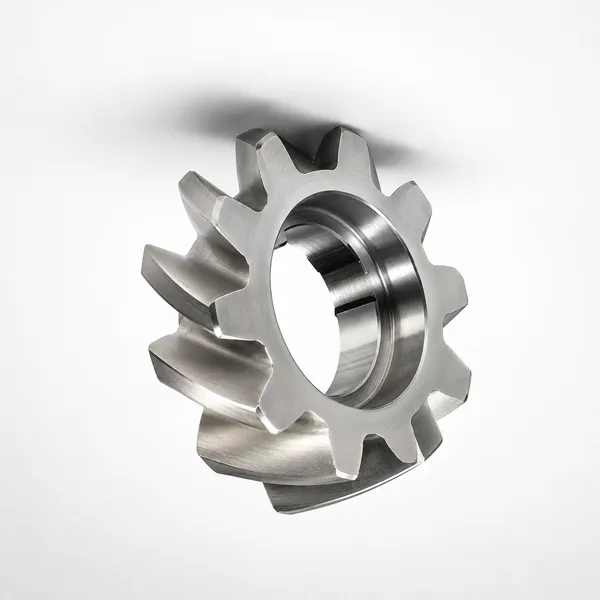
Korea Ever-Power 316L stainless helical gear set for beverage packing and filling machinery — M5, 24T helical pinion, helix angle 20°, 17-4 PH stainless shaft (H900 condition, HRC 40), DIN 7 quality class. 316L stainless body gear (wheel): 42T, M5, same helix angle, 316L material selected for the wheel as the larger, slower-rotating element (lower tooth stress per cycle) where corrosion resistance and fabricability take priority over maximum hardness. Gear oil: Klüber Summit WF 150 NSF H1 synthetic food-grade oil, pre-filled at factory. Housing: 316L stainless continuous-weld, IP69K sealed, electropolished Ra ≤ 0.8 μm, EHEDG-compliant sloped top surface for CIP drainage. Used in Krones, Sidel, and KHS beverage filling line conveyor drives and packing machine indexers in carbonated soft drink, water, and beer production facilities. Output torque: up to 380 Nm at the wheel shaft. Efficiency: 97.2% at rated torque (vs 52% for an equivalent worm gearbox at 20:1 ratio).
Helical gear specification: 316L stainless (housing and shafts up to 40 mm diameter) or 17-4 PH stainless (shafts above 40 mm where strength requires it), M4–M10, IP69K, EPDM shaft seals, NSF H1 PAO synthetic oil, EHEDG-compliant housing, 90°C CIP chemical resistance confirmed. Meat and poultry processing — slaughter lines, deboning conveyors, portioning machines, tumbler drives, stuffing and filling equipment, smoke house conveyor systems — represents the most hygienically demanding environment for helical gearboxes among all food sectors. Daily CIP cycles with hot water (up to 90°C), NaOH caustic (2–4%), and peracetic acid (0.5%) are applied not just to the equipment but directly to the gearboxes in the product-contact zone, since meat processing environments require full bacteriological decontamination of all surfaces that could harbour Listeria, Salmonella, or E. coli. Korea Ever-Power meat processing helical gearboxes are tested for CIP chemical resistance by immersion of all external surface samples in 4% NaOH at 90°C for 100 hours (representing approximately 100 daily CIP cycles), and peracetic acid 0.5% at 80°C for 100 hours — confirming the 316L housing, EPDM seals, and NSF H1 lubricant maintain their specified properties after this accelerated CIP exposure before the product is approved for meat plant use.
SECTOR 02
BAKERY &
CONFECTIONERY
Helical gear specification: 316L stainless or coated aluminium housing (aluminium acceptable in bakery where CIP is wet wipe rather than high-pressure spray), M4–M10, IP67, NSF H1 lubricant, flour-dust-excluding labyrinth seal at shaft entries. Bakery helical gear drives (tunnel oven conveyor, dough mixer, sheeter, depositor, prover conveyor, cooling spiral conveyor) benefit more from the helical gear’s efficiency advantage than most food sector applications — bakery ovens generate significant ambient heat (40–60°C in the oven hall), and the energy efficiency of the conveyor drive determines how much additional cooling load is added to the oven hall ambient, which affects both the oven temperature control precision and the operator comfort in the oven hall. A helical gear drive at η = 97% adding only 3% of motor power as heat to the oven hall is significantly preferable to a worm gear at η = 55% adding 45% of motor power as heat in the same environment. Confectionery drives (chocolate enrober conveyors, sugar-panning pan drives, gummy depositing machines) operate at elevated ambient temperature from the confectionery product’s processing temperature — chocolate tempering at 32°C and aerated confectionery at up to 50°C ambient. Korea Ever-Power confectionery helical gearboxes use ISO VG 150 PAO NSF H1 lubricant instead of the standard VG 220 to maintain adequate viscosity at elevated ambient temperature without the viscosity excess at cold start that would increase gear mesh temperature during the warm-up period after overnight shutdown.
SECTOR 03
DAIRY &
BEVERAGE
Helical gear specification: 316L stainless housing, M4–M8, IP69K, EPDM seals, NSF H1 lubricant, ratio 5:1–40:1 (multi-stage helical), operating temperature to 90°C (pasteuriser and UHT conveyor drives exposed to steam). Dairy processing (pasteurisation, UHT treatment, cheese making, yogurt production, butter and cream processing) and beverage production (carbonated, still, juice, beer, wine, spirits) share a common requirement for helical gearboxes that combine the hygienic design of the food-contact zone with the high-efficiency, low-noise performance that the enclosed, temperature-controlled dairy and beverage production environment demands. Dairy pasteuriser conveyor drives, in particular, require helical gearboxes that maintain their sealing integrity at the elevated temperature of the pasteurisation tunnel — 85°C for HTST, 95°C for HTLT — where EPDM shaft seals are required (NBR and ACM degrade rapidly above 80°C under dairy fat contamination conditions). Beverage filling machine rotary transfer drives require helical gearboxes with extremely low noise output below 65 dB(A) at the operator position to meet the noise abatement requirements of modern filling hall designs and maintain the controlled acoustic environment of the filling room. Korea Ever-Power beverage and dairy helical gearboxes are supplied with a noise measurement certificate confirming the A-weighted sound power level at rated speed under no-load and full-load conditions, enabling the filling machine OEM to confirm compliance with the filling hall acoustic design specification before machine installation.
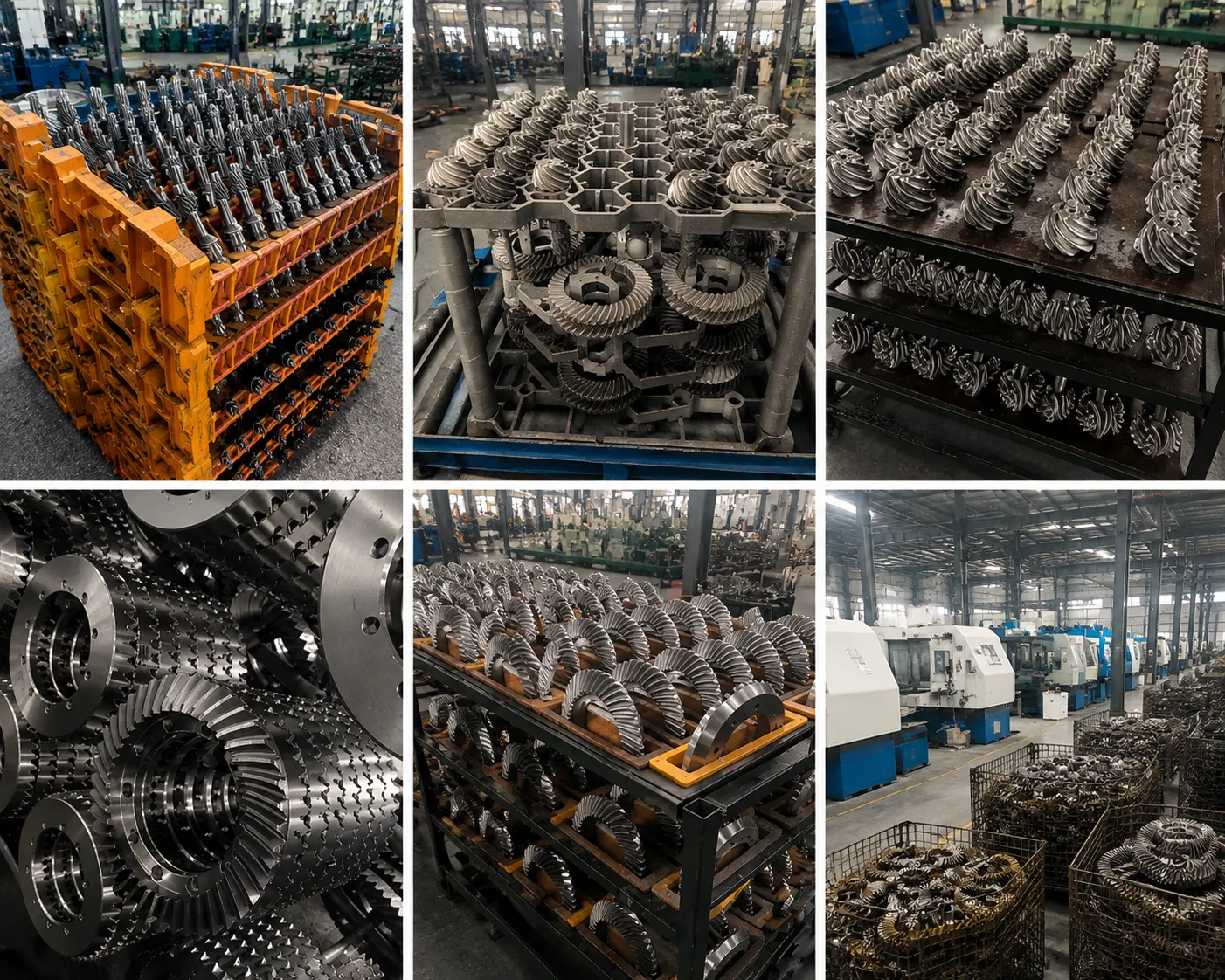
Korea Ever-Power food processing helical gear manufacturing facility — 316L stainless helical gear hobbing and quality inspection for dairy, meat, and beverage applications. The manufacturing environment for food-grade stainless helical gears requires physical separation from carbon steel gear production to prevent cross-contamination — a single carbon steel chip embedded in the machined surface of a 316L stainless gear introduces a local carbon steel corrosion site that will show rust within weeks of food plant installation. Korea Ever-Power maintains a dedicated stainless gear production area with all-stainless or polymer tooling fixtures and a compressed air blow-off station using oil-free compressed air before the final cleaning step. Final cleaning: ultrasonic cleaning in food-grade detergent, hot water rinse, nitrogen blow-dry — no petroleum-based rust inhibitor is applied after final cleaning, since rust inhibitor residue would contaminate the NSF H1 oil fill during assembly. Korea Ever-Power’s stainless gear production area is audited by third-party food safety auditors (BRC, SQF, or equivalent) as part of the food plant customer’s supplier qualification process.
Comparing Helical and Worm Gear Drives for Food Processing — Selection Guide
The choice between helical and worm gear drives for food processing equipment is one of the most common specification decisions that food plant engineers and machine builders face. Both offer hygienic gearbox designs in 316L stainless with NSF H1 lubricant — the selection between them should be made on the basis of the ratio, the efficiency requirement, and the installation geometry.
FACTOR
HELICAL GEAR
WORM GEAR
RECOMMENDATION
Ratio 5:1–40:1
η 95–98% (1 or 2 stages)
η 55–85%
Helical preferred
Ratio 60:1–100:1
Requires 2–3 stages; larger footprint
Single stage; compact
Worm preferred
Self-locking needed
Cannot self-lock (add motor brake)
Self-locking above 60:1
Worm preferred
Noise <65 dB(A)
Achievable, DIN 6–7
High sliding noise at speed
Helical preferred
Power >7.5 kW
Efficient, small motor size
Motor must be oversized 30–40%
Helical preferred
Right-angle output needed
Requires bevel pre-stage (adds cost)
Inherent 90° layout
Worm preferred
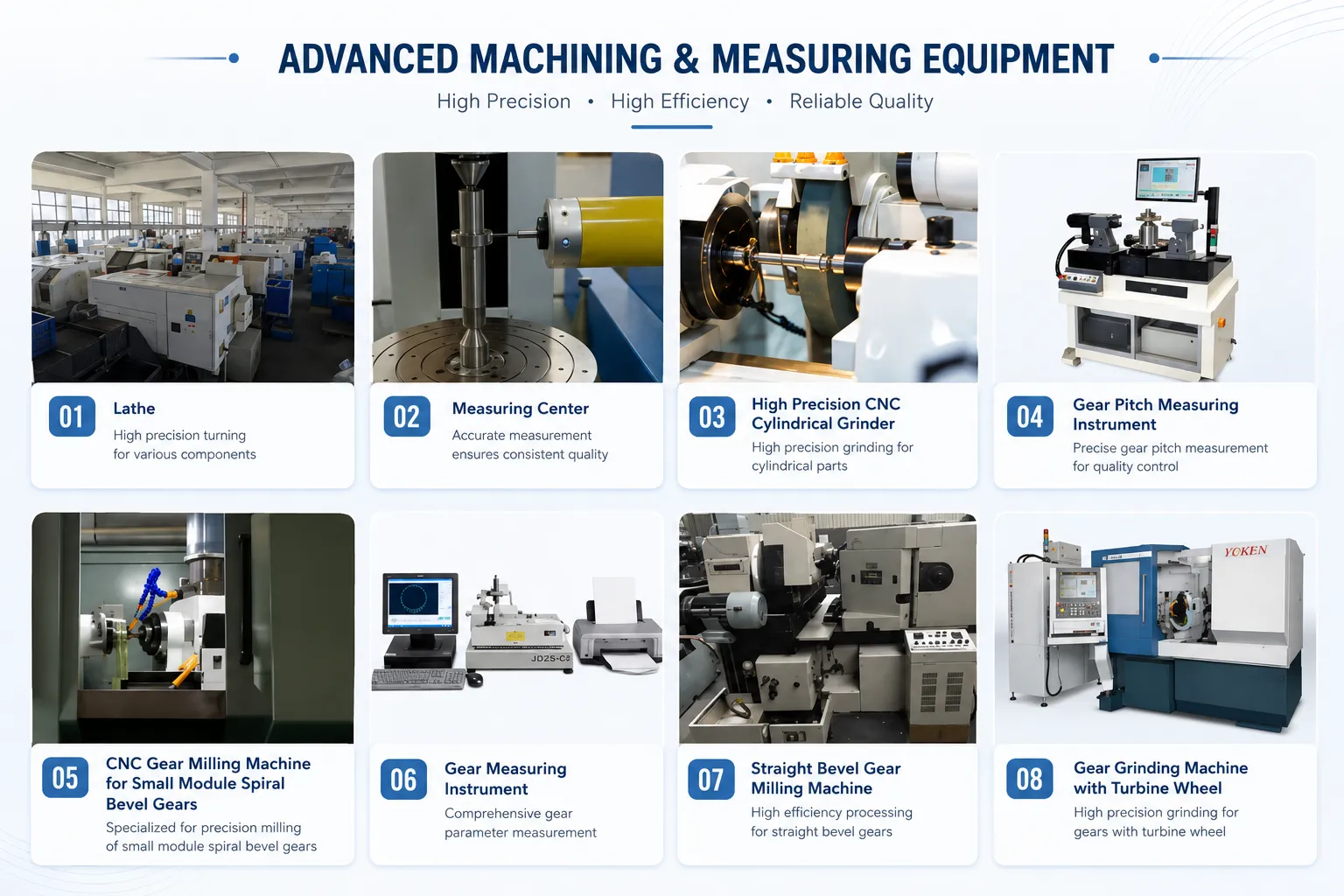
Korea Ever-Power precision measurement for 316L stainless food processing helical gears — helix angle and profile measurement on a Klingelnberg P65 gear measurement machine. Food processing helical gears are measured with a dedicated CMM stylus tip cleaned between measurements to prevent cross-contamination from machining residues — a food safety precaution that is not required in standard industrial gear inspection but is mandated by Korea Ever-Power’s food grade production protocol. The profile measurement confirms that the helical tooth involute form is within the DIN 7 tolerance for all tooth positions (drive flank and coast flank, since food processing conveyors frequently reverse direction for product changeover purging), and the lead measurement confirms the helix angle is consistent along the full tooth face width — a helix angle deviation produces an uneven load distribution across the tooth face that can cause the 316L stainless tooth (which has lower hardness than carbon steel) to show fatigue micro-pitting in the overloaded portion of the tooth face earlier than the ISO 6336 fatigue life calculation would predict.
Frequently Asked Questions — Helical Gears for Food Processing
Q 01
We currently use worm gearboxes for our meat processing conveyor line at 5.5 kW per drive. We want to upgrade to helical drives for energy savings. What should we expect in terms of cost, efficiency improvement, and installation change?
Upgrading from worm to helical drive on a meat processing conveyor at 5.5 kW is a well-justified energy efficiency improvement with a typical payback period of 18–30 months in a 20-hours-per-day food processing environment. Expected outcomes: Efficiency improvement: assuming the existing worm gearboxes are at 25:1 ratio with efficiency η ≈ 65%, the equivalent 2-stage helical gearbox at 25:1 achieves η ≈ 96%. At 5.5 kW shaft output, the motor input power reduces from 5.5/0.65 = 8.46 kW to 5.5/0.96 = 5.73 kW — a saving of 2.73 kW per drive. At €0.18/kWh for 6,000 hours/year: €2,948/year saving per drive. For a 10-conveyor line: €29,480/year energy saving. Installation change: worm gearboxes have the motor axis perpendicular to the output shaft (right-angle layout). 2-stage helical gearboxes typically have motor axis parallel to the output shaft (inline layout). If the current conveyor mounting requires a right-angle output, you need either: (a) a helical-bevel gearbox (one bevel stage + one helical stage — ratio up to 40:1, efficiency 93–95%, still significantly better than worm); or (b) a 2-stage parallel-shaft helical with a right-angle mounting adapter bracket. Korea Ever-Power recommends the helical-bevel (right-angle helical) option for meat processing conveyor upgrades — it matches the existing motor-to-conveyor geometry, achieves 93–95% efficiency, and uses the same 316L stainless hygienic housing configuration as our standard food processing helical gearboxes. Cost premium over worm: a 316L stainless right-angle helical gearbox at 25:1 costs approximately 40–60% more than an equivalent stainless worm gearbox — recovered in energy savings within 18–28 months at the above usage rates.
Q 02
Can 316L stainless helical gears achieve sufficient tooth hardness for heavy-duty food processing drives — meat grinder augers, mixer paddles — where the torque is very high?
316L stainless in the annealed or solution-annealed condition has a maximum tooth surface hardness of approximately HB 190–220 — significantly lower than the HRC 58–62 of case carburized carbon steel gears. This hardness limitation affects the load capacity of 316L stainless helical gears in two ways: (1) bending fatigue endurance limit (σ_FE) is approximately 45% lower than 20CrMnTi carburized, and (2) contact fatigue endurance limit (σ_HE) is approximately 60% lower. For a heavy-duty meat grinder auger drive at 22 kW: an equivalent carburized gear at M8 centre distance 160 mm achieves the required output torque. The 316L gear at the same module and centre distance has only 40% of the load capacity — meaning 316L is NOT suitable for 22 kW at M8 without a significant module or centre distance increase. Solutions for heavy-duty food processing helical gears: (1) 17-4 PH stainless, H900 condition: precipitation hardening to HRC 38–43 at the tooth surface. Load capacity is approximately 60% of carburized carbon steel — better than 316L. 17-4 PH is the standard solution for meat grinder and heavy mixer helical gears in food-contact zones. (2) Nitrided 316L stainless (plasma nitriding): plasma nitriding of 316L can achieve HV 900 (approximately HRC 67 equivalent at the very surface) but only to a depth of 0.1–0.15 mm — too shallow for heavy load. Useful for improving wear resistance in light-duty food gears but not for high-contact fatigue loads. (3) Increase the module: for 316L at the original 316L hardness, increase the module by 1.5–2 steps (e.g. M8 to M12) to compensate for the lower endurance limit — this increases the gear size and weight but may fit within the available housing envelope. Korea Ever-Power recommends 17-4 PH as the standard material for all food processing helical gear shafts (the pinion side) at torques above 500 Nm per shaft, retaining 316L for the wheel (larger, lower-stressed element) and housing.
Q 03
What documentation does Korea Ever-Power provide with food processing helical gearboxes for our HACCP and BRC audit requirements?
Korea Ever-Power food processing helical gearbox standard documentation package for HACCP and BRC audit: (1) 316L / 17-4 PH material certificate (EN 10204 Type 3.1 confirming material grade, chemical composition, and mechanical properties of the housing and gear shaft materials). (2) NSF H1 lubricant data sheet and registration certificate — the NSF International registration number for the lubricant grade pre-filled in the gearbox, confirming registration as NSF H1 (incidental food contact acceptable). (3) IP69K sealing certificate — confirming the housing seal design has been tested to IEC 60529 IP69K requirements, or alternatively a sealing design declaration with seal material (EPDM grade and food-contact suitability statement). (4) EHEDG drainability declaration — confirming the housing external geometry complies with EHEDG Guidelines for hygienic design (no horizontal ledges, minimum external surface Ra). (5) FDA 21 CFR 178.3570 compliance statement for the lubricant — confirming the food-grade oil complies with FDA regulations for incidental food contact lubricants for US market food plants. (6) ISO 9001:2015 quality certificate for the gear manufacturing facility. Additional documents available on request for specific BRC or SQF certification requirements: process FMEA for the gearbox manufacturing process, microbiological surface testing records (swab tests on the housing exterior surface at Ra ≤ 0.8 μm), and a CIP chemical resistance test summary for the specified cleaning agents. Korea Ever-Power provides all standard documentation within the normal delivery lead time — no additional charge or extended lead time for food processing documentation requirements.
Explore Korea Ever-Power Gear Categories
Seven precision gear product lines for food processing, dairy, meat, beverage, bakery and hygienic industrial applications worldwide.
Korea Ever-Power manufactures 316L stainless and 17-4 PH stainless helical gears for all food processing applications — meat, poultry, bakery, confectionery, beverage, and dairy. NSF H1 pre-filled PAO lubricant, IP69K housing, EPDM seals, EHEDG-compliant geometry, FDA 21 CFR compliance. M3–M12, DIN 6–7, single and double-helical. Efficiency 96–98% vs worm at equivalent ratios. Full HACCP and BRC audit documentation included. ISO 9001:2015 certified.

 Japanese
  English
  Italian
  Korean
  French