GEAR APPLICATION GUIDE · RING GEAR · R10

Ring Gears for Robotics and Automation:
Robot Joint Drives, Harmonic Drive Alternatives and Collaborative Robot Ring Gears

Ring gears in robotics applications are at the frontier of precision gear manufacturing — the ring gear in a collaborative robot (cobot) joint drive must achieve backlash below 1 arc-minute, torsional stiffness above 500 Nm per arc-minute, and absolute position accuracy below 0.05° over the full joint rotation range, while fitting inside the robot arm cross-section of 80–120 mm OD and having a mass below 200–400 grams per joint. These specifications — the combination of precision, stiffness, compactness, and low mass — push ring gear manufacturing to its technical limit and have driven the development of alternative drive principles (harmonic drives, cycloidal drives) that achieve higher precision than standard planetary at the cost of higher manufacturing complexity. This guide covers both the technical specifications of ring gears for standard high-precision planetary robot joint drives and the design principles of harmonic drive flex-splines (a special form of internal ring gear) used in precision robotic applications.

20CrMnTi · 17-4 PH · M1–M5 · DIN 3–5
≤1 arc-min · ≥500 Nm/arc-min · 0.05° accuracy
Cobot · SCARA · 6-Axis · AGV · Delta · EOAT

BACKLASH TARGET

≤ 1 arc-min

Ring gear backlash specification for robot joint planetary drives. Industrial 6-axis robot: ≤ 1.5 arc-min. Collaborative robot (cobot): ≤ 1.0 arc-min. High-precision SCARA: ≤ 0.5 arc-min. Medical robot: ≤ 0.3 arc-min. At 1 arc-min backlash and a robot arm of 500 mm reach, the TCP (tool centre point) position uncertainty from joint backlash is approximately 0.145 mm per joint — for a 6-joint robot, total TCP uncertainty contribution from backlash alone is up to 0.87 mm

STIFFNESS

≥ 500 Nm/arc-min

Minimum torsional stiffness for robot joint planetary ring gear stages. The joint torsional stiffness determines how much the robot arm deflects under load — at 500 Nm/arc-min, a 100 Nm payload torque at the wrist deflects the joint by 0.2 arc-min (0.0033°), producing a TCP position error of 0.029 mm at 500 mm reach. Multiple joints compound: a 6-joint robot with all joints at 500 Nm/arc-min and 100 Nm load can show total TCP deflection of 0.17 mm — acceptable for assembly tasks but marginal for grinding or deburring

MODULE

M1 – M5

Robot joint ring gear module range. Wrist joint (smallest): M1–M2, OD 40–80 mm. Elbow joint: M2–M3, OD 80–120 mm. Shoulder joint (highest torque): M3–M5, OD 120–200 mm. SCARA horizontal joint: M2–M4. AGV wheel drive: M3–M5, OD 120–180 mm. Delta robot joint: M1.5–M3. All DIN 4–5 for backlash requirement, all carburized for stiffness/strength

CYCLE LIFE

≥ 10,000 hrs

Robot joint ring gear design life. Collaborative robot (cobot): 10,000 hours typical specification (3 years at 3,000 hours/year in manufacturing). Industrial robot shoulder joint: 30,000 hours (10 years at 3,000 hours/year, 3 shifts). Surgical robot: 10,000+ hours AND ≤ 1 μm total wear on tooth flanks (sterilisation-level cleanliness requirement). The ring gear must maintain its backlash specification within the design tolerance for the full design life

Robot Joint Ring Gear Engineering — Backlash, Stiffness, and the Planetary vs Harmonic Trade-Off

The robot joint drive debate between standard planetary ring gears and harmonic drive (strain wave gear) flex-splines is fundamentally a trade-off between backlash, stiffness, mass, and manufacturing cost. Standard planetary ring gears achieve the ≤ 1 arc-min backlash required for cobots at DIN 4–5 quality class with matched planet pitches — this is demonstrated in production by Korea Ever-Power’s printing press and packaging machine planetary gear sets, which reach 0.5–0.8 arc-min backlash at DIN 5. However, the standard planetary’s inherent kinematic mechanism (discretely meshing sun-planet-ring contacts at fixed pitch positions) produces a periodic torque ripple (at the planet tooth mesh frequency) that can excite structural resonances in the robot arm — particularly in the lower-stiffness carbon fibre composite arms used in cobots. The harmonic drive (a cup-shaped thin-ring flex-spline that deforms elliptically inside an internal circular spline) achieves backlash below 0.1 arc-min and near-zero torque ripple — but at 3–5× the manufacturing cost of an equivalent planetary ring gear, and with a torsional stiffness that is typically 30–50% lower than the equivalent planetary at the same gear ratio and joint OD.

Korea Ever-Power’s ring gears for robotics and automation are manufactured in 20CrMnTi case carburized (HRC 60–62 tooth surface, 42CrMo4 QT carrier for the standard industrial robot and cobot market) and 17-4 PH H900 stainless (for food handling cobots and medical robots where the joint drive must withstand washdown or autoclave sterilisation). The precision level for robot ring gears (DIN 4–5 internal tooth, CBN-ground) requires the planet gear matched set tolerance of ±2 μm and the ring gear internal tooth total pitch deviation below 3 μm — parameters that push the manufacturing process to its limits at modules M1–M3, where a 3 μm pitch deviation represents 0.1% of the tooth pitch of a M3 ring gear. Korea Ever-Power achieves these tolerances by processing robot ring gears on dedicated CNC internal grinding machines in a climate-controlled cell (20°C ± 0.2°C) and measuring each ring gear individually on a Klingelnberg P26 gear measurement machine with 0.1 μm stylus resolution.

The cobot-specific design requirements differ from standard industrial robot requirements in several key respects that affect the ring gear specification. Cobots (collaborative robots designed to work alongside humans without physical safety barriers) require a lower backlash specification than conventional industrial robots because the cobot operates under position control in the human-shared workspace — any backlash-induced position overshoot at a direction reversal could cause unintended contact with a human operator. Cobots also typically use a torque-limited control mode (the motor controller limits the torque to a level safe for human contact, typically 30–80 N effective force at the TCP) — this torque limitation reduces the peak torque at the ring gear to a value significantly below the structural limit of the gear, meaning the ring gear design for cobots is dominated by precision and stiffness requirements, not load capacity. The lower torque requirement at cobots allows Korea Ever-Power to use smaller modules (M1–M2 for cobot wrist joints vs M3–M5 for equivalent-ratio industrial robot joints) — producing a smaller, lighter ring gear that fits within the cobot’s more compact arm cross-section, while still maintaining the DIN 4 quality required for the ≤ 1 arc-min backlash specification.
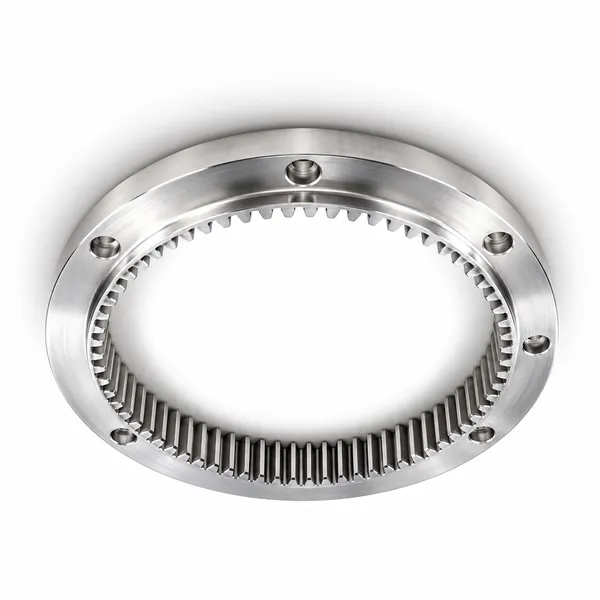
planetary ring gear robotics cobot joint drive Korea Ever-Power
Korea Ever-Power 20CrMnTi carburized precision internal ring gear for cobot shoulder joint drive — M3, 54T internal, OD 175 mm, bore 162 mm, wall thickness 6.5 mm (thin-ring, controlled by quench constraint fixture during heat treatment), face width 28 mm, DIN 4 CBN-ground. Assembled-stage backlash: 0.8 arc-min (measured on the assembled 2-stage planetary at rated radial preload). Torsional stiffness at rated torque: 620 Nm/arc-min. Planet gear set: 3 matched planets, pitch within ±2 μm. Planet bearing type: angular contact deep groove bearing (preloaded) — not needle roller — to eliminate bearing radial clearance contribution to effective backlash. The ring gear’s thin wall (6.5 mm, only 1.3× the tooth height of M3) required the quench constraint fixture during carburizing and quenching to maintain bore roundness within 0.020 mm TIR after heat treatment — without the fixture, the predicted bore distortion would have reached 0.065 mm TIR, making post-hardening internal grinding to DIN 4 impossible (the grinding stock removal required would have exceeded the available grinding allowance from the pre-hardening finish-cut). With the fixture, actual bore distortion was 0.018 mm TIR, comfortably within the DIN 4 internal grinding allowance.

Robot and Automation Platform Ring Gear Specifications

6-Axis Industrial Robot Joints (J1–J6)

M2–M5 depending on joint, DIN 4–5, 20CrMnTi carburized, 2-stage planetary per joint, matched planet pitch ±2 μm, angular contact bearings (preloaded), backlash ≤ 1.5 arc-min, torsional stiffness ≥ 400 Nm/arc-min, design life 30,000 hours. The 6-axis industrial robot (Fanuc, KUKA, ABB, Yaskawa, Denso, Epson) uses a planetary gearbox at each of the 6 joints — joint 1 (base rotation, highest torque) has the largest planetary ring gear (M4–M5, shoulder-size), while joints 5 and 6 (wrist roll and yaw, lowest torque but also smallest OD) use the smallest ring gears (M1.5–M2, wrist-size). Korea Ever-Power manufactures matched ring gear sets for all 6 joints of the major robot brands, with cross-reference to robot model and production year for aftermarket service supply.

M2–M5 · DIN 4–5 · 30,000h · 6-joint set

Collaborative Robot (Cobot) Joint Drives

M1–M3, DIN 4, 20CrMnTi carburized or 17-4 PH (washdown variant), torque-sensing joint design (ring gear integrated with a strain gauge or piezoelectric torque sensor element for the cobot’s collision detection system), backlash ≤ 1.0 arc-min, mass ≤ 300 g per stage, design life 10,000 hours. Collaborative robots (Universal Robots, FANUC CRX, ABB GoFa, KUKA LBR, Doosan, Aubo, Techman) have become the fastest-growing segment of the industrial robotics market — their compact, lightweight design and direct human-collaboration capability drive unique ring gear requirements that standard industrial robot ring gears do not address. The torque-sensing ring gear is a Korea Ever-Power custom product where the ring gear OD integrates a precision torsional compliance element (a section of reduced wall thickness that deflects measurably under torque) with strain gauge mounting holes — allowing the ring gear to function as both the gear element and the torque sensor housing in the cobot’s integrated joint module.

M1–M3 · DIN 4 · cobot · torque sensor option

AGV Wheel and Pivot Drive Ring Gears

M3–M5, DIN 5–6, 20CrMnTi carburized, compact hub-integrated design (ring gear OD doubles as the wheel hub bore — the ring is pressed into the drive wheel hub), IP67 sealing (AGVs operate in wet warehouse and manufacturing environments), design life 15,000 hours, shock resistance from floor transitions. Automated guided vehicles (AGVs) and autonomous mobile robots (AMRs) use planetary ring gears in the wheel drive assembly (the motor + planetary gearbox combination that drives each wheel) and in the pivot drive (the mechanism that steers the drive wheel module around its vertical axis for omnidirectional AGV navigation). The hub-integrated ring gear design for AGV wheel drives requires the ring gear OD to be precision-machined to the wheel hub bore tolerance — usually H7 fit — and for the ring gear to maintain this OD dimension over the 15,000+ hour life, including the thermal cycling from cold warehouse starts in −10°C to +40°C summer operating temperature in a Southern European or North American distribution centre.

M3–M5 · hub-integrated · IP67 · AGV AMR
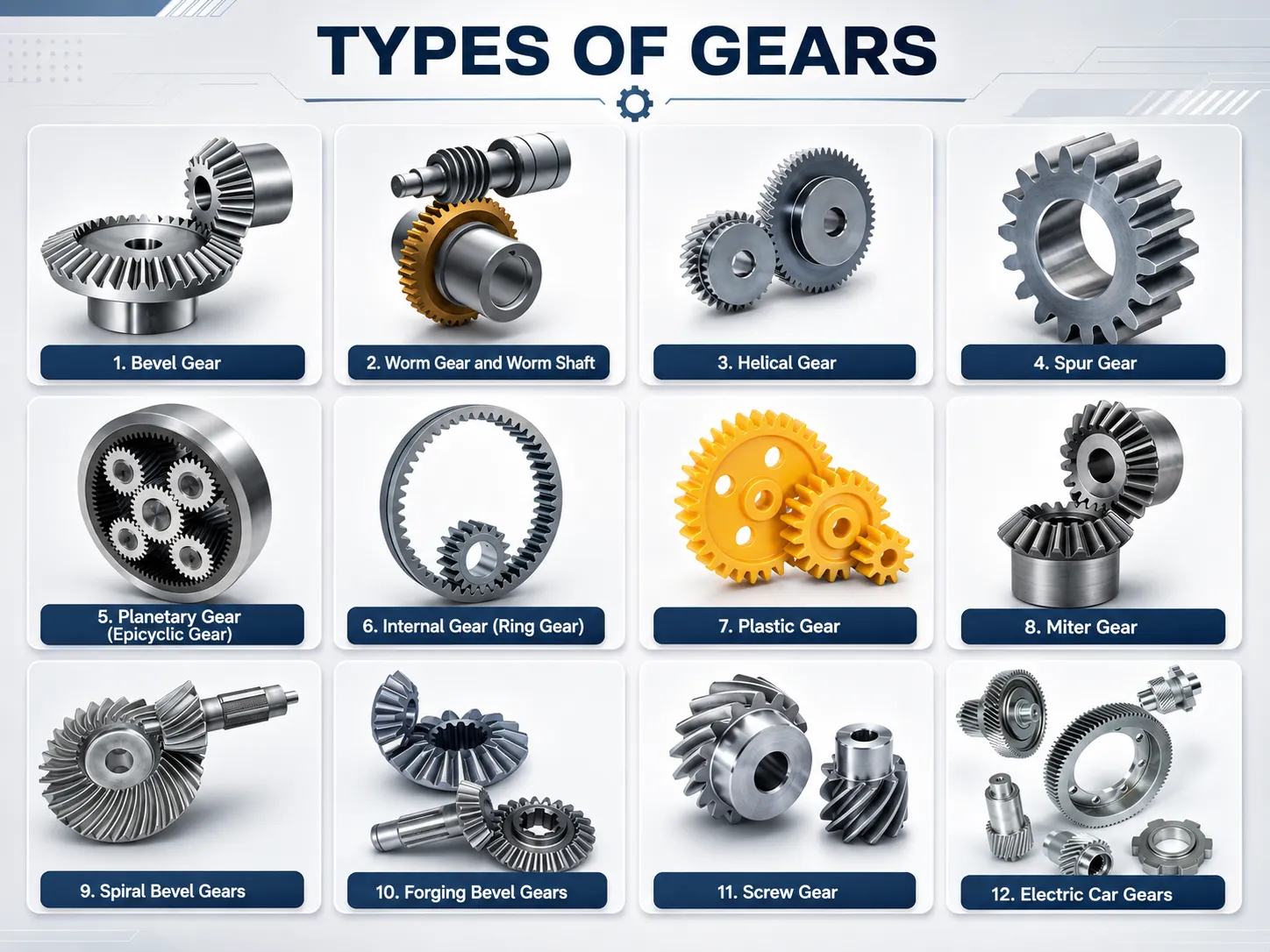
Korea Ever-Power precision ring gear robotics automation gear types
Korea Ever-Power gear type overview for robotics applications — the selection between gear types for robot joints follows the joint torque and precision requirement: internal ring gears for high-ratio planetary (the dominant robot joint drive); external ring gears for rotary table and base rotation where the large-diameter external ring provides a high-accuracy angular reference; and spur or helical external gears for the robot’s tool end-of-arm tooling (EOAT) quick-change mechanisms and on-board tool drives. Korea Ever-Power’s robotics ring gear production covers all three applications — the same DIN 4 quality standard applies to each, since the robot’s position accuracy is determined by the lowest-quality gear in the kinematic chain. A single DIN 7 ring gear at the robot base joint (for cost saving) would degrade the robot’s position accuracy to the level set by the DIN 7 gear, regardless of the DIN 4 quality of the other five joints — Korea Ever-Power specifies a consistent quality class across all joints in a robot joint set to prevent this quality-chain problem.
Korea Ever-Power robot ring gear precision manufacturing DIN4 CBN grinding
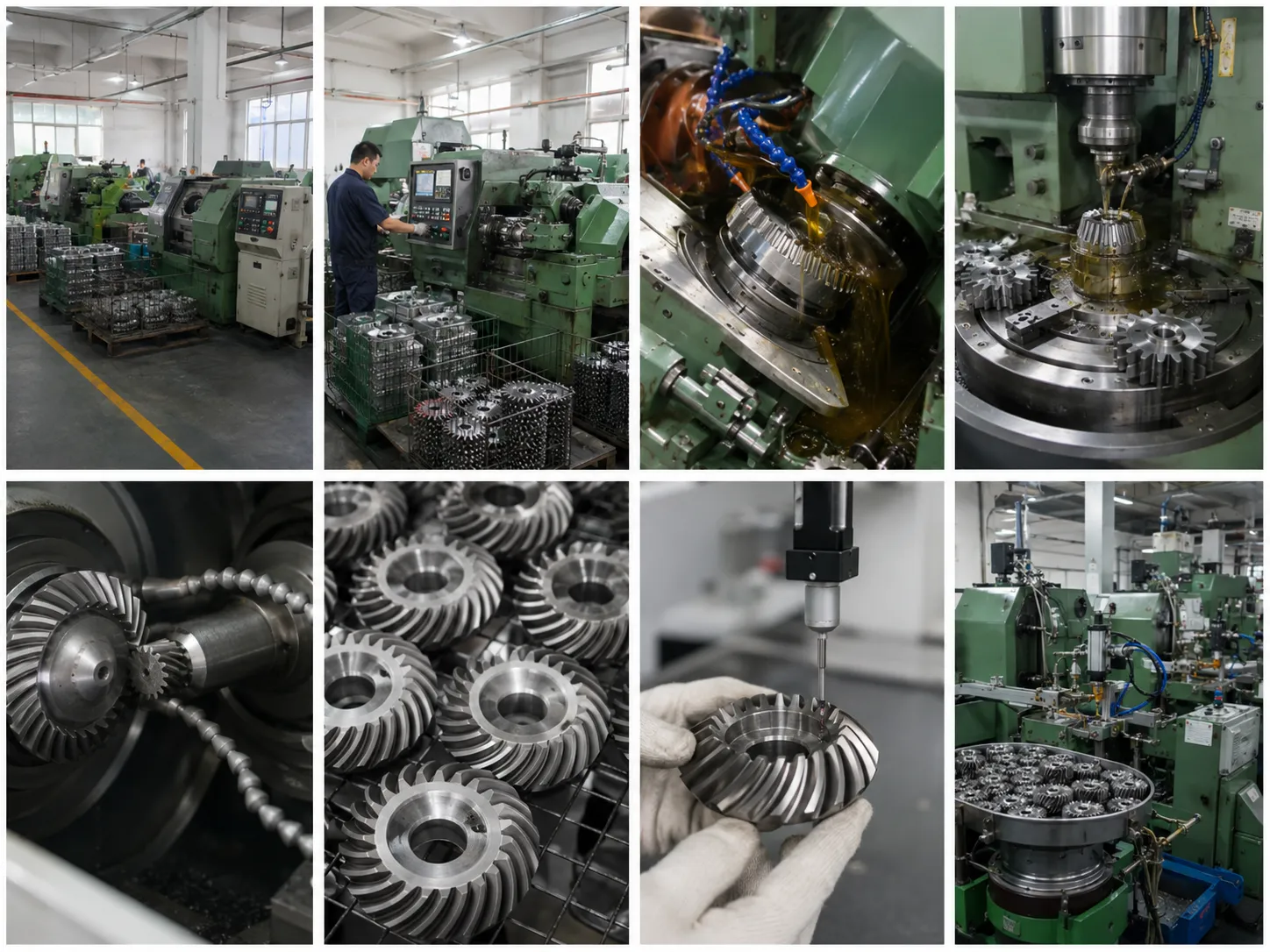
Korea Ever-Power robot joint ring gear manufacturing facility — DIN 4 internal CBN grinding for M2–M3 robot joint ring gears. The robot ring gear manufacturing process involves three precision stages that must each achieve the required accuracy without introducing datum errors from the preceding stage: (1) CNC turning of the ring blank (bore, OD, face) to ±0.005 mm dimensional accuracy — the bore is finish-turned oversize by the grinding allowance (0.05–0.08 mm on the tooth root circle for a M3 ring); (2) gear shaping of the internal tooth profile as a rough-cut (oversize by 0.03–0.05 mm on both tooth flanks), then the ring is sent for carburizing and quenching; (3) internal CBN grinding of the tooth profile to the final DIN 4 specification, using the outer face of the ring as the axial datum and the OD (which was finish-turned before carburizing and experienced minimal thermal distortion during the carburizing cycle) as the radial datum. The key quality control point is the transition from stage 2 (pre-hardening shape) to stage 3 (post-hardening grind) — the grinding allowance must be adequate to completely remove all heat-treatment distortion from the tooth profile, while not being so large that the grinding time becomes excessive or the CBN wheel wear rate increases above the economic limit. Korea Ever-Power specifies the grinding allowance for each robot ring gear design from the measured distortion data on the first production batch — typically 0.03–0.05 mm per flank for M2–M3 rings with wall thickness above 5 mm.

Frequently Asked Questions — Ring Gears for Robotics and Automation

Q 01

We are building a cobot arm and want to use planetary ring gears instead of harmonic drives to reduce cost. The joint OD is 90 mm and the required ratio is 30:1 at 150 Nm output. Can a planetary ring gear meet our ≤ 1 arc-min backlash requirement at this size?

A 30:1 ratio at 150 Nm output in a 90 mm OD envelope is achievable with a 2-stage planetary ring gear configuration, and meeting ≤ 1 arc-min backlash is feasible at DIN 4 with the right design choices. Feasibility analysis for the specific requirement: Stage layout for 30:1 in 90 mm OD: a 2-stage planetary with each stage at 5.48:1 (5.48² = 30.0:1) fits comfortably in 90 mm OD. Stage 1: sun M2 12T, planet ×3 M2 21.6T (rounded to 22T), ring M2 56T — actual ratio (56+12)/12 = 5.67:1 (slight deviation from 5.48, adjust stage 2 accordingly). The M2 ring OD = (56+2) × 2 = 116 mm — too large. Reduce to sun 10T, planet 18T, ring 46T at M2: OD = (46+2) × 2 = 96 mm — fits within 90 mm bore with a 3 mm wall. This requires a thin-ring design with distortion control during heat treatment. Backlash at DIN 4, M2: Korea Ever-Power DIN 4 M2 ring gears with matched planet pitch ±2 μm achieve assembled-stage backlash of 0.6–1.0 arc-min per stage. 2-stage backlash accumulation (worst case, both stages maximum): 1.0 + 1.0 / stage_ratio_1 = 1.0 + 1.0/5.67 = 1.18 arc-min — slightly above the 1.0 arc-min target. To reach ≤ 1.0 arc-min: (a) upgrade stage 1 planet matching to ±1.5 μm (achievable at Korea Ever-Power) to reduce stage 1 backlash to 0.7 arc-min, giving combined backlash 0.7 + 0.7/5.67 = 0.82 arc-min — within specification; or (b) add a light spring preload on the stage 1 sun gear bearing to eliminate stage 1 gear mesh clearance. Stiffness at 90 mm OD, M2: Korea Ever-Power estimates 380–520 Nm/arc-min for a 2-stage M2 planetary at this OD — at the lower end of the recommended ≥ 500 Nm/arc-min for cobots, but achievable with increased planet count (4 planets instead of 3) which improves both stiffness and load sharing. Korea Ever-Power recommends a detailed design study for this cobot joint — the 90 mm OD constraint is at the practical limit for M2 rings and requires careful thin-ring distortion management. Cost comparison with harmonic drive: Korea Ever-Power planetary ring gear set at M2 DIN 4 for this joint costs approximately 35–45% of the equivalent harmonic drive unit at the same ratio and output torque — significant savings at cobot production volumes of 1,000+ units per year.

Q 02

Our existing Fanuc M-20iD industrial robot joints show increasing backlash after 8 years of operation. What replacement ring gear set should we order, and does Korea Ever-Power hold the Fanuc joint specification?

Korea Ever-Power maintains a cross-reference database for major industrial robot planetary joint ring gears including Fanuc M-20iD series. For the M-20iD specifically: the 6-joint robot uses planetary gear sets at different sizes for each joint axis — J1 (base) uses the largest stage (M4 or M5), J4–J6 (wrist) the smallest (M1.5–M2). To confirm the exact ring gear specification for your specific M-20iD variant and serial number range (the M-20iD series includes M-20iD/12, M-20iD/25, M-20iD/35 variants with potentially different joint specifications): (1) send Korea Ever-Power the robot model number and production year, and one of the worn ring gears from the highest-backlash joint (J1 or J2 is usually the first to show measurable backlash increase); (2) Korea Ever-Power will measure the worn ring, cross-reference against the database, and confirm the specification before quoting. Replacement procedure recommendation for an 8-year Fanuc M-20iD with increased backlash: replace all 6 joints simultaneously rather than just the one joint with the highest measured backlash. The reason: if one joint has developed 3 arc-min backlash after 8 years, the other joints will develop similar backlash within 1–2 years (they have the same service life and similar usage). Replacing all 6 joints in one maintenance event is significantly more cost-effective (single robot downtime, single setup cost for the maintenance crew) than making 2–3 separate replacements over 3 years. Korea Ever-Power supplies 6-joint complete replacement ring gear sets for major industrial robot models as a bundle — typically 12–18% cheaper than ordering each joint ring gear separately, and with a single lead time for all 6 joints (25–30 working days) to minimise the planning lead time for the scheduled maintenance event.

Q 03

For a food handling cobot in a meat processing environment, what ring gear material and sealing specification should we use, and how does the NSF H1 lubricant affect the backlash over time compared to standard synthetic gear oil?

Food handling cobot joint ring gear specification for meat processing: 材料: 17-4 PH H900 stainless for all internal ring gears in the joint drive (not 20CrMnTi — carbon steel corrodes rapidly in the meat processing CIP environment even with sealed joints). 17-4 PH H900 provides HRC 38–43 tooth surface hardness — lower than carburized 20CrMnTi at HRC 60–62, but adequate for cobot joint ring gears where the tooth load is low (cobot torque-limited design) and the chemical resistance is the primary material selection driver. Sealing: IP69K for all joint seals — meat processing wash-down uses hot water (up to 80°C) at 80–100 bar. Seal material: EPDM (not NBR — peracetic acid in meat plant CIP attacks NBR within weeks). The IP69K sealing prevents CIP chemical ingress that would contaminate the NSF H1 gear oil and attack the ring gear tooth surface. Lubricant — NSF H1 vs standard synthetic oil effect on backlash: NSF H1 approved food-grade PAO oils (Klüber Summit WF 150, Castrol Optileb GT, etc.) have viscosity grades from VG 150 to VG 220, similar to standard PAO synthetic gear oils. The EHL film thickness in the ring gear tooth contact zone (which determines the effective operating clearance and thus the backlash at operating temperature) is slightly lower with NSF H1 PAO than with standard PAO because NSF H1 PAO does not contain the zinc-based extreme pressure (EP) anti-wear additives that standard gear oils use. The absence of EP additives increases the wear rate in boundary lubrication conditions (when the gear mesh momentarily operates below the minimum film thickness, which occurs at very low speed or at start from rest in cold conditions). In practice for cobot joints: the initial 500-hour running period shows slightly higher wear (0.5–1.0 μm additional tooth surface wear) with NSF H1 compared to standard gear oil, but after the running-in period the wear rate normalises as the surface micro-roughness has been smoothed. The total backlash increase at 10,000 hours from this NSF H1 wear differential is estimated at +0.2–0.4 arc-min — manageable within the cobot’s backlash budget. Korea Ever-Power pre-fills all food handling cobot ring gear stages with Klüber Summit WF 150 (NSF H1 registered, VG 150) and validates the hot-run backlash at thermal steady state with this lubricant before dispatch.

Explore Korea Ever-Power Gear Categories

Seven precision gear product lines for industrial robots, collaborative robots, AGVs, SCARA, Delta, and automation system drives worldwide.
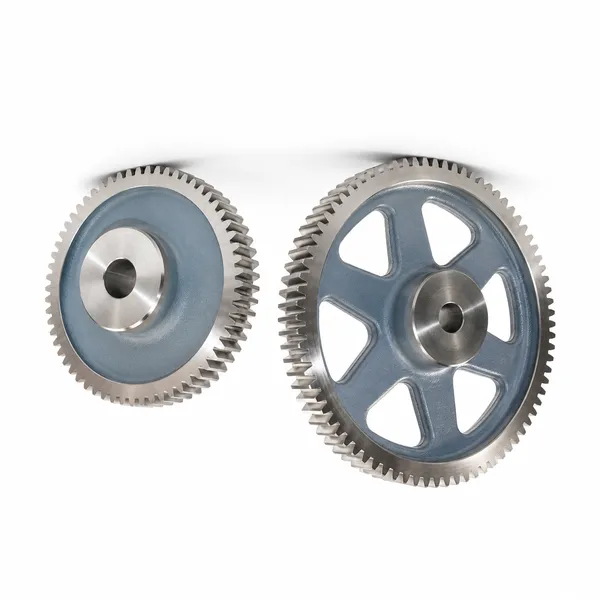
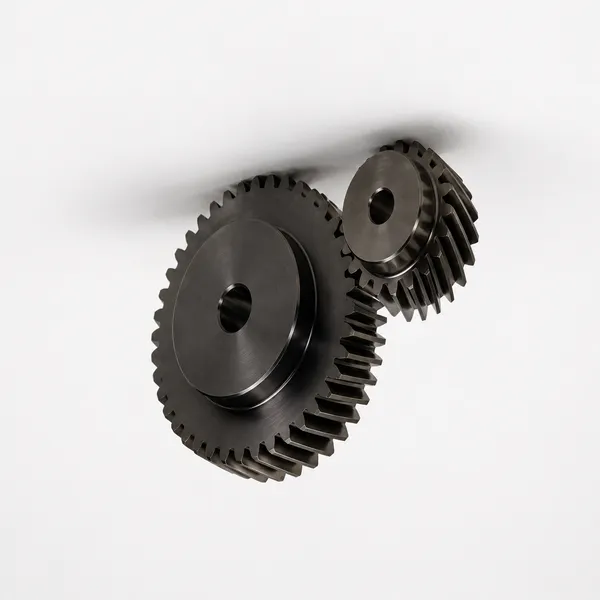
spur gear robotics

Spur Gears

Robot EOAT · DIN 4 · M1–M5

precision helical gear robot

Helical Gears

Low noise · robot reducer · DIN 4–5

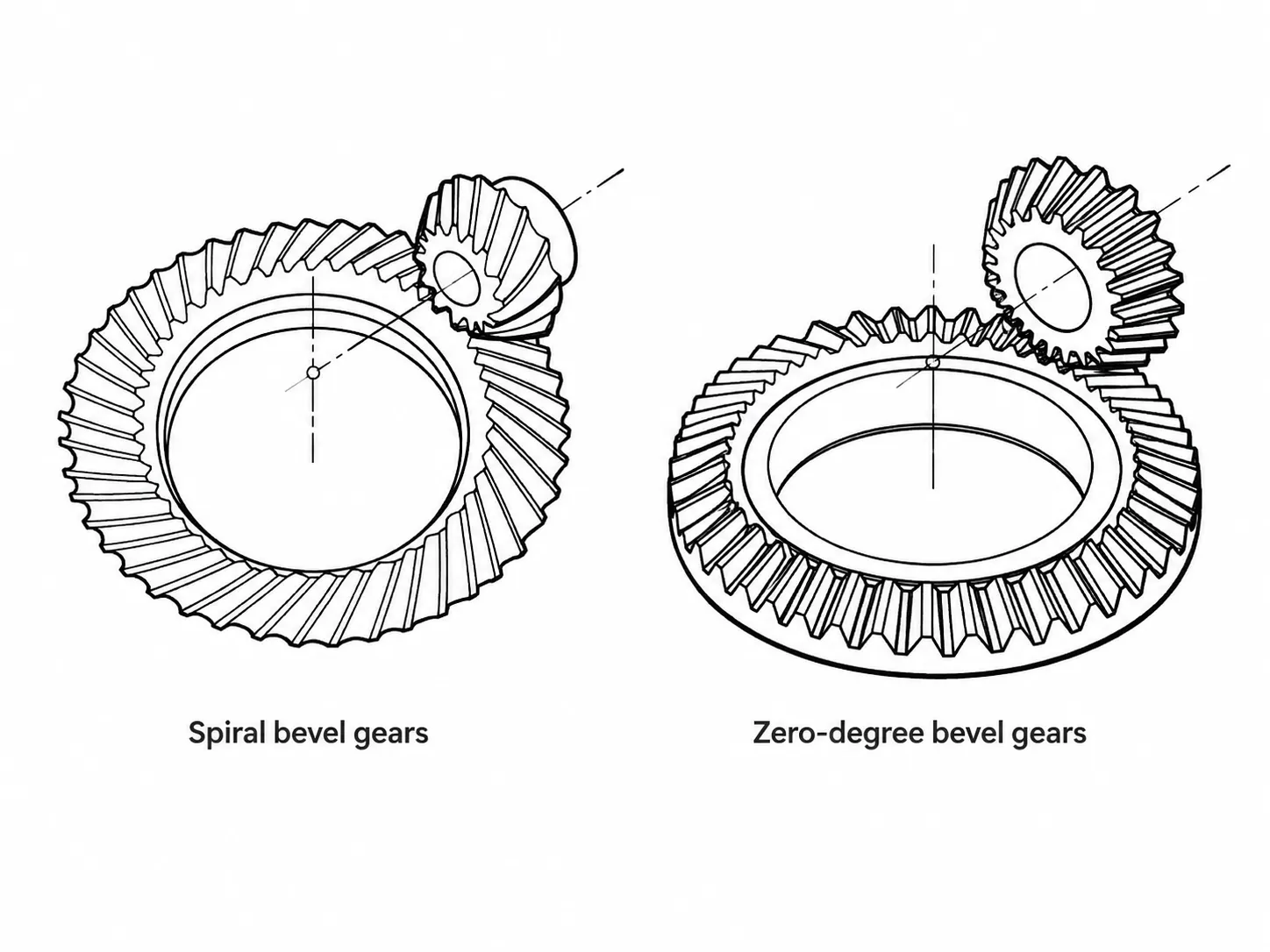
bevel gear robot wrist

ベベルギア

Robot wrist · compact angle · DIN 4

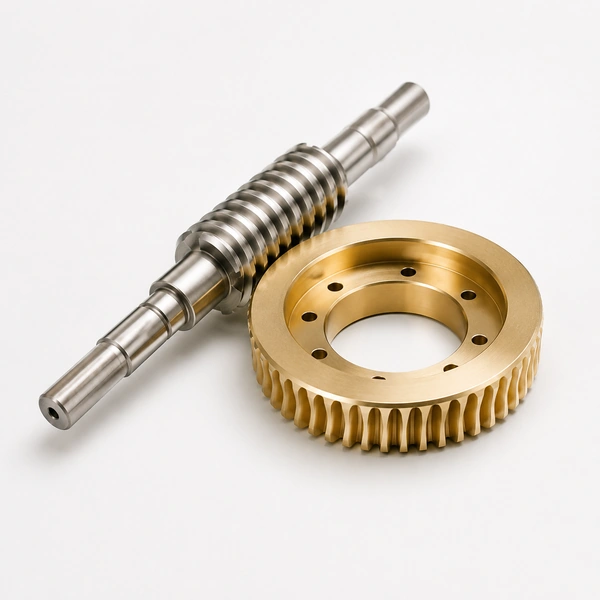
worm gear robot

Worm Gears

Self-lock · robot hold · AGV actuator

robot joint ring gear

Ring Gears

Robot joint · DIN 4 · cobot · AGV

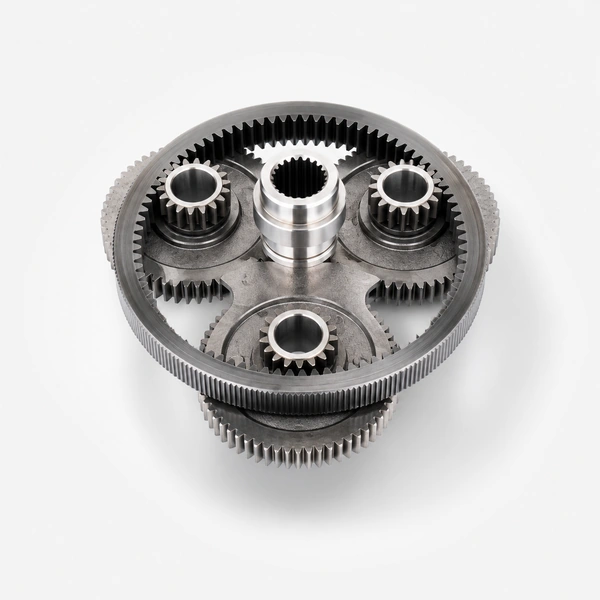
planetary gear robot joint

Planetary Gears

Robot joint stage kit · DIN 4–5

plastic gear robot sensor

Plastic Gears

PEEK · encoder · robot sensor

GET A QUOTATION · KOREA EVER-POWER

Need Ring Gears for Robotics and Automation?

Korea Ever-Power manufactures precision ring gears for robot joint drives — M1–M5, DIN 4–5 CBN-ground, ±2 μm matched planet pitch, assembled backlash ≤ 1.0 arc-min, torsional stiffness ≥ 500 Nm/arc-min. 6-joint complete sets for Fanuc, KUKA, ABB, Yaskawa, and other major brands. Cobot food-handling variant in 17-4 PH stainless with NSF H1 lubricant and IP69K sealing. AGV hub-drive integrated ring gears. ISO 9001:2015 certified.

Request a Quotation →

編集者: Cxm

VR Tour of Our Factory

TAGs:

ギアラック

当社は、ギアラックの大手メーカー、サプライヤー、輸出業者の一つとして、ギアラックをはじめとする様々な製品を提供しています。

詳細についてはお問い合わせください。

郵便:[email protected]

ギアラックの製造業者、サプライヤー、輸出業者

最近の投稿

jaJapanese