GEAR APPLICATION GUIDE · PLANETARY GEAR · P06

Planetary Gears for Conveyor Drives:
Belt Conveyor Drives, Mining Conveyors and Bulk Material Handling

Conveyor drives are the highest-power, longest-running, and most maintenance-sensitive application category for planetary gearboxes in bulk material handling — a single belt conveyor at an iron ore mine may run 24 hours per day, 365 days per year, transmitting 2–5 MW through each drive head, with a total annual energy consumption equivalent to a small power plant. The planetary gearbox in a conveyor drive must simultaneously deliver the high torque density needed to reduce the drive head physical size (which is limited by the conveyor structure), the efficiency needed to minimise energy cost, and the operational reliability needed to prevent unplanned stops that cascade through the entire mining or materials handling operation. This guide covers planetary gear specification for all classes of conveyor application — light-duty package handling conveyors through heavy-duty mining overland belt conveyor main drives.

20CrMnTi · 42CrMo4 · M5–M18 · 2–3 Stage
Power 5 kW–5 MW · DIN 5–7 · ISO 6336 · η 97%
Package · General Industry · Mining · Overland

POWER RANGE

5 kW – 5 MW

Planetary gearbox power range for conveyor drives. Package handling belt: 5–22 kW. General industrial conveyor: 22–200 kW. Bulk material handling (port, quarry): 200 kW–1 MW. Mine belt conveyor (underground): 500 kW–2 MW. Overland mining conveyor (main drive): 2–5 MW per drive head with 2–4 drive motors per conveyor

STAGES

2 – 3 Stage

Conveyor drive planetary stage count. Single stage: ratio up to 12:1, used in conveyor drum drive units at output speeds above 100 RPM (shallow-angle material handling). 2-stage: ratio 15:1–100:1, standard for most industrial conveyor drives. 3-stage: ratio 100:1–500:1 for slow-speed bulk material scraper and apron conveyor drives where direct coupling to the drive drum at very low RPM is required

TORQUE DENSITY

3–5× Helical

Planetary gearboxes for conveyor drives achieve 3–5× higher torque density than equivalent helical parallel-shaft gearboxes at the same output shaft size — the load sharing among 3–4 planet gears distributes the ring gear and sun gear tooth loads, enabling smaller overall dimensions for the same output torque. This torque density advantage is the primary reason planetary drives have displaced helical shaft-mounted drives for conveyor applications above 100 kW

EFFICIENCY

η 97–99%

Per-stage efficiency of planetary gears for conveyor drives. Single stage: η ≈ 99%. 2-stage: η ≈ 97–98%. 3-stage: η ≈ 96–97%. The high efficiency is critical for large conveyor drives — a 3 MW overland conveyor at 97% vs 92% efficiency (comparable parallel-shaft helical) saves 150 kW continuously — approximately 1,314 MWh/year at 24h/day, 365 days/year operation

Planetary Gearbox Advantages for Conveyor Drives

The planetary gearbox has become the dominant drive solution for belt conveyor applications above 100 kW because it offers a combination of advantages that parallel-shaft helical gearboxes cannot match: the coaxial input-output shaft arrangement (motor and conveyor drum on the same axis) allows the gearbox to be integrated directly into the conveyor drum as a drum motor or mounted on the drive shaft without a flexible coupling and separate motor base; the high torque density (3–5× helical) reduces the gearbox mass and mounting structure cost for conveyor drives where the drive head is elevated 5–20 metres above the ground on the conveyor structure; and the high per-stage efficiency (97–99%) minimises the energy cost for large conveyors that run continuously. Korea Ever-Power’s planetary gear sets for conveyor drives are manufactured to ISO 6336 load capacity standards and ISO 1328 quality class specifications, covering the full power range from 5 kW package handling conveyors through 5 MW overland mining belt conveyor main drives. For complete planetary gearbox units including housing, bearings, and seals, our planetary gearbox product range covers the standard conveyor drive configurations from foot-mounted to shaft-mounted to drum motor integrated forms.

gear-for-petrochemical-industry

The load sharing among the planet gears is the key mechanism that gives the planetary gearbox its torque density advantage — but it is also the most critical design and manufacturing parameter that determines whether the promised torque density is actually achieved in service. In a theoretically perfect planetary gearbox with 3 planets, each planet gear carries exactly 1/3 of the total ring gear tangential force. In practice, manufacturing and assembly tolerances in the planet pin hole positions, planet gear pitch errors, and ring gear eccentricity cause unequal load distribution — one planet may carry 40% of the total load while another carries only 27%. This load sharing imbalance reduces the effective load capacity of the planetary set below the theoretical 3-planet capacity and is the root cause of planet gear fatigue failures that occur at torques well below the nominal rated capacity. Korea Ever-Power addresses load sharing inequality through controlled planet gear pitch accuracy (all planets in a matched set within ±3 μm pitch deviation from the mean) and floating sun gear design (where the sun gear is not fixed to the input shaft by a rigid coupling but is allowed a small radial float to self-centre under the net force from the planet gears), which is the most effective load sharing improvement mechanism for 3-planet designs.
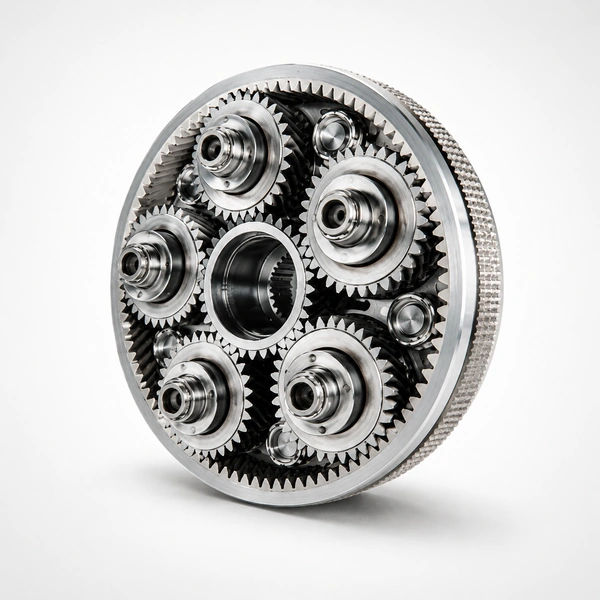
planetary gear set conveyor drive Korea Ever-Power
Korea Ever-Power 20CrMnTi case carburized planetary gear set for bulk material handling conveyor drive — 2-stage, stage 1: sun M6 18T, planet ×3 M6 24T, ring M6 66T (ratio 4.67:1); stage 2: sun M8 14T, planet ×3 M8 21T, ring M8 56T (ratio 5.0:1); total ratio 23.3:1. All gears 20CrMnTi carburized HRC 60–62, profile ground DIN 6 (sun and planets), DIN 7 (ring gear internal). Planet gear set matched by pitch measurement — all 6 planets (3 per stage) within ±3 μm pitch deviation from mean. Sun gear floating: ±0.8 mm radial float permitted at the spline coupling to the input shaft. Rated output torque: 28,000 Nm at 85 RPM output speed. Designed for a 500 kW conveyor drive motor at 1,480 RPM. Load sharing factor K_Hβ = 1.10 (ISO 6336 — reflects the controlled pitch tolerance and floating sun). Calculated design life: >50,000 hours (B10 life) at rated load for 20CrMnTi carburized planet gears. Planet bearing life (cylindrical roller bearings in each planet): B10 > 100,000 hours at rated radial load per planet.

Conveyor Type Planetary Drive Specifications
CONVEYOR 01

GENERAL INDUSTRIAL
BELT CONVEYOR

Planetary gear specification: 2-stage, 20CrMnTi carburized, DIN 6–7, ratio 15:1–80:1, power 22–500 kW, matched planet pitch ±5 μm, floating sun, ISO 6336 rated life 20,000 hours. General industrial belt conveyors (manufacturing plant material transport, assembly line conveyors, warehouse sortation systems, aggregate quarry conveyors) represent the broadest category of conveyor planetary gear application by installed unit count. The 2-stage planetary gearbox in the 22–200 kW range is the workhorse product — compact, high-efficiency, and available in either shaft-mounted or foot-mounted configurations for the two standard conveyor drive head arrangements. The shaft-mounted configuration (a hollow-bore gearbox that slides directly onto the conveyor head drum shaft and is torque-arm restrained against rotation) is the most popular for new conveyor installations because it eliminates the flexible coupling, motor base, and alignment procedure required for foot-mounted installations. Korea Ever-Power 2-stage planetary gear sets for general industrial conveyors are supplied as matched complete stage kits — sun gear, 3 planet gears (pitch-matched), ring gear (internal), and planet carrier — for installation into new or refurbished conveyor drive gearbox housings. Gear oil: ISO VG 220 synthetic gear oil standard for conveyor drive planetary gearboxes at ambient temperatures above −15°C.

CONVEYOR 02

UNDERGROUND MINE
BELT CONVEYOR

Planetary gear specification: 2–3 stage, 20CrMnTi carburized, DIN 6 (profile ground), ratio 25:1–200:1, power 200 kW–2 MW, matched planet pitch ±3 μm, floating sun with load sharing measurement certificate, ISO 6336 rated life 40,000 hours, high-shock service factor KA = 1.5. Underground mine belt conveyors (coal, hard rock mining) operate in the most severe environment of any conveyor application — high humidity (90–100% RH), temperature variation from surface ambient to 30–40°C underground, coal dust or rock dust contamination, and the consequenceof an unplanned conveyor stop shutting down production from an entire mine section. The planetary gear set in an underground mine conveyor drive must sustain the conveyor’s starting torque (which can be 2–3× rated for long belt conveyors loaded with material at start) and the belt tension shock loads from splices passing the drive drum, while operating in the sealed housing of the conveyor drive unit for 40,000+ hours between planned maintenance overhauls. Korea Ever-Power mine conveyor planetary gear sets are designed with an additional shock service factor KA = 1.5 applied above the ISO 6336 working service factor to account for the non-quantifiable impact loads from belt splices and the full-load starting torque cycles accumulated over 40,000 hours of mine operation.

CONVEYOR 03

OVERLAND MINING
CONVEYOR

Planetary gear specification: 3-stage planetary (or 2-stage planetary + 1-stage helical), 20CrMnTi carburized, DIN 5–6, ratio 50:1–200:1, power 2–5 MW per drive head, 3–4 planet gears per stage for enhanced load sharing, ISO 6336 fatigue-based design life 60,000 hours, hydraulic soft start or CST (fluid coupling with soft start) to limit starting torque at the planetary gearbox. Overland mining belt conveyors — the multi-kilometre conveyor systems that transport iron ore, coal, copper, or aggregate from the mine to the port or processing plant — represent the highest-power, longest-running conveyor application for planetary gearboxes. The planetary drive on an overland mine conveyor is subject to constraints that drive unique engineering requirements: the gearbox must fit within the physical envelope of the conveyor drive head structure (often constrained to 3–4 metres width to maintain structural headroom requirements); the starting torque must be controlled to prevent belt slip and belt damage, which requires soft-start devices (fluid couplings, CST, or controlled starting devices) between the motor and the gearbox; and the load sharing among 3–4 planets per stage must be tightly controlled to prevent the catastrophic planet gear fatigue failures that have shut down entire mine operations for weeks while replacement gearboxes were manufactured and installed. Korea Ever-Power overland conveyor planetary gear sets use 4 planets per stage (not 3) for the highest-power applications — the 4-planet arrangement reduces the tooth load per planet by 25% compared to 3-planet, extending the gear fatigue life proportionally and providing a significant reserve against the load sharing inequality that inevitably exists in multi-planet designs.

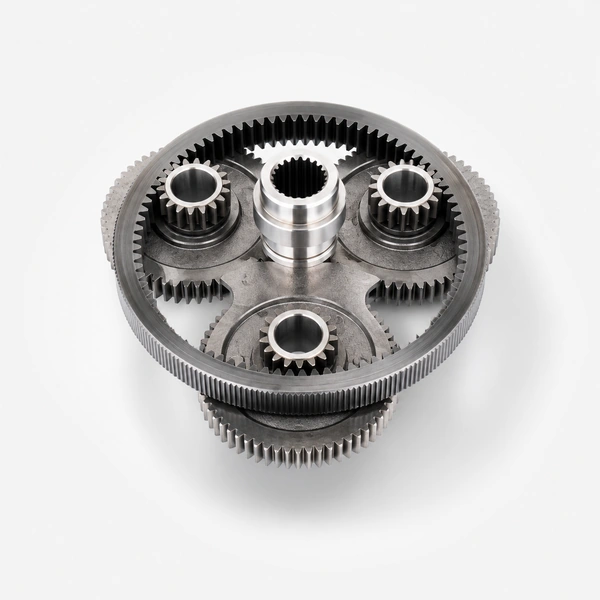
planetary gear kit conveyor drive Korea Ever-Power
Korea Ever-Power 20CrMnTi case carburized planetary gear kit for general industrial conveyor drive replacement — complete 2-stage gear set including sun gear, 3 matched planet gears (pitch-matched within ±4 μm), internal ring gear, and planet carrier for both stages. The planet gear matching is done by measuring the pitch of all planet gears in the production batch and selecting the 3 (or 4, for 4-planet designs) with pitch deviation closest to the batch mean — this ensures the load distribution among planets is as uniform as possible from first operation, rather than relying on run-in wear to equalise the load over the first 1,000–2,000 hours. All gear pairs in the kit are verified for tooth contact pattern (sun-to-planet and planet-to-ring) on a test fixture before packaging, with blue-marking contact photographs included in the documentation package. Korea Ever-Power replacement conveyor drive planetary gear kits are cross-referenced to the major conveyor gearbox OEM models — Sumitomo Cyclo, Brevini (Rexnord), SEW Eurodrive, Stieber, Dodge (Rexnord), and Flender — allowing maintenance engineers to order directly from the conveyor gearbox model and size without requiring the gear drawing.
Korea Ever-Power planetary gear conveyor manufacturing quality
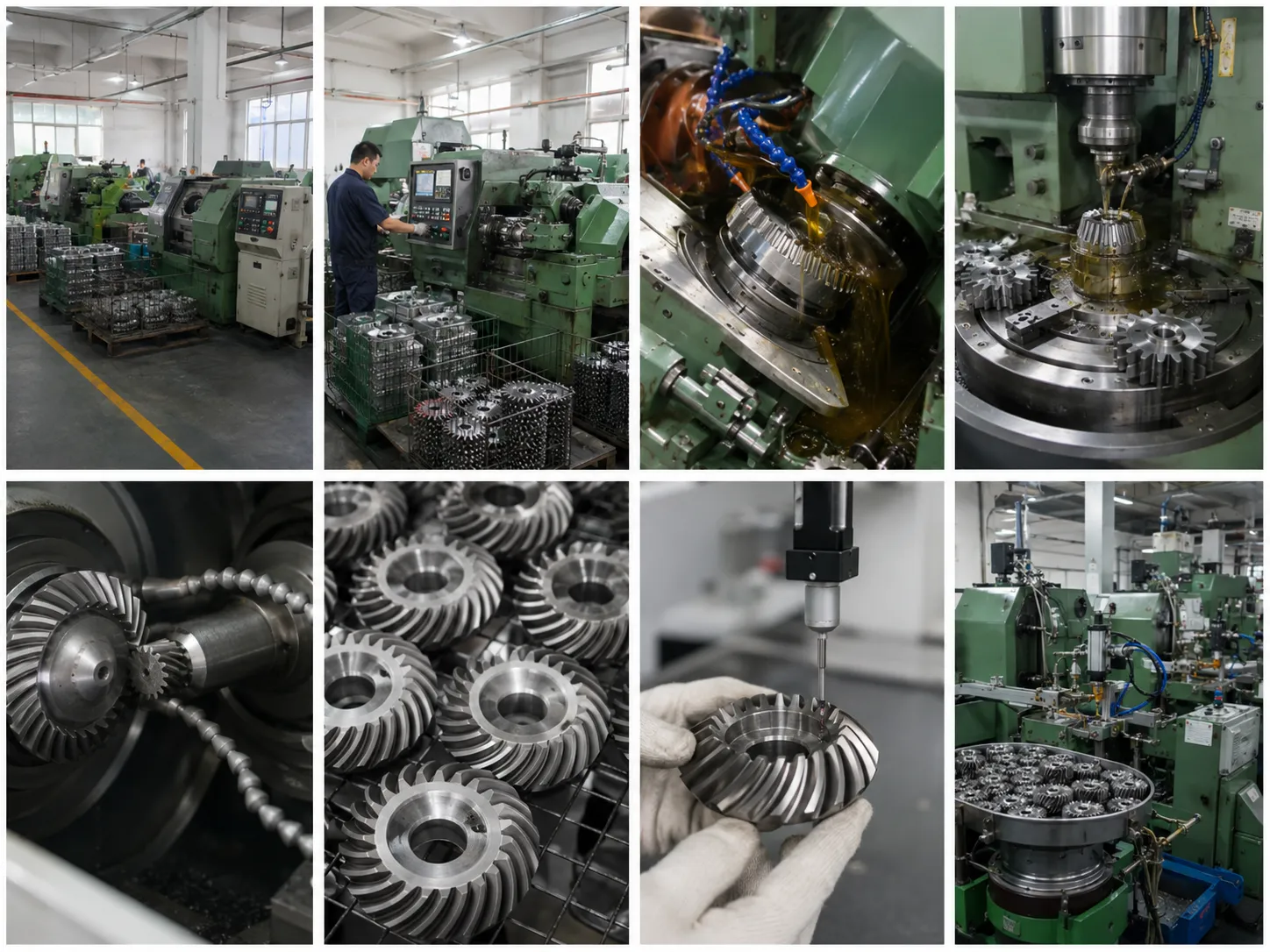
Korea Ever-Power planetary gear manufacturing facility for heavy conveyor drive applications — 20CrMnTi case carburized planet gear production, profile grinding, and pitch-matched batch selection for conveyor replacement gear kits. The planet gear pitch-matching process at Korea Ever-Power involves hobbing all planet gears for a production batch (typically 30–60 gears for a given module and tooth count combination), measuring the pitch of all gears on a gear measurement machine, sorting the batch by pitch deviation from the theoretical mean, and selecting the 3 or 4 gears with the smallest pitch deviation from each other (not from the theoretical mean — relative deviation matters for load sharing, not absolute deviation from nominal). This selection procedure ensures that the matched planet set has maximum load sharing, regardless of where the batch mean falls within the pitch tolerance. The matched sets are then packaged together and identified with a batch identifier that the conveyor maintenance engineer can reference when ordering repeat supplies — ensuring the replacement planetary gear kit for the same gearbox model always uses a batch of matched planets from the same tolerance tier.

Frequently Asked Questions — Planetary Gears for Conveyor Drives

Q 01

Our 315 kW quarry conveyor planetary gearbox failed — one planet gear has a fractured tooth at the root. The gearbox is only 3 years old. What caused this and how do we prevent recurrence?

Planet gear tooth root fracture at 3 years in a 315 kW quarry conveyor drive is a bending fatigue failure — the tooth root has been loaded beyond its endurance limit for the number of cycles accumulated (315 kW × 3 years × 6,000 hours/year at typical quarry operation gives approximately 10⁸ planet gear tooth load cycles — at the edge of the endurance limit range for many carburized gear designs). Root causes in order of probability: (1) Overload from quarry conveyor starting: quarry belt conveyors are often started loaded (material on the belt from the previous production shift), which produces a starting torque of 2.5–3.5× rated. If the original gearbox was sized for an unloaded start (KS = 1.5) but is regularly started loaded (KS = 2.5–3.0), the planet gear tooth root has been experiencing 2–3× its designed stress at each start — accumulating fatigue damage at a rate 8–27× faster than designed. (2) Planet gear load sharing imbalance: if the fractured planet was consistently carrying more than its share of the total tangential force (due to pitch error or planet pin hole position error), its root stress was higher than the average planet stress assumed in the design. Inspection: after removing all three planet gears, measure the tooth thickness of each on a calibrated gear tooth vernier caliper and compare — if the fractured planet’s tooth is measurably thinner than the other two (from wear), it was carrying more load. Correction: specify Korea Ever-Power replacement planet gears with matched pitch (±3 μm batch selection) and confirm the conveyor soft-start device is correctly rated for loaded belt starting. (3) Insufficient carburized case depth: if the planet gear was manufactured with effective case depth below the minimum for the applied tooth root stress, the subsurface transition zone hardness is too low to sustain the cyclic bending stress — the fatigue crack initiates below the case-core interface rather than at the surface. Korea Ever-Power can analyse the fracture surface of the failed planet gear (request the returned part for metallurgical examination) to confirm which failure mechanism occurred and provide a root cause analysis report.

Q 02

How do we identify the correct replacement planetary gear set for a conveyor gearbox when the gearbox nameplate has been damaged and the OEM model number is unknown?

Identifying a conveyor planetary gearbox model without the nameplate requires a systematic approach using the available physical measurements: (1) Measure the gearbox external dimensions: the overall length (input to output shaft), the housing flange OD or mounting bolt circle diameter, and the output shaft bore diameter. Korea Ever-Power maintains a database of external dimensions for all major conveyor gearbox OEM models (Sumitomo, Brevini/Rexnord, SEW, Flender, Dodge/Rexnord) — cross-referencing the external dimensions alone narrows the model to 3–5 candidates in most cases. (2) Count the ring gear teeth through the gearbox inspection port (or by rotation counting): rotate the output shaft by hand and count the input shaft revolutions for each full output revolution — this gives the exact overall ratio. From the ratio and the likely number of stages (a 2-stage box for ratios 15:1–100:1), Korea Ever-Power can calculate the possible sun/planet/ring tooth count combinations and identify the most likely stage ratios. (3) Measure the gearbox oil fill volume: the oil capacity (stamped on the name plate or stated in the manual) is closely linked to the internal housing volume, which is determined by the gear size and stage arrangement. This provides an independent cross-check. (4) Photograph the gear internals through the inspection port or after partial disassembly: module, tooth count, and quality can be estimated from close-up photos of the sun and planet gear surfaces. Korea Ever-Power’s application engineering team provides a free model identification service — submit the external dimensions, ratio measurement, oil volume, and any photographs, and Korea Ever-Power will identify the most likely OEM model and quote the matched replacement gear set within 48 hours.

Q 03

What is the recommended oil change interval for conveyor planetary gearboxes, and how do oil analysis results indicate that an early oil change is needed?

Conveyor planetary gearbox oil change intervals depend on the oil type and the operating conditions: Standard intervals per ISO/TR 14179-2: mineral gear oil: 3,000–5,000 hours or 12–18 months (whichever is sooner) for ambient temperatures below 50°C. PAO synthetic gear oil: 8,000–12,000 hours or 24–36 months. For mine conveyor applications where ambient temperatures may exceed 40°C at the gearbox surface: reduce intervals by 30–40% (mineral oil: 2,000–3,000 hours; PAO: 5,000–8,000 hours). Oil analysis triggers for early change: Korea Ever-Power recommends oil analysis at 50% of the scheduled change interval to confirm the oil condition before the full interval has elapsed. Parameters indicating early oil change needed: (a) Viscosity deviation above ±15% from the original ISO VG grade — viscosity reduction indicates shear thinning of VI improver additives; viscosity increase indicates oxidation or contamination. (b) Water content above 0.1% by weight (Karl Fischer method) — water in planetary gear oil causes severe corrosion of the precision planet bearing elements within weeks. (c) Particle count above ISO 4406 cleanliness class 18/16/13 for the oil system — ferrous particle content (measured by the ICP atomic emission spectrum, Fe concentration above 50 ppm per 8,000 hours) indicates abnormal wear in the planetary stage gears or bearings. (d) TAN (Total Acid Number) above 2 mg KOH/g from the new oil baseline — indicates oil oxidation leading to additive depletion and acidic attack of copper-containing bearing alloys. Korea Ever-Power provides an oil analysis recommendation protocol for conveyor planetary gearboxes as part of the gear set supply documentation — giving the maintenance team the specific parameter limits and sampling intervals for the planetary gearbox model and operating conditions.

Explore Korea Ever-Power Gear Categories

Seven precision gear product lines for conveyor drives, mining, bulk materials, and industrial power transmission worldwide.
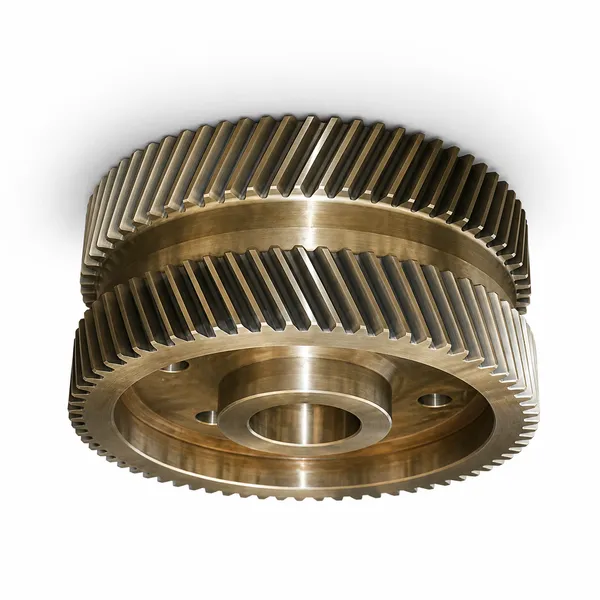
spur gear conveyor

Spur Gears

M5–M16 · conveyor drum · heavy duty

helical gear conveyor

Helical Gears

Conveyor gearbox · double-helical · mill

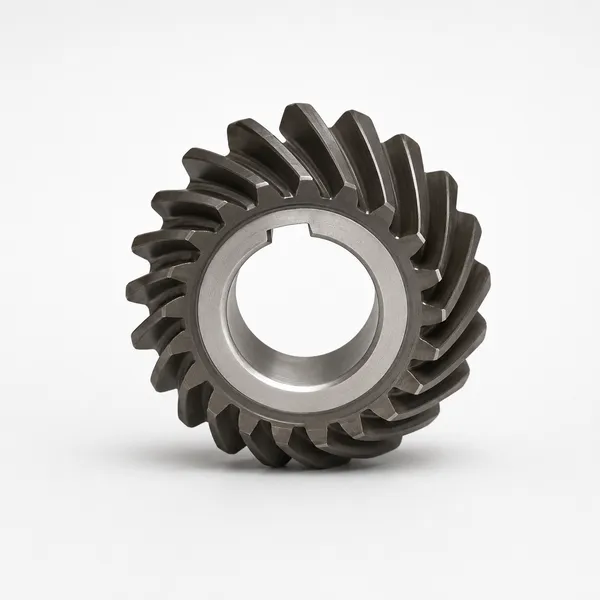
bevel gear conveyor

ベベルギア

Right-angle takeoff · conveyor branch

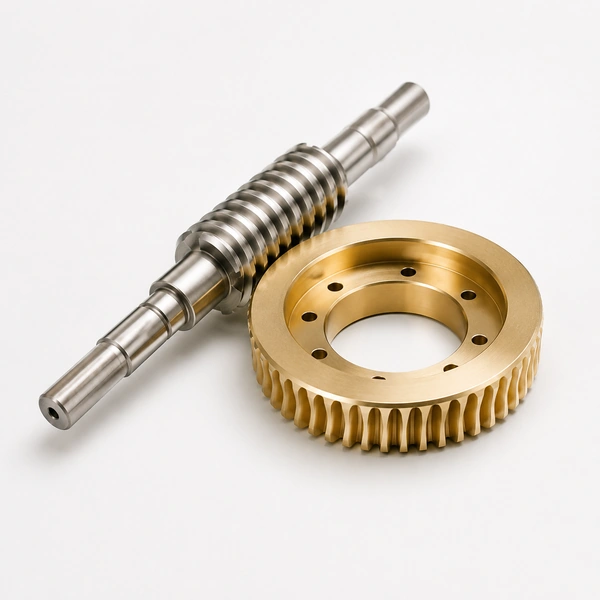
worm gear conveyor

Worm Gears

Self-locking · slow conveyor · low power

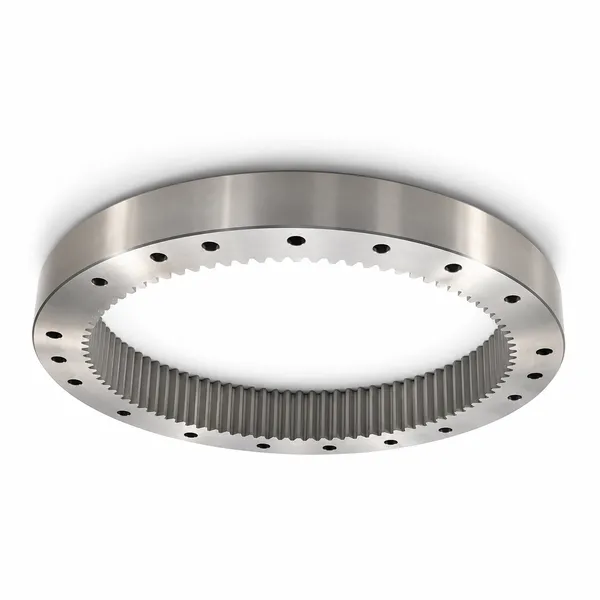
ring gear conveyor

Ring Gears

Planetary internal ring · conveyor drive

planetary gear conveyor

Planetary Gears

2–3 stage · 5 kW–5 MW · conveyor kit

plastic gear

Plastic Gears

Sensor · limit switch · light conveyor

GET A QUOTATION · KOREA EVER-POWER

Need Planetary Gears for Conveyor Drives?

Korea Ever-Power manufactures 20CrMnTi case carburized planetary gear sets for all conveyor drive applications — 2-stage and 3-stage, 5 kW to 5 MW, ratio 15:1–500:1. Pitch-matched planet gears (±3 μm), floating sun for load sharing, DIN 5–7 profile ground. Cross-reference for Sumitomo Cyclo, Brevini, SEW, Flender, Dodge, and Stieber conveyor gearboxes. Root cause analysis service for failed conveyor planetary gears. ISO 6336 rated life documentation. ISO 9001:2015 certified.

Request a Quotation →

編集者: Cxm

VR Tour of Our Factory

TAGs:

ギアラック

当社は、ギアラックの大手メーカー、サプライヤー、輸出業者の一つとして、ギアラックをはじめとする様々な製品を提供しています。

詳細についてはお問い合わせください。

郵便:[email protected]

ギアラックの製造業者、サプライヤー、輸出業者

最近の投稿

jaJapanese