GEAR APPLICATION GUIDE · HELICAL GEAR · H08

Helical Gears for Crane and Hoist Drives:
Overhead Cranes, Port Hoists and Industrial Lifting Equipment

Crane and hoist helical gears operate under a duty cycle that is unique among industrial gear applications — the torque is applied in discrete, often unpredictable intervals (each lift event), with significant shock loading at the moment of load pickup when the rope suddenly tensions against a stationary or slowly moving load, and the consequence of gear failure is the risk of an uncontrolled load drop — a safety outcome that is unacceptable under any design condition. This guide covers helical gear specification, duty cycle analysis, safety factor selection, and material requirements for overhead travelling cranes, jib cranes, port container cranes, and industrial hoist units from 1 tonne through 500 tonne lifting capacity.

18CrNiMo7-6 · 42CrMo4 · M6–M20 · FEM Group M
SF 1.5–2.5 · DIN 5–7 · Load Spectrum · ISO 4301
Overhead · Port · Jib Crane · Industrial Hoist

DUTY CLASS

FEM M3 – M8

Crane mechanisms are classified by duty class per FEM (European Federation of Materials Handling) or ISO 4301/4 — M3 (light, occasional use) through M8 (heavy, continuous industrial steel mill service). The duty class directly determines the required fatigue life of the helical gear and the appropriate service factor

MODULE RANGE

M6 – M20

Industrial hoist (1–10T): M6–M10. Workshop overhead crane (5–50T): M8–M14. Heavy duty steel plant crane (100–500T): M12–M20. Port gantry crane hoist (40–80T): M10–M16. All grades: 42CrMo4 QT or 18CrNiMo7-6 carburized

SAFETY FACTOR

S_F ≥ 1.8

Minimum bending fatigue safety factor for crane hoist helical gears per FEM crane gear design rules. General workshop crane: S_F ≥ 1.8. Steel mill ladle crane: S_F ≥ 2.2. Offshore crane: S_F ≥ 2.5. Contact fatigue safety factor S_H ≥ 1.25 for all crane gears per ISO 6336

QUALITY CLASS

DIN 5 – 7

DIN 5–6 ground for high-speed first stage helical gears in crane hoists (motor speed 1,000–1,500 RPM). DIN 7 for final stage gears at drum speed below 50 RPM. All gears 100% magnetic particle inspected after heat treatment as required by crane safety standards EN 13157 and FEM 1.001

Crane Hoist Helical Gear Engineering — Duty Class, Load Spectrum, and Safety Requirements

The engineering of helical gears for crane and hoist drives cannot be reduced to a simple calculation of the rated lift torque divided by a service factor — the crane gear duty is fundamentally a stochastic (probabilistic) problem, where the gear experiences a statistical distribution of loads across a range from zero (hook running empty) to the rated maximum lift load, with the distribution depending on the crane’s service conditions. A warehouse crane that primarily lifts palletised goods at 80–100% of its rated capacity has a very different load spectrum from a scrap-handling crane that lifts electromagnet grabs at 20–30% of rated capacity most of the time but occasionally lifts a full grab of heavy scrap at 100% rated. Both cranes may have the same rated lift capacity, but the scrap crane accumulates far fewer high-load fatigue cycles and could potentially use lighter helical gears for the same design life — or conversely the warehouse crane needs heavier gears despite the same rating.

Korea Ever-Power’s helical gears for crane hoist drives are manufactured in 18CrNiMo7-6 case carburized (for heavy and extra-heavy duty M5–M8 cranes where maximum tooth bending and contact fatigue resistance is required) and 42CrMo4 through-hardened QT (for light and medium duty M3–M5 workshop crane hoists where the fatigue loading is within the capability of through-hardened steel). All crane hoist helical gears are subjected to 100% magnetic particle inspection (MPI) of all tooth surfaces and roots after final heat treatment and machining — a requirement of EN 13157 (European crane safety standard) that ensures any heat treatment cracks, grinding burns, or material defects are detected before the gear enters service. Korea Ever-Power provides MPI inspection certificates with every crane hoist helical gear shipment.

The shock loading at the moment of load pickup — when the lifting rope transitions from slack (or moving slowly downward) to suddenly taking the full weight of the suspended load — generates a dynamic torque spike in the hoist gearbox that is typically 1.5–3.0× the static lift torque, depending on the crane control system and the load pickup speed. Modern crane control systems with soft-start torque ramping reduce this spike to 1.5–2.0× static, but older direct-on-line or two-speed motor cranes may generate spikes of 2.5–3.0×. The helical gear service factor for crane hoist applications must account for this pickup torque spike as well as the nominal lift load fatigue — Korea Ever-Power uses the FEM crane gear design method (FEM 1.001, 3rd edition) to calculate the equivalent constant torque at the gear’s pitch point from the load spectrum and pickup shock factor, then applies this equivalent torque to the ISO 6336 fatigue calculation to determine the required module, face width, and material for the specified design life.
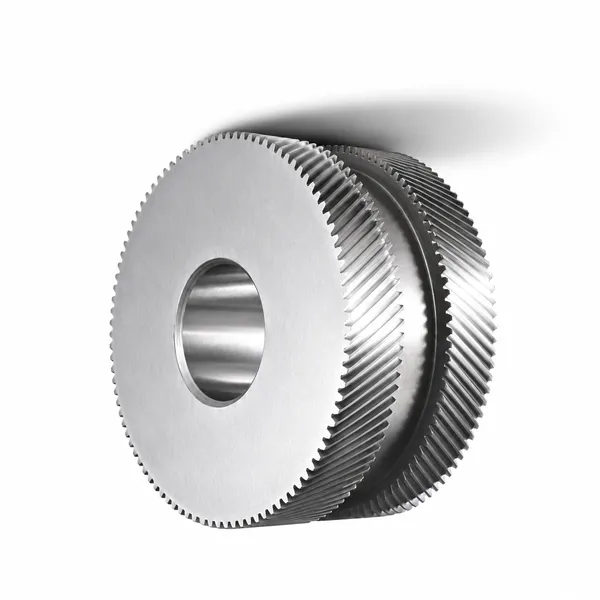
carbon steel helical gear crane hoist drive Korea Ever-Power
Korea Ever-Power 42CrMo4 through-hardened helical gear for overhead crane hoist gearbox intermediate stage — M10, 38 teeth, helix angle 18°, HB 300–340 through section, DIN 7 quality class, face width 100 mm. 100% magnetic particle inspection (MPI) on all tooth surfaces and roots after hobbing and heat treatment — no indications per EN ISO 23278 Level 1. FEM duty class M5 design: equivalent constant torque Teq = 0.82 × T_rated (load spectrum factor K_S = 0.82 for M5 class), design life 12,500 hours (FEM M5 = 10⁷ load cycles at Teq). Bending fatigue safety factor S_F = 1.92 (≥1.8 FEM minimum). Contact fatigue safety factor S_H = 1.31 (≥1.25 minimum). Material certificate, MPI certificate, dimensional inspection report supplied. Replacement for Demag, Stahl, Konecranes, and GH Cranes hoist gearbox intermediate stages up to 40T lifting capacity.

Crane Type Application Specifications
CRANE 01

OVERHEAD TRAVELLING
CRANE (EOT)

Helical gear specification: M8–M16, 42CrMo4 QT HB 280–330 (M3–M5 duty class) or 18CrNiMo7-6 carburized (M6–M8 duty class), DIN 6–7, FEM calculation per FEM 1.001, magnetic particle inspection 100%. Overhead travelling cranes (EOT cranes) in manufacturing and warehouse facilities are the most common crane type globally — bridge cranes on a pair of runway rails, with the hoist trolley traversing along the bridge beam. The hoist gearbox on an EOT crane is typically a 2-stage or 3-stage helical gear reducer mounted on the trolley frame, driving the rope drum through the third gear stage. Duty classes range from M3 (infrequent use maintenance crane) to M7 (continuous steel mill casting crane). Korea Ever-Power supplies EOT crane hoist helical gear replacement sets for Demag (DH, DC series), Stahl (SH series), Konecranes (XN, CXT series), GH Cranes, Dongqi, and all major EOT crane manufacturers. Most EOT crane hoist gearboxes are 2-stage helical reducers with module M8–M12 in stage 1 and M10–M14 in stage 2 for capacities of 5–50T — these are the highest-volume crane gear replacement parts and Korea Ever-Power maintains production records for the 50 most common gearbox models.

CRANE 02

PORT CONTAINER
GANTRY CRANE

Helical gear specification: M10–M18, 18CrNiMo7-6 carburized HRC 58–62 (all stages — port cranes are M7–M8 duty due to continuous 24h/day container handling operation), DIN 6 ground, corrosion-resistant gear oil for marine atmosphere, 3-stage helical reduction. Port container cranes (ship-to-shore cranes at container terminals) handle 20–40-foot ISO containers weighing up to 40 tonnes at rates of 25–35 moves per hour per crane, operating 20+ hours per day. The hoist gearbox on a ship-to-shore crane is the single most critical mechanical component in the terminal’s throughput capacity — a gearbox failure requiring crane downtime costs the terminal operator $5,000–$20,000 per hour in lost container moves during peak vessel operations. Korea Ever-Power port crane hoist helical gears are designed to FEM M7–M8 duty class with 18CrNiMo7-6 carburized material and DIN 6 quality class as standard for all port crane applications — the first-stage pinion gear at motor speed (750–1,000 RPM) is ground to DIN 5 at PLV above 8 m/s. Marine-environment port crane gearboxes require ISO VG 220 or VG 320 gear oil with corrosion inhibitor additive package for the salt-air coastal atmosphere. Korea Ever-Power supplies port crane hoist helical gear sets for Liebherr, Konecranes (former MacGREGOR), ZPMC, Manitowoc, and Reggiane port crane models.

CRANE 03

STEEL PLANT
LADLE / CHARGING CRANE

Helical gear specification: M12–M20, 18CrNiMo7-6 carburized, DIN 5–6 ground, FEM M7–M8 duty, S_F ≥ 2.2, heat-resistant gear oil ISO VG 320 (for gearboxes exposed to radiant heat from the steel melt), high-temperature shaft seals (FKM rated to 180°C) for the gearbox shaft entries nearest the molten steel ladle. Steel plant ladle cranes (which transport liquid steel in ladles from the basic oxygen furnace or electric arc furnace to the continuous caster) and charging cranes (which charge scrap and lime into the EAF vessel) represent the most demanding crane duty in industry — M7–M8 class, heavy loads at near-rated capacity on most lifts, exposure to radiant heat from molten steel that elevates gearbox temperatures to 50–80°C above ambient even with thermal shielding. The consequence of a ladle crane gear failure while carrying a full ladle of liquid steel is catastrophic — the ladle cannot be set down safely with the crane failed and emergency procedures involve extended cooling periods. Ladle crane hoist gearboxes are designed with redundant safety systems and the gears are specified with higher safety factors than standard crane gears. Korea Ever-Power ladle crane helical gear sets are designed to S_F ≥ 2.2 (vs 1.8 for workshop EOT cranes) with 18CrNiMo7-6 carburized material in all stages.

Korea Ever-Power gear measurement quality inspection crane hoist helical gear
Korea Ever-Power precision gear measurement and quality inspection facility — 100% magnetic particle inspection (MPI) of crane hoist helical gears using fluorescent magnetic particle method per EN ISO 23278. MPI is conducted after final machining and heat treatment on all crane gear tooth surfaces and roots — the sensitivity of fluorescent MPI can detect surface cracks with opening widths as small as 0.001 mm, providing confidence that the gear tooth surface is free of heat treatment cracks, quench cracks, or grinding burns that would cause premature fatigue failure in crane service. Korea Ever-Power issues a formal MPI inspection certificate for each crane gear lot, signed by a qualified NDT Level 2 inspector, meeting the EN 13157 crane safety standard documentation requirements for lifting equipment gear components.

FEM Duty Class and Helical Gear Sizing — A Practical Guide

The FEM (Fédération Européenne de la Manutention, now FEM MHE) classification system for crane mechanisms provides a structured approach to helical gear design that properly accounts for the variable loading of crane operations — recognising that a crane hoist gear does not see its rated load on every lift. The FEM crane mechanism classification combines two parameters: the mechanism group (M1–M8, determined from the expected total number of working cycles over the crane’s design life) and the load spectrum class (L1–L4, determined from the proportion of lifts at rated load vs partial loads). The combination gives the mechanism class that directly determines the required fatigue life of the helical gear.
CRANE APPLICATION FEM CLASS DESIGN CYCLES MATERIAL S_F MIN. DIN CLASS
Maintenance, light shop crane M3 6.3 × 10⁴ 42CrMo4 1.50 DIN 7
General factory overhead crane M5 2.0 × 10⁶ 42CrMo4 1.80 DIN 6–7
Port container crane (STS) M7 1.25 × 10⁷ 18CrNiMo7-6 2.00 DIN 5–6
Steel plant ladle crane M7–M8 1.25 × 10⁷+ 18CrNiMo7-6 2.20 DIN 5–6
Offshore crane (DNV-GL class) M6–M8 Application-dependent 18CrNiMo7-6 2.50 DIN 5
Korea Ever-Power workshop crane hoist helical gear production quality
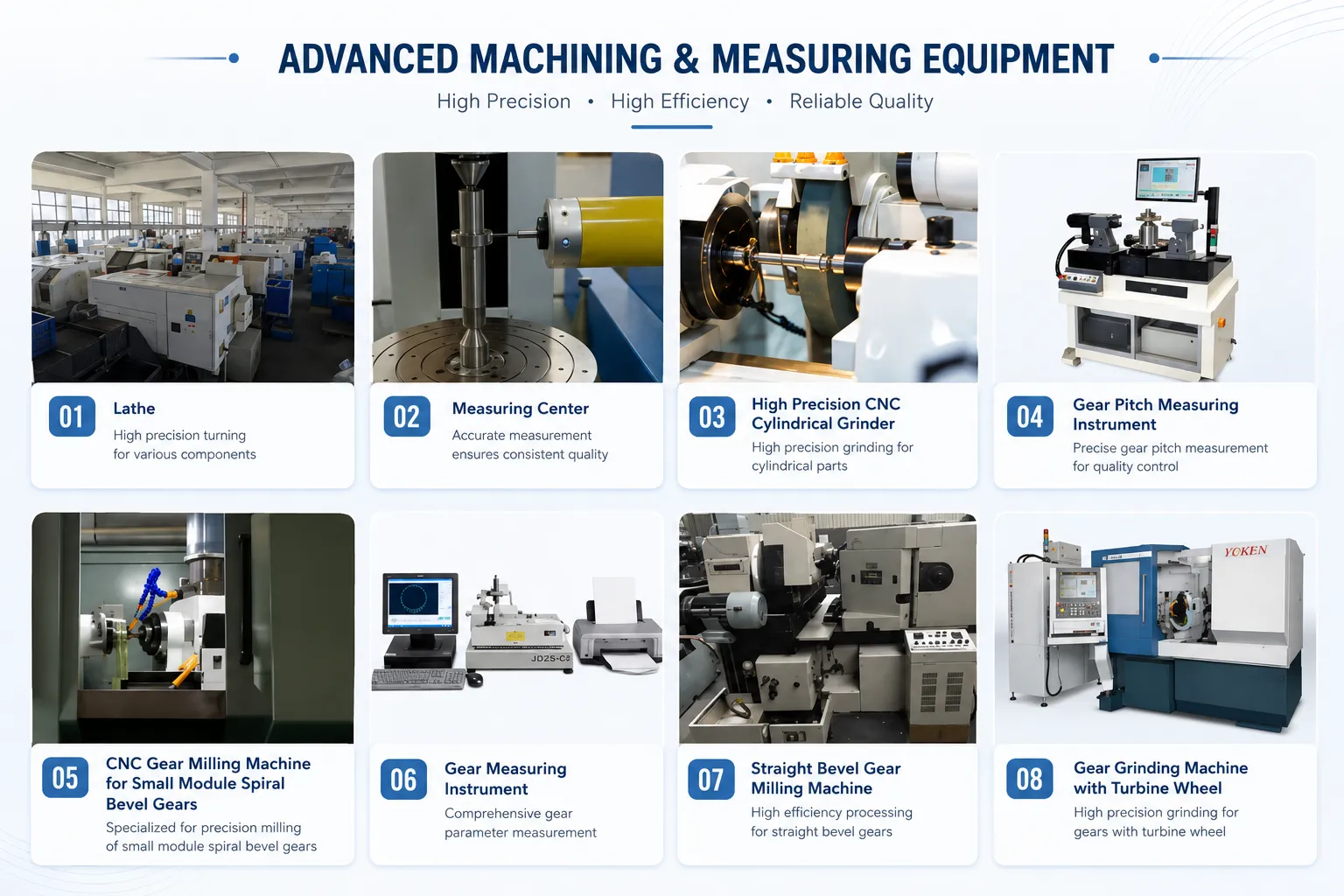
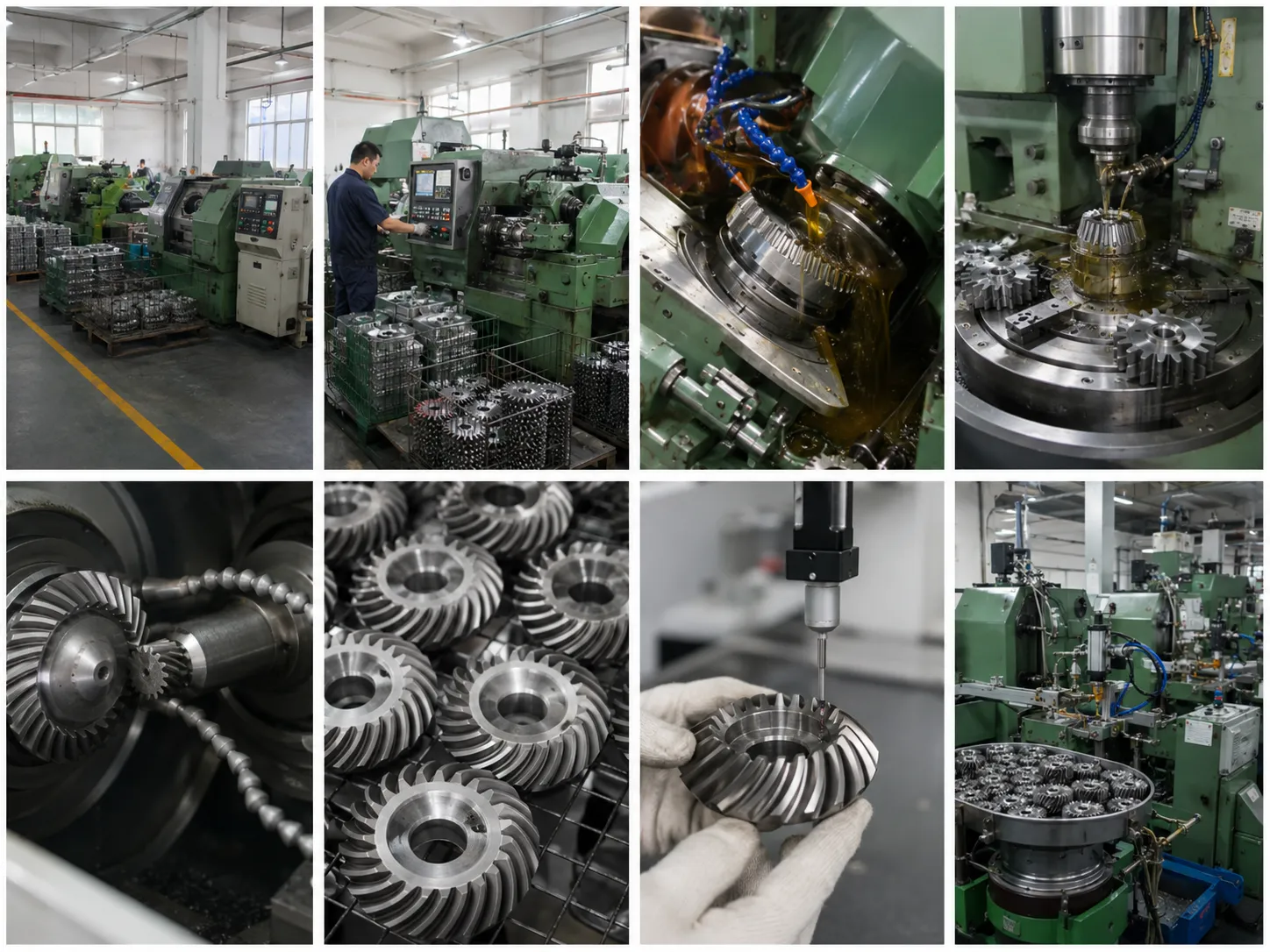
Korea Ever-Power production facility for crane hoist helical gears — CNC gear hobbing, profile grinding, and non-destructive examination. Large-module crane gears (M12–M20) are manufactured from individually forged 42CrMo4 or 18CrNiMo7-6 blanks — not machined from bar stock — to ensure the required grain flow orientation around the tooth profile. Forging traceability (heat number, forge date, heat treatment record) is maintained for each gear in the lot and included in the documentation package shipped with the gears for incorporation into the crane’s maintenance and certification records as required by lifting equipment safety regulations (LOLER in the UK, 2006/42/EC Machinery Directive in the EU, OSHA 1910.179 in the US).

Frequently Asked Questions — Crane and Hoist Helical Gears

Q 01

Our 20-tonne overhead crane hoist gearbox is showing tooth pitting on the first stage helical gears after only 3 years in service. The crane was specified as FEM M5 duty. What is causing this early pitting?

Contact fatigue pitting on first-stage helical gears in a crane hoist gearbox after 3 years of M5 duty service indicates the actual load on the gear is higher than the M5 design load, or the gear material/heat treatment has not achieved the required contact fatigue resistance. Diagnosis: (1) Verify actual crane utilisation vs M5 design assumption: M5 duty class assumes a specific number of load cycles at the design load spectrum (load spectrum class L2 or L3). If the crane has actually been used as an M6 or M7 machine (higher frequency of use or heavier average loads than designed), the gear will exhaust its M5 design life in half the expected time. Request the crane control system’s lift cycle log if available — modern cranes with electronic load monitoring can provide the actual load history. (2) Verify oil viscosity and condition: contact pitting is accelerated by inadequate EHL film — check the current oil viscosity grade against the gearbox manufacturer’s specification and measure the current oil viscosity. If the oil has degraded to below the specified viscosity by more than 20%, the film parameter Λ may have dropped below 1.0, causing progressive surface pitting. (3) Check gear surface hardness: if the first-stage gears are 42CrMo4 QT and the Brinell hardness has been measured below 280 HB (indicating inadequate heat treatment), the permissible contact stress σ_H is below specification. Korea Ever-Power can provide a replacement first-stage helical gear set in 18CrNiMo7-6 carburized (higher contact fatigue resistance for the same module) if the original 42CrMo4 design is insufficient for the actual operating duty. Contact with the gearbox model, gear dimensions, and the crane usage history for a specific recommendation.

Q 02

What documentation must accompany crane hoist helical gears to satisfy EN 13157 and the Machinery Directive for the crane’s CE marking?

The documentation requirements for crane hoist helical gears under EN 13157 (Cranes — Safety: Hand powered cranes) and the Machinery Directive 2006/42/EC (which covers powered cranes) encompass both the gear component supplier’s documentation and the crane manufacturer’s technical file. Korea Ever-Power supplies the following documentation with each crane hoist helical gear order: (1) Material certificate: EN 10204 Type 3.1 (for critical components) or Type 2.2 (for standard components), confirming the material is as specified (42CrMo4 or 18CrNiMo7-6) with chemical composition and mechanical properties (Rm, Rp0.2, A, KV at specified temperature) per the drawing requirement. (2) Heat treatment record: hardness test results on at least 3 tooth positions confirming the heat treatment has achieved the specified hardness range; for carburized gears, case depth measurement confirming minimum effective case depth. (3) Magnetic particle inspection (MPI) report: 100% MPI of all tooth surfaces and roots with zero relevant indications, signed by a qualified NDT Level 2 inspector per EN ISO 9712. This is mandatory for all crane lifting gear per EN 13157. (4) Dimensional inspection report: all critical dimensions per the drawing confirmed, including tooth profile and lead measurements per DIN quality class. (5) ISO 9001:2015 certificate: Korea Ever-Power’s current quality management certification. The crane manufacturer incorporates these documents into the crane’s technical file for the CE marking process. If any document is missing, the CE marking authority may request a new conformity assessment — Korea Ever-Power provides all documentation as standard for all crane hoist helical gear orders without additional charge.

Q 03

How do I correctly specify a replacement helical gear set for a Demag DH hoist gearbox when the original part numbers are no longer available from Demag?

Demag DH series hoist gearboxes are among the most widely installed crane hoist units globally, and Korea Ever-Power maintains a complete reference database of all DH series gear specifications from the DH 1 through DH 10 (and the newer DC series) covering all winding classes and gear ratios. For Demag DH gearboxes where the original part number is no longer available from the OEM: (1) Identify the DH type and winding class: the DH type (DH1, DH2, DH5, DH10) and winding class (W1–W6 or FEM duty) are stamped on the gearbox nameplate. Korea Ever-Power can cross-reference from the DH type and winding class to the full gear specification for stages 1 and 2. (2) Confirm the gear ratio: the ratio is also on the nameplate; confirm it matches the Korea Ever-Power database record for the DH type (there are occasionally multiple ratio options for the same DH type). (3) Order as a matched pair: when replacing Demag DH hoist gears, replace both the pinion and the wheel in the affected stage simultaneously — replacing only the pinion against a worn wheel significantly shortens the new pinion’s service life because the new pinion engages the existing wear pattern of the old wheel rather than a fresh unworn surface. Korea Ever-Power DH series replacement gears are manufactured in the same material and quality class as the original Demag specification — 42CrMo4 QT for DH1–DH5 standard winding classes, 18CrNiMo7-6 carburized for DH5–DH10 heavy duty winding classes — and include all EN 13157 documentation as standard.

Explore Korea Ever-Power Gear Categories

Seven precision gear product lines for crane, hoist, mining, industrial and port handling applications worldwide.
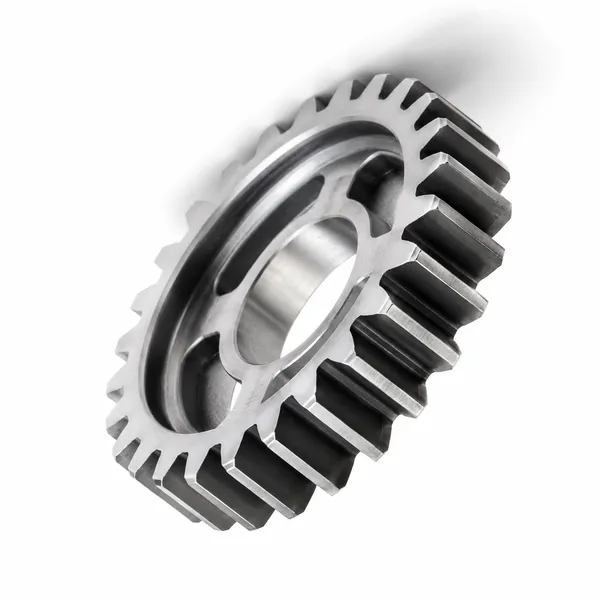
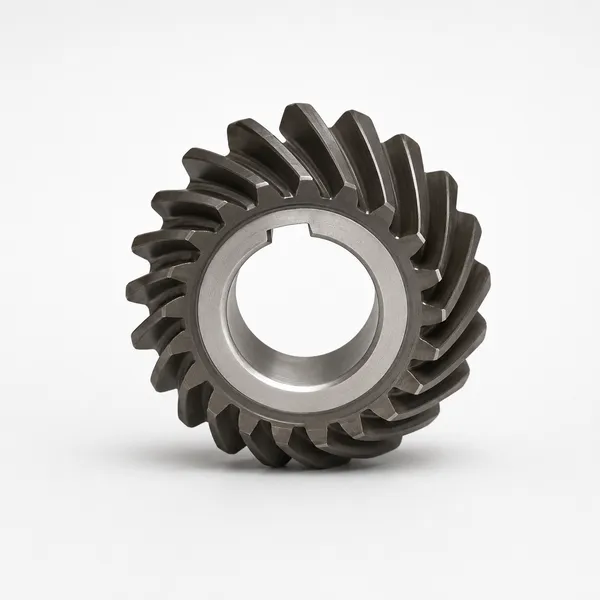
spur gear crane

Spur Gears

M8–M20 · forged · crane auxiliary

helical gear crane hoist

Helical Gears

FEM M3–M8 · DIN 5–7 · hoist gearbox

bevel gear crane

Bevel Gears

Right-angle · crane cross-travel · slew

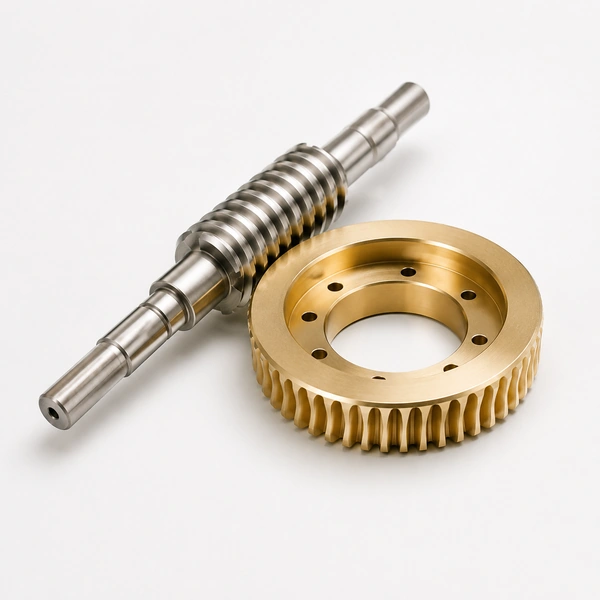
worm gear hoist

Worm Gears

Self-locking · light hoist · hand chain

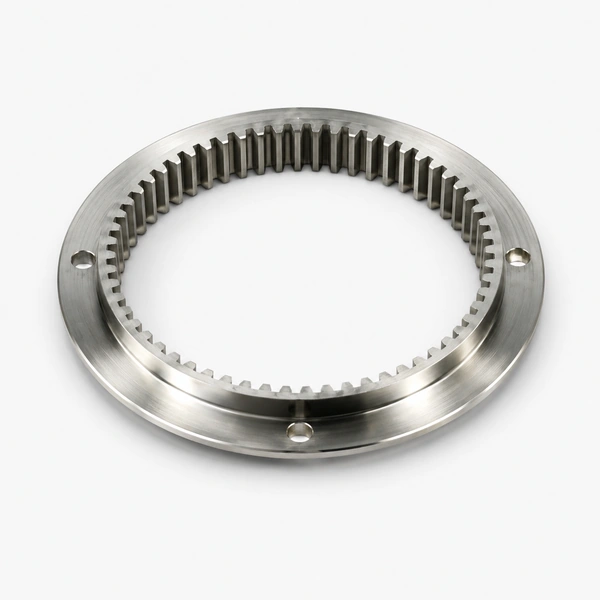
ring gear

Ring Gears

Slewing · crane slew ring · large OD

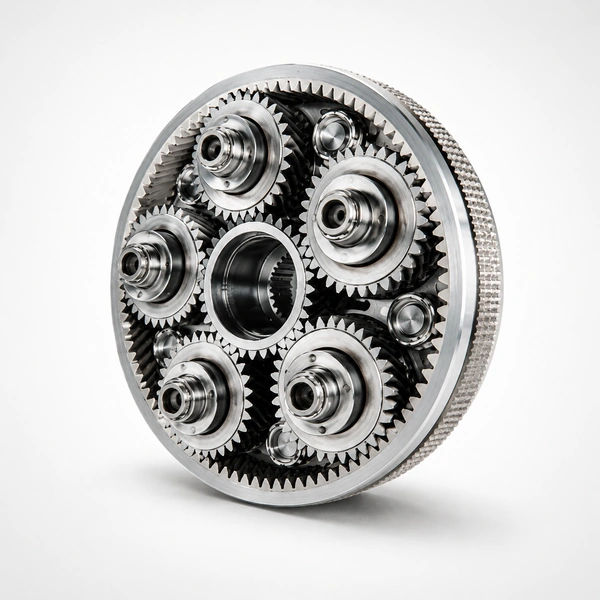
planetary gear

Planetary Gears

Compact hoist · drum · travel drive

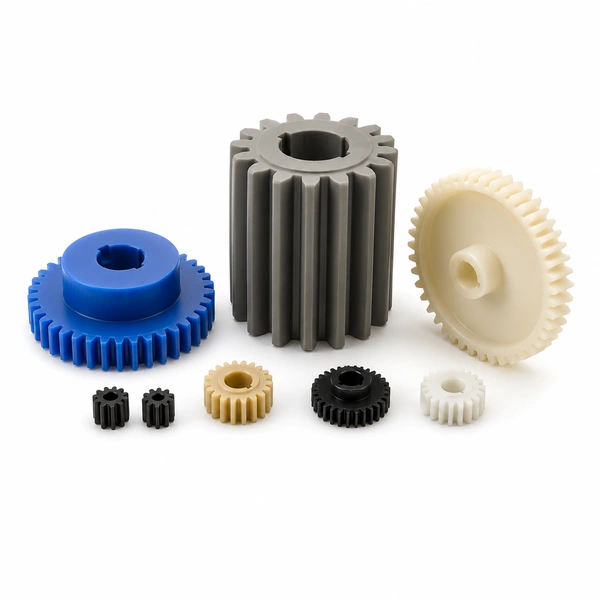
plastic gear

Plastic Gears

Limit switch · sensor · instrument

GET A QUOTATION · KOREA EVER-POWER

Need Helical Gears for Crane and Hoist Drives?

Korea Ever-Power manufactures 18CrNiMo7-6 and 42CrMo4 helical gears for all crane and hoist applications — EOT workshop cranes (FEM M3–M5), port container gantry cranes (M7), steel plant ladle cranes (M7–M8), and offshore cranes (M6–M8 with DNV GL documentation). Module M6–M20, DIN 5–7, 100% MPI included, EN 10204 3.1 material certificates. Cross-reference for Demag DH, Stahl SH, Konecranes, Liebherr, and ZPMC. ISO 9001:2015 certified.

Request a Quotation →

Editor: Cxm

VR Tour of Our Factory

TAGs:

gear rack

As one of leading gear rack manufacturers, suppliers and exporters of products, We offer gear rack and many other products.

Please contact us for details.

Mail:[email protected]

Manufacturer supplier exporter of gear rack

Recent Posts

en_USEnglish