GEAR APPLICATION GUIDE · HELICAL GEAR · H01

Helical Gears for Industrial Gearboxes:
Noise Reduction and Load Capacity Guide

Helical gears are the dominant gear type in industrial gearbox design — offering higher contact ratios, smoother torque transmission and 6–10 dB(A) lower noise than equivalent spur gears. This guide covers helix angle selection, axial thrust management, material specification, DIN quality class, and gearbox efficiency for single- and double-helical industrial drives.

20CrMnTi · 18CrNiMo7 · 42CrMo4
Helix 8° – 30° · DIN 5–8 · ISO 6336
Single & Double Helical · Gearbox & Inline Reducer

NOISE ADVANTAGE

6–10 dB(A)

Quieter than equivalent spur gears at same module, speed and load — the primary reason helical gears dominate industrial gearbox design

CONTACT RATIO

1.5 – 2.5

Helical gear total contact ratio vs 1.2–1.6 for spur gears — more teeth share the load simultaneously, reducing peak tooth stress

HELIX ANGLE RANGE

8° – 30°

8°–15° for single-helical gearbox with standard thrust bearings; 20°–30° for maximum noise reduction or double-helical (herringbone) design

EFFICIENCY

98.5–99.5%

Per helical gear mesh pair under full load — higher than worm (50–90%) and comparable to straight bevel gears. Multi-stage gearbox: multiply per-stage efficiencies

Why Helical Gears Are the Standard for Industrial Gearboxes

The helical gear has displaced the spur gear as the dominant gear type in enclosed industrial gearboxes for one fundamental reason: the progressive tooth engagement that its angled tooth geometry produces. Where a spur gear tooth pair makes immediate full-face contact at the moment of engagement — generating an impulsive contact force that is the primary source of gear mesh noise and dynamic load fluctuation — the helical gear tooth enters contact at one end and progressively sweeps across the full face width as the gear rotates. This gradual engagement distributes the contact force load-onset over a finite angular rotation, reducing the peak dynamic mesh force and the resulting noise and vibration by 6–10 dB(A) at equivalent module, speed and transmitted torque.

Korea Ever-Power’s helical gears for industrial gearboxes are manufactured in 20CrMnTi, 18CrNiMo7, and 42CrMo4 alloy steel to DIN 5–8 quality class, covering single-stage gearbox applications from 2.2 kW to multi-stage industrial gearboxes above 5,000 kW. All helical gears for enclosed gearbox applications are finish-ground after case hardening to achieve the tooth profile and lead accuracy that determines gearbox noise at operating speed.

The higher total contact ratio of helical gears (typically 1.5–2.5 vs 1.2–1.6 for spur gears at the same module) means more teeth share the transmitted load at any instant, reducing the peak bending stress at each tooth root and the peak Hertzian contact stress at each tooth flank. This dual improvement in both bending and contact stress allows helical gearboxes to transmit the same power as an equivalent spur gearbox in a smaller centre distance — or to transmit significantly more power within the same gearbox housing envelope.

Progressive Tooth Engagement

Helical tooth contact begins at one end and sweeps diagonally across the face — contact line length grows progressively from zero to maximum, then reduces back to zero. This eliminates the abrupt load onset of spur gears. The result is lower dynamic mesh force, lower vibration transmission to the gearbox housing, and dramatically reduced airborne gear mesh noise at all gearbox operating speeds.

Higher Load Capacity per Centre Distance

The higher total contact ratio of helical gears allows the same transmitted torque to be shared across more simultaneous tooth contacts, reducing peak root stress and flank contact stress relative to spur gears at the same module and face width. In practice, helical gearboxes achieve 15–30% higher power density than spur gearboxes of equal housing dimensions — a critical advantage in space-constrained industrial gearbox installations.

Smooth Torque Transmission

Helical gear transmission error — the deviation from perfectly uniform angular velocity ratio — is lower than spur gears at the same DIN quality class because the overlap ratio buffers individual tooth spacing errors across multiple simultaneous contacts. Low transmission error means smooth output shaft rotation, which is critical for gearbox applications driving precision machinery, machine tools, and servo-controlled systems where torque ripple must be minimised.

Helix Angle Selection: Noise, Thrust and Face Width
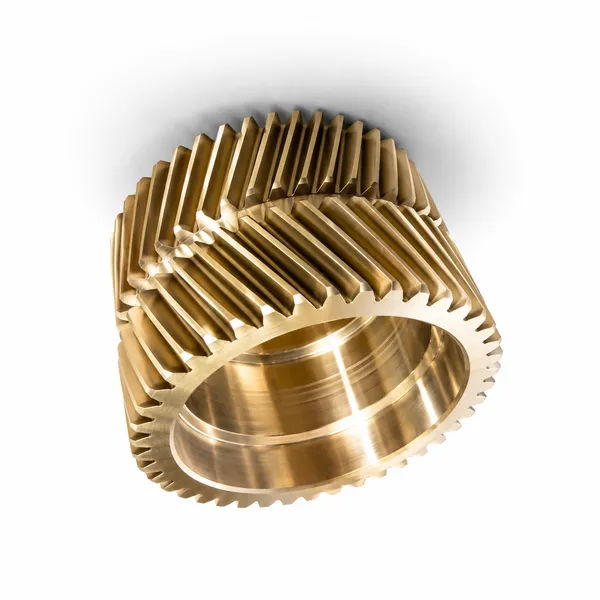
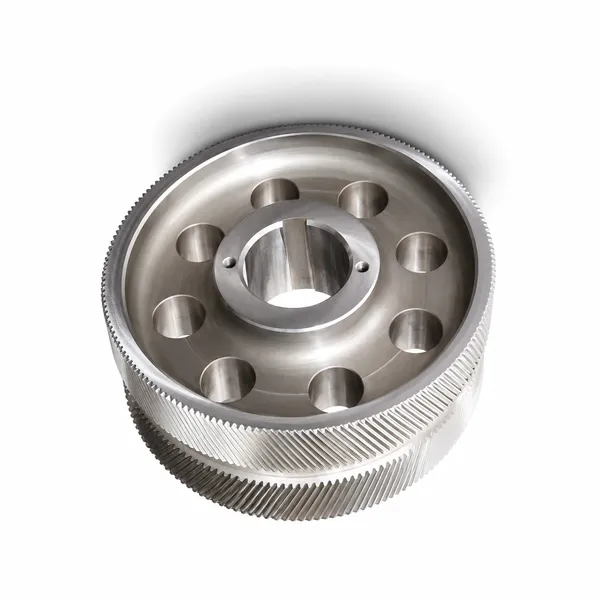
industrial alloy steel double helical gear gearbox Korea Ever-Power
Korea Ever-Power industrial alloy steel double helical gears (herringbone gears) for high-power gearbox applications — 18CrNiMo7 carburized and ground to DIN 5 quality class. Double helical design eliminates axial thrust entirely while achieving helix angles of 25°–35° for maximum noise reduction. Used in steel mill gearboxes, cement plant drives, marine main reduction gearboxes and high-power industrial compressor drives where single-helical thrust bearing loads at these helix angles would be commercially impractical.

Helix angle is the most important design variable in helical gearbox design after module and gear ratio. It directly controls the balance between three competing effects: noise reduction (higher helix angle = lower noise), axial thrust generation (higher helix angle = higher thrust load on shaft bearings), and minimum face width requirement (higher helix angle = wider face required for one full tooth to span the face width — the overlap ratio >1.0 condition for smooth operation).

HELIX ANGLE NOISE REDUCTION vs SPUR AXIAL THRUST RATIO MIN FACE WIDTH (for εβ>1) TYPICAL APPLICATION
8° – 12° 3–4 dB(A) tan(10°) = 0.18 × Ft ~3.4 × module General-purpose gearbox, light noise requirement, standard thrust bearings
15° – 20° 5–7 dB(A) tan(17.5°) = 0.31 × Ft ~5.7 × module Industrial gearbox standard — automotive, compressor, conveyor drives; angular contact bearings
20° – 25° 7–9 dB(A) tan(22.5°) = 0.41 × Ft ~7.5 × module Low-noise gearbox — HVAC, precision machine tool, food processing; tapered roller thrust pairs
25° – 35° (double helical) 9–11 dB(A) Zero axial thrust ~10 × module (per helix) High-power gearbox — steel mill, cement, marine reduction; thrust eliminated by opposing helices

AXIAL THRUST MANAGEMENT IN SINGLE-HELICAL GEARBOXES

Thrust Magnitude

Fa = Ft × tan(ψ) where Ft is the tangential force and ψ is the helix angle. At ψ = 20° and 15 kW at 1,000 RPM: Ft = 9,550 N; Fa = 9,550 × tan(20°) = 3,475 N. This axial thrust must be reacted by angular contact or tapered roller bearings on both shaft ends.

Bearing Selection

Single-helical gearbox shafts require bearings capable of carrying both radial and axial load simultaneously. Angular contact ball bearings (15° or 25° contact angle) handle moderate axial thrust; tapered roller bearings handle heavy thrust at low speed; paired cylindrical + thrust bearing arrangements separate the radial and axial load paths for high-speed precision gearboxes.

Double Helical Solution

Double helical (herringbone) gears use opposing left-hand and right-hand helices on the same gear body — the axial thrust from each helix exactly cancels, producing zero net axial force. This allows helix angles of 25°–35° for maximum noise reduction without imposing axial thrust on bearings. Required: a floating shaft arrangement to allow self-equalization of both helix loads.

Material and Heat Treatment for Industrial Gearbox Helical Gears
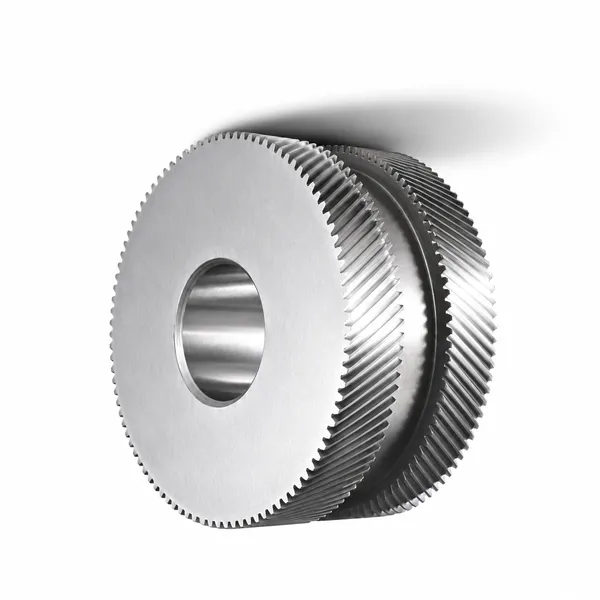
carbon steel double helical gear industrial gearbox Korea Ever-Power
Korea Ever-Power carbon alloy steel double helical gears for high-power industrial gearbox drives — 20CrMnTi or 42CrMo4 alloy steel forging blank, normalized, rough machined, case carburized or through-hardened, finish hobbed and profile ground. DIN 5 quality class tooth profile and lead accuracy confirmed by Klingelnberg gear analyser before shipment with individual measurement report.

20CrMnTi — Case Carburized

Standard for industrial gearbox helical gears requiring maximum fatigue life. Case depth 0.8–1.5 mm, HRC 58–62 tooth surface, σF = 380–430 MPa, σH = 1,400–1,550 MPa. After carburizing and quenching, profile and lead grinding to DIN 5–6 compensates for heat treatment distortion and achieves the accuracy required for low-noise gearbox operation above 5 m/s pitch line velocity.

✓ Standard for PLV > 5 m/s gearbox

18CrNiMo7-6 — High Power

Premium case-carburizing steel for high-power and high-cycle industrial gearboxes — wind turbine main gearboxes, marine reduction gearboxes, and steel mill drives. Higher Ni content (1.4–1.7%) gives superior core impact toughness (AKV > 80 J at −20°C) for gearboxes subject to shock loading. σF = 430–480 MPa. Specified in ISO 6336 and AGMA 2101 high-reliability calculations. Case depth 1.0–2.0 mm for large-module gears.

✓ Wind turbine, marine, steel mill gearbox

42CrMo4 — Through-Hardened

Through-hardened and tempered to HB 280–340 for medium-duty gearbox helical gears where case carburization cost is not justified by the application duty. σF = 260–310 MPa, σH = 1,000–1,150 MPa. No post-hardening grinding required — the uniform hardness profile means minimal distortion during heat treatment. Hobbed to DIN 7–8 for gearboxes at PLV below 5 m/s. Lower cost than case-carburized option for medium-duty industrial gearboxes.

✓ Medium-duty gearbox, PLV < 5 m/s

Stainless / Food-Grade

316L or 17-4 PH stainless steel for food processing gearboxes and chemical plant gearboxes subject to corrosive washdown. Lower allowable stresses than alloy steel (σF = 130–200 MPa) require larger module or wider face width for equivalent power. Paired with plastic gears in mixed material gearbox stages for food-contact compliance without full stainless gearbox cost.

✓ Food, pharma, chemical plant gearbox

Industrial Gearbox Applications by Sector
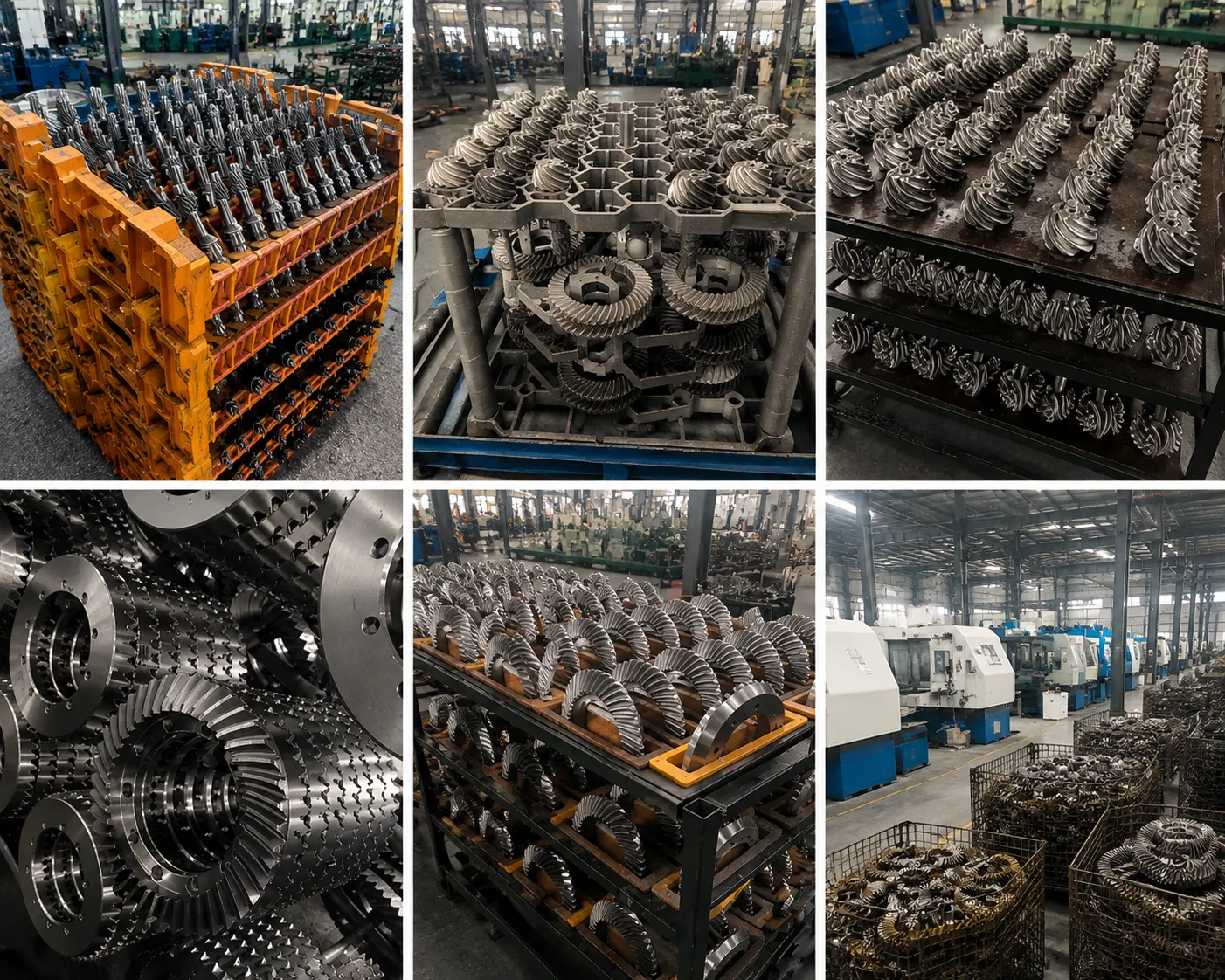
Korea Ever-Power helical gear manufacturing gearbox production
Korea Ever-Power gear production floor — hobbing and grinding of industrial gearbox helical gears in 20CrMnTi and 18CrNiMo7 alloy steel. Helical gear hobbing capacity: module M1–M20, OD up to 1,000 mm, helix angle 0°–35°, DIN 5–9 quality class. Post-hobbing gear grinding on Reishauer and Gleason-Pfauter grinders for DIN 5–6 industrial gearbox helical gears requiring pitch line velocities above 8 m/s and noise specifications below 72 dB(A).

SECTOR 01

CONVEYOR &
LIFTING DRIVES

Helical gear specification: Module M4–M10, 20CrMnTi case carburized, single or double helical, DIN 6–7, ψ = 15°–20°. Conveyor drives above 50 kW and crane hoist gearboxes use helical gears in enclosed multi-stage gearboxes where noise, compact dimensions, and thermal rating govern the design over an open spur gear arrangement. Service factor 1.5–2.0. Korea Ever-Power supplies replacement helical gear sets for standard IEC frame gearboxes and bespoke helical gearbox stages for custom conveyor OEM programmes.

SECTOR 02

COMPRESSOR &
PUMP DRIVES

Helical gear specification: Module M3–M8, 18CrNiMo7 case carburized, DIN 5–6, ψ = 20°–25°, PLV 8–25 m/s for speed-increaser compressor drives. Compressor gearboxes often run as speed-increasers (electric motor input at 1,500 RPM, compressor output at 8,000–15,000 RPM) — requiring helical gears with DIN 4–5 accuracy, precision-ground tooth profiles, and hydrodynamic journal bearings. ISO 6336 reliability factor SH ≥ 1.2 and SF ≥ 1.5 for continuous-duty compressor gearbox design.

SECTOR 03

WIND TURBINE
GEARBOX

Helical gear specification: Module M8–M18, 18CrNiMo7-6 case carburized and ground DIN 4–5, three-stage planetary + helical combination gearbox, design life 20 years at L10 = 175,000 hours (IEC 61400-4). Wind turbine gearboxes combine planetary first stages for compact high-torque input with helical parallel-shaft stages for the speed-increasing output stages. The helical parallel stages carry the highest pitch line velocities (15–30 m/s at the high-speed shaft) and require the most demanding tooth profile accuracy and surface roughness specifications of the entire gearbox.

SECTOR 04

MACHINE TOOL
& EXTRUDER

Helical gear specification: Module M2–M6, 20CrMnTi or Cronidur30 (machine tool), DIN 4–5, low transmission error for servo axis accuracy. Machine tool spindle gearboxes and extruder gearboxes require helical gears with the lowest achievable transmission error — DIN 4 or finer — because transmission error at the gear mesh frequency creates cyclic torque variation that appears as surface finish errors in machined workpieces or thickness variation in extruded profiles. Korea Ever-Power grinds helical gears to DIN 4 for CNC machine tool gearbox replacement on request.

Frequently Asked Questions

Q 01

How much quieter is a helical gearbox than an equivalent spur gearbox, and what determines the noise difference?

The noise reduction is typically 6–10 dB(A) at the same module, centre distance, speed, and transmitted torque — though the exact figure depends on helix angle, DIN quality class, tooth tip relief, and operating speed. Higher helix angle increases the overlap ratio (the fractional contribution of helical overlap to total contact ratio), which buffers individual tooth spacing errors and reduces dynamic mesh force. At 15° helix angle and DIN 6 quality, a typical industrial gearbox reduces from 82 dB(A) (spur) to 75–76 dB(A) (helical). At 20° helix angle and DIN 5 ground quality, the reduction is 8–9 dB(A). The quality class contribution is significant: moving from hobbed DIN 7 to ground DIN 5 reduces noise by a further 3–5 dB(A) at pitch line velocities above 8 m/s, regardless of gear type.

Q 02

Can Korea Ever-Power supply replacement helical gears for a standard brand-name gearbox (SEW, Flender, Nord)?

Yes — Korea Ever-Power regularly supplies aftermarket replacement helical gears and helical gear sets for all major brand-name industrial gearboxes including SEW-Eurodrive, Flender, Nord, Bonfiglioli, Sumitomo, and Siemens gearbox models. The process: customer provides the gearbox model number and the worn or broken helical gear (or photographs with tooth count, OD, bore, face width, and helix hand measurements). Korea Ever-Power reverse-engineers the module, helix angle, pressure angle, and tooth profile from the measurements, produces an engineering drawing for customer approval, and manufactures the replacement helical gear or matched gear set in the same material grade as the original or an upgraded specification. Lead time 15–35 days from drawing approval depending on size, material, and heat treatment.

Q 03

When should a gearbox use double helical gears instead of single helical, and what are the design implications?

Double helical (herringbone) gears are specified when: (1) the helix angle required for noise or load capacity exceeds 20°–25°, making the resulting axial thrust load impractical to carry with standard angular contact bearings at the gearbox shaft dimensions; (2) the gearbox power is high enough that the bearing and housing modifications for single-helical thrust would be more expensive than double-helical gear manufacturing; (3) the gearbox housing arrangement naturally suits a floating shaft (required for double helical load equalization). Typical double-helical applications: steel mill main drive gearboxes above 2,000 kW, marine main reduction gearboxes, and cement plant kiln drive gearboxes. Design implication: one shaft in the double-helical stage must be free to float axially to allow both helices to equalize their respective tooth loads simultaneously — this requires a spline coupling or floating pin coupling at one end of the double-helical gear shaft.

Q 04

What DIN quality class should I specify for an industrial gearbox helical gear at different pitch line velocities?

DIN quality class recommendation by pitch line velocity (PLV) for industrial gearbox helical gears: PLV below 3 m/s — DIN 8–9 (hobbed, no post-hardening grinding required for through-hardened gears); PLV 3–6 m/s — DIN 7–8 (hobbed and shaved for normalised or induction-hardened, or ground for case-hardened); PLV 6–12 m/s — DIN 6–7 (profile and lead grinding after case hardening; pitch, profile, and lead errors below 8–11 μm); PLV 12–25 m/s — DIN 5–6 (precision grinding, tooth tip relief to optimise load distribution at operating load); PLV above 25 m/s (compressor speed-increaser) — DIN 4–5 (super-finish lapping or honing after grinding, individual measurement of each gear by scanning gear analyser). Korea Ever-Power provides DIN quality class confirmation measurement report with each industrial gearbox helical gear order.

Q 05

What documentation does Korea Ever-Power provide with industrial gearbox helical gears?

Korea Ever-Power provides with every industrial gearbox helical gear order: (1) Material certificate — mill certificate confirming steel grade (20CrMnTi, 18CrNiMo7, 42CrMo4) with chemical composition and mechanical properties per heat; (2) Heat treatment report — for case-carburized helical gears: metallographic cross-section photograph showing case depth, surface hardness HRC at five tooth positions, core hardness HB; (3) Gear measurement report — tooth spacing error, profile form error, profile slope deviation, lead form error, lead slope deviation, pitch diameter, runout, and surface roughness Ra measured on gear analyser and reported to the specified DIN quality class; (4) Dimensional inspection report — bore, keyway, OD, face width, helix hand confirmed against drawing; (5) Video QC — production video of hobbing, grinding, and final inspection for traceability. ISO 9001:2015 production system certificate available. Third-party inspection by SGS, Bureau Veritas, or Intertek can be arranged for critical gearbox helical gear orders.

Explore Korea Ever-Power Gear Categories

Seven precision gear product lines for industrial, automotive, agricultural and specialist applications worldwide.
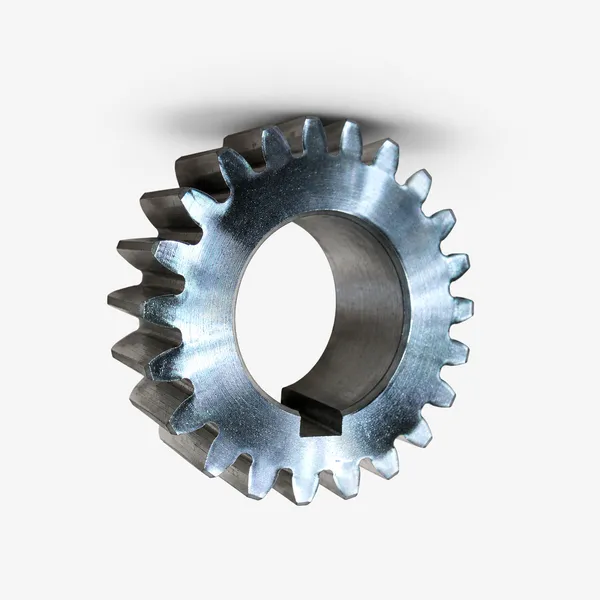
spur gear

Spur Gears

M1–M20 · C45, 20CrMnTi, 316L, Nylon

helical gear gearbox

Helical Gears

Low noise · high contact ratio · gearbox, wind, auto

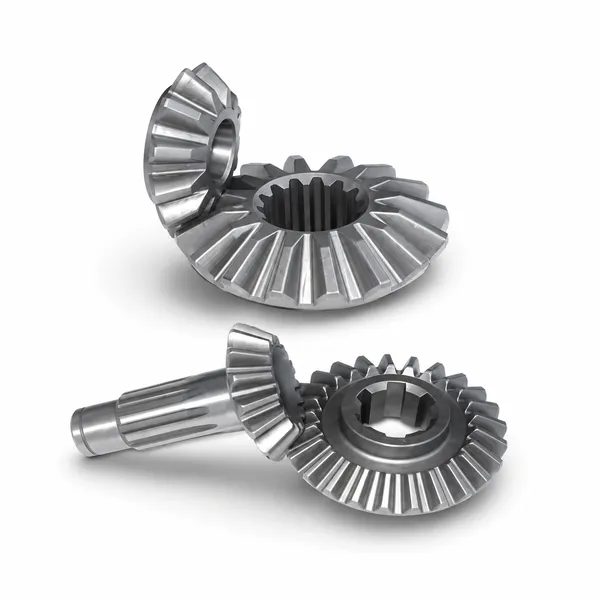
bevel gear right angle

Ingranaggi conici

Right-angle drives · straight & spiral · differential

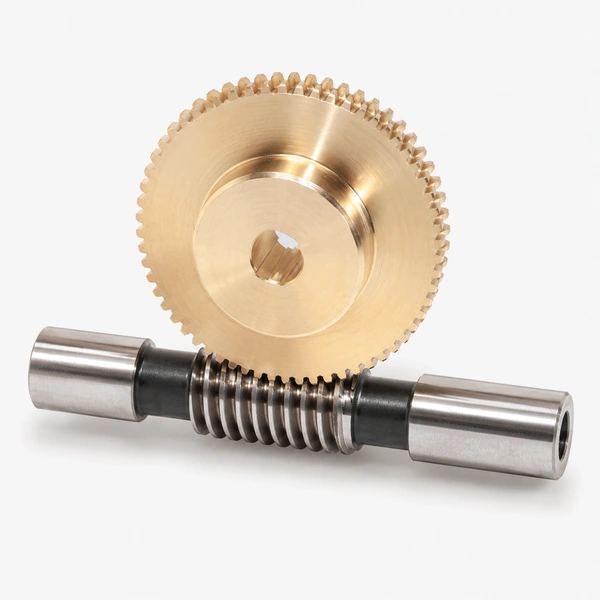
worm gear reducer

Worm Gears

High ratio · self-locking · valve, hoist, solar

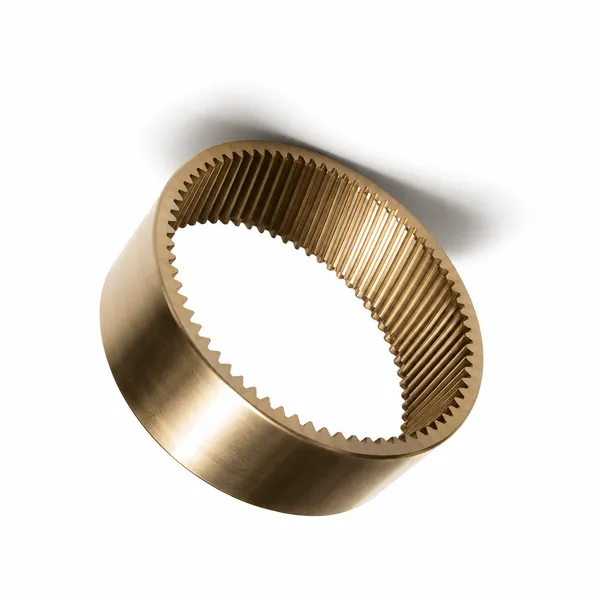
ring gear internal planetary

Ring Gears

Internal gear · planetary stage · wind, excavator

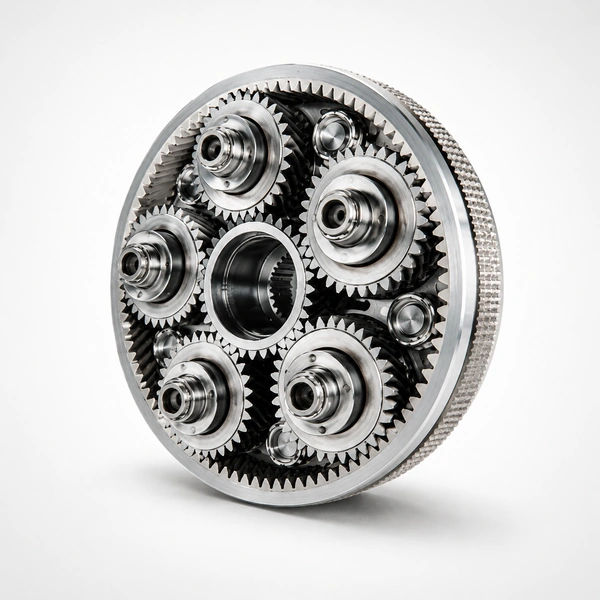
planetary gear set

Planetary Gears

Compact · high torque density · servo, EV, wind

plastic gear POM nylon

Plastic Gears

POM · MC Nylon · UHMWPE · self-lubricating, FDA

GET A QUOTATION · KOREA EVER-POWER

Need Helical Gears for an Industrial Gearbox?

Korea Ever-Power supplies 20CrMnTi, 18CrNiMo7, 42CrMo4 and stainless helical gears for all industrial gearbox types — single and double helical, DIN 4–9 quality class, module M1–M20. OEM gearbox production, aftermarket replacement sets, and bespoke gearbox helical stages. ISO 9001:2015 documentation and gear measurement certificates included.

Request a Quotation →

Redattore: Cxm

VR Tour of Our Factory

TAGs:

cremagliera degli ingranaggi

In qualità di uno dei principali produttori, fornitori ed esportatori di cremagliere, offriamo cremagliere e molti altri prodotti.

Vi preghiamo di contattarci per maggiori dettagli.

Posta:[email protected]

Produttore, fornitore ed esportatore di cremagliere

Articoli recenti

it_ITItalian