
Helical Gears for Wind Turbine Gearboxes:
Load Spectrum, Material, and 20-Year Life Design
Wind turbine gearboxes represent the most demanding helical gear application in terms of load variability, fatigue life requirement, and consequence of failure. The gearbox must operate reliably for 20 years under a continuously variable torque input from the rotor, with no scheduled overhaul access — all while transmitting megawatts of power through a nacelle structure subject to dynamic bending and yaw loads. This guide covers helical gear material specification, surface treatment, micro-geometry optimisation, and the IEC 61400 / ISO 6336 life calculation framework that governs wind turbine gearbox gear design.
20-year life · ISO 6336 · Helix 12°–20°
1–6 MW · Planetary · Parallel Stage · HSS
Why Wind Turbine Gearboxes Use Helical Gears
The wind turbine main gearbox converts rotor shaft rotation (typically 5–20 RPM for a 2–5 MW turbine) to generator input shaft speed (1,500–1,800 RPM for a four-pole generator) through a total ratio of 75:1–120:1 achieved in two or three stages. Helical gears are specified for all parallel shaft stages of the wind turbine gearbox for three compelling reasons: the high contact ratio of helical gears distributes the continuously varying rotor load across more tooth pairs simultaneously, reducing peak tooth contact stress at each mesh event; the helical tooth form generates lower dynamic mesh forces at the very high pitch line velocities (50–100 m/s) of the high-speed stage; and the higher load capacity per unit gear size of helical vs spur gears allows the gearbox to be sized within the space and weight envelope of the nacelle, which is a critical constraint at 80–120 m hub height.
Korea Ever-Power’s helical gears for wind turbine gearboxes are manufactured in 18CrNiMo7-6 (primary specification for gearbox stages above 500 kW) and 20MnCr5 (for smaller turbine intermediate stages) — case carburized to 1.0–1.5 mm effective case depth, HRC 60–62 tooth surface, shot peened to introduce compressive residual stress, and profile and lead ground to DIN 4 or DIN 3 quality class with superfinishing of the tooth flanks available for high-speed stage pinions. All wind turbine helical gears from Korea Ever-Power are manufactured and inspected under ISO 9001:2015 and to the quality requirements of AGMA 6006 (Standard for Design and Specification of Gearboxes for Wind Turbines).
The most critical difference between wind turbine gearbox helical gear design and industrial gearbox design is the life calculation method. Industrial gearboxes are typically designed to a constant rated load — the gear teeth are sized to carry the nameplate torque indefinitely at a specified safety factor. Wind turbine gearbox helical gears must be designed using the full load spectrum: the actual distribution of rotor torque over the 20-year design life, expressed as a Weibull probability distribution, is integrated using Miner’s cumulative damage rule to calculate the total fatigue damage from the variable load history. This typically allows smaller, lighter gears than a constant-rated-load calculation would give (since most wind operating hours are at 30–60% of rated power), while correctly accounting for the infrequent extreme loads that would not appear in the rated-load calculation.
WIND TURBINE GEARBOX STRUCTURE — HELICAL GEAR STAGES
STAGE 1
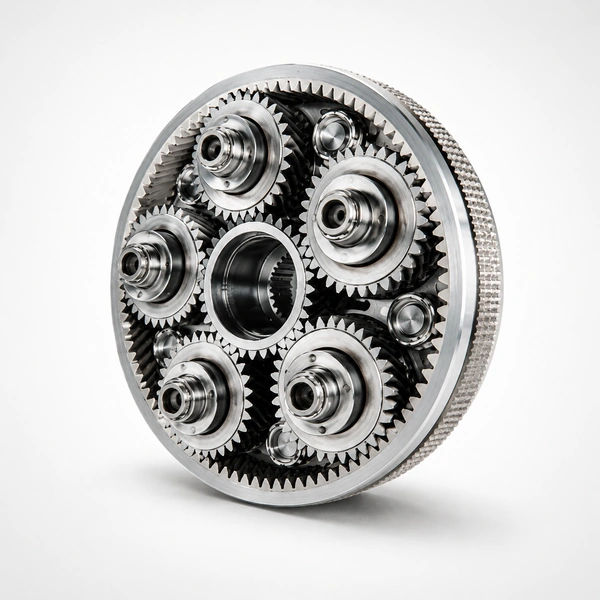
Planetary (Low Speed)
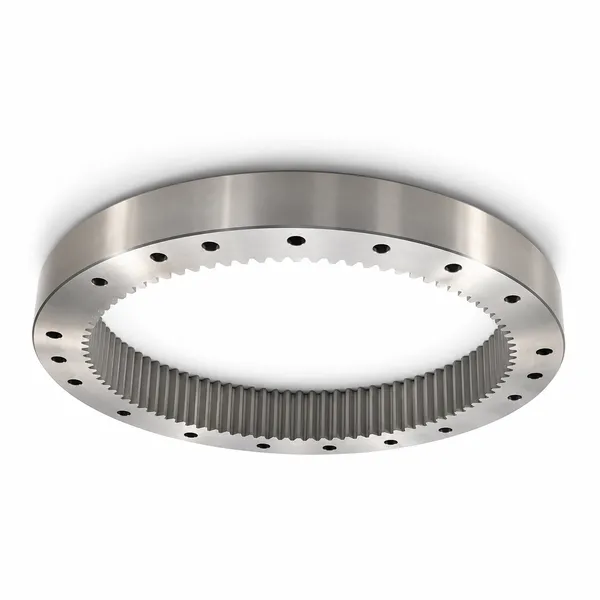
Ratio: 4:1–6:1. Planet gears: helical (or spur for older designs). Input: rotor shaft 5–20 RPM. Ring gear: 18CrNiMo7-6 nitrided. Planet and sun: 18CrNiMo7-6 carburized HRC 60–62. Highest torque stage — largest gears in the gearbox.
STAGE 2
Parallel Helical (Intermediate)
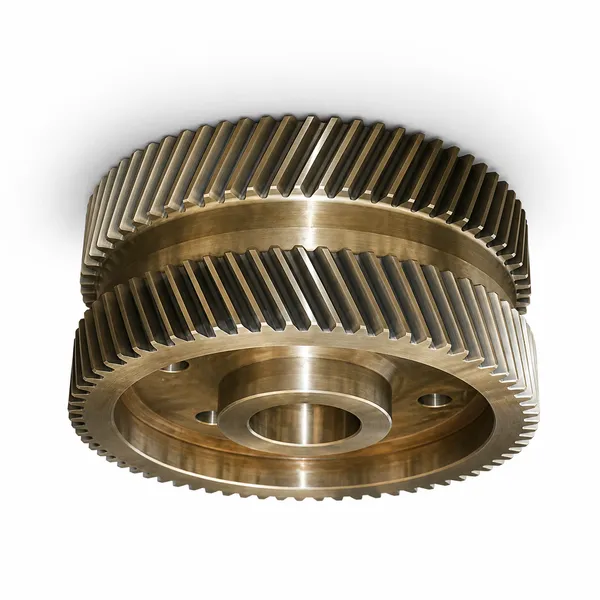
Ratio: 4:1–6:1. PLV: 15–35 m/s. 18CrNiMo7-6 carburized, HRC 60–62, ground DIN 4. Helix angle 15°–18°. Double helix (herringbone) used in some designs to eliminate thrust bearing requirement.
STAGE 3
Parallel Helical (High Speed)
Ratio: 4:1–6:1. PLV: 50–100 m/s. 18CrNiMo7-6 carburized, HRC 60–62, DIN 3–4 ground + superfinished (Ra <0.2 μm). Highest gear quality requirement in the gearbox — dominant noise source if quality insufficient.
Material and Surface Treatment Specifications
Frequently Asked Questions
Explore Korea Ever-Power Gear Categories
Seven precision gear product lines for wind energy, industrial, automotive and specialist applications worldwide.
Redattore: Cxm
 Italian
  English
  Korean
  French
  Japanese