GEAR APPLICATION GUIDE · PLANETARY GEAR · P10

Custom OEM Planetary Gear Manufacturing:
Non-Standard Ratios, Special Materials and Multi-Stage Planetary Stage Kits

Every catalogue planetary gearbox starts as a custom design before it becomes a production standard — the gear stage kit at its core (sun gear, matched planet set, internal ring gear) was engineered to a specific ratio, torque, speed, and size that was then frozen and repeated in volume. The custom OEM planetary gear stage kit occupies the space between what catalogues cover and what the machine designer actually needs: the exact ratio that gives a certain output speed from a given motor, the exact OD envelope that fits the housing available in the machine frame, the exact material that meets the temperature or chemical environment of the specific process, and the exact quality class that balances the noise, backlash, and cost requirements of the specific customer. Korea Ever-Power’s custom planetary gear stage kit manufacturing service delivers these non-standard configurations from single prototypes to series production runs, with the full engineering support — tooth count calculation, load capacity confirmation, material specification, and quality measurement certificate — that OEM machine builders need to integrate custom planetary stages into their machine designs.

Any Ratio · M1–M12 · Any Material · DIN 4–9
1–4 Stage · Matched Planets · OEM Documentation
Gearbox · Servo · Medical · Marine · Aerospace

RATIO RANGE

2:1 – 10,000:1

Custom planetary stage kit gear ratio range. Single stage (fixed ring): 3:1–12:1. Two stage: 9:1–144:1. Three stage: 27:1–1,728:1. Four stage: 81:1–20,000:1. Any ratio achievable by combining standard stages differently or using non-standard tooth counts. The non-standard ratio is the most common driver for custom planetary gear stage kit requests — most catalogue planetary gearboxes offer only specific ratios (3:1, 4:1, 5:1, 6:1, 7:1, 8:1, 10:1 per stage) that may not produce the exact output speed needed for a particular machine application

MODULE RANGE

M1 – M12

Custom planetary gear kit module range. M1–M2: miniature instrument and medical drives. M2–M5: servo motor, robotics, packaging. M5–M8: heavy-duty industrial: extruder, crane, conveyor. M8–M12: large industrial reducer stages. The module selection determines the number of planets that can simultaneously mesh with the sun and ring — smaller modules allow more planets (better load sharing) for a given OD

STAGES

1 – 4 Stages

Custom planetary kit stage count. 1-stage: ratio 3:1–12:1, highest efficiency (≥ 98% per stage), simplest. 2-stage: ratio 9:1–100:1, suitable for most servo and industrial applications. 3-stage: ratio 100:1–800:1, used when a very high ratio in a compact OD is needed (extruder drives, slow-speed conveyors, large valve actuators). 4-stage: rarely used due to efficiency losses and length, but achievable for extreme ratios (1,000:1+)

LEAD TIME

12 – 40 days

Custom planetary gear kit lead time from drawing confirmation. M2–M4, DIN 6–7, standard steel: 12–18 days. M4–M8, DIN 5–6, carburized: 18–28 days. Stainless or exotic material: 22–35 days. DIN 4 precision, multi-stage: 28–40 days. Prototype (1–3 sets): add 3–5 days for first-article inspection. Production (10+ sets): same lead time as prototype, shorter for repeat orders

Custom Planetary Gear Stage Kit Design — Tooth Count Arithmetic, Load Sharing, and OD Constraints

The design of a custom planetary gear stage kit begins with the tooth count arithmetic — the constraint that the tooth counts of the sun (z₁), planet (z₂), and ring (z₃) gears must simultaneously satisfy the ratio requirement, the assembly condition, and the tooth interference condition. The ratio of a standard planetary (fixed ring) is i = (z₃/z₁) + 1. For a non-standard ratio such as 7.3:1, the tooth count combination must give z₃/z₁ = 6.3, which with z₁ = 10 gives z₃ = 63 and z₂ = (z₃ − z₁)/2 = 26.5 — not an integer, so z₁ = 10 does not work. Trying z₁ = 20: z₃ = 126, z₂ = 53 — integers. Assembly condition: (z₁ + z₃)/n_planets must be an integer, where n_planets is the number of planets. With 3 planets: (20 + 126)/3 = 48.67 — not integer. Try z₁ = 30: z₃ = 189, z₂ = 79.5 — not integer. Try z₁ = 15: z₃ = 94.5 — not integer. This iterative search continues until a tooth count combination is found that satisfies ratio (within acceptable tolerance), assembly condition, and tooth interference. Korea Ever-Power’s application engineering team performs this tooth count calculation using a gear design tool that systematically searches all tooth count combinations within the OD constraint for a given module and number of planets.

Korea Ever-Power’s custom OEM planetary gear stage kits are engineered from first principles for each non-standard requirement — the tooth count calculation, load capacity analysis (ISO 6336 for gear bending and contact fatigue), planet pin bearing life calculation (ISO 281), and efficiency estimation are all performed and documented in the application engineering report that accompanies each custom stage kit. This report is designed to support the OEM machine builder’s own technical documentation — it provides the data needed to validate the gear stage in a machine CE technical file, or to answer a customer’s technical query about the gearbox specification. For complete custom planetary gearbox assemblies (including housing, output shaft, motor flange, and seals, in addition to the gear stage kit components), Korea Ever-Power’s planetary gearbox product line covers many standard and non-standard configurations that can serve as the starting point for a custom gearbox design.

The OD constraint is the second key design driver for custom planetary stage kits — the stage kit must fit within the housing bore available in the machine, which may be a non-standard dimension driven by the machine frame design or by the flanged motor OD that the stage kit must couple with. The relationship between the OD constraint and the achievable gear module (and therefore load capacity) is non-linear — reducing the OD by 20% while maintaining the same ratio and planet count reduces the module by 20% (since the ring gear OD scales with module), but reduces the tooth load capacity by 36% (since the bending and contact fatigue resistance scale with module²). This means the OD constraint is often the limiting factor in a custom planetary design, and the application engineer must evaluate whether the required load capacity can be achieved within the given OD or whether the OD must be increased. Korea Ever-Power communicates this constraint analysis clearly in the application engineering review — if the specified OD is too small for the required torque at the requested module, Korea Ever-Power proposes either a larger module at a larger OD, a higher planet count to improve load sharing and reduce the load per tooth, or a higher-strength material (18CrNiMo7-6 deep carburized instead of 20CrMnTi standard carburized) to achieve the required load capacity at the constrained OD.
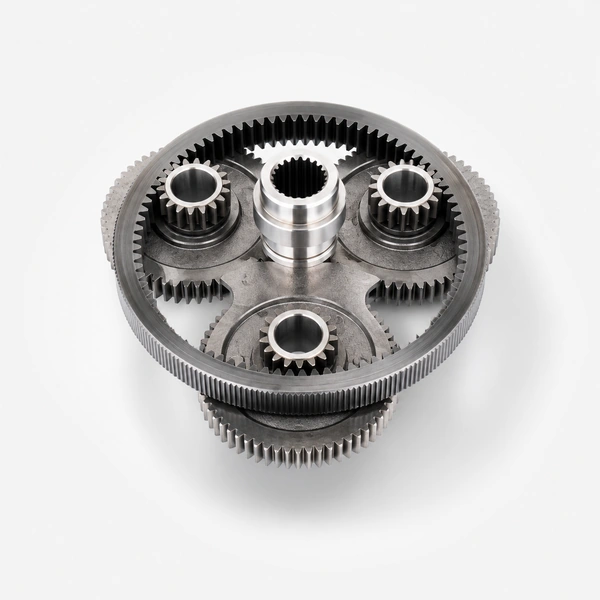
custom OEM planetary gear stage kit Korea Ever-Power non-standard ratio
Korea Ever-Power custom 2-stage planetary gear stage kit for a specialist packaging machine drive — non-standard ratio 38.5:1 (stage 1: 5.5:1, stage 2: 7.0:1), achieved with tooth counts: Stage 1 sun 20T, planet 30T, ring 80T; Stage 2 sun 15T, planet 30T, ring 105T. 20CrMnTi carburized HRC 60–62, DIN 5 profile ground (stage 1: M3, stage 2: M3), matched planets ±2 μm pitch within each stage. The non-standard ratio 38.5:1 was required because the packaging machine’s servo motor runs at 3,000 RPM and the conveyor drive shaft must rotate at exactly 77.9 RPM for the correct product pitch — 3,000 / 77.9 = 38.51:1. No catalogue planetary gearbox offers this ratio. Korea Ever-Power designed the 2-stage tooth combination using the systematic tooth count search (stage 1 ratio 5.5:1 × stage 2 ratio 7.0:1 = 38.5:1), confirmed the 3-planet assembly condition for both stages ((sun + ring)/3 = integer: stage 1: (20+80)/3 = 33.3 — not integer; revised to sun 18T, planet 31T, ring 80T: (18+80)/3 = 32.67 — still not integer; further revised to sun 18T, planet 30T, ring 78T: (18+78)/3 = 32 — integer ✓; ratio 78/18+1 = 5.33:1; stage 2 adjusted to 7.22:1 for total 38.5:1), and manufactured the first article in 19 working days from drawing confirmation.

Custom Planetary Stage Kit Categories and Special Requirements
TYPE 01

NON-STANDARD RATIO
STAGE KITS

애플리케이션: Any machine drive requiring an output speed that cannot be achieved with catalogue planetary ratios (3:1, 4:1, 5:1, 6:1, 7:1, 8:1, 10:1 per stage). Examples: a conveyor requiring exactly 24 RPM from a 1,450 RPM motor (ratio 60.42:1 — achievable with a 7.78:1 stage × 7.77:1 stage = 60.5:1, a 2-stage non-standard combination); a wind turbine yaw drive requiring 0.72 RPM from a 1,500 RPM motor (ratio 2,083:1 — requiring a 3-stage non-standard configuration). Korea Ever-Power performs the complete tooth count design for non-standard ratios including verification of the ratio accuracy (the achieved ratio will differ slightly from the nominal due to integer tooth count rounding — Korea Ever-Power calculates and states the exact achieved ratio and the resulting output speed error, so the machine designer can confirm it is within the allowable synchronisation error for their application). Materials and quality class remain standard (20CrMnTi carburized, DIN 5–7) unless otherwise specified — the only non-standard feature is the tooth counts. Lead time premium over standard: minimal (no additional tooling required if the module is standard).

TYPE 02

SPECIAL MATERIAL
STAGE KITS

애플리케이션: Machine drives in environments where standard 20CrMnTi carburized steel cannot be used — food processing (316L stainless or NSF H1 compatible), pharmaceutical (316L, PEEK planet gears for zero metallic contamination), chemical processing (duplex stainless 2205 or Hastelloy C276 for acid and chloride environments), offshore and marine (316L or duplex for seawater exposure), high temperature (Inconel 718 for furnace atmosphere or turbocharger actuator applications). Special material planetary stage kits are more complex to design than standard steel kits because: (a) the gear material strength data may not be in the ISO 6336 standard tables, requiring Korea Ever-Power to use material test data for the fatigue capacity calculation; (b) the machinability of special alloys (particularly duplex stainless and Inconel) is significantly worse than standard steel, increasing the cutting time and the tendency for work hardening during profile grinding; (c) the heat treatment options are more limited — 316L stainless cannot be carburized and hardened to HRC 60+ like 20CrMnTi, so the allowable tooth contact stress is lower and the module must be increased to compensate. Korea Ever-Power applies a material strength derating factor to all non-standard material planetary stage kits and presents the resulting load capacity compared to the standard 20CrMnTi equivalent in the application engineering report.

TYPE 03

LEGACY GEARBOX
REPLACEMENT KITS

애플리케이션: Replacement planetary stage kits for discontinued or obsolete industrial gearboxes where the original gear manufacturer is no longer able to supply spares. Legacy industrial gearboxes (from brands such as Brevini, Hansen, Eisenbeiss, Santasalo, Renk, Flender, David Brown, Falk) that are 15–30 years old may have had their spare parts supply discontinued when the models were superseded or the companies merged or closed divisions. Korea Ever-Power’s legacy replacement service reverse-engineers the planetary stage kit from the worn or damaged original components: the worn planet gears are measured (over-pin measurement for tooth thickness, bore measurement for pin diameter, pitch circle runout), the ring gear is measured (internal over-pin or over-ball measurement, bore OD and face dimensions), and the sun gear is measured (over-pin measurement, shaft dimensions). From these measurements, Korea Ever-Power identifies the module, tooth counts, pressure angle, and any profile shift, then manufactures replacement stage kits to the identified specification with the original material heat treatment (confirmed from metallurgical examination of a cross-section sample of the worn gear if the original material specification is not available). Lead time for legacy replacement: 18–30 days from receipt and measurement of the worn components.

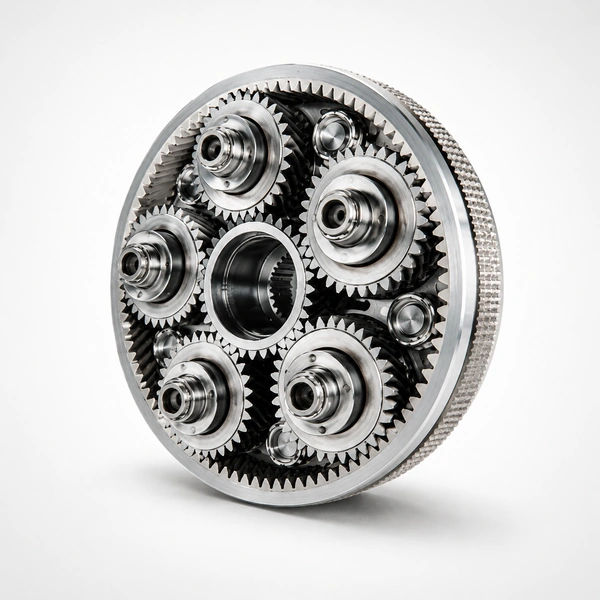
custom OEM planetary gear sets Korea Ever-Power range
Korea Ever-Power custom OEM planetary gear set production range — from M1.5 miniature medical device stage kits (foreground left, 3 matched planet gears approximately 8 mm diameter) to M8 heavy industrial replacement stage kits (background right, planet gears approximately 80 mm diameter). The scale relationship between these extremes — a 10:1 diameter ratio — reflects the range of custom planetary applications that Korea Ever-Power manufactures within a single quality system and manufacturing facility. The critical quality control point for all custom planetary stage kits (regardless of module) is the planet pitch matching tolerance — the maximum difference in pitch circle position between the matched planet gears in each stage. Korea Ever-Power specifies this tolerance as ±2 μm for DIN 5, ±3 μm for DIN 6, and ±5 μm for DIN 7, and measures it on a gear measurement machine (not a manual over-pin check) to confirm the matching quality before the planets are packaged as a matched set. A matched set that is measured and confirmed keeps its certification — if individual planets are separated from the matched set packaging and then recombined with planets from a different batch, the matching quality is no longer certified and Korea Ever-Power will not accept responsibility for the load sharing performance of the incorrectly assembled stage.

Korea Ever-Power Custom Planetary Gear Kit — OEM Supply Process

STEP 1 — ENQUIRY

Submit the gear kit requirement: ratio (exact or nominal), output torque, maximum input speed, OD constraint (maximum ring gear OD), number of stages, material requirement (or application description for Korea Ever-Power to recommend), quality class (or NVH and backlash target), and quantity (prototype and production). If a drawing or gear card exists, include it. If a worn gear set is being replaced, describe the gearbox make and model or send the worn components for measurement.

STEP 2 — DESIGN

Korea Ever-Power performs the tooth count calculation (ratio optimisation within the OD constraint), ISO 6336 gear capacity analysis (bending and contact safety factors at rated torque), planet pin bearing life calculation, and efficiency estimate. A design summary is submitted to the customer with the exact achieved ratio, the tooth count combination, and the safety factors — the customer confirms or requests modifications before tooling and manufacturing commence.

STEP 3 — MANUFACTURE

Gear blanks are turned, hobbed (or shaped for the ring), heat treated (carburized + quenched, or through-hardened), and profile ground to the specified DIN class. Planet gears are individually measured and then matched into sets — the matching process selects planets from the production batch that are closest in pitch position to achieve the specified pitch matching tolerance (±2–5 μm depending on DIN class). The complete stage kit (sun + matched planets + ring) is bagged and labelled as a matched set.

STEP 4 — DOCUMENTATION

Each custom planetary stage kit is dispatched with: material certificate (EN 10204 Type 3.1), dimensional inspection report for each gear in the kit (CMM measurement of key functional dimensions: OD, bore, pitch diameter, tooth thickness, profile form error, pitch deviation), matched planet certificate (individual pitch measurements and the within-set pitch deviation confirming the matching tolerance), and the application engineering report (tooth count combination, exact ratio, ISO 6336 safety factors). The documentation supports the customer’s quality system traceability requirement for OEM-supplied components.
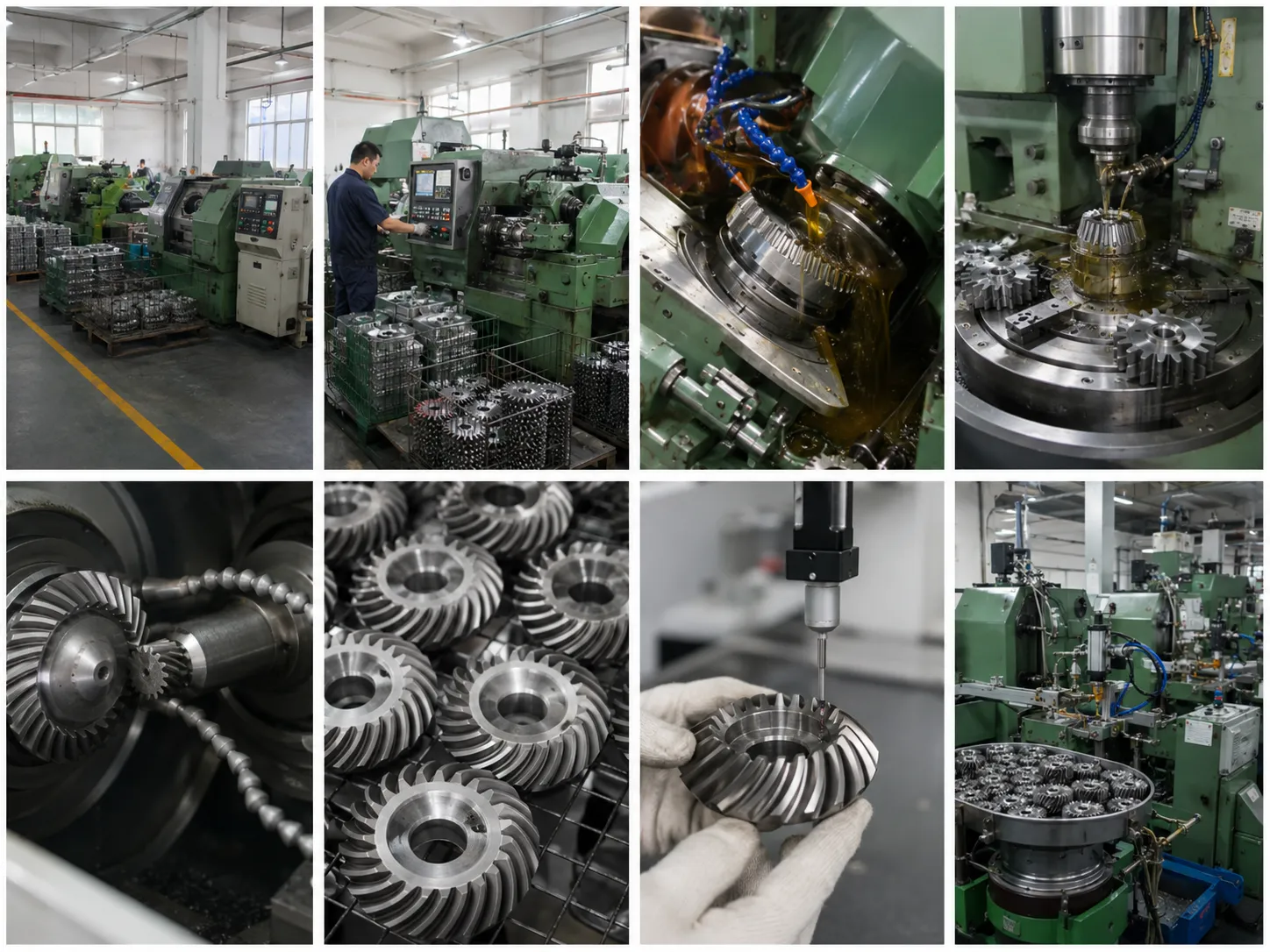
Korea Ever-Power custom planetary gear OEM manufacturing workshop
Korea Ever-Power custom planetary gear manufacturing facility — CNC gear hobbing and grinding cells for custom OEM stage kit production. The key operational difference between standard and custom planetary gear production at Korea Ever-Power is the setup time management — a standard planetary stage kit uses established CNC grinding programmes, existing hob tooling, and a validated heat treatment schedule with production data spanning multiple batches. A custom stage kit requires a new tooth count combination (potentially requiring new hob or shaper cutter tooling if the module or tooth count is outside the existing tool inventory), a new grinding CNC programme (which requires a qualification grinding run and measurement cycle before the production parts are ground), and a first-article inspection that verifies the achieved tooth geometry against the design specification before the full production quantity is committed to grinding. Korea Ever-Power manages this setup cost by separating the setup charge from the per-piece price in all custom planetary kit quotations — making the first-article cost transparent and allowing the customer to make an informed decision about the prototype versus production quantity trade-off.

Frequently Asked Questions — Custom OEM Planetary Gear Stage Kits

Q 01

We need a 3-stage planetary gear kit for a large valve actuator — ratio 600:1, output torque 12,000 Nm, maximum OD 280 mm. Can Korea Ever-Power supply this as a complete 3-stage kit, and how is the stage ratio split optimised?

A 3-stage planetary for 600:1 at 12,000 Nm output in OD 280 mm is a demanding but achievable specification. Korea Ever-Power’s approach to the 3-stage design for this requirement: Stage ratio split: an equal split (ratio per stage = 600^(1/3) = 8.43:1 per stage) gives the most even load distribution across stages and the highest overall efficiency. However, in practice the tooth count arithmetic constrains which ratios are exactly achievable — Korea Ever-Power’s tooth count search for approximately 8.43:1 per stage at M4 (the module needed for 12,000 Nm in OD 280 mm, using the ring gear OD ≈ (z₃+2)×module ≤ 280 mm, so z₃ ≤ 68 at M4) gives: sun 10T, planet 24T, ring 58T → ratio = (58+10)/10 = 6.8:1; or sun 8T, planet 22T, ring 52T → ratio = (52+8)/8 = 7.5:1. Three stages of 7.5:1 give 7.5³ = 421.9:1 — not 600:1. Korea Ever-Power uses a mixed ratio approach: stage 1 = 8.0:1 (sun 10T, planet 25T, ring 60T — check assembly condition (10+60)/3 = 23.33 → try (10+60)/4 = 17.5 with 4 planets — not integer; sun 12T, ring 60T, planet 24T, (12+60)/3 = 24 ✓ — ratio (60+12)/12 = 6.0:1; try sun 10T, ring 70T, planet 30T, (10+70)/4 = 20 ✓ — ratio (70+10)/10 = 8.0:1 ✓ with 4 planets, OD = (70+2)×4 = 288 mm — slightly above 280 mm, adjust to M3.8 or reduce ring to 68T: OD = (68+2)×4 = 280 mm, ring 68T, sun 10T, planet 29T, (10+68)/not divisible by 4… this search converges in Korea Ever-Power’s gear design software in < 30 seconds. Load distribution across stages: for a 600:1 3-stage planetary, stage 1 sees the highest input speed (motor speed) and lowest torque; stage 3 sees the lowest speed and highest torque (output torque = 12,000 Nm). The module and planet count should increase through the stages: stage 1 M3 3 planets, stage 2 M4 4 planets, stage 3 M5 4 planets — increasing the load capacity at each stage proportional to the increasing torque. Korea Ever-Power provides the complete stage-by-stage tooth count design, ISO 6336 capacity analysis, and gear drawing set within 5 working days of receiving the confirmed specification.

Q 02

We are replacing stage kits in a 15-year-old Brevini gearbox where Brevini can no longer supply spares. The planet gears are worn beyond measurement — only the ring gear tooth profile is still legible. What information can Korea Ever-Power extract from the ring gear alone?

The ring gear is the most information-rich component for reverse engineering a planetary stage when the planet and sun gears are worn — the ring gear internal tooth profile is protected from wear by the planet gears running inside it (the planet flanks wear, not the ring flanks, in most planetary gear wear modes). From the ring gear alone, Korea Ever-Power can determine: (1) Module: measure the ring gear bore (the internal tooth root circle diameter ID₃ = (z₃ − 2.5) × m for standard dedendum) and count the teeth to derive m = ID₃ / (z₃ − 2.5). Alternatively, use the internal over-ball measurement (IDB) with a calibrated ball of known diameter — the IDB measurement uniquely defines the module and profile shift for a given tooth count and pressure angle. (2) Tooth count z₃: count the ring gear internal teeth directly. (3) Pressure angle: 20° is standard for all modern planetary gears; 14.5° for very old (pre-1960) gearboxes. Confirm by measuring the tooth profile on a CMM — the pressure angle is visible in the tooth flank slope at the pitch point. (4) Profile shift coefficient x₃: the ring gear internal teeth may have a non-zero profile shift to balance the tooth root bending stress between the sun and ring, or to achieve a specific centre distance. Measurable from the IDB deviation from the standard (zero-shift) theoretical value. (5) Face width and ring OD/bore: measurable directly. From z₃ and m alone, Korea Ever-Power can back-calculate the most likely z₁ (sun tooth count) and z₂ (planet tooth count) combinations that satisfy the assembly condition and give a ratio consistent with the gearbox’s nameplate ratio. This indirect determination of the planet and sun tooth counts is correct in approximately 90% of cases — the remaining 10% (unusual or patented tooth count combinations) may require a small number of additional measurements (planet pin circle diameter, which uniquely determines z₂ if m is known) to disambiguate. Korea Ever-Power requests a photograph of the ring gear face (showing the internal teeth) and the ring gear OD and bore diameter measurements — these are sufficient to start the reverse engineering process while the ring gear is in transit to Korea Ever-Power for the detailed CMM measurement.

Q 03

We are developing a new compact servo-driven axis for a collaborative robot and want 4 planets per stage instead of the standard 3, to improve load sharing and stiffness. What is the additional tooth count constraint introduced by using 4 planets instead of 3?

Switching from 3 to 4 planets per stage requires the assembly condition to change: instead of (z₁ + z₃)/3 = integer, the condition becomes (z₁ + z₃)/4 = integer — a stricter constraint that eliminates approximately 25% of the tooth count combinations that work for 3 planets. This makes the tooth count design for 4-planet stages less flexible, and at non-standard ratios can require the designer to accept a slightly different ratio than the ideal to find a tooth count combination that satisfies the 4-planet assembly condition. Specific example for a cobot servo axis at 8:1 ratio with 4 planets: ratio 8:1 requires z₃/z₁ = 7 (i.e. z₃ = 7 × z₁). Assembly condition: (z₁ + 7z₁)/4 = 8z₁/4 = 2z₁ = integer — satisfied for any z₁ that is an integer. ✓ This is a special case where the 4-planet assembly condition is automatically satisfied for ratio 8:1 (because the ratio is exactly 8:1, giving z₃/z₁ = 7, and (1+7)/4 = 2 = integer for all z₁). Try z₁ = 14, z₂ = (z₃−z₁)/2 = (98−14)/2 = 42, z₃ = 98 at M2: ring OD = (98+2)×2 = 200 mm — too large for a cobot joint. Reduce to z₁ = 10, z₃ = 70, z₂ = 30: OD = (70+2)×2 = 144 mm — still large. Reduce to z₁ = 8, z₃ = 56, z₂ = 24: OD = (56+2)×2 = 116 mm — feasible. Check interference at z₁ = 8, z₂ = 24: the minimum sun tooth count for 4 planets without interference is approximately 12 for 20° pressure angle standard addendum — z₁ = 8 is below this limit, requiring profile shift. Korea Ever-Power calculates the necessary profile shift for any combination below the standard non-interference limit and applies it in the gear design — this is one of the value-adds of the application engineering review that comes with each custom planetary stage kit design. Benefits confirmed for 4-planet over 3-planet at same OD: load sharing improves from approximately 1/3 per planet to 1/4 per planet (33% load reduction per planet), enabling either a longer service life at the same module or the same life at a module step smaller (which reduces OD and inertia). Torsional stiffness increases by approximately 25–30% at the same module because the 4-planet arrangement provides more tooth mesh contacts per revolution than 3-planet. Korea Ever-Power recommends 4-planet configuration for all cobot and high-cycle servo planetary stage kits above 5:1 ratio where the OD constraint permits the planet count increase without reducing below the interference limit.

Explore Korea Ever-Power Gear Categories

Seven precision gear product lines for custom OEM planetary drives, non-standard ratios, special materials, and legacy gearbox replacement worldwide.
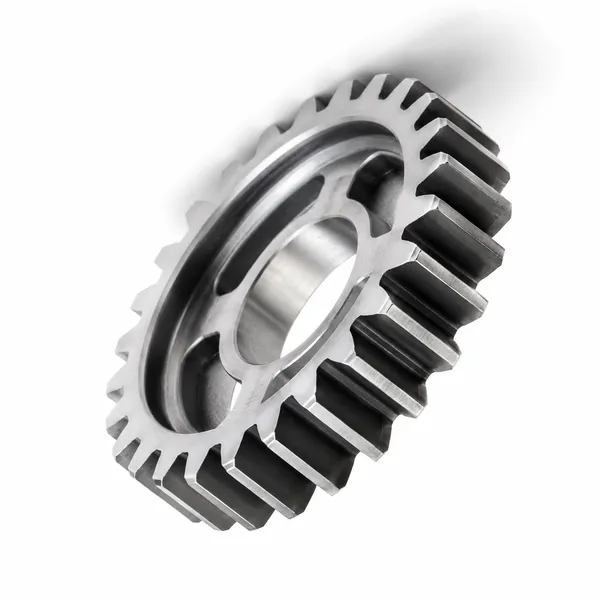
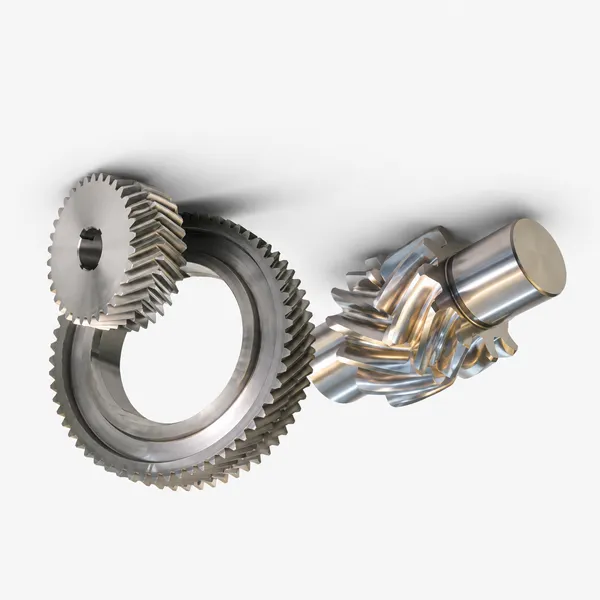
custom spur gear OEM

Spur Gears

Custom OEM · sun gear · planet gear

custom helical gear OEM

Helical Gears

Custom OEM · industrial reducer

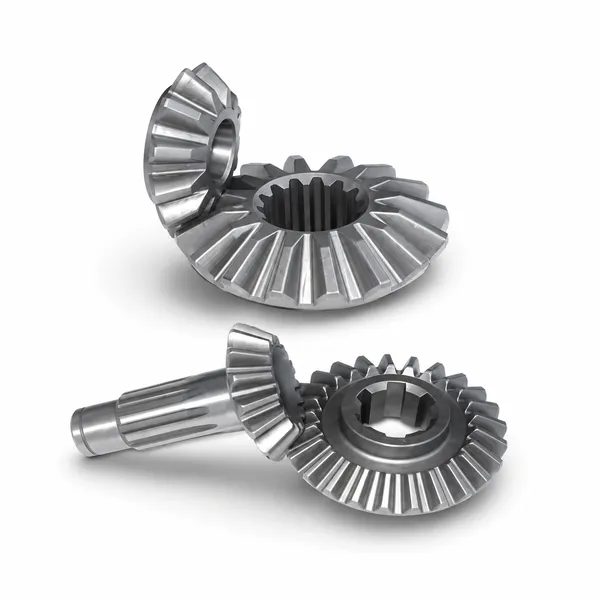
custom bevel gear OEM

베벨 기어

Custom angle drive · non-std ratio

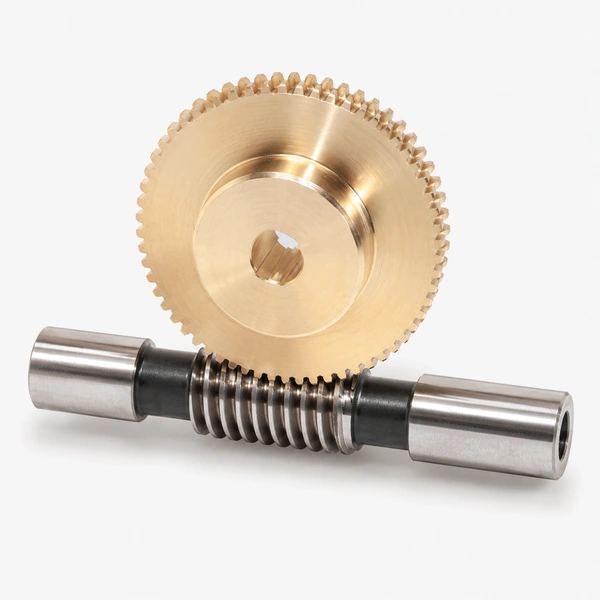
custom worm gear OEM

Worm Gears

Custom worm set · special ratio OEM

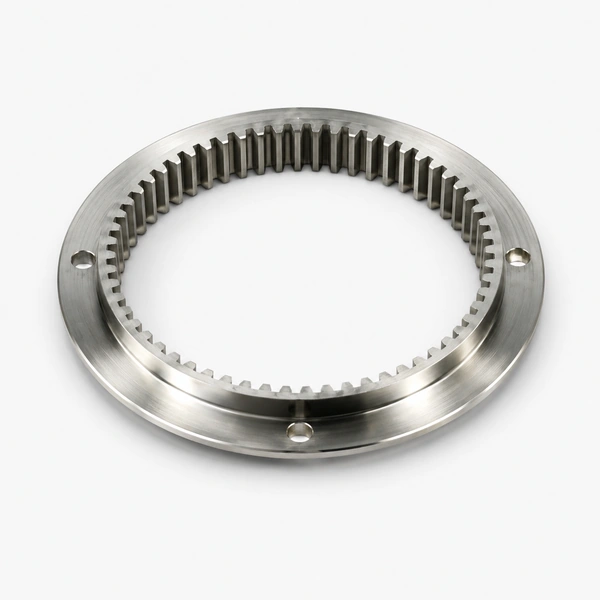
custom ring gear OEM planetary

Ring Gears

Custom ring · non-std tooth count

custom planetary gear OEM kit

Planetary Gears

Custom stage kit · any ratio · OEM

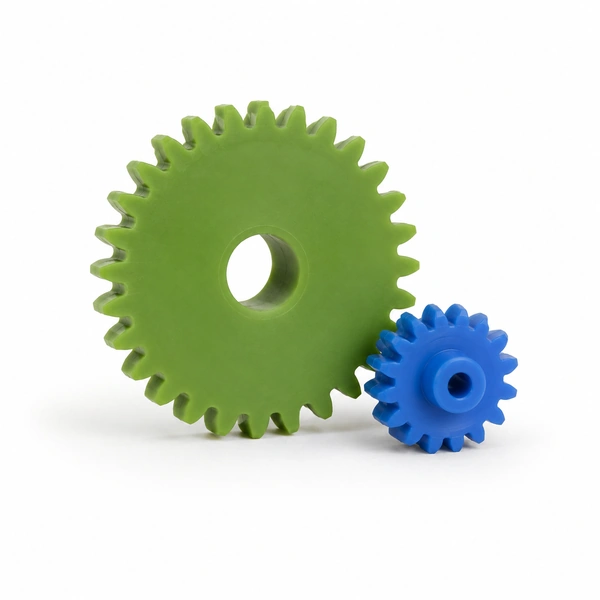
custom plastic gear OEM

Plastic Gears

Custom nylon · PEEK · OEM moulded

GET A QUOTATION · KOREA EVER-POWER

Need Custom OEM Planetary Gear Stage Kits?

Korea Ever-Power manufactures custom planetary gear stage kits for any ratio, any material, any quality class — non-standard tooth counts, 1–4 stages, M1–M12, 20CrMnTi / 316L / Ti-6Al-4V / 17-4 PH / Inconel 718, DIN 4–9. Tooth count arithmetic, ISO 6336 load analysis, and matched planet certificate with every kit. Legacy gearbox reverse engineering from worn components. Prototype from 1 set, production volumes to 10,000+ sets/year. ISO 9001:2015 certified.

Request a Quotation →

편집자: Cxm

VR Tour of Our Factory

TAGs:

기어랙

당사는 기어랙 제조, 공급 및 수출 분야의 선두 기업으로서 기어랙을 비롯한 다양한 제품을 제공합니다.

자세한 사항은 저희에게 문의해 주세요.

우편:[email protected]

기어랙 제조업체, 공급업체, 수출업체

최신 글

ko_KRKorean