
Planetary Gears for Printing Machines:
Register Accuracy, Zero-Backlash Drives and High-Speed Web Offset Printing
Printing machine planetary gear drives operate at the intersection of the highest speed, the most stringent register (positional accuracy) requirements, and the most vibration-sensitive process of any industrial gear application — a web offset press running at 80,000 impressions per hour must maintain cyan, magenta, yellow, and black colour registration within ±0.05 mm across the full press width, while operating multiple printing units at identical surface speeds with the web (paper or substrate) under a controlled tension that would be disturbed by any speed variation at any single printing unit. The planetary gearbox driving each printing cylinder in a modern web offset press must deliver not merely adequate torque at the rated speed, but zero speed variation under the full range of printing loads, gear mesh excitations, and dynamic coupling forces from the interlinked multi-unit press drive train.
±0.05 mm Register · 80,000 iph · Torsional Stiffness
Web Offset · Sheetfed · Flexo · Digital Press
Planetary Gear Engineering for Printing Machines — Register, Stiffness, and Speed
The planetary gearbox in a modern web offset or digital printing press must satisfy a combination of performance requirements that no other type of gearbox meets as well: it must simultaneously provide a large speed reduction ratio (typically 5:1–40:1 from the servo motor to the printing cylinder) in a very compact axial space (the printing cylinder is flanked by its impression cylinder and blanket cylinder, leaving minimal room for the drive mechanism), transmit the torque without any angular backlash that would cause the cylinder to overshoot or undershoot a commanded position change, and maintain these properties under the thermal load of a press running at 30–80 m/s paper web speed for 20 hours per day without measurable increase in backlash from thermal expansion of the gear mesh clearances. These requirements collectively drive the printing press planetary gearbox to the highest precision and stiffness specification of any non-robotic industrial planetary drive application.
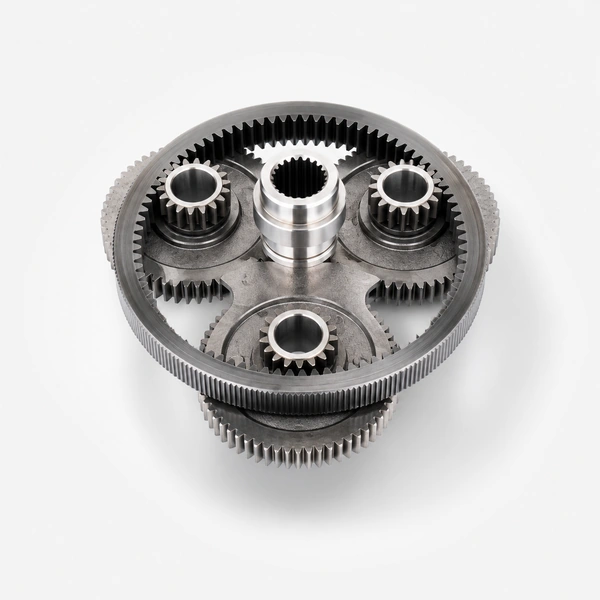
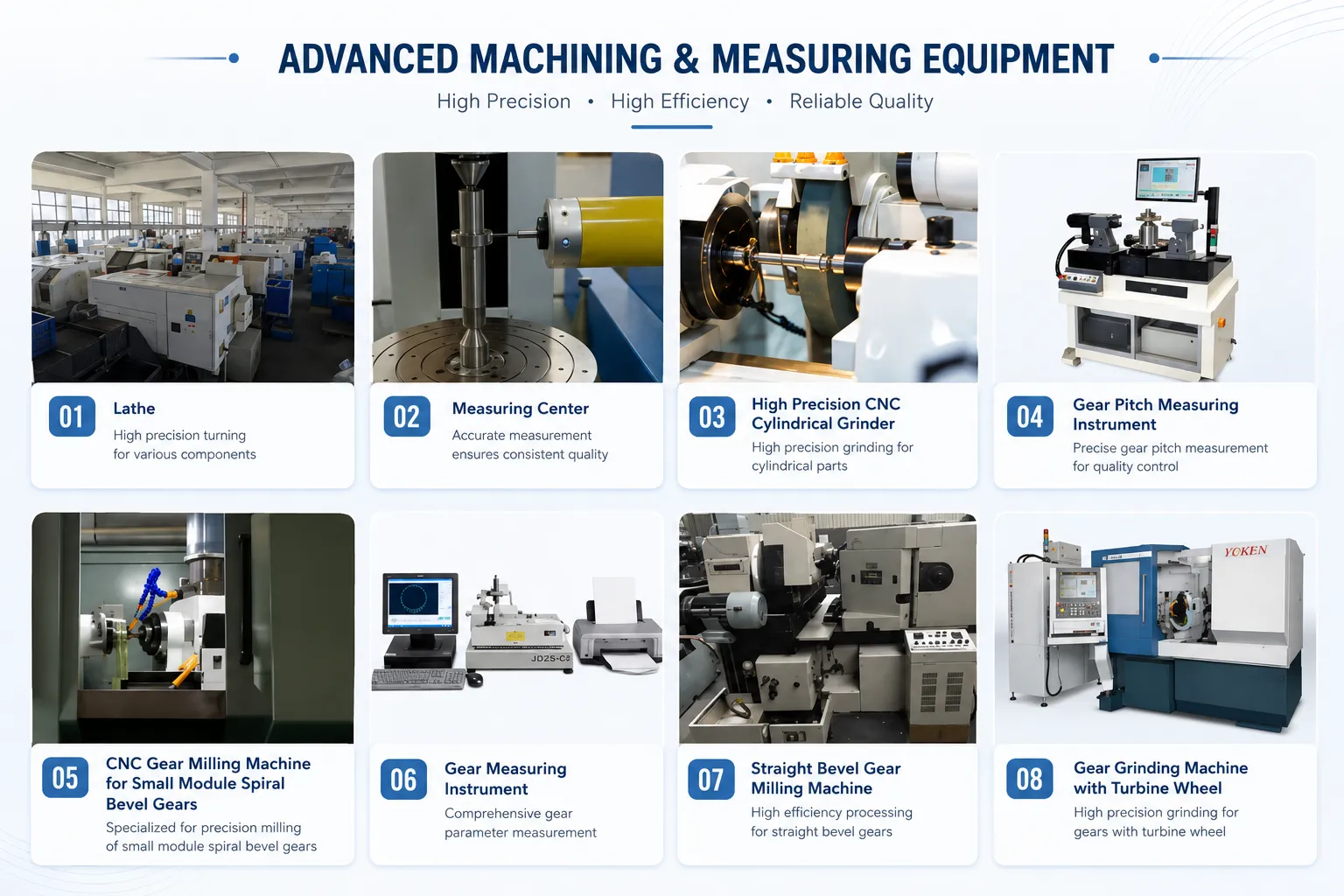
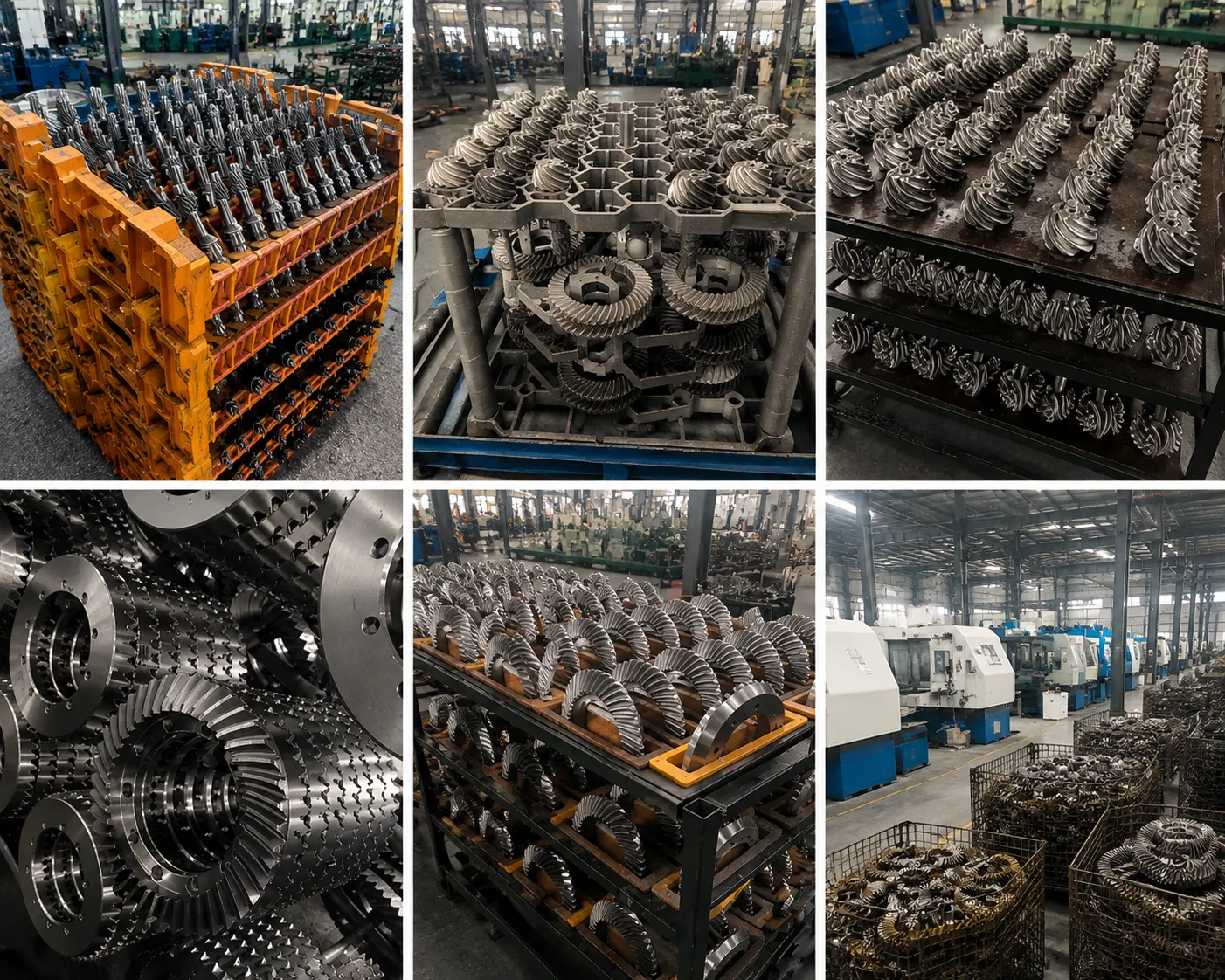
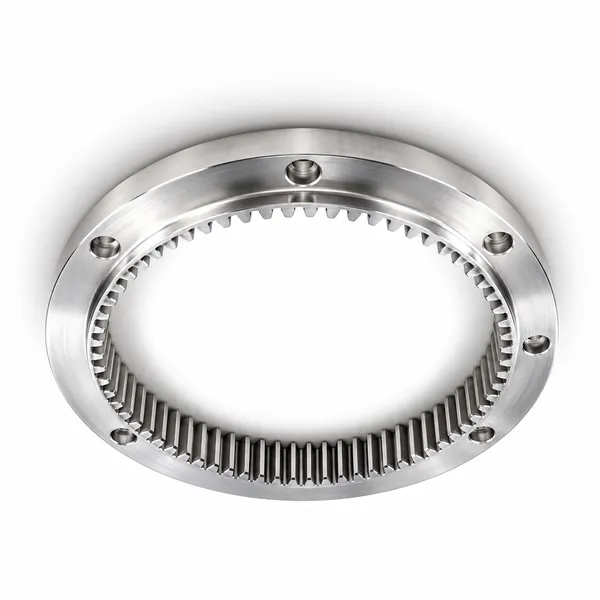
Korea Ever-Power’s planetary gear sets for printing machines are manufactured to DIN 4–5 quality class with all planets in each stage matched to ±2 μm pitch deviation and the ring/sun gear combination individually tested for transmission error below 3 μrad at the output before assembly clearance. The ring gear internal tooth profile is ground (not only hobbed) to DIN 4 to achieve the profile accuracy required for sub-arc-minute backlash — the internal ring gear is the most difficult component to achieve DIN 4 on, because the grinding wheel must reach inside the ring bore with a spindle that is necessarily longer and therefore less rigid than the equivalent external gear grinding setup. Korea Ever-Power uses a dedicated internal gear grinding machine with a short-reach grinding spindle and active vibration damping for all printing press ring gears at M3 and above. For customers requiring complete planetary gearbox assemblies for printing press applications, our planetary gearbox range includes press-specific configurations with servo motor flanges, output shaft configurations compatible with printing cylinder couplings, and torsional stiffness certificates.
The torsional stiffness requirement for printing press planetary drives is often underspecified by press builders — the focus on backlash (which is measurable and specified in every planetary gearbox datasheet) can cause the torsional stiffness to be overlooked, even though a torsionally compliant gearbox produces register errors that are indistinguishable from backlash errors in the printed product. The torsional stiffness of a planetary gearbox is determined primarily by the planet gear tooth mesh stiffness (the ratio of the tangential mesh force to the tooth deflection), the number of planets in simultaneous mesh, and the design of the output shaft coupling — each element in the torsional stiffness chain must be considered. Korea Ever-Power specifies the torsional stiffness of each printing press planetary gear set as the measured output angular deflection (in arc-minutes) under the rated output torque, applied and released quasi-statically in both rotation directions to confirm that the stiffness is the same in both directions (which it must be for a zero-backlash press drive — a difference in CW and CCW stiffness would produce asymmetric register errors at direction reversals during press jog mode or makeready).
Printing Press Type Planetary Drive Specifications
Web Offset Press (Heatset / Coldset)
Specification: M4–M6, DIN 5, 20CrMnTi carburized, 2-stage planetary, ratio 20:1–50:1, torsional stiffness ≥ 150 Nm/arc-min, backlash ≤ 1.0 arc-min, servo motor flange IEC B5 or IEC B14. Web offset presses run continuously at speeds of 40,000–80,000 impressions per hour, with the printing cylinder rotating at 500–1,500 RPM. The planetary gearbox must maintain sub-arc-minute backlash over the full press run (which may be 4–12 hours continuously without speed change on long runs), including the thermal cycle from cold startup to steady-state operating temperature. Korea Ever-Power web offset planetary gear sets are individually run-tested at rated speed for 2 hours at the factory before shipment to confirm the backlash remains within specification after thermal stabilisation — cold assembly backlash and hot running backlash can differ by 0.3–0.5 arc-min due to differential thermal expansion of the steel gears and aluminium housing.
M4–M6 · DIN 5 · ≤1.0 arc-min · 2-stage · run-tested
Sheetfed Offset Press
Specification: M3–M5, DIN 5, 20CrMnTi carburized, 1 or 2-stage planetary, ratio 5:1–25:1, low noise ≤ 68 dB(A) at rated speed (sheetfed presses operate in production halls where operators are present at the feeder and delivery continuously), backlash ≤ 0.8 arc-min. Sheetfed offset presses (Heidelberg, Komori, Manroland, KBA) print on individual cut sheets rather than a continuous web — the printing speed is 10,000–18,000 sheets per hour, and the planetary drives are typically smaller than web press drives. The noise requirement for sheetfed press planetary drives is stricter than for web offset — the typical sheetfed press room is a quieter environment than a web press room, and the operator spends a higher proportion of their time near the press (at the feeder or delivery) making the gear noise contribution to ambient more significant. Korea Ever-Power sheetfed press planetary gear sets are measured for sound power level per ISO 3746 and issued with a noise certificate confirming compliance with the press OEM’s specification.
M3–M5 · DIN 5 · ≤68 dB(A) · 1–2 stage · noise cert
Flexographic Press (Label / Packaging)
Specification: M3–M5, DIN 5–6, 20CrMnTi or 17-4 PH stainless (for food packaging label printing where the press operates in a food-adjacent environment), 1-stage or 2-stage, ratio 4:1–20:1, corrosion-resistant housing for solvent-based ink environments, backlash ≤ 1.5 arc-min. Flexographic presses for label and flexible packaging printing use planetary drives on the print station roller drives, the anilox roller drive, and the tension control zone nip roller drives. The register requirement for flexo label printing is tighter than for publication offset because label printing often requires precise registration of very fine features (barcodes, fine-line artwork) on substrates that stretch slightly under web tension — the planetary drive must be stiff enough to prevent register loss from substrate stretch variation causing dynamic load changes at the print station. Korea Ever-Power flexo press planetary gear sets for food packaging applications are specified in 17-4 PH stainless steel housing and 316L stainless steel output shaft for full washdown resistance in the hygienic labelling zone of food production lines.
M3–M5 · DIN 5–6 · stainless option · food-adjacent
Frequently Asked Questions — Planetary Gears for Printing Machines
Explore Korea Ever-Power Gear Categories
Seven precision gear product lines for printing machines, press drives, packaging equipment and precision motion control worldwide.
편집자: Cxm
 Korean
  English
  Italian
  French
  Japanese