
Ring Gears for Aerospace and Satellite Systems:
Actuator Ring Gears, Satellite Antenna Drives and Aerospace Gear Train Applications
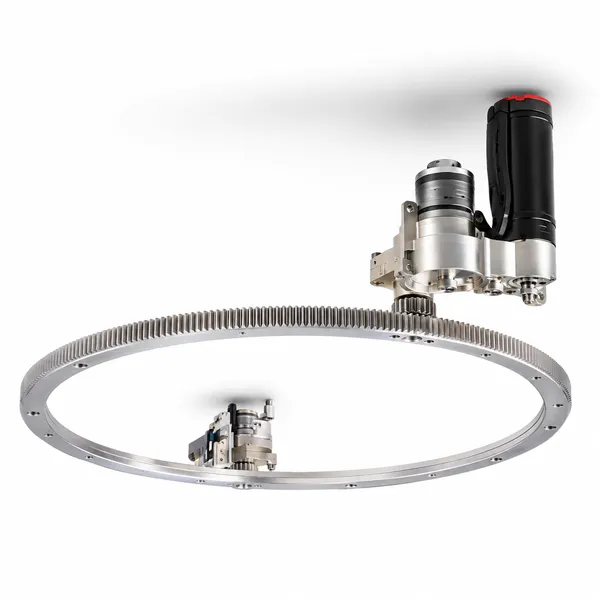
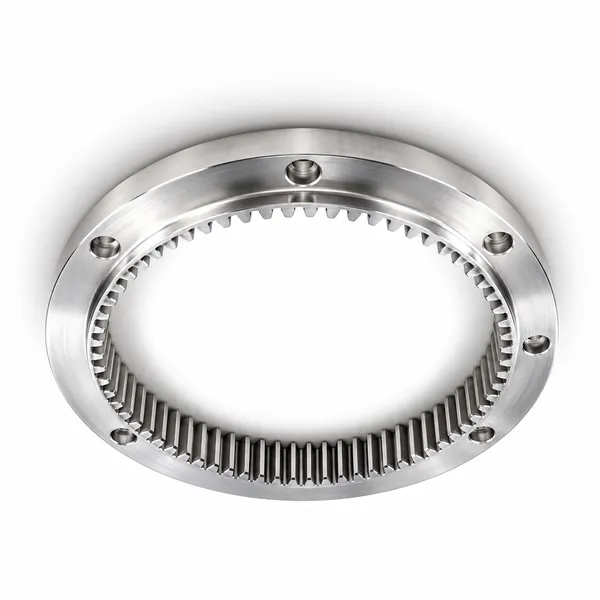
Aerospace ring gears operate under a set of constraints that differ categorically from all other industrial ring gear applications — every gram of mass matters in a flight structure, every micron of dimensional deviation affects the attitude control accuracy of a satellite positioning system, every material choice must comply with a qualification programme that can cost more than the hardware itself, and the gear must function reliably across a lifetime measured in decades without any possibility of maintenance after launch. The aerospace ring gear is simultaneously the most demanding and the most rewarding engineering challenge in the gear industry, requiring the convergence of precision manufacturing, exotic materials, and system-level design thinking that no other sector demands in the same combination.
DIN 3–5 · −65°C to +150°C · Vacuum MoS₂
Satellite · UAV · Helicopter · Actuator · Antenna
Aerospace Ring Gear Engineering — Mass, Precision, and Life Assurance
The fundamental engineering difference between an aerospace ring gear and an industrial ring gear of the same module and tooth count is not primarily a question of dimension or load — it is a question of design philosophy. Industrial ring gears are designed to a reliability target that accepts a small probability of in-service failure that can be addressed by planned maintenance or unplanned repair. Aerospace ring gears — particularly those in flight-critical actuators (flight control surface drives, helicopter rotor pitch control) and in space systems (satellite attitude control reaction wheels, satellite antenna pointing drives) — are designed to a reliability target that accepts no in-service failure, because repair is either impossible (a satellite in geostationary orbit, 36,000 km above the Earth) or involves the loss of a manned aircraft with potentially catastrophic consequences.
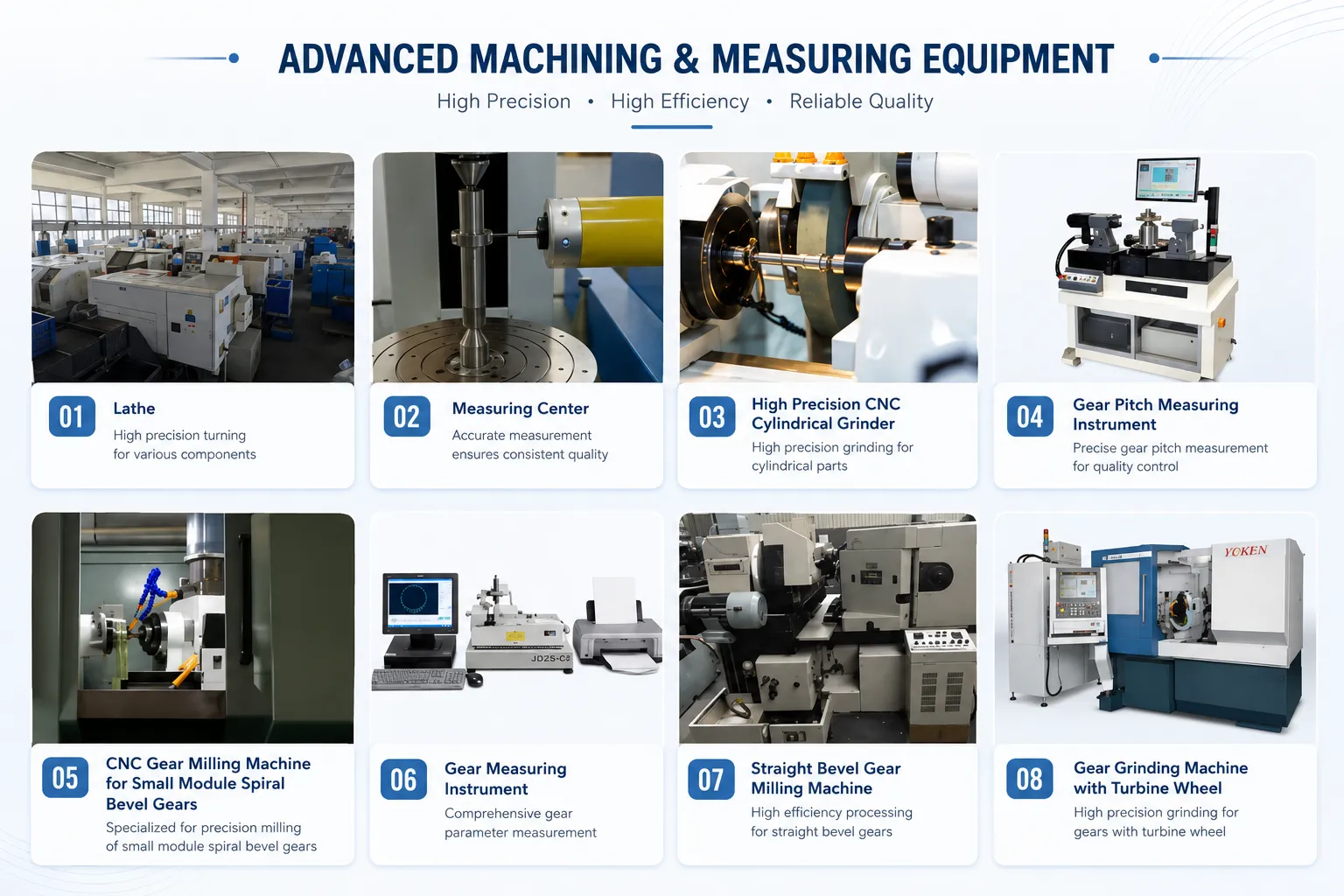
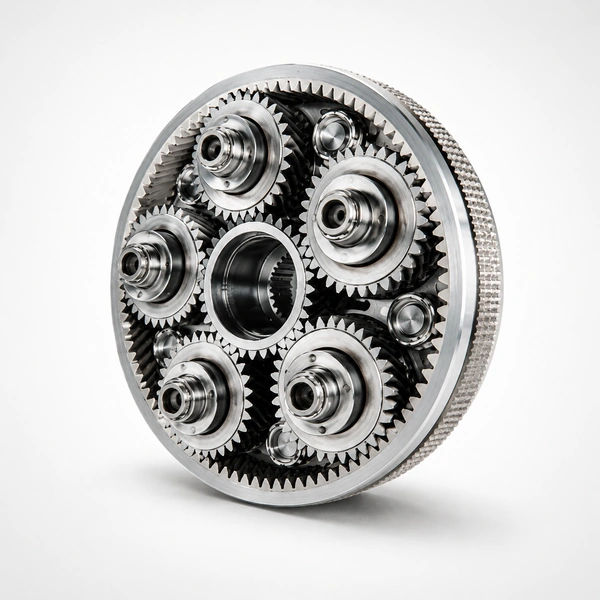
Korea Ever-Power’s ring gears for aerospace and satellite applications are manufactured in Ti-6Al-4V (Grade 5 titanium, the standard aerospace structural alloy), 15-5 PH stainless (H900 condition), 17-4 PH stainless (H900 and H1025 conditions), and Inconel 718 for high-temperature actuator applications. The manufacturing quality class is DIN 3–5 (compared to DIN 6–8 for standard industrial ring gears) — achieving DIN 3 on an internal ring gear is one of the most challenging precision machining tasks in the gear industry, requiring a fully temperature-controlled grinding room, CBN internal grinding wheels, and a measurement machine with sub-micron resolution to confirm the tooth profile against the DIN 3 tolerance band. For applications requiring complete planetary gearbox assemblies with aerospace-specification ring gears, Korea Ever-Power’s planetary gearbox range includes configurations designed for integration into flight-heritage planetary drive mechanisms in UAV and aircraft actuator systems.
The mass constraint in aerospace ring gear design forces a different approach to material and geometry selection than in industrial design. In a satellite attitude control actuator, the ring gear must provide the load capacity and life for the pointing drive while adding as little mass as possible to the spacecraft — every kilogram of additional mass translates directly into launch cost (currently USD 2,000–10,000 per kilogram to LEO depending on the launch vehicle). The mass optimisation of an aerospace ring gear starts with material selection — Ti-6Al-4V has a specific strength (ultimate tensile strength ÷ density) of approximately 260 kN·m/kg, compared to 125 kN·m/kg for 20CrMnTi carburized steel. This means a titanium ring gear can carry the same load at approximately half the mass of an equivalent steel gear. However, titanium has a lower surface hardness than carburized steel (HRC 36 for Ti-6Al-4V in the aged condition, vs HRC 60–62 for carburized 20CrMnTi), which reduces the tooth contact fatigue resistance and requires the designer to increase the module or tooth face width to compensate — partially offsetting the mass advantage. The optimum aerospace ring gear material is determined case-by-case from the load, life, mass, and temperature requirements of each specific application.
Aerospace Ring Gear Application Specifications
Aerospace Gear Material Comparison and Selection Guide
Frequently Asked Questions — Ring Gears for Aerospace
Explore Korea Ever-Power Gear Categories
Seven precision gear product lines for aerospace, satellite, UAV, defence and high-precision industrial applications worldwide.
편집자: Cxm
 Korean
  English
  Italian
  French
  Japanese