GEAR APPLICATION GUIDE · PLANETARY GEAR · P09

Planetary Gears for Electric Vehicles:
EV Motor Reduction Drives, Two-Speed Transmissions and Electric Axle Gear Trains

Electric vehicle planetary gear sets operate under conditions that differ fundamentally from conventional automotive transmission gears — the EV motor’s ability to produce maximum torque from zero RPM eliminates the need for a multi-ratio gearbox in most passenger car applications, replacing the 6–8 speed transmission with a single-ratio planetary reduction unit that steps down the motor’s 12,000–20,000 RPM operating speed to the 2,000–4,000 RPM wheel drive speed. This simplification creates a new set of engineering challenges: the single-ratio planetary must cover the full vehicle speed range from zero to maximum (typically 150–200 km/h), sustaining maximum motor torque at any speed without thermal or fatigue failure, while achieving a noise level below the EV’s inherently quiet cabin ambient (the absence of engine noise makes gear whine from a DIN 7 or DIN 8 quality planet gear distinctly audible to passengers).

20CrMnTi · 18CrNiMo7-6 · M3–M6 · DIN 5–6
12,000–20,000 RPM · 1-speed · Low NVH · 150kW+
Passenger EV · Electric Truck · e-Axle · 2-Speed · PHEV

SPEED

12,000–20,000 RPM

EV motor input speed to the planetary gear set (at the sun gear, for a fixed-ring planetary). This is 3–5× the speed of typical industrial planetary applications and drives the NVH (noise, vibration, harshness) and bearing life requirements — the planet pin bearings, in particular, must operate at the highest speed of any planetary bearing application outside of aerospace. Needle roller bearings are standard for EV planet pins; at 15,000 RPM sun, planet speed = 15,000 × sun teeth / (sun + ring teeth) × 2 ≈ 6,000–9,000 RPM

TORQUE

Up to 5,000 Nm

EV planetary output torque at the wheel drive. Passenger car single-motor: 1,500–2,500 Nm at the output (after 8–12:1 reduction). Dual-motor performance EV: up to 3,500 Nm per axle. Electric commercial vehicle (e-truck, e-bus): 4,000–5,000 Nm at the axle. The maximum torque occurs at launch (0 km/h full throttle) — the gear fatigue design must sustain this maximum torque for the vehicle’s design life of 300,000–500,000 km

NVH TARGET

≤ 65 dB(A)

Maximum gear mesh noise contribution to cabin noise in a passenger EV at 100 km/h. This requires profile-ground DIN 5–6 planet gears (DIN 7 or below produces gear whine perceptible above the EV cabin noise floor of 45–55 dB(A), compared to an ICE vehicle where the engine noise masks gear whine at any DIN level). Some EV OEMs target even lower: ≤ 60 dB(A) for premium segment EVs where gear noise would be a major customer quality complaint

LIFE TARGET

300,000–500,000 km

EV drivetrain planetary gear design life. Passenger EV: 300,000 km (15 years at 20,000 km/year). Electric commercial truck: 500,000–1,000,000 km. At 8:1 reduction and 100 km/h (equivalent to 4,600 wheel RPM), the planet gear accumulates 10¹⁰ tooth contact cycles over 300,000 km — requiring design in the gigacycle fatigue regime, beyond the conventional 10⁹ cycle limit

EV Planetary Gear Engineering — High Speed, Gigacycle Fatigue, and NVH

The EV reduction planetary operates in a performance regime that challenges several standard gear design assumptions. The first challenge is the gigacycle fatigue regime — at 15,000 RPM motor speed with an 8:1 planetary ratio, the planet gear accumulates tooth contact cycles at a rate of approximately 15,000 × ring_teeth / (2 × planet_teeth) RPM × 60 minutes = over 1 million tooth contact cycles per hour of full-speed operation. Over 300,000 km of vehicle life at an average speed of 60 km/h (5,000 hours of operation), the planet gear accumulates more than 5 × 10⁹ tooth contact cycles — well beyond the 10⁷ cycles at which the material endurance limit is conventionally defined and the 10⁸ cycles at which most automotive gear fatigue test databases end. The EV planet gear must be designed for gigacycle fatigue (10⁹–10¹⁰ cycles), where the allowable contact stress is 20–35% below the conventional endurance limit — a significant design driver that forces either a larger module (to reduce the contact stress at the same output torque) or a higher-strength material (18CrNiMo7-6 deep case carburized instead of 20CrMnTi) that has lower fatigue strength reduction in the gigacycle regime.

Korea Ever-Power’s planetary gear sets for electric vehicles are manufactured in 18CrNiMo7-6 deep case carburized (the preferred material for EV reduction planetary gears — the deep case depth of 1.5–2.5 mm at the tooth root provides both the hardness gradient for gigacycle fatigue resistance and the core toughness for the high-torque launch events), with DIN 5–6 profile grinding for NVH compliance, and matched planet pitch tolerance ±2 μm for optimum load sharing. For customers requiring complete EV reduction units including the differential and e-axle housing, Korea Ever-Power’s planetary gearbox range includes gear stage kits designed for integration into EV e-axle designs from OEM and Tier 1 automotive suppliers. The EV planetary ring gear internal tooth profile is ground to DIN 5 (not DIN 6 or 7 as used in most industrial applications) because the high pitch line velocity at 15,000 RPM motor speed places the EV gear mesh frequency in the audible range (typically 1,000–5,000 Hz for 15,000 RPM motor with 20–40 tooth planet gears) where the human ear is most sensitive and where gear whine from DIN 6+ profile errors would be perceptible as an objectionable tonal noise above the EV’s quiet cabin ambient.

The thermal management of the EV reduction planetary is a design challenge that does not arise in lower-speed industrial applications. At 15,000 RPM sun gear input, the gear mesh friction power loss (even at 99% efficiency per stage) represents several kilowatts of heat generation in the gear mesh — for a 150 kW EV motor at full power with a 2-stage planetary at 98% total efficiency, the heat generated in the gear set is 3 kW. This 3 kW must be removed from the gear set without overheating the planet bearings (whose maximum operating temperature for long-life needle roller bearings is 120°C). Most EV reduction units use an oil-jet lubrication system (a pressurised oil circuit that sprays oil directly onto the gear mesh and planet bearing) rather than an oil bath (where the gears dip into a sump), because oil-jet lubrication provides 5–10× the cooling capacity at the gear mesh contact zone compared to oil-bath splash lubrication. Korea Ever-Power EV planetary gear sets are designed with consideration for the oil-jet delivery system — the planet carrier windows (the openings in the carrier structure through which the oil jets must reach the planet bearings) are sized to allow adequate oil flow at the carrier rotation speed without excessive parasitic oil churning drag from the rotating carrier windows interacting with the jet streams.
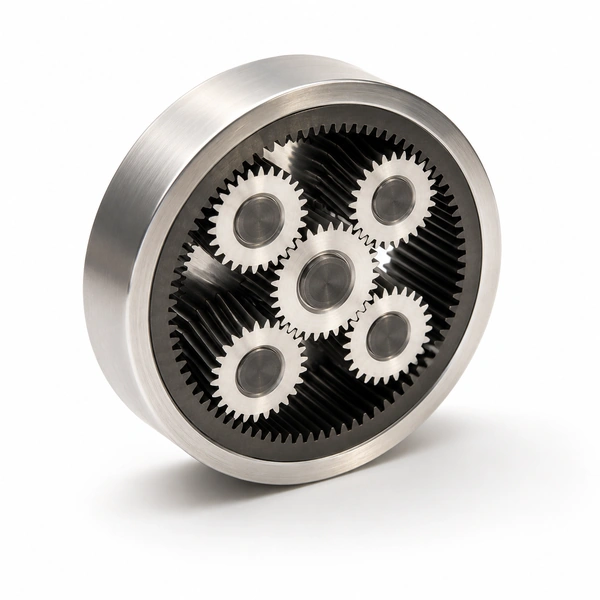
EV electric vehicle planetary gear reduction drive Korea Ever-Power
Korea Ever-Power 18CrNiMo7-6 deep case carburized planetary gear set for electric vehicle reduction drive — 2-stage: stage 1 sun M4 16T, planet ×4 M4 20T, ring M4 56T (ratio 4.5:1); stage 2 sun M4 14T, planet ×4 M4 22T, ring M4 58T (ratio 5.14:1); total ratio 23.1:1. All gears 18CrNiMo7-6 deep carburized, effective case depth at tooth root 1.8 mm (vs 1.2 mm for standard industrial 20CrMnTi — the deeper case extends the hardened zone below the contact Hertzian stress maximum, providing fatigue resistance to 10¹⁰ cycles). DIN 5 profile ground, planet matched set ±1.5 μm pitch deviation. 4 planets per stage (vs 3 in standard industrial planetary) for enhanced load sharing and reduced tooth load per planet — critical for gigacycle fatigue at 15,000 RPM. Rated input speed: 16,000 RPM continuous (motor peak speed 18,000 RPM, sustained ≤ 60 seconds). Oil-jet lubrication port compatibility with the e-axle housing oil circuit design of the customer’s vehicle platform.

Electric Vehicle Drive Type Planetary Specifications
EV TYPE 01

PASSENGER EV
SINGLE-MOTOR

Planetary specification: 18CrNiMo7-6 deep carburized, M4–M5, DIN 5–6, ratio 8:1–12:1 (single 2-stage planetary), 4 planets per stage for load sharing, oil-jet lubrication, maximum input speed 18,000 RPM, NVH ≤ 65 dB(A) at 15,000 RPM, design life 10¹⁰ tooth cycles. Single-motor passenger EVs (the configuration used by Tesla Model 3/Y single-motor, Volkswagen ID.3/ID.4, Renault Megane E-Tech, BYD Seal, and others) use a fixed-ratio planetary reduction between the PMSM or induction motor and the differential — the single gear ratio is the key design optimisation target for the planetary stage. The ratio must be high enough to let the motor operate at its efficiency optimum speed under normal driving (typically 6,000–10,000 RPM for PMSM motors), while low enough to not over-spin the motor at maximum vehicle speed. Most single-motor EVs use a ratio of 8:1–10:1, giving a motor speed of 12,000–15,000 RPM at 150 km/h (assuming 330 mm wheel radius). Korea Ever-Power single-motor EV planetary gear sets are validated to the gigacycle fatigue regime using a combined load spectrum that reflects the worldwide driving cycle data from the target market (Europe: WLTP; North America: US06; China: CLTC) — the design life fatigue assessment uses this duty cycle rather than the maximum torque continuous operation, which would be excessively conservative for typical EV usage patterns.

EV TYPE 02

ELECTRIC TRUCK
E-AXLE DRIVE

Planetary specification: 18CrNiMo7-6 or 20CrNiMo deep carburized, M5–M7, DIN 6, ratio 12:1–20:1 (2-stage or 3-stage planetary depending on the axle configuration), 4 planets per stage, output torque up to 5,000 Nm per axle, design life 10,000 hours (500,000 km equivalent), NVH ≤ 70 dB(A). Electric trucks and buses (BYD Han, Mercedes eActros, Volvo FH Electric, DAF XF BEV) use significantly larger planetary gear sets than passenger EVs because the vehicle weight (5–40 tonnes fully laden) produces wheel forces that translate to axle torques of 4,000–5,000 Nm — four to five times the maximum torque of a typical passenger EV. The larger module (M5–M7) reduces the number of tooth contacts per revolution and therefore the cumulative cycle count at the same vehicle distance, partially mitigating the gigacycle fatigue challenge compared to the smaller module passenger EV gears. However, the absolute tooth load per cycle is proportionally higher, requiring the 18CrNiMo7-6 deep carburized material for the higher contact fatigue endurance at the subsurface shear stress maximum (which for M6 gears at 5,000 Nm output is at approximately 1.5–2.0 mm below the tooth surface — exactly within the extended case depth of the deep carburizing treatment).

EV TYPE 03

2-SPEED EV
TRANSMISSION

Planetary specification: 18CrNiMo7-6 deep carburized, M3–M5, DIN 5, ratio step 1 (low gear): 10:1–15:1 for maximum acceleration; ratio step 2 (high gear): 5:1–8:1 for highway efficiency, ring gear fixed or carrier fixed depending on the ratio switching mechanism (typically a dog clutch or synchroniser on the ring gear for the ratio shift). Two-speed EV transmissions are gaining traction in performance EVs and electric commercial vehicles because the single fixed-ratio planetary forces a compromise between launch acceleration (requires high torque at low speed — favours high ratio) and top speed (requires low reduction at high speed — favours low ratio). A 2-speed transmission eliminates this compromise: gear 1 provides maximum acceleration from rest, gear 2 allows the motor to operate at its efficiency optimum speed at highway cruise. The ratio shift mechanism in a 2-speed EV planetary requires the ring gear to switch between fixed (generating reduction from sun to carrier) and rotating-with-carrier (producing 1:1 direct drive) — a mechanism that demands the ring gear to sustain the shock load of ratio engagement under partially-synchronised motor speed during the shift event. Korea Ever-Power 2-speed EV ring gears are designed with enhanced tooth root toughness (achieved by limiting the carburizing temperature to 900°C to avoid austenitic grain growth, and by applying a post-hardening shot peening treatment to the tooth root that induces compressive residual stress at the root fillet — improving the bending fatigue strength by 15–20% for the ratio shift impact loads).

Korea Ever-Power EV planetary gear precision measurement NVH
Korea Ever-Power EV planetary gear NVH measurement — transmission error (TE) measurement at the assembled stage level, with the stage running at 5,000 RPM input (representing normal city driving motor speed) and 12,000 RPM (representing highway speed). The TE measurement at speed (dynamic TE, as opposed to the static TE measured on the gear measurement machine) captures the combined contribution of gear profile error, planet load sharing imbalance, and the dynamic response of the ring gear and carrier structure to the mesh excitation — all three contribute to the EV cabin noise. Korea Ever-Power EV planetary gear sets are issued with a dynamic TE certificate showing the peak-to-peak TE at both city (5,000 RPM) and highway (12,000 RPM) motor speeds, in the frequency domain — the frequency spectrum shows whether any NVH issue is concentrated at the planet mesh frequency (primary concern) or at harmonics of the mesh frequency (secondary concern). Spectra showing peaks above 15 μrad at the mesh frequency indicate the stage will produce audible gear whine in the EV cabin and require re-grinding of the planet and ring gear profile to reduce the profile error contribution to TE.
Korea Ever-Power EV planetary gear manufacturing high speed precision
Korea Ever-Power EV planetary gear manufacturing — profile grinding of 18CrNiMo7-6 deep case carburized planet gears to DIN 5 quality. The grinding setup for EV planet gears at M4 requires a CBN grinding wheel with a dresser that maintains the wheel profile within ±1 μm of the involute form — at DIN 5, the total profile form error tolerance is 3.8 μm for an M4 gear, so the grinding wheel dresser accuracy must be at least 4× better than the gear tolerance to prevent the wheel form error from consuming the available tolerance budget. Korea Ever-Power uses a CNC diamond roller dresser (CNC-form dresser) on all EV planetary gear grinding machines — the dresser profile is generated by the CNC control from the theoretical involute function, and the dresser wear is compensated automatically by the CNC after every 10 grinding cycles. The 4-planet per stage configuration of Korea Ever-Power EV planetary gear sets requires all 4 planets in each stage to be matched within ±1.5 μm pitch deviation (tighter than the ±2 μm used for industrial planetary) — achieving this matching tolerance in 18CrNiMo7-6 requires both the DIN 5 grinding accuracy and the individual planet TE measurement that Korea Ever-Power performs before matching, allowing the 4 planets in each stage to be selected from a batch of 6–8 ground planets for the closest mutual pitch match.

Frequently Asked Questions — Planetary Gears for Electric Vehicles

Q 01

We are developing a new passenger EV at 200 kW motor power with a target gear ratio of 9:1. Should we use 20CrMnTi or 18CrNiMo7-6 for the planet gears, and what is the cost premium for 18CrNiMo7-6?

Material selection for a 200 kW, 9:1 passenger EV planetary: the choice between 20CrMnTi and 18CrNiMo7-6 is determined by whether the planet gear’s calculated contact fatigue safety factor S_H at 10¹⁰ tooth contact cycles exceeds 1.0 (the minimum) for the EV duty cycle. Korea Ever-Power performs this calculation as part of the application engineering review — but the typical result for 200 kW EV planet gears at M4 module is: 20CrMnTi carburized: allowable contact stress σ_HP at 10⁷ cycles = 1,500 MPa (standard endurance limit). At 10¹⁰ cycles (gigacycle regime), the allowable reduces by approximately 20% to σ_HP,10¹⁰ ≈ 1,200 MPa. The calculated contact stress at rated motor torque in a 9:1, M4, 4-planet stage at 200 kW: approximately 1,150–1,280 MPa — at the margin of the 10¹⁰ allowable, giving S_H = 0.94–1.04. This means 20CrMnTi may be adequate depending on the exact geometry, but the safety margin is very small and does not account for the uncertainty in the gigacycle extrapolation. 18CrNiMo7-6 deep carburized: allowable at 10¹⁰ cycles ≈ 1,400–1,450 MPa (higher endurance retained at gigacycle due to the improved core microstructure and deeper case depth). This gives S_H = 1.09–1.26 at the same calculated contact stress — a meaningful safety margin above the minimum, with adequate conservatism for the gigacycle extrapolation uncertainty. Cost premium: 18CrNiMo7-6 material costs approximately 20–30% more than 20CrMnTi in raw material. The total planet gear cost premium (including deep carburizing, which takes longer than standard carburizing for 20CrMnTi) is approximately 35–45% above the equivalent 20CrMnTi gear. For a 4-planet stage with 4 planet gears per stage × 2 stages = 8 planet gears total, this premium is typically EUR 80–150 per vehicle drivetrain at production volumes — small relative to the total e-axle assembly cost. Korea Ever-Power recommends 18CrNiMo7-6 as the standard material for passenger EV planet gears at motor power above 150 kW, and 20CrMnTi only for EV platforms below 100 kW where the lower torque reduces the contact stress to safely below the 20CrMnTi gigacycle allowable.

Q 02

Our EV development team has noticed gear whine at highway speed (100 km/h, approximately 10,500 RPM motor speed) with the first prototype DIN 6 planetary gear set. What modifications would reduce the gear whine to an acceptable level?

Gear whine at 10,500 RPM motor speed is characterised by a tonal noise at the planet mesh frequency — for a 4-planet, sun 16T, planet 20T ring 56T stage (ratio 4.5:1), the planet mesh frequency at 10,500 RPM sun is: f_mesh = 10,500/60 × 16 = 2,800 Hz. This 2,800 Hz frequency is in the most sensitive range of human hearing (2,000–4,000 Hz, maximum sensitivity per ISO 226 equal loudness contours), which explains why even a small transmission error amplitude at this frequency is perceived as annoying. The modifications Korea Ever-Power recommends to reduce EV planetary gear whine from DIN 6 to the target NVH level: (1) Upgrade to DIN 5 profile ground: upgrading from DIN 6 (ground, typical profile form error Fα ≤ 5 μm) to DIN 5 (Fα ≤ 3.2 μm) reduces the primary TE contribution from profile error by 35–40%. At DIN 5 with ±2 μm planet pitch matching, Korea Ever-Power’s EV planetary gear sets typically show peak-to-peak dynamic TE below 8 μrad at 10,500 RPM — below the 15 μrad threshold for audible gear whine in the EV cabin. (2) Apply tooth flank crowning and lead modification: adding a longitudinal crowning (a slight barrel shape to the tooth face width, with the centre 3–5 μm higher than the edges) reduces the sensitivity of the gear contact to the misalignment that arises from bearing deflection at high speed and load — misalignment under load shifts the contact to one edge of the tooth face, increasing the dynamic TE above the static measurement value. (3) Balance the planet carrier: any dynamic imbalance of the rotating carrier assembly (carrier + 4 planet gears + bearings) produces a vibration at carrier rotation frequency that can excite the ring gear and housing structure at its natural frequencies. At 10,500 RPM sun speed with 4.5:1 ratio, the carrier rotates at 2,333 RPM — Korea Ever-Power dynamically balances all EV planetary carriers to G2.5 balance grade (per ISO 21940-11) to minimise carrier-imbalance-induced vibration. Korea Ever-Power can evaluate your specific geometry and provide a DIN 5 re-manufacture quotation with crowning and balance as part of the EV NVH improvement programme.

Q 03

What is Korea Ever-Power’s supply model for EV planetary gear sets — can we source for prototype, validation, and production volumes from the same supplier, and what is the minimum quantity for competitive pricing?

Korea Ever-Power’s EV planetary gear supply model covers all stages of the EV development cycle from single prototypes to mass production: Prototype phase (1–10 sets): Korea Ever-Power manufactures EV planetary gear sets in prototype quantities from the design specification — lead time 30–45 days from confirmed drawing for 18CrNiMo7-6 DIN 5 quality. Prototype pricing reflects the full per-set manufacturing cost without amortised tooling or batch efficiency. Each prototype set includes a dimensional inspection report, dynamic TE measurement, and material certificate — the same documentation as production hardware. Validation phase (10–100 sets): lead time 25–35 days per batch; pricing reduced 20–30% from prototype level through batch efficiency on material procurement, heat treatment scheduling, and grinding setup. Korea Ever-Power treats validation-phase hardware with production-intent processes (same material, heat treatment specification, and grinding programme as will be used in production) — this ensures the validation test results represent production hardware performance, not prototype performance. Production phase (500+ sets/year): Korea Ever-Power establishes a production commitment (annual volume estimate, scheduling, and call-off frequency) with the EV customer, enabling production tooling investments (dedicated grinding dressing programmes, material pre-orders, heat treatment scheduling blocks) that reduce the lead time to 15–20 days per call-off and the unit cost to 30–40% below the prototype price. Minimum order for competitive production pricing: 500 complete gear sets per year (approximately 2 gear sets per working day, which represents a compact production cell allocation at Korea Ever-Power). Quality traceability: all Korea Ever-Power EV planetary gear sets in production are supplied with full production traceability (heat treatment chart, grinding programme ID, CMM measurement file, TE measurement file) archived for 15 years — meeting automotive OEM supplier quality system requirements for product and process documentation retention over the vehicle model lifetime.

Explore Korea Ever-Power Gear Categories

Seven precision gear product lines for electric vehicles, e-axles, EV drivetrains, and high-speed precision power transmission worldwide.
spur gear EV automotive

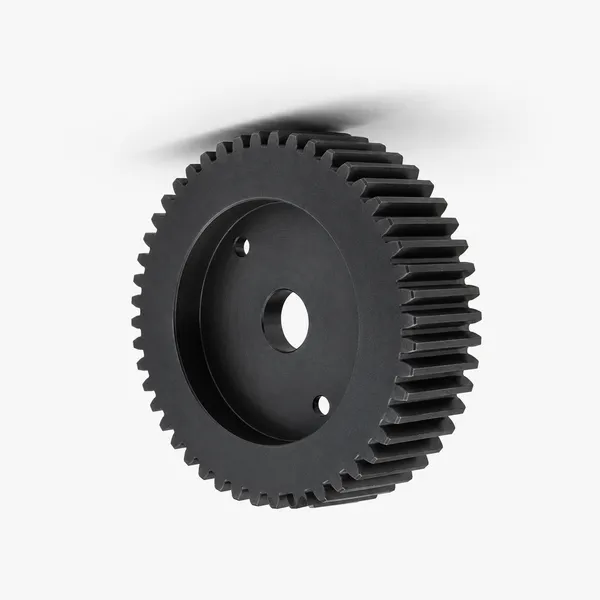
Spur Gears

EV auxiliary · motor · DIN 5–6

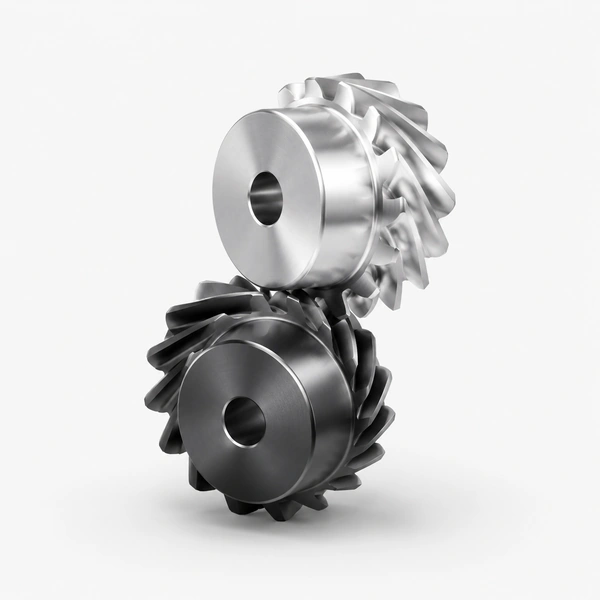
helical gear EV transmission

Helical Gears

EV transmission · e-axle · low NVH

hypoid gear EV axle

Bevel Gears

EV differential · AWD angle drive

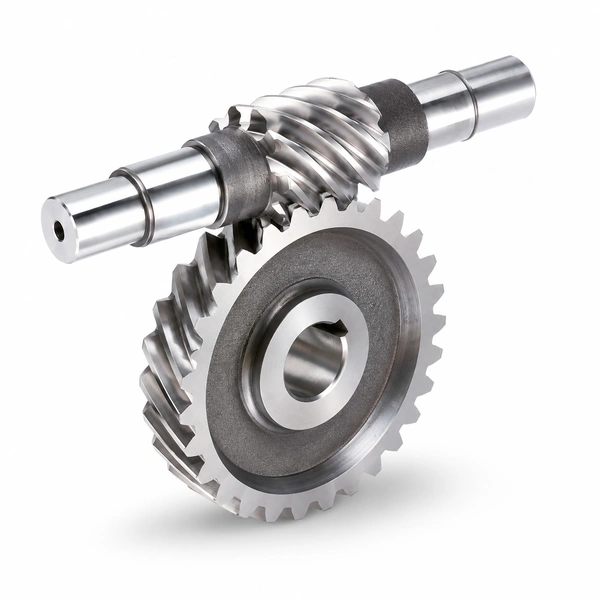
worm gear EV

Worm Gears

EV steering · seat · self-lock

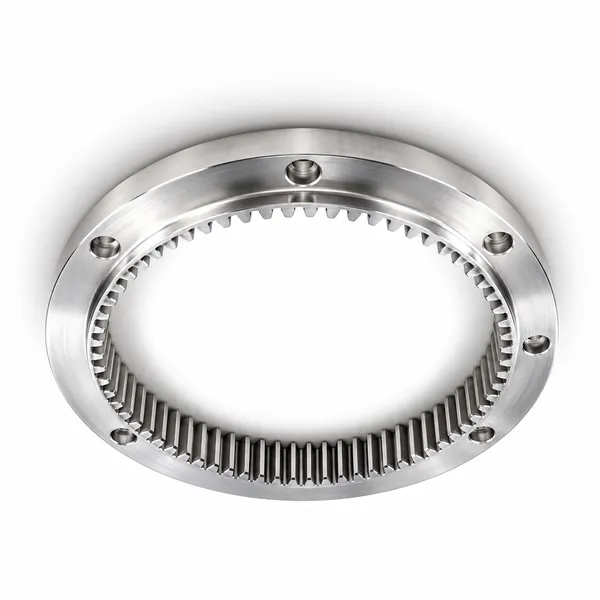
ring gear EV e-axle

Ring Gears

EV reduction ring · e-axle DIN 5

EV planetary gear stage

Planetary Gears

EV reduction · 18CrNiMo7-6 · DIN 5

plastic gear EV sensor

Plastic Gears

EV sensor · encoder · resolver

GET A QUOTATION · KOREA EVER-POWER

Need Planetary Gears for Electric Vehicles?

Korea Ever-Power manufactures 18CrNiMo7-6 deep case carburized planetary gear sets for EV reduction drives — M3–M7, DIN 5–6, 4 planets per stage, ±1.5 μm planet pitch matching, dynamic TE certificate, gigacycle fatigue design to 10¹⁰ cycles. Passenger EV, electric truck e-axle, and 2-speed EV transmission variants. Prototype 1–10 sets in 30–45 days. Production 500+ sets/year. Dynamic balancing to G2.5. ISO 9001:2015 certified.

Request a Quotation →

Editor: Cxm

VR Tour of Our Factory

TAGs:

gear rack

As one of leading gear rack manufacturers, suppliers and exporters of products, We offer gear rack and many other products.

Please contact us for details.

Mail:[email protected]

Manufacturer supplier exporter of gear rack

Recent Posts

en_USEnglish