GEAR APPLICATION GUIDE · RING GEAR · R05

Ring Gears for Slewing Drives:
Crane Slewing Rings, Solar Tracker Drives and Excavator Slew Mechanisms

Slewing drive ring gears are among the most dimensionally imposing gear components in industrial machinery — the slewing ring gear of a 100-tonne mobile crane has an OD of 2.5–3.5 metres and must transmit the full superstructure slewing torque while simultaneously carrying the combined radial, axial, and moment loads from the crane boom through an integrated raceway bearing. The design integration of the ring gear tooth profile, the rolling element bearing raceway, and the structural cross-section of the slewing ring represents a unique engineering challenge that differs fundamentally from all other ring gear applications, and that demands a manufacturing process — hobbing or profile grinding the gear teeth on the same part as the precision-ground bearing raceway — that requires specialised machinery found in only a handful of gear manufacturers worldwide.

42CrMo4 · 50Mn · 42CrMo · OD 300–5000mm
Internal / External · DIN 7–9 · Induction Hardened
Crane · Solar · Excavator · Wind · Medical

OD RANGE

300 – 5,000 mm

Slewing drive ring gear OD range. Solar tracker single-axis: 300–600 mm. Compact excavator (1–5 t): 400–700 mm. Standard excavator (6–40 t): 700–1,400 mm. Mobile crane (20–100 t): 1,200–3,000 mm. Port crane / shipyard crane: 2,500–5,000 mm. Wind turbine pitch ring: 1,800–4,000 mm

TOOTH FORM

Internal / External

Slewing ring gears are manufactured in both external-tooth (pinion drives the outer ring) and internal-tooth (pinion drives inside the ring, more compact) configurations. External tooth: crane slewing rings, solar tracker drive rings. Internal tooth: excavator slewing rings (the pinion is inside the ring gear, giving a more compact turntable), wind turbine pitch ring. Tooth form: straight or helical spur on the slewing ring

MATERIAL

42CrMo4 / 50Mn

Standard slewing ring gear materials. 42CrMo4 (EN 1.7225): European standard for crane and excavator slewing rings, QT to HB 280–320 before tooth induction hardening. 50Mn (Chinese standard GB): equivalent in crane slewing ring applications. 42CrMo (Chinese standard, equivalent to 42CrMo4): common for solar tracker and standard industrial slewing rings. Case carburized 20CrMnTi for small precision slewing rings (OD < 600 mm)

HARDENING

Induction HRC 50–58

Tooth surface hardening for slewing ring gears: induction hardening of the tooth flanks (and the bearing raceway on the same part) to HRC 50–58 after the gear blank is QT treated. Through-hardening by induction produces a case depth of 2–6 mm at the tooth surface, with a transition to the QT core that maintains ductility for the dynamic loads of crane and excavator slewing operation. Flame hardening is an acceptable alternative for very large rings where induction coil size is impractical

Slewing Drive Ring Gear Engineering — Combined Gear and Bearing Design

The slewing ring gear is the only standard gear component that simultaneously functions as a gear and a rolling element bearing — the same ring forging contains both the precision-machined gear tooth profile on its periphery (inner or outer depending on the configuration) and the hardened, ground rolling element raceway on its face. This design integration creates a manufacturing sequence that is unique among gear types: the blank must be rough-machined, QT heat treated, semi-finish machined (both tooth profile and raceway reference surfaces), induction hardened (both the tooth flanks and the raceway in the same or adjacent operations), and then finish-ground (the raceway) and finish-hobbed (the tooth profile) with the bearing reference surfaces used as the datum for both machining operations, ensuring concentricity between the gear pitch cylinder and the bearing raceway to within 0.1–0.3 mm TIR depending on the ring diameter.

Korea Ever-Power’s ring gears for slewing drives are manufactured in 42CrMo4 (for crane and excavator applications under European standards), 42CrMo (for solar tracker, standard industrial, and Chinese-market excavator slewing rings under GB standards), and 50Mn (for large crane slewing rings where the higher manganese content provides better through-hardening depth in the thick cross-sections of large-diameter rings). The manufacturing process for Korea Ever-Power slewing ring gears follows the DIN 3992 and ISO 6336 calculation standards for gear capacity, combined with ISO 76 bearing load rating calculation for the integrated bearing function — the slewing ring is both a gear and a bearing, and both functions must be independently rated for the combined loads at each application. For applications requiring a complete slewing drive assembly including the pinion, motor, and housing, Korea Ever-Power’s planetary gearbox product line covers several configurations that integrate with standard slewing ring gears.

The combined load analysis of a slewing ring gear is fundamentally different from a standard ring gear load analysis because the slewing ring carries three types of simultaneous load: the tangential (torque) load from the drive pinion engaging the ring gear teeth, the axial load from the weight of the superstructure being slewed (which compresses the bearing raceway axially), and the overturning moment from the offset between the superstructure centre of gravity and the slewing ring centreline (which creates a tilting moment that increases the load on one side of the bearing raceway while reducing it on the other). The equivalent bearing load for a slewing ring bearing is calculated from these three simultaneous components using the ISO TR 10715 method, which combines them into a single equivalent radial load for the rolling element fatigue life calculation. Korea Ever-Power performs this combined load analysis for each custom slewing ring gear application and provides the calculated bearing L10 life (the number of slewing revolutions at which 90% of a batch of rings would be expected to survive without bearing fatigue failure) alongside the gear tooth bending and contact fatigue safety factors in the application engineering report.
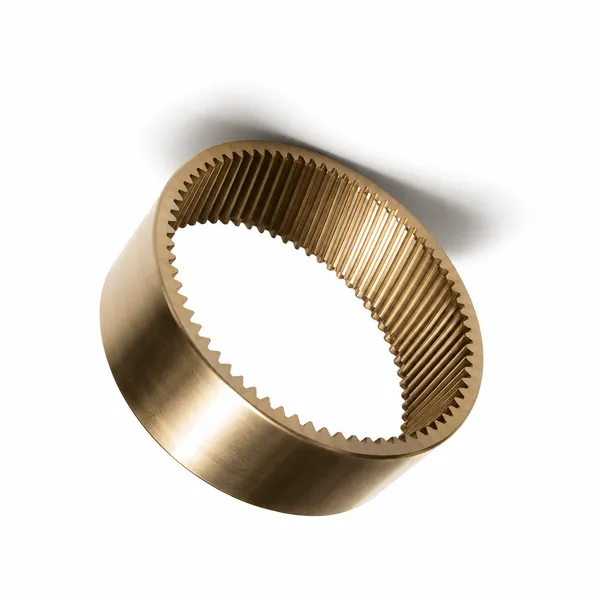
alloy steel internal slewing ring gear excavator crane Korea Ever-Power
Korea Ever-Power 42CrMo4 QT internal-tooth slewing ring gear for 20-tonne excavator application — M8, 120 internal teeth, OD 980 mm, bore 860 mm, ring cross-section height 70 mm, face width 65 mm. Tooth flanks induction hardened HRC 52–56 to effective depth 3.5–4.5 mm; core HB 280–320 (QT condition retained below the induction hardened zone). Bolt holes: 24× M24 equally spaced on two bolt circles (outer bolt circle for upper structure, inner for undercarriage) per the specific excavator model mounting pattern — Korea Ever-Power can supply slewing rings with any bolt circle pattern specified by the excavator OEM. Tooth quality: DIN 8 (hobbed, not ground — the induction hardening distortion on large rings precludes precision grinding of the tooth profile, which is why all large slewing ring gears are DIN 7–9 quality versus the DIN 4–6 of smaller precision gears). MPI of all tooth surfaces and raceway after induction hardening. Surface treatment: tooth and raceway surfaces packed with Mobilgrease XHP 220 NLGI 2 EP grease before shipment to prevent transit corrosion.

Slewing Drive Application Specifications
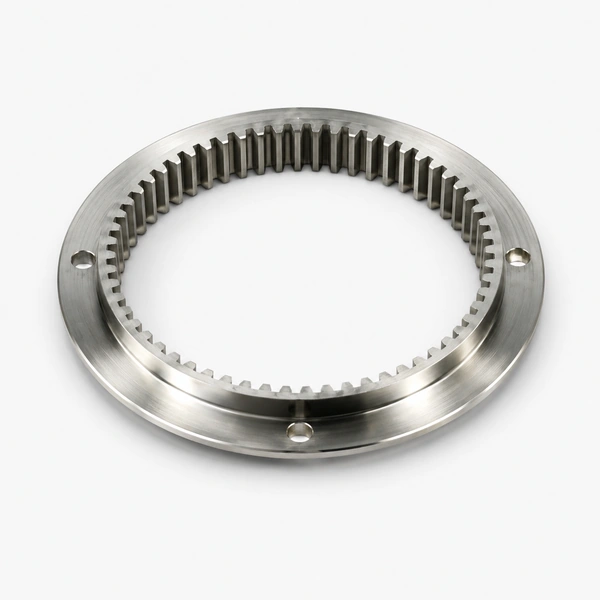
APPLICATION 01

MOBILE CRANE
SLEWING RING

Ring gear specification: 42CrMo4 QT, M10–M16 external or internal tooth, OD 1,200–3,000 mm, DIN 8–9, tooth induction hardened HRC 50–56, four-point contact ball bearing or crossed roller bearing raceway in the same ring, bolt circles per crane OEM drawing. Mobile cranes (all-terrain, rough terrain, truck-mounted) use the slewing ring as the structural and mechanical interface between the crane undercarriage (which travels on wheels or tracks) and the superstructure (which rotates 360° continuously in lifting operation). The slewing ring of a 50-tonne mobile crane sustains a combined vertical load from the superstructure and lifted load of up to 500–800 kN, a moment load from the offset boom tip load of up to 1,500 kN·m, and a drive torque from the slewing motor and planetary gearbox of up to 80–120 kN·m — all simultaneously during lift and slew operations. The gear tooth on this slewing ring is not the structural limiting element (the rolling element bearing raceway fatigue is usually the first failure mode) but it must sustain the slewing torque without tooth fracture for the crane’s rated 30-year service life, which at a typical crane utilisation of 2,000 slewing cycles per year means 60,000 slewing engagements on each ring gear tooth. Korea Ever-Power mobile crane slewing ring gears are manufactured with a tooth root fillet radius at 0.35 × module to improve tooth root impact resistance for the variable-speed, reversing-direction slewing loads characteristic of crane operation.

APPLICATION 02

SOLAR TRACKER
SLEWING DRIVE

Ring gear specification: 42CrMo QT, M6–M10 external tooth, OD 300–800 mm, DIN 7–8, tooth induction hardened HRC 50–54, slew angle ±60° (azimuth) or ±45° (elevation), coated (dacromet or zinc phosphate) for 25-year outdoor corrosion resistance, drive pinion from worm or planetary reducer. Solar tracker slewing drives (the electromechanical actuator that rotates a solar panel array to track the sun’s daily and seasonal position for maximum energy capture) use a compact external-tooth slewing ring that is driven by either a worm gear reducer + electric motor or a small planetary gearbox + motor. The solar tracker slewing ring operates at extremely low speeds (the sun tracks across the sky at approximately 15°/hour, so the ring gear rotates at less than 0.04 RPM average) and with very low transmitted torque compared to a crane — the dominant load on a solar tracker slewing ring is not the drive torque but the wind load on the panel array (which can create a moment of 15–30 kN·m per tracker in a 30 m/s storm condition). Korea Ever-Power solar tracker slewing ring gears are specified with a 25-year outdoor corrosion resistance requirement — the tooth surface and non-functional surfaces receive a dacromet coating (360-hour salt spray resistance per ISO 9227) in addition to the standard induction-hardened tooth surface, providing the corrosion protection needed for desert solar farm installations where the slewing rings cannot be reached for re-greasing without significant access effort.

APPLICATION 03

EXCAVATOR
SLEWING RING

Ring gear specification: 42CrMo4 or 50Mn QT, M6–M14 internal tooth, OD 600–2,000 mm (depending on excavator weight class), DIN 8, tooth induction hardened HRC 50–58, high-shock service factor from frequent reversal and impact loads, grease nipple pattern per OEM specification. Excavator slewing rings are the highest-shock slewing ring application — the 360° continuous rotation slewing operation is combined with rapid direction reversals during bank excavation, and the bucket crowd and boom swing frequently transmit impact loads through the slewing ring as the bucket enters dense soil or rock. The internal tooth configuration (pinion inside the ring) is standard for excavator slewing rings because it produces a more compact turntable height (the pinion is positioned below the slewing ring level rather than beside it), and the internal mesh has a higher contact ratio than external for the same pitch diameter, distributing the impact loads more smoothly. Korea Ever-Power excavator slewing ring gears are cross-referenced to major excavator OEM specifications — Caterpillar, Komatsu, Hitachi, Volvo, Doosan, Sany, XCMG — and can be supplied as aftermarket replacements with dimensional verification against the original ring specifications provided by the customer.

planetary ring gear slewing drive mechanism Korea Ever-Power
Korea Ever-Power ring gear product range showing the scale relationship between planetary reducer ring gears (left, OD 180–380 mm for servo and motor drives) and slewing ring gears for crane and excavator drives (right, OD 800–2,500 mm). The slewing ring gear OD and structural cross-section must be sized to carry the combined bearing and gear loads from the crane superstructure and lifted load — this requires the ring cross-section height to be typically 8–12% of the ring OD (a 1,200 mm OD crane slewing ring has a cross-section height of 96–144 mm), compared to the thin-ring planetary ring gears where the wall thickness is only 15–25% of the tooth height. The large cross-section of the slewing ring provides the structural stiffness that limits ring distortion under the overturning moment — ring distortion under moment load shifts the rolling element contact into a partial arc of the raceway, increasing the contact stress above the Hertzian design value and reducing the bearing fatigue life. Korea Ever-Power calculates the ring distortion under the rated moment load as part of the slewing ring design — rings where the calculated distortion exceeds the allowable limit for the bearing design are specified with a thicker cross-section or a higher-grade material.

Slewing Ring Gear Installation, Greasing and Maintenance

The service life of a slewing ring gear is determined primarily by the lubrication and maintenance quality during operation — the bearing raceway fatigue life (calculated as 50,000–200,000 slewing revolutions depending on load and ring size) assumes adequate lubricant film in the rolling element contact zone at all times. In practice, slewing rings on cranes and excavators operate in outdoor environments where the greasing interval is difficult to maintain precisely, the grease can be diluted or washed out by rain or high-pressure cleaning, and the bearing raceway and gear teeth are simultaneously exposed to abrasive contamination (sand, grit, concrete dust on construction sites). The combination of inadequate lubrication and abrasive contamination is the most common cause of premature slewing ring failure in field service.

SLEWING RING GEAR — MAINTENANCE PARAMETERS

GEAR TOOTH GREASING

  • • Grease type: open-gear grease, NLGI 0 or 00 (semi-fluid) for continuous application from an automatic lubricator; NLGI 2 EP for manual greasing intervals
  • • Interval: manual greasing every 100–250 hours of slewing operation, or every 50 hours in dusty/wet conditions. Automatic lube systems: every 8–20 hours depending on the system flow rate and the ring circumference
  • • Application method: brush-apply grease to the tooth flanks with the ring rotating at low speed — ensures coverage on all tooth faces, not just the accessible arc

RACEWAY GREASING

  • • Grease type: NLGI 2 lithium or lithium-complex EP grease suitable for the bearing raceway operating temperature (−20°C to +80°C in most crane and excavator applications)
  • • Interval: every 50–100 hours of operation via the grease nipple pattern on the ring (typically 4–8 nipples equally spaced around the ring circumference)
  • • Volume: grease until fresh grease appears at the labyrinth seal — confirms all raceway segments have been reached
  • • After washing or high-pressure cleaning: always regrease immediately, since water displaces grease from the raceway contact zone

BOLT PRELOAD INSPECTION

  • • Bolt preload loss is the second most common slewing ring failure precursor — the mounting bolts loosen from the dynamic loads of crane slewing, reducing the clamping force on the ring and allowing the ring to rock in its seat under moment load, producing fretting damage at the ring/structure interface
  • • Inspection interval: check bolt torque values at every 500 hours or annually (whichever is sooner); re-torque to specification if any bolt has lost more than 10% of its installation torque value
  • • Bolt grade: minimum grade 10.9 (ISO 898-1) for all slewing ring mounting bolts — grade 8.8 is undersized for the clamp load requirement and must not be substituted
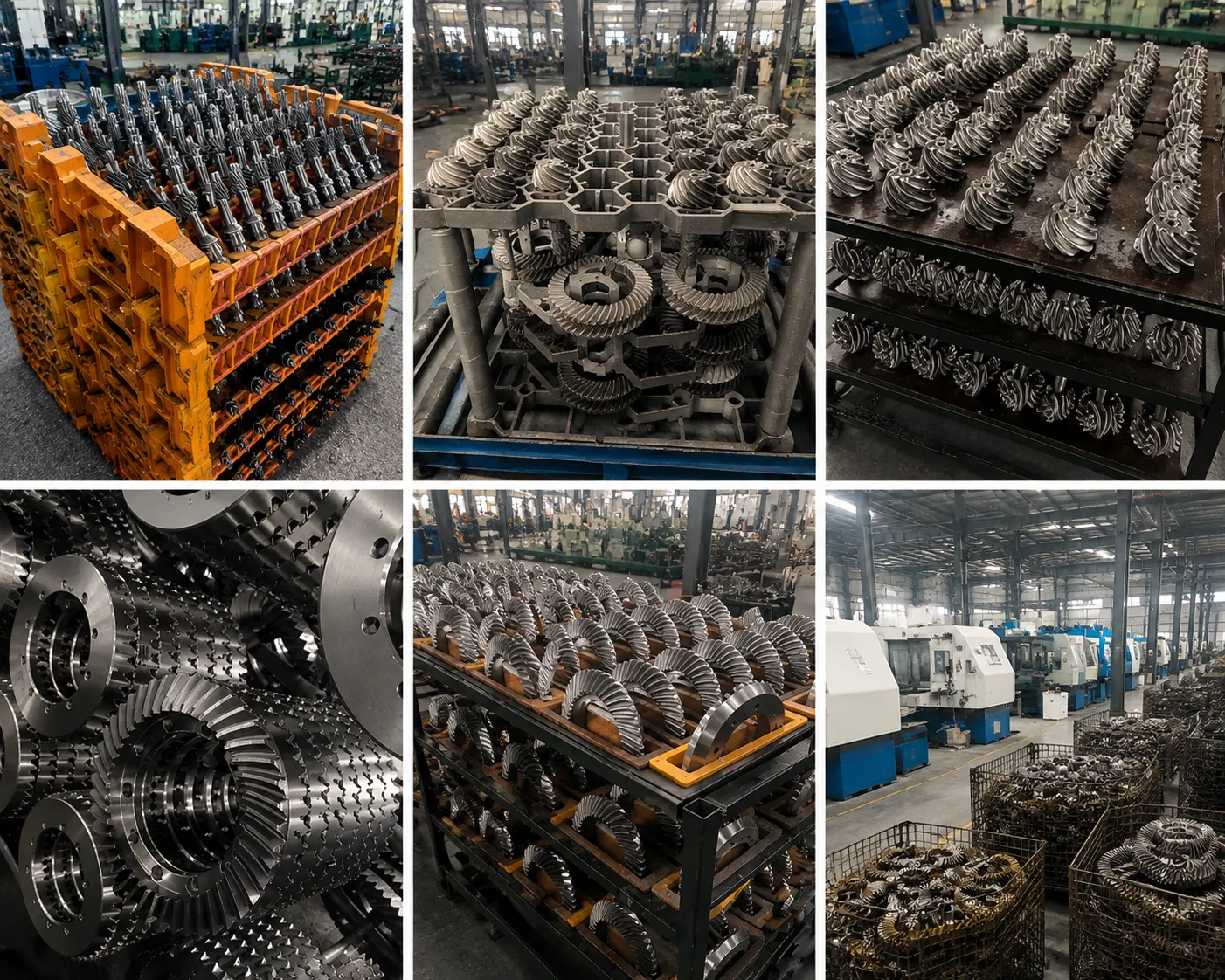
Korea Ever-Power slewing ring gear large diameter manufacturing workshop
Korea Ever-Power large-diameter slewing ring gear manufacturing facility — vertical CNC turning and hobbing for ring diameters OD 400–2,500 mm. The manufacturing constraint for large slewing ring gears is the machine table swing diameter — Korea Ever-Power’s largest vertical CNC hobbing machine has a 2,600 mm maximum workpiece OD, allowing slewing ring tooth profiles to be hobbed on rings up to OD 2,500 mm in a single setup. For rings above 2,500 mm OD, tooth profiling is performed by gear shaping (internal teeth) or gear hobbing with the ring mounted on a custom rotary table fixture. The flatness and runout of the ring bearing faces are critical to the concentricity of the gear pitch cylinder with the bearing raceway — Korea Ever-Power uses a vertical CNC turning center with 5 μm positioning accuracy to machine both the tooth reference surfaces and the bearing raceway faces in the same setup, eliminating the re-setup datum error that would otherwise limit the concentricity of the finished ring.

Frequently Asked Questions — Ring Gears for Slewing Drives

Q 01

Our 25-tonne crane slewing ring shows visible pitting on the gear teeth after 8 years of service — the pitting is concentrated on the lower third of the tooth face near the root. The ring has been properly greased. What is causing root-zone pitting on crane slewing ring gear teeth?

Root-zone pitting on crane slewing ring gear teeth (concentrated in the lower portion of the tooth face, below the pitch line) is a contact fatigue failure mode called single-contact-zone pitting — it occurs when the tooth root area carries a disproportionately high Hertzian contact stress compared to the pitch line. The causes are specific to slewing ring gears: (1) Pinion tip contact at the slewing ring tooth root: the slewing ring gear tooth is driven by a smaller pinion, and if the pinion is slightly oversized (larger addendum than designed), the pinion tooth tip contacts the slewing ring tooth root zone below the intended contact band. The tip contact zone has the highest sliding velocity at the gear mesh and the thinnest EHL film (the low-pressure tip contact generates less hydrodynamic film than the pitch point contact), making it the most vulnerable point for surface fatigue — particularly in induction-hardened slewing ring gear teeth where the case depth at the root fillet may be at its minimum. Correction: measure the pinion tip diameter and confirm it matches the gear design; if the pinion has been replaced and the replacement’s addendum is larger than specified, the pinion must be replaced to the correct specification. (2) Induction hardening case depth insufficient at the tooth root: the induction hardening coil geometry for large slewing ring gears sometimes produces a shallow case depth at the tooth root compared to the flank (the field lines concentrate at the tooth tips and flanks, leaving the root zone with a longer heat soak time but lower peak temperature). If the effective case depth at the root is below 2.0 mm for a M10 slewing ring gear tooth, the root zone hardness may be insufficient to sustain the Hertzian contact fatigue of 8 years of crane operation. Metallurgical examination of a tooth sample can confirm whether this is the case. Korea Ever-Power slewing ring gears use a shaped induction coil geometry and a programmed two-pass hardening cycle to ensure the root zone achieves the minimum specified effective case depth — this is confirmed by a hardness traverse on a tooth section sample from each production batch.

Q 02

What is the recommended replacement interval for excavator slewing rings, and are there measurable wear indicators that identify when the ring must be replaced before failure?

Excavator slewing ring replacement should be based on condition monitoring rather than a fixed calendar interval — the actual service life varies enormously between applications (a site clearing excavator working in sand may achieve 10,000+ hours, while one demolishing reinforced concrete may need replacement at 4,000 hours). Measurable wear indicators and their replacement thresholds: (1) Axial play in the slewing ring bearing: with the boom in the maximum reach position (maximum moment load on the slewing ring), measure the vertical clearance between the upper and lower structures at the slewing ring using feeler gauges or a dial indicator. Acceptable axial play: ≤ 1.0–1.5 mm depending on excavator class (refer to the OEM service manual for the specific limit). Axial play above 2.0 mm indicates raceway wear sufficient to affect the structural safety of the crane — immediate replacement required. (2) Gear tooth wear (backlash increase): mount a dial indicator tangentially against the excavator upper structure and measure the dead-band rotation (in mm) when the slewing motor is reversed without load. New condition backlash is typically 0.3–0.8 mm at the slewing ring OD; replace when backlash exceeds 3× the new condition value (approximately 1.0–2.5 mm measured at the OD). (3) Visual inspection of gear teeth: using a borescope or after removing the protective cover, inspect the pinion and ring gear teeth for chipping, spalling, or severe wear that exposes the base material below the induction-hardened layer. Any tooth that shows material loss to the unhardened core must trigger immediate inspection by a qualified crane engineer before further operation. Korea Ever-Power recommends an annual slewing ring condition assessment for all excavators above 20 tonnes, combining the three measurements above with a grease sample analysis for raceway wear metal content.

Q 03

What information does Korea Ever-Power need to supply a slewing ring gear for a non-standard crane where the original OEM slewing ring is no longer available?

For a non-standard or legacy crane where the original slewing ring is no longer available from the OEM, Korea Ever-Power requires the following information to design and manufacture a replacement: (1) Dimensional information from the existing ring (or from the crane structural drawings if available): outer diameter (OD), inner diameter (ID), ring height (H), bolt circle diameters (both outer and inner), bolt hole count and diameter on each circle, gear tooth count (count the teeth on the existing ring — usually possible by rotating the superstructure by hand and counting), and whether the teeth are on the outer or inner diameter. (2) Tooth geometry measurement: module identification from the OD measurement: for an external-tooth ring, module = (OD − 2 × addendum) ÷ tooth count ≈ (OD − 2.167 × module) ÷ tooth count — solve iteratively for module. Korea Ever-Power can identify the module from the OD and tooth count if both are provided, with confirmation by over-pin measurement on the existing ring. (3) Material specification (from the original OEM documentation if available, or Korea Ever-Power will recommend 42CrMo4 QT as the standard replacement material). (4) Crane rated load and boom radius (to allow the combined bearing and gear load calculation for the replacement ring design — this confirms the original ring’s structural cross-section is adequate for the load, or flags if it should be upgraded). (5) Photographs of the existing ring (both the gear tooth profile and the full ring from both sides) — these allow Korea Ever-Power’s engineering team to identify any non-standard features (modified bolt patterns, sealing arrangements, raceway type) that must be replicated in the replacement. Lead time for a non-standard legacy crane slewing ring gear: 35–55 days from drawing confirmation, depending on OD and material availability.

Explore Korea Ever-Power Gear Categories

Seven precision gear product lines for slewing drives, cranes, excavators, solar trackers and large rotating machinery worldwide.
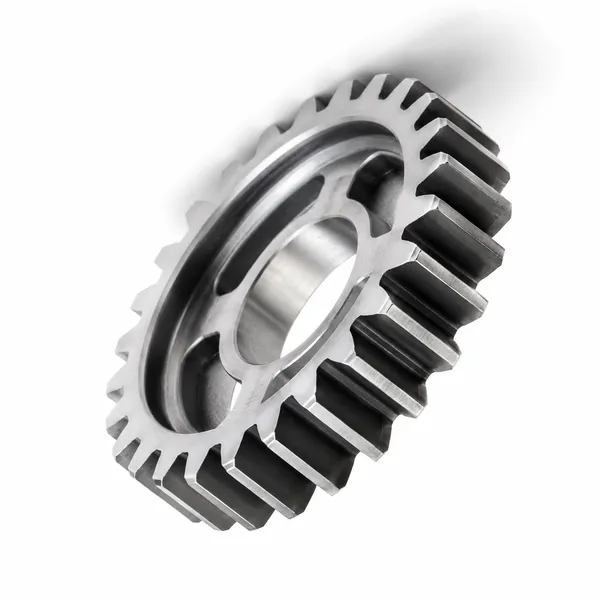
spur gear crane

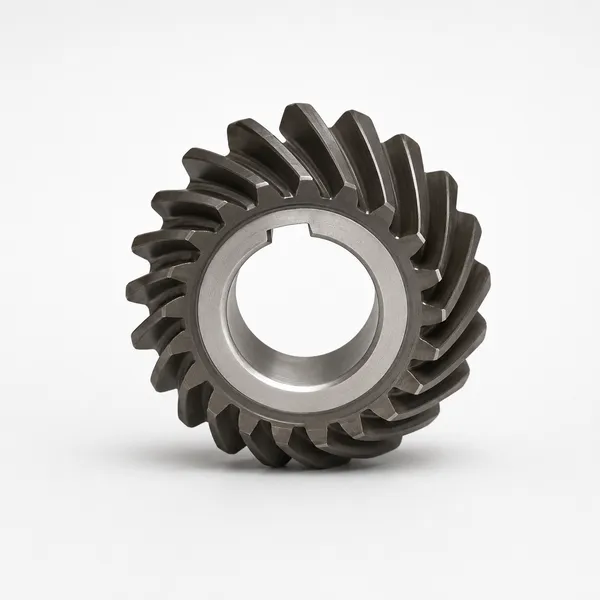
Spur Gears

Slew pinion · crane drive · M8–M16

helical gear crane

Helical Gears

Slewing gearbox · crane hoist stage

bevel gear crane

Bevel Gears

Crane angle drive · hoist direction

worm gear solar tracker

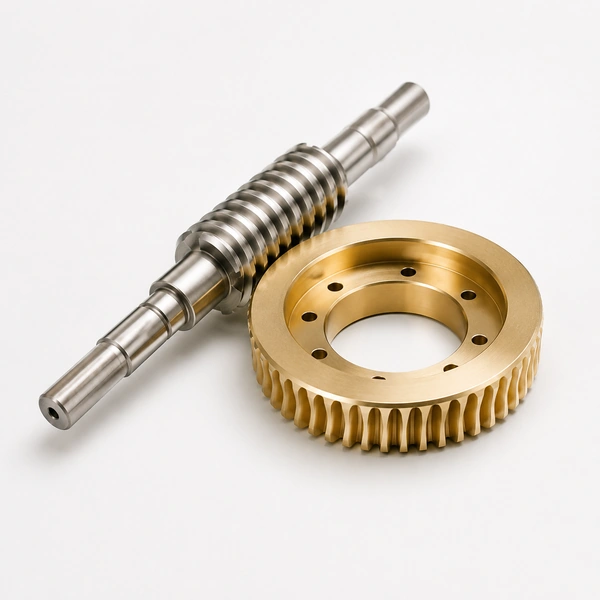
Worm Gears

Solar tracker actuator · self-lock

slewing ring gear crane

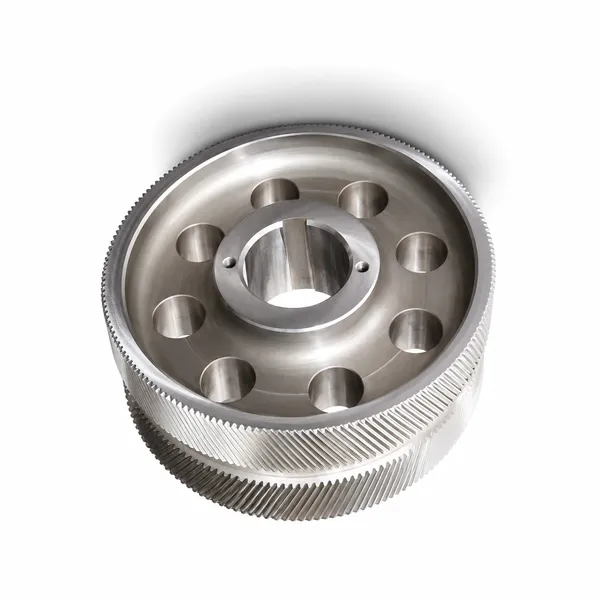
Ring Gears

Slewing ring · OD 300–5,000 mm

planetary gear crane hoist

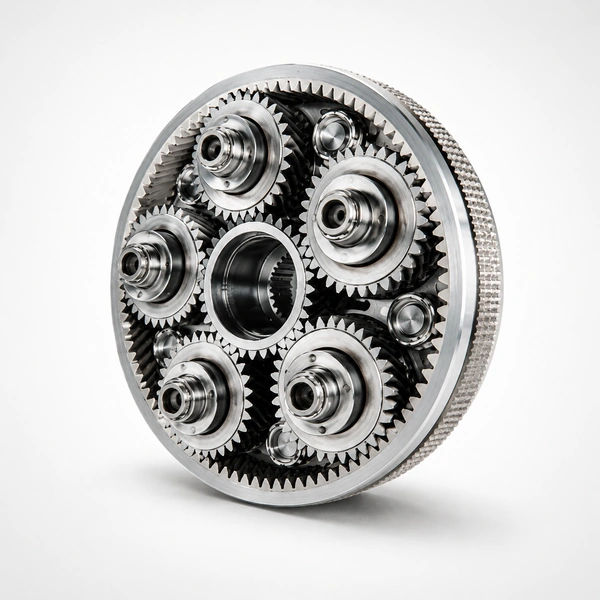
Planetary Gears

Crane hoist · slewing reducer stage

plastic gear

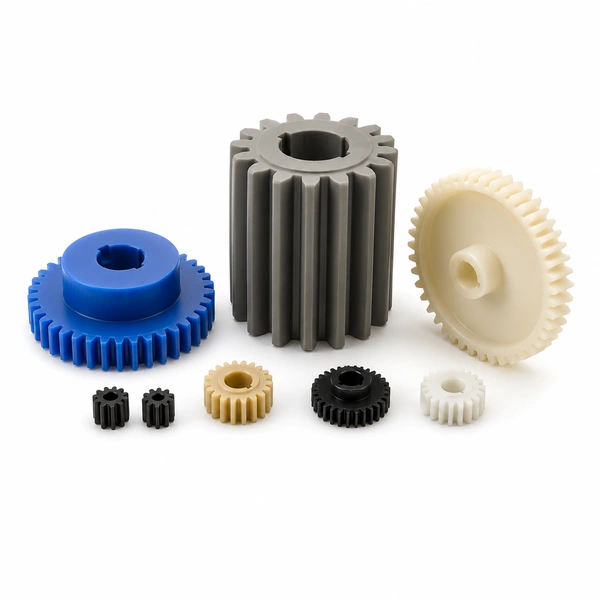
Plastic Gears

Sensor · limit switch · crane control

GET A QUOTATION · KOREA EVER-POWER

Need Ring Gears for Slewing Drives?

Korea Ever-Power manufactures 42CrMo4 and 50Mn slewing ring gears for crane, excavator, solar tracker, and industrial slewing applications — OD 300–2,500 mm, internal and external tooth, M6–M16, induction hardened HRC 50–58, DIN 7–9 quality. Bolt circle patterns to OEM specification. Dacromet coating for 25-year outdoor corrosion resistance. Non-standard legacy crane replacement service. ISO 9001:2015 certified.

Request a Quotation →

Editor: Cxm

VR Tour of Our Factory

TAGs:

gear rack

As one of leading gear rack manufacturers, suppliers and exporters of products, We offer gear rack and many other products.

Please contact us for details.

Mail:[email protected]

Manufacturer supplier exporter of gear rack

Recent Posts

en_USEnglish