GEAR APPLICATION GUIDE · PLASTIC GEAR · PL03

POM Gears for Food Processing Equipment:
Delrin Acetal Gear Applications in Food Machinery, Conveyors and Beverage Systems

Polyoxymethylene (POM) — sold under the DuPont trade name Delrin and also marketed as acetal or polyacetal — is the most widely used engineering plastic for food processing gear applications where a combination of high dimensional stability, low moisture absorption, excellent machinability, good wear resistance, and FDA-compliant composition is needed. POM gears are found in virtually every segment of the food industry: in the mixing shaft drives of commercial food processors, in the conveyor belt indexing mechanisms of meat slicing lines, in the dosing and portioning drives of filling machines for dairy and beverages, and in the dispenser mechanisms of coffee machines and vending equipment. Understanding when POM outperforms nylon (PA6, PA66) in food gear applications — and when it does not — is essential for specifying the correct material for each specific food processing drive.

POM-H · POM-C · Delrin · M1–M6 · FDA 21 CFR
−40°C to +90°C · Moisture Stable · CIP Compatible
Food Conveyor · Mixer · Filler · Vending · Beverage

POM VS NYLON

3× Lower Moisture

POM’s key advantage over PA6/PA66 in food processing: moisture absorption. PA6 absorbs 2.8–3.5% moisture by weight at 100% RH (producing a tooth thickness increase of 0.3–0.5% due to swelling). POM-H absorbs only 0.2–0.3% at saturation — essentially dimensionally stable in wet food environments. This makes POM the standard choice for food gear applications where CIP (Clean-In-Place) water and steam cleaning cycles would cause nylon gears to swell and jam in their housings

MODULE RANGE

M1 – M6

POM food gear module range. Coffee machine / vending: M1–M1.5. Beverage dispensing / dosing: M1.5–M2. Food processor mixing shaft: M2–M3. Conveyor indexing drive: M3–M4. Filling machine main drive: M3–M5. Meat processing auxiliary: M4–M6. All food processing POM gears: machined from homopolymer POM-H rod or injection moulded from POM-C (copolymer)

TEMP RANGE

−40°C / +90°C

POM food gear operating temperature range. Lower end: POM retains toughness to −40°C (useful for refrigerated conveyor applications). Upper continuous: 90°C for POM-H, 100°C for POM-C. Above 90°C POM softens progressively — for hot-fill beverage (85°C product temp) and pasteuriser conveyors (85–95°C), Korea Ever-Power recommends PEEK instead of POM for any gear in direct contact with hot product

FDA STATUS

FDA 21 CFR 177.2470

POM food gear regulatory compliance. FDA 21 CFR 177.2470 (Polyoxymethylene copolymers): approved for repeated use in contact with all food types, including aqueous, fatty, and acidic foods. EU Regulation 10/2011 (plastic materials for food contact): POM listed. NSF Standard 51 (food equipment materials): POM approved. Korea Ever-Power POM food gears are manufactured from food-grade POM-H or POM-C rod/sheet that carries an FDA 21 CFR 177.2470 material certificate from the polymer supplier

POM vs Nylon in Food Processing Gears — The Critical Material Differences

The choice between POM and PA6/PA66 for food processing gear applications is more nuanced than simply selecting the material with the higher strength or the lower cost — each material has specific advantages in the food environment that make it the correct choice for certain applications and the wrong choice for others. The decisive comparison is across five properties: moisture absorption and dimensional stability, chemical resistance to CIP agents, strength and stiffness, temperature resistance, and food contact regulatory compliance. POM leads in moisture stability (0.2% vs 2.8% absorption) and dimensional stability in wet cleaning environments, and is comparable in food contact compliance. Nylon (PA6/PA66) leads in impact toughness — the Charpy notched impact energy of PA6 is 6.5 kJ/m², compared to 6.0 kJ/m² for POM-H, making nylon the preferred material for food processing gears in applications with impact loading (meat bone-in product, frozen block processing). Nylon also has significantly higher elongation to break than POM (200% vs 25%), meaning a nylon gear will deflect visibly under overload and warn the operator before fracture, while a POM gear will fracture more abruptly under the same overload.

Korea Ever-Power’s POM gears for food processing equipment are manufactured from food-grade POM-H (DuPont Delrin 500 or equivalent, with FDA 21 CFR 177.2470 material certificate from the polymer supplier) for standard food processing applications, and POM-C (copolymer, BASF Ultraform N2320 or equivalent) for applications requiring better long-term thermal stability above 80°C or improved resistance to acid CIP agents (POM-C has marginally better acid stability than POM-H because the copolymer terminator groups are more resistant to chain-end depolymerisation in acid). The machining of POM food gears follows a standard process: rough turning of the gear blank from rod stock, rough hobbing of the tooth profile, then finish hobbing or finish profile grinding to the required tolerance. POM machines very cleanly (better surface finish than nylon at the same tooling and parameters), producing tooth flanks with Ra ≤ 0.8 μm from a well-maintained hobbing machine — significantly better than the Ra 1.6–3.2 μm typical of machined nylon gears. This better surface finish directly reduces the gear mesh friction coefficient and wear rate in dry-running food processing gear applications.

The chemical resistance of POM food gears to CIP cleaning agents is a critical application engineering consideration that is often underspecified. Standard CIP chemicals used in food processing include alkaline detergents (NaOH-based, pH 11–13), acid rinses (phosphoric or citric acid, pH 2–4), and sanitising agents (chlorine-based at 200–500 ppm, or peracetic acid at 100–200 ppm). POM-H has good resistance to the alkaline NaOH solutions at the concentrations and temperatures used in standard food CIP (1–2% NaOH at 70–80°C), but moderate resistance to strong acid at elevated temperature — concentrated phosphoric acid (above 5%) at 60°C can cause slow surface degradation of POM-H over repeated exposure cycles. POM-C has better acid resistance than POM-H at temperatures up to 60°C. Peracetic acid (PAA) is the CIP agent that most severely limits POM gear life — PAA at 0.1–0.2% concentration (common in dairy and beverage CIP) causes measurable surface oxidation of POM after repeated exposure at 40–50°C, reducing the tooth surface hardness and increasing the wear rate in subsequent operation. Korea Ever-Power recommends POM-C over POM-H for any food processing gear that is directly wetted by PAA sanitising cycles, and provides a CIP compatibility assessment as part of the application engineering review for food processing POM gear enquiries.
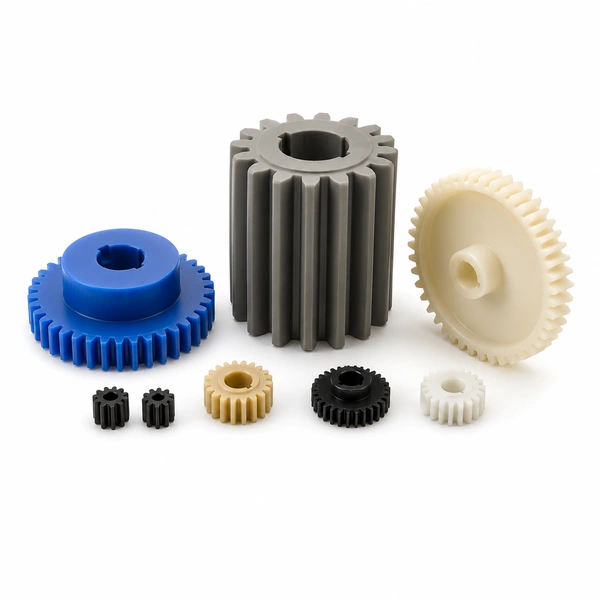
POM acetal Delrin food processing gear Korea Ever-Power FDA compliant
Korea Ever-Power food-grade POM-H machined gear range for food processing applications — M1.5 coffee machine dispenser gears (left, white, 0.5 g per gear), M3 food conveyor indexing gears (centre, natural white, 18 g), and M5 commercial food processor mixing drive gears (right, natural white, 85 g). All three grades manufactured from DuPont Delrin 500 POM-H rod stock with FDA 21 CFR 177.2470 material certification. The natural white colour of unfilled POM-H is an important property in food processing — any broken gear tooth or gear fragment that falls into the food stream can be detected by the food production line’s X-ray foreign body detection system (operating at 50–120 kV), since POM (density 1.41 g/cm³) is detectable at fragment sizes above 3–5 mm when the X-ray detection system is calibrated for plastic. Korea Ever-Power also offers blue-pigmented food-grade POM for applications where the production line uses visual colour checks rather than X-ray — the blue colour contrasts with the majority of food products, making plastic gear fragments visually identifiable during visual inspection of the production stream. The blue pigment is a food-grade phthalocyanine blue (PB15:3) that complies with FDA 21 CFR 178.3297.

POM Gear Applications in Food Processing

Beverage and Dairy Filling Machines

M2–M4, POM-C, machined from rod stock, natural white FDA colour, bore keyway for drive shaft, CIP compatible (1% NaOH, PAA 0.1%), operating speed 100–300 RPM, output torque ≤ 20 Nm per gear, continuous duty. Beverage and dairy filling machine drive gears (the metering star wheel drives, the filling carousel indexing drives, and the capping head drives) are the highest-volume single food processing application for POM gears. The CIP wash-down cycle is typically 2–4 times daily on a beverage filling line, making moisture stability the primary material selection criterion — POM-C outperforms PA6 in this application because the POM gear dimensions remain constant across the production day (from dry startup in the morning to fully wetted steady-state after the first CIP cycle), while a PA6 gear would swell measurably over the first 30–60 minutes of each production day as it absorbs moisture, potentially causing jamming in tight-clearance metering star wheel housings. Korea Ever-Power beverage filling machine POM gear range covers the most common star wheel module and tooth count combinations for major filling machine brands (KHS, Krones, Sidel, SIDCO, GEA, Tetra Pak filling line equipment).

POM-C · M2–M4 · CIP stable · beverage OEM

Food Conveyor and Indexing Drives

M3–M5, POM-H or POM-C, machined or injection moulded depending on volume, white or blue (visually detectable), operating temperature −15°C (refrigerated conveyor) to +40°C (ambient), shock resistant (food products fall onto conveyor from above, transmitting impact through the conveyor drive to the indexing gear). Food processing conveyor indexing gears (the intermittent-motion gear drives that advance a conveyor by one product pitch at each indexing cycle, then stop to allow a process operation on the product in the index position) use POM gears because the intermittent motion and frequent starts create a dynamic loading environment where the dimensional stability of POM (vs nylon’s moisture-induced dimensional changes) is critical for the precise index positioning accuracy that maintains product alignment in the process station. Korea Ever-Power conveyor indexing POM gear range covers M3–M5 in standard tooth counts for the index drives of meat portioning lines, bread baking lines, cheese cutting lines, and fresh produce packing conveyors used by major food processing equipment builders in Australia, the Netherlands, the UK, and Germany.

POM-H · M3–M5 · blue detectable option · −15°C

Coffee Machine and Vending Equipment

M1–M2, POM-H injection moulded (volumes above 5,000 pieces per year make injection moulding more economical than machining at M1–M2), tight dimensional tolerance (±0.05 mm on tooth thickness for consistent coffee dose metering accuracy), operating cycles ≥ 2 million per year (commercial espresso machines brew 50,000–200,000 cups per year, the bean grinder drive gear accumulates 1–2 million cycles per year), temperature stability up to 80°C (the boiler proximity raises the ambient around the grinder drive mechanism to 60–80°C). Coffee machine and vending equipment POM gears operate at the intersection of miniaturised precision (M1–M1.5, tooth height 2.25–3.37 mm), high cumulative cycle count (millions per year), and food-safety compliance that makes POM the dominant material choice. Korea Ever-Power injection moulds POM-H coffee machine gears in multi-cavity tools (8–16 cavities for M1–M1.5 gears) from DuPont Delrin 500NC10 (natural colour, unreinforced, FDA compliant) — the NC10 grade has a melt flow rate optimised for the thin-wall filling needed to inject coffee machine gears at M1 without short shots or sink marks on the tooth flanks that would affect the metering accuracy.

POM-H · M1–M2 · injection moulded · 2M+ cycles/year
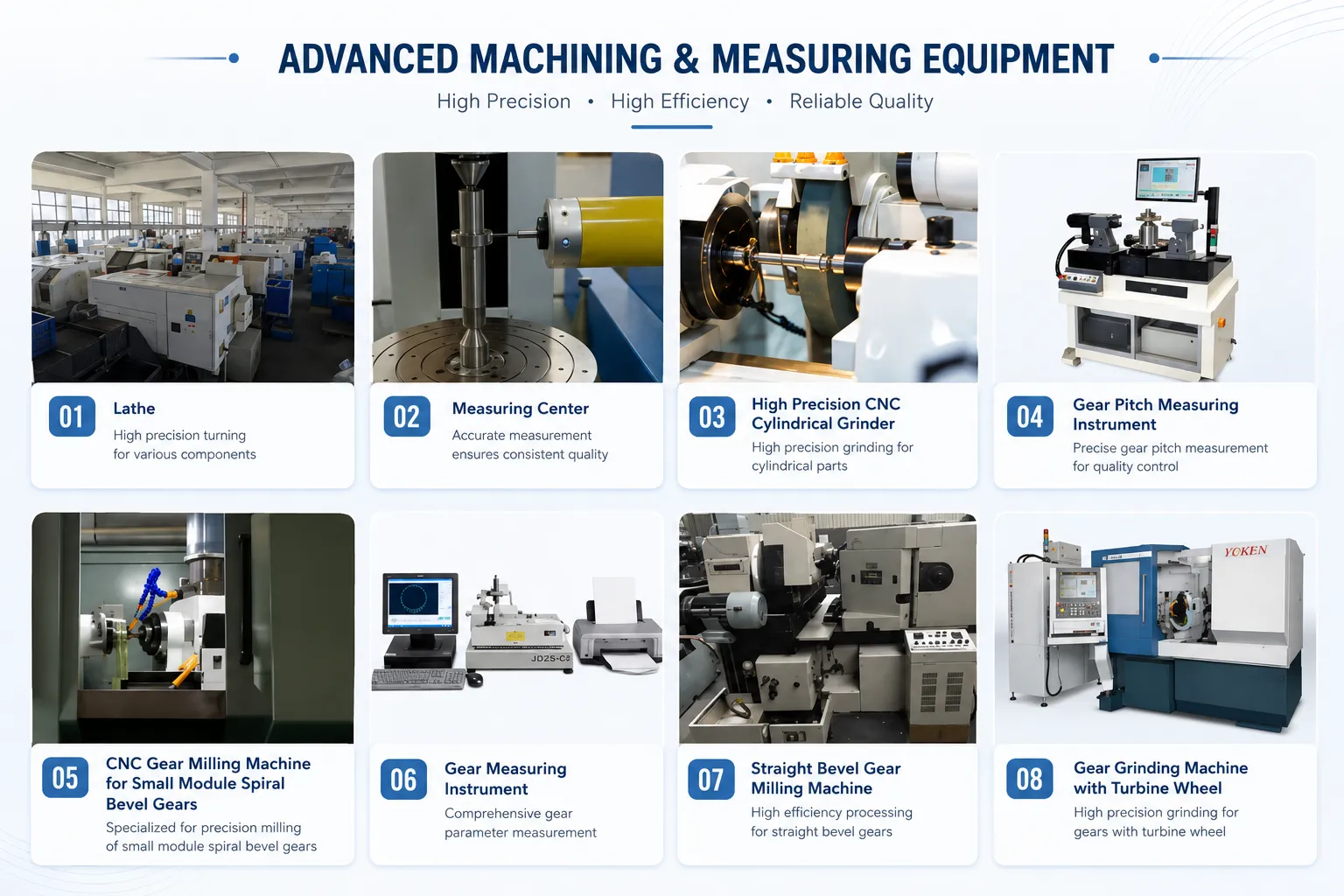
Korea Ever-Power POM food gear dimensional inspection FDA quality
Korea Ever-Power POM food processing gear dimensional inspection — over-pin measurement of POM-H gear tooth thickness on a precision bench comparator. POM gears for food processing require tighter dimensional inspection than standard industrial plastic gears because: (1) the tooth thickness directly determines the metering accuracy of filling machines and dosing pumps — a 0.1 mm tooth thickness error in a M2 metering gear produces a 1.5% dose volume error that may push the filled product outside the legal minimum fill volume requirement; (2) the bore diameter and roundness directly determine the gear’s position on the drive shaft and its concentricity — a bore that is 0.05 mm out-of-round produces a cyclic runout of 0.05 mm at the filling cam or star wheel, creating a product pitch variation that causes jams in the filling machine downstream of the cam. Korea Ever-Power food processing POM gears are 100% inspected for tooth thickness (over-pin measurement, ±0.03 mm tolerance for metering applications) and bore diameter (bore gauge, ±0.02 mm for standard shaft fits). The inspection records are retained with the batch quality file for 5 years — supporting the food manufacturer’s HACCP documentation requirement for supplier quality evidence on components that are critical-to-function in the filling and metering process.
Korea Ever-Power POM food gear injection moulding machining manufacturing
Korea Ever-Power food-grade POM gear manufacturing facility — CNC gear hobbing and injection moulding for food processing POM gear production. The manufacturing process for food-grade POM gears differs from standard engineering gear manufacturing in two important quality control steps: (1) Material segregation: food-grade POM-H and POM-C rod stock and injection moulding pellets are stored in sealed, labelled containers in a dedicated food-grade material rack, physically separated from the industrial engineering plastic stocks. The FDA certification documents for each reel or box of food-grade material are filed with the batch production record — no food-grade POM gear can be manufactured from unlabelled or uncertified material. (2) Colour control: natural white and blue food-grade POM are the only colours used for food processing gears at Korea Ever-Power. No coloured pigments from non-food-grade gears are permitted in the food gear production area — even a trace contamination of non-food pigment in a moulded food gear would violate the FDA material compliance. Korea Ever-Power segregates food and non-food plastic gear production into separate moulding cells, with dedicated tooling and dedicated material handling equipment for each cell.

Frequently Asked Questions — POM Gears for Food Processing

Q 01

Our dairy filling machine M3 POM gears are showing surface pitting and small cracks on the tooth flanks after 18 months of service. The machine undergoes CIP with 1% peracetic acid at 40°C twice daily. Is the PAA damaging the gears?

Tooth flank surface pitting and cracking on POM gears after 18 months of twice-daily PAA CIP exposure is a recognised degradation mode — the peroxide component of peracetic acid initiates an oxidative chain-scission reaction in the POM-H polymer backbone, progressively reducing the molecular weight at the gear tooth surface. The surface degradation first appears as a dull, chalky appearance (loss of the original machined surface gloss), then as micro-crazing (a fine network of surface cracks visible at ×10 magnification), and finally as pitting as the degraded surface layer delaminates under the tooth contact stress. At 1% PAA concentration at 40°C with twice-daily 20-minute CIP exposure, the total PAA exposure is approximately 240 hours per year. Korea Ever-Power’s CIP compatibility data for POM-H shows measurable surface degradation after 100–150 hours of PAA exposure at these conditions — consistent with the 18-month failure timeline you describe. Solutions: (1) Switch to POM-C: POM copolymer has better PAA resistance than POM-H because the copolymer terminator groups are more resistant to oxidative attack — POM-C shows measurable degradation only after approximately 200–250 hours of equivalent PAA exposure, extending the service life by 30–50%. (2) Reduce PAA concentration or contact time: if the CIP protocol can be adjusted (with the dairy’s food safety and hygiene team approval) to 0.05% PAA for 10 minutes (which achieves equivalent log reduction of Listeria monocytogenes as 0.1% at 20 minutes per published food safety literature), the PAA degradation rate of the POM gears is reduced by approximately 60%. (3) Switch to PEEK: PEEK (polyether ether ketone) has excellent PAA resistance (tested to 1% PAA at 60°C, 500+ hours without measurable surface degradation) and operates at continuous temperatures to 240°C. Korea Ever-Power manufactures PEEK food processing gears at M1–M5 — the cost is approximately 4–6× POM-C, but the service life in PAA-intensive dairy CIP environments is 3–5× longer, making PEEK the more economical choice on a cost-per-hour-of-service basis. Korea Ever-Power recommends PEEK for all dairy filling machine gears directly wetted by PAA sanitiser where twice-daily or more frequent CIP cycles are the standard hygiene protocol.

Q 02

We are designing a new portion-controlled meat slicing machine for the European market. The slice thickness metering gear operates at −5°C (refrigerated cabinet). Is POM the correct material, and what operating load does Korea Ever-Power recommend as the safe design limit for M3 POM gears at this temperature?

POM is a good choice for the metering gear in a refrigerated meat slicer at −5°C — it maintains adequate toughness and machinability down to −40°C, significantly better than most other engineering plastics for low-temperature food processing. Design limit recommendation for M3 POM-H gears at −5°C: (1) Tooth bending stress limit at −5°C: POM-H flexural strength at −5°C is approximately 90 MPa (compared to 68 MPa at 23°C — POM stiffens and strengthens at low temperature, unlike nylon which loses toughness below 0°C unless impact-modified). The tooth bending fatigue stress limit for POM-H gears in standard gear design guidelines (VDI 2736, the German guideline for plastic gears) at 10⁶ cycles and 23°C is approximately 20 MPa. At −5°C, this limit can be increased by approximately 20–25% to 24–25 MPa, reflecting the higher flexural strength at low temperature. (2) Contact fatigue limit at −5°C: the contact fatigue limit for POM-H against a steel pinion (the common configuration in food metering drives where POM runs against a stainless steel driving pinion) at 23°C is approximately 30–35 MPa. At −5°C, increase by 15% to 35–40 MPa. (3) Recommended operating load for M3 POM-H at −5°C, 24T tooth count, driving against 316L stainless pinion, at 100 RPM: maximum tangential tooth force = σ_F_limit × (tooth bending module factor × face width) = approximately 25 MPa × (M3 × 20 mm face width × tooth form factor 1.2) = 25 × (3 × 20 × 1.2)/1,000 = 1.8 N/mm² × (face area equivalent) — for practical design, the safe tangential tooth load for a M3 POM-H gear at −5°C at 10⁶ cycles is approximately 450–600 N at the pitch circle, corresponding to an output torque of approximately 0.7–0.9 Nm at a 30 mm pitch diameter. This is the safe continuous design load — intermittent loads up to 2× this value are acceptable for < 1% of cycles. Korea Ever-Power provides the complete VDI 2736 design calculation for all custom POM food processing gear enquiries.

Q 03

What documentation does Korea Ever-Power provide with food processing POM gears to support our machine’s CE marking and our customer’s HACCP plan?

Korea Ever-Power provides the following documentation with food processing POM gear orders, designed to support CE marking of the machine and HACCP compliance for the food manufacturer: (1) Material safety declaration (food contact): a written declaration confirming the gear material (POM-H grade, manufacturer, grade designation) complies with FDA 21 CFR 177.2470 (USA), EU Regulation (EU) 10/2011 on plastic food contact materials (Europe), and NSF Standard 51 (North America). The declaration includes the polymer manufacturer’s reference document number for traceability. (2) Colour additive compliance: for blue-pigmented POM gears, a separate declaration confirming the pigment identity and regulatory compliance (FDA 21 CFR 178.3297 for blue pigments). (3) EN 10204 Type 2.1 declaration of conformance: confirming the gear is manufactured to the customer’s drawing specification and the stated material. Type 2.1 (works declaration) is standard; Type 3.1 (independent inspection certificate) is available on request at a small additional charge. (4) Dimensional inspection report: over-pin measurements and bore diameter for each batch, confirming the key functional dimensions are within the drawing tolerance. (5) CIP compatibility statement: confirming the material is compatible with the specified CIP agents at the concentrations and temperatures stated by the customer. (6) X-ray and metal detectability statement: confirming the gear material does not contain metal particles that would give false positives in the customer’s inline metal detection system (important where metal detectors and plastic gear components are both present on the same production line). Korea Ever-Power issues all six document types as a Food Contact Documentation Pack that ships with each food processing POM gear order, at no additional charge for standard food grades.

Explore Korea Ever-Power Gear Categories

Seven precision gear product lines for food processing, dairy, beverage, meat packing, and hygienic industrial equipment worldwide.
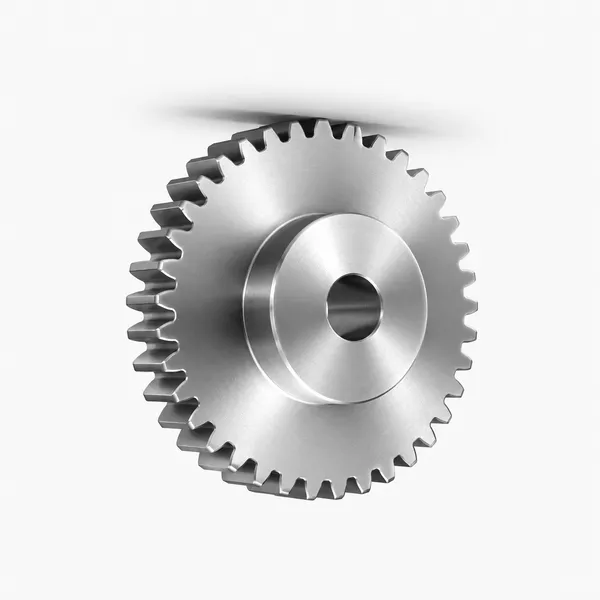
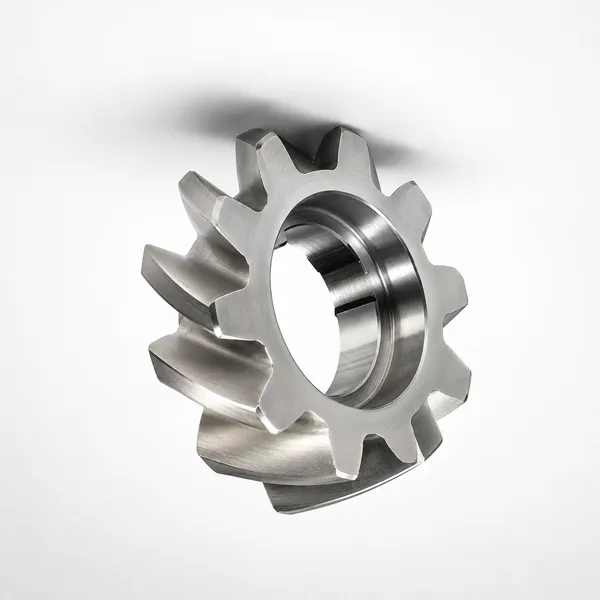
stainless spur gear food

Spur Gears

316L · food · washdown · DIN 5–7

beverage helical gear

Helical Gears

Beverage · food processing · low noise

bevel gear food

Ingranaggi conici

Food mixer · angle drive · washdown

worm gear food

Worm Gears

Food self-lock · conveyor elevator

ring gear food

Ring Gears

Food planetary drive ring · 316L

planetary gear food

Planetary Gears

Food servo planetary · NSF H1 grease

POM food plastic gear

Plastic Gears

POM · PEEK · FDA · blue detectable

GET A QUOTATION · KOREA EVER-POWER

Need POM Gears for Food Processing Equipment?

Korea Ever-Power manufactures food-grade POM-H and POM-C gears for all food processing applications — M1–M6, machined from FDA 21 CFR 177.2470 certified rod stock or injection moulded in multi-cavity tools. Natural white or blue visually-detectable option. CIP compatibility assessment (NaOH, PAA, chlorine) for each application. Full food contact documentation pack: FDA declaration, EU 10/2011 compliance, dimensional inspection report. Minimum 10 pieces machined, minimum 500 pieces injection moulded. ISO 9001:2015 certified.

Request a Quotation →

Redattore: Cxm

VR Tour of Our Factory

TAGs:

cremagliera degli ingranaggi

In qualità di uno dei principali produttori, fornitori ed esportatori di cremagliere, offriamo cremagliere e molti altri prodotti.

Vi preghiamo di contattarci per maggiori dettagli.

Posta:[email protected]

Produttore, fornitore ed esportatore di cremagliere

Articoli recenti

it_ITItalian